Skip to content
’m Amanda from Kinwin in China. I lead OEM/ODM plush projects for brands and retailers worldwide. Clients often ask me: “Why is it called a plush?” The answer sits at the crossroads of language history, textile engineering, and modern retail naming. In this guide, I explain where the word comes from, how textile technology created plush fabric, what defines plush in specs, how the term jumped from fabric to toy category, how regions interpret the word, and why “plush” still wins in branding and SEO today. I’ll keep the language simple and practical so your sourcing, QC, and marketing teams can use it right away.
What is the linguistic and historical origin of the term “plush”?
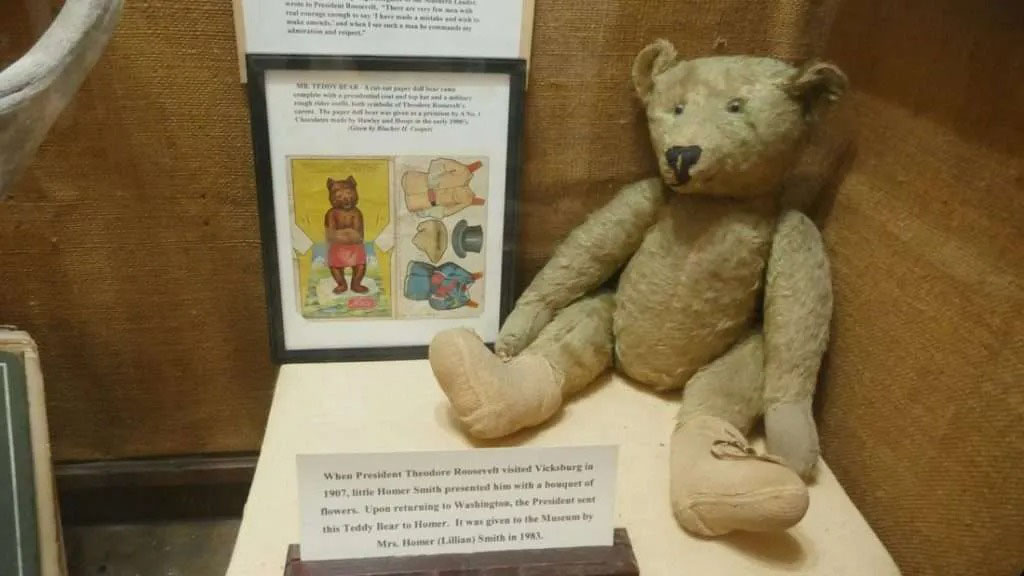
“Plush” descends from the French peluche, which traces back to the Latin pilus (“hair”). In early European textile shops, peluche meant a hairy or tufted cloth—a fabric with raised pile. English borrowed it as “plush”, and by the 18th–19th centuries the word described short-pile luxury fabrics used in apparel, upholstery, and trim. The core meaning never changed: a fabric with a soft, upright nap that looks richer than flat weaves.
The term carried status. Velvet and plush lived close together in language, but plush usually pointed to a slightly longer or looser pile and a more cuddly handfeel. When manufacturers began covering stuffed animals with pile fabrics, shopkeepers described them as “plush bears.” Over time, shoppers shortened the phrase to simply “plush.”
Table 1 — Word Origins at a Glance
| Language/Root | Word | Core Sense | What Carried Forward to Toys |
|---|---|---|---|
| Latin | pilus | Hair/fiber | Raised, hair-like surface |
| French | peluche | Tufted/pile fabric | Soft, fuzzy look and touch |
| English | plush | Short/medium pile luxury cloth | The idea of “soft pile = plush” |
Takeaway: The name is textile-first. Toys borrowed the word because the fabric defined the experience.
How did the evolution of textile technology lead to the creation of plush fabric?
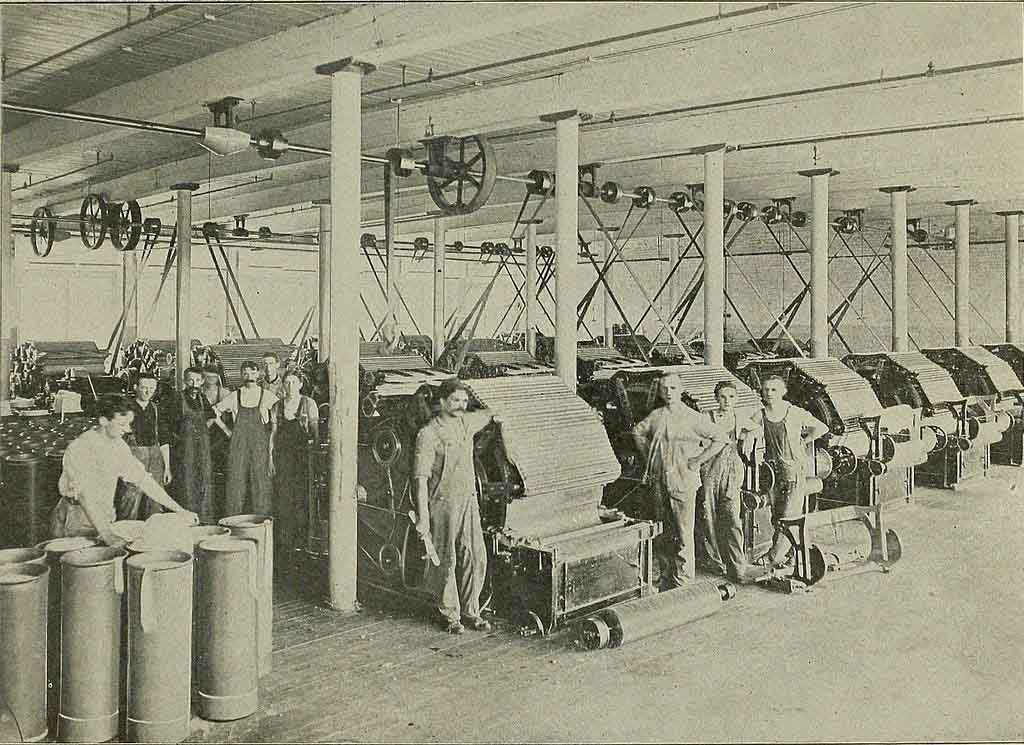
Plush owes its life to the engineering of pile. Weavers and knitters learned to build a second system of yarns that stand upright from the base. As machines improved, pile became cheaper, cleaner, and more consistent—perfect for products that get handled, washed, and hugged.
- Velvet-era foundations: Early looms created looped or cut pile. Cutting loops made a dense, soft face.
- Industrial revolution: Mechanized looms and finishing tools scaled pile production. Shearing, brushing, and heat-setting standardized height and direction.
- Synthetic fibers: Acrylic, modacrylic, and polyester brought washability, colorfastness, and price stability. Polyester especially made plush good for children’s lines.
- Warp/circular knitting: Modern knitting systems produced minky, velboa, faux fur, sherpa/boa—with precise control over pile height, density, denier, and backing stability.
Table 2 — Technology Milestones That Made Plush Mainstream
| Era | Breakthrough | Why It Mattered for Plush |
|---|---|---|
| Hand to mechanized looms | Consistent loop/cut pile | Reliable softness at lower cost |
| Industrial finishing | Shearing/raising/heat-setting | Even pile height; cleaner face |
| Synthetic fiber era | Polyester, acrylic, modacrylic | Washable, color-stable, kid-safe builds |
| Warp/circular knitting | Minky/velboa/faux fur systems | Fine control of pile density and handfeel |
Takeaway: Technology moved plush from luxury trim to mass-market softness—and opened the door to plush toys.
What defines plush fabric in terms of pile height, density, and fiber composition?
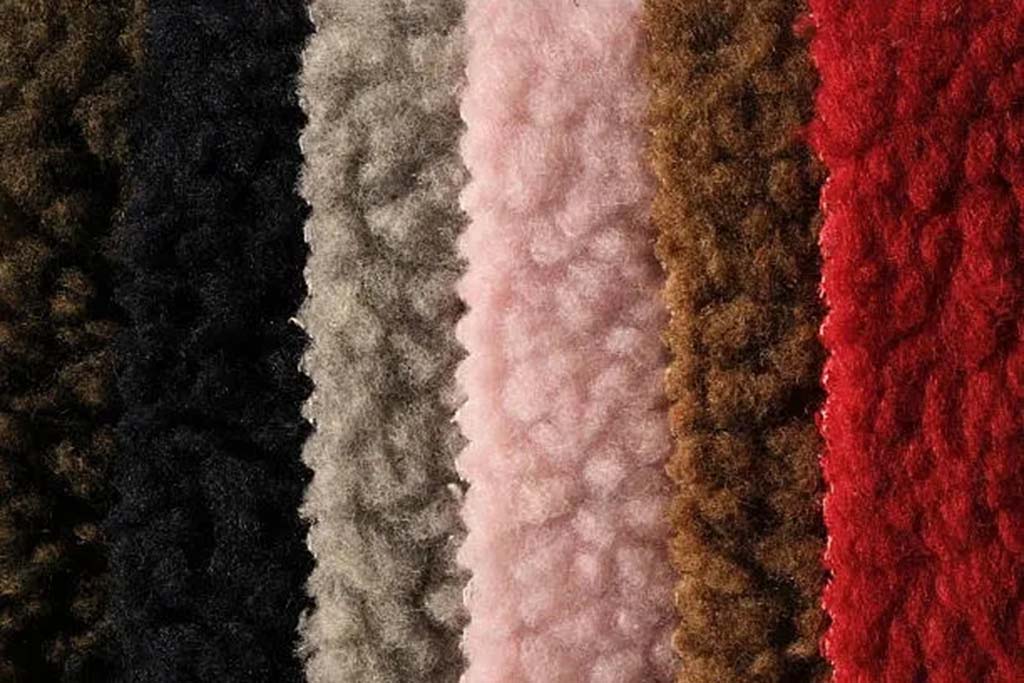
In factory language, a fabric is “plush” when the face has raised pile that creates soft, cushiony handfeel. Three variables define the experience in specs and on the shop floor:
Pile height
- Short (≈1–3 mm): minky/velboa; great for clean embroidery and infant lines.
- Medium (≈4–8 mm): fluffy yet controllable; good balance for faces and shape.
- Long (≥10 mm): faux fur realism; needs trimming around eyes/mouth and brush-after-wash guidance.
Pile density & construction
- Higher stitch density and finer denier give a fuller, silkier surface with better recovery.
- A stable warp-knit backing prevents laddering and supports seam strength.
Fiber composition
- Polyester: dominant; durable, colorfast, easy care—ideal for toys.
- Acrylic/Modacrylic: warm, realistic faux fur; more premium look.
- Cotton blends: matte, cozy; less common for long-pile realism.
- Mohair/Alpaca: heritage luxury for collector bears and boutique runs.
We also lock GSM (fabric weight), shade lot, and finishes (brushing, anti-shed) in the tech pack because these change both handfeel and test outcomes.
Table 3 — Spec Variables and What Users Actually Feel
| Variable | Range/Choice | What the consumer feels | QC/Production note |
|---|---|---|---|
| Pile height | 1–3 / 4–8 / 10+ mm | Silky → fluffy → furry | Trim zones near facial features |
| Density/denier | Low → high | Sparse → rich/“full” | Watch stitch clarity for embroidery |
| Backing stability | Low → high | Misshapes → crisp seams | Fewer seam failures, cleaner cutting |
| Fiber | Polyester / Acrylic / Mohair | Easy-wash → realistic → heritage | Match care labels to fiber reality |
| GSM | Lower → higher | Light → premium heft | Impacts cost and freight weight |
Takeaway: Plush is defined by pile architecture. When we control height, density, and fiber, we control feel, look, and durability.
How did the term “plush” transition from describing fabric to representing an entire toy category?
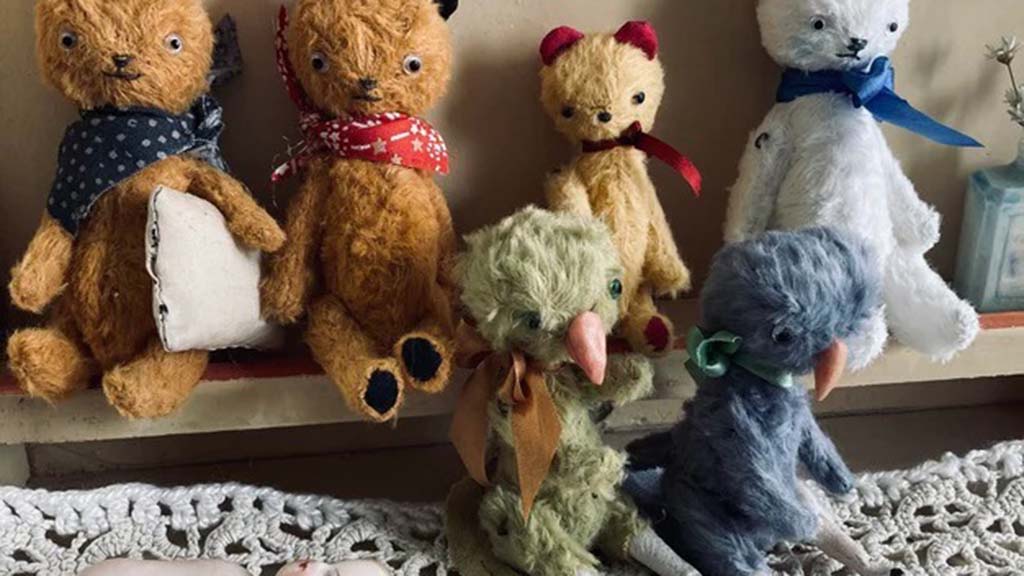
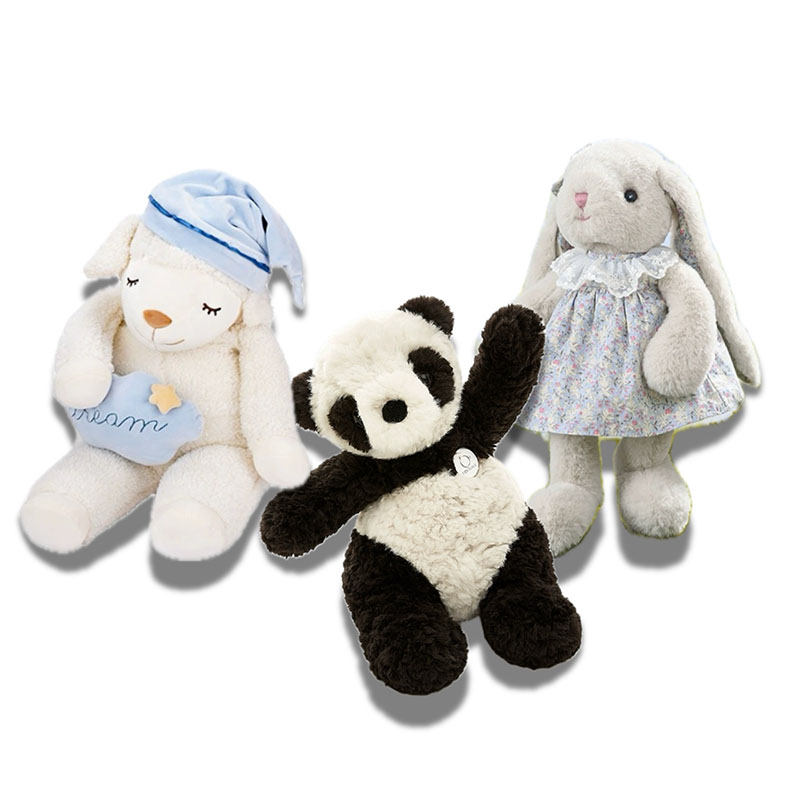
Retailers sold early animals and bears by fabric promise: “plush bear” meant soft, fuzzy, premium-feel compared to rag toys. As pile fabrics became the standard shell for soft animals, the material name became the category name in shoppers’ minds. By the mid-20th century, many markets casually called stuffed animals “plush.”
The transition followed a simple logic:
- Material led perception: People buy the feel first.
- Language simplified: “Plush bear” → “plush.”
- Category locked: As more animals used pile shells, plush became the shorthand for the category.
Today, textile people still mean pile fabric. Toy people often mean the soft toy itself. Both are right in context.
Table 4 — From Fabric to Category (How the Meaning Shifted)
| Stage | Who used the word | What “plush” meant | Example phrase |
|---|---|---|---|
| Textile mills | Weavers/knitters | Pile fabric type | “Velboa plush, 2.5 mm pile” |
| Early retail | Shopkeepers | Soft bear with pile shell | “Premium plush bear” |
| Mass adoption | Shoppers | Soft, stuffed toy by feel | “I want a plush for a gift” |
| Modern split | Textiles vs. toys | Fabric vs. product category | Both accepted depending on context |
Takeaway: The feel of the fabric reshaped the language of the category.
How do different regions and industries (textile vs. toy manufacturing) interpret the meaning of “plush”?
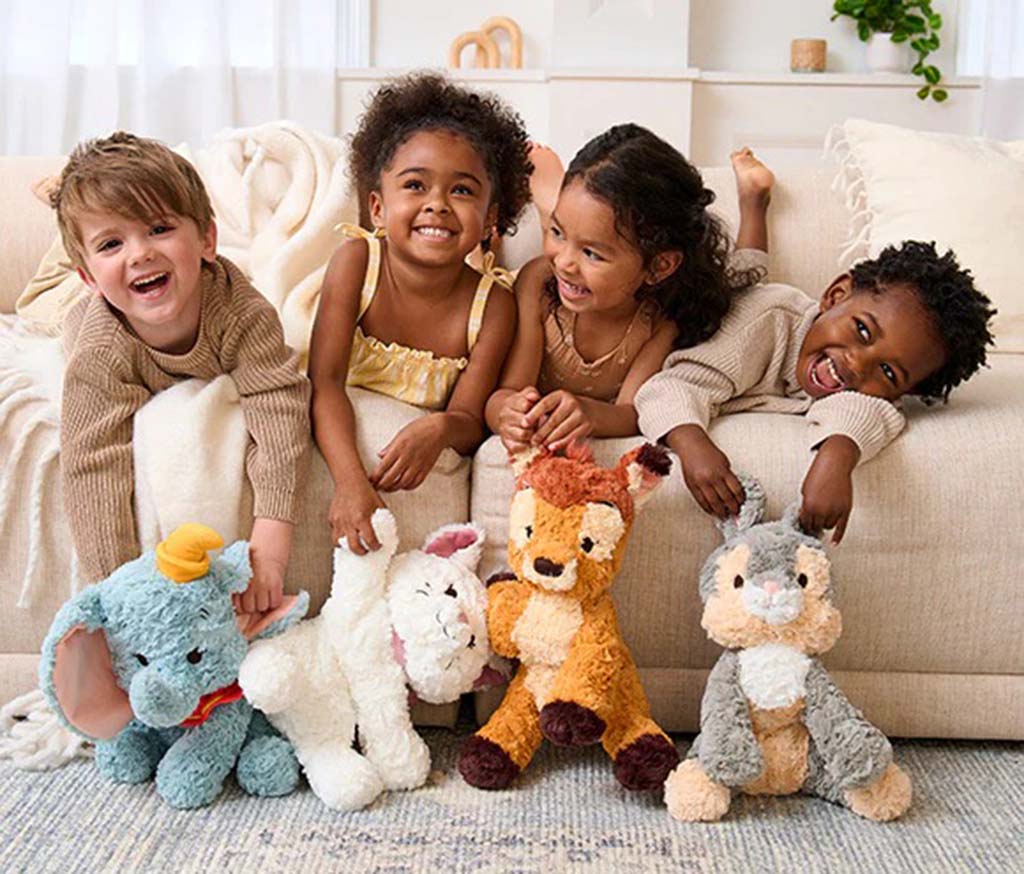
Interpretation follows local retail habits and industry context.
- Textile industry (global): “Plush” is strictly a pile fabric family. Specs talk about pile height, density, GSM, denier, backing.
- Toy manufacturing: “Plush” usually means the finished soft toy with a plush shell.
Regional retail language
- United States: everyday shoppers say “stuffed animal”; retail uses “Stuffed Animals & Plush Toys.”
- United Kingdom/EU: category label is “Soft Toys,” with “teddy” for bears; “plush” appears more in trade copy.
- Japan and fandoms: “plush” / “plushie” show up in hobby spaces, while store navigation may use local equivalents of “soft toy.”
Table 5 — Region & Industry Meanings
| Context | What “plush” means | Lead noun in titles | Size unit |
|---|---|---|---|
| Textile (any region) | Pile fabric spec | N/A (material-level) | N/A |
| Toys (global) | Soft toy with plush shell | Region-dependent | Region-dependent |
| U.S. retail | Category subset | “Stuffed Animal (Plush Toy)” | Inches |
| UK/EU retail | Umbrella = Soft Toy | “Soft Toy” / “Teddy Bear” | Centimeters |
Takeaway: Keep “plush” in specs everywhere; localize titles to how shoppers search.
Why does “plush” remain the preferred term in modern product naming, branding, and SEO taxonomy?
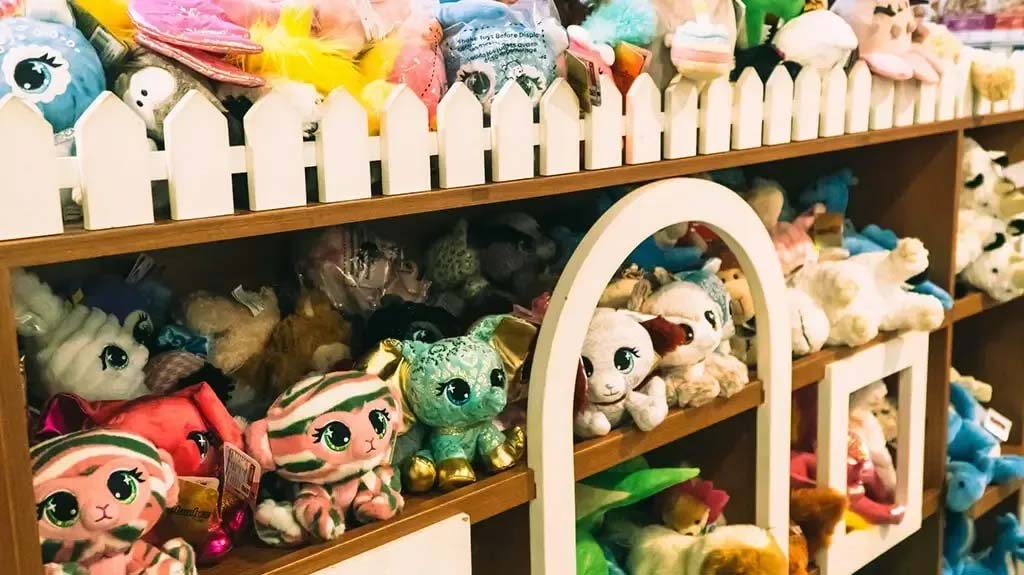
“Plush” wins because it communicates faster and cleaner than any alternative:
- Instant promise: One word conveys softness, pile, cuddle value.
- Cross-border clarity: Even when titles localize (US “stuffed animal,” UK “soft toy”), filters and bullets can still say “plush fabric.”
- Photo alignment: The word matches what images show—texture and depth—which increases trust and click-through.
- Spec precision: In RFQs, “plush” anchors measurable parameters (GSM, pile height, density), which tie directly to cost and compliance.
- SEO synergy: Hybrid titles capture broad and niche queries without keyword stuffing.
Table 6 — Naming/SEO Playbook (Copy-Ready)
| Channel | Title Formula | Bullets/Attributes | Why it Works |
|---|---|---|---|
| U.S. PDP | 12" Fox **Stuffed Animal (Plush Toy)** – Minky Shell | Material=Plush; Feature=Embroidered; Age; Care | Catches “stuffed animal” & “plush toy” searches |
| UK PDP | 30 cm Fox **Soft Toy** – Plush Fabric | Material=Plush; Age; Care; EN71 | Matches local noun; keeps plush in specs |
| Global meta | “Plush Toy / Soft Toy / Stuffed Animal” (spread) | Alt text: “fox plush toy stuffed animal” | Broad coverage without spam |
| B2B RFQ | “Plush (minky/velboa/faux fur), pile 2–3 mm, GSM 240” | Fill grams; pouches; SPI; tests | Precise cost/compliance handover |
Takeaway: “Plush” is a brand cue, a spec handle, and a search handle—all in one syllable.
Implementation guide (you can use this today)
- In specs: Always write “plush” plus the exact fabric family—minky/velboa/faux fur/sherpa—and lock pile height, density, GSM, backing.
- In titles: Localize the main noun (US Stuffed Animal, UK Soft Toy) and keep “plush” either in parentheses or in bullets.
- In bullets/filters: Declare material = plush, feature = embroidered/safety eyes, weighted base, size, age, wash care.
- In photos: Use texture macro, scale-in-hand, face close-up, and seated stability shots so the word “plush” matches the visual promise.
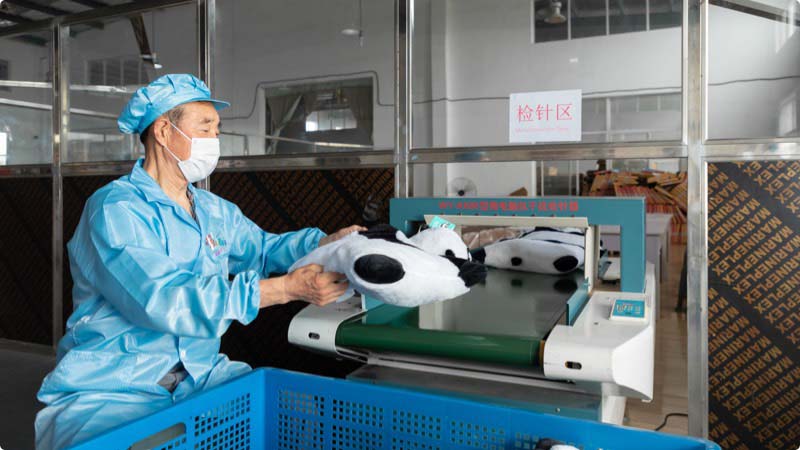
- In compliance: Remember that “plush” vs “soft toy” does not change the law—age grade, trims, and markets do. Keep EN71 / ASTM F963 / CPSIA aligned to real lots.
- In pricing: Understand that pile parameters (height, density, GSM) drive material and minute costs. Choose one hero spec and keep the rest efficient.
FAQ quick answers for your team
- Is every soft toy a plush? No. A soft toy can be flat-knit or woven with no pile; that’s not plush.
- Is every plush a stuffed animal? In toys, yes—plush usually means a stuffed form with a pile shell.
- Does “plush” improve SEO alone? It helps, but the best results come from hybrid titles and structured attributes.
- Can I call a rag doll “plush”? Only if the shell includes pile. Otherwise, label it a soft doll/soft toy.
Conclusion
It’s called “plush” because the word began with pile fabric—a soft, raised surface that defined the tactile promise. As textile technology scaled, that fabric moved into toys, and the name followed. Today “plush” works across spec sheets, brand stories, and SEO, while legal rules still follow age grading and trims, not the noun on the hangtag. If you name the material clearly, lock pile height/density/GSM, localize titles, and keep EN71/ASTM/CPSIA aligned to real lots, your products will read premium, test clean, and convert.
At Kinwin, my team turns briefs into sealed PPS and on-time mass runs with plush quality that shows on camera and feels right in hand. Email [email protected] or visit kinwintoys.com to plan your next plush line.