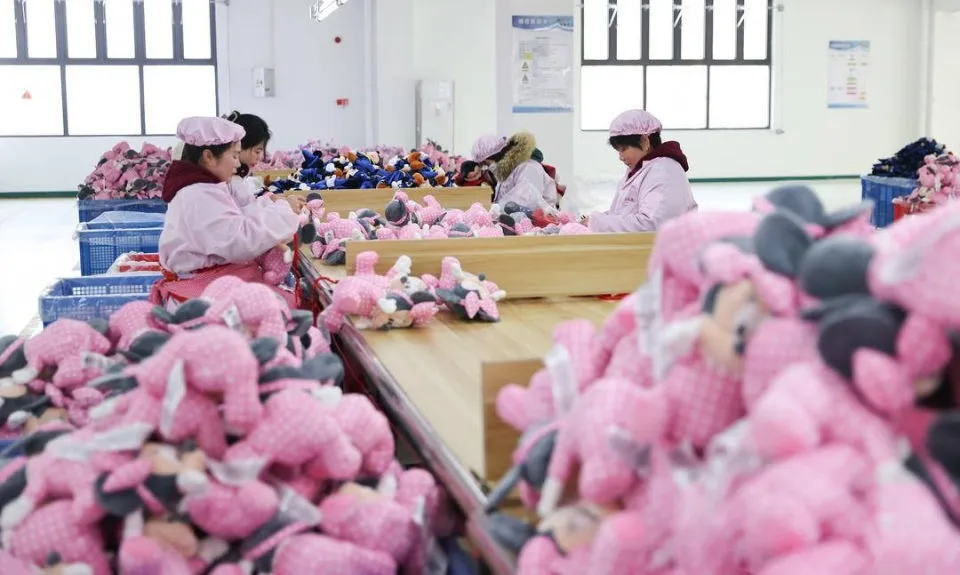
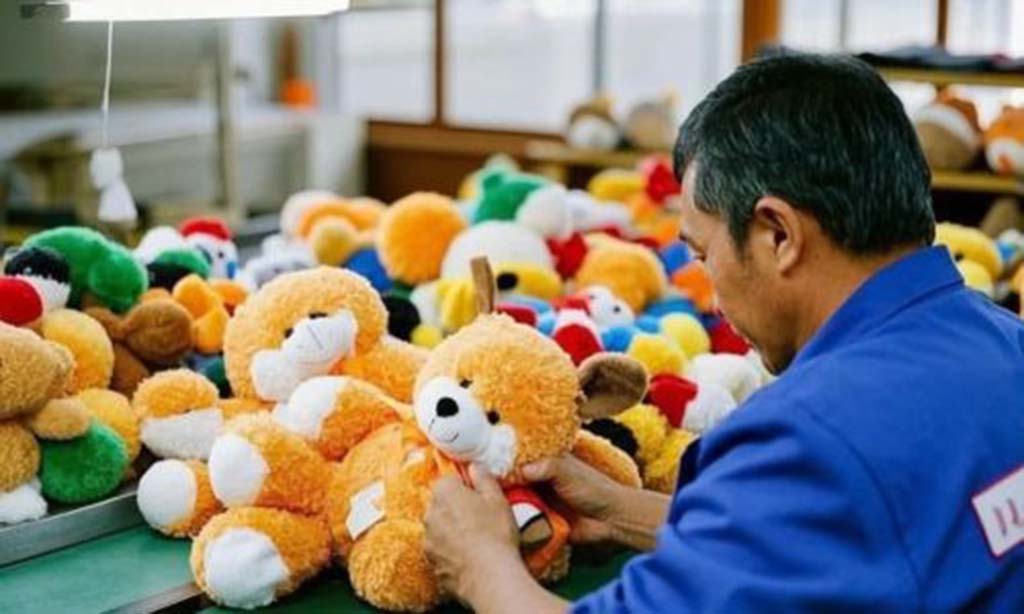
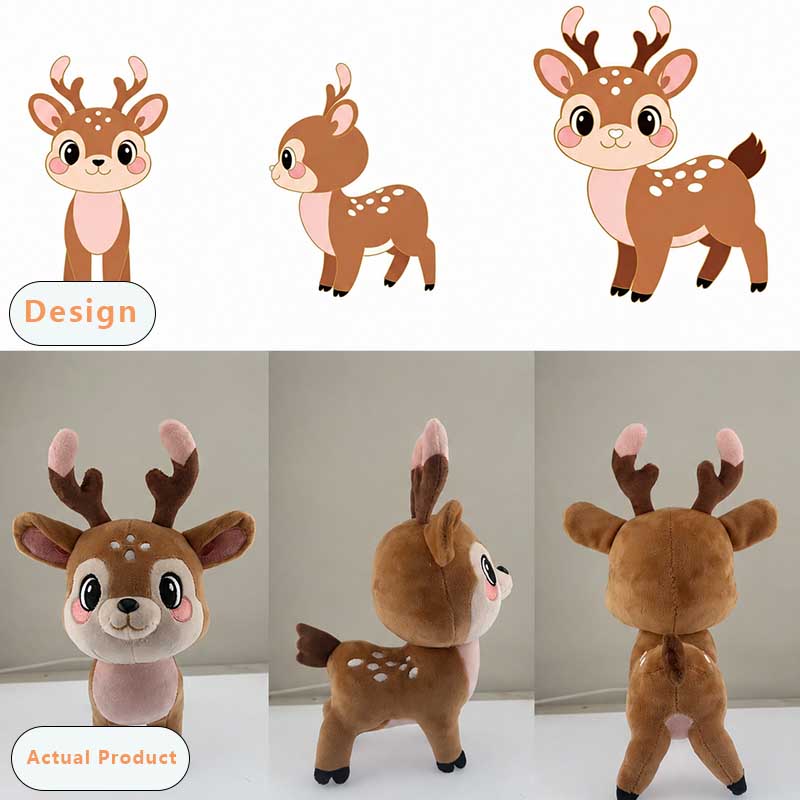
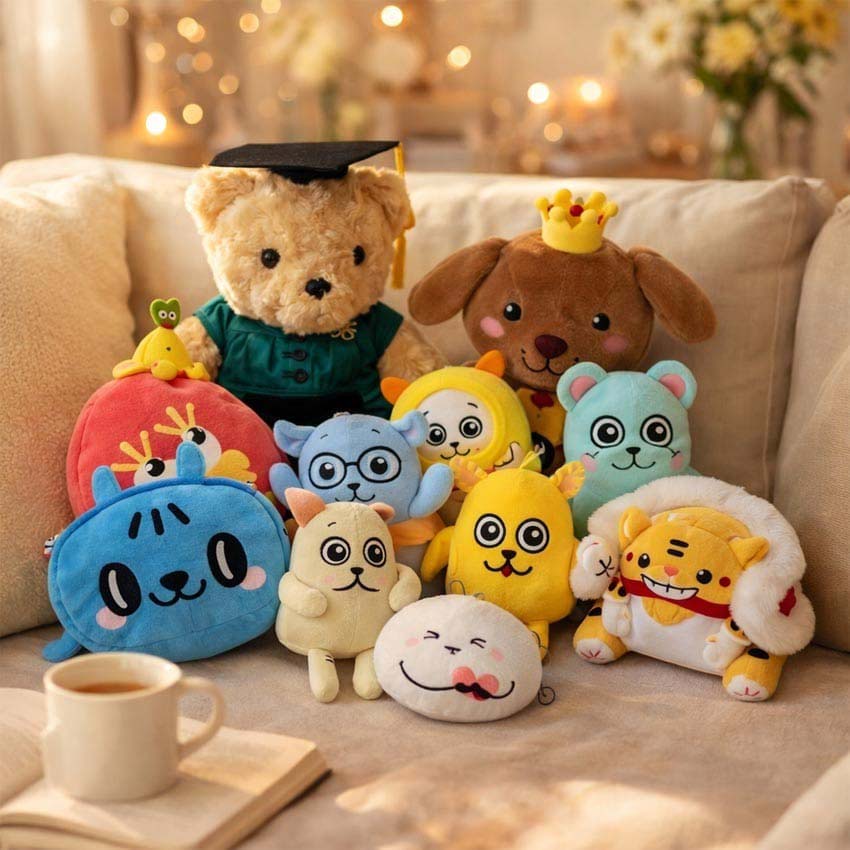
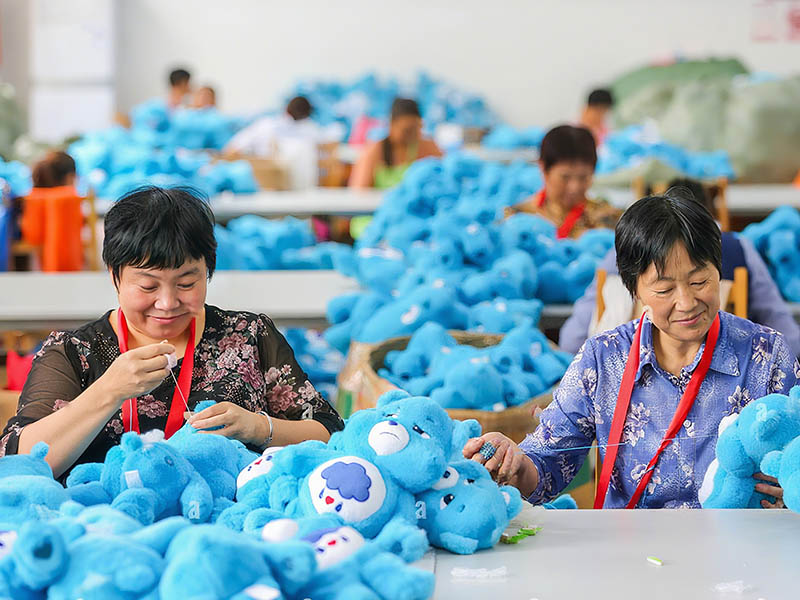
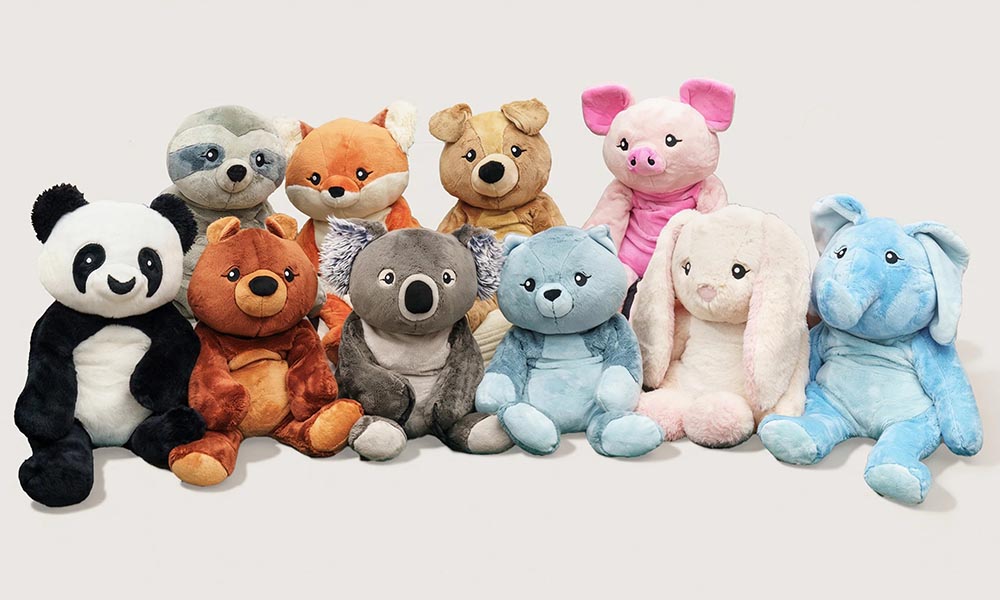
PQC in plush toy manufacturing usually means Process Quality Control. It refers to the quality checks, production controls, and corrective actions used while plush toys are being made, not only after they are finished. For buyers, PQC is one of the most important differences between a factory that simply inspects finished goods and a factory that actively prevents quality problems during production.
In plush manufacturing, many quality issues begin long before final inspection. Fabric may be cut in the wrong direction, embroidery may drift from the approved position, stuffing density may change during the day, seams may become weak as workers speed up, or color batches may be mixed by mistake. If these problems are only found at the end, the cost of fixing them is much higher.
A strong PQC system helps control these risks while production is still moving. It connects the approved sample, tech pack, materials, workers, machines, QC checkpoints, and buyer requirements into a practical factory process. This guide explains what PQC means, how it works in plush toy production, and what buyers should ask before placing bulk orders.
What Does PQC Mean in Plush Toy Manufacturing?
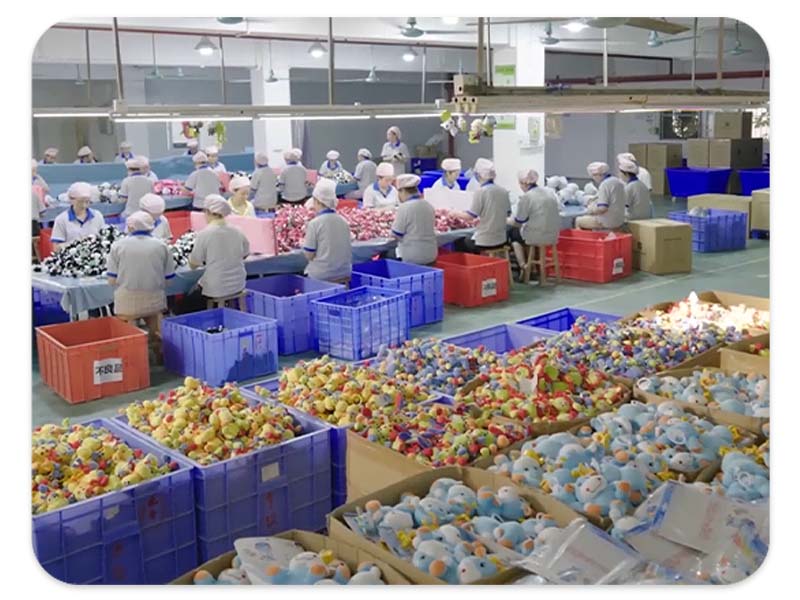
PQC means Process Quality Control, which is the system used to monitor and control product quality during the manufacturing process. In plush toy production, PQC checks whether each production stage follows the approved sample, technical specification, safety requirements, and workmanship standards before the product reaches final inspection.
The key idea is prevention. Instead of waiting until all plush toys are finished and packed, PQC checks the process while problems can still be corrected quickly. This is especially important in bulk plush orders because one small process mistake can repeat across hundreds or thousands of units if it is not caught early.
| Quality Term | Meaning | When It Happens | Main Purpose |
|---|---|---|---|
| IQC | Incoming Quality Control | When materials arrive | Check fabric, filling, accessories, labels, and components |
| PQC | Process Quality Control | During production | Control cutting, sewing, stuffing, embroidery, assembly, and repair |
| IPQC | In-Process Quality Control | During production line checks | Inspect semi-finished goods and detect process deviations |
| FQC | Final Quality Control | After products are finished | Check finished goods before packing or shipment |
| OQC | Outgoing Quality Control | Before goods leave factory | Confirm shipment condition, packing, and documents |
In many factories, PQC and IPQC are closely connected. Some suppliers use PQC as a broad term for production process control, while IPQC refers more specifically to inspections performed during production. Buyers do not need to worry too much about the exact terminology. What matters is whether the factory has real checkpoints, records, trained inspectors, and a system for correcting problems before they spread.
At Kinwin, PQC is treated as part of daily production management. It is not only a QC department task. Production workers, line supervisors, material handlers, sampling teams, and QC staff all need to work from the same approved standards.
Why Is PQC Important for Bulk Plush Toy Orders?
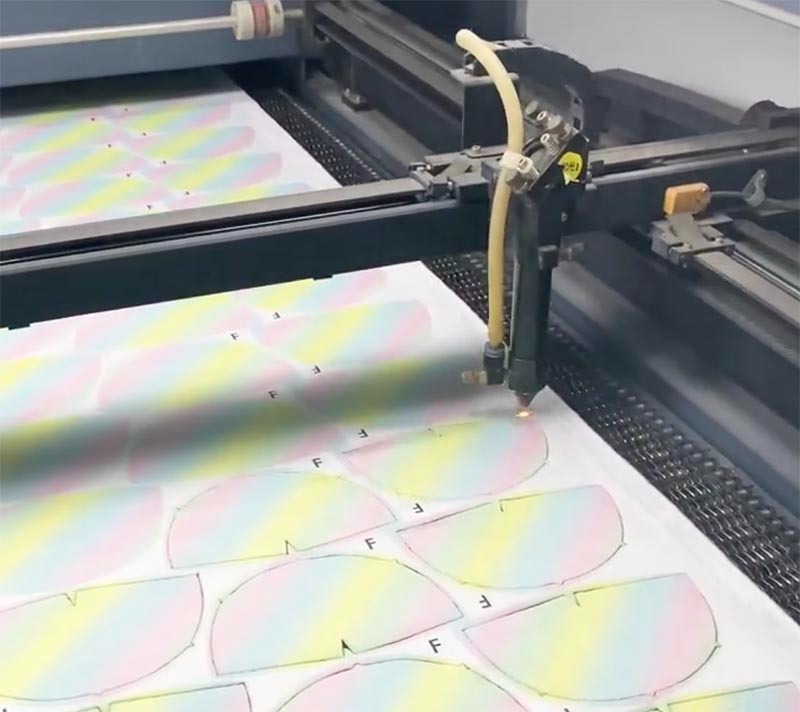
PQC is important for bulk plush toy orders because plush toys are highly process-dependent products. Even when the approved sample is perfect, bulk production can still drift if the process is not controlled. Fabric direction, seam allowance, stuffing weight, embroidery alignment, accessories, labels, and final shaping all need repeated control.
For buyers, the risk is simple: if a problem is found early, it may affect a small number of units. If the same problem is found after full production, the buyer may face rework, delays, extra cost, shipment rejection, or inconsistent products in the market.
| Without PQC | With PQC | Buyer Impact |
|---|---|---|
| Problems found after production ends | Problems found during production | Lower rework cost and fewer delays |
| Quality depends heavily on final inspection | Quality is controlled stage by stage | More stable finished goods |
| Production drift may go unnoticed | Deviations are corrected early | Better sample-to-bulk consistency |
| QC reports come too late to act | Production updates identify risk earlier | Buyer has more control before shipment |
| Workers may interpret standards differently | Approved sample and tech pack guide each stage | Clearer production expectations |
Bulk plush orders often involve repetitive handwork. Unlike fully automated products, plush toys depend on sewing skill, stuffing judgment, shaping, trimming, embroidery setup, and manual finishing. That means stable quality requires more than good materials. It requires process discipline.
For example, if stuffing density slowly becomes lower during the day, the product may still look acceptable on the line, but the final batch may feel inconsistent. If a seam allowance becomes too narrow, the toy may pass a quick visual check but fail durability testing later. PQC helps catch these issues while they are still manageable.
Which Production Stages Should PQC Cover in Plush Manufacturing?
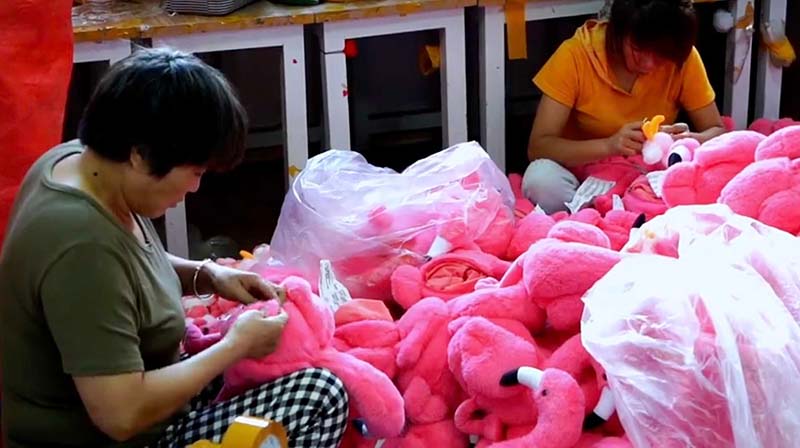
PQC should cover every major production stage that can affect the final plush toy. In a well-managed factory, process quality control begins before sewing and continues until finished goods are ready for final inspection and packing.
The exact checkpoints depend on the product. A simple promotional plush may need fewer technical checks than a licensed character plush, baby plush, weighted plush, or electronic plush toy. However, most custom plush orders share a common production flow.
| Production Stage | PQC Focus | Common Risk Controlled |
|---|---|---|
| Material preparation | Fabric batch, color, pile direction, defects | Wrong shade, shedding, mixed materials |
| Cutting | Pattern accuracy, direction, quantity | Size deviation, distorted shape, fabric waste |
| Embroidery or printing | Position, thread color, logo clarity | Misaligned face, poor brand appearance |
| Sewing | Seam strength, allowance, shape control | Open seams, uneven body shape |
| Stuffing | Filling weight, firmness, symmetry | Flat body, lumpy feel, inconsistent hand feel |
| Assembly | Accessories, labels, clothing, parts | Missing or misplaced components |
| Needle detection | Metal contamination check | Hidden safety hazard |
| Pre-packing check | Appearance, cleaning, shaping, labels | Visible defects and packing mistakes |
A strong PQC system is not just a checklist on paper. It should be built into the production rhythm. The first batch of cut panels should be checked before full cutting continues. The first finished units from the sewing line should be compared against the approved sample. Stuffing should be checked repeatedly because filling behavior can change depending on worker speed and material condition.
For buyers, this means asking the factory not only whether they inspect goods, but where the inspections happen. A supplier that can describe stage-by-stage controls usually has a more mature manufacturing system.
How Does PQC Control Cutting, Sewing, and Stuffing Quality?
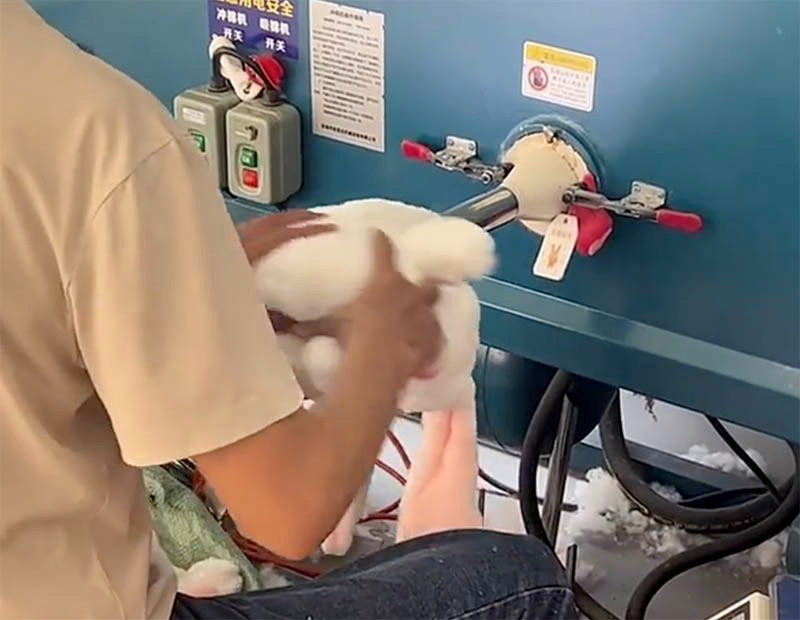
Cutting, sewing, and stuffing are three of the most important stages in plush toy quality. If these stages are not controlled, the final product can look different from the approved sample even when the materials are correct.
Cutting controls the foundation of the product shape. Sewing controls structure and durability. Stuffing controls softness, fullness, recovery, and the emotional feel of the plush toy. PQC needs to check each of these areas with practical standards, not only visual judgment.
| Stage | PQC Check | How It Affects Final Quality |
|---|---|---|
| Cutting | Pattern size, direction, fabric pile, matching | Controls shape, symmetry, and size consistency |
| Sewing | Seam allowance, stitch density, seam strength | Controls durability and appearance |
| Stuffing | Filling weight, distribution, firmness | Controls touch, shape, and perceived value |
| Shaping | Body proportion, facial position, limb balance | Controls character accuracy |
| Repair | Rework method and approval | Prevents inconsistent finishing |
In cutting, PQC should check whether fabric pieces follow the correct pile direction. Plush fabric has a surface direction, and cutting against the intended direction can create visible shade differences or inconsistent texture. This is especially important for character plush toys where face, body, and limbs need a consistent appearance.
In sewing, PQC should focus on seam strength and shape control. A plush toy may look fine on a table but fail when pulled, squeezed, or handled by children. Sewing inspection should check not only whether the seam is closed, but whether the seam can support real use.
In stuffing, the factory should control both weight and hand feel. Too little stuffing makes the product feel cheap or flat. Too much stuffing can distort the shape, stress the seams, or make the toy less cuddly. For repeat orders, stuffing standards are especially important because customers expect the same feel from batch to batch.
How Does PQC Prevent Sample-to-Bulk Production Differences?
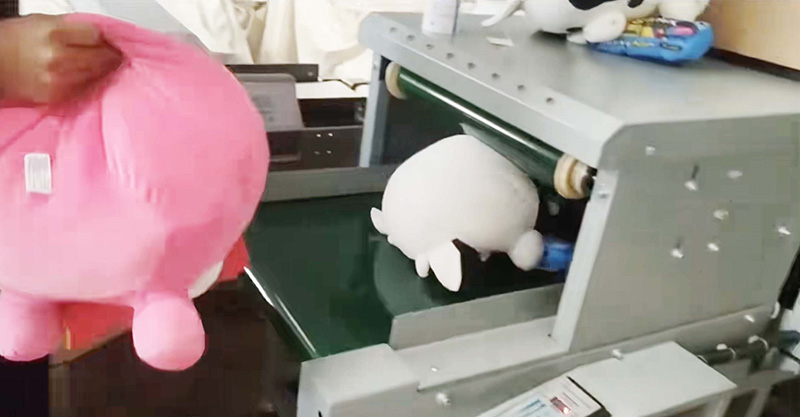
One of the biggest concerns for buyers is whether bulk production will match the approved sample. PQC helps prevent sample-to-bulk differences by turning the approved sample into a production standard and checking the first production units before the full batch continues.
Without process control, workers may interpret the sample differently, materials may behave differently in bulk, or small adjustments may be made on the line without buyer approval. These changes can create products that are technically similar but visibly or physically different from what the buyer approved.
| Control Tool | How It Helps | Buyer Benefit |
|---|---|---|
| Approved sample | Physical reference for shape, fabric, stuffing, expression | Clear comparison standard |
| Tech pack | Records measurements, materials, colors, details | Reduces memory-based production |
| First-off inspection | Checks first completed units against approved sample | Catches setup errors early |
| In-line QC | Checks units during production | Prevents quality drift |
| Deviation report | Records problems and correction actions | Improves traceability and buyer confidence |
First-off inspection is especially valuable. This is the checkpoint where the first completed bulk production units are compared with the approved sample before the factory continues at full speed. If the embroidery is slightly off, the stuffing feels different, or the seam changes the shape, the factory can adjust immediately.
For custom plush toys, even small differences can matter. A character face that is 5 mm too low may change the expression. A softer stuffing level may change the perceived quality. A fabric with a slightly different pile direction may look like a color issue. PQC helps find these differences while correction is still possible.
What PQC Records Should Buyers Ask a Plush Toy Factory For?
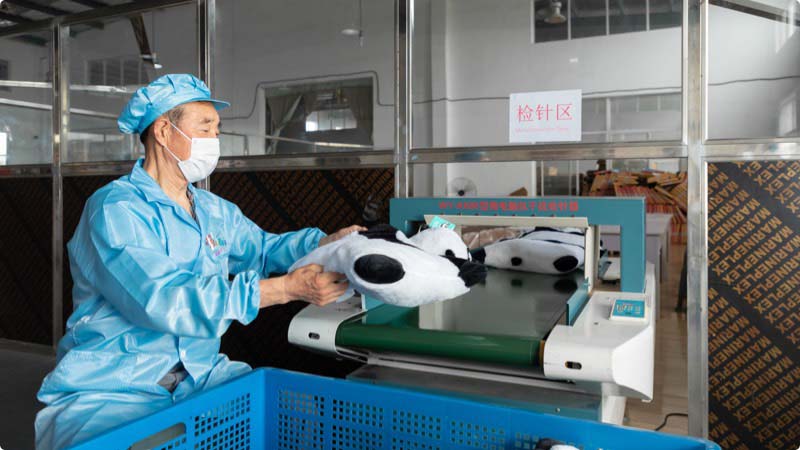
Buyers should ask for PQC records that show the factory is actually controlling production, not only saying that quality is “good.” Useful records include material inspection results, first-off inspection reports, in-line inspection notes, defect summaries, corrective actions, needle detection logs, and final QC reports.
Documentation matters because many buyers cannot be present at the factory. Records give visibility into what was checked, when it was checked, who checked it, what problems were found, and how the factory handled them.
| Record Type | What It Shows | When Buyer Should Request It |
|---|---|---|
| Material inspection record | Fabric, filling, accessories, labels checked before production | Before cutting or sewing begins |
| First-off inspection report | First production units checked against approved sample | At production start |
| In-line inspection record | Quality status during production | During bulk manufacturing |
| Defect and correction log | Problems found and actions taken | For larger or higher-risk orders |
| Needle detection log | Finished goods checked for metal contamination | Before packing or shipment |
| Final QC report | Finished goods inspection result | Before balance payment or shipment |
A good report does not need to be overly complicated, but it should be specific. It should identify the order, product, date, inspector, checked quantity, defect type, result, and corrective action when needed. Photos are also useful, especially for visual issues such as embroidery position, shape deviation, fabric shade, or packaging errors.
For first orders, buyers may also combine factory PQC records with third-party inspection. This gives an additional layer of confidence. However, third-party inspection should not replace factory PQC. It is much better when the factory controls quality throughout production and the third-party inspector verifies the final result.
How Is PQC Different from Final Inspection?
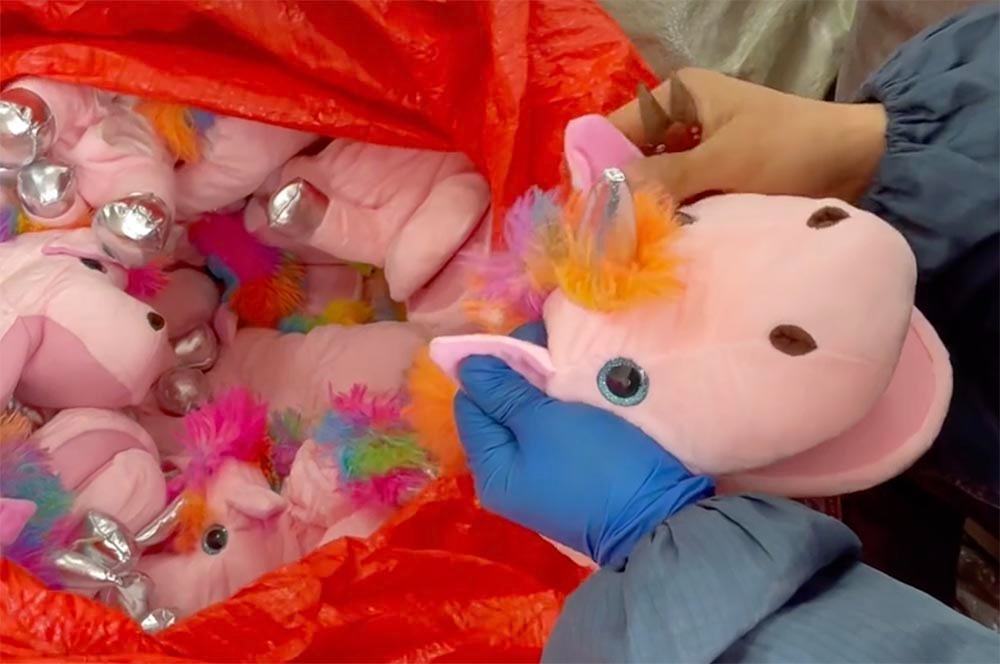
PQC and final inspection are related, but they are not the same. PQC happens during production and focuses on preventing or correcting problems while goods are still being made. Final inspection happens after production is complete and focuses on deciding whether finished goods are acceptable for shipment.
Both are important, but they serve different purposes. Final inspection can identify finished product defects, but it may be too late to correct root causes efficiently. PQC helps control the root causes before they become full-batch problems.
| Comparison Point | PQC | Final Inspection |
|---|---|---|
| Timing | During production | After production completion |
| Main purpose | Prevent and correct process problems | Accept or reject finished goods |
| Focus | Cutting, sewing, stuffing, assembly, process drift | Appearance, function, packing, quantity |
| Correction cost | Usually lower if caught early | Often higher because goods are finished |
| Buyer value | Improves stability and reduces surprise | Confirms shipment readiness |
A factory that only depends on final inspection is taking a reactive approach. It may still find defects, but only after time, labor, and materials have already been used. A factory with strong PQC takes a preventive approach. It monitors production as it happens and adjusts the process when needed.
For buyers, the best situation is not choosing between PQC and final inspection. The best situation is having both. PQC protects the process, and final inspection confirms the finished result.
How to Evaluate Whether a Plush Toy Manufacturer Has Strong PQC?
To evaluate whether a plush toy manufacturer has strong PQC, buyers should ask practical questions about production checkpoints, inspector roles, approved sample control, defect handling, reporting, and communication. A reliable supplier should be able to explain the process clearly instead of giving only general claims.
Buyers should listen for specific answers. “We check quality carefully” is not enough. A stronger answer would explain when materials are checked, how first-off inspection works, how line inspectors monitor sewing and stuffing, what happens when defects are found, and what records can be shared before shipment.
| Buyer Question | Strong Factory Answer | Weak Factory Answer |
|---|---|---|
| When do you start quality control? | From incoming materials and first production units | After products are finished |
| How do you prevent sample-to-bulk differences? | Approved sample, tech pack, first-off inspection, in-line QC | Workers follow the sample by experience |
| What happens if defects are found? | Goods are isolated, root cause checked, process corrected | We repair them later |
| Can you provide QC records? | Yes, material, in-line, needle detection, and final reports | No formal records available |
| Who is responsible for PQC? | QC team plus line supervisors and production managers | Only final inspection staff |
Buyers can also check factory behavior during sampling. A factory with strong PQC usually asks detailed questions, records specifications carefully, flags production risks early, and explains how the sample will be transferred into bulk production. A weak factory may rush quotation and sampling without confirming technical details.
Kinwin supports OEM and bulk plush toy buyers with structured process control, production-stage inspection, needle detection, final QC, and clear communication. For buyers who care about stable quality, PQC is one of the strongest signs that a factory can manage production professionally.
Conclusion
PQC in plush toy manufacturing means controlling quality during production, not only checking finished goods at the end. It covers material preparation, cutting, embroidery, sewing, stuffing, assembly, needle detection, and pre-packing checks. Its purpose is to prevent quality problems from spreading across the full order.
For buyers, PQC is important because it protects sample-to-bulk consistency, reduces rework risk, improves delivery reliability, and gives better visibility into the manufacturing process. A factory with strong PQC can identify issues early, correct root causes, and provide records that help buyers make confident shipment decisions.
If you are sourcing custom plush toys, stuffed animals, or bulk OEM plush products, ask your supplier how they manage PQC before production begins. Kinwin helps buyers control plush toy quality through clear specifications, production checkpoints, documentation, and practical factory-side quality management.
FAQ
What does PQC stand for in manufacturing?
PQC usually stands for Process Quality Control. In plush toy manufacturing, it means checking and controlling quality during production stages such as cutting, sewing, stuffing, assembly, and needle detection.
Is PQC the same as IPQC?
They are closely related. PQC is often used as a broader term for process quality control, while IPQC usually means In-Process Quality Control, or inspections performed during production. In practice, buyers should focus on the actual checkpoints and records rather than terminology alone.
Why is PQC important for plush toys?
Plush toys rely heavily on manual and semi-manual processes. Small production changes can affect shape, softness, seam strength, embroidery position, and safety. PQC helps detect these issues before they spread across the full order.
What is the difference between PQC and final inspection?
PQC happens during production to prevent and correct problems. Final inspection happens after products are finished to confirm whether goods are ready for shipment. Both are important, but PQC reduces the chance of discovering major issues too late.
What PQC records should buyers request?
Buyers can request material inspection records, first-off inspection reports, in-line inspection notes, defect correction logs, needle detection records, and final QC reports before shipment.
Can PQC reduce production delays?
Yes. When issues are found early, they are usually easier and faster to correct. Without PQC, defects may only be discovered after the order is finished, which can cause rework, repacking, shipment delays, or buyer disputes.
How does Kinwin manage PQC for custom plush orders?
Kinwin manages PQC through approved samples, technical specifications, material checks, production-stage inspections, sewing and stuffing control, needle detection, final QC, and clear communication with buyers before shipment.