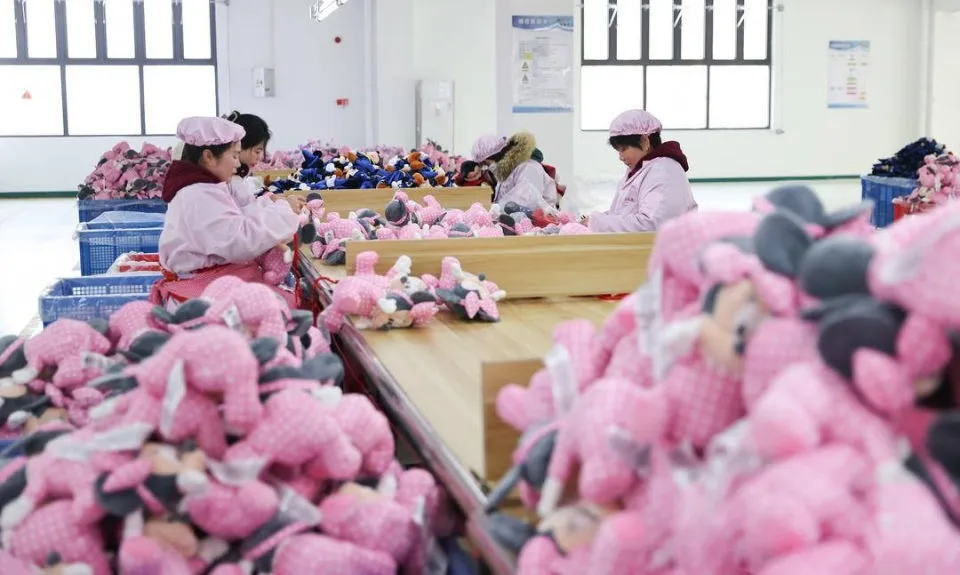
Shipping cost is one of the most significant — and most frequently underoptimized — components of plush toy landed cost. For buyers who have focused their cost management efforts on unit price negotiation, compliance testing investment, and development efficiency, the discovery that shipping represents 15 to 35 percent of total landed cost on a typical ocean freight order — and substantially more on air freight — often arrives as a surprise.
It should not be a surprise. Plush toys have physical characteristics that make them structurally expensive to ship relative to their product value: they are large in volume, light in weight, soft in structure, and often packaged in ways that create more empty air space than product. These characteristics interact with freight pricing structures in ways that systematically disadvantage plush relative to denser product categories — and that create specific optimization opportunities for buyers who understand how freight pricing actually works.
This guide explains where plush toy shipping cost comes from, what the most significant cost drivers are, and what specific optimization actions reduce shipping cost without reducing product quality or creating commercial risk. The opportunities are substantial — well-structured shipping optimization consistently produces 20 to 40 percent reduction in per-unit freight cost without any change to the product itself.
Why Shipping Cost Is a More Significant Variable Than Most Plush Buyers Anticipate?
Shipping cost is more significant than most plush buyers anticipate because it is typically not included in the factory quotation — which shows unit production cost — and because it is subject to optimization variables that are less familiar to buyers who have focused their procurement attention on production cost management.
The production cost is visible and comparable across supplier quotations. The shipping cost is invisible until the shipping quote arrives — often after the production supplier has been selected, the order has been placed, and the optimization opportunity to change packaging and carton specifications has passed.
Here is a framework for understanding shipping cost as a proportion of total landed cost across different product types and shipping modes:
| Product Type | Production Cost | Ocean Freight (per unit, 1,000 units) | Air Freight (per unit, 1,000 units) | Shipping as % of Landed Cost (Ocean) | Shipping as % of Landed Cost (Air) |
|---|---|---|---|---|---|
| Small plush (15cm) | $3.50 | $0.80–$1.20 | $3.50–$5.00 | 18–26% | 50–59% |
| Medium plush (30cm) | $5.80 | $1.80–$2.80 | $7.00–$11.00 | 24–33% | 55–65% |
| Large plush (50cm) | $8.50 | $4.00–$6.50 | $18–$28 | 32–43% | 68–77% |
| Weighted plush (1.5kg) | $12.00 | $2.50–$4.00 | $9.00–$14.00 | 17–25% | 43–54% |
| Premium character (35cm) | $9.00 | $2.20–$3.50 | $9.00–$14.00 | 20–28% | 50–61% |
These ranges show that shipping cost is not a small variable — it is a commercially significant component that, when optimized, produces cost savings that are directly comparable to unit price negotiation successes.
The Dimensional Weight Mechanism — Why Plush Is Structurally Expensive to Ship
The most important concept for understanding plush toy shipping economics is dimensional weight — the calculation that freight carriers use to determine the billable weight of shipments where the physical volume of the goods exceeds what their actual weight would suggest.
For air freight, the dimensional weight formula is:
(Length × Width × Height in cm) ÷ 5,000 = Dimensional Weight in kg
Freight is charged at whichever is higher — actual weight or dimensional weight. For most plush toys, dimensional weight consistently exceeds actual weight by a factor of 2 to 5 — meaning that buyers pay for 2 to 5 times more “weight” than their product actually weighs, purely because plush occupies more cubic space than denser goods.
| Plush Product | Actual Weight | Carton Dimensions | Dimensional Weight | Ratio | Freight Charged At |
|---|---|---|---|---|---|
| 15cm bear, 12/carton | 6kg | 45×35×30cm | 9.45kg | 1.58× | Dimensional |
| 30cm character, 6/carton | 8kg | 55×45×40cm | 19.8kg | 2.48× | Dimensional |
| 50cm large plush, 4/carton | 7kg | 70×55×50cm | 38.5kg | 5.5× | Dimensional |
| Weighted plush 1.5kg, 8/carton | 14kg | 60×50×40cm | 24kg | 1.71× | Dimensional |
For ocean freight, the pricing mechanism is different — LCL (Less than Container Load) charges by cubic meter, while FCL (Full Container Load) charges a flat rate per container. But the principle remains: more cubic volume means higher cost, and reducing the volume of the packed goods reduces the freight cost.
How Does Packaging Design Directly Reduce Freight Cost Without Changing the Product?

Packaging design is the single most powerful lever for reducing plush toy shipping cost — because the packaging dimensions directly determine the dimensional weight for air freight and the cubic volume for LCL ocean freight, and because packaging dimensions are entirely within the buyer’s control to specify before any freight cost is incurred.
The optimization principle is straightforward: the packaging should be as small as possible while still providing adequate product protection and meeting retail presentation requirements. Every centimeter of unnecessary packaging dimension adds cubic volume that is charged as freight.
Here is a practical packaging dimension optimization analysis for a 30cm character plush:
| Packaging Option | Internal Dimensions | Product Clearance | Dimensional Weight per Carton (6 units) | Dimensional Weight Saving vs Default |
|---|---|---|---|---|
| Default polybag + loose carton | 60×50×45cm | 5–8cm per side | 27kg | Baseline |
| Fitted polybag + form-fit carton | 55×44×38cm | 2–3cm per side | 18.4kg | 31% reduction |
| Vacuum-compressed polybag + reduced carton | 50×40×32cm | 2–3cm per side | 12.8kg | 53% reduction (if recovery confirmed) |
| Retail window box optimized | 48×38×35cm | Tight fit with protection | 12.7kg | 53% reduction |
The 31 to 53 percent reduction in dimensional weight from packaging optimization — without any change to the product — translates directly to 31 to 53 percent reduction in air freight cost per unit. On a 1,000-unit air shipment, this saving can represent $5,000 to $15,000 in freight cost reduction.
The Form-Fit Packaging Approach
Form-fit packaging — packaging designed to the specific dimensions of the product rather than from standard carton size options — is the most effective packaging dimension optimization approach. It requires knowledge of the product’s actual stuffed dimensions (height, width, depth from the counter sample) and the design of packaging to those dimensions with minimal clearance.
The clearance required depends on the product’s compression recovery characteristics and the structural requirements of the packaging. A product confirmed through transit simulation testing to recover from compression in its packaging can be packed with minimal clearance — effectively touching the packaging interior. A product whose compression recovery is uncertain requires additional clearance to prevent sustained compression damage.
Vacuum Compression — The Highest-Reduction Option
Vacuum compression packaging — where air is evacuated from the polybag containing the product, compressing the plush to a fraction of its natural volume — offers the most dramatic dimensional weight reduction, sometimes achieving 60 to 75 percent volume reduction compared to natural-state packaging.
The commercial viability of vacuum compression for plush depends on one critical factor: pile and shape recovery after decompression. Products must be tested in a transit simulation — vacuum compressed, stored for the expected transit duration, decompressed, and assessed for recovery — before vacuum compression is specified for commercial shipments. Products that do not fully recover from vacuum compression arrive at the customer in a deformed state, creating the quality problem that the freight saving was intended to fund.
Products that do recover completely from vacuum compression can achieve the most significant per-unit shipping cost reduction available through packaging changes alone.
Packaging MOQ and Cost Trade-offs
Custom packaging designed for dimensional efficiency — form-fit boxes, printed polybags with correct dimensions — carries minimum order quantity requirements from the packaging supplier. For buyers at lower production volumes, the packaging MOQ may exceed the production quantity, requiring the purchase of more packaging than immediately needed.
The economic analysis of custom packaging should weigh:
- The freight saving per unit from the optimized packaging dimensions
- The cost premium of custom packaging versus standard off-the-shelf packaging
- The excess packaging cost from MOQ above production quantity
- The number of orders over which the optimized packaging will be reused
For most buyers with ongoing production relationships and regular reorder cycles, the freight saving from optimized packaging consistently exceeds the packaging cost premium — making the investment in form-fit packaging economically self-funding within the first one to two shipping cycles.
How Does Carton Configuration and Density Optimization Reduce Per-Unit Shipping Cost?

Carton configuration — how individual units are arranged within the export shipping carton — determines the external dimensions of each carton and therefore the cubic volume or dimensional weight charged for that carton. Optimizing carton configuration to minimize external dimensions while maintaining adequate product protection is the second major lever for per-unit shipping cost reduction.
The carton configuration optimization targets three variables simultaneously: the number of units per carton (affecting per-carton freight cost allocation), the arrangement of units within the carton (affecting the carton’s external dimensions), and the carton wall thickness (affecting the external dimensions without changing internal space).
Here is a carton configuration optimization analysis for a 25cm character plush:
| Configuration | Units/Carton | Carton External Dimensions | Carton Volume | Volume/Unit | Indexed Cost |
|---|---|---|---|---|---|
| 2×2×2 grid | 8 | 56×52×50cm | 145,600 cm³ | 18,200 cm³ | Baseline |
| 2×2×3 grid | 12 | 56×52×75cm | 218,400 cm³ | 18,200 cm³ | Same per unit |
| Staggered 3×3 | 9 | 56×52×57cm | 165,984 cm³ | 18,443 cm³ | 1.3% higher |
| Nested alternating | 8 | 52×48×46cm | 115,034 cm³ | 14,379 cm³ | 21% lower |
| Compressed fitted | 12 | 54×50×56cm | 151,200 cm³ | 12,600 cm³ | 31% lower |
The staggering, nesting, and compression fitting approaches demonstrate that the same units can be configured in ways that significantly reduce the external carton volume — reducing the cubic volume charged for LCL ocean freight or the dimensional weight charged for air freight.
Carton Wall Thickness and Its Volume Impact
Corrugated carton wall thickness — typically 4 to 8mm per wall for standard single-wall, and 8 to 12mm per wall for double-wall — adds to the external dimensions of the carton beyond the product’s dimensions. For an 8-unit carton with standard double-wall construction, the carton walls add approximately 2 to 2.5cm to each dimension — adding 15 to 20 percent to the external dimensions compared to the internal dimensions.
Optimizing carton wall thickness to the minimum required for the specific product weight and stacking load — using single-wall construction for light products that don’t require heavy stacking protection — reduces external dimensions without affecting the product’s protection or the internal carton space.
Master Carton Optimization for Container Loading
For ocean FCL (Full Container Load) shipments, an additional optimization is the master carton dimensions relative to the standard container floor dimensions — specifically whether the carton dimensions allow efficient floor-to-ceiling stacking without wasted space at the top of each stack.
A standard 20-foot dry container has internal dimensions of approximately 590×235×239cm. Carton dimensions that divide evenly into the container dimensions — in length, width, and height — achieve higher container utilization than dimensions that create voids at the edges or top. For buyers with FCL volume, optimizing carton dimensions for container fill efficiency reduces the number of containers required and therefore the total freight cost.
How Does Shipping Mode Selection Affect Total Freight Economics?
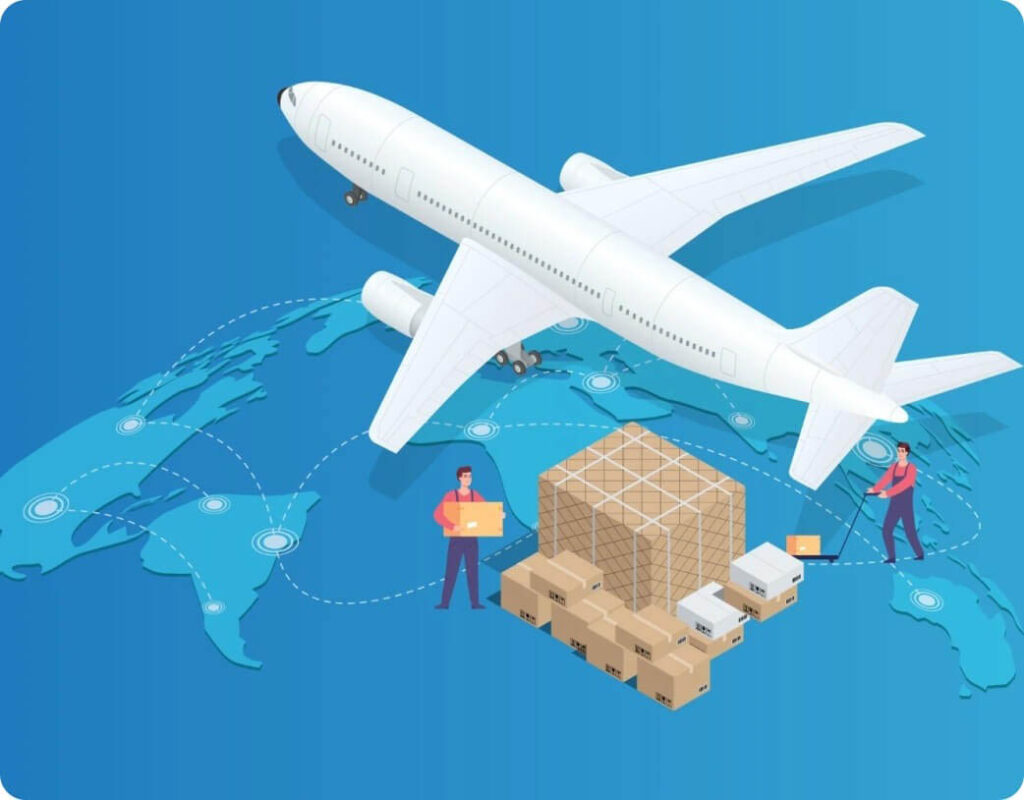
Shipping mode selection — the choice between ocean freight (FCL or LCL) and air freight — is the most commercially significant single shipping decision for most plush toy buyers, because the cost difference between modes is typically 200 to 600 percent and the choice should be made based on total commercial economics rather than on freight cost alone.
Here is a comprehensive shipping mode comparison for plush toys:
| Factor | Ocean FCL | Ocean LCL | Air Freight | Express Courier |
|---|---|---|---|---|
| Transit time (China to US) | 18–28 days | 25–40 days | 3–6 days | 3–5 days |
| Cost per CBM | $100–$250/CBM | $150–$350/CBM | $3,500–$7,000/CBM equivalent | $5,000–$10,000/CBM equivalent |
| Minimum volume for best economics | 15+ CBM (full 20ft container) | 0.5–15 CBM | Any volume | Under 0.5 CBM |
| Dimensional weight impact | None — priced by container | High — priced by CBM | Very High — DIM weight | Very High — DIM weight |
| Customs handling | Single clearance | Single clearance | Single clearance | Carrier-managed |
| Best application | Large production orders | Small-medium orders | Urgent or small high-value | Samples, urgent small |
The Break-Even Analysis Between Ocean LCL and Air Freight
The decision between ocean LCL and air freight for small-to-medium orders is a break-even analysis between the freight cost difference and the commercial value of the transit time difference:
Break-even formula:
(Air freight cost − Ocean LCL cost) ÷ (Ocean transit days − Air transit days) = Daily inventory carrying cost at which modes break even
For a 1,000-unit order of medium plush toys:
- Air freight: $3,500 total
- Ocean LCL: $800 total
- Freight cost difference: $2,700
- Transit time difference: 22 days (28-day ocean vs 6-day air)
- Break-even daily inventory value: $2,700 ÷ 22 = $122.73/day
If the daily commercial value of having the inventory 22 days earlier — in revenue, in seasonal window capture, in inventory carrying cost avoidance — exceeds $122.73 per day, air freight is commercially justified. If it does not, ocean freight produces better total economics.
This break-even analysis transforms the shipping mode decision from a cost comparison into a commercial decision based on the actual value of inventory arrival timing — which is the correct analytical framework.
When Ocean FCL Becomes the Right Choice
The transition from LCL to FCL becomes economically advantageous when the order volume reaches approximately 60 to 70 percent of a standard 20-foot container capacity — because the flat-rate FCL cost begins to be lower than the per-CBM LCL cost at that volume threshold.
For a 20-foot container with approximately 25 to 28 CBM usable capacity, this threshold occurs at approximately 15 to 18 CBM of plush toys. For buyers who order at or above this volume, FCL typically offers:
- Lower per-CBM cost than LCL
- Faster transit (no consolidation/deconsolidation handling time)
- Lower damage risk (no cargo consolidation with other goods)
- Simpler customs clearance (single container entry)
For buyers at volumes between LCL-optimal and FCL-optimal, the decision depends on whether combining multiple SKUs or consolidating orders from different production runs can reach the FCL efficiency threshold — which leads to the order consolidation strategy discussed in the next section.
How Does Order Consolidation and Timing Strategy Reduce Shipping Cost?
Order consolidation — the practice of combining multiple production orders or multiple product SKUs into a single shipment — is one of the most commercially impactful shipping cost reduction strategies available, because it achieves volume thresholds that unlock lower per-unit freight rates and better mode options than individual orders would qualify for.
Here is a consolidation impact analysis across different order scenarios:
| Scenario | Individual Order 1 | Individual Order 2 | Individual Shipping Cost | Consolidated Shipping Cost | Saving |
|---|---|---|---|---|---|
| Two 500-unit orders shipped separately | 500 units, LCL | 500 units, LCL | $1,600 total ($800 each) | $1,000 (consolidated LCL) | $600 (37.5%) |
| Three SKU product range | 300 units A | 300 units B, 400 units C | $2,400 total | $1,400 (single LCL) | $1,000 (41.7%) |
| Range launch consolidated to FCL threshold | 600 units A, 400 units B | 500 units C, 500 units D | $4,800 LCL total | $2,500 FCL | $2,300 (47.9%) |
Seasonal Timing Strategy
The timing of production orders affects freight rates through the supply-demand dynamics of shipping capacity — specifically, the seasonal freight rate premium that occurs during peak shipping periods.
| Period | Freight Rate Environment | Strategy Implication |
|---|---|---|
| January–March | Lower rates — post-holiday capacity recovery | Favorable for large non-urgent orders |
| April–May | Moderate — pre-summer inventory buildup | Good rates for summer product launches |
| June–July | Rising — peak season approach | Book early, consider partial advance shipping |
| August–October | Peak — highest demand period for holiday shipping | Highest rates — book capacity in advance, premium for spot rates |
| November–December | Declining after holiday — capacity freeing | Moderate rates returning |
For buyers who plan production cycles at least three to four months in advance, scheduling shipments to avoid the peak August–October period — or booking forward contracts for peak period capacity at off-peak rates — can reduce freight costs by 20 to 40 percent compared to spot booking during peak season.
The Pre-Booking Advantage
Forward booking of freight capacity — reserving space with carriers at pre-agreed rates before the production run begins — provides two advantages: rate certainty that prevents peak season spot rate exposure, and space availability guarantee that prevents the production-complete-but-no-freight-space scenario that forces expensive spot bookings or production storage delays.
For regular buyers with predictable shipping volumes, establishing annual or semi-annual freight contracts with forwarders — committing to a minimum volume in exchange for preferential rates — produces consistent freight cost reduction that compounds across multiple shipping cycles.
How Do Incoterms and Freight Responsibility Allocation Affect Total Landed Cost?

Incoterms — the internationally standardized trade terms that define where the seller’s cost and risk responsibility ends and the buyer’s begins — affect total landed cost not by changing the physical cost of freight but by determining who controls the freight booking and who bears the risk of freight cost fluctuations.
The most commonly used Incoterms in plush toy trade and their landed cost implications:
| Incoterm | Where Seller’s Responsibility Ends | Who Books Freight | Cost Control | Risk Allocation |
|---|---|---|---|---|
| EXW (Ex Works) | At factory — buyer collects | Buyer | Maximum buyer control | Buyer bears all freight risk |
| FOB (Free on Board) | When loaded onto vessel at origin port | Buyer | High buyer control | Buyer bears ocean/air freight risk |
| CFR/CIF (Cost and Freight/Insurance) | At destination port | Seller | Seller controls freight booking | Buyer bears import clearance |
| DDP (Delivered Duty Paid) | At buyer’s specified location | Seller | Seller controls all logistics | Seller bears all risk to delivery |
FOB vs DDP — The Most Common Decision
The most commercially significant Incoterm decision for most plush toy buyers is the choice between FOB and DDP — specifically, whether to control the freight booking themselves (FOB) or to have the factory manage door-to-door delivery (DDP).
Arguments for FOB (buyer controls freight):
- Buyer selects the freight forwarder based on their preferred rates and service
- Buyer has visibility into freight cost components
- Buyer can optimize freight routing and mode
- Buyer’s customs broker manages import clearance according to buyer’s preferences
Arguments for DDP (seller manages delivery):
- Simplicity — one transaction covers production and delivery
- No freight management overhead for buyer
- Factory may have better rates through volume relationships with forwarders
The cost reality for most buyers is that FOB with a buyer-selected freight forwarder produces lower total landed cost than DDP — because the buyer’s freight forwarder negotiates rates on the buyer’s behalf rather than on the factory’s behalf, and because the factory’s DDP price typically includes a margin on the logistics component. The exception is buyers with very small shipping volumes who do not have the freight forwarder relationships to access competitive rates — for whom DDP may represent a more favorable total cost despite its simplicity premium.
The True Total Landed Cost Calculation
Regardless of Incoterm, the complete total landed cost calculation includes every cost incurred between factory completion and warehouse arrival:
| Cost Component | FOB | DDP | Notes |
|---|---|---|---|
| Ex-factory unit price | Same | Same | Production cost |
| Export packing | Sometimes separate | Usually included | Clarify in quotation |
| Inland transport to port | Buyer pays | Included in DDP | |
| Origin port charges | Buyer pays | Included in DDP | |
| Export customs | Buyer pays | Included in DDP | |
| Ocean/air freight | Buyer pays | Included in DDP | |
| Destination port charges | Buyer pays | Included in DDP | |
| Import customs duty | Buyer pays | Included in DDP | |
| Import customs brokerage | Buyer pays | Included in DDP | |
| Inland delivery to warehouse | Buyer pays | Included in DDP | |
| True total landed cost | Sum of all above | DDP price (verify inclusions) | Compare on true total |
How Do Documentation Accuracy and Customs Classification Affect Shipping Cost?

Documentation accuracy and customs classification affect shipping cost through two mechanisms: import duty rates that are determined by HS code classification, and customs examination delays that are triggered by documentation errors — creating detention and demurrage costs that can exceed the freight cost savings achieved through other optimization efforts.
HS Code Classification and Import Duty
Plush toys are typically classified under HS 9503 (other toys) — with specific sub-classifications that may carry different duty rates depending on the product’s specific characteristics and the destination country.
| HS Code | Description | US Duty Rate | EU Duty Rate | Notes |
|---|---|---|---|---|
| 9503.00.00 | Tricycles, scooters, other toys — general | Varies by specific product | 4.7% | Consult current tariff schedule |
| 9503.00.90 | Stuffed toys | See current schedule | 4.7% | Most standard plush |
| 9504–9508 | Other toy categories | Varies | Varies | Electronic toys may classify differently |
Note: Import duty rates change through trade agreements, Section 301 actions, GSP modifications, and budget legislation. Buyers should verify current applicable rates with their customs broker at the time of each shipment rather than relying on rates from previous experience.
The Section 301 Tariff Consideration for US-Bound Shipments
For US-bound shipments from China, Section 301 tariffs — implemented from 2018 onward — have added significant additional duties on many product categories in addition to the standard Most Favored Nation (MFN) tariff rates. The applicable Section 301 tariff rate for specific plush toy classifications should be confirmed with a US customs broker before order finalization, as these rates have been subject to ongoing review and modification.
For buyers who have not recently imported plush toys from China to the US, the total duty burden — MFN rate plus applicable Section 301 rate — may be significantly higher than expected from historical experience.
Documentation Accuracy and Examination Risk
Customs examination — the physical inspection of cargo by customs authorities — adds significant time and cost to the clearance process. While some examination is random and unavoidable, documentation errors increase examination probability by creating discrepancies that customs algorithms or officers identify as requiring investigation.
The most common documentation errors that trigger examination:
| Documentation Error | Examination Risk | Cost Consequence |
|---|---|---|
| Description inconsistency (invoice vs packing list) | High | 2–5 day delay plus examination cost |
| Value discrepancy (apparent undervaluation) | Very High | Examination plus potential duty reassessment |
| HS code inconsistency (invoice vs declaration) | High | Examination plus potential reclassification |
| Missing CPSIA certificate at entry | High (US market) | Hold until documentation provided |
| Incorrect country of origin | Very High | Examination plus potential penalty |
| ISF filing errors or late filing (US) | High | CBP penalty plus potential examination |
Preventing documentation examination through accurate, consistent documentation preparation is a legitimate shipping cost reduction strategy — because the cost of an examination event (examination fee, demurrage for container storage during examination, delay cost from missed delivery window) typically ranges from $500 to $3,000 per incident.
How Should Buyers Build Shipping Cost Optimization Into Their Sourcing Process?

Shipping cost optimization produces the most consistent results when it is built into the sourcing process as a systematic activity rather than addressed as an afterthought when the shipping quote arrives. The specific integration points are product development (where packaging dimensions are decided), purchase order placement (where quantity and timing decisions are made), and supplier selection (where total landed cost visibility should be established).
Integration at Product Development Stage
The product development stage is where packaging dimension decisions are made — and it is therefore the stage with the highest impact on dimensional weight, which is the most significant driver of freight cost for most plush buyers.
| Development Decision | Shipping Cost Optimization Action | Timing |
|---|---|---|
| Unit packaging specification | Design packaging to minimum dimensions consistent with protection and retail requirements | Before packaging production |
| Transit compression test | Confirm product recovers from compressed packaging over transit duration | Counter sample stage |
| Inner carton configuration | Optimize unit arrangement for minimum external carton dimensions | Before carton specification |
| Master carton dimensions | Optimize for container floor dimensions if FCL volume anticipated | Before carton production |
| Dimensional weight pre-calculation | Calculate dimensional weight before finalizing packaging dimensions | Before packaging finalization |
Integration at Order Placement Stage
| Order Decision | Shipping Cost Optimization Action | Impact |
|---|---|---|
| Order quantity | Assess whether increasing order to reach LCL-to-FCL threshold reduces per-unit shipping cost below carrying cost | Potential 30–50% per-unit freight saving |
| Order timing | Schedule shipping to avoid peak season or pre-book capacity at off-peak rates | 20–40% rate saving vs peak spot rates |
| Multi-SKU consolidation | Consolidate multiple SKUs in a single shipment rather than shipping separately | 20–40% saving vs separate shipments |
| Freight forwarder selection | Request quotes from multiple forwarders with your specific carton dimensions and routing | 10–25% rate variation between forwarders |
| Mode selection | Apply break-even analysis to ocean vs air decision | Saves air freight premium on non-urgent shipments |
The Freight Forwarder Relationship
A freight forwarder relationship is one of the most underinvested supplier relationships for most plush buyers — treated as a commodity service rather than as a partner whose expertise and market access can materially reduce shipping costs.
A well-selected freight forwarder provides:
| Forwarder Capability | Shipping Cost Benefit |
|---|---|
| Carrier rate negotiation | Access to contracted rates below spot market |
| Consolidation service (for LCL) | Access to regular consolidation departures at competitive rates |
| China inland logistics | Optimized origin pickup and port trucking |
| HS code guidance | Correct classification to avoid misclassification duty exposure |
| Documentation review | Pre-submission check reduces examination risk |
| Customs brokerage integration | Seamless import clearance without hand-off cost |
| Transit time optimization | Route selection balancing cost and transit time |
Developing one to two preferred freight forwarder relationships — sharing volume in exchange for preferential rates and service priority — consistently produces better shipping economics than using spot-market forwarders for every shipment.
At Kinwin, we provide buyers with support at the shipping stage by coordinating carton specifications that are optimized for freight economics alongside product protection, preparing accurate and complete shipping documentation, and working with our logistics partners to provide competitive freight options. We also provide detailed packing lists and carton dimension specifications to buyers who manage their own freight relationships, giving them the accurate data they need to obtain optimized freight quotes before cargo is ready to ship.
If you are planning a production project and want to understand how carton and packaging specifications can be designed to optimize your specific shipping economics — based on your destination, shipping mode preference, and order volume — we would be glad to work through it with you as part of the project planning process.
Reach out to our team at [email protected] or visit kinwintoys.com to start that conversation.
Conclusion
Shipping cost for plush toys is not a fixed cost determined by product weight and shipping distance — it is a variable that responds significantly to packaging design, carton configuration, order volume strategy, mode selection, timing, and documentation quality. Buyers who optimize these variables systematically consistently achieve 20 to 40 percent reduction in per-unit shipping cost compared to those who accept default packaging specifications and spot-market freight rates.
The most powerful single optimization is packaging dimension reduction — which directly reduces dimensional weight and therefore directly reduces freight cost, without any change to the product or any trade-off in product quality. The most powerful strategic optimization is order consolidation and timing — which unlocks volume-based rate improvements and avoids seasonal rate premiums.
Both of these optimizations are most effective when they are addressed at the product development and order planning stage — before packaging is produced and before production is scheduled. Shipping cost optimization done before these commitments are made costs nothing and saves the maximum amount. Shipping cost optimization attempted after these commitments have been made is more constrained and less impactful.
Building shipping cost awareness into the product development and order planning process — as systematically as unit cost awareness is already built in — is the commercial discipline that turns shipping from an unavoidable overhead into a managed, optimized component of the total landed cost.
FAQ
Q1: How should buyers approach the decision between paying for lightweight premium packaging that reduces dimensional weight versus using heavier standard packaging that is cheaper to produce but more expensive to ship?
The decision between lightweight premium packaging and heavier standard packaging should be made on total cost economics — specifically, whether the freight saving from the lighter packaging exceeds the packaging cost premium over the expected number of shipping cycles. The calculation is straightforward: (dimensional weight reduction in kg × freight rate per kg) × expected shipment cycles = total freight saving. Compare this to the packaging cost premium × total units packaged. For most buyers with regular shipping cycles and air freight as their primary shipping mode, the freight saving from dimensional weight reduction significantly exceeds the packaging cost premium within two to three shipping cycles. For buyers who ship exclusively by ocean FCL — where dimensional weight does not apply — the calculation changes: ocean FCL is priced by container, so lightweight packaging reduces cost only if it achieves sufficient density improvement to reduce the number of containers required. For buyers on the boundary between FCL and LCL, packaging weight that enables higher units per carton may push the total volume over the FCL threshold, making the lightweight packaging investment return larger than the dimensional weight calculation alone would suggest.
Q2: What is the practical impact of ISF (Importer Security Filing) requirements on shipping timing for US-bound plush toy shipments, and how should buyers build this into their shipping timeline?
ISF filing — required 24 hours before vessel loading at the origin port — affects shipping timing in two specific ways that buyers should plan for. First, it requires that specific shipment information be finalized at least 24 hours before loading: the shipper and consignee details, the HS codes, the country of origin, and the loading location must all be confirmed and communicated to the customs broker in time for the 24-hour submission deadline. This means the commercial invoice and packing list must be finalized before loading, not after — which is a production completion and documentation timeline requirement rather than purely a logistics requirement. Second, ISF filing errors or late filing trigger CBP penalties of up to $5,000 per violation, and may result in the shipment being flagged for additional scrutiny on arrival. Building ISF requirements into the shipping timeline means: confirming the commercial invoice and packing list details at least 48 hours before planned vessel loading (to provide the customs broker with the additional time needed to submit the filing), establishing a direct communication channel between the logistics team and the customs broker so that filing can proceed without delays, and confirming with the customs broker that the ISF has been submitted and accepted before the loading window arrives.
Q3: How does the approach to shipping cost optimization change for buyers who ship to multiple destination countries from the same production run?
Multi-destination shipping from a single production run introduces additional complexity in both logistics and documentation that, if not planned correctly, can eliminate the shipping cost savings that other optimization measures achieve. The most important planning decision for multi-destination shipping is whether to consolidate all destinations into a single shipment to the primary market and then re-export, or to split the shipment at origin into destination-specific consignments. The consolidation-and-re-export approach is typically more expensive in total logistics cost despite simpler origin logistics, because the re-export process involves additional handling, storage, and customs documentation at the consolidation point. Origin splitting — separate shipments to each destination from the China origin — is typically more efficient in total logistics cost despite requiring more documentation preparation, because each destination receives its shipment directly without the re-handling cost. For buyers with multiple destinations, working with a freight forwarder that has consolidated service networks into all target markets — and can provide competitive rates for each destination from a single origin booking — produces the best combination of rate efficiency and logistical simplicity.
Q4: What specific documentation errors most commonly cause customs delays for plush toy shipments, and how can buyers create a pre-shipment documentation checklist to prevent them?
The documentation errors that most commonly cause plush toy customs delays fall into three categories: value discrepancies, description inconsistencies, and compliance documentation gaps. Value discrepancies — where the declared value appears inconsistent with the product description or with market pricing for similar goods — trigger examination because customs algorithms identify them as potential undervaluation. Prevention requires declaring the actual transaction value accurately, with no informal “split invoicing” arrangements that reduce the declared value below the actual transaction value. Description inconsistencies — where the product description on the commercial invoice differs from the packing list, the bill of lading, or the customs declaration — create examination by flagging the shipment as potentially misclassified. Prevention requires checking that all documents describe the goods in identical terms, with the same HS code, country of origin, and product description across every document. Compliance documentation gaps — specifically missing CPSIA CPC for US market children’s products, or missing CE documentation for EU market products — create holds at customs when authorities request documents that are not available. Prevention requires a documentation checklist that confirms all required documents are present and available before the shipment departs. A practical checklist for US market plush toy shipments should verify: commercial invoice accuracy (value, HS code, description, origin, Incoterm), packing list consistency with invoice, bill of lading accuracy, ISF filing confirmation, CPSIA CPC availability, third-party test report availability, CPSIA tracking label application confirmed, and carton marking completeness.
Q5: How should buyers negotiate freight rates with forwarders, and what information is needed to obtain the most competitive quotes?
Negotiating competitive freight rates with forwarders requires providing sufficient shipment specificity for the forwarder to quote accurately — and comparing quotes on an identical basis so that rate differences reflect actual rate competitiveness rather than scope differences. The specific information required for an accurate freight quote includes: origin address (factory location, city, province), destination address (warehouse, city, state/country), estimated cargo ready date, carton count and dimensions (all cartons, exact external L×W×H per carton type), total gross weight, total CBM (calculated from carton dimensions), commodity description and HS code, applicable Incoterm, and any special requirements (insurance, temperature control, hazardous classification). Providing this information to three to five freight forwarders simultaneously and requesting quotes on the same Incoterm basis — typically FOB origin for buyers who want to control the main freight — produces comparable quotes that reveal actual rate differences. When evaluating quotes, confirm that the scope is identical: some forwarders provide base freight-only rates while others include origin charges, document fees, and destination handling that may or may not be included in other quotes. Building the freight forwarder evaluation on total all-inclusive landed cost rather than base freight rate produces the most accurate comparison. Long-term relationships with preferred forwarders who receive committed volume in exchange for preferential rates consistently produce better outcomes than pure spot-rate comparison shopping.