Skip to content
When buyers evaluate plush toy manufacturers, most of the evaluation focuses on production capability — the factory’s capacity, its quality control systems, its compliance infrastructure, and its pricing. These are important dimensions. But there is a dimension that is often underweighted in supplier evaluation despite having outsized influence on development outcomes: design capability.
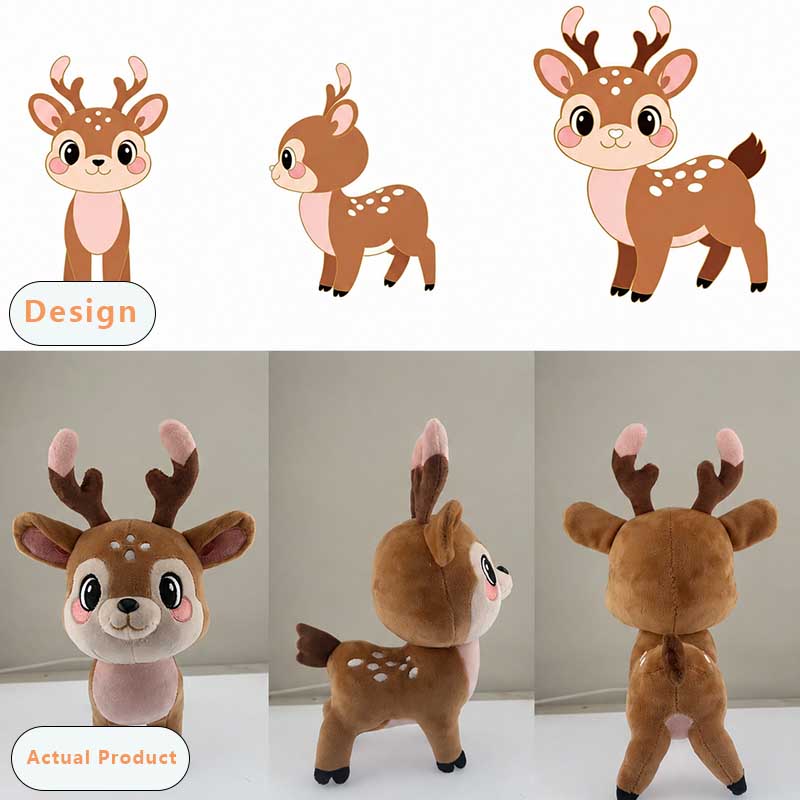
Design capability in plush manufacturing is not the same as design service — the offering of original character creation or styling assistance. It is the technical capability to take a design concept, interpret it correctly, engineer the pattern system that produces the intended three-dimensional form, and execute a first sample that accurately reflects the design intent rather than approximating it.
This capability — or its absence — is the primary determinant of how many revision rounds are required before a sample is approvable, whether the approved sample accurately predicts bulk production quality, whether complex design elements are achievable within the intended budget and timeline, and whether the product that reaches customers matches the brand vision that motivated its development.
Factories with strong design capability produce accurate first samples, require fewer revision rounds, achieve complex designs that other factories cannot, and deliver bulk goods that match approved samples reliably. Factories without it produce first samples that require reconstruction, cycle through revision rounds without convergence, decline or inadequately execute complex designs, and deliver bulk goods that disappoint relative to the approved sample.
Understanding exactly what design capability consists of — and how to assess it before committing to a manufacturing relationship — is the practical knowledge that enables buyers to select the right manufacturing partner for their specific design requirements.
What Is Design Capability in Plush Manufacturing and Why Does It Go Beyond Execution?

Design capability in plush manufacturing is the combination of technical expertise, institutional knowledge, dedicated infrastructure, and process discipline that enables a factory to translate a design concept into an accurate physical prototype — and then to translate that prototype into consistent bulk production.
It goes beyond execution because execution — the physical sewing, stuffing, and assembly of a plush product — is a production competency that most factories possess. What design capability adds is the interpretive and engineering layer that determines whether the product being executed is the right product. Execution without design capability produces a product that is well-made but wrong. Design capability combined with execution produces a product that is well-made and correct.
Here is a framework for understanding what design capability comprises at each stage of the development process:
| Development Stage | Execution Only | Design Capability Added | Commercial Difference |
|---|---|---|---|
| Brief receipt | Brief passed to production for pattern making | Structured brief review identifies ambiguities and technical challenges | First-sample accuracy |
| Pattern making | Generic patterns adapted from existing templates | Custom pattern engineering for each design’s specific three-dimensional requirements | Proportion accuracy and form correctness |
| Material sourcing for sampling | Nearest available material used | Correct specification material sourced before sampling begins | Material character matches design intent |
| Sample construction | Production operators build sample between regular duties | Dedicated sample sewers working exclusively on development | Construction quality reflects design accurately |
| Deviation identification | Deviations discovered by buyer on receipt | Deviations documented by factory and communicated with sample dispatch | Efficient revision process |
| Revision management | Some revision items addressed, others missed | Complete action list confirmed before revision begins | Revision convergence efficiency |
| Counter sample | Optional or absent | Standard step before production authorization | Sample-to-bulk quality prediction |
The Design Capability Gap in the Market
The plush toy manufacturing market contains a wide range of design capability levels — from factories whose pattern making expertise is limited to generic template adaptation, through factories with capable in-house pattern teams, to specialist factories whose development capability is a primary competitive differentiator.
This capability range is not directly visible in factory presentations, capacity claims, or catalog quality. A factory that produces excellent simple products at high volume may have genuinely limited design capability for complex original character designs — because those designs require pattern engineering expertise that was never needed for the simpler products. Assessing design capability requires design-specific evaluation rather than general manufacturing capability assessment.
How Does Pattern Engineering Expertise Determine Whether a Design Is Achievable?

Pattern engineering is the technical discipline at the heart of plush toy design capability. It is the process of converting a two-dimensional design concept — typically artwork showing the character’s intended appearance from one or more angles — into a system of fabric panels that, when sewn together and stuffed, produce a correctly proportioned three-dimensional form.
Pattern engineering is technically demanding because the relationship between a flat panel system and the three-dimensional form it produces is not intuitive. The same three-dimensional shape can be achieved through many different panel systems — and the choice of panels significantly affects the achievability of the design, its production cost, and its quality consistency at scale. An experienced pattern engineer selects the panel system that achieves the intended form most accurately, most cost-efficiently, and most consistently across production. An inexperienced one applies a generic system that produces an approximation of the intended form at best.
Here is a framework for understanding how pattern engineering expertise affects design achievability across different design complexity levels:
| Design Type | Pattern Engineering Requirement | Without Expertise | With Expertise |
|---|---|---|---|
| Simple symmetric shape — basic bear/bunny | Minimal — standard templates largely applicable | Usually achievable | Cleanly achievable, optimized |
| Moderate original character — custom proportions | Significant — custom panel engineering required | Multiple revision rounds, proportion accuracy limited | Accurate first sample, efficient revision |
| Complex character — high panel count, detailed features | High — full custom engineering, multiple technical solutions | Often not achievable to specification; fundamental problems persist across rounds | Achievable with correct approach |
| Proportionally sensitive character — IP accuracy critical | Very High — proportional deviation immediately visible | Character accuracy not reliably achievable | Accurate within commercial tolerance |
| Unusual form — non-standard topology, extreme proportions | Expert — creative engineering solution required | Not achievable | Achievable with specialist approach |
The Proportion Engineering Problem
The most technically demanding aspect of pattern engineering for original character designs is proportion engineering — the adjustment of panel dimensions to account for the fact that stuffing changes the apparent proportions of the finished product in ways that are counterintuitive and difficult to predict without experience.
A character whose face is designed with large eyes, a small nose, and a round head in the design artwork will not automatically produce those proportions when the pattern panels are cut to match the artwork dimensions. Stuffing fills the interior volume and pushes the outer fabric outward in ways that depend on the size of the head relative to its curvature, the density of the filling, the stretch characteristics of the fabric, and the interaction between adjacent panels. An experienced pattern engineer adjusts the panel dimensions to account for these effects — making the pattern panels slightly different from what the design artwork shows in ways that produce the correct proportions in the finished, stuffed product.
Without this proportion engineering expertise, the first sample consistently shows proportion differences from the design intent — often with a larger-than-intended head, a face that appears flatter than designed, or limbs that attach at angles that differ from the design. These differences require revision rounds not because the concept is wrong but because the pattern engineering did not account for the stuffing effects that produce the correct form.
Seam Placement as a Design Capability Indicator
An expert pattern engineer treats seam placement as a design decision — choosing seam positions that achieve the intended three-dimensional form efficiently, minimize visible seam lines in the character’s primary display areas, and position structural seams where they can bear filling load without creating visible stress lines.
An inexperienced pattern maker treats seam placement as a construction convenience — placing seams wherever they make the panel shapes easiest to cut and sew, which often means seams appear in the character’s face, at the primary viewing angles, or at points where filling pressure creates visible puckering.
Examining the seam placement in a factory’s portfolio samples — specifically noting whether seams appear in logical structural positions or in visible character expression areas — reveals pattern engineering sophistication more clearly than any verbal description of the factory’s capabilities.
How Does Brief Interpretation Quality Predict First-Sample Accuracy?
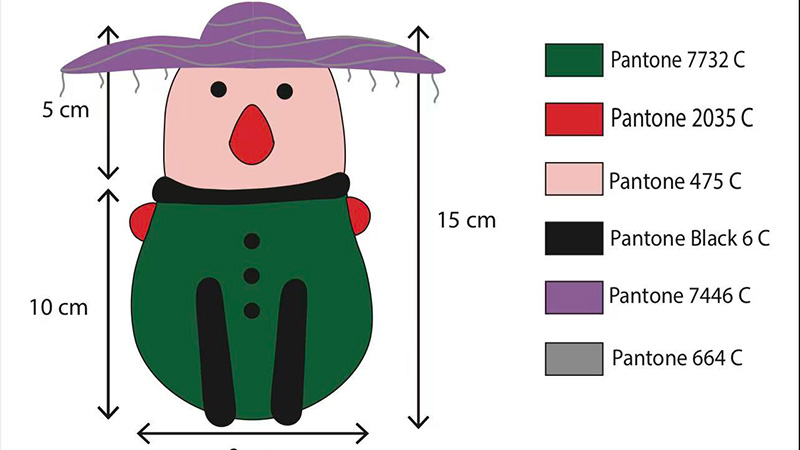
Brief interpretation — the process of converting a design brief into a shared understanding of what must be built before pattern making begins — is the upstream determinant of first-sample accuracy. A correctly interpreted brief produces a first sample that accurately reflects the design intent. A misinterpreted brief produces a first sample that reflects the factory’s assumptions about the design intent, which may differ significantly from what was specified.
The quality of brief interpretation is revealed most directly by the questions a factory asks before sampling — not by the answers they give to questions the buyer asks. A factory with genuine design capability asks specific, technically informed questions that reveal their understanding of the design’s construction requirements. A factory without genuine design capability accepts the brief without significant questions and proceeds based on assumptions that may or may not match the buyer’s intent.
Here is a framework for understanding brief interpretation quality and its impact on first-sample accuracy:
| Brief Element | Poor Interpretation Approach | Good Interpretation Approach | First-Sample Accuracy Impact |
|---|---|---|---|
| Scale reference | Assumes a scale from the artwork dimensions | Requests specific dimension confirmation | Critical — wrong scale produces wrong-size product |
| Color specification | Selects nearest available fabric | Requests Pantone reference, flags any sourcing gap | High — color deviation requires correction round |
| Material description | Uses generic description to select from stock | Identifies specific requirements, flags alternatives if unavailable | Medium-High — material character affects quality impression |
| Construction detail | Applies default construction approach | Identifies construction method implications, asks about specific requirements | Medium — wrong construction requires rebuild |
| Accessory specification | Uses nearest available accessory | Requests specific accessory code or detailed specification | Medium — wrong accessory changes character expression |
| Three-dimensional form from 2D art | Makes geometric assumptions | Requests multi-view references, identifies where single-view is insufficient | High — wrong form interpretation produces significant proportion errors |
The Clarification Questions Test
One of the most efficient and most revealing design capability assessments available at the early stage of a supplier relationship is presenting a design brief and observing what questions the factory asks before sampling begins. The quality and specificity of these questions reveals the depth of the factory’s brief interpretation capability.
Questions that indicate strong brief interpretation capability:
- “The artwork shows only a front view — can you provide a side and back view, or describe the intended depth and width proportions of the head?”
- “The color reference is ‘light blue’ — do you have a Pantone reference, and should we work from the fabric standard or the object standard?”
- “The embroidery design shows a nose with shadow lines — are these meant as 3D embroidery with foam substrate or standard flat embroidery with shading stitches?”
- “The size reference shows a 25cm product — is this the total height including ears, or the seated body height?”
Questions that indicate limited brief interpretation capability:
- “Is this design simple or complex?”
- “What material should we use?”
- “How big should it be?”
The first set reveals a factory that understands construction implications and is preventing assumption-based errors before they produce incorrect samples. The second set reveals a factory that will fill the information gap with assumptions — and whose first sample will reveal those assumptions when they prove incorrect.
How Does Design Capability Affect Cost — Both Development Cost and Production Cost?
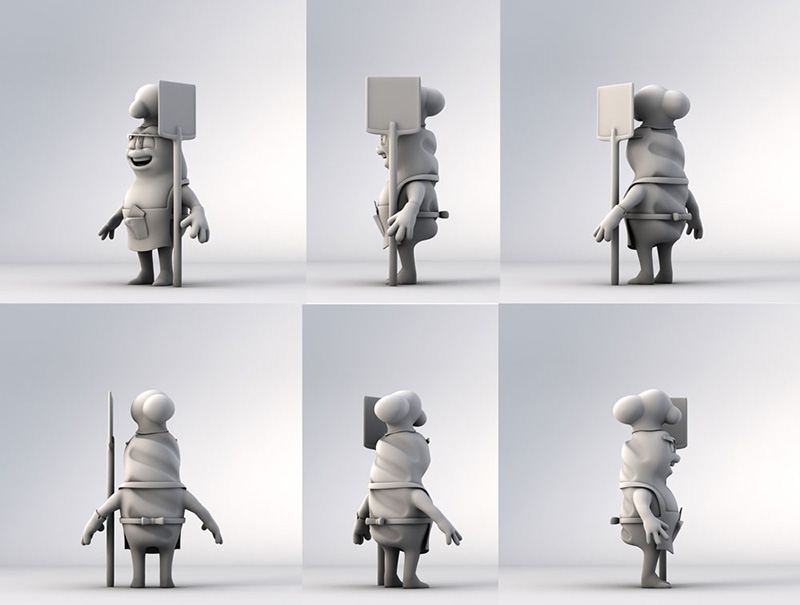
Design capability has a direct, measurable impact on both development cost and production cost — and the impact is consistently underestimated by buyers who focus on unit price comparisons without accounting for the development efficiency and production quality differences that design capability produces.
Development Cost Impact
| Development Scenario | Low Design Capability | High Design Capability | Cost Difference |
|---|---|---|---|
| First sample accuracy | 40–60% — fundamental reconstruction often required | 75–85% — refinement remaining | 2–4 additional revision rounds at low capability |
| Revision rounds to approval | 4–6 rounds for complex product | 1–2 rounds for same product | $1,500–$3,000 in additional sampling and shipping |
| Development timeline | 16–24 weeks for complex product | 8–12 weeks for same product | 8–12 weeks of additional delay |
| Brief clarification | Problems discovered in sample | Problems discovered before sampling | 1–2 rounds saved per brief ambiguity |
| Material accuracy | Wrong material in first sample | Correct material in first sample | 1 additional round for material correction |
| Counter sample | Absent — gap discovered at delivery | Standard — gap caught pre-production | Potential full batch rework avoided |
For a buyer developing five designs simultaneously, the difference between low and high design capability represents $7,500 to $15,000 in additional sampling and shipping costs, 8 to 12 weeks of additional development time, and the management overhead of 15 to 30 additional revision round cycles.
Production Cost Impact
Design capability affects production cost through its impact on pattern engineering efficiency — specifically, the panel count and construction complexity that the pattern engineering solution requires to achieve the intended design.
A pattern engineer with expertise in designing for production efficiency produces designs with the minimum panel count that achieves the intended form — reducing cutting operations, sewing operations, and quality monitoring overhead. A pattern engineer without this expertise produces designs with higher panel counts than necessary — because more panels provide more control over individual surface areas, but at higher production cost for each additional panel.
| Design Approach | Panel Count | Relative Labor Cost | QC Overhead |
|---|---|---|---|
| Expert pattern — production optimized | 10 panels | Baseline | Baseline |
| Competent pattern — standard approach | 13 panels | +25–30% | +20% |
| Inexperienced pattern — over-paneled | 17 panels | +50–70% | +40% |
For a 3,000-unit production run, the difference between an expert-engineered 10-panel design and an inexperienced 17-panel pattern is significant in both per-unit labor cost and total batch labor cost — a production cost difference that compounds across every unit in every production run of the product.
How Does Design Capability Affect the Speed and Efficiency of Product Development?
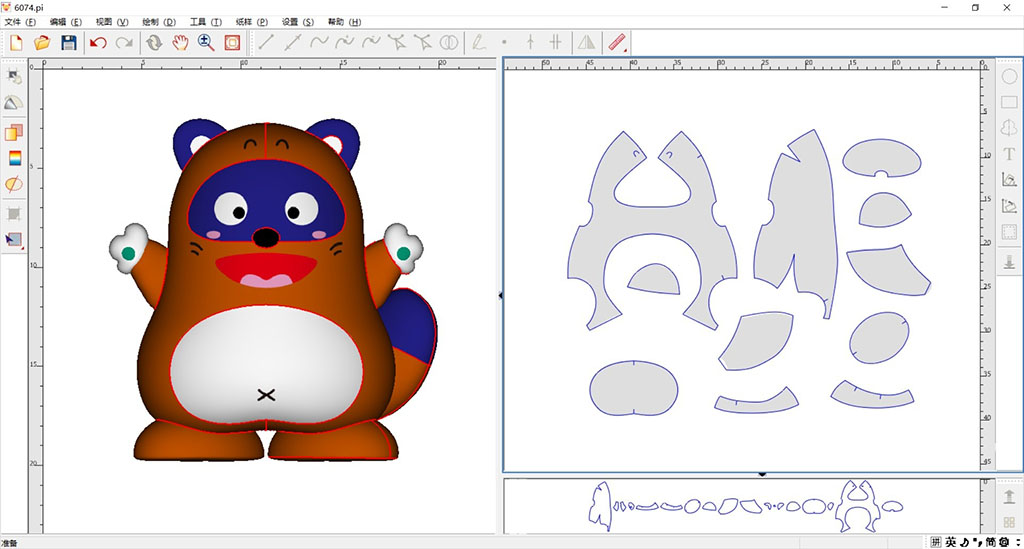
Product development speed is a direct commercial advantage in the plush toy market — brands that can develop new products faster can respond to market trends earlier, enter seasonal windows with more lead time, and launch more products per year than brands whose development process is slower. Design capability is one of the primary determinants of development speed.
Here is a complete timeline comparison for a complex character design across different design capability levels:
| Development Stage | Low Design Capability | High Design Capability | Time Saving |
|---|---|---|---|
| Brief review and clarification | 0 days — no formal review | 3–5 days — structured review with questions | -3 to -5 days (invested but recovered in revision savings) |
| Pattern making | 7–14 days — slow with rework | 5–8 days — efficient with expertise | 2–6 days |
| Material sourcing | 14–21 days — sourcing gaps discovered | 5–10 days — pre-confirmed availability | 4–11 days |
| First sample construction | 10–14 days | 7–10 days | 3–4 days |
| Revision round 1 | 12–16 days (construction + shipping + review) | 10–14 days (construction + shipping + review) | 2 days |
| Revision rounds 2–4 (low capability only) | 36–48 additional days | 0 additional rounds | 36–48 days |
| Counter sample | 0 days — absent | 10–14 days | Counter sample time invested but protects against much larger delay at production stage |
| Total development timeline | 79–113 days (2.5–4 months) | 40–55 days (1.5–2 months) | 39–58 days faster |
For a product launching into a specific seasonal window, this timeline difference determines whether the product can be developed, produced, and delivered in time for the target launch — or whether it misses the window entirely.
The Compounding Effect Across a Product Range
For brands developing product ranges — multiple designs launching together or in a defined sequence — the design capability timeline advantage compounds across every design. A brand developing eight designs with a factory of high design capability achieves the same total development timeline as a brand developing three designs with a factory of low design capability. The brand with high-capability manufacturing can therefore launch significantly more products in any given period — a competitive advantage that is directly traceable to design capability investment.
How Does Design Capability Determine What Character and Product Complexity Is Achievable?
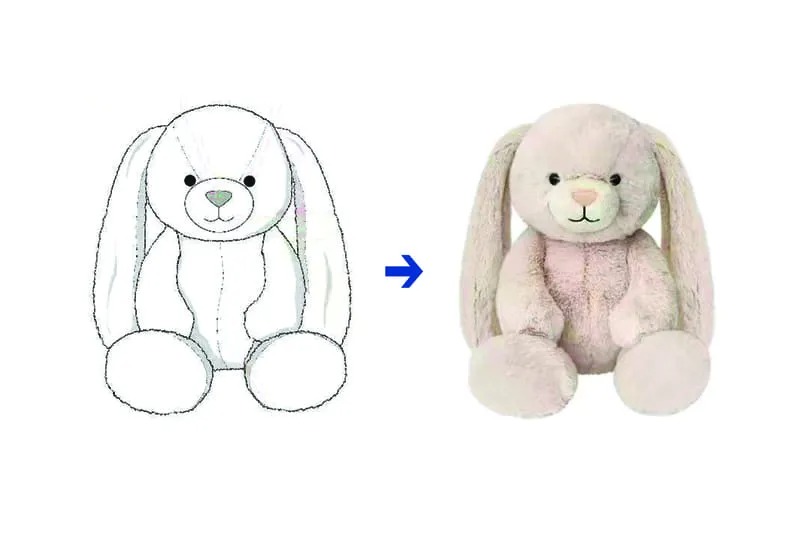
Design capability is not just an efficiency variable — it is also a ceiling on what product complexity is achievable at all. Some character designs and product types cannot be produced to specification without the specific pattern engineering and construction expertise that high design capability represents. Attempting to produce them through a factory without that expertise produces either a product that does not match the design intent or a development process that never converges on an acceptable sample.
Here is a complexity spectrum showing what becomes achievable at different design capability levels:
| Complexity Level | Description | Achievable Without Strong Design Capability | Achievable With Strong Design Capability |
|---|---|---|---|
| Level 1 — Basic | Simple symmetric animals, standard proportions | Yes — template adaptation sufficient | Yes — efficiently |
| Level 2 — Moderate | Original characters, moderate complexity, standard accessories | Partially — proportion accuracy limited | Yes — reliably |
| Level 3 — High | Complex characters, multiple panel types, character-specific proportions | With difficulty — multiple rounds, accuracy limited | Yes — reliably |
| Level 4 — Very High | Licensed character accuracy, tight IP tolerance requirements | Not reliably achievable | Yes — with appropriate development process |
| Level 5 — Expert | Novel forms, unusual topology, extreme proportions, 3D embroidery integration | Not achievable | Yes — with specialist expertise |
Licensed Character Accuracy Requirements
One of the most design-capability-demanding categories in plush manufacturing is licensed character production — where the character’s proportions, colors, and feature placements are defined by the IP holder’s style guides and where deviation from those specifications constitutes a licensing compliance failure rather than just a quality issue.
Licensed character accuracy requires pattern engineering that can achieve specific proportional relationships — a character whose eye size is defined as a percentage of head circumference, whose ear attachment position is defined by a specific angle, and whose overall silhouette must match a provided reference within tolerance — consistently across production.
This level of proportional precision requires the combination of experienced pattern engineering, precise first-sample production, and systematic measurement at the revision stage that high design capability provides. Factories without this capability produce licensed character products that may look similar to the character but consistently fail the style guide tolerance checks that IP holders apply to licensed production.
How Does Design Capability Connect to Long-Term Brand Consistency Across Reorders?
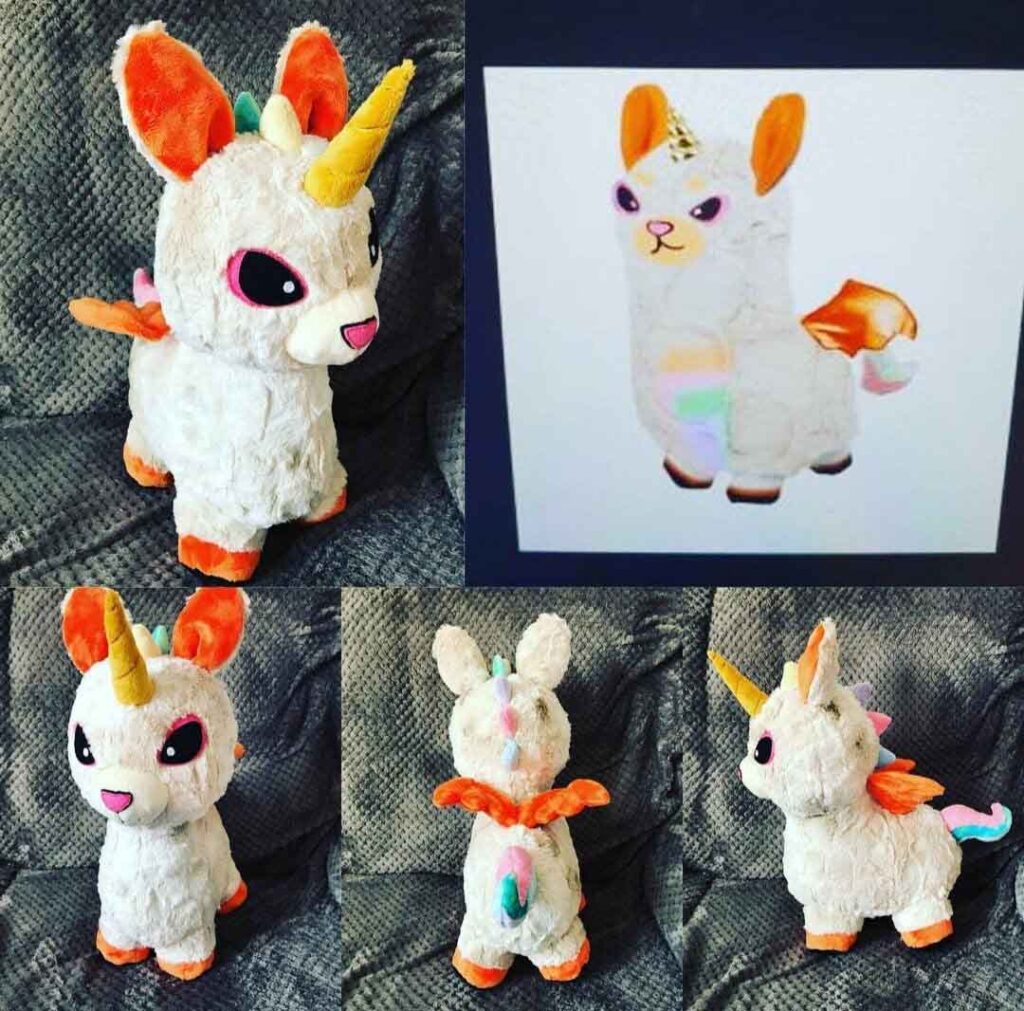
Design capability’s commercial impact extends beyond the initial development cycle to the long-term brand consistency dimension — whether the product that customers receive on a reorder two years after the initial launch is indistinguishable from the product they received on the original order.
Reorder consistency depends on design capability because the production standard for a reorder is defined by the documentation created during the original development process — the tech pack, the approved counter sample, the material specifications, and the IPQC records. A factory with genuine design capability produces this documentation completely and accurately during the original development. A factory without this capability produces incomplete documentation — which means that reorder production relies on institutional memory, retained physical samples, and operator knowledge rather than on written, measurable specifications.
Here is how design capability affects reorder consistency:
| Consistency Dimension | Without Design Capability | With Design Capability |
|---|---|---|
| Tech pack completeness | Incomplete — some dimensions and specifications missing | Complete — all measurable characteristics documented |
| Material specification for reorder | Vague — “same fabric as before” | Specific — supplier code, grade, and IQC comparison to retained swatch |
| Counter sample for reorder | Not produced — relies on original sample or memory | Standard — counter sample from reorder materials confirms production standard |
| Proportion consistency | Variable — pattern may drift without documented reference | Consistent — documented pattern with specifications |
| Color consistency | Variable — relies on retained sample rather than Pantone specification | Consistent — Pantone reference enables objective assessment |
| Feature position consistency | Variable — embroidery coordinates not documented | Consistent — coordinate specifications provide measurable reference |
For brands whose commercial model depends on product consistency across multiple seasons — where customers who buy a character product in one season expect it to match the product they already own — this reorder consistency dimension is a direct commercial quality requirement that design capability either delivers or fails to deliver.
How Should Buyers Evaluate Design Capability Before Committing to a Plush Manufacturer?
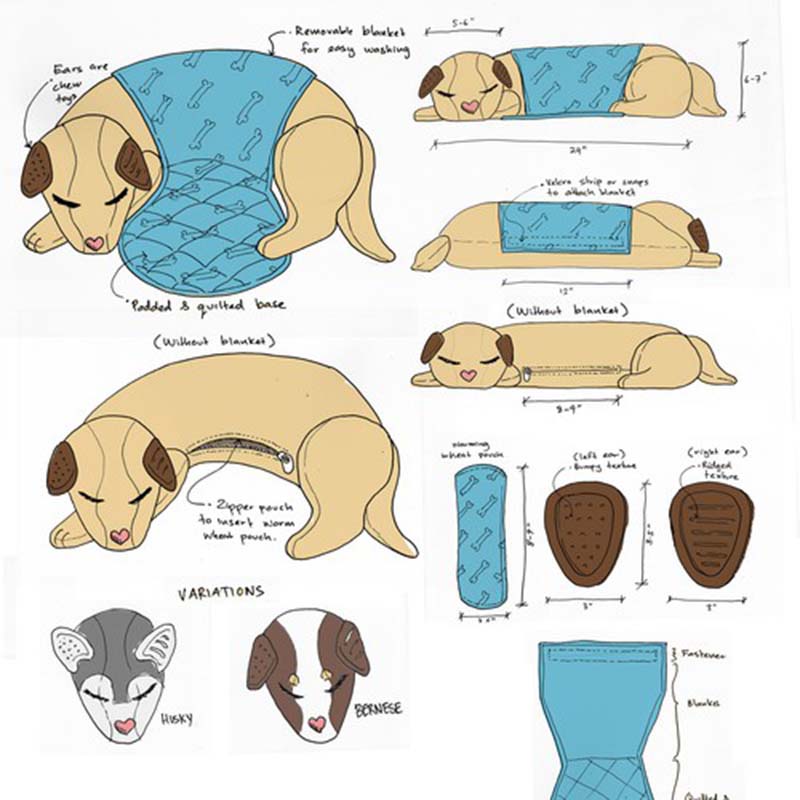
Evaluating design capability before committing to a manufacturing relationship requires design-specific assessment methods — because standard manufacturing capability assessments do not reveal the pattern engineering expertise, brief interpretation quality, or development process discipline that design capability comprises.
Here is a complete design capability evaluation framework:
Portfolio Sample Analysis
Request physical samples of existing products at different complexity levels from the factory’s portfolio — specifically products comparable to your planned development in terms of character complexity, panel count, and design specificity.
| Assessment Criterion | What to Look For | Design Capability Indicator |
|---|---|---|
| Proportion accuracy | Do proportions appear consistent with a design reference? | Experienced pattern making produces consistent proportions |
| Seam placement | Are seams in logical structural positions or in visible expression areas? | Expert seam placement indicates engineering sophistication |
| Surface smoothness | Are curved surfaces smooth or faceted/puckered? | Panel geometry quality reveals engineering competence |
| Embroidery quality and position | Are features precisely positioned and cleanly executed? | Precision indicates measurement and execution capability |
| Overall form consistency | Do multiple samples of the same product look identical? | Consistency indicates documented production standard |
| Complexity achievement | Has the factory achieved comparable complexity to your planned design? | Demonstrates relevant capability ceiling |
Development History Review
Request the development history of an existing product from the factory’s portfolio — specifically the first sample, any intermediate revision samples, and the final approved sample for a design comparable in complexity to your planned product.
| What to Assess | Design Capability Indicator |
|---|---|
| First sample accuracy | How close is the first sample to the final approved product? |
| Revision round count | How many rounds were required? |
| Revision convergence | Did each revision bring the product closer to approval or did it change different elements while re-introducing problems? |
| Documentation of revisions | Were revision changes tracked and documented? |
Technical Questions Assessment
Present the factory with a design brief comparable to your planned development and ask them specific technical questions before any sampling begins.
| Technical Question | Assessment Purpose |
|---|---|
| “What views do you need to accurately engineer the three-dimensional form of this character?” | Reveals understanding of 3D pattern engineering requirements |
| “Which elements of this design present the most significant pattern engineering challenges?” | Reveals ability to identify complexity before sampling |
| “How would you approach achieving the eye-to-head proportion in the design at the specified pile height?” | Reveals specific construction problem-solving capability |
| “What embroidery approach would you use for the nose, and why?” | Reveals understanding of embroidery technique options |
| “At what stage would you produce a counter sample, and what would you assess in it?” | Reveals development process completeness |
Reference Conversations Focused on Design Capability
When conducting reference conversations with the factory’s existing clients, ask specifically about design-related experience rather than general satisfaction:
| Reference Question | What It Reveals |
|---|---|
| “How accurate was their first sample relative to your design brief on a complex product?” | First-sample accuracy across real development relationships |
| “Did revision rounds converge efficiently, or did the same problems recur?” | Revision process discipline |
| “Have they ever declined a design as not achievable, and if so, was the reason well-founded?” | Honesty about capability limits |
| “Has the quality of reorders of the same product been consistent with the original?” | Reorder consistency from documented production standards |
At Kinwin, design capability is one of our primary investments — because we understand that buyers choose manufacturing partners not just for production capacity but for the design interpretation, pattern engineering, and development process capability that determines whether the products they envision can actually be built as intended.
Our dedicated pattern making team works exclusively on development — not as a secondary duty alongside production work. Our structured brief review process identifies and resolves ambiguities before sampling begins. Our development history on complex character products demonstrates first-sample accuracy that consistently reaches 75 to 85 percent — the range that results in efficient revision convergence rather than extended circular revision cycles.
If you are evaluating whether our design capability is appropriate for your specific product requirements — or if you want to present a design brief for a technical feasibility assessment before committing to a development relationship — we would be glad to have that specific conversation.
Reach out to our team at [email protected] or visit kinwintoys.com to start the conversation.
Conclusion
Design capability in plush manufacturing is the factor that most directly determines whether a product development project runs efficiently or wastefully, whether complex character designs are achievable at all, whether bulk goods match approved samples reliably, and whether reorders maintain the quality consistency that brand equity depends on.
It is also the factor that is most systematically underweighted in typical supplier evaluation — because design capability is not directly visible in factory presentations, capacity claims, or even in the quality of simple products, and because its impact only becomes apparent when the development process begins and the gap between design intent and sample output reveals whether genuine pattern engineering expertise is present or absent.
Buyers who assess design capability through the specific evaluation methods described in this guide — portfolio analysis, development history review, technical question assessment, and reference conversations focused on design experience — make supplier selection decisions that hold up through complex development cycles, deliver the brand accuracy that character-based products require, and produce the reorder consistency that long-term brand relationships depend on.
At Kinwin, we believe that design capability is the manufacturing partnership investment that most directly supports our clients’ brand ambitions — and we build and maintain it accordingly.
FAQ
Q1: How should buyers handle a situation where a factory’s design capability is strong for simple products but has not been tested on the complexity level they need — should they commission a test design or a full development project?
When a factory’s design capability is demonstrated for simpler products but unproven at the complexity level a buyer requires, a test design — a paid but non-production development exercise using a design of the required complexity — is the most commercially efficient way to assess whether the capability is present before committing to a full production relationship. The test design should be a representative example of the complexity level planned for the production product — comparable panel count, comparable character specificity, comparable embroidery and accessory requirements. The evaluation criteria are first-sample accuracy relative to the design brief, the technical quality of the pre-sampling questions asked, the revision convergence efficiency if revision is required, and the quality of the documentation produced at sample approval. The test design investment — typically one sampling fee plus shipping — is small relative to the cost of committing to a production development cycle with a factory whose capability is inadequate for the required complexity.
Q2: Is there a meaningful difference in design capability between factories that use CAD pattern making software versus those that use manual pattern making, and which should buyers prefer?
The use of CAD pattern making software provides specific advantages for pattern accuracy, revision efficiency, and documentation — because digital patterns can be measured precisely, modified consistently, and documented in ways that physical paper patterns cannot. A factory that uses CAD pattern making can produce dimension tables from digital pattern files, make precise adjustments to specific measurements without affecting others, and maintain pattern archives that support accurate reorder production. Manual pattern making, conducted by very experienced pattern makers, can achieve comparable accuracy for standard complexity designs — but becomes less reliable at high complexity levels where the precision of CAD measurement provides meaningful advantages. For buyers developing complex original character designs or licensed character products where proportional accuracy is critical, a factory with CAD pattern making capability generally provides better first-sample accuracy and better reorder consistency than an equally experienced factory using manual methods. For simpler designs where the pattern engineering challenge is lower, the tool difference matters less than the experience and expertise of the pattern maker using the tool.
Q3: How does design capability affect the manufacturer’s ability to develop product ranges — multiple related characters or product variants — efficiently?
Product range development — creating multiple characters within a consistent design family — is one of the highest-leverage applications of strong design capability, because the pattern engineering knowledge developed for the first character in a range can be applied to subsequent characters more efficiently than starting from scratch. A factory with strong design capability builds institutional knowledge about a product family’s design architecture — the proportional relationships, material choices, construction approach, and quality criteria that define the family — and applies this knowledge to new characters in the range, reducing the development timeline and first-sample revision requirements compared to treating each character as an entirely new design. A factory without this capability treats each character as independent — losing the institutional knowledge advantage and requiring the same full development cycle for each new character. For brands planning character ranges of five or more characters, the efficiency difference of range-aware design capability becomes a significant commercial advantage in time-to-market and development cost.
Q4: How should buyers specify design capability requirements in a supplier brief or RFQ to ensure they receive accurate capability representations rather than optimistic self-assessment?
Specifying design capability requirements in a supplier brief requires framing the requirement in evidential terms — asking for specific evidence rather than general claims. Instead of asking “do you have experienced pattern makers?” (a question that any factory will answer affirmatively), the brief should request: portfolio samples of three products at the complexity level of the planned design, the development history (first sample through approved sample) of one comparable product showing round count, a description of the pre-sampling brief review process including examples of the questions typically asked, and the technical specification (tech pack excerpt) from a recent product at comparable complexity to demonstrate documentation quality. These evidence requests cannot be answered with optimistic self-assessment — they require the production of actual development history and product samples that demonstrate or fail to demonstrate the required capability. Factories that can fulfill these requests are demonstrating capability. Factories that cannot produce this evidence despite claiming the capability are revealing the gap between their self-representation and their operational reality.
Q5: At what point in a long-term supplier relationship does design capability become less important — and does it ever become safe to stop assessing it?
In a mature, well-documented supplier relationship, the operational importance of design capability assessment shifts rather than disappearing. For repeat productions of existing, well-documented products — where the tech pack is complete, the counter sample approach is established, and the production history is documented — design capability is demonstrated through proven performance and the evaluation emphasis shifts to production execution and quality monitoring. For new product development within an established relationship — new characters, product extensions, design refreshes — design capability remains as important as in any new development relationship, because the relevant question is always whether the specific design being developed is within the factory’s capability envelope. The most effective approach for mature relationships is to maintain the design capability evaluation for every new development exercise while reducing it for established product reorders — because the capability has been demonstrated for the specific product but not pre-demonstrated for designs that have not yet been developed.