Skip to content
A delayed plush toy delivery is rarely just an inconvenience. For a seasonal product, a two-week delay can mean missing the selling window entirely. For a product committed to a retail partner, a late delivery can trigger penalties or future exclusion from the buyer’s supplier list. For an e-commerce brand, a stockout while advertising spend is running burns marketing budget without generating the revenue it was designed to support.
The commercial cost of a production delay compounds quickly — and it compounds in ways that are often disproportionate to the delay duration itself. A two-week delay does not create two weeks of commercial disruption. It creates a cascade of disruptions: an expedited freight bill that reduces margin on the delayed order, a stockout period that drives customers to competitors, negative reviews from customers who expected a product that was unavailable, and a disrupted launch timeline that affects subsequent campaign planning.
Managing this risk effectively requires preventing delays before they occur — not responding to them after they have already compounded. At Kinwin, delay prevention is built into our production planning, material management, quality management, and communication systems as a deliberate operational discipline. This page explains specifically what causes production delays, how we prevent each cause, and how we communicate timeline risk collaboratively with buyers when prevention is insufficient and timeline management becomes necessary.
What Causes Production Delays in Plush Manufacturing and Why Do They Have Compounding Commercial Consequences?
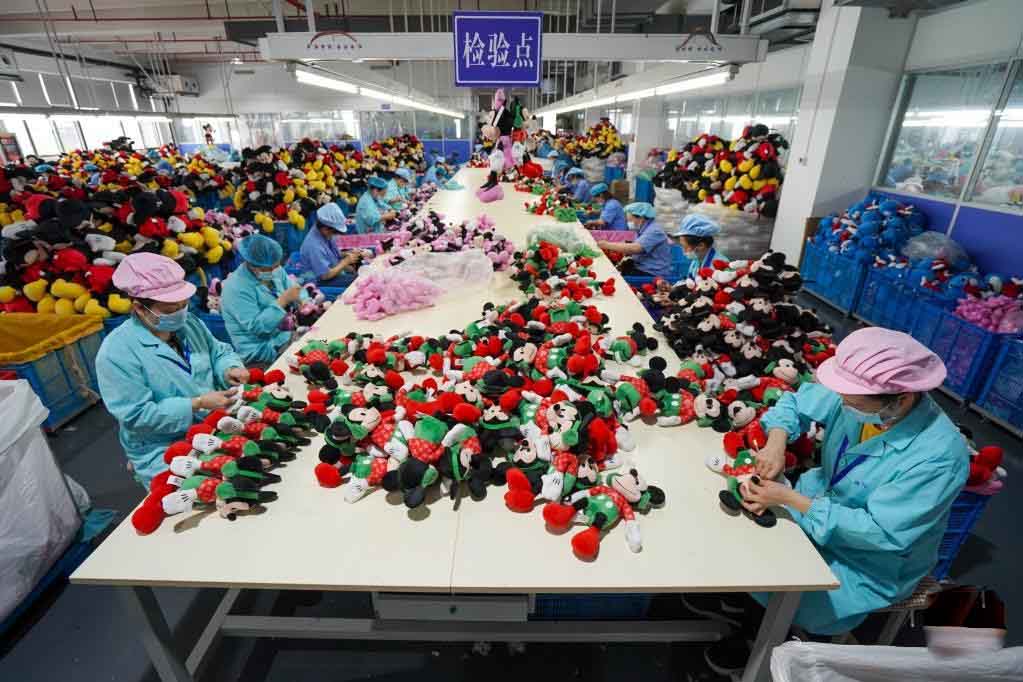
Production delays in plush toy manufacturing originate from a defined set of causes — each operating at a specific stage of the production process, each preventable through specific operational disciplines. Understanding these causes is the foundation for understanding why the prevention systems described in this guide are structured the way they are.
Here is the complete delay cause framework for plush toy production:
| Delay Cause | Stage | Frequency | Prevention Difficulty | Compounding Effect |
|---|---|---|---|---|
| Capacity not reserved — production slot unavailable | Pre-production | Medium | Low — requires advance planning | Delay from first day |
| Material sourcing delay — fabric or accessories | Pre-production | High | Medium — requires proactive lead time management | Delays entire production start |
| IQC failure — non-compliant or substandard material | Pre-production | Medium | Medium — requires compliance-first sourcing | Replacement sourcing adds 1–3 weeks |
| Sample revision cycles extending beyond budget | Development | Very High | Medium — requires brief quality and factory capability | Development delay pushes production start |
| Counter sample requiring additional revision | Pre-production | Medium | Low — manageable with capable factory | Adds 1–2 weeks before production authorization |
| Production pace shortfall — throughput below plan | Production | Medium | Medium — requires pace monitoring | Compounds daily — late discovery multiplies impact |
| Quality deviation requiring production halt | Production | Medium | Medium — requires IPQC discipline | Halt plus correction time |
| Material shortage mid-run — fabric or accessories run out | Production | Low-Medium | Low — requires quantity planning | Production halt while sourcing |
| FQC failure requiring rework | Pre-shipment | Medium | Medium — requires quality system discipline | Rework plus reinspection time |
| Documentation incomplete — compliance or shipping | Pre-shipment | Medium | Low — requires organized preparation | Shipment hold at customs or factory |
| Logistics booking delay — freight not reserved | Shipping | Low | Low — requires advance booking | Missed vessel or flight |
The Compounding Mechanism
What makes production delays particularly expensive is not just the time lost but the compounding of that time against external commitments that have their own fixed timelines. A 10-day production delay does not create a 10-day delivery delay — it creates a 10-day delay compressed into a timeline that was already planned to the day, which typically requires expedited freight (cost premium of 200 to 400 percent of standard freight cost) to partially recover, while still delivering 3 to 5 days late due to the limits of available freight options.
The compounding formula is: original delay + expedited freight premium + residual delivery delay + missed window commercial impact + management time cost = total delay cost. This total consistently exceeds the original delay’s apparent size by a factor of three to five for commercial products in competitive market categories.
How Do We Prevent Delays at the Pre-Production Planning Stage?
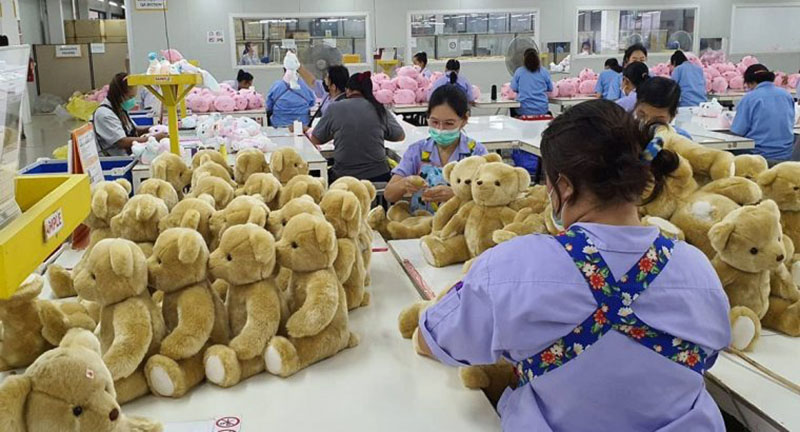
Pre-production planning is the stage where the majority of production delays are preventable at minimal cost — because the decisions made at this stage determine whether production has the materials, capacity, and preparation it needs to proceed on schedule, or whether it will encounter the gaps that create delays.
We prevent delays at the pre-production planning stage through five specific practices:
1. Production Capacity Reservation
We do not schedule a production start date and then check capacity availability when that date approaches. We confirm production slot availability before the order is accepted and reserve capacity at the point of order confirmation — ensuring that when the materials are IQC-cleared and the counter sample is approved, the production line is ready to begin rather than waiting for an available slot.
This practice prevents one of the most common and most frustrating delay causes: arriving at the planned production start date with everything else ready, only to discover that production capacity is committed to other orders and the actual start must be delayed.
For buyers with seasonal delivery requirements — peak season orders where the delivery window is fixed — we establish the required delivery date, work backward through the production and shipping timeline to identify the latest acceptable production start, and confirm that a production slot is available by that date before committing to the project.
2. Material Lead Time Mapping
Every material required for a production run has a sourcing lead time — the time from order placement to delivery at the factory. For standard catalog fabrics and accessories, this may be three to seven days. For custom-dyed fabrics, specialty accessories, or compliance-certified materials from specific suppliers, it may be two to four weeks.
We map the lead time for every material before establishing the production schedule — ensuring that the production start date is set after the latest material lead time, not before it. This prevents the most common material-related delay: materials ordered too late, arriving after the planned production start, delaying the entire run.
Our material lead time map for a typical production project:
| Material Type | Typical Lead Time | Our Planning Buffer |
|---|---|---|
| Standard catalog fabric | 3–7 days | 10 days |
| Extended range catalog fabric | 7–14 days | 21 days |
| Custom-dyed fabric | 14–28 days | 35 days |
| Standard safety accessories | 5–10 days | 14 days |
| Custom-ordered accessories | 14–21 days | 28 days |
| PP cotton filling | 3–7 days | 10 days |
| Specialty filling (glass beads, etc.) | 7–14 days | 21 days |
| Packaging — catalog | 5–10 days | 14 days |
| Packaging — custom printed | 14–21 days | 28 days |
3. Production Timeline Buffer
We build a 10 to 15 percent timeline buffer into every production schedule — not as padding that absorbs inefficiency but as a planned allocation for the quality correction events that occur in every production run: a roll transition check that requires a material hold, an IPQC deviation that requires machine recalibration, a closing seam quality issue that requires operator technique reinforcement. These events take time, and a production schedule that does not account for them will be late.
The buffer is structured into the schedule at the beginning — not borrowed from the shipping timeline at the end when it becomes apparent that production has consumed more time than the schedule allowed.
4. Compliance Documentation Pre-Clearance
For products with compliance testing requirements, we initiate the testing process during the sampling stage — not after production is complete. By submitting the approved sample for third-party testing while bulk production is being planned, we receive the test results and compliance documentation before production is complete rather than after — eliminating the documentation completion delay that holds shipment when testing is left to the post-production stage.
5. Logistics Pre-Booking
For time-sensitive deliveries, we pre-book logistics — reserving freight space with our logistics partners before production is complete — based on the production completion estimate. This pre-booking ensures that freight space is available at the planned completion date rather than requiring a new booking search that may not find available space at the required timing.
How Do We Prevent Material Sourcing and IQC Delays?
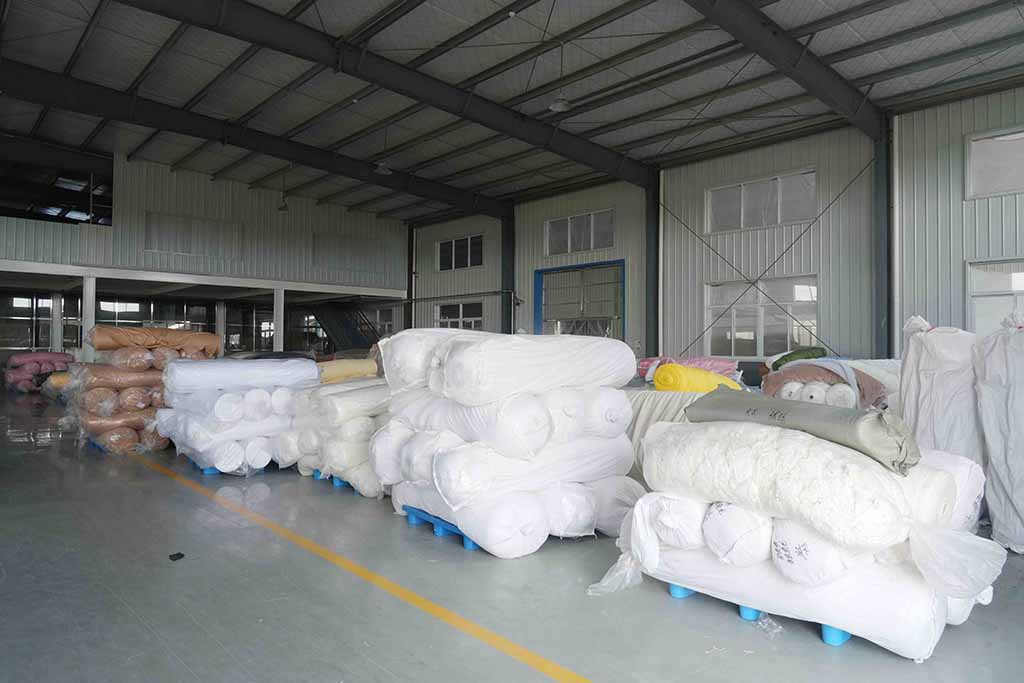
Material sourcing and IQC delays are among the most common delay causes in plush toy production — and among the most preventable through systematic sourcing discipline and proactive supplier management.
Here is our complete material sourcing and IQC delay prevention system:
Supplier Relationship Maintenance
We maintain active relationships with qualified suppliers for all standard material categories — fabric, filling, accessories, and packaging — rather than sourcing opportunistically at each order. These established relationships provide two delay prevention benefits: shorter order processing time (established clients receive priority processing), and advance visibility into supplier capacity and material availability that allows us to identify potential sourcing constraints before they affect production timelines.
When a material specification requires a supplier we have not previously qualified — a new fabric style, a specialty accessory — we initiate the qualification process at the brief review stage, before the sampling process begins, rather than at the production planning stage. This ensures that the production supplier is qualified and their lead time is understood before the production schedule is committed.
Parallel IQC Processing
When materials for a production run are sourced from multiple suppliers — fabric from one, accessories from another, filling from a third — we initiate all sourcing simultaneously and process IQC on materials as they arrive rather than waiting for all materials to be present before beginning IQC.
This parallel processing approach means that production can begin as soon as all materials have passed IQC, rather than being delayed by the sequential processing of materials that were sourced in parallel but inspected in sequence.
IQC Failure Contingency Planning
When a material fails IQC — color deviation outside tolerance, pile height below specification, compliance documentation absent or expired — the standard response adds sourcing lead time to the production schedule. We reduce this delay through contingency planning that identifies an alternative supplier for each critical material before production begins — so that when a primary material supplier’s delivery fails IQC, the sourcing process for the alternative begins immediately rather than after the failure is discovered and alternatives are then researched.
For materials with the highest IQC failure risk — custom-dyed fabrics with color consistency challenges, compliance-sensitive materials where documentation is sometimes incomplete — we request advance swatch samples from the supplier before the bulk order is placed, comparing swatches against the approved reference before committing the bulk order. This swatch pre-approval reduces the probability of an IQC failure that would delay production.
Backup Fabric Quantity Planning
One of the most disruptive material-related delays is the mid-run discovery that the fabric quantity is insufficient — the cutting plan consumed more fabric than projected due to roll width variation, cutting waste from complex panel shapes, or quality rejection of sections with defects. We prevent this by planning fabric orders with a 5 to 10 percent quantity buffer above the projected production requirement — ensuring that the production run can be completed without a mid-run sourcing event.
How Do We Prevent Development and Sampling Delays?
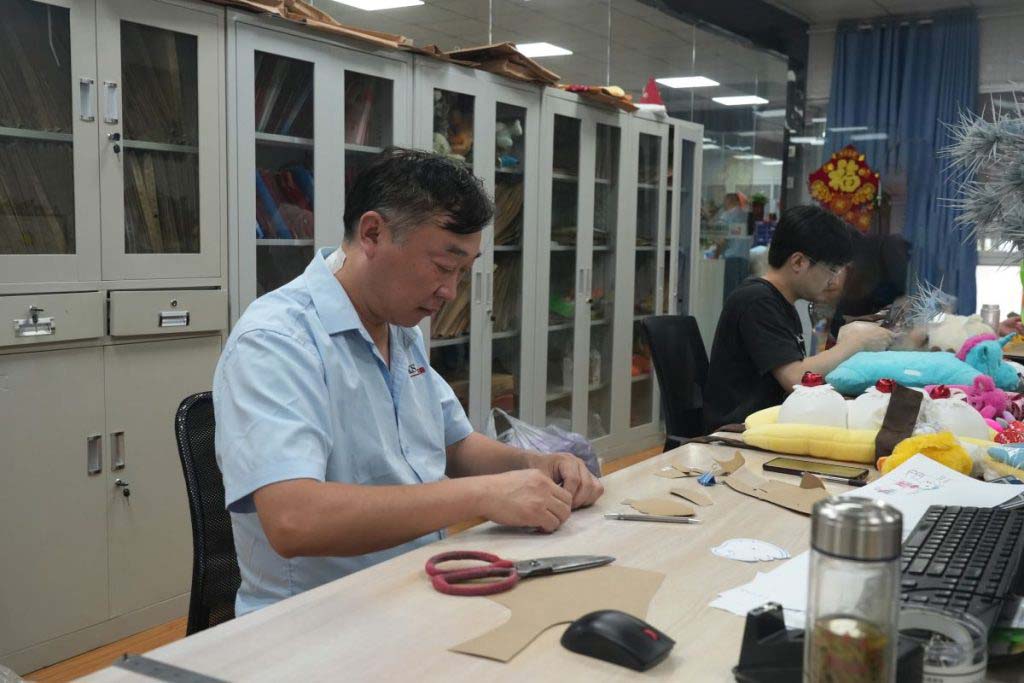
Development delays — where the sampling process extends beyond the planned timeline due to revision rounds, brief ambiguity, or material sourcing challenges — are one of the most common causes of production start delays. Every additional revision round adds one to two weeks to the development timeline. Three extra revision rounds on a design that needed one add three to six weeks to the project — pushing the production start by the same amount.
We prevent development and sampling delays through the development process discipline described throughout this guide:
Brief Completeness Standard
Our pre-sampling clarification protocol identifies and resolves all brief ambiguities before pattern making begins — preventing the assumption-based first-sample errors that make revision rounds necessary. A brief that requires one clarification conversation before sampling saves two to four weeks of revision time that the resulting incorrect assumptions would have required.
Revision Action List Discipline
Before beginning any revision round, we confirm a specific action list with the buyer — enumerating exactly what will be changed, what will not be changed, and what the buyer will assess in the revision sample. This confirmation prevents the most common revision inefficiency: addressing some revision items while missing others, requiring an additional round to address the overlooked items.
Material Availability Pre-Confirmation
Before beginning sampling with any material, we confirm that the material is available in sufficient quantity for both the sample and the anticipated bulk production requirement. Discovering at the production authorization stage that the sampling material is not available in bulk — requiring a material change and additional sampling to confirm the alternative — is a common delay source that our pre-confirmation step prevents.
Parallel Development for Multiple Designs
For buyers developing multiple designs simultaneously, we structure the development workflow to process designs in parallel — with dedicated pattern making and sampling resources assigned to each design — rather than sequentially. This parallel approach means that the development timeline for a five-design range is governed by the slowest design rather than by the sum of individual design timelines, reducing total development duration by 60 to 70 percent compared to sequential development.
How Do We Prevent Delays During the Production Run?
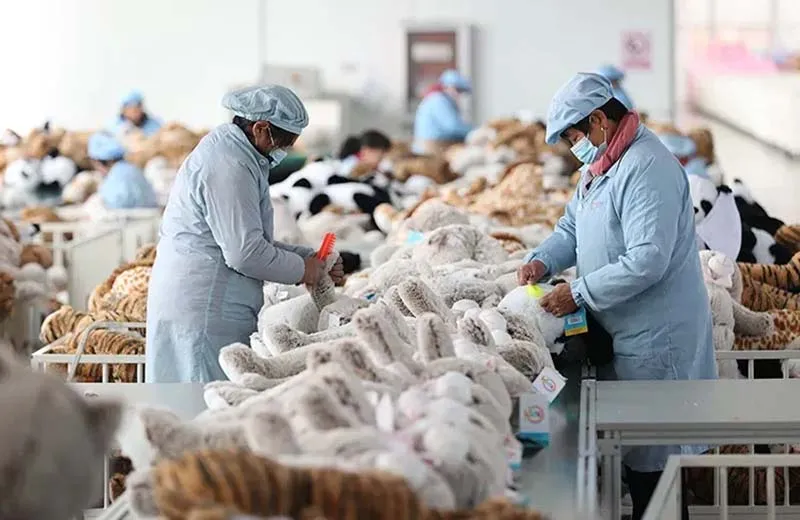
Production run delays originate from pace shortfalls that go undetected until they have created a significant gap between production completion and the planned date, and from quality issues that require production halts and correction time. We prevent both through active production monitoring and proactive pace management.
Daily Production Pace Tracking
From the first day of production, we track completed units against the planned daily production rate — identifying any pace shortfall at the earliest opportunity. This tracking is not conducted informally by production supervisors estimating completion — it is a documented daily count compared to the production plan.
Our pace monitoring escalation protocol:
| Pace Shortfall Detected | Escalation Level | Action |
|---|---|---|
| 5–10% below plan | Internal monitoring | Investigate cause, implement minor adjustment |
| 10–20% below plan | Project manager notification | Assess recovery options, prepare buyer update |
| 20%+ below plan | Buyer notification | Present specific timeline impact assessment and recovery options |
| Recovery not possible within buffer | Buyer timeline update | Revised delivery estimate with specific options |
This escalation protocol ensures that timeline risk is visible to the buyer at the earliest point where meaningful intervention is still available — rather than at the point where the delivery date has already been missed.
Production Halt Prevention Through IPQC
The most significant production run delays arise from quality deviations that require production to be halted while the cause is identified and corrected. Our IPQC system prevents these halts by catching quality deviations at the monitoring interval — typically affecting 150 to 200 units — rather than at the batch level, where the halt affects the remaining production volume.
When an IPQC check identifies a deviation — a weight reading outside the tolerance range, an embroidery position outside the coordinate specification — production of the affected operation is halted immediately, the cause is identified, the correction is implemented and verified, and production resumes. The total halt time for a promptly identified and corrected IPQC deviation is typically one to two hours. The same deviation, if discovered at FQC, requires a halt plus rework of all affected units — typically three to five days.
The time difference between IPQC detection and FQC detection is what our production timeline buffer is designed to absorb. By catching deviations early through IPQC monitoring, we keep quality corrections within the buffer rather than allowing them to consume the delivery timeline.
Material Quantity Management During Production
When fabric consumption is tracking above the planned rate — due to higher than expected cutting waste, roll width variation, or quality rejection of fabric sections — we identify this at the 50 percent production milestone and initiate supplementary sourcing immediately. This early identification ensures that supplementary material arrives before the original quantity is exhausted, preventing the production halt that material shortage would create.
How Do We Prevent Quality-Related Delays Before Shipment?
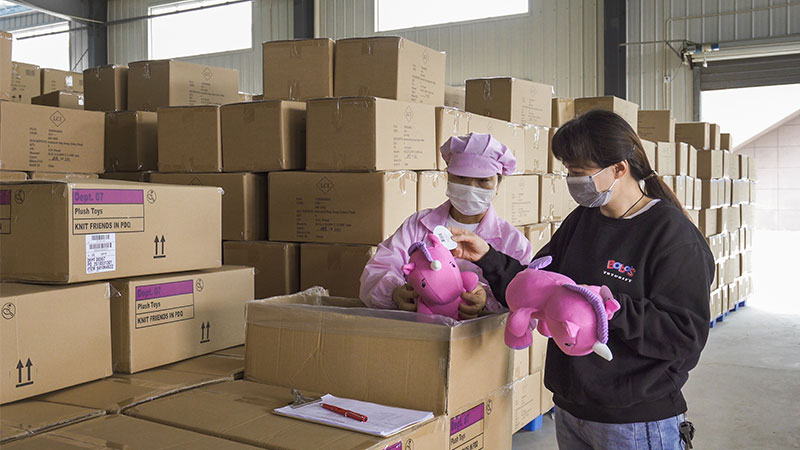
Quality-related delays before shipment — where FQC identifies batch failures that require rework before shipment can be authorized — are among the most commercially disruptive delays because they occur at the end of the production timeline when recovery options are most limited.
We prevent quality-related shipment delays primarily through the upstream quality management that prevents batch-level failures from occurring — the IQC, IPQC, and counter sample process that catches and corrects quality issues before they accumulate to the point where a batch-level failure is the outcome. When these upstream controls are effective, FQC confirms quality that has been maintained throughout production rather than discovering quality that was never managed.
When FQC does identify issues that require correction, our delay mitigation approach includes:
Rework Scope Assessment
When FQC identifies a defect category that requires rework, we immediately assess the scope — what proportion of the batch is affected, what the rework operation requires, and how long the rework will take. This assessment is conducted within two hours of the FQC finding, providing the earliest possible timeline impact estimate.
Parallel Rework and Reinspection Scheduling
When rework is required, we schedule the reinspection simultaneously with initiating the rework — so that the inspection appointment is secured before rework is complete rather than being booked after. This parallel scheduling reduces the delay between rework completion and reinspection by the inspection booking lead time — typically one to three days.
Rework Prioritization
When time is critical, rework operations are prioritized as production floor work — assigned to available operators on an immediate basis rather than scheduled as a future production activity. This prioritization ensures that rework begins within hours of FQC finding rather than being queued behind ongoing production.
Pre-Shipment Documentation Preparation
The compliance documentation package — test reports, compliance certificates, CPSIA tracking label confirmation, CE Declaration of Conformity — is prepared before FQC, not after. When FQC passes, shipment documentation is ready for immediate dispatch. When rework is required, the compliance documentation is already complete and does not add delay to the rework recovery timeline.
How Do We Prevent Logistics and Documentation Delays?
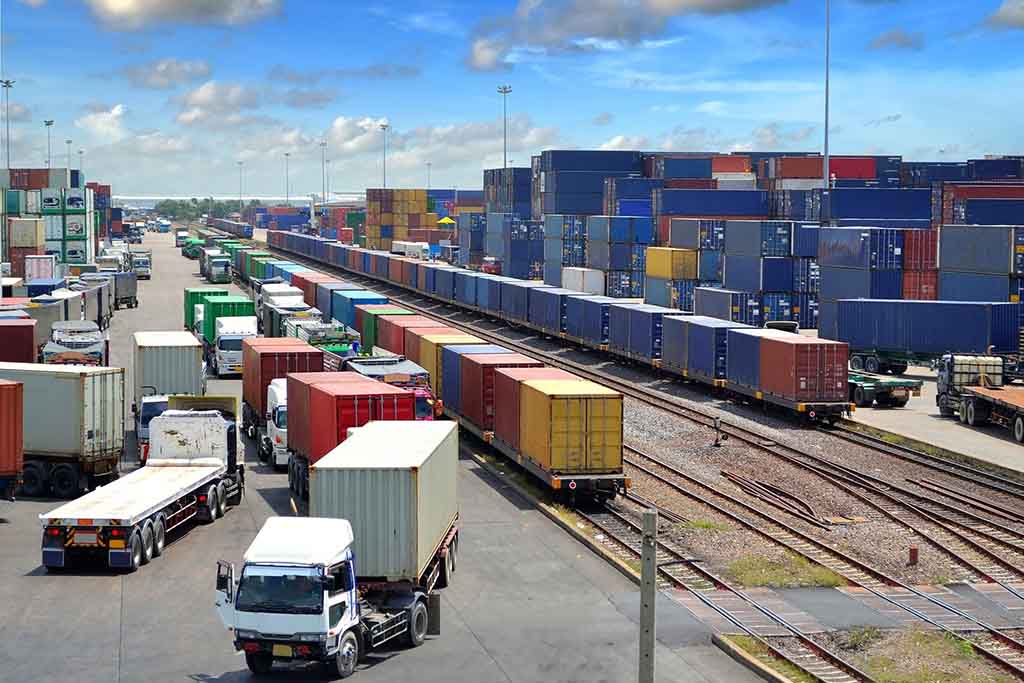
Logistics and documentation delays — where shipment is ready but cannot proceed because freight space is unavailable, documentation is incomplete, or customs requirements are not met — are among the most frustrating delay causes because they occur after production quality has been confirmed, when the entire commercial investment is complete and the delay is purely administrative.
We prevent logistics and documentation delays through systematic preparation that completes logistics arrangements and documentation before they are needed:
Advance Freight Booking
For all orders with defined delivery windows, we coordinate freight booking with our logistics partners in advance of production completion — securing freight space for the planned completion date. This advance booking ensures that freight is available at the completion date rather than requiring a new booking at a point when the desired departure may not have available space.
For ocean freight, advance booking of 14 to 21 days before planned production completion is standard. For air freight where the booking window is shorter, we maintain relationships with freight forwarders who provide priority access for time-critical shipments.
Documentation Completion Before Shipment Date
Our pre-shipment documentation checklist is completed during production — not at the shipment stage. This checklist includes:
| Document | Completion Timing | Responsible Party |
|---|---|---|
| Commercial invoice | After production completion, before FQC | Kinwin |
| Packing list | After quantity confirmation | Kinwin |
| CPSIA Children’s Product Certificate | During production (requires test reports) | Buyer with Kinwin support |
| CE Declaration of Conformity | During production | Buyer with Kinwin support |
| Test reports | During sampling/pre-production (proactive testing) | Testing laboratory |
| Material compliance certificates | At IQC clearance | Kinwin from suppliers |
| Shipping marks verification | After carton labeling | Kinwin |
| Barcode verification | After label application | Kinwin |
By completing each document at its earliest possible stage rather than leaving all documentation to the post-FQC period, we eliminate the documentation assembly delay that commonly holds shipment for two to five days after production and quality verification are complete.
Customs Pre-Clearance Support
For shipments to markets with specific customs requirements — US customs clearance, EU import documentation, UK post-Brexit customs — we prepare the specific documentation those requirements mandate and confirm its completeness before the shipment departs. This pre-departure confirmation prevents the customs hold that incomplete documentation creates — where goods arrive at the destination port but cannot be released until the missing documentation is provided.
How Do We Communicate Timeline Risk and Manage It Collaboratively with Buyers?

Prevention is the priority — but prevention is not always complete. When timeline risk develops despite our prevention systems, our commitment to buyers is proactive, specific, and honest communication that enables collaborative management rather than reactive response to a problem that has already materialized.
Our Timeline Risk Communication Standard
When our pace monitoring or planning assessment identifies a timeline risk — at any stage of the project — we communicate it to the buyer as soon as it is identified, not at the next scheduled milestone update.
The communication standard for timeline risk includes:
| Communication Element | What We Provide |
|---|---|
| Specific timeline impact | Exact estimated delay in days — not “possibly slightly delayed” |
| Root cause identification | Specific cause of the delay — material sourcing, pace shortfall, quality correction |
| Recovery options | Specific options available with timeline and cost implications for each |
| Recommendation | Our recommended approach with rationale |
| Decision timeline | When the buyer needs to confirm their choice to preserve each option |
This specific, options-based communication format gives buyers the information they need to make informed decisions rather than responding to vague warnings with imprecise implications.
Recovery Options We Can Provide
When a timeline risk is identified with sufficient advance notice, the following recovery options may be available:
| Recovery Option | Timeline Recovery | Cost Implication | When Available |
|---|---|---|---|
| Extended production shifts | 2–5 days | Labor premium — typically 15–25% of production cost for the extension period | When labor resources are available |
| Additional production workstations | 3–7 days | Resource allocation premium | When factory capacity allows |
| Air freight substitution | 14–21 days (ocean to air) | 200–400% freight cost increase | When production is complete or near complete |
| Partial shipment — available portion | Immediate for portion | Split shipment logistics cost | When partial inventory can serve immediate need |
| Revised delivery acceptance | N/A — absorbs delay | No additional cost | When commercial impact of delay is manageable |
The Collaborative Timeline Decision
Our role in timeline management is not to make the delivery decision for the buyer — it is to provide the information that enables the buyer to make an informed decision about how to respond to a timeline risk that we have identified.
The buyer’s commercial context — the urgency of the delivery window, the cost tolerance for expedited freight, the flexibility of their retail commitments — determines which recovery option is appropriate. Our role is to present the options accurately, recommend our preferred approach based on our production knowledge, and execute whatever approach the buyer confirms.
This collaborative decision-making model works because both parties have the information they need: the buyer has the commercial context, and we have the production status and logistics knowledge. Together, these information sets produce better timeline decisions than either party would make independently.
At Kinwin, delay prevention is a production discipline — not a customer service aspiration. The systems described in this guide are operational standards applied to every production run, for every buyer, at every order volume. We build production plans that include buffers. We map material lead times before setting production schedules. We monitor pace from day one. We communicate timeline risk immediately when it develops.
The buyers who work with us experience this not as a feature but as the normal baseline of what professional plush manufacturing looks like — because we believe that timeline reliability is as much a part of quality as the stitching and filling and embroidery that are more directly visible.
If you are planning a production run with a specific delivery requirement and want to understand how our planning process would approach your timeline — what the critical path looks like, where the risks are, and what our prevention system addresses — we would be glad to walk through it with you.
Reach out to our team at [email protected] or visit kinwintoys.com to start that conversation.
Conclusion
Production delays in plush manufacturing are not random events — they are predictable consequences of specific planning gaps, material management failures, development process weaknesses, quality system inadequacies, and communication failures that allow developing problems to compound before they are addressed.
At Kinwin, we prevent delays by addressing each of these causes systematically — through capacity reservation before order confirmation, material lead time mapping before schedule setting, brief clarification before sampling begins, pace monitoring from production day one, IPQC detection of quality issues before they become batch failures, and proactive timeline risk communication the moment a risk is identified.
No production system eliminates delay risk entirely. What distinguishes professional manufacturing from unpredictable manufacturing is not the absence of challenges — it is the presence of systems that prevent the majority of delay causes from materializing, detect the remainder at the earliest possible stage, and communicate what cannot be prevented in time for collaborative management that limits commercial impact.
That is what our delay prevention system is built to deliver — and it is what we apply to every production run we manage.
FAQ
Q1: How far in advance should buyers communicate their delivery requirements to Kinwin, and how does advance notice affect what timeline options are available?
Advance notice is the most significant single factor in what timeline options are available for any given production run. For standard production orders with ocean freight delivery, a minimum of 12 to 14 weeks from production authorization to delivery is typically required — accounting for material lead times, sampling if needed, production duration, FQC, freight booking, transit, and customs clearance. For buyers who communicate their delivery requirement 16 to 20 weeks in advance, this timeline is achievable comfortably within standard processes and standard freight. For buyers who communicate their requirement 10 to 12 weeks in advance, the timeline is achievable but requires tighter management with minimal buffer. For buyers who communicate their requirement 8 weeks or less in advance, air freight substitution for ocean freight is typically required — adding significant cost — and some timeline elements may need to be compressed in ways that add risk. The practical recommendation is to communicate delivery requirements at the project initiation conversation — before design brief submission — so that the production schedule is built around the delivery requirement from the start rather than being fitted to the requirement retrospectively.
Q2: What is the most common cause of production delays that Kinwin sees across its client projects, and how does your prevention system specifically address it?
The most common delay cause we encounter is excess sampling revision rounds — where the development timeline extends beyond the planned window due to revision rounds that could have been prevented through better brief preparation or clearer revision management. This is consistently the highest-frequency delay cause because it affects projects where the design brief was submitted with ambiguities that produced assumption-based first samples, or where revision feedback was not confirmed as a specific action list before revisions began, leading to partial correction and additional rounds. Our specific prevention addresses both root causes: the pre-sampling clarification protocol resolves brief ambiguities before pattern making begins, and our action list confirmation process before each revision ensures that all revision items are correctly understood and addressed in a single round. Together, these practices consistently reduce revision rounds from the three to five that undisciplined development processes require to one to two that clearly specified development produces. Each prevented revision round represents one to two weeks of development timeline preserved.
Q3: How does Kinwin handle situations where a buyer’s delivery requirement has changed after production has already started — for example, due to a retail partner bringing forward their order requirement?
When a buyer’s delivery requirement changes during active production, our response process starts with an immediate production status assessment: how many units are complete, what is the current pace, and what is the most optimistic completion date achievable under current or enhanced production conditions. This assessment is conducted within 24 hours of receiving the revised requirement. The assessment output is a specific options presentation — typically including: whether the enhanced timeline is achievable through extended production shifts or additional resources, what the cost implications of each option are, and what timeline can be committed to with confidence. We do not commit to a revised timeline that is not achievable — because a committed timeline that is then missed is worse commercially than an honest assessment of what is possible. If the buyer’s revised requirement cannot be met through any production adjustment, we provide the earliest achievable date and discuss whether a partial shipment of completed units can serve the immediate retail need while the remainder is shipped on the standard timeline.
Q4: Does Kinwin guarantee delivery timelines, and what recourse is available to buyers if a committed delivery date is not met due to factory-side delays?
We commit to production timelines that are achievable based on accurate assessment of production requirements, material lead times, and logistics parameters — and we take commercial responsibility for delays that originate from factory-side failures to execute against those commitments. Our purchase agreements include specific production completion milestones and final delivery date commitments, with defined commercial remedies for factory-side delays that affect committed dates. These remedies typically include sharing or absorbing the incremental cost of air freight when ocean freight is no longer viable due to factory-side delay, and price adjustments for delays that cause buyers to miss defined commercial windows. We do not guarantee delivery dates against circumstances outside our control — including shipping delays from carrier disruption, customs processing delays, or force majeure events — but we do take responsibility for delays within our production and logistics management sphere. The specific commercial terms are discussed and agreed at the order confirmation stage, not after a delay has occurred.
Q5: How does Kinwin’s delay prevention approach work for reorders, and are reorders faster than first orders?
Reorders are consistently faster than first orders — typically by three to five weeks — because the development stage is either eliminated or significantly compressed, and because the production knowledge accumulated in the original project reduces the management overhead at every subsequent stage. For a standard reorder with no design changes, the development timeline is replaced by a counter sample confirmation — building one prototype with the reorder materials to confirm production readiness before authorizing the full run. This takes one to two weeks rather than the four to eight weeks that original sampling requires. Material sourcing for reorders is also faster because the material specifications are already established and the suppliers are already qualified — reducing the sourcing lead time to the material production and delivery time rather than including supplier qualification time. The production planning stage is faster because the tech pack, work instructions, and production records from the original run are available immediately — production can begin without the documentation preparation that first orders require. These compounded efficiency gains make reorder timelines more predictable and more compressible when delivery windows are tight.