Skip to content
Pre-shipment inspection is the quality verification event that determines whether a completed production batch meets the standards established in the approved sample and documented in the product specification — before the goods leave the factory and before the buyer’s balance payment is released. It is the final quality gate in the production process: the systematic check that either confirms the batch is ready to ship or identifies problems that must be resolved before shipment is authorized.
For buyers who source plush toys remotely — which describes the majority of buyers working with China-based manufacturers — pre-shipment inspection is one of the most commercially important tools available. Without it, the buyer’s first real quality assessment of a bulk production batch happens when the shipment arrives — after the goods have been paid for, shipped internationally, and cleared customs. Any quality failures discovered at that point are expensive and slow to resolve.
With pre-shipment inspection, quality failures are identified at the factory before shipment — while the goods are still accessible, while payment leverage is still available, and while correction options are still practical. The difference between these two scenarios — problem discovered at delivery versus problem discovered pre-shipment — is the difference between managing a quality situation with leverage and managing one without it.
This guide explains exactly how pre-shipment inspection works for plush toys — what it covers, how it is structured, what defect classifications apply, and how buyers should act on inspection results to protect their commercial interests.
Why Pre-Shipment Inspection Is the Last Line of Defense Before Quality Problems Reach Customers?
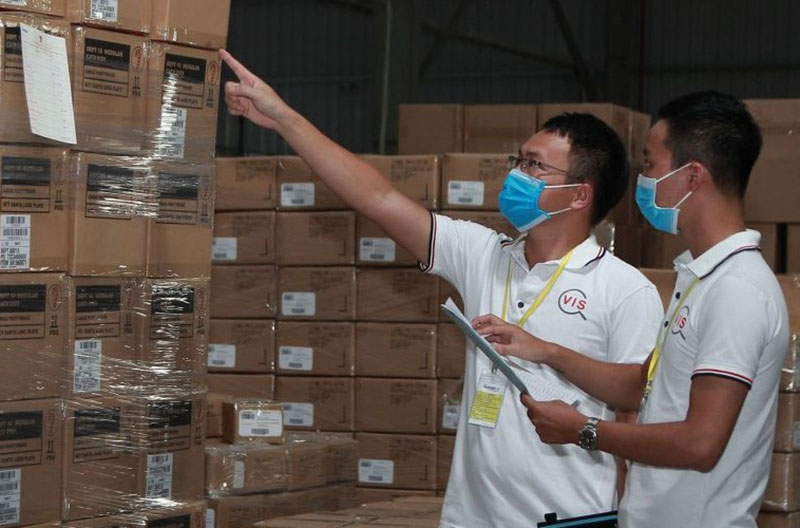
Pre-shipment inspection is the last line of defense because it is the final opportunity to verify quality while corrective options are still practical and while the commercial leverage of the balance payment is still available. After shipment, the buyer’s position changes fundamentally: the goods are in transit, the leverage of payment retention is gone, and any quality problems that were not identified before shipping must be managed through negotiation, rework on arrival, customer-facing damage control, or the far more expensive processes of rejection, return, or recall.
The commercial logic of pre-shipment inspection is straightforward when total cost is considered:
| Quality Management Scenario | When Problem Is Identified | Correction Cost | Leverage Available |
|---|---|---|---|
| Problem caught at IQC (material stage) | Before production begins | Very Low | High — material can be replaced |
| Problem caught at IPQC (during production) | During production | Low to Medium | High — correction before completion |
| Problem caught at factory FQC (internal) | After production, before inspection | Medium | High — factory corrects before payment |
| Problem caught at pre-shipment inspection | After production, before shipment | Medium — factory still responsible | Good — balance payment retained |
| Problem caught on arrival | After shipment, on delivery | High — goods received | Low — payment already released |
| Problem discovered by customers | After delivery and sale | Very High — returns, reviews, brand damage | None |
The cost of conducting pre-shipment inspection — typically $300 to $600 for a standard third-party inspection visit — is a small fraction of the cost of any of the post-shipment problem scenarios it prevents. The return on this investment is asymmetric: the inspection cost is certain and bounded; the potential cost of the problems it catches is uncertain and potentially very large.
What Pre-Shipment Inspection Is Not
Pre-shipment inspection is not a guarantee that every unit in the batch meets the quality specification — because it is a sampling-based assessment, not a 100 percent unit-by-unit check. A statistically adequate sample of the batch is inspected, and the results are used to infer the quality of the full batch. Units outside the sample are not individually assessed.
Pre-shipment inspection is also not a substitute for the earlier quality controls — IQC, IPQC, first-off inspection — that prevent problems from accumulating to the point where a pre-shipment inspection would catch them as a batch failure. The inspection confirms the effectiveness of the production quality system. It does not replace that system.
How Is a Pre-Shipment Inspection Structured and What Does It Cover?
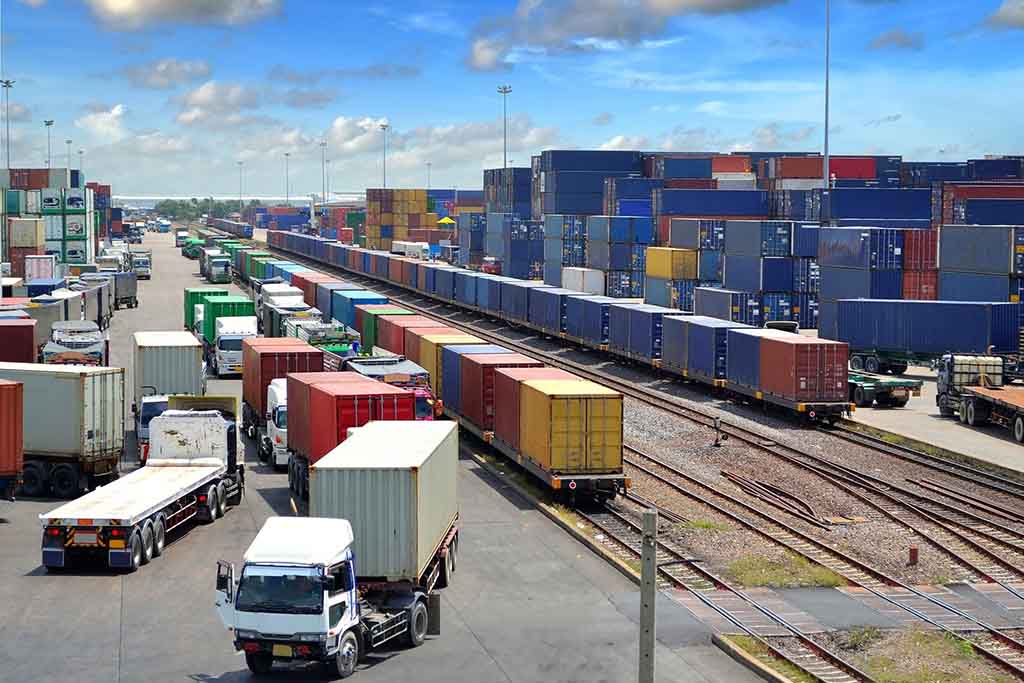
A pre-shipment inspection for plush toys follows a defined structure that covers multiple quality dimensions systematically — from the general condition of the packed goods through product-specific quality checks against the approved specification. Understanding this structure helps buyers specify their inspection requirements precisely and evaluate inspection results accurately.
Here is the complete structure of a professional pre-shipment inspection for plush toys:
Inspection Structure Overview
| Inspection Phase | What Is Assessed | Time Required |
|---|---|---|
| Production completion verification | Confirm total production quantity is complete and available | 15–20 minutes |
| Carton and packaging check | Shipping marks, carton quantity, carton condition | 20–30 minutes |
| Sampling | Random carton selection and unit selection per AQL protocol | 30–45 minutes |
| Product visual inspection | Each sampled unit assessed against approved criteria | 60–120 minutes |
| Product measurement | Key dimensions measured against specification | 30–60 minutes |
| Functional and safety checks | Pull force tests, accessible small parts check | 30–45 minutes |
| Packaging check | Inner packaging, labels, inserts | 20–30 minutes |
| Barcode and label verification | Barcode scan, label content verification | 15–20 minutes |
| Documentation review | Compliance certificates, test reports | 15–20 minutes |
| Report preparation | Inspector completes inspection report | 30–45 minutes |
Production Completion Verification
Before any product sampling begins, the inspector verifies that the total ordered quantity is present and packaged — confirming that the batch being inspected represents the complete production run rather than a selected portion. This verification includes counting packed cartons, confirming carton quantities match the packing list, and verifying that all cartons are sealed and ready for shipment.
This step prevents a specific quality management issue: a factory presenting a selected portion of the production for inspection — typically the better-quality units — while holding back units that would pull the inspection result below the pass threshold. A professional inspection protocol requires that the complete batch be present and that carton selection for sampling be random.
Carton and Shipping Verification
The carton inspection covers the outer shipping packaging — verifying that cartons are correctly marked with shipping address, product details, quantity, and any market-specific required markings. It also checks for carton damage — damp patches, crush damage, tears — that could affect the product’s condition in transit.
How Does AQL Sampling Work for Plush Toy Inspection?
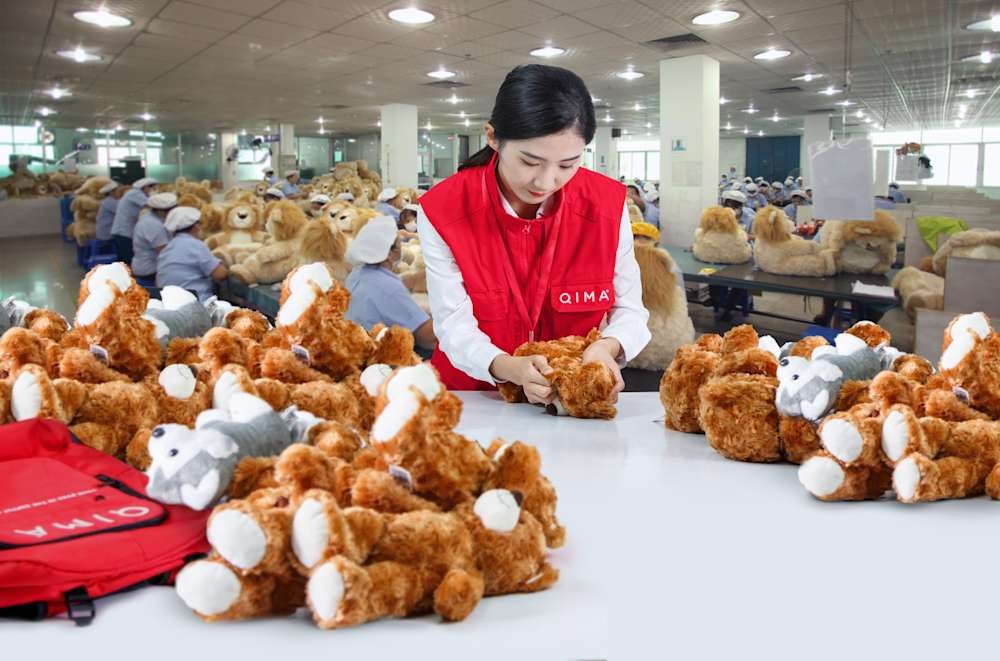
AQL — Acceptable Quality Limit — is the statistical framework that determines how many units are inspected from a batch and what defect count constitutes a pass or fail result. It is the bridge between inspecting a sample and drawing a conclusion about the full batch — providing a statistically grounded basis for quality decisions that would not be possible from ad hoc sampling.
AQL sampling for plush toy pre-shipment inspection uses ISO 2859-1 as the reference standard and applies Inspection Level II as the default for most commercial applications. The process involves three decisions: the lot size (the total number of units in the batch being inspected), the inspection level (how intensive the sampling will be), and the AQL value (what defect rate is considered acceptable for each defect class).
Here is a practical AQL sampling table for the most common plush toy production batch sizes:
| Lot Size | Sample Size Code | Sample Size (Level II) | AQL 1.5 Ac/Re | AQL 2.5 Ac/Re | AQL 4.0 Ac/Re |
|---|---|---|---|---|---|
| 151–280 | G | 32 | 1/2 | 2/3 | 3/4 |
| 281–500 | H | 50 | 1/2 | 3/4 | 5/6 |
| 501–1,200 | J | 80 | 2/3 | 5/6 | 7/8 |
| 1,201–3,200 | K | 125 | 3/4 | 7/8 | 10/11 |
| 3,201–10,000 | L | 200 | 5/6 | 10/11 | 14/15 |
| 10,001–35,000 | M | 315 | 7/8 | 14/15 | 21/22 |
Reading the table: Ac = Accept number (maximum defects allowing pass). Re = Reject number (minimum defects triggering fail). For a 1,000-unit batch at AQL 2.5 (major defects), the inspector examines 80 units. If 5 or fewer major defects are found, the batch passes. If 6 or more are found, the batch fails.
AQL Values for Different Defect Classes
Different defect classes are assigned different AQL values — reflecting the different commercial and safety significance of different types of defects:
| Defect Class | Definition | Typical AQL | Rationale |
|---|---|---|---|
| Critical | Safety-relevant defects — accessible sharp edges, failing pull force tests, CPSIA lead violations | 0 (zero tolerance) | Safety risk to end user |
| Major | Defects that affect product function, appearance significantly, or compliance | 2.5 | Commercial quality standard |
| Minor | Defects noticeable under close inspection but not affecting function or primary appearance | 4.0 | Acceptable variation threshold |
The Random Sampling Requirement
For AQL results to be statistically valid, the sample units must be selected randomly from the full batch — not selected by the factory or by the inspector based on any quality-related criterion. The standard method is to select cartons randomly from the batch (every Nth carton, or random number selection), then select units from within each selected carton.
A factory that pre-selects the cartons presented for inspection, or that repacks higher-quality units into cartons intended for inspection, undermines the statistical validity of the AQL result. Professional inspectors require access to the full batch and conduct carton selection independently — which is one of the reasons why independent third-party inspection provides stronger quality assurance than factory self-inspection.
How Are Plush Toy Defects Classified and What Triggers a Batch Rejection?
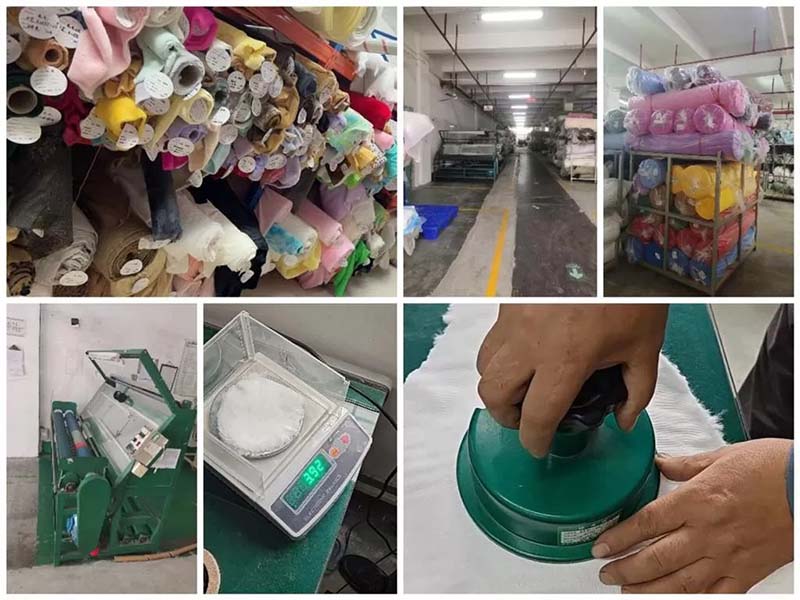
Defect classification is the analytical framework that converts each quality observation during inspection into a category that determines its weight in the pass/fail calculation. Not all defects are equal — a safety-critical defect that could cause injury has a different commercial and regulatory significance from a minor cosmetic imperfection, and the inspection protocol reflects this difference through the classification system.
Here is a comprehensive defect classification guide for plush toy inspection:
Critical Defects — Zero Tolerance
| Defect | Description | Safety Risk |
|---|---|---|
| Accessible sharp point or edge | Any sharp point or edge accessible to a child | Laceration, puncture |
| Failing pull force test | Eye, nose, or accessory detaches under specified pull force | Choking hazard |
| Accessible small part | Any component that fits in small parts cylinder after pull test | Choking hazard |
| Strangulation risk | Any cord, string, or loop longer than specified maximum | Strangulation |
| Chemical non-compliance evidence | Visual evidence of non-compliant materials (where identifiable) | Health risk |
| Exposed wire or hard internal structure | Sharp internal component accessible through fabric | Injury risk |
Major Defects — AQL 2.5
| Defect | Description | Commercial Impact |
|---|---|---|
| Wrong color — visible | Product color significantly deviates from approved specification | Brand accuracy failure |
| Shape deformation | Product does not match approved sample proportions | Character identity failure |
| Significant stuffing deficiency | Product visibly under-stuffed — shape does not hold | Quality perception failure |
| Uneven stuffing | Visible asymmetry or lumping in stuffing distribution | Shape quality failure |
| Embroidery position deviation | Feature placement exceeds tolerance specification | Character expression error |
| Embroidery quality failure | Skipped stitches, thread breaks, incomplete coverage | Visual quality failure |
| Seam opening | Visible seam gap — stuffing may be accessible | Quality and potential safety |
| Accessory wrong position | Eye, nose, or other feature significantly mispositioned | Character accuracy failure |
| Wrong accessory | Different accessory from specification — wrong color, size, style | Specification compliance failure |
| Label missing or wrong content | Required label absent or content incorrect | Compliance failure |
| Fabric surface defect — significant | Visible contamination, hole, or pile damage visible in normal use | Visual quality failure |
Minor Defects — AQL 4.0
| Defect | Description | Commercial Impact |
|---|---|---|
| Minor thread trim — loose | Thread not trimmed to specification but not affecting appearance significantly | Minor finishing quality |
| Minor color variation — within tolerance | Color slightly off but within acceptable range | Acceptable variation |
| Minor embroidery inconsistency | Small stitch variation not affecting character expression | Minor quality variation |
| Minor stuffing inconsistency | Slight density variation not affecting shape | Minor tactile variation |
| Packaging minor issue | Polybag slightly off center, insert slightly misaligned | Minor packaging quality |
| Minor surface pile variation | Small area of pile direction inconsistency not prominently visible | Minor surface quality |
Batch Rejection Triggers
A batch fails pre-shipment inspection when:
- Any critical defect is found (zero tolerance — single critical defect triggers rejection)
- The number of major defects in the sample meets or exceeds the AQL 2.5 reject number for the batch size
- The number of minor defects in the sample meets or exceeds the AQL 4.0 reject number for the batch size
What Specific Quality Checks Are Conducted on Plush Toys During Inspection?

Beyond the defect classification framework, effective plush toy inspection requires specific assessment methods — physical tests, measurement techniques, and visual evaluation protocols — that provide objective, documented evidence of quality rather than subjective impressions.
Here is a complete guide to the specific quality checks conducted during plush toy pre-shipment inspection:
Visual Quality Checks
| Check | Method | Reference Standard | Pass Criterion |
|---|---|---|---|
| Color accuracy | D65 light box comparison to approved swatch | Approved color swatch | Within approved Pantone tolerance |
| Shape and proportion | Side-by-side comparison to counter sample | Approved counter sample | Visually consistent with counter sample |
| Embroidery position | Coordinate measurement from defined reference point | Tech pack coordinate specification | Within ±3mm of specified coordinates |
| Embroidery quality | Close visual — thread tension, coverage, color | Approved counter sample embroidery | No skipped stitches, complete coverage |
| Fabric surface quality | Visual scan under good light | Zero defect standard for visible surfaces | No holes, contamination, or significant pile damage |
| Pile direction consistency | Visual across all surface panels | Approved pile direction specification | Consistent direction across all panels |
| Seam quality | Visual inspection of all accessible seams | No gaps, correct stitch density | Clean seams, no visible gaps |
| Closing seam | Specific visual and light pull assessment | Secure closure specification | No gap visible, secure under light pull |
| Accessory position | Measurement from defined reference points | Tech pack position specification | Within acceptable tolerance |
Physical and Functional Checks
| Check | Method | Standard Applied | Pass Criterion |
|---|---|---|---|
| Pull force — eyes | Perpendicular pull to specified force using gauge | EN71-1 / ASTM F963 force requirement | No detachment at required force |
| Pull force — nose | Perpendicular pull to specified force | EN71-1 / ASTM F963 force requirement | No detachment at required force |
| Pull force — buttons, badges | Perpendicular pull to specified force | EN71-1 / ASTM F963 force requirement | No detachment at required force |
| Seam strength | Pull test at defined seam locations | EN71-1 / ASTM F963 seam strength | No seam failure at required force |
| Small parts check | Post-pull-test components assessed in small parts cylinder | Small parts cylinder specification | No component fits cylinder |
| Filling density assessment | Hand compression and release — firmness check | Approved counter sample firmness reference | Consistent with counter sample |
| Weight check | Weigh unit on precision scale | Tech pack fill weight specification | Within ±5–8% of target weight |
| Accessible sharp edges | Edge and point check using safety test tool | Sharp edge specification | No accessible sharp point or edge |
Measurement Checks
| Measurement | Method | Reference | Tolerance |
|---|---|---|---|
| Overall height | Measuring tape from base to highest point | Tech pack dimension | ±5% |
| Overall width | Widest point measurement | Tech pack dimension | ±5% |
| Head circumference | Measuring tape around fullest head point | Tech pack dimension | ±5% |
| Limb length | Individual limb measurements | Tech pack dimension | ±5% |
| Label placement | Measurement from seam reference points | Specification placement | ±10mm |
Packaging and Compliance Checks
| Check | What Is Verified | Pass Criterion |
|---|---|---|
| CPSIA tracking label (US) | Label present, content correct | Correct information, correct placement |
| Age grade label | Correct age designation marked | Matches specification |
| Care instructions | Present, correct, legible | All required symbols/text present |
| Barcode | Scan test, product information match | Scans correctly, matches product data |
| Inner packaging | Polybag present, correct size, sealed correctly | Per packaging specification |
| Retail packaging (if applicable) | Box condition, insert placement, label content | Per packaging specification |
| Compliance documentation availability | Test reports, certificates available | All required documents present |
How Does Third-Party Inspection Differ from Factory Self-Inspection?

The distinction between factory self-inspection (the factory’s internal FQC) and third-party pre-shipment inspection (an independent inspection commissioned by the buyer) is one of the most practically important distinctions in plush toy quality management. Both are conducted on the same batch of goods. Both produce inspection reports. But they differ in ways that make their results structurally different in reliability and commercial utility.
Here is a comprehensive comparison:
| Dimension | Factory Self-Inspection | Third-Party Inspection |
|---|---|---|
| Inspector identity | Factory’s own QC personnel | Independent inspector from external organization |
| Commercial incentive | Factory benefits from passing result | Inspector has no financial interest in outcome |
| Reporting accountability | Report received by factory management | Report issued by independent organization |
| Buyer access to result | Buyer receives report factory chooses to share | Buyer receives report directly from inspection company |
| AQL protocol discipline | Variable — may be compromised under production pressure | Standardized protocol applied consistently |
| Defect classification consistency | Variable — factory may classify leniently | Consistent — independent criteria applied |
| Report documentation quality | Variable — format and detail varies | Standardized — professionally formatted, photographic evidence |
| Legal standing in dispute | Limited — factory self-reporting | Strong — independent documentation |
| Pre-payment timing | Typically completed before factory requests balance | Commissioned by buyer specifically before payment release |
| Credibility for retail partners | Low to Medium — may not be accepted | High — SGS, Intertek, Bureau Veritas reports accepted by major retailers |
Why Factory FQC Cannot Replace Third-Party Inspection
Factory self-inspection and third-party inspection serve different functions in the quality management system — and neither can fully substitute for the other.
Factory FQC catches the highest proportion of defects most efficiently — because the factory’s QC team works throughout the production run and can catch issues as they develop. But factory FQC has a structural limitation: the factory has a financial incentive for the batch to pass, because a failing result delays payment and may require costly rework. This incentive does not necessarily lead to dishonest reporting — but it consistently affects the borderline judgments that every QC assessment involves, particularly in the defect classification decisions that determine whether a defect is major (potentially failing) or minor (not failing).
Third-party inspection addresses this limitation by replacing the interested party’s judgment with an independent assessor’s judgment at the final quality gate. The independent inspector has no financial interest in whether the batch passes or fails — which means their defect classifications are free from the production-pressure influences that affect factory QC decisions at the margin.
For buyers whose payment structure retains the balance until after inspection, third-party inspection is the quality verification event that both parties can accept as objective — giving the factory confidence that the assessment is fair and giving the buyer confidence that the result is uninfluenced by the factory’s commercial interests.
What Documentation Should a Pre-Shipment Inspection Produce?

A professional pre-shipment inspection produces a comprehensive written report that documents every aspect of the inspection — what was checked, what was found, what measurements were taken, and what the overall pass/fail conclusion is. This documentation serves multiple functions: it is the quality assurance record that supports the buyer’s payment decision, the evidence basis for any quality dispute that arises, the compliance reference for retailer and platform requirements, and the production quality baseline for reorder comparison.
Here is a complete guide to what a professional inspection report should contain:
Inspection Report Content Requirements
| Report Section | Content | Why It Matters |
|---|---|---|
| Inspection overview | Date, location, inspector identity, product details, batch size | Identifies the specific inspection event |
| Quantity verification | Cartons present, units per carton, total count | Confirms batch completeness |
| Sampling information | Sample size, AQL level, carton selection method | Documents statistical basis of inspection |
| Product identification | Style name, SKU, order number, approved sample reference | Links inspection to specific order and specification |
| AQL results summary | Defects found by class, accept/reject conclusion | Immediate pass/fail determination |
| Defect detail | Each defect type found — quantity, description, photo | Evidence basis for each finding |
| Measurement results | Each measured dimension with specification and actual value | Objective dimensional compliance evidence |
| Pull force test results | Each test conducted, force applied, result | Safety test evidence |
| Weight check results | Units weighed, weights measured, specification reference | Density compliance evidence |
| Packaging compliance | Label content, barcode scan, packaging condition | Compliance documentation |
| Color assessment | Color comparison result under D65 | Visual quality evidence |
| Embroidery assessment | Position measurements, quality findings | Character quality evidence |
| Photographic documentation | Images of passed and failed items, defect examples | Visual evidence supporting written findings |
| Inspector conclusion | Overall pass/fail recommendation | Summary judgment |
| Inspector signature | Signed authentication of report | Professional accountability |
Photographic Documentation Standards
Photographic documentation is the most important evidence component of the inspection report — because photographs provide objective visual evidence that supports every written finding and that can be evaluated independently by the buyer without requiring specialist interpretation.
A professional inspection report should include:
- At least one photograph of the overall inspection setup showing the sampled units
- Photographs of all defects found, with each defect clearly visible and annotated
- Comparison photographs showing passed units alongside the approved counter sample or reference
- Close-up photographs of pull force tests and measurement setups
- Photographs of all labels, barcodes, and packaging checked
The photographic record is also the primary reference for any quality dispute that arises after the inspection — providing visual evidence of the actual condition of the goods at the time of inspection rather than relying on written descriptions that can be interpreted differently.
How Should Buyers Act on Inspection Results Before Authorizing Shipment?
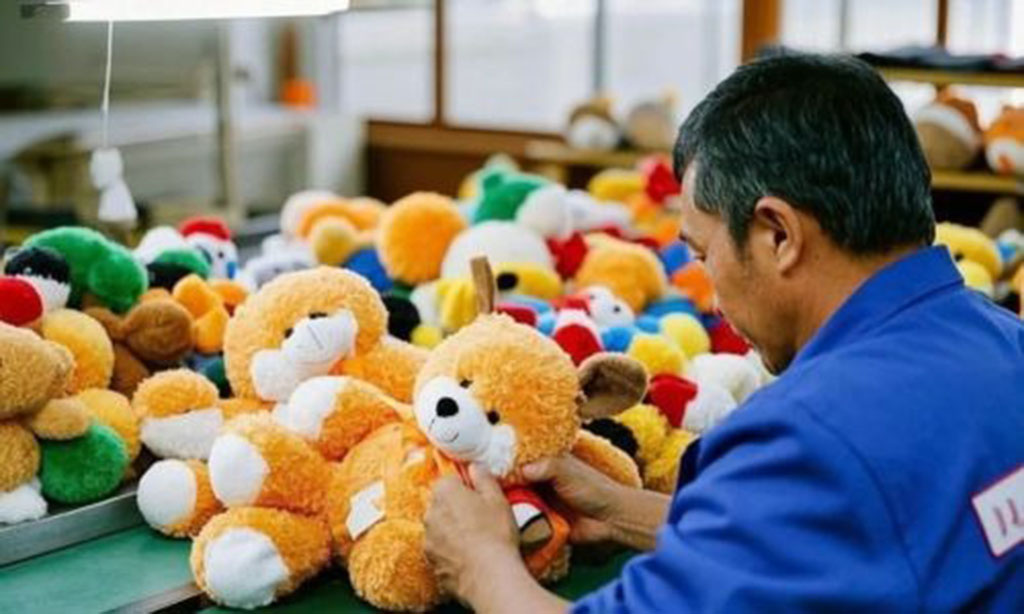
The commercial value of pre-shipment inspection is fully realized only when buyers act on inspection results decisively before authorizing shipment — using the findings to make informed decisions about whether to release payment, require rework, accept with condition, or reject the batch.
Here is a complete decision framework for acting on inspection results:
Scenario 1 — Clean Pass
Situation: AQL sample shows defect counts within acceptable range for all defect classes. No critical defects found.
Action: Authorize shipment and release balance payment. File inspection report in compliance documentation system.
Documentation: Retain inspection report as quality compliance record for the batch.
Scenario 2 — Pass with Minor Issues
Situation: Batch passes AQL for critical and major defects. Minor defect count at or near the accept threshold.
Action: Authorize shipment with documented awareness of minor issue. Consider whether the minor issue should be addressed in the production specification for future orders.
Documentation: Note minor issues in the supplier performance record for reference in next order briefing.
Scenario 3 — Fail with Remediable Defects
Situation: Batch fails due to major or critical defects that can be corrected through rework — wrong labels, missing labels, embroidery position corrections, closing seam reinforcement.
Action: Do not authorize shipment. Present specific rework requirement to factory with defined completion standard. Commission reinspection after rework is completed. Release balance payment only after reinspection pass.
Communication to factory: Written rework instruction specifying exactly what must be corrected and the standard the reinspection will apply.
Scenario 4 — Fail with Non-Remediable Defects
Situation: Batch fails due to defects that cannot be economically corrected — significant color deviation across the batch, systematic stuffing deficiency requiring full restuffing, dimensional errors requiring pattern correction.
Action: Do not authorize shipment. Present findings to factory in writing with photographic evidence. Negotiate resolution — replacement production, price reduction, or batch destruction depending on severity and factory accountability.
Commercial negotiation basis: The retained balance payment is the primary commercial leverage for negotiating resolution. Do not release payment before resolution terms are agreed and confirmed.
Scenario 5 — Fail with Critical Defects
Situation: Any critical defect found — pull force failure, accessible small parts, sharp edges.
Action: Do not authorize shipment under any circumstances. Critical defects cannot be accepted with commercial accommodation — they represent genuine safety risks that must be fully remediated before any units ship.
Rework requirement: 100 percent reinspection and rework of all units — not AQL sampling — before reinspection is commissioned.
The Reinspection Protocol
When rework is required before shipment, the reinspection must verify that the specific defects identified in the original inspection have been corrected — not simply repeat the original inspection protocol on the assumption that rework was completed correctly.
The reinspection brief should specify exactly which defects were found in the original inspection and require the inspector to verify specifically that those defects have been addressed in addition to conducting the standard AQL inspection on the reworked batch.
At Kinwin, we actively support buyers in structuring their pre-shipment inspection protocols — recommending appropriate AQL levels for the product and market, coordinating with SGS and Intertek for inspection scheduling, and providing the production documentation that inspectors need to conduct a fully informed assessment.
We view pre-shipment inspection not as a constraint on our relationship with buyers but as a component of the transparency that makes long-term manufacturing partnerships productive for both parties. Our products consistently pass third-party inspection because our production quality management system is designed to prevent the defects that inspection catches — which means pre-shipment inspection serves as confirmation of our quality rather than as a discovery of problems we did not know about.
If you are planning an upcoming production run and want to understand how to structure pre-shipment inspection for your specific product — what AQL levels to specify, which checks to include, and how to structure the defect classification criteria — we would be glad to discuss it with you.
Reach out to our team at [email protected] or visit kinwintoys.com to start that conversation.
Conclusion
Pre-shipment inspection is the quality governance mechanism that gives buyers the most commercially valuable thing available in remote manufacturing relationships: verified, documented evidence of batch quality before payment is released and before goods leave the factory.
Understanding how inspection is structured — the AQL sampling framework, the defect classification system, the specific checks applicable to plush toys, the difference between factory and third-party inspection, and how to act on results decisively — transforms pre-shipment inspection from a cost to be minimized into a quality investment to be applied strategically.
Buyers who conduct systematic pre-shipment inspection on every significant order consistently experience fewer quality failures reaching customers, stronger commercial positions when problems do arise, and better long-term supplier relationships built on transparent, documented accountability rather than trust that is tested only when things go wrong.
The investment is $300 to $600 per inspection visit. The protection is the prevention of quality problems whose remediation costs consistently exceed that investment by an order of magnitude.
FAQ
Q1: How far in advance should a pre-shipment inspection be scheduled, and what information needs to be provided to the inspection company?
Pre-shipment inspection should be scheduled when the production run is approximately 80 to 85 percent complete — far enough in advance that the inspection company can confirm inspector availability for the planned inspection date, but not so early that production may not be complete by the inspection date. For most inspection companies operating in China’s plush manufacturing regions, a minimum of three to five business days advance notice is required, though seven to ten days is preferable to ensure the most experienced inspectors are available. Information required at scheduling includes: factory name and address, contact person at the factory, total quantity and product description, the inspection date preference, the AQL levels to be applied, any special inspection requirements (specific safety tests, measurement requirements, documentation checks), and the approved counter sample reference or photographs for the inspector’s reference. If special equipment is required — pull force testing equipment, D65 light box, precision scale — confirming availability or arranging provision in advance prevents inspection delays on the day.
Q2: Can pre-shipment inspection be conducted by video call rather than in-person, and what are the limitations of remote inspection?
Remote video inspection — conducted through a live video call between an inspector at the factory and the buyer — is technically possible and has been used as a partial substitute for in-person inspection in situations where in-person access is not available. However, remote inspection has significant limitations that make it a less reliable quality verification method than in-person inspection for plush toys specifically. The most significant limitation is the inability to conduct physical tests remotely: pull force testing, seam strength testing, small parts assessment, and filling density assessment all require the inspector to physically handle the product — which is not possible through a video call. Color assessment under D65 lighting cannot be replicated accurately through a camera and screen combination. And the random sampling requirement — which requires the inspector to select cartons from the full batch independently — cannot be enforced when the factory controls what is presented to the camera. For buyers who cannot conduct in-person inspection, the most reliable alternative is commissioning a local inspection company with physical access to the factory rather than attempting remote video inspection.
Q3: What should buyers do if the factory refuses to allow third-party inspection or attempts to restrict the inspector’s access to the full batch?
A factory that refuses third-party inspection or attempts to restrict inspector access is exhibiting one of the clearest red flags in manufacturing quality management — because there is no legitimate reason for a factory to restrict independent inspection of goods they claim meet the buyer’s quality specification. Refusal or restriction typically signals that the factory knows the goods would fail inspection if assessed independently. The appropriate response is to make third-party inspection a non-negotiable condition of payment release — explicitly stated in the purchase agreement before the order is placed. If a factory refuses to allow inspection despite a contractual inspection right, the buyer should treat this as a material breach of the purchase agreement and withhold payment until inspection is permitted. For future sourcing decisions, a factory that resists third-party inspection should be excluded from the supplier pool — because the resistance reveals exactly the kind of quality management culture that pre-shipment inspection is designed to protect against.
Q4: When a batch fails inspection and rework is required, how should buyers verify that the rework has been completed correctly before authorizing reinspection?
Verification of rework completion before reinspection should include two elements: written factory confirmation that the specific defects identified in the original inspection have been corrected in all affected units, supported by a description of the correction method applied; and photographic evidence from the factory showing the corrected condition — labeling corrections with photos of the correct labels applied, seam reinforcements with photos of the reinforced seams, and any other specific correction that can be evidenced photographically. This documentation establishes that the factory has actually conducted the rework rather than simply claiming it has, and it gives the reinspector specific items to verify in the reinspection. The reinspection brief should explicitly reference the original inspection findings and require the inspector to confirm that each identified defect type has been corrected, in addition to conducting the standard AQL assessment on the reworked batch. If the rework involved only a specific subset of units — those in which the defect was found — the reinspection should focus on those specific units rather than drawing a new random sample that may not include the reworked units.
Q5: How should inspection requirements differ for a first order from a new factory versus a reorder from a well-established supplier relationship?
Inspection intensity should be calibrated to the quality risk profile of each specific order rather than applied uniformly regardless of relationship history — but with the recognition that established relationship history does not eliminate the need for inspection, it only provides context for calibrating its intensity. For a first order from a new factory, the highest practical inspection intensity is appropriate — using the standard AQL 2.5/4.0 framework with the full inspection scope described in this guide. This first-order inspection establishes the quality baseline for the relationship and provides the data needed to assess whether the factory’s actual production output matches their representation of their capabilities. For reorders from established suppliers with consistent passing inspection history, the intensity may be adjusted based on the relationship’s track record — but inspection should not be eliminated entirely. Many quality management failures in long-term supplier relationships occur specifically because buyers reduce or eliminate inspection as a gesture of trust, removing the accountability mechanism that was part of what maintained quality in the earlier, more carefully monitored period. A reasonable calibration for established suppliers is maintaining the standard AQL framework but simplifying the inspection scope for dimensions where the supplier has consistently performed well, while maintaining full attention on any dimensions where previous inspections have identified issues.