By Amanda — Kinwin (OEM/ODM plush manufacturer, CE & ASTM ready)
When buyers ask “What is the name of plushie material?”, they usually mean which fabric should I choose to achieve a certain softness, sheen, or durability. In manufacturing, names like minky, velboa, faux fur, and fleece describe very specific constructions and handfeels. In this guide, I’ll map the most common fabric names to their technical traits—pile length, fiber type, GSM, stretch, backing, colorfastness, safety, and eco options—so you can brief suppliers with confidence.
What are the standard fabric names for plushies (e.g., minky, velboa, faux fur, fleece)?

In plush production, we use a small set of fabric families with clear roles. Each name signals handfeel, texture, and price tier. Here’s how I define them on spec sheets.
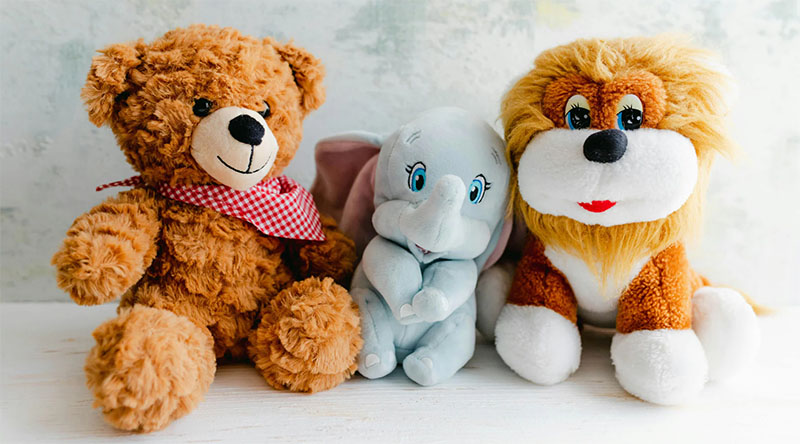
- Minky (a.k.a. microfleece/microplush): Super-soft, short pile (1–3 mm), fine filament polyester, subtle sheen. Ideal for baby plush, faces, and outfits needing precise embroidery.
- Velboa: Short, dense pile (≈1–2 mm) with a smooth, almost suede-like surface; great color definition and crisp print edges; economical and durable.
- Faux Fur: Medium–long pile (5–70 mm+) with directionality; used for realistic animals or premium textures. Requires careful cutting with the nap.
- Fleece (polar/double-sided): Brushed knit with no distinct pile; matte, warm, cost-effective; common for bodies, scarves, or interiors.
- Sherpa/Teddy Fleece: Loop or curly pile knit mimicking wool; cozy appearance for lambs, winter bears, and trims.
- Short-Pile Plush (general): Catch-all for knit pile fabrics 1–4 mm not branded as minky/velboa.
- Tricot/Velour (cotton or poly): Smooth velour knit with low pile; gentle on infant skin, takes embroidery well.
Table 1 — Common Plush Fabrics at a Glance
| Fabric Name | Typical Pile | Fiber | Look/Handfeel | Best Use Cases |
|---|---|---|---|---|
| Minky | 1–3 mm | 100% PET | Silky, fine, slight sheen | Baby plush, faces, apparel details |
| Velboa | 1–2 mm | 100% PET | Smooth, dense, crisp print | Bodies, precision markings |
| Faux Fur | 5–70 mm | PET/Modacrylic blends | Realistic, directional | Realistic animals, premium lines |
| Fleece (polar) | N/A (brushed) | PET or blends | Matte, warm, forgiving | Bodies, scarves, interior parts |
| Sherpa/Teddy | 3–10 mm loops | PET/cotton blends | Wooly, cozy | Lamb textures, trims |
| Velour/Tricot | <1 mm | PET or cotton | Soft, uniform | Infant zones, embroidered areas |
How do pile length, fiber type, and GSM influence handfeel and appearance?
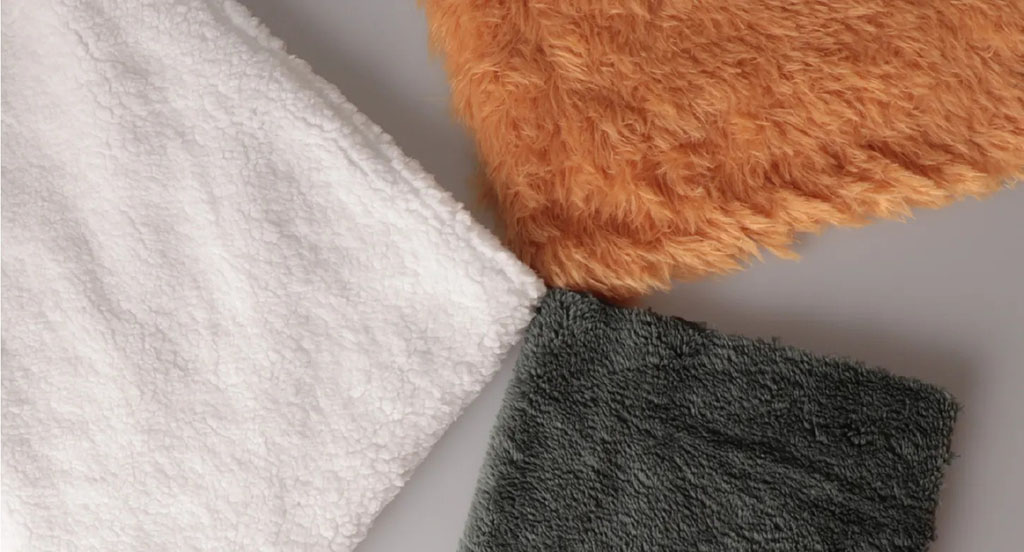
Pile length creates the first impression. Short pile (1–3 mm) reads clean and precise; long pile (10 mm+) reads fluffy and lifelike but needs grooming and careful seam planning. Fiber type (mostly polyester) defines sheen, resilience, and wash behavior. GSM (grams per square meter) impacts drape, opacity, and perceived quality; heavier GSM often feels richer but may reduce breathability and increase cost.
- Short pile (1–3 mm): crisp embroidery, low snag risk, modern look.
- Medium pile (3–10 mm): fuller handfeel, still embroidery-friendly with stabilizer.
- Long pile (10–70 mm): high realism; requires directional cutting and brushing after sewing.
- Fiber fineness (denier): finer filaments = softer hand, better “minky feel.”
- GSM bands: 180–230 gsm (light/lining), 230–300 gsm (standard), 300–400+ gsm (premium/structured).
Table 2 — Pile × Fiber × GSM Impact
| Parameter | Range | What You See/Feel | Production Implication |
|---|---|---|---|
| Pile Length | 1–3 mm | Clean, sharp detail | Easy embroidery & printing |
| 3–10 mm | Plush, fuller body | Needs stabilizer under stitches | |
| 10–70 mm | Fluffy, realistic | Directional cutting, grooming | |
| Fiber Type | PET fine filament | Silky handfeel, sheen | Strong, washable |
| PET/coarse | Matte, sturdy | Lower cost, less silky | |
| Modacrylic blends | Realistic fur | Higher cost, careful heat | |
| GSM | 180–230 | Light, drapey | Economical, may need lining |
| 230–300 | Standard plush | Balanced cost/feel | |
| 300–400+ | Dense, premium | Higher cost, slower sewing |
Which backing constructions and stretch properties impact patterning and seam strength?
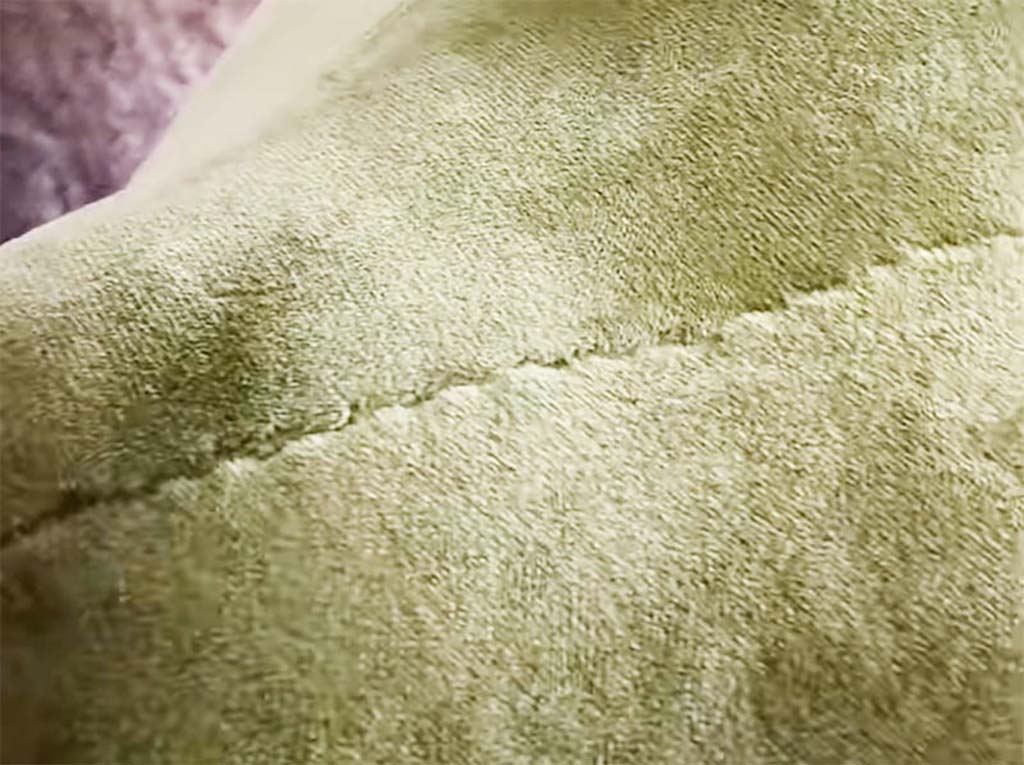
Most plush fabrics are knit-backed to support pile tufts. Backing and stretch control how patterns fit and how seams hold under stress.
- Warp-knit backing (tricot): Stable, low vertical stretch; excellent for precise patterning and embroidered faces.
- Weft-knit backing: More overall stretch; forgiving for round bodies but can distort small details.
- Mechanical stretch vs. spandex content: Mechanical stretch from knit structure is common; adding spandex improves recovery but can shift embroidery alignment.
- Stitch types: Double needle/lockstitch at load points; zigzag/overlock in curved seams; reinforce stress zones (arm joins, tail base).
- Seam allowances: Slightly wider for long pile to capture fibers without slippage; shave or “scarf” pile in seam allowance to reduce bulk.
Table 3 — Backing & Stretch Guide
| Backing Type | Stretch Profile | Best For | Patterning Note | Seam Strength Tips |
|---|---|---|---|---|
| Warp-knit (tricot) | Low–moderate | Faces, details, precise panels | Minimal distortion | Lockstitch + bar-tack at stress points |
| Weft-knit | Moderate–high | Round bodies, soft drape | Allow easing in curves | Overlock + topstitch to stabilize |
| Spandex-blend | High recovery | Apparel-style trims | Control embroidery skew | Use stabilizer, reduce stitch density |
| Non-woven laminate | Minimal | Print panels, internal structure | Stable print registration | Shorter stitch length to prevent perforation |
How do colorfastness, pilling, and abrasion tests guide fabric selection for plush toys?
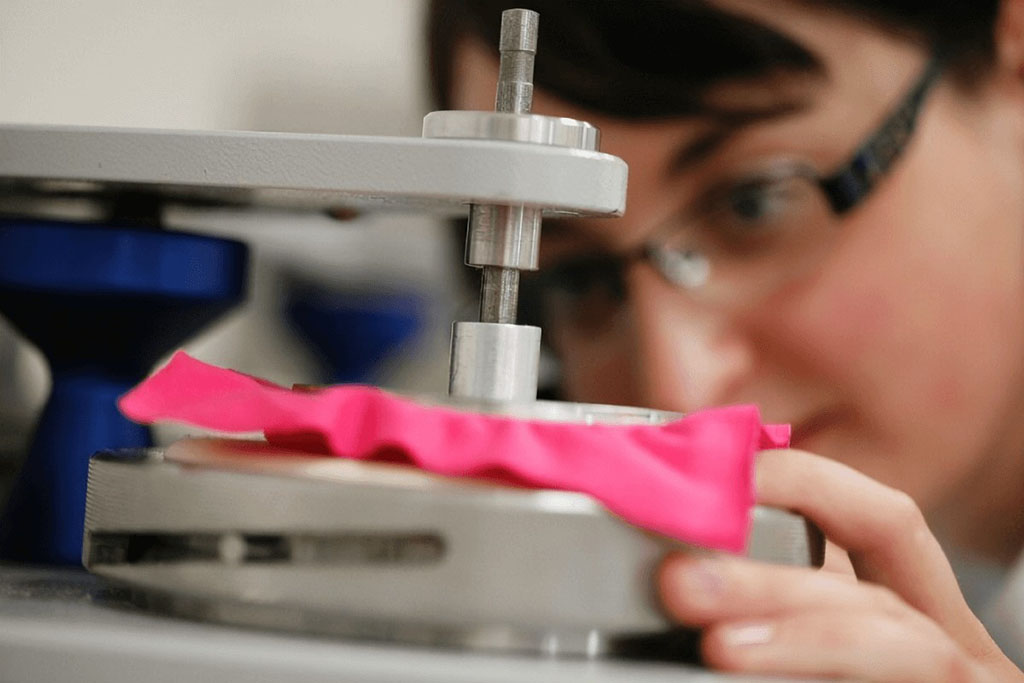
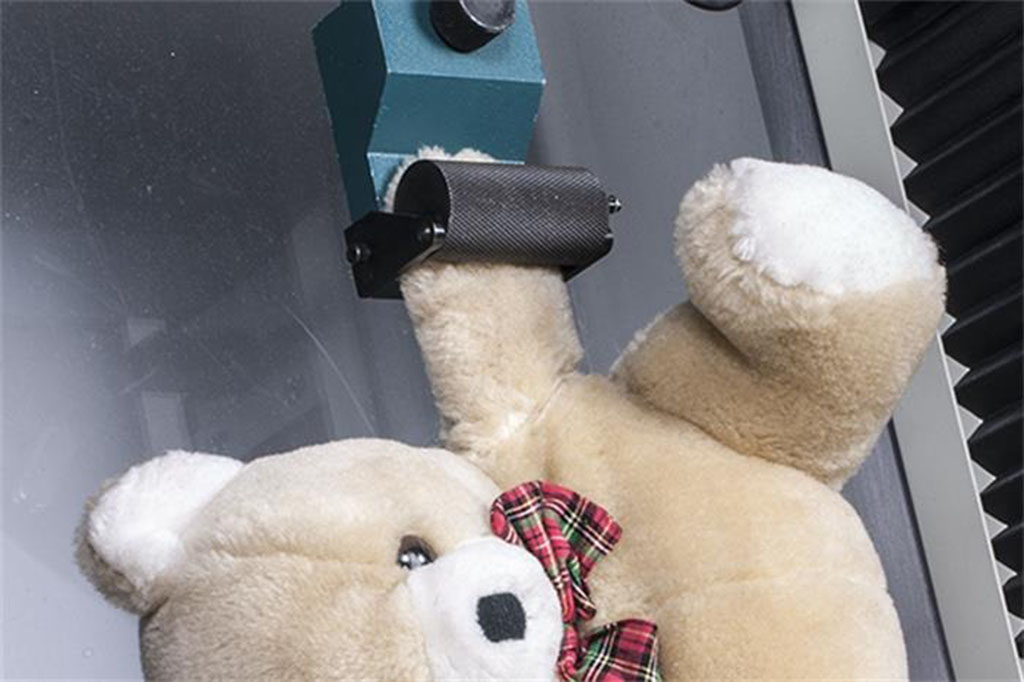
Retail-ready plush must survive rubbing, saliva/sweat, washing, and everyday play. In development, I align fabric picks to performance targets before we cut patterns.
- Colorfastness to washing/rubbing (ISO/AATCC): prevent dye transfer to light fabrics or skin.
- Colorfastness to saliva/sweat (EN 71-1 practices & EN 71-3 chemical migration relevance): vital for baby products.
- Pilling (Martindale/Random Tumble): high scores = fewer fuzz balls.
- Abrasion resistance (Martindale cycles): especially for short-pile areas (nose, paws).
- Seam slippage tests: ensure backing holds stitches under load, particularly with long pile that reduces stitch bite.
Table 4 — Performance Testing Targets (Typical Buyer Specs)
| Property | Method (Typical) | Target (Retail) | Note |
|---|---|---|---|
| Colorfastness to washing | ISO 105-C06 / AATCC 61 | Grade 4–5 | Prevents fade/bleed |
| Colorfastness to rubbing | ISO 105-X12 / AATCC 8 | Dry 4–5 / Wet ≥4 | Dark colors critical |
| Saliva/sweat fastness | EN 71 guidance / ISO 105-E04 | Grade ≥4 | Baby SKUs focus |
| Pilling resistance | ASTM D3512 / ISO 12945 | Grade ≥4 | Minky/velboa should excel |
| Abrasion resistance | Martindale | Cycles per buyer spec | High-wear zones only |
| Seam slippage | ISO 13936 | Within buyer limit | Long pile needs attention |
What safety and chemical compliance standards apply to plush fabrics (CPSIA, REACH, EN71-3)?
Even the softest fabric must pass safety law. For toys, compliance isn’t optional. My team validates fabric before sampling to avoid redesigns later.
- US: ASTM F963 (mechanical/physical; seam strength), CPSIA (lead ≤100 ppm in substrates, phthalates limits), tracking labels.
- EU: EN 71-1/2/3 (mechanical/flammability/chemical migration), REACH Substances of Very High Concern (SVHC) surveillance, Azo dyes restrictions.
- UK: UKCA mirrors EU rules; documentation must match.
- Other regions: Additional brand/RSL requirements (e.g., OEKO-TEX® for textiles, Prop 65 disclosures in certain U.S. states).
Practical rule: lock your material library and reuse approved shades where possible. Each new dye lot or special finish (e.g., anti-microbial, softeners) may trigger re-testing.
Table 5 — Compliance Map for Plush Fabrics
| Region | Core Standard | Fabric-Relevant Focus | What We Document |
|---|---|---|---|
| US | CPSIA + ASTM F963 | Lead/phthalates; mechanical | Test reports tied to SKU & lot |
| EU | EN 71-1/2/3 + REACH | Migration of elements; flammability | CoC + lab results; RSL checks |
| UK | UKCA (EN 71 aligned) | Same as EU with UK marking | UK DoC + labeling |
| Global | Brand RSL / OEKO-TEX® | Azo dyes, SVHC, additional chem limits | Supplier declarations + 3rd party tests |
Are recycled polyester and organic options viable for OEM/ODM plush production?
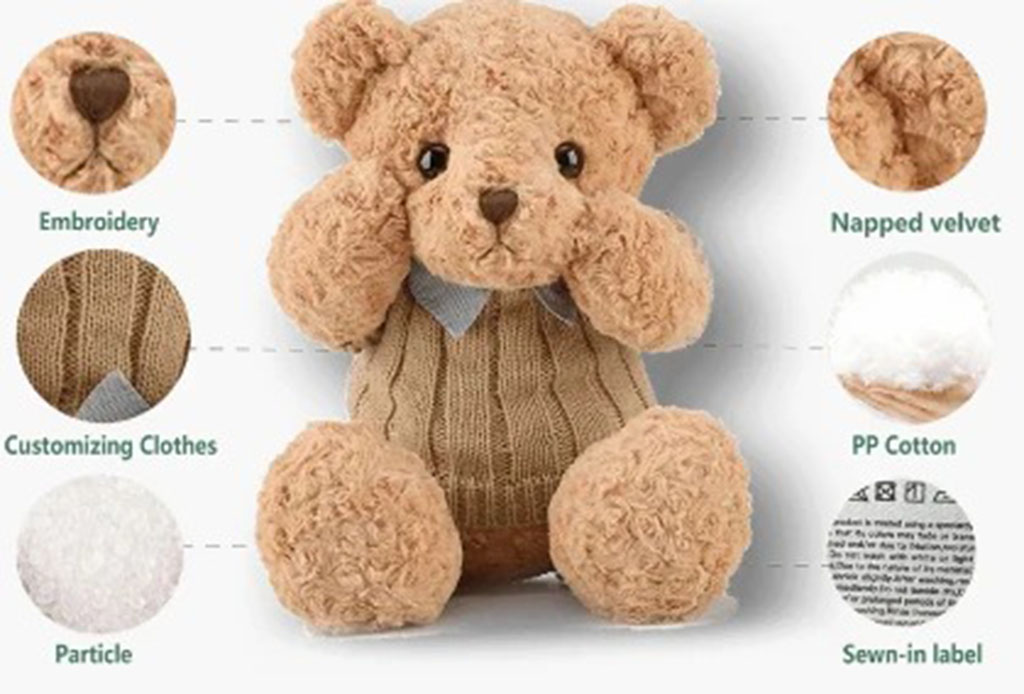
Yes—rPET (recycled polyester) for pile and/or stuffing is now widely viable, and organic cotton works for select fabrics (velour, some fleeces). Demand is strong in Europe, North America, and Japan. Trade-offs exist:
- rPET pile & stuffing: Similar handfeel to virgin PET when sources are high-grade. Slight cost premium and sometimes longer lead times; maintain documentation (GRS certification, batch traceability).
- Organic cotton velour/fleece: Natural handfeel and strong marketing story; colors may be more muted; can increase cost and require tighter dye controls.
- Biobased fibers (PLA, blends): Niche; watch heat stability and supply consistency.
- Packaging: Pair eco fabrics with kraft cartons, paper belly bands, and mono-material bags for a complete claim.
Compliance remains the same: eco does not skip EN 71-3 or CPSIA. We still test color migration and mechanical safety.
Conclusion
When someone asks “what is the name of plushie material,” the real decision is which fabric construction delivers the feel, durability, and compliance your market demands. Minky and velboa win for precision and softness, faux fur wins for realism, and fleece/velour serve infant-friendly and cost-sensitive builds. Backing, stretch, GSM, and testing complete the picture. Eco choices like rPET and organic cotton are now viable at scale—just plan lead times and documentation.
At Kinwin, I help buyers convert mood boards into tested, repeatable fabric specs that pass CE/ASTM/CPSIA and look great on shelf. If you need swatch curation, performance targets, and compliance planning, let’s build your fabric library together.
Contact me at [email protected] or visit kinwintoys.com to source plush fabrics and launch a safer, softer collection.