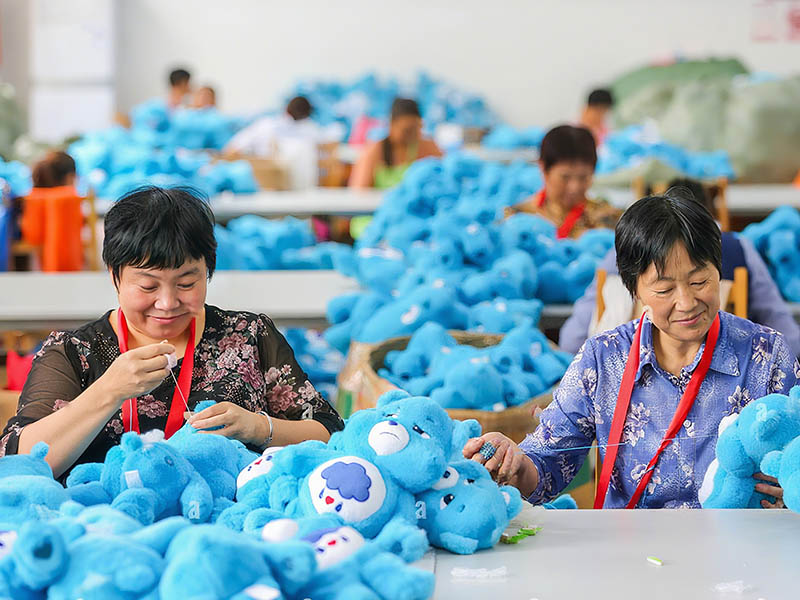
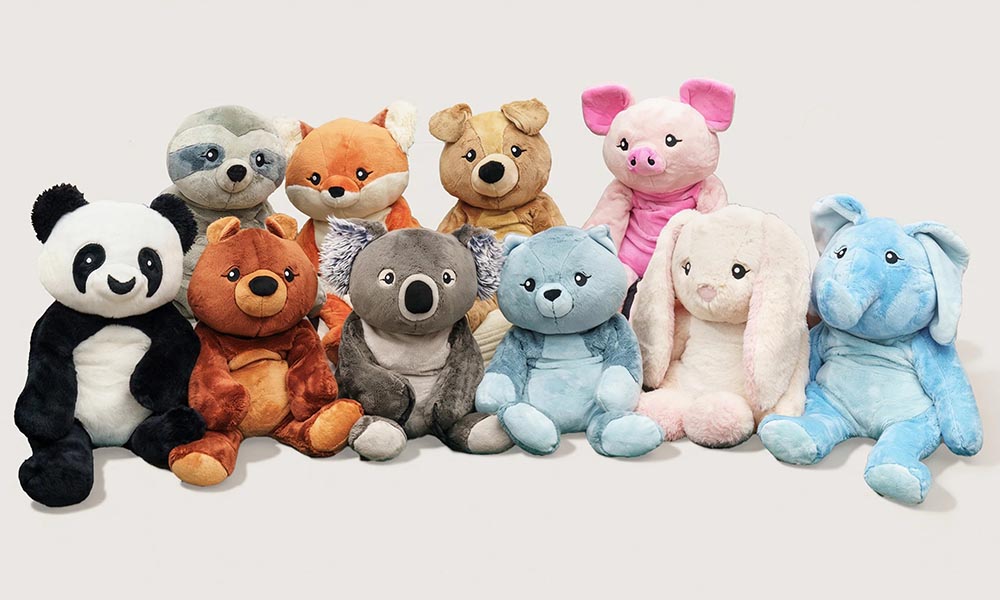
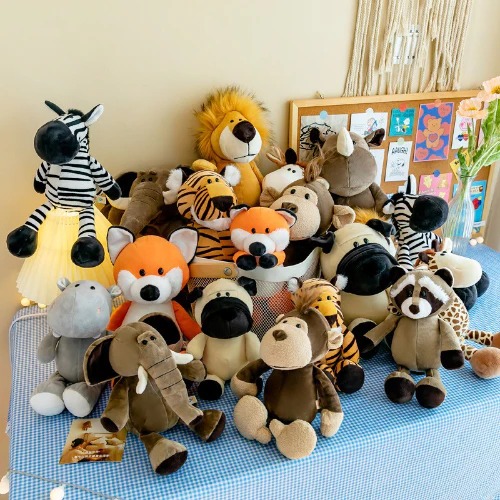
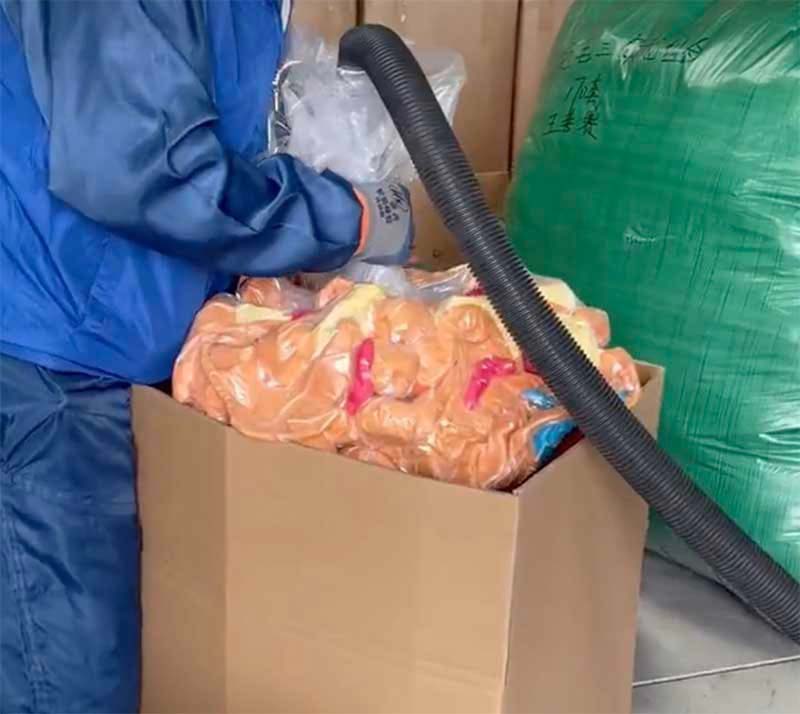
Building a brand in the plush toy category is not just about finding a factory that can make the product you designed. It is about finding a manufacturing partner who understands that every production decision — every material choice, every quality control checkpoint, every development revision, every communication — either supports your brand’s growth or creates friction that slows it down.
The brands that grow successfully in this category are not those with the most creative designs or the most aggressive pricing. They are those whose products consistently deliver what their brand promises — quality that customers trust, safety that retailers and platforms can rely on, and visual consistency that makes the brand recognizable across every unit in every order. These outcomes are not produced by creative vision alone. They are produced by the manufacturing infrastructure, quality systems, and development expertise behind the product.
At Kinwin, our role is to be the manufacturing foundation that makes brand growth possible — not just by executing what brands specify but by bringing the expertise, systems, and partnership approach that helps brands build products that perform in market, scale reliably, and deliver the consistent quality that long-term customer relationships require.
This page explains specifically how we do that.
What Does Brand Growth Through Plush Products Actually Require from a Manufacturing Partner?
Brand growth in the plush toy category requires more from a manufacturing partner than production capacity and competitive pricing. It requires a partner who understands the full value chain between a design concept and a customer’s experience — and who brings capabilities at every stage of that chain that either protect or accelerate the brand’s growth trajectory.
Brand growth through plush products requires a manufacturing partner who can consistently deliver four outcomes: products that accurately represent the brand’s design intent and quality standard, quality consistency that is maintained across every order rather than only on first impressions, compliance readiness that allows products to enter and remain in regulated markets without compliance-related disruption, and the scalability to support the brand’s production requirements as they grow without the quality or communication degradation that often accompanies supplier scaling.
Here is a framework for understanding what brand growth specifically requires from a manufacturing partner:
| Brand Growth Requirement | What It Means in Practice | Manufacturing Partner Capability Required |
|---|---|---|
| Design accuracy | Products that look like the brand designed them | Strong pattern making, sampling expertise |
| Quality consistency | Same quality on order ten as on order one | Documented QC systems, tech pack management |
| Compliance readiness | Products that can legally enter target markets | Certified materials, testing lab relationships |
| Scalability | Ability to increase volume without quality degradation | Production infrastructure, capacity management |
| IP protection | Designs that remain exclusive to the brand | Contractual protection, operational discipline |
| Reorder reliability | Consistent quality across multiple production runs | Material batch management, documented standards |
| Communication transparency | Visibility into production status throughout the run | Proactive update protocols, documented reporting |
| Problem resolution | Problems handled in ways that protect brand timeline | Accountability culture, solution-first approach |
Why Manufacturing Partner Quality Is a Brand Growth Variable
Many brands treat manufacturing as a cost center to be minimized rather than a growth variable to be optimized. This treatment produces a consistent pattern: initial orders with careful supplier evaluation, followed by supplier selection primarily on price, followed by quality problems that consume management attention, damage customer relationships, and create the compliance incidents that platforms and retailers respond to by reducing the brand’s access.
The brands that avoid this pattern are those that recognize the manufacturing partnership as a direct input to their brand’s market performance — and invest in manufacturing quality accordingly. The production decisions made at the factory level determine the quality customers experience, the compliance status that platform algorithms evaluate, and the review sentiment that drives organic visibility in e-commerce channels. Every quality failure in production is a brand growth barrier. Every quality success is a brand growth enabler.
How Do We Help Brands Develop Products That Are Built for Market Success from the Start?
Product development is the stage where brand growth potential is most powerfully determined — and also the stage where the most costly mistakes are made when manufacturing and market knowledge are not combined effectively. A product that looks beautiful in design but is not optimized for production efficiency will cost more than it should. A product that is efficient to produce but not designed for the specific market it targets will underperform commercially regardless of production quality. A product that combines design appeal, production efficiency, and market alignment creates the strongest foundation for brand growth.
We help brands develop products built for market success through a pre-development consultation process that combines our manufacturing expertise with the brand’s market knowledge — producing designs that are not only visually compelling but also production-efficient, compliance-ready, and aligned with the quality standards and price points that their target markets require.
Here is how our development support process operates:
| Development Support Stage | What We Provide | Brand Benefit |
|---|---|---|
| Initial concept review | Manufacturing feasibility assessment, complexity and cost analysis | Identifies production challenges before investment is made |
| Market alignment discussion | Guidance on material standards for target markets, compliance requirements | Prevents compliance surprises after development |
| Design optimization input | Specific suggestions for cost-efficiency without quality compromise | Reduces production cost while maintaining brand standard |
| Material selection support | Physical material options with quality, cost, and compliance information | Informed material decisions before sampling begins |
| Brief development assistance | Guidance on technical specification completeness | Reduces revision rounds, accelerates development |
| Sampling with feedback | Deviation documentation, proactive improvement suggestions | Faster path to approved sample |
| Counter sample confirmation | Production-environment verification before bulk authorization | Prevents sample-to-bulk quality gaps |
| Tech pack finalization | Complete, distribution-ready production specification | Consistent production reference for all future orders |
Our Feasibility Assessment — Honest Before Expensive
One of the most valuable things we provide at the start of a development relationship is an honest feasibility assessment — a technical review of the design concept that identifies any elements that would be significantly more expensive than the budget suggests, any construction approaches that would create quality consistency challenges at scale, and any material specifications that are not available in compliance-certified form for the intended market.
This assessment is valuable specifically because it is honest. We do not accept every brief without comment and then let the buyer discover production challenges through expensive revision rounds. We identify the challenges upfront — before sampling investment is made — and present specific alternatives that achieve the same design intent more efficiently.
Brands that receive this kind of manufacturing input at the concept stage consistently develop better products at lower total development cost than those who begin sampling before these questions are addressed. The investment in honest upfront assessment pays dividends across every revision round it prevents and every compliance surprise it eliminates.
How Does Our Customization Capability Support Brand Identity and Product Differentiation?
Brand identity in the plush toy category is built through product differentiation — the specific visual, tactile, and character qualities that make a brand’s products recognizable and irreplaceable in their customers’ experience. This differentiation is achievable only through genuine customization capability — the ability to translate a brand’s specific design vision into a physical product that accurately expresses it, exclusively, at production scale.
Our customization capability supports brand identity and differentiation through a complete OEM and ODM development infrastructure that covers every element of product distinction — original character development, proprietary color and material specifications, custom accessory design, branded packaging, and the IP protection framework that keeps those designs exclusive to the brands that developed them.
Here is an overview of our customization capabilities:
| Customization Dimension | What We Offer | Brand Differentiation Value |
|---|---|---|
| Original character development | Pattern engineering for unique shapes and proportions | Products competitors cannot replicate |
| Proprietary color specifications | Custom fabric dye matching, Pantone-specified colors | Brand-consistent color identity across products |
| Custom material selection | Premium fabric options, specialized fills, unique textures | Material quality as brand differentiator |
| Custom accessory design | Unique eye shapes, custom-molded features, branded elements | Visual distinctiveness at the detail level |
| Exclusive embroidery design | Original facial expressions, logo embroidery, decorative elements | Character personality expressed consistently |
| Branded packaging development | Custom box design, insert development, retail presentation | Complete brand experience at point of sale |
| IP protection | Contractual exclusivity, design file security, production exclusivity | Design investment protected from competitor access |
| ODM catalog with modification | Access to existing designs with exclusive modifications | Faster market entry with brand-specific elements |
Building Brand Equity Through Product Consistency
Customization is not just about making products look different from competitors — it is about making products look exactly the same as each other, across every unit in every order. The emotional connection that customers form with a plush character depends on that character being consistent — having the same expression, the same proportions, the same color, and the same feel every time it is encountered. Inconsistency in any of these dimensions undermines the emotional connection and the brand equity it creates.
Our customization infrastructure is built to maintain this consistency across production runs — through tech pack documentation that captures every design element in measurable terms, through material batch management that maintains consistent fabric and filling across reorders, and through our quality control system that verifies consistency at every production stage.
The brand equity that customers associate with a plush character is built one consistent unit at a time. Our manufacturing systems are designed to ensure that every unit contributes positively to that equity — not just the first few under careful sampling conditions, but every unit across every production run over the life of the product.
How Do We Ensure the Quality Consistency That Brand Reputation Depends On?
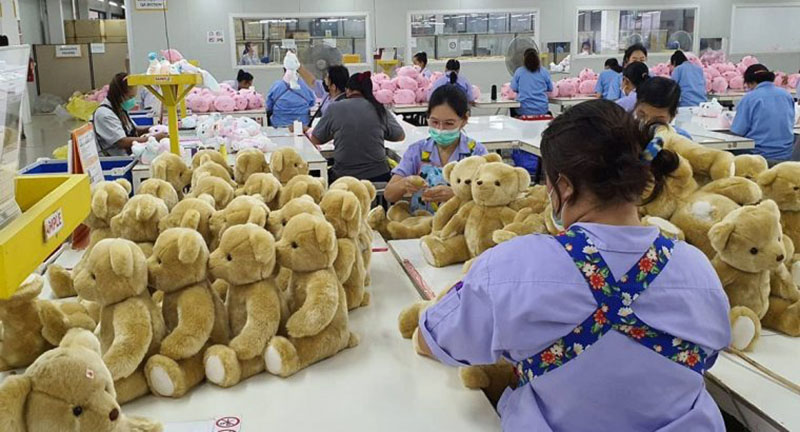
Brand reputation in e-commerce and retail is directly expressed in review scores, return rates, and repeat purchase behavior — all of which are directly determined by the consistency of the quality that customers receive. A brand whose products are consistently high quality builds reputation that compounds over time. A brand whose products vary in quality — even if the average is acceptable — builds the reputation of unpredictability, which is commercially more damaging than consistently moderate quality.
We ensure the quality consistency that brand reputation depends on through a three-stage quality management system — IQC, IPQC, and FQC — supported by an independent QC team, calibrated testing equipment, complete production documentation, and the institutional knowledge of our product designs and our clients’ standards that deepens with every order we produce.
Here is how our quality system specifically supports brand reputation protection:
| Quality System Element | How It Works | Brand Reputation Protection |
|---|---|---|
| IQC — material verification | Every material batch verified against specification before production | Prevents material-quality variation from reaching finished goods |
| Counter sample | Bulk production environment verified against approved standard | Prevents sample-to-bulk quality gaps that damage brand perception |
| First-off inspection | First production units verified before run proceeds | Catches setup errors before they replicate across the order |
| IPQC density monitoring | Stuffing density verified at defined intervals | Maintains shape consistency across all units in the run |
| IPQC embroidery verification | Embroidery position checked against coordinates at defined intervals | Maintains character expression consistency |
| IPQC fabric roll transition | New roll verified against approved standard before cutting | Prevents within-order color inconsistency |
| FQC AQL inspection | Statistical sample of completed batch verified against all criteria | Confirms batch quality before shipment approval |
| Tech pack management | Complete specification documentation maintained for all active designs | Consistent production reference for all future orders |
| Reorder swatch approval | Fabric for reorders verified against original reference before bulk | Prevents reorder color inconsistency |
The Reorder Consistency Commitment
One of the most commercially significant quality consistency challenges for growing brands is reorder consistency — ensuring that the tenth production run of a product is visually and qualitatively indistinguishable from the first, even though it may be produced months or years later from different material batches by different operator teams.
Our reorder consistency commitment addresses this through systematic retention of production references — keeping the approved sample, the finalized tech pack with all measurements and material specifications, and IQC records from every production run in organized files accessible for every reorder. Before each reorder begins, we conduct bulk material swatch pre-approval, comparing the proposed reorder fabrics against the original reference, and we build a counter sample from the new materials to confirm that the production environment can replicate the original standard before committing the full reorder volume to production.
This process is operationally demanding — it would be simpler to source available materials without comparison, cut without counter sample verification, and rely on the operator team’s memory of the product from the previous run. We do not take that approach because we understand that reorder consistency is not a quality nicety — it is a brand asset that customers and retail partners depend on.
How Do We Support Compliance So Brands Can Enter and Scale in Regulated Markets?
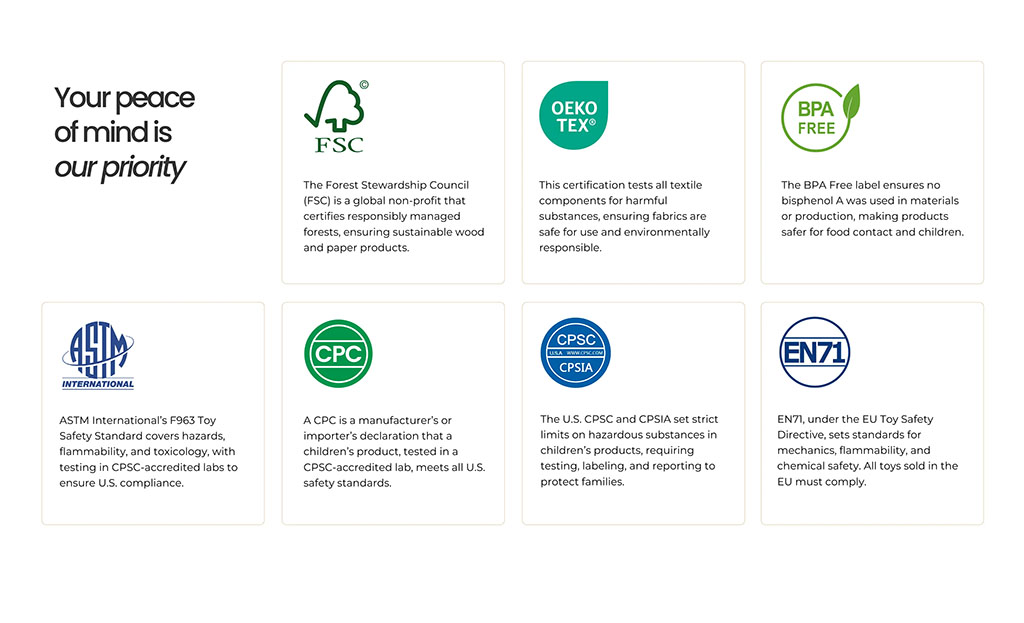
Compliance is not an obstacle that stands between a brand and its market — it is the foundation that makes market access stable and scalable. Brands that manage compliance proactively — building it into their product development and sourcing process from the start — can enter regulated markets confidently, maintain platform access reliably, and scale without the compliance-related disruptions that constrain brands who treat it as an afterthought.
We support compliance so brands can enter and scale in regulated markets through a compliance-first approach that begins at material sourcing and extends through product testing coordination, documentation management, and regulatory guidance — ensuring that every product we produce for a brand meets the applicable standards for their specific target market before it ships.
Here is how our compliance support works across the key dimensions:
| Compliance Support Area | What We Provide | Market Access Benefit |
|---|---|---|
| Certified material sourcing | All materials carry current compliance documentation — OEKO-TEX, REACH, CPSIA-compatible | Chemical compliance foundation established before production |
| ASTM F963 support | Certified materials, structural compliance, accredited lab coordination | US toy safety compliance |
| EN71 support | Certified materials, seam strength standards, flammability-tested fabrics | EU toy safety compliance |
| CPSIA tracking label application | Correct content and placement on all US-market products | US regulatory compliance |
| CE marking support | Declaration of Conformity documentation preparation | EU market entry |
| Testing lab coordination | SGS and Intertek relationships, sample preparation, timeline management | Efficient, reliable testing process |
| Age grading guidance | Correct age designation and its test scope implications | Appropriate test coverage for target user |
| Weighted product compliance | Filling containment, seam strength, weighted-specific requirements | Compliance for specialized product types |
| Documentation management | Complete pre-shipment documentation package | Market entry readiness |
Compliance as a Brand Competitive Advantage
For brands selling in compliance-sensitive channels — Amazon, major US and EU retailers, corporate gifting programs with ethical sourcing requirements — compliance documentation is not just a regulatory requirement but a competitive differentiator. Brands that can respond immediately to compliance document requests with complete, current test reports from accredited laboratories are better positioned in retailer and platform onboarding processes than those who cannot.
We help our clients build and maintain this compliance position by treating documentation as a standard output of every production run rather than an occasional special request. Every client who produces with us receives a complete documentation package — material compliance certificates, product test reports, CPSIA labels, and the supporting documentation for CE marking — as part of the standard production closure process.
This documentation infrastructure is one of the most tangible long-term values of working with a professional manufacturer — because it builds, with each successive order, a compliance record that makes the brand’s regulatory position progressively stronger and more defensible.
How Do We Help Brands Scale Production Efficiently as Their Business Grows?
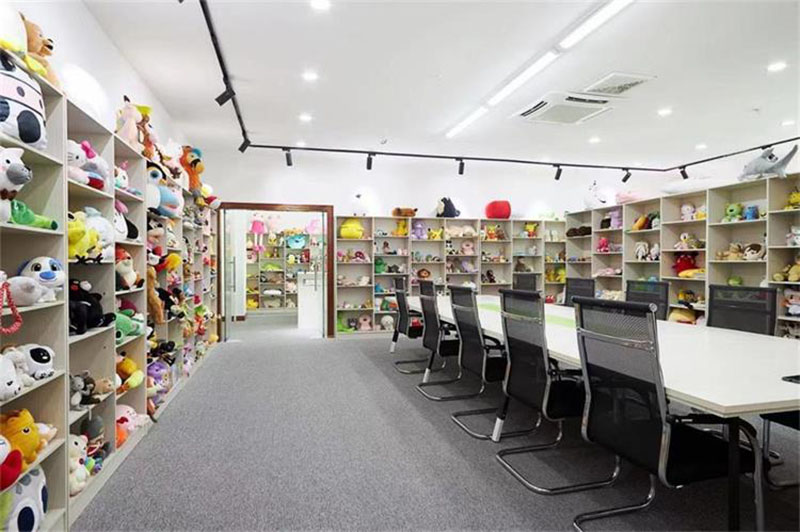
Scaling production is one of the most significant transition points in any brand’s growth trajectory — and one where manufacturing partner quality matters most. A factory that performs reliably at 500-unit orders may deliver a fundamentally different experience at 5,000-unit orders if its production management, quality monitoring, and communication infrastructure are not built to scale. The failure mode that most commonly accompanies scaling with inadequate suppliers is quality dilution — the gradual decline in quality consistency as volume increases and the attention-per-unit that sustained quality requires becomes harder to maintain.
We help brands scale production efficiently through a production infrastructure and quality management system that is designed to maintain consistent performance at larger volumes — not just at the smaller volumes that many factories excel at during the relationship-building period.
Here is how our scaling support works across the key dimensions:
| Scaling Support Area | What We Provide | Brand Growth Benefit |
|---|---|---|
| Capacity planning | Advance capacity reservation for brands with seasonal demand | Avoids peak-season production delays |
| Volume tier pricing | Progressive price improvements as order volume grows | Better economics as brand scales |
| Production scheduling | Priority scheduling for established clients | Reliable delivery windows at larger volumes |
| QC system scaling | IPQC frequency maintained as volume increases | Quality consistency at scale |
| Material volume management | Bulk material sourcing with batch tracking at larger quantities | Consistent materials across larger production runs |
| Multi-SKU production coordination | Efficient management of multiple designs in simultaneous production | Range expansion without operational complexity |
| Documentation scaling | Same documentation standard maintained at all volumes | Compliance readiness not degraded by scale |
| Communication scaling | Same communication cadence maintained at larger volumes | Visibility maintained regardless of order size |
The Scaling Quality Maintenance Challenge
The most common quality management failure at scale is the reduction of IPQC monitoring intensity as production volume increases. At smaller order sizes, it is straightforward to maintain high-frequency quality checks because the total production time is limited. At larger order sizes, production runs for days or weeks — and maintaining the same monitoring frequency requires genuine organizational commitment to sustain that effort across the full production duration.
Our quality management system maintains consistent IPQC intervals regardless of order size — because the quality risks that require monitoring at 500 units are equally present at 5,000 units, and production drift that accumulates between monitoring checks affects proportionally larger quantities as order size grows. The organizational commitment to maintaining monitoring quality at scale is one of the specific investments that distinguishes professional manufacturer infrastructure from operations that excel only at smaller volumes.
Supporting Range Expansion
Brand growth in the plush category typically involves not just increasing volume on existing designs but expanding the product range — adding new characters, new product types, new size variants, or new functional features. This range expansion creates development demands that require the same capabilities at higher throughput: more pattern engineering, more sampling, more material qualification, more compliance assessment.
We support range expansion by maintaining the development team capacity and production coordination infrastructure to manage multiple concurrent development projects without the quality and timeline degradation that comes from over-committing development resources. Brands that grow their product ranges with us benefit from the institutional knowledge we have built about their quality standards, material preferences, and market requirements — which allows new product development to proceed with the efficiency of an established relationship rather than the overhead of learning a new client’s standards from scratch.
How Do We Support Brands Beyond Manufacturing — Communication, Documentation, and Partnership?
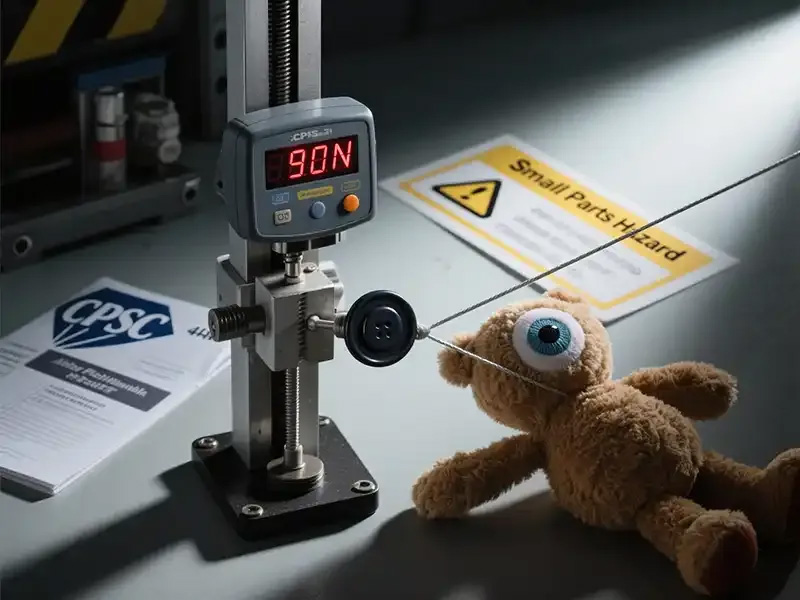
The manufacturing relationship between a brand and its plush toy factory is not limited to the production of physical goods. It includes the entire information and decision-making infrastructure that allows the brand to manage its sourcing confidently, respond to market and regulatory requirements efficiently, and make product development decisions with the manufacturing knowledge they require.
We support brands beyond manufacturing through three specific partnership dimensions: proactive communication that keeps brands informed throughout the production process, complete documentation that supports the brand’s compliance and market access requirements, and the ongoing development partnership that helps brands build better products with every successive order.
Here is how our partnership support works across these three dimensions:
Communication — Visibility Throughout Production
| Communication Element | What We Provide | When | Brand Benefit |
|---|---|---|---|
| Pre-production confirmation | Materials passed IQC, counter sample approved, work instructions distributed | Before production day 1 | Confirmed production readiness |
| First-off inspection report | First unit quality assessment with photos | Production day 1 | Early quality confirmation |
| Mid-production update | Production progress at 50% completion, any quality findings | At production midpoint | Visibility into developing issues |
| Stuffing density log | Filling weight measurements across production run | At production completion | Stuffing consistency evidence |
| Embroidery position log | Position measurements at IPQC intervals | At production completion | Expression consistency evidence |
| FQC inspection report | Complete AQL inspection results with photos | Before balance payment request | Quality confirmation before payment |
| Shipment notification | Tracking information and shipping documents | Day of shipment | Delivery timeline management |
Documentation — Compliance and Brand Record
| Documentation Element | What It Supports | Provided As |
|---|---|---|
| Material compliance certificates | Chemical safety compliance evidence | Standard with every order |
| Product test reports | ASTM/EN71 safety compliance | Coordinated per product, per market |
| CPSIA tracking label confirmation | US regulatory compliance | Standard for US market orders |
| CE Documentation support | EU regulatory compliance | Standard for EU market orders |
| FQC inspection report | Quality assurance record | Standard with every order |
| Production batch records | Material traceability | Available on request |
| Tech pack archive | Production reference for reorders | Maintained in our system |
Development Partnership — Getting Better with Every Order
The most distinctive aspect of our brand support approach is the long-term development partnership we build with clients across multiple orders. With each successive production run, our team’s knowledge of a brand’s specific products, quality standards, and market requirements deepens — reducing the communication overhead of each new order, improving the accuracy of first-off production, and enabling increasingly precise material and process management.
This institutional knowledge accumulation is one of the most commercially significant — and most under-recognized — values of a stable manufacturing partnership. A brand that has produced with Kinwin for three years has a manufacturing partner that knows their character proportions, their quality tolerances, their compliance requirements, and their seasonal timing needs without being briefed from scratch on each order. This knowledge translates directly into faster development cycles, fewer revision rounds on design iterations, more reliable production timelines, and the kind of proactive problem identification that only comes from a partner who knows the brand’s production history intimately.
How Can Your Brand Start Growing with Kinwin as Your Plush Manufacturing Partner?
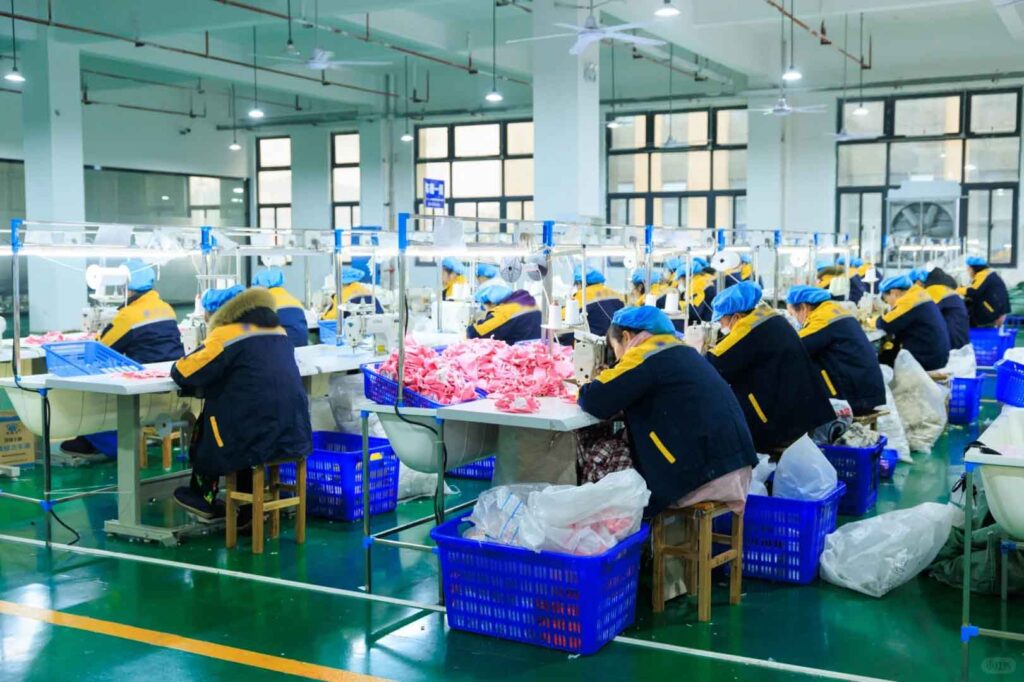
Starting a manufacturing partnership with Kinwin is designed to be structured, transparent, and low-risk — giving both parties the information needed to confirm the fit before significant commitment is made, and establishing the production standards and communication infrastructure that support long-term brand growth from the first order.
Here is how the partnership begins:
| Partnership Stage | What Happens | Timeframe |
|---|---|---|
| Initial conversation | Brand shares product concept, target market, volume, and timeline — Kinwin provides feasibility assessment, indicative pricing, and compliance overview | Day 1–2 |
| Pre-development consultation | Product requirements refined, compliance requirements confirmed, material direction discussed, cost optimization opportunities identified | Day 3–7 |
| Brief development and submission | Brand provides complete design brief — Kinwin reviews and confirms all specifications before sampling begins | As ready |
| Sampling | Pattern making, material sourcing, first sample production, revision management, counter sample confirmation | 4–8 weeks depending on complexity |
| First production order | Order confirmed, production scheduled, pre-production planning completed, production run executed with full QC documentation | 6–10 weeks from order confirmation |
| Ongoing partnership | Reorder management, range expansion, compliance maintenance, institutional knowledge deepening | Continuous |
What to Bring to the First Conversation
The more context provided in the initial conversation, the more specific and useful our response will be. Useful information includes the product concept or category, the target market and retail or e-commerce channel, the intended end user and applicable compliance requirements, the approximate initial order quantity and timeline, any existing design references or quality examples, and the brand’s specific quality or compliance requirements.
Brands that do not yet have a complete design are welcome to begin the conversation at the concept stage — our development team can work with rough references, mood boards, or market examples to develop a producible brief as part of the partnership. The important starting point is not the completeness of the design but the clarity of the market need and the brand vision the product is intended to express.
Our Commitment to Every Brand Partnership
At Kinwin, we approach every brand partnership with a specific commitment: to bring our manufacturing expertise, quality systems, and institutional knowledge to bear in service of the brand’s market success — not just its production needs. This means honest feasibility assessment rather than accepting every brief as presented. Complete quality documentation rather than minimum compliance. Proactive communication rather than reactive response. And the long-term development investment that builds manufacturing knowledge specific to each brand’s products and markets.
We understand that the brands who choose us are investing not just in production capacity but in a manufacturing foundation for their growth — and we take that responsibility seriously in every decision we make about their products.
Reach out to our team at [email protected] or visit kinwintoys.com to begin the conversation about how Kinwin can support your brand’s growth with plush products.
Conclusion
Brand growth in the plush toy category is built on manufacturing foundations — the quality systems, development capabilities, compliance infrastructure, and partnership orientation that determine whether every product a brand ships either builds or undermines its market reputation.
The brands that grow most successfully are not those with the most creative designs or the most aggressive pricing. They are those whose manufacturing partnerships deliver the consistent quality, reliable compliance, and scalable production that allows their creative vision to reach customers exactly as intended — every unit, every order, every season.
At Kinwin, supporting brand growth is not a marketing positioning — it is the organizational purpose that shapes every operational decision we make. From the material we source to the documentation we produce, from the first-off inspection we conduct to the reorder swatch we verify, every action is taken with the brand’s long-term market success as the measure of our performance.
If you are building a plush toy brand and looking for a manufacturing partner who will invest in your success as seriously as you do, we would be glad to show you specifically how we work — and why the brands that grow with us continue growing with us.
FAQ
Q1: How does Kinwin protect a brand’s original character designs from being used by other clients or appearing in Kinwin’s own catalog?
Every original character design developed through our OEM process is protected through a combination of contractual commitment and operational practice. Contractually, we maintain non-disclosure agreements covering all design files, patterns, and technical specifications shared during development. All design files, patterns, and tooling created specifically for a client’s product are documented as that client’s exclusive assets, and our manufacturing agreement explicitly prohibits production of those designs for any other party. Operationally, client-specific production files, patterns, and material specifications are stored separately from our general production resources and are accessible only to the team members working on that specific client’s production. We do not incorporate client design elements into our ODM catalog under any circumstances. For brands with particularly high IP sensitivity — licensed characters, proprietary brand assets with significant commercial value — we are also glad to discuss design registration options in relevant jurisdictions as an additional layer of protection.
Q2: Can Kinwin support brands that are just starting out with their first plush product, or is there a minimum business size or order history required?
We support brands at every stage of their development — including those placing their first plush toy order. Our ODM catalog is specifically designed to serve new brands who want to test the market with quality products before investing in full custom development, and our OEM development process is structured to guide first-time buyers through brief preparation, material selection, and sampling management with the support they need to navigate those stages confidently. There is no minimum business size or order history required to work with us. What we do look for is clarity about the product concept, the target market, and the intended use of the product — because understanding where the product is going is what allows us to provide the most useful development and compliance guidance. New brands who are honest about their stage of development consistently find that our team invests more, not less, in helping them get the first product right — because we understand that a brand’s first product sets the standard that all subsequent products will be measured against.
Q3: How does Kinwin handle situations where a brand’s seasonal demand creates very uneven production volume across the year?
Seasonal demand patterns are common in the plush toy category, and we manage them through advance planning conversations with clients who have predictable seasonal requirements. For brands whose demand peaks in Q3 and Q4, we discuss their production requirements early in the year — typically in Q1 — and reserve appropriate production capacity in our schedule for the peak period. This advance reservation ensures that peak-season orders receive the production time and quality management attention they require, rather than being compressed into an over-committed production schedule. For brands whose demand is more volatile and harder to forecast, we maintain some flexible production capacity that can be allocated to shorter-notice requirements, though this flexibility is more limited during peak season than during lighter production periods. The most important action for brands with seasonal demand patterns is to communicate their anticipated requirements as early as possible — because production scheduling is a finite resource, and the brands who plan earliest consistently secure the most favorable scheduling arrangements.
Q4: Does Kinwin offer any support for brands that want to develop eco-friendly or sustainably positioned plush products?
Yes — sustainable and eco-friendly positioning is an increasingly important dimension of plush toy product development, and we actively support clients who want to incorporate sustainability credentials into their products. Specific support we provide in this area includes sourcing fabrics with OEKO-TEX Standard 100 certification — which verifies freedom from harmful substances and is recognized by sustainability-conscious retailers and consumers. We can source recycled polyester filling materials for brands that want to position filling sustainability as a product attribute. We work with packaging suppliers who offer FSC-certified and recycled-content packaging options. And we provide the material documentation that supports sustainability claims — confirming the specific certifications held by the materials used in a client’s product rather than making general sustainability claims that cannot be specifically substantiated. Brands that want to develop genuinely sustainable plush products — where the sustainability credentials are verifiable rather than aspirational — should raise this as a priority in our initial conversation so that the development process is structured around sourcing options that meet the specific certification requirements their market and retail partners expect.
Q5: What happens to the production records, tech packs, and approved samples for a brand’s products if they decide to move to a different manufacturer in the future?
A brand’s production records, tech packs, and design files are the brand’s intellectual property assets — not ours. If a brand decides to move their production to a different manufacturer for any reason, they are entitled to receive all design files, tech pack documentation, and approved samples associated with their products upon request. Physical patterns and tooling created specifically for a brand’s products are also the brand’s assets, and we commit to facilitating their transfer to a new manufacturing partner when requested. We handle these transitions professionally and without obstruction — because we understand that a manufacturing partner who makes it difficult for clients to leave is not a partner that clients will choose to stay with voluntarily. Our goal is to build partnerships that brands choose to continue because the quality, service, and value we provide make us the best manufacturing option for their needs — not because leaving is complicated or costly.