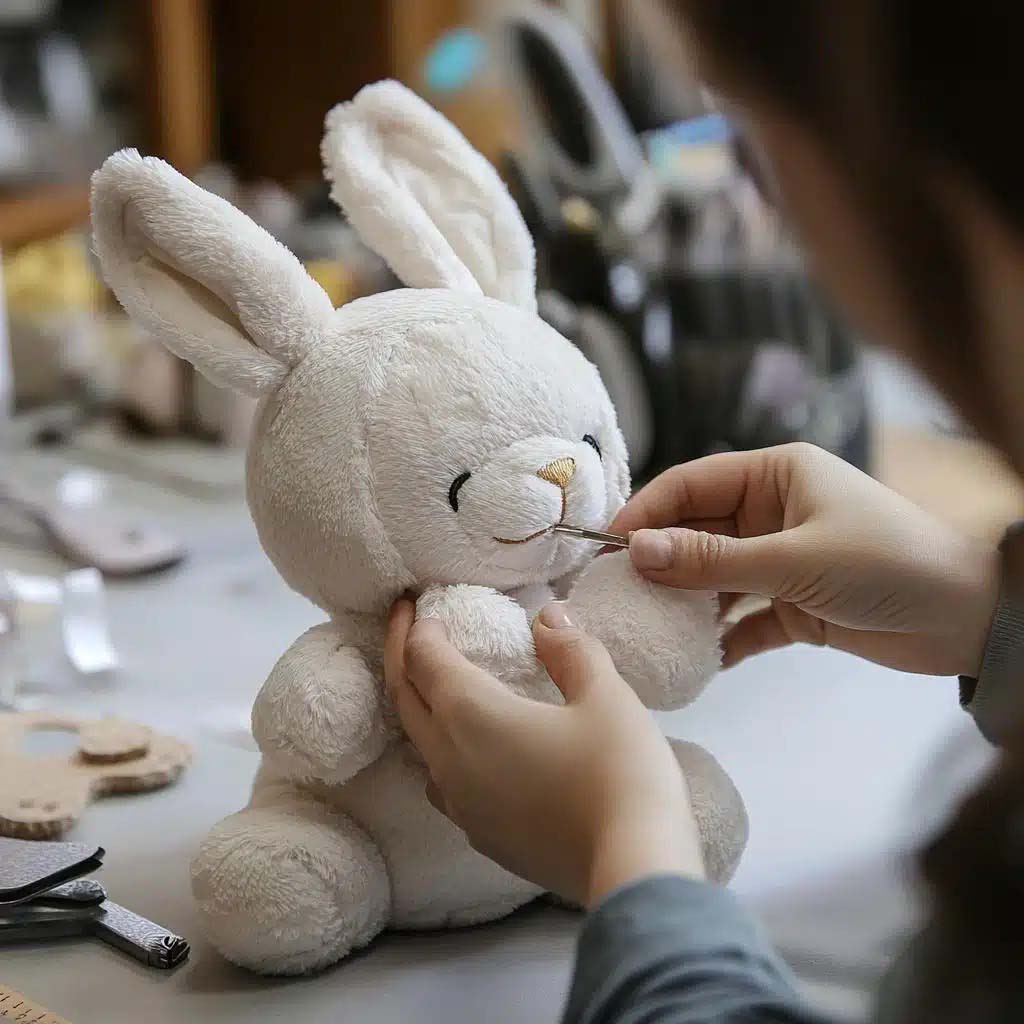
When buyers talk about sample accuracy, they are usually describing the gap between what they designed and what arrived in the sample box. Sometimes that gap is small — a color that is slightly warmer than the reference, a proportion that needs minor adjustment. Sometimes it is large — a character that looks fundamentally different from the design, dimensions that are noticeably off, materials that bear little resemblance to what was specified.
The difference between these outcomes is not luck. It is not primarily the result of how good a factory’s equipment is or how advanced their production line. It is the result of specific decisions made at specific points in the development and production process — decisions about how completely a brief is prepared, how rigorously a pattern is engineered, how carefully materials are selected and verified, how systematically the sampling workflow is managed, and how consistently production controls are applied from the first unit to the last.
Achieving 95 percent plush accuracy — which means producing bulk goods that are close enough to the approved sample that differences are essentially invisible to end customers — requires all of these elements working correctly together. This guide explains each element in the sequence it operates, making the path from design concept to accurate bulk production visible and practical.
What Does “95% Plush Accuracy” Actually Mean in Manufacturing Terms?
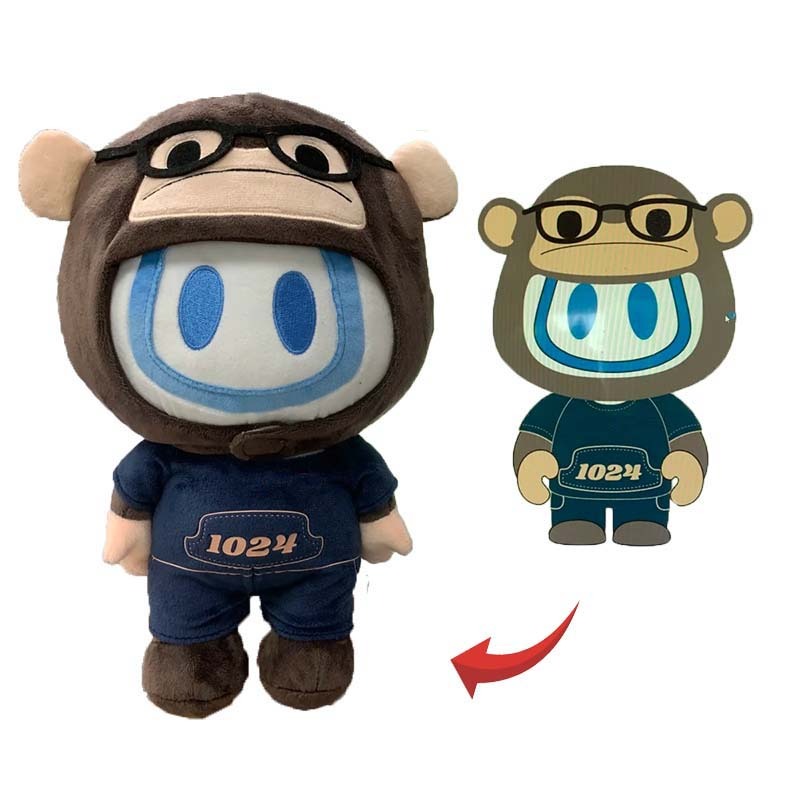
Before explaining how high plush accuracy is achieved, it is worth being precise about what the term means — because accuracy in manufacturing is a specific, measurable concept rather than a general aspiration toward quality.
In plush toy manufacturing, 95 percent accuracy does not mean that 95 percent of units in a production run are defect-free. It means that the finished bulk product, assessed across all quality dimensions — dimensions, color, shape, material quality, stuffing density, embroidery positioning, accessory placement, and finishing standard — falls within 95 percent or more of the approved production standard, measured by a defined tolerance for each quality attribute. Units within tolerance are considered accurate. Units outside tolerance constitute the defect rate.
Here is a framework for understanding what accuracy means across the key quality dimensions of a plush toy:
| Quality Dimension | Accuracy Measurement | Tolerance Standard | Why This Level Matters |
|---|---|---|---|
| Overall dimensions | Height and width measurement | ±5% of approved specification | Customer notices visible size differences |
| Color accuracy | Pantone deviation under D65 | Within 1 Pantone shade | Color mismatch is immediately visible |
| Shape and proportion | Silhouette comparison to counter sample | Visually indistinguishable | Shape defines product character |
| Stuffing density | Compression measurement | ±10% of approved compression value | Density affects shape and feel |
| Embroidery position | Coordinate deviation measurement | ±3mm from approved coordinate | Position affects emotional expression |
| Fabric quality | Pile height and surface consistency | Within approved swatch tolerance | Fabric defines premium feel |
| Accessory placement | Position deviation measurement | ±5mm from approved position | Placement affects overall visual balance |
| Seam quality | Stitch density and alignment | No visible deviation from standard | Seam quality signals overall construction quality |
Why 95 Percent Is the Practical Target
One hundred percent accuracy across all quality dimensions across all units in a bulk production run is not achievable in any manufacturing system that relies on human operators and natural material inputs. Fabric has inherent batch variation. Human operators produce outputs that vary within ranges even with excellent training and monitoring. Stuffing machines drift from calibration settings across long production runs.
The practical target is not elimination of all variation — it is containment of variation within ranges that are commercially invisible to end customers and commercially acceptable to buyers. A product that is 2mm shorter than specification and within one Pantone shade of the approved color is indistinguishable from the reference in real-world use. A product that is 15mm shorter than specification with a visible color deviation is a defect. The 95 percent accuracy target means ensuring that only the commercially invisible category of variation is present in the vast majority of units, while the commercially significant deviation category affects fewer than 5 percent of units.
How Does Brief Quality Determine the Accuracy Ceiling Before Sampling Begins?
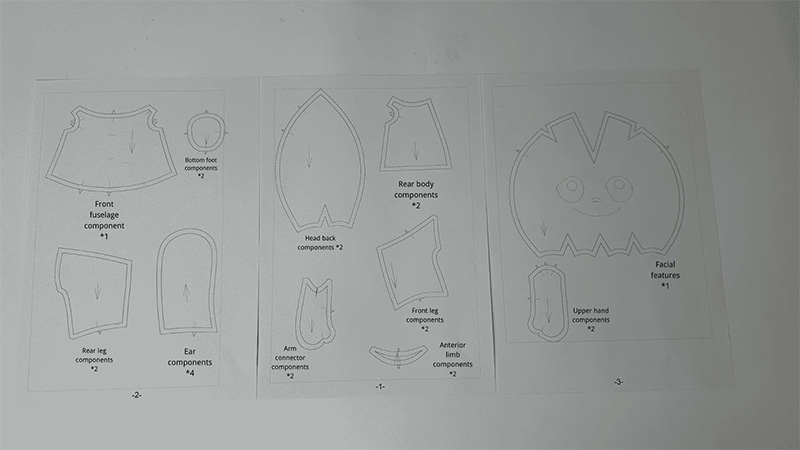
The design brief is the first and most fundamental determinant of plush accuracy — and it operates as an accuracy ceiling rather than just a starting point. A brief that completely and precisely specifies the product establishes a high accuracy ceiling — the factory has everything it needs to execute correctly, and accuracy depends on their capability to apply that information well. A brief that is incomplete or ambiguous establishes a low accuracy ceiling — regardless of how capable the factory is, the accuracy of their output is limited by the quality of the information they were given to work from.
Brief quality determines the accuracy ceiling because every missing specification in the brief becomes a factory assumption, and factory assumptions do not reliably match buyer intent. The dimensions of the accuracy gap between a vague brief and a complete one are not minor. A brief without Pantone color references gives the factory no objective basis for color matching — and the resulting color deviation may require two or three revision rounds to resolve. A brief without precise dimension specifications produces a first sample whose size reflects the factory’s interpretation rather than the buyer’s requirement. Each gap produces a corresponding accuracy gap in the first sample.
Here is a direct mapping between brief completeness and first-sample accuracy:
| Brief Element | If Absent | Accuracy Impact on First Sample | Revision Rounds Generated |
|---|---|---|---|
| Pantone color references | Factory matches from image — subjective | Color typically requires correction | 1–2 color revision rounds |
| Dimension table | Factory estimates from illustration | Size deviation is common | 1–2 size correction rounds |
| Fabric specification with swatch | Factory selects from available stock | Wrong fabric quality or texture | Potential material resample |
| Embroidery placement coordinates | Factory positions by visual judgment | Facial feature position varies | 1 position correction round |
| Filling density specification | Factory uses standard density | Density may not match intent | 1 density correction round |
| Accessory specification | Factory selects nearest available | Wrong size or style | 1 accessory correction round |
The Compounding Effect of Multiple Brief Gaps
Each missing brief element generates approximately one additional revision round. When multiple elements are missing simultaneously — as is common in quickly assembled briefs prepared under timeline pressure — the revision rounds do not simply add together. They compound, because corrections to one element sometimes require reassessment of elements that were previously considered acceptable.
A first sample with color deviation, proportion deviation, and embroidery position issues cannot be corrected in one round if the proportion change affects the natural position of the embroidery reference points. The color and proportion must be addressed first, producing a second sample, which must then be re-evaluated for embroidery position in the context of the corrected proportions. What appeared to be three separate correction items becomes four rounds when their interactions are not managed.
The practical implication is that the investment in brief preparation — which costs time rather than money — has a return that significantly exceeds its cost when measured in revision rounds prevented. For buyers who develop multiple designs simultaneously, a consistent brief preparation discipline applied across all designs can reduce total development sampling cost by 40 to 60 percent compared to the cost of correcting gaps through revision rounds.
How Does Pattern Engineering Translate Design Intent Into Physical Accuracy?
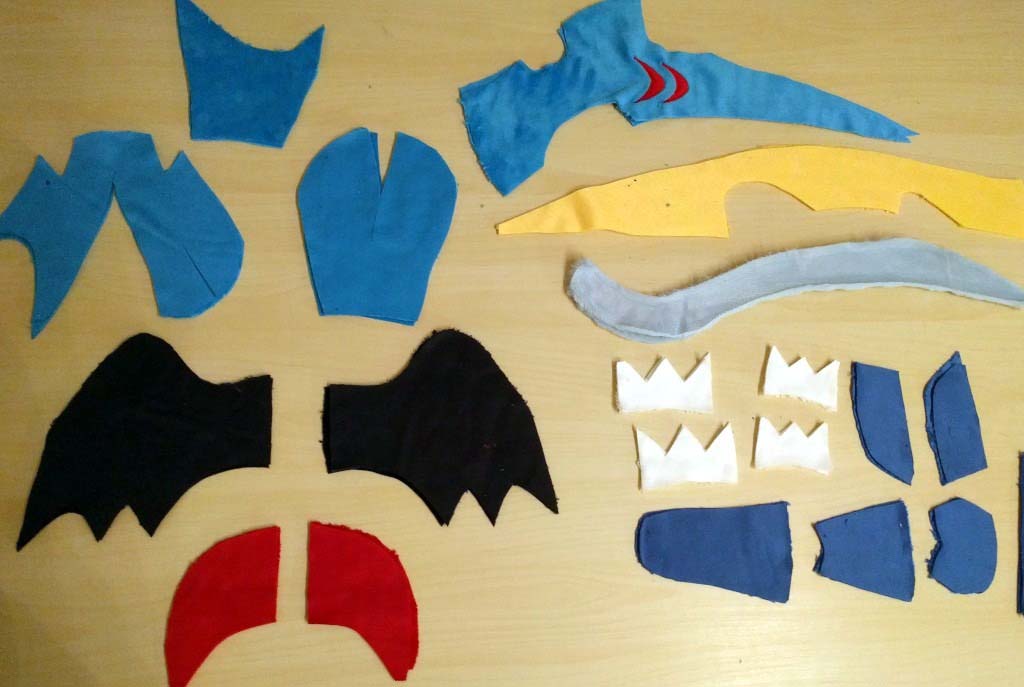
Pattern engineering is the technical process that translates the design intent captured in the brief into a set of precise fabric cutting templates — the physical instructions that determine the shape, proportions, and construction approach of the finished product. It is the most experience-dependent and most technically demanding stage of the accuracy achievement process, and the one where the gap between capable and less capable manufacturing partners is most directly visible in the resulting first sample.
Pattern engineering translates design intent into physical accuracy through the three-dimensional engineering judgment of experienced pattern makers — their ability to determine how a set of two-dimensional fabric panels will combine, when stuffed and shaped, to produce the intended three-dimensional form. This judgment cannot be derived from calculation alone. It is built through accumulated experience with how different shapes, fabrics, and construction approaches interact — and it is the primary reason why experienced manufacturers consistently achieve higher first-sample accuracy than newer factories on complex designs.
Here is how specific pattern engineering decisions affect accuracy across different quality dimensions:
| Pattern Engineering Decision | Quality Dimension Affected | Accuracy Impact of Error | Correction Required |
|---|---|---|---|
| Panel boundary placement | Shape and silhouette | Incorrect 3D form | Full pattern rebuild |
| Seam allowance calculation | Dimensions | Product smaller or larger than specified | Pattern recalculation |
| Grain line specification | Fabric surface appearance | Pile direction inconsistency | Panel recut with corrected grain |
| Dart and tuck placement | Shape in curved areas | Flat or distorted curved sections | Pattern modification |
| Stuffing access position | Shape retention | Difficulty achieving correct density | Closure position change |
| Embroidery registration point | Embroidery position accuracy | Systematic position offset | Pattern mark adjustment |
| Proportional compensation | Overall proportions | Product looks different when stuffed | Scale adjustment across panels |
The Three-Dimensional Shape Engineering Challenge
The most technically challenging aspect of pattern engineering for plush toys is the translation of two-dimensional design artwork into a three-dimensional stuffed form that accurately represents the design intent. This challenge is particularly significant for original character designs — where the design exists only as illustration and has no physical reference — and for designs with organic or asymmetric forms that do not conform to standard geometric shapes.
The core difficulty is that a two-dimensional design in an illustration does not directly specify the three-dimensional structure required to produce it. An illustrated character with a round head does not specify how many panels the head should have, where the seams should sit, or how the panels should be proportioned to produce a correctly round form when stuffed. These decisions must be engineered by the pattern maker from the design intent — and different engineering solutions produce different three-dimensional results.
An experienced pattern maker who has solved similar engineering problems across many designs develops an intuitive library of solutions — knowing which panel configuration produces the most accurate round head form, which seam placement creates the cleanest appearance when visible, which stuffing approach achieves the most consistent shape retention. This intuitive library is what produces high first-sample accuracy on complex designs, and it is only built through extensive hands-on experience with the specific challenges of plush toy pattern engineering.
How Do Material Standards Directly Affect Dimensional and Visual Accuracy?
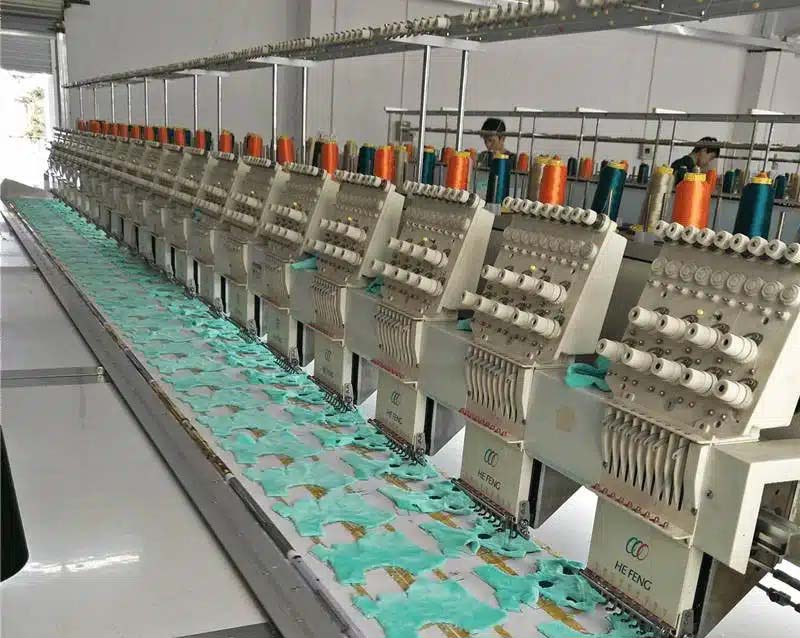
Materials are the physical substrate on which every accuracy achievement in plush toy production depends. The color accuracy that can be achieved is bounded by the color matching precision of the sourced fabric. The dimensional accuracy that can be achieved is bounded by the dimensional consistency of the fabric being cut and sewn. The visual quality that can be achieved is bounded by the inherent quality of the surface materials. No pattern engineering or production process management can produce a color-accurate product from materials that do not match the color specification.
Material standards directly affect dimensional and visual accuracy through three mechanisms. First, material specification precision — how precisely the required material characteristics are defined — determines how closely the sourced material can match the design intent. A precise specification produces a close match. A vague specification produces an approximate one. Second, material incoming quality control — how rigorously the received material is verified against the specification — determines whether the correct material actually enters production. Third, material batch consistency — how consistently the material’s characteristics are maintained across the quantities used in a production run — determines how uniformly accurate the finished product is across all units.
Here is a mapping of material standards to their accuracy implications:
| Material Factor | Accuracy Mechanism | Impact on Finished Product | Control Method |
|---|---|---|---|
| Fabric color specification precision | Determines how closely sourced fabric can match design | Color accuracy ceiling of finished product | Pantone reference in specification |
| Fabric color lot consistency | Determines color uniformity across all units | Unit-to-unit color consistency | IQC swatch comparison per roll |
| Pile height consistency | Determines surface texture uniformity | Consistent visual feel across the batch | IQC pile height measurement |
| Filling density grade | Determines stuffing consistency and shape retention | Dimensional and shape consistency | Filling weight specification and IQC |
| Accessory dimensional accuracy | Determines feature proportion accuracy | Facial feature visual accuracy | IQC dimensional verification |
| Thread color accuracy | Determines seam and embroidery color contribution | Minor but visible color contribution | Color comparison at IQC |
The D65 Lighting Requirement for Color Accuracy
Color accuracy in plush toy production cannot be reliably assessed or maintained without standardized lighting conditions. Fabric colors appear substantially different under warm incandescent light, cool fluorescent light, and natural daylight — creating the possibility of a fabric that appears correctly matched under one light source and noticeably off under another. This lighting-dependent variation is one of the most common sources of color accuracy disputes in international plush toy sourcing.
The solution is consistent use of D65 standardized daylight illumination for all color assessments — from the initial comparison of sourced fabric against the Pantone reference during IQC, through embroidery thread color selection, to final inspection color evaluation. When all color assessments are conducted under the same standardized light source, the accuracy of color specification, material sourcing, and production monitoring are all expressed in the same color language — and the accuracy achieved under D65 assessment conditions is the accuracy delivered to the customer.
Factories that use D65 lighting consistently throughout their quality process — at IQC, during sampling, and in FQC — produce more consistent color accuracy than those that conduct color assessments under variable or uncontrolled lighting conditions. The presence of calibrated D65 light equipment is one of the most reliable visible indicators of a factory’s investment in objective, systematic color quality management.
How Does the Sampling Workflow Systematically Close the Gap Between Design and Product?
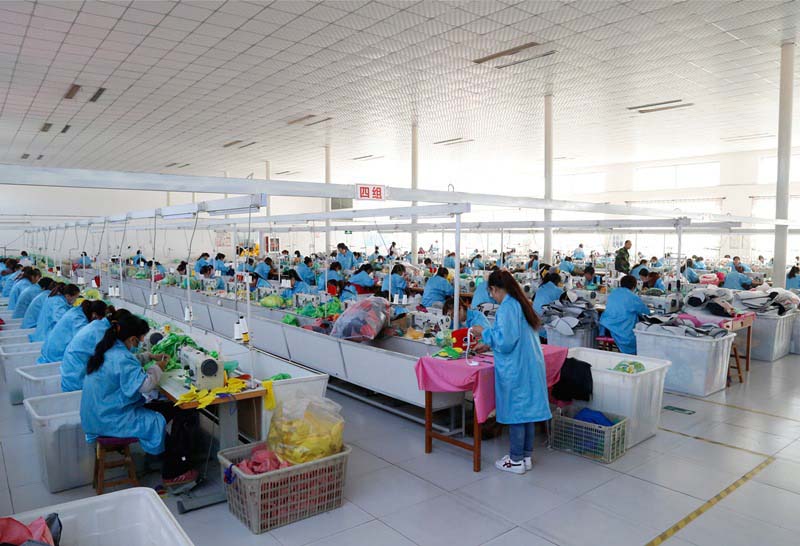
The sampling workflow is the iterative development process that systematically closes the gap between the design intent captured in the brief and the physical product that can be produced accurately at scale. It is not a single event but a structured sequence of development rounds — each one moving the product closer to the approved standard through the progressive resolution of the specific gaps that each round reveals.
The sampling workflow systematically closes the gap between design and product through four sequential mechanisms: accurate brief interpretation by the factory’s development team, physical prototype construction by specialized sampling personnel, systematic buyer evaluation against defined criteria, and specific revision feedback that addresses each identified gap precisely. When all four mechanisms operate correctly, each revision round closes a defined portion of the remaining gap — and the total number of rounds required to reach approval reflects how effectively the workflow was managed from the start.
Here is a framework for understanding how the gap closes across a well-managed sampling workflow:
| Sampling Stage | Gap Remaining | Gap-Closing Mechanism | Accuracy Level Achieved |
|---|---|---|---|
| Complete brief submitted | 100% gap — design exists only in documentation | Precise specification provides factory a complete roadmap | Brief quality determines ceiling |
| Factory design review | Specification interpreted correctly | Factory confirms understanding, flags ambiguities | Ambiguities resolved before sampling |
| First sample produced | Major gaps visible | Physical prototype reveals factory’s interpretation | 60–75% accuracy typical |
| First evaluation completed | All gaps specifically identified | Systematic evaluation against all criteria | All deviations documented |
| Revision 1 completed | Major gaps closed | Targeted corrections applied to identified deviations | 80–90% accuracy typical |
| Revision 2 completed | Minor gaps addressed | Refinement of remaining deviations | 90–95% accuracy typical |
| Counter sample produced | Production-environment accuracy confirmed | Bulk materials and production processes verified | 95%+ accuracy confirmed |
| Sample approved | Zero remaining significant gaps | All deviations within acceptable tolerance | Production reference established |
Why the Counter Sample Is the Final Gap-Closing Step
The counter sample stage closes the specific accuracy gap that no development sample can address — the gap between what the factory can produce under controlled sampling conditions and what the production environment actually delivers with bulk materials, production line operators, and calibrated production equipment.
This gap exists because development samples are built by experienced specialist sample sewers using carefully selected materials under close supervision. Bulk production is handled by production line operators using machine-sourced bulk materials under the normal production conditions of a busy factory floor. The differences between these two environments — in operator skill, material characteristics, equipment settings, and supervision intensity — produce product differences that are only discoverable by building a sample under the actual production conditions.
The counter sample is this discovery mechanism. It reveals whether the bulk fabric’s color matches the development sample fabric, whether the production stuffing machine’s calibrated output matches the hand-stuffing density of the development sample, and whether the production embroidery machine’s positioning reproduces the coordinate accuracy of the sampling stage embroidery. Each discrepancy identified in the counter sample is corrected before bulk production begins — closing the final gap between the approved standard and what the production environment actually delivers.
What Production Controls Maintain Accuracy from the First Unit to the Last?

Achieving 95 percent accuracy in the first unit of a production run is a significant accomplishment — but it is only half of the accuracy challenge. The second half is maintaining that accuracy across every subsequent unit in the run, from the first to the last. Production drift — the gradual change in output quality that occurs as machines warm up, operators fatigue, material roll characteristics vary, and equipment settings shift — is the primary threat to sustained accuracy across a bulk production run.
Production controls maintain accuracy from the first unit to the last by applying a structured monitoring system that detects production drift at the earliest possible point — before it accumulates into accuracy deviations that are visible in finished goods — and triggers corrections that return the production process to the verified accuracy baseline. This monitoring system operates continuously throughout the production run rather than only at the beginning and end.
Here is a comprehensive production control framework organized by the accuracy dimension each control primarily maintains:
| Production Control | Accuracy Dimension Maintained | Monitoring Interval | Corrective Action Trigger |
|---|---|---|---|
| Stuffing machine density check | Shape and dimension accuracy | Every 150–200 units | Weight outside ±5% of target |
| Embroidery position verification | Facial feature position accuracy | Every 50 embroidered units | Coordinate deviation >2mm |
| Fabric roll transition check | Color and pile consistency | At every new roll start | Visible deviation from previous roll |
| Panel dimension spot check | Dimensional accuracy | Every 200 cut sets | Dimension outside tolerance |
| Seam quality monitoring | Construction integrity | Every 60–90 minutes | Visible seam quality deviation |
| Accessory attachment check | Component security | Every 2 hours | Any detachment under spot force |
| Surface finishing review | Visual quality standard | Pre-packing, every unit | Visible thread or surface defect |
| First-off comparison | Overall accuracy baseline | First 3–5 completed units | Any deviation from counter sample |
The First-Off Inspection as Accuracy Anchor
The first-off inspection is the production control that anchors the entire run’s accuracy — it establishes the verified accuracy baseline from which all subsequent monitoring measures drift. When the first three to five complete units from the production line are comprehensively inspected against the approved counter sample, the inspection confirms that the production process has been correctly configured to deliver the required accuracy level before the run proceeds.
Any deviation identified at the first-off stage — whether in stuffing density, embroidery position, color, or dimensional accuracy — is corrected by halting production, identifying the cause of the deviation, recalibrating the relevant process element, and producing a corrected unit before the run continues. The correction cost at this stage is minimal — five units may need to be set aside. The same correction, applied after 2,000 units have been produced with the deviation, costs a full batch rework or a quality concession.
Managing the Accuracy-Speed Trade-off
One of the most common accuracy failures in bulk plush production is not a technical failure but a management failure — the decision to prioritize production speed over accuracy monitoring when production is under timeline pressure. When delivery deadlines create pressure to maximize unit output per shift, the most vulnerable accuracy controls are the monitoring intervals that require inspection time — stuffing density checks, embroidery position verifications, and fabric roll transition checks.
Factories that maintain production monitoring intervals under timeline pressure — treating accuracy controls as non-negotiable regardless of the delivery schedule — consistently deliver better bulk accuracy than those that scale back monitoring when the production floor is busy. This discipline requires organizational commitment from factory management — a clear policy that accuracy monitoring is not a discretionary activity that can be traded against speed — and it is one of the most revealing indicators of a factory’s genuine quality culture.
Buyers who want to verify this discipline before it is tested in their production run can ask specifically: “What happens to your in-process quality monitoring intervals when you are under pressure to meet a delivery deadline?” A factory with genuine quality culture will describe consistent intervals regardless of timeline pressure. A factory that monitors primarily when convenient will struggle to answer this question with the same confidence.
How Does Final Verification Confirm That Accuracy Has Been Achieved Across the Batch?
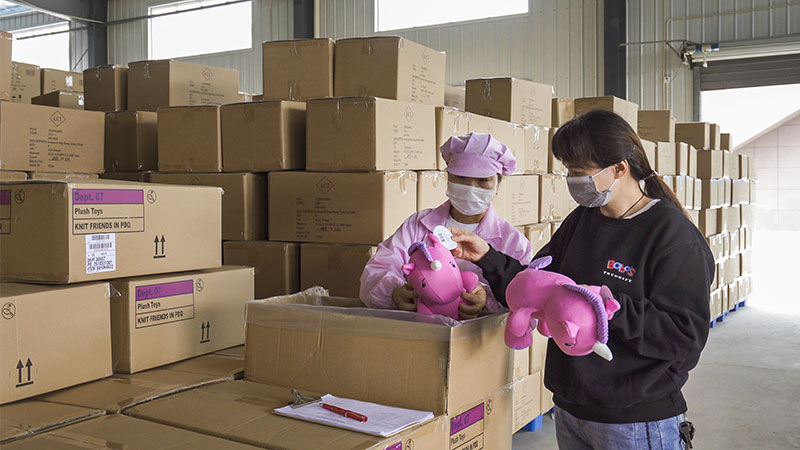
Final verification is the last quality confirmation step before a production run is released for shipment. It confirms that the accuracy achieved through the combined effect of brief quality, pattern engineering, material standards, sampling workflow, and production monitoring has been maintained across the full batch — and that the batch as a whole meets the 95 percent accuracy standard that makes it acceptable for delivery.
Final verification confirms batch accuracy through a comprehensive AQL-based inspection of a statistically defined sample drawn from the complete packed production batch. This inspection covers all accuracy dimensions simultaneously — dimensional accuracy, color accuracy, shape, stuffing density, embroidery position, accessory attachment, surface quality, and labeling — and uses the inspection results to determine whether the batch as a whole falls within or outside the agreed accuracy threshold.
Here is how final verification operates as an accuracy confirmation system:
| Verification Element | How It Confirms Accuracy | Standard Applied | Output |
|---|---|---|---|
| AQL sample selection | Statistically representative sample drawn | ISO 2859 Inspection Level II | Sample size table-determined |
| Dimensional check | Key measurements against tech pack tolerance | ±5% of specification | Pass/fail per dimension |
| Color assessment | All color areas under D65 against approved sample | Within 1 Pantone shade | Pass/fail per color area |
| Stuffing density | Compression against approved reference | ±10% of approved value | Pass/fail per unit |
| Embroidery position | Coordinate measurement against standard | ±3mm from approved | Pass/fail per feature |
| Accessory security | Pull force test on all safety accessories | EN71/ASTM reference force | Pass/fail per accessory |
| Surface quality | Visual inspection for finishing defects | Zero visible defect standard | Defect count |
| Label accuracy | Content verification against specification | Exact content match | Pass/fail |
| AQL calculation | Defect rate in sample against acceptance number | AQL 2.5 major, 1.5 critical | Batch pass or hold |
Third-Party Verification as Independent Accuracy Confirmation
Factory internal FQC confirms accuracy against the factory’s own assessment of the approved standard. Third-party pre-shipment inspection confirms accuracy against the buyer’s specified criteria, conducted by an independent inspector with no relationship to the factory and no incentive to pass results that do not meet the agreed standard.
For buyers who want the highest level of accuracy assurance — particularly for first orders, large volume orders, or products where compliance accuracy is critical — third-party verification from SGS, Bureau Veritas, or Intertek provides the independent confirmation that internal FQC, however rigorous, cannot provide for itself. The third-party inspection report is the most objective evidence available to a buyer that the batch accuracy claimed by the factory’s FQC process has been independently confirmed.
The practical value of third-party verification is not primarily in the cases where it catches problems the factory’s FQC missed — though it does catch these in a meaningful proportion of inspections. It is in the assurance it provides in the cases where the factory’s FQC was accurate — giving buyers the confidence to release the balance payment and accept the shipment based on independently confirmed, documented accuracy evidence rather than the factory’s self-reported results.
What Is the Buyer’s Role in Achieving and Protecting Plush Accuracy?

Plush accuracy is often understood as entirely a factory responsibility — the buyer specifies the product, the factory produces it accurately, and accuracy is the factory’s performance metric. This understanding is incomplete. Achieving and protecting 95 percent plush accuracy across every production run requires active buyer participation at specific points in the development and production process. Without this participation, even the most capable factory cannot consistently achieve the accuracy standard that competitive plush toy markets require.
The buyer’s role in achieving and protecting plush accuracy is active and consequential at four specific points: brief preparation, sample evaluation, approval documentation, and production communication. At each of these points, buyer actions directly affect the accuracy of the outcome — and buyer inactions create accuracy gaps that the best manufacturing process cannot fully compensate for.
Here is a framework for understanding the buyer’s accuracy contribution at each key point:
| Buyer Contribution Point | Specific Buyer Action Required | Accuracy Impact of Buyer Inaction |
|---|---|---|
| Brief preparation | Complete all specification elements — Pantone references, dimension table, material swatches, placement coordinates | Each missing element reduces first-sample accuracy ceiling |
| Internal alignment | Confirm all stakeholders agree on design direction before brief submission | Post-brief changes reduce accuracy efficiency |
| Sample evaluation | Conduct systematic checklist-based evaluation under D65 lighting | Impressionistic evaluation misses deviations that generate later revision rounds |
| Revision feedback | Provide specific, measurable, annotated feedback for every identified deviation | Vague feedback produces inaccurate corrections |
| Feedback consolidation | Compile all stakeholder input into one document before factory communication | Fragmented feedback generates additional revision rounds |
| Counter sample approval | Evaluate counter sample against approved development sample before authorizing bulk | Skipping counter sample allows production-environment accuracy gaps to reach bulk output |
| Production communication | Request first-off inspection report and mid-production updates | Absence of proactive monitoring allows drift to accumulate undetected |
| Balance payment timing | Retain balance until FQC report and third-party inspection (where required) confirm accuracy | Early balance release removes the primary commercial lever for accuracy enforcement |
The Brief as the Buyer’s Primary Accuracy Contribution
Of all the points where buyer action affects accuracy, brief preparation is the highest-impact and most directly controllable. The buyer’s brief establishes the accuracy ceiling for the entire development process — the maximum accuracy that even the most capable factory can achieve is bounded by the precision of the specifications the buyer has provided. Improving brief quality costs time, not money, and the return on that time investment is measured in revision rounds prevented, development timelines shortened, and compliance risks avoided.
The most impactful brief preparation investments are Pantone color references — eliminating the most common source of first-sample color revision — dimension tables with tolerances — eliminating the most common source of size deviation correction — and physical material swatches — eliminating the most common source of material quality gap between specification and execution. Together, these three elements address the three most frequent causes of inaccurate first samples, and their inclusion in the brief is the single highest-return accuracy investment available to any buyer.
Protecting Accuracy Through Payment Structure
The buyer’s role in protecting accuracy during production extends to the commercial structure of the purchase agreement. A payment structure that retains the majority of payment — typically 70 percent of the order value — until after independent quality verification has confirmed that the production accuracy meets the agreed standard gives the buyer the commercial leverage to insist on accuracy remediation when the FQC results do not meet the specification.
Without this leverage — in situations where full payment is made before goods are inspected or where inspection is waived for convenience — the buyer’s ability to hold the factory accountable for accuracy shortfalls is significantly reduced. The commercial terms of the purchase agreement are therefore an accuracy protection mechanism, not just a cash flow arrangement, and they should be structured with accuracy enforcement explicitly in mind.
At Kinwin, we support buyers in achieving the accuracy standard described throughout this guide through every mechanism available — rigorous brief review, experienced pattern engineering, compliance-first material sourcing, a structured sampling workflow with counter sample confirmation, continuous in-process accuracy monitoring, and comprehensive final verification documentation. Our clients who invest in the brief preparation practices and evaluation disciplines described here consistently achieve 95 percent or better accuracy across their production runs — because they provide the inputs that our manufacturing systems are designed to convert into accurate finished products.
If you want to discuss how this accuracy system applies to your specific product development situation — the brief preparation process, the sampling workflow, the counter sample policy, and the final verification documentation we provide — we would be glad to walk through it with you.
Reach out to our team at [email protected] or visit kinwintoys.com to start that conversation.
Conclusion
Achieving 95 percent plush accuracy across bulk production is the convergence of many elements working correctly together — a complete design brief, precise pattern engineering, compliant and consistent materials, a systematic sampling workflow that closes the gap between design intent and physical product, continuous in-process monitoring that prevents production drift, and rigorous final verification that confirms accuracy across the full batch.
No single element is sufficient on its own. The most complete brief cannot compensate for inadequate pattern engineering. The most capable pattern making cannot compensate for materials that do not match the specification. The most rigorous production monitoring cannot compensate for an approved sample that does not accurately represent the design intent.
This interdependence is why achieving high plush accuracy consistently — not just occasionally — requires the full system to be in place, operated by experienced personnel who understand how each element affects the others, and actively supported by buyers who prepare complete briefs, evaluate samples systematically, and structure their production communication to maintain visibility throughout the run.
When all of these elements are present, 95 percent accuracy is not an ambitious target — it is a predictable outcome.
FAQ
Q1: Is 95 percent plush accuracy achievable on first samples as well as bulk production, or only in bulk after multiple revision rounds?
First samples from experienced factories consistently achieve a high level of accuracy relative to the brief — but not typically 95 percent, because the first sample stage is specifically designed to reveal gaps and resolve them rather than to confirm full accuracy. A well-executed first sample from an experienced factory with a complete brief typically achieves 70 to 80 percent accuracy — with the remaining gap concentrated in specific areas that are difficult to resolve without a physical prototype reference. This is not a failure of the first sample process — it is the expected outcome of the gap-closing mechanism that sampling is designed to be. The 95 percent target is appropriate for the counter sample stage — after all revision rounds have closed the identified gaps and the counter sample has confirmed that the production environment can reproduce the approved standard. For first samples, a more appropriate accuracy expectation is that all major structural, proportional, and material issues are either correct or specifically identified for correction, with no fundamental design interpretation errors requiring complete rebuilding.
Q2: How does product complexity affect the number of revision rounds typically needed to reach 95 percent accuracy?
Product complexity has a direct and predictable effect on the number of revision rounds required to reach 95 percent accuracy. Simple designs — standard animal shapes with basic embroidery and single-fabric construction — typically reach the required accuracy standard in one to two revision rounds from experienced factories. Moderate complexity designs — original character shapes, multi-fabric construction, detailed embroidery — typically require two to three rounds. Highly complex designs — unusual proportions, many fabric panels, functional elements, intricate embroidery, weighted filling — may require three to five rounds even with experienced factories and complete briefs. This complexity-round relationship is a predictable function of the number of independently adjustable quality dimensions in the design — each additional complexity factor adds an independently adjustable element that may require its own correction round. Buyers planning development timelines and budgets for complex designs should build this relationship into their project planning from the start rather than discovering it through the development process.
Q3: What is the most common reason that bulk orders that achieved 95 percent accuracy in the counter sample fall below that standard in full production?
The most common cause of accuracy loss between counter sample and full bulk production is production monitoring lapse — the reduction of in-process quality monitoring intensity under production volume or timeline pressure. The counter sample is produced with close supervisor attention and careful calibration verification. Bulk production of thousands of units extends over days or weeks under the normal production pressures of a busy factory, and the monitoring disciplines that maintained accuracy in the counter sample may not be maintained at the same intensity throughout the full run. Specifically, stuffing density checks, embroidery position verifications, and fabric roll transition checks are the monitoring controls most frequently reduced under production pressure — and their reduction produces the stuffing drift, embroidery position drift, and inter-roll color variation that are the most common bulk accuracy complaints. Buyers who require that these specific monitoring checks be documented in the IPQC log and who request that log as part of the production communication are the most effective at maintaining accountability for monitoring discipline throughout the full production run.
Q4: How should buyers document their own accuracy standards to protect them if bulk delivery falls below the required level?
The most effective documentation of accuracy standards is a tech pack with measurable tolerances for every key quality dimension, combined with a signed quality annex to the purchase agreement that specifically references those tolerances as the acceptance criteria for the production batch. The tech pack should specify tolerances in measurable terms for dimensions, color, stuffing density, embroidery position, and accessory placement — using the language described throughout this guide. The quality annex should specify the AQL level that will be applied in final inspection, define the defect classification for each quality dimension, confirm the right to third-party inspection, and specify the consequences if the inspection result does not meet the agreed AQL threshold. With this documentation in place before production begins, any accuracy dispute becomes an objective assessment against agreed criteria rather than a subjective disagreement about what was expected — which is both faster to resolve and more reliably favorable to the buyer’s commercial interest.
Q5: Can 95 percent plush accuracy be maintained across reorders of the same design months or years after the original production run?
Yes — but maintaining accuracy across reorders requires specific practices that many buyers do not systematically apply. The production reference materials from the original run — the approved sample, the tech pack with tolerances, the material specification with approved supplier and lot information — must be retained and actively used as the reference standard for each reorder rather than being treated as historical information. For fabric specifically, bulk material approval before each reorder begins is essential — because fabric from the same supplier ordered months later will come from a new dye lot that may show subtle color characteristics differences from the original. For filling, density calibration verification before the reorder production run begins ensures that the stuffing system is calibrated to the same standard as the original run. And for designs with embroidery, confirmation that the embroidery files and machine programming have been retained in the factory’s system — rather than needing to be rebuilt from scratch — prevents the positioning inaccuracies that can result from embroidery programming that is reconstructed rather than retained from the approved standard.