Skip to content
Short plush is the go-to fabric when you need a smooth, neat, and durable surface on a plush toy. In this guide, I explain how it’s defined, how we produce and finish it for toys, how it compares with velboa and minky, how specs like pile height and GSM change the feel, and what safety rules matter for export to the USA, Europe, Japan, and Korea. You can use this as a buying and production reference for your next plush line.
To help you make quick decisions, I include simple spec ranges, factory notes, and pass–fail checks. You get clear options, fewer surprises, and a better chance to hit price, quality, and delivery targets with confidence.
What is short plush material and how is it defined in textile manufacturing?
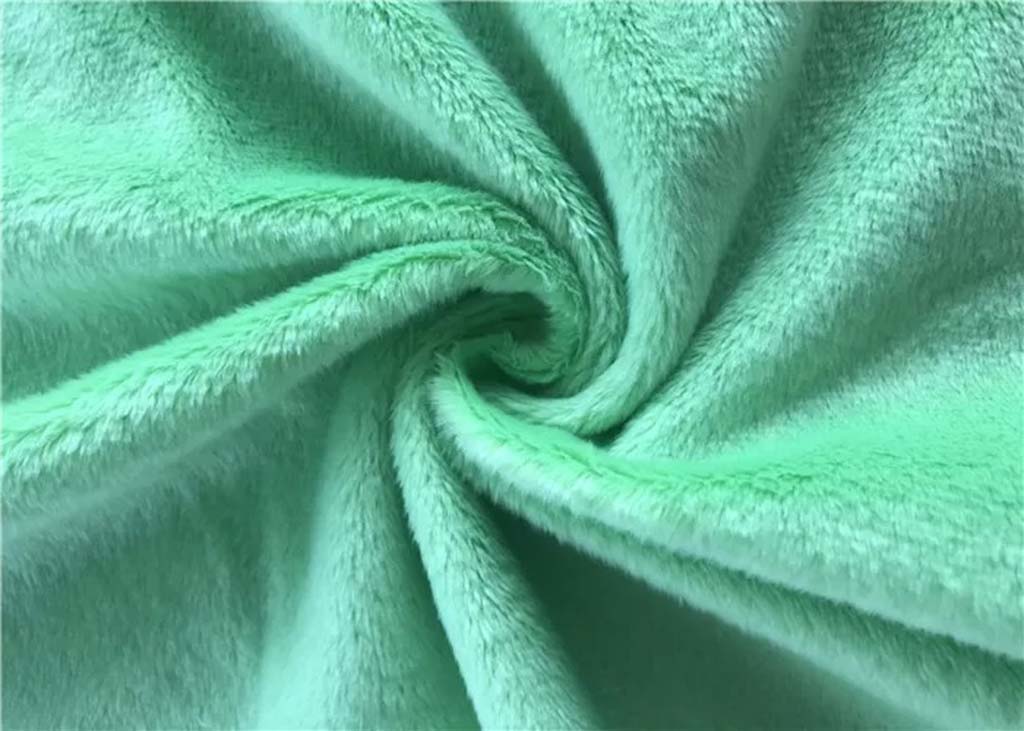
Short plush is a warp- or weft-knitted pile fabric with a low pile height (usually 1–4 mm) and a soft, uniform surface. The base is commonly 100% polyester (sometimes blends), with pile formed by knitted loops that are cut and finished. In toy work, “short plush” means a tidy, low-pile nap that photographs cleanly, resists matting, and sews well on small parts like ears, muzzles, and accessories.
Short plush is different from long-pile faux fur. It aims for precision: crisp embroidery, easy color matching, and stable seams. Because the fibers are short, the face stays smooth after washing and handling, which helps your product maintain a premium look in stores and online.
Typical spec characteristics
- Pile height: 1–4 mm (most common 1.5–3 mm)
- GSM (fabric weight): 180–350 gsm depending on backing and finish
- Fiber: Polyester (PET) microfibers are most common for softness + durability
- Backing: Tricot or circular knit backing for stable sewing and less fray
- Finishes: Shearing, brushing, singeing, heat-setting, anti-pilling, anti-static (optional)
Table 1. Quick taxonomy of short plush for toy manufacturing
| Attribute | Typical Range | Why It Matters | Buyer Tip |
|---|---|---|---|
| Pile height | 1–4 mm | Controls smoothness, embroidery clarity, matting risk | Use 1.5–2.5 mm for faces |
| GSM | 180–350 gsm | Influences drape, opacity, seam strength | 220–280 gsm for small plush |
| Fiber | 100% polyester | Soft, colorfast, durable, easy care | Request consistent denier |
| Backing | Tricot/circular knit | Stability, low stretch, better shaping | Ask for shrinkage data |
| Finish | Shear/brush/heat-set | Smooth touch, even nap | Check for shade consistency |
How is short plush fabric produced and finished for toy applications?
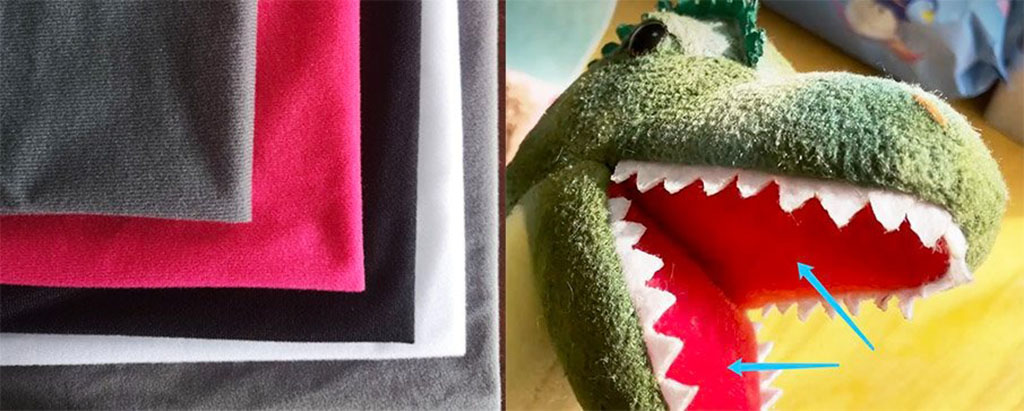
Short plush starts as a knit fabric with pile loops. The loops are then cut or sheared to a low, even height. The fabric is brushed to align fibers, dyed (or piece-dyed/yarn-dyed), and heat-set to stabilize the nap. Optional finishing adds anti-pilling or anti-static properties. For toys, the goal is consistent color, low fiber shed, and stable seams.
At Kinwin, we focus on even shearing, balanced dyeing, and controlled heat-setting. This keeps the handfeel soft, while maintaining strong stitch performance in production lines. A clean finish helps your embroidery look sharp and reduces rework.
Table 2. Production & finishing steps with common risks and controls
| Step | Purpose | Common Risk | Factory Control |
|---|---|---|---|
| Knitting | Create base + loops | Uneven loop density | Machine calibration & inline checks |
| Shearing | Set low pile height | Height variance, striping | Laser height guides & sampling |
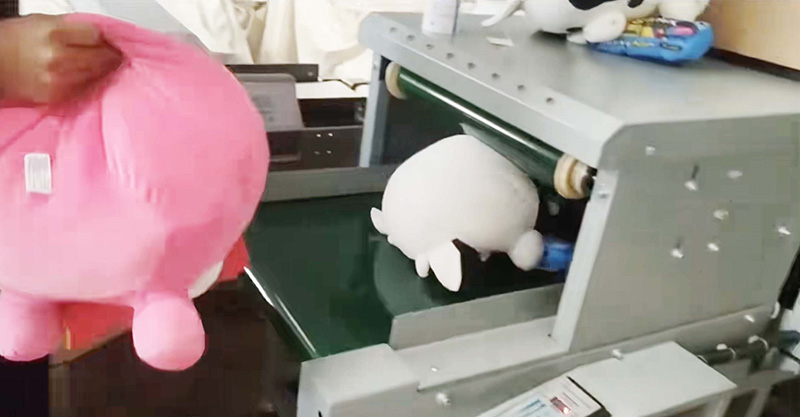
| Brushing | Align nap, soften | Excess shed | Optimize brush pressure & cycles |
| Dyeing | Color & shade | Shade drift, crocking | Lab dips, controlled bath ratios |
| Heat-setting | Dimensional stability | Over-setting (stiff handfeel) | Time–temp windows & tests |
| Finishing | Anti-pill/anti-static | Chemical imbalance | Certificate + batch QA swatches |
What are the key differences between short plush, velboa, and minky fabrics?
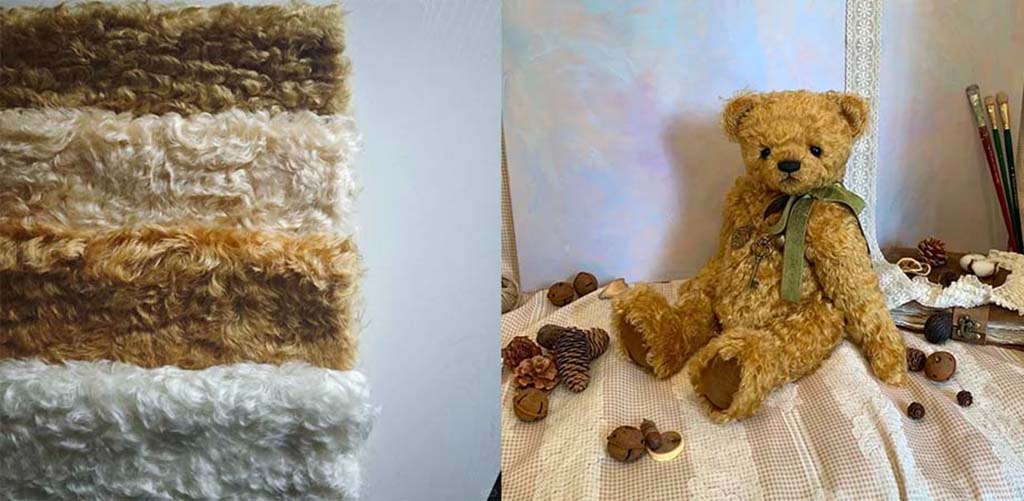
Short plush, velboa, and minky are all plush family fabrics, but they serve different design goals:
- Short plush: low pile, clean surface, strong for embroidered detail and small parts.
- Velboa: short pile too, but typically denser and tighter, with a slightly firmer handfeel and strong abrasion resistance. Good for cost-sensitive projects needing durability.
- Minky: longer microfibre pile (usually 2–8 mm), very buttery-soft handfeel, often with embossed dots/ridges; perfect for ultra-soft cuddle zones, blankets, and premium plush bodies.
Table 3. Short plush vs. velboa vs. minky (buyer-facing comparison)
| Fabric | Typical Pile | Handfeel | Durability | Embroidery Clarity | Cost Position | Best Use |
|---|---|---|---|---|---|---|
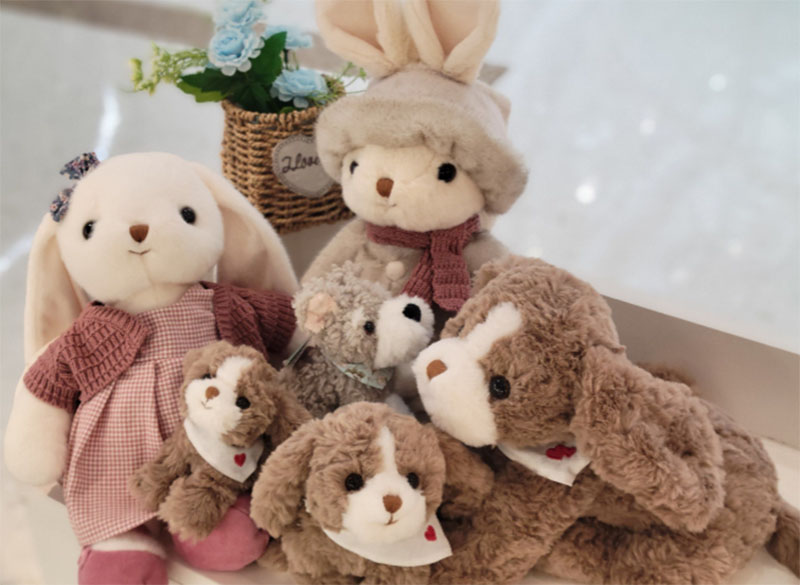
| Short plush | 1–4 mm | Soft-smooth | High | Excellent | Mid | Faces, small parts, tidy look |
| Velboa | 1–3 mm | Soft-firm | Very high | Very good | Low–Mid | Budget bodies, high wear areas |
| Minky | 2–8 mm | Ultra-soft | Medium–High | Good | Mid–High | Premium bodies, baby-soft zones |
How to choose quickly
- Need sharp details and a clean face? Choose short plush.
- Need toughness on a budget? Choose velboa.
- Need cloud-soft touch for a premium SKU? Choose minky.
How does pile height, GSM, and fiber composition affect plush softness and durability?
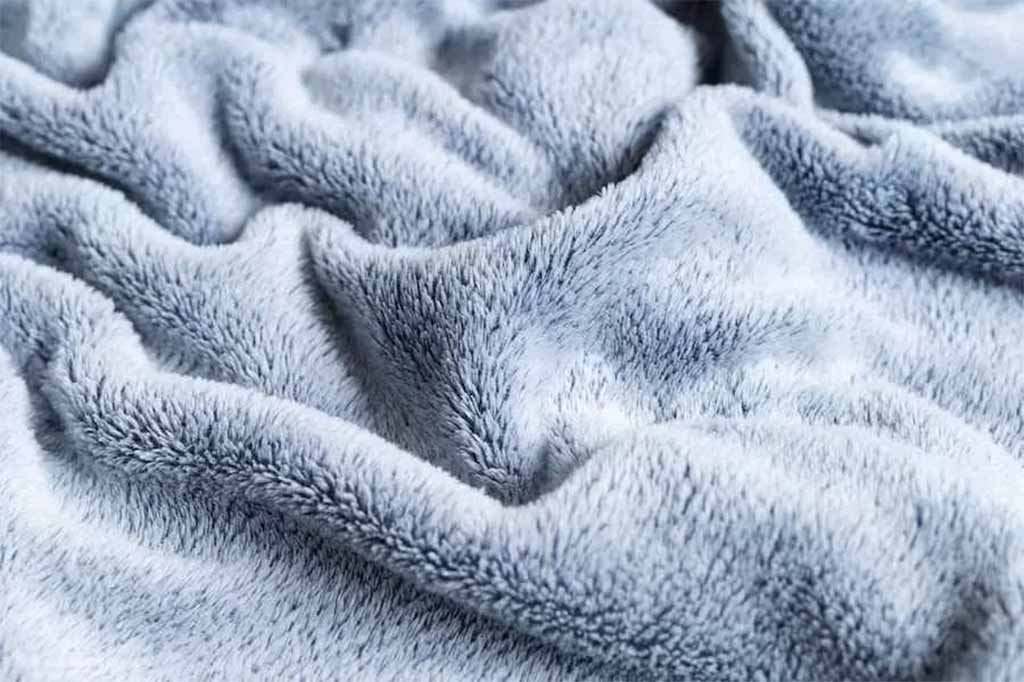
Pile height controls the surface look and touch. Lower piles (1–2 mm) give crisp embroidery and even color. Higher piles (3–4 mm within “short”) feel plusher but can show nap direction in photos.
GSM links to weight and opacity. Higher GSM can feel denser and more premium, but too heavy may reduce drape in small items.
Fiber composition—most short plush uses polyester microfibers for softness + durability. Fiber denier and crimp affect rebound and anti-pilling behavior.
For buyers, the key is to match the spec to the part: a face panel may need 1.5–2 mm pile at 220–260 gsm; a body may look great at 2–3 mm pile and 260–300 gsm; accessories may use a firmer velboa for edges that need to hold shape.
Table 4. Spec matrix: how pile, GSM, and fiber change feel and life
| Target | Pile Height | GSM | Fiber Notes | Result | Tip |
|---|---|---|---|---|---|
| Sharp face/embroidery | 1.5–2.0 mm | 220–260 | Fine-denier PET | Clean lines, low glare | Ask for anti-pilling finish |
| Premium body feel | 2.0–3.0 mm | 260–300 | Microfiber PET | Plush hand + stable seams | Check shade under daylight |
| Budget but tough | 1.5–2.5 mm | 200–240 | Standard PET | Firmer handfeel | Consider velboa for edges |
| Small accessories | 1.0–1.8 mm | 180–220 | PET blend optional | Crisp shape | Reinforce seam allowances |
| Photo-friendly | 1.5–2.5 mm | 230–270 | Microfiber PET | Even nap in pictures | Align nap direction in cutting |
What are the safety and compliance standards for short plush in toy production?
Short plush for toys must pass regional toy safety standards. The fabric itself is part of the whole toy test, not only a standalone test. You need to confirm chemical safety, flammability, colorfastness, and mechanical safety of seams and trims. For export, the most common frameworks include:
- EN 71 (Europe): parts 1 (mechanical/physical), 2 (flammability), 3 (migration of elements).
- ASTM F963 (USA) and CPSIA (including lead & phthalates limits).
- REACH (EU) for chemicals and restricted substances.
- GB/T standards in China for local compliance; ST marks for Japan as needed.
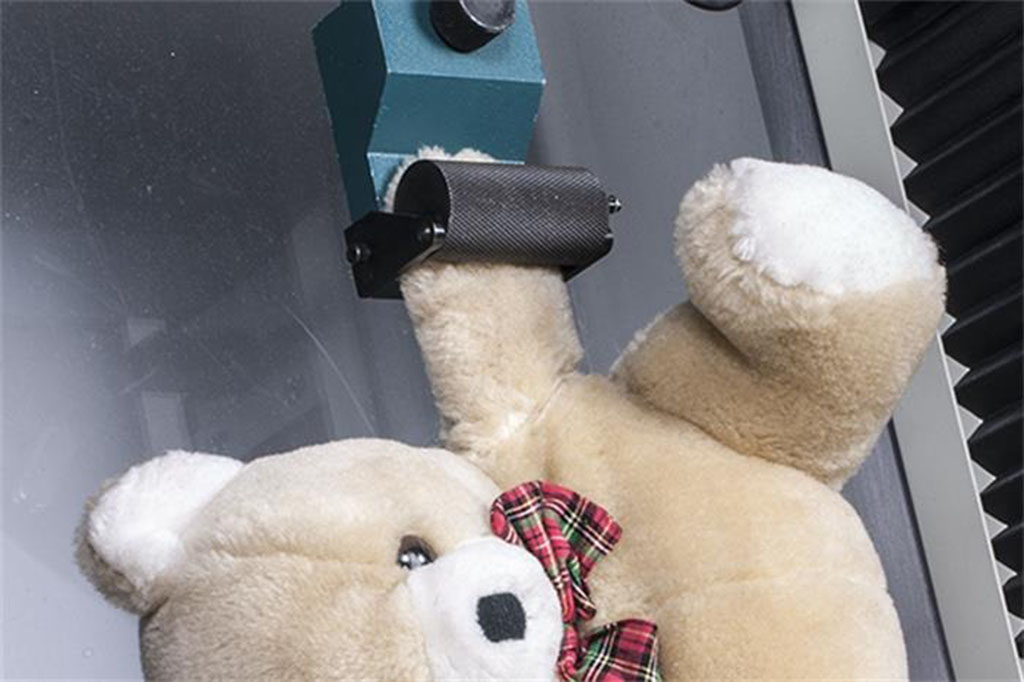
At Kinwin, we plan compliance from material sourcing. We coordinate lab tests for colorfastness to saliva/sweat (where needed), pilling, and wash care instructions. You get safer fabric choices and fewer delays at inspection.
Table 5. Compliance map for short plush in toys (high-level buyer checklist)
| Region/Standard | Focus Areas | Typical Fabric-Related Checks | Buyer Action |
|---|---|---|---|
| EN 71 (EU) | Mech/phys, flammability, chemicals | EN71-2 flame, EN71-3 migration; colorfastness | Ask for lab reports per lot or color |
| ASTM F963 (US) | Mechanical, chemical | Flammability of solids; heavy metals | Confirm CPSIA tracking labels |
| CPSIA (US) | Lead, phthalates | Total lead, restricted phthalates | Verify component certificates |
| REACH (EU) | Substances of concern | SVHC screening | Request supplier declarations |
| GB/T + ST (CN/JP) | Local rules | Fabric colorfastness, seam strength | Align with destination market |
How do manufacturers choose short plush for different plush toy designs?
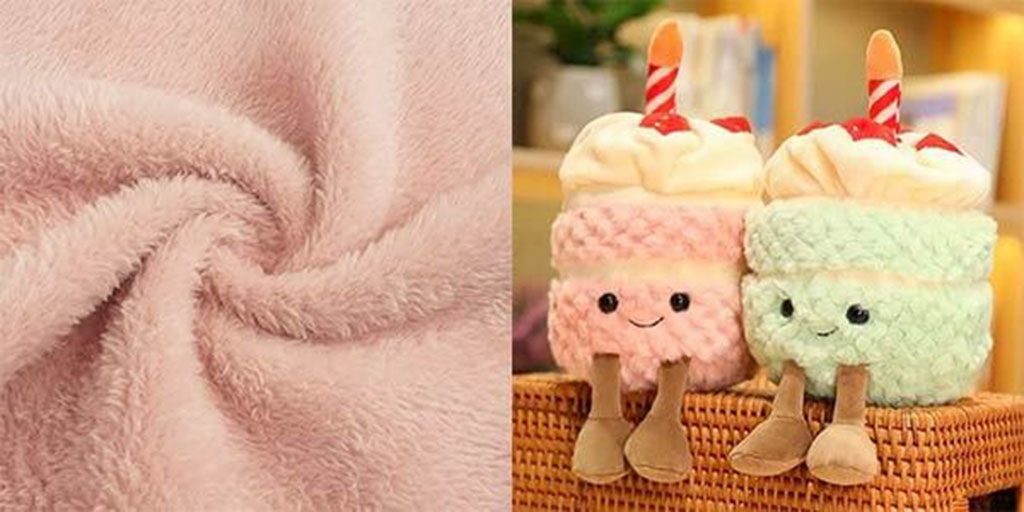
Manufacturers map fabric to function and target market. The right choice reduces complaints, makes photos look better, and keeps your brand story strong. Here’s how we select at sample stage:
- Define the tactile goal (soft-smooth, firm-smooth, ultra-soft).
- Confirm parts that need accuracy (face) vs. volume (body).
- Pick pile height based on detail level (1.5–2 mm for faces).
- Set GSM to match size and seam strength.
- Choose finish (anti-pilling/anti-static) for handling and shipping.
- Run mini-wash tests to check nap and shade.
- Lock shade with controlled lab dips before bulk dyeing.
Practical examples you can reuse
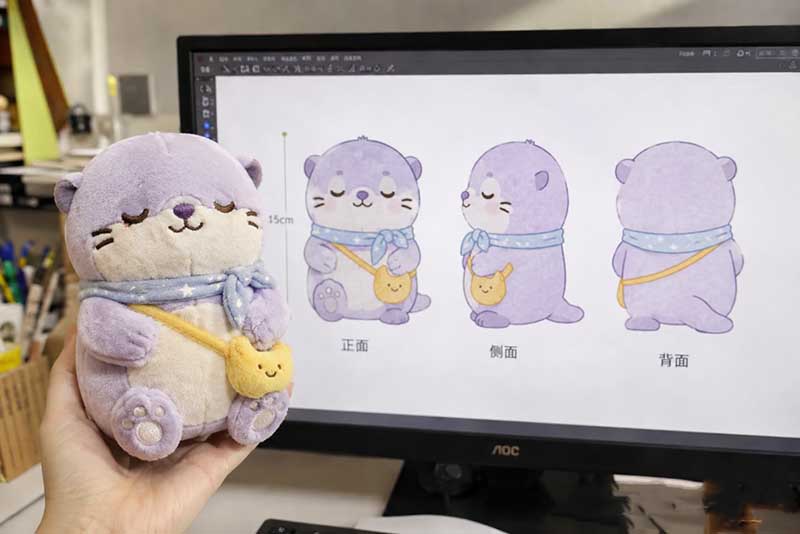
- Chibi animals (10–18 cm): Short plush 1.5–2 mm pile, 230–260 gsm for head/face; velboa for small ears/tails needing edge control.
- Medium plush (20–35 cm): Short plush 2–3 mm body at 260–300 gsm; short plush 1.5–2 mm face.
- Gift market premium: Minky body (3–5 mm) with short plush face (1.5–2 mm) for sharp embroidery and soft cuddle.
- Baby-oriented (brand decision with testing): Minky for main panels, short plush for facial clarity; ensure enhanced colorfastness and fluff control.
Conclusion
A strong plush line needs the right short plush: safe, soft, durable, and photo-ready.
At Kinwin, we help global buyers pick the correct pile height, GSM, and finish for each toy part, then build samples and bulk with clear QC gates and compliance support.
You get clean embroidery, stable seams, consistent shades, and smoother lab approvals—so your products look great online and feel great in hand.
Contact us at [email protected] or visit kinwintoys.com to discuss your next project and see how our factory can power your success.