Skip to content
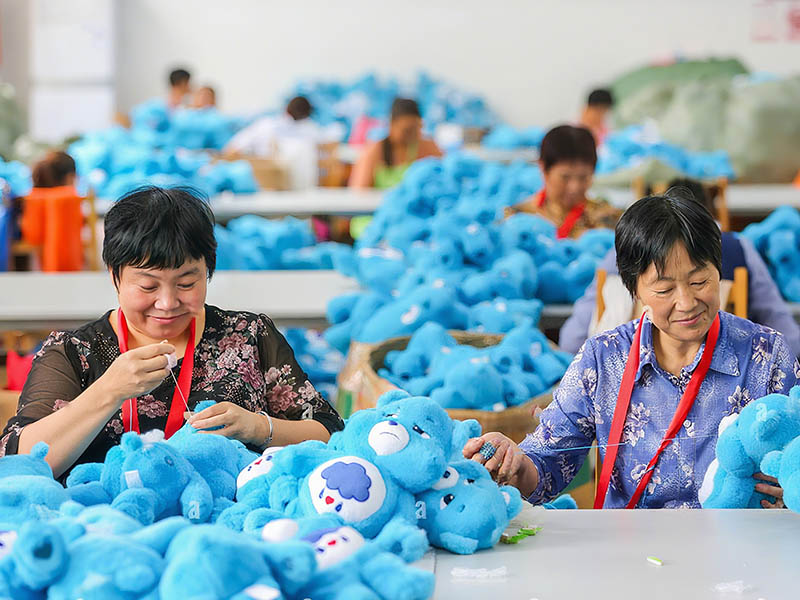
I’m Amanda from Kinwin in China. I lead OEM/ODM plush programs for global brands, retailers, and DTC teams. The question “Are plushies made in China?” is really two questions: how much of the world’s plush comes from China, and why does China remain the most reliable place to design, test, and scale soft toys. In this guide, I explain the production share and leading clusters, how integrated supply chains enable speed and consistency, which compliance frameworks govern exports, how China compares with Vietnam and other hubs, what logistics and Incoterms mean for your landed cost, and how to verify a factory before you scale orders. I’ll keep the language plain and the steps actionable.
What share of global plush production comes from China, and which provinces/clusters lead output?
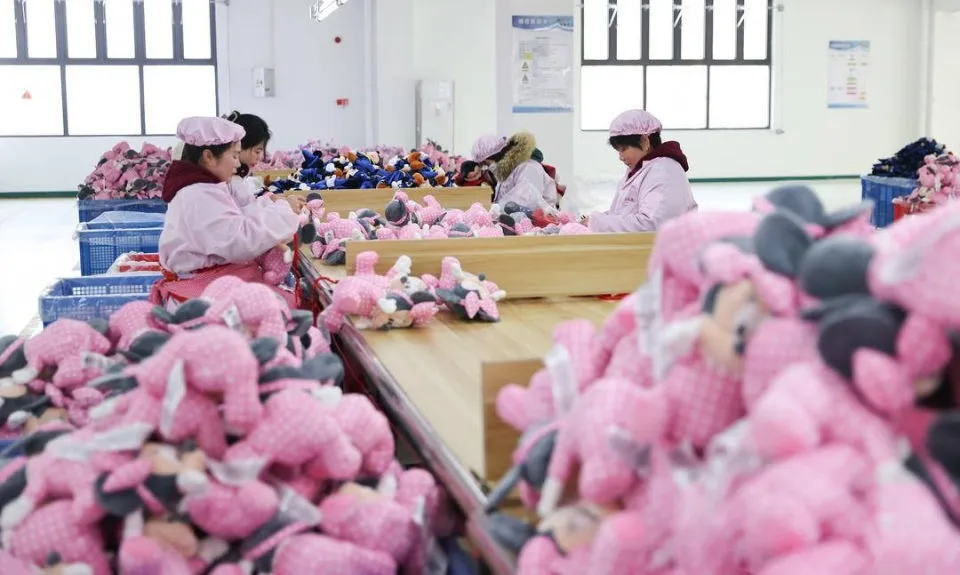
China accounts for a major share of the world’s plush production—comfortably the largest single-country source by volume. The reason is simple: a dense network of pile-fabric mills, cut-and-sew plants, embroidery houses, pellet suppliers, and testing labs has grown together for decades. This cluster effect creates stable capacity for everyday core animals, but also the skill to deliver licensed or high-detail faux-fur lines that need clean faces and tight tolerances.
Several provinces stand out:
- Guangdong (Dongguan, Huizhou, Shenzhen): fast sampling, faux-fur mastery, excellent face accuracy for collector and licensed work; strong ODM.
- Jiangsu (Nantong, Suzhou): careful planning, reliable textile base; ideal for size ladders and repeat orders.
- Zhejiang (Yiwu, Ningbo): trims and packaging at your doorstep; great for minis, clip-ons, blind displays, and gift bundles.
- Shandong (Qingdao, Weifang): competitive sewing cost and trained workforce for large-volume basics.
Each cluster supports different needs. Licensed detail or complex faux fur? Guangdong. High-volume core animals? Shandong/Jiangsu. Minis, clips, bundles with strong merchandising? Zhejiang. Most brands do best with one lead cluster and a backup for risk control.
Table 1 — China Plush Clusters (Strength-at-a-Glance)
| Cluster | Typical strengths | Best suited lines | Notes |
|---|---|---|---|
| Guangdong | Faux-fur handling, face accuracy, speed | Licensed, collector, décor | Slightly higher minute rate |
| Jiangsu | Textile depth, planning, steady output | Core animals, size ladders | Reserve capacity early |
| Zhejiang | Trims/packaging density, display formats | Minis, clip-ons, blind boxes | Tight small-parts control |
| Shandong | Volume sewing, competitive cost | Mass retail basics | Align pile direction for consistency |
How do China’s integrated supply chains (fabric mills, trims, stuffing) enable scale, consistency, and faster lead times?
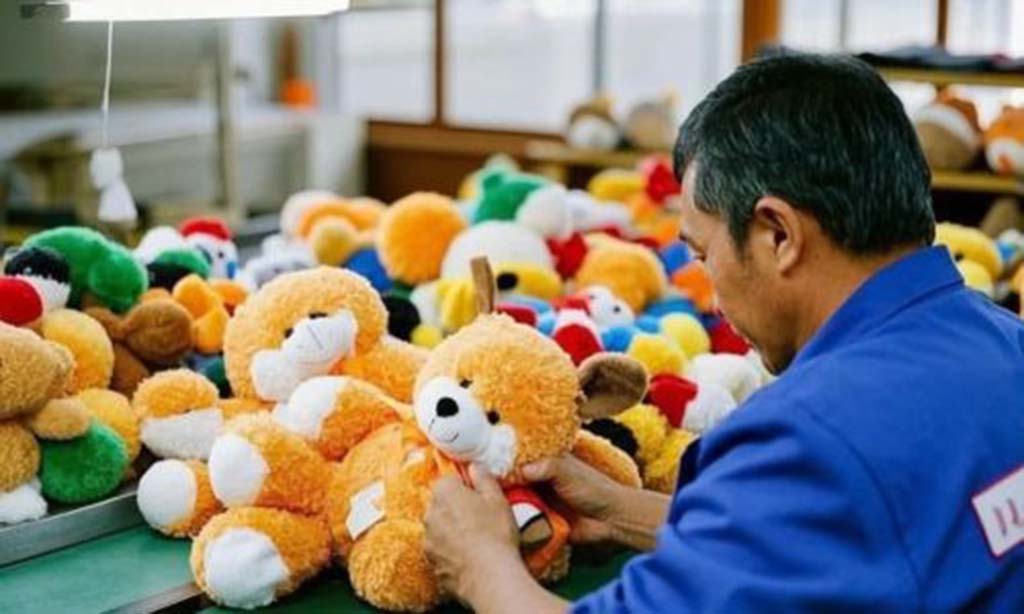
China’s advantage is proximity. A factory can get face-shell minky/velboa in the morning, run multi-head embroidery in the afternoon, and tweak panel-gram fill maps the next day. You feel the effect at every step:
- Sampling speed: S1 (silhouette) turns quickly because patterning, face masks, and foam/rough 3D checks are in-house. S2 (materials/face) can lock real pile heights, embroidery densities, trim masks, and double-pouched weight systems in a week or two, not months.
- Repeatability: Marker making respects pile direction; SPI tables and bar-tacks are standard; metered stuffing hits the grams per panel target, so squeeze feels the same across lots.
- Change control: When dye lots or trim vendors change, your factory can re-test nearby with accredited labs; documents update fast and stay lot-tied to the goods that ship.
- Cost discipline: Close-by suppliers reduce waiting and waste. It’s not only lower price/kg; it’s lower minutes and fewer resamples, which is where the real savings live.
This is why many teams use China as the engineering hub even if they dual-source elsewhere. The cluster turns design intent into a stable, photographed reality—faces land where they should, cheeks don’t collapse, and labels match the laws of the target market.
Which compliance frameworks (EN71, ASTM F963/CPSIA, CE, REACH) and audits (BSCI/SEDEX) govern China-made plushies?
For exports, the destination market sets the rules. In practice:
- EU/UK: EN71-1/2/3 + CE/UKCA marking with a Declaration of Conformity (DoC) and a technical file.
- U.S.: ASTM F963 + CPSIA (lead, phthalates) with a Children’s Product Certificate (CPC) and tracking label.
- Chemistry/RSL: Many retailers request REACH screens or their own RSL limits.
- Social/ethical: Retail acceptance often expects BSCI or SEDEX/SMETA; toy-focused buyers may prefer ICTI Ethical Toy Program.
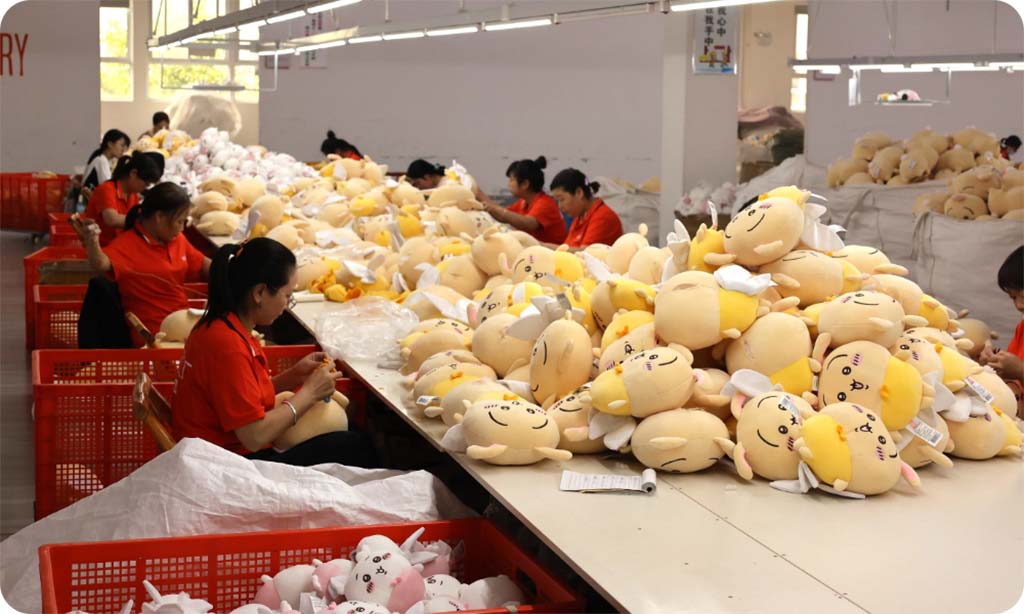
Strong factories run lot-tied lab tests on actual production (not just development swatches) and keep a live compliance folder: BOM, reports, CPC/DoC, label proofs, and PPS photos. Weighted plush requires leakage validation (double pouch + abuse tests). Any dye-lot or vendor change triggers a re-test for the affected scope. This is how China-made plush moves through customs and retailer intake without drama.
Table 2 — Compliance Snapshot (What You Should See)
| Area | What to verify | Why it matters |
|---|---|---|
| Product safety | EN71 (EU/UK), ASTM F963 + CPSIA (U.S.) | Legal access to market |
| Declarations | DoC (EU/UK), CPC (U.S.) + tracking label | Document truth and traceability |
| Chemistry | REACH / retailer RSL | Fewer rejections, brand trust |
| Social audit | BSCI / SEDEX / ICTI | Retail onboarding, ESG signals |
| Lot-tied testing | Reports match your lot & model | Stops “paper compliance” |
How do OEM/ODM workflows, sampling cycles, and MOQs in China compare with Vietnam and other emerging hubs?
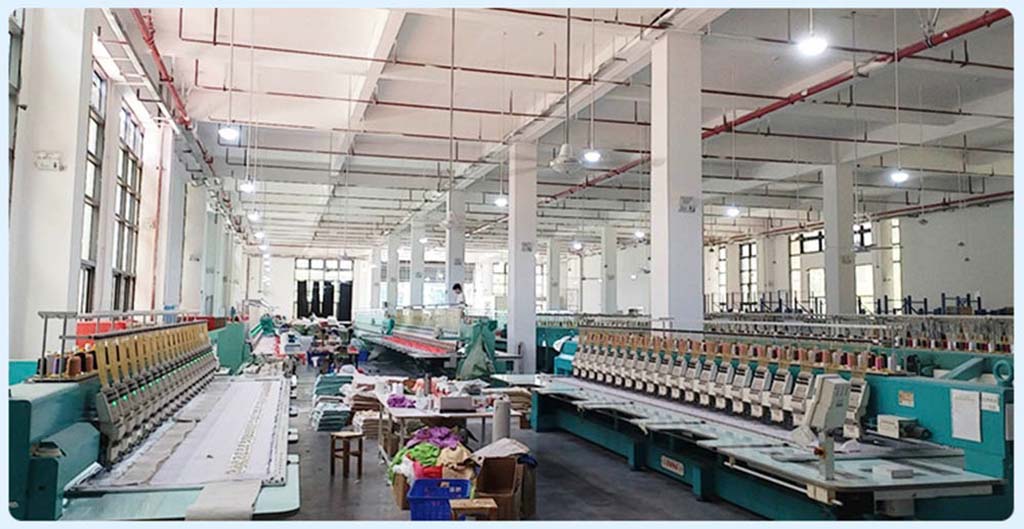
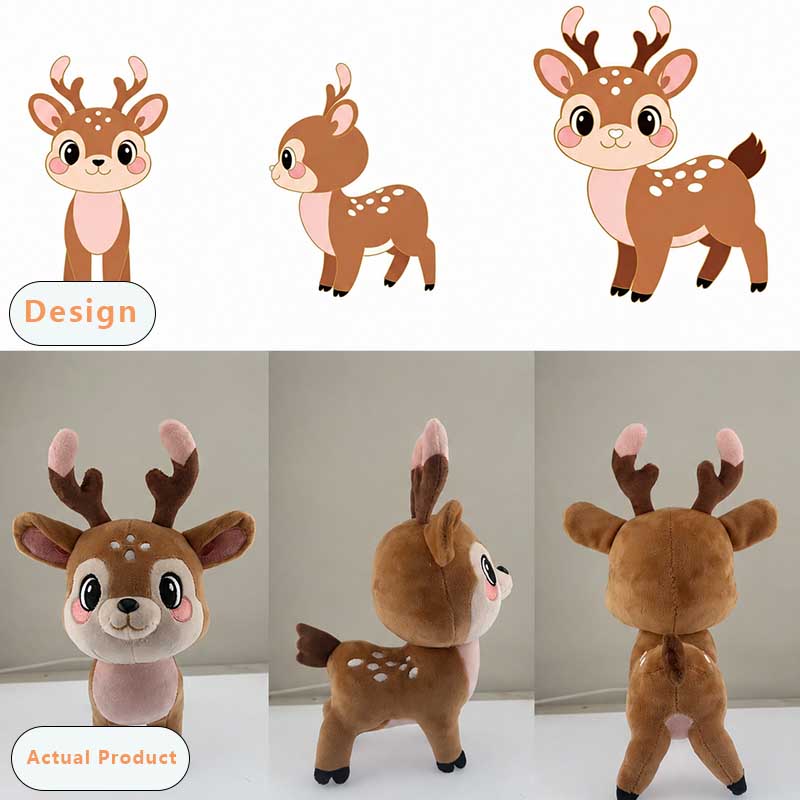
OEM (you provide design) and ODM (factory co-develops) both work in China because sample rooms are fast and experienced. A disciplined cycle looks like this:
- Design transfer: orthographic sketches, face mask, sizes, age grade, target markets.
- DFM: panel joins, SPI tables, trim masks around muzzles/eyes for faux fur, baffles for big bodies, fill-gram targets.
- S1 (silhouette) → S2 (materials/face/weights) → PPS (labels/pack).
- Pilot run → mass production → FRI (AQL-based).
China vs Vietnam/others: Vietnam and Indonesia offer good labor cost and growing plush skill. For core basics and minis, they’re strong. But for license-accurate faces, dense faux-fur lines, or fast ODM adjustments, China still turns changes into finished PPS faster because more of the chain is within a short drive. MOQs in China can be flexible when you use standard minky/velboa palettes; custom-dyed fabric anywhere raises MOQs and color approval time.
Table 3 — China vs. Emerging Hubs (Directional)
| Factor | China | Vietnam / Indonesia |
|---|---|---|
| Sampling speed (S1→S2→PPS) | Fastest due to cluster density | Good, improving; some trims imported |
| Face accuracy & faux fur | Best-in-class for detail | Adequate for basics; longer dev time |
| MOQ flexibility | Better with stock palettes | Often similar; dyed colors push MOQs |
| Compliance literacy | Very high, lot-tied standard practice | Improving; depends on partner |
| When to choose | Licensed, collector, complex ODM; fast turn | Core basics, minis, diversification |
What logistics, tariffs (HS 9503), and Incoterms (EXW/FOB/CIF/DDP) most affect total landed cost for China-made plushies?
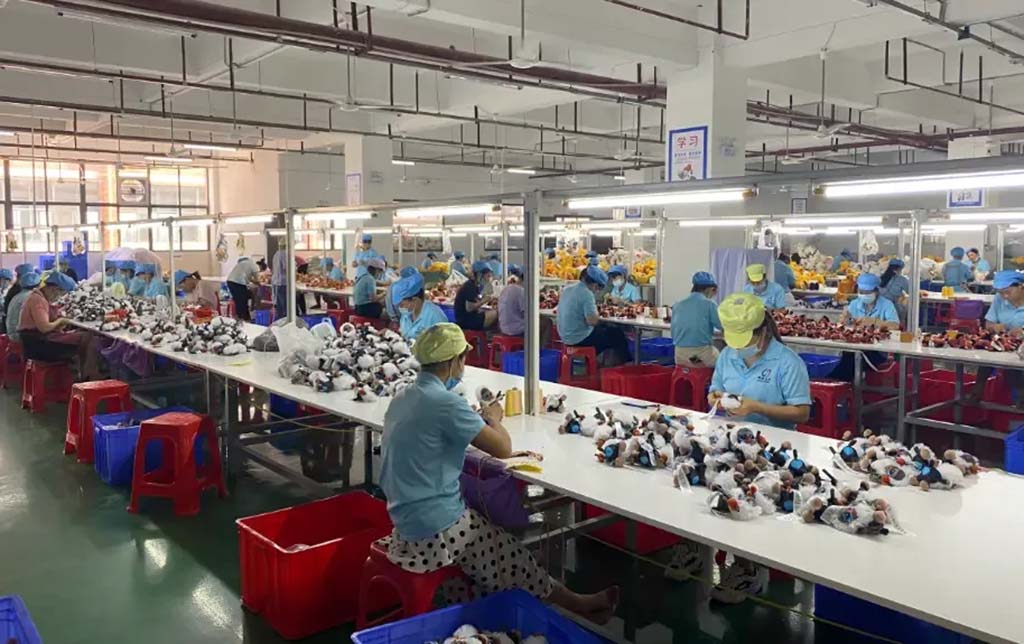
Plush is volumetric—you pay more for space than weight. Landed cost depends on cartonization, mode, duties, and Incoterms:
- Cartons & compression: Short-pile SKUs sometimes allow gentle compression with full recovery; faux fur and sculpted faces usually should not be compressed. Right-sized cartons and clean pack plans reduce dollars per unit more than tiny fabric savings.
- Freight mode: Ocean FCL is cheapest per unit; LCL for small loads; air for urgent drops only.
- Tariffs: Most toys fall under HS 9503; duty rates vary by destination—check your lane.
- Incoterms:
- EXW: you control everything from factory gate; best for experienced teams.
- FOB: common and transparent (you book the vessel; clear costs).
- CIF: includes ocean freight to port; destination charges still yours.
- DDP: simple for lean teams; confirm what’s included (duties, VAT, brokerage) to avoid surprises.
Table 4 — Incoterms & Cash/Control
| Term | Cash timing | Control | Use when |
|---|---|---|---|
| EXW | Earliest cash out (you handle all) | Highest | You have forwarder + import routine |
| FOB | Balanced | High (post-port) | Most common; transparent landed cost |
| CIF | Mid | Medium | You prefer factory-booked ocean to port |
| DDP | Later (pay bundled) | Low | Small teams; simplicity > tiny savings |
How can buyers verify reliability—factory audits, AQL plans, third-party lab tests, and on-site inspections—before scaling orders?
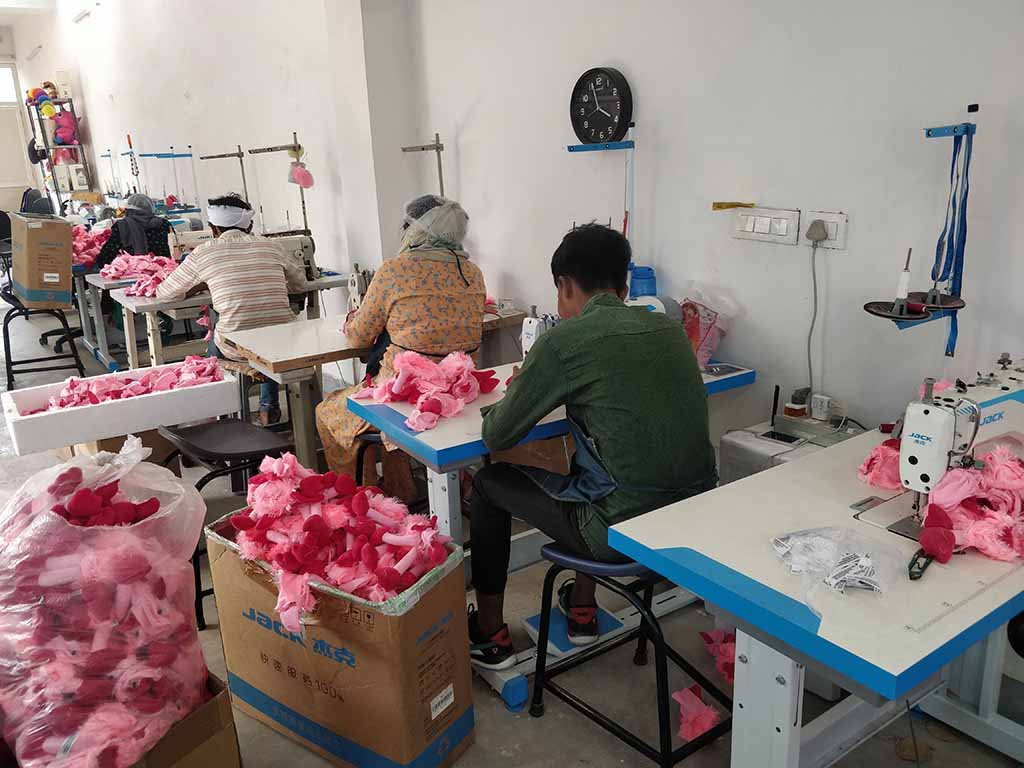
Trust, but verify. A reliable China program uses documents + eyes:
- Paperwork: Ask for lot-tied EN71/ASTM/CPSIA lab reports that match your model, size, and lot; CPC/DoC; tracking-label art; and a BOM with GSM, pile height, SPI, bar-tacks map, and fill grams per panel.
- Audits: Check BSCI/SEDEX/ICTI recency. If travel is hard, do a video audit of cutting, embroidery, stuffing, and packing.
- AQL & FRI: Put General Level II, Major 2.5 / Minor 4.0 in the PO with special checks (pellet leakage, cheek symmetry, embroidery placement, lint on velboa). No ship before FRI pass.
- Pilot run: Start small, read 48-hour velocity in market, and reorder winners.
- Change control: Any dye-lot or trim vendor change → update file and re-test affected scope.
Table 5 — Verification Checklist (Do This Before Scale)
| Item | What “good” looks like | Why it prevents risk |
|---|---|---|
| Lot-tied reports | Lab PDFs with IDs, photos, exact model | Stops “recycled” certs |
| CPC/DoC & labels | Correct importer, tracking code, age mark | Customs & retailer-ready |
| AQL in PO | G-II, Maj 2.5 / Min 4.0 + specials | Predictable pass/fail |
| FRI report | Packed-goods inspection with photos | Workmanship & labeling match |
| Pilot data | 48-hour sell-through + returns | Objective “go/no-go” for scale |
| Change logs | BOM + test updates on any lot/vendor change | Paper equals product reality |
Conclusion
Yes—most of the world’s plushies are made in China, and for good reasons: dense clusters, fast and accurate ODM, lot-tied compliance, and logistics muscle that turns sketches into store-ready toys on schedule. Pick the right cluster for your line, write the specs in numbers, test the actual lots, and lock AQL into the PO. Do this, and you will get plush that looks premium, feels soft, and clears audits the first time. If you want a partner to run this system end-to-end, email [email protected] or visit kinwintoys.com—my team at Kinwin can take you from brief to PPS to on-time mass with audit-ready files.