Skip to content
Rework is the most expensive quality cost in plush toy manufacturing — not because the cost per rework event is necessarily very large, but because rework represents the compounding of multiple failures simultaneously: a design or specification decision that created ambiguity, a material or process control failure that allowed a defect to form, and a quality monitoring failure that allowed the defect to accumulate across multiple units before it was caught.
Every unit that requires rework has already consumed the full production cost of that unit — the material, the labor, the machine time, the quality oversight — and then requires additional labor, material, or both to bring it to an acceptable standard. The rework unit costs twice what a correctly produced unit costs, and if the rework requires additional materials — replacement accessories, new closing seams, additional filling — the cost compounds further.
At scale, rework economics are damaging in proportion to the defect rate. A factory with a 10 percent defect rate on a 5,000-unit order produces 500 rework units. At $3 average rework cost per unit and $5 average original production cost, the rework adds $1,500 in direct cost while effectively requiring 500 units of additional production capacity — delaying completion and potentially missing the delivery window.
The most commercially effective response to rework is not faster or cheaper rework — it is the systematic prevention of the conditions that produce defects. This guide explains exactly how to prevent rework at each stage of the production process, where prevention is most cost-efficient, and how buyers can build rework prevention into their supplier relationships as a commercial standard rather than a hoped-for outcome.
Why Rework Is More Expensive Than Prevention in Plush Manufacturing?

The prevention-versus-rework economics in plush manufacturing are strongly asymmetric — the cost of prevention at the right stage is consistently and significantly lower than the cost of rework at a later stage. Understanding this asymmetry is the analytical foundation for investing in the right prevention systems rather than accepting rework as an inevitable production cost.
The asymmetry exists because defects have a cost amplification structure: the later in the production process a defect is discovered, the more production investment has already been made in the defective unit, and the fewer options exist for efficient correction.
Here is a cost amplification framework for a representative plush toy defect:
| Discovery Stage | Production Investment in Unit When Defect Found | Correction Cost | Total Cost of Defect |
|---|---|---|---|
| IQC — material before production | $0 — no unit produced yet | Material replacement | $0.50–$2.00 per batch |
| First-off inspection — production day 1 | $2–$4 in labor and material | Process correction, first units rework | $0.50–$3.00 per affected unit |
| IPQC — mid-production | $5–$8 in full production cost | Correction plus rework of interval units | $2–$6 per affected unit |
| FQC — production complete | $5–$8 in full production cost plus packaging | Rework plus repack plus potential reinspection | $3–$10 per affected unit |
| Post-shipment — at buyer | Full production plus freight | Rework at destination or write-off | $8–$25 per affected unit |
| At customer — after sale | Full production plus freight plus fulfillment | Return processing plus replacement | $15–$50 per affected unit |
The cost at customer discovery is 30 to 100 times the cost at IQC prevention — on a per-unit basis. When the brand damage, negative review impact, and repeat purchase rate reduction that customer-facing quality failures produce are included, the asymmetry is even larger.
The Rework Rate and Its Commercial Impact
For buyers evaluating suppliers, the defect and rework rate is one of the most commercially significant performance metrics — because it directly determines the total production cost (unit price × quantity, plus rework cost for defective units) and the delivery reliability (rework time adds to the timeline).
| Defect Rate | Defective Units (5,000 order) | Rework Cost ($4/unit) | Timeline Impact | Total Additional Cost |
|---|---|---|---|---|
| 2% | 100 | $400 | 0.5–1 day | $400–$800 |
| 5% | 250 | $1,000 | 1–2 days | $1,000–$2,000 |
| 10% | 500 | $2,000 | 2–4 days | $2,000–$4,000 |
| 15% | 750 | $3,000 | 3–6 days | $3,000–$6,000 |
The difference between a 2 percent and a 10 percent defect rate on a single order is $1,600 to $3,200 in direct rework cost plus the timeline extension — a difference that reflects the quality management investment difference between a factory with effective prevention systems and one without.
How Does Pre-Production Planning Eliminate the Root Causes of Rework?

The majority of rework causes can be traced to decisions — or the absence of decisions — made before the first production unit is built. Design ambiguities that operators resolve through assumption. Material specifications that do not match what was approved in sampling. Equipment settings that were calibrated for a different product. Work instructions that were not prepared for this specific product. Each of these pre-production failures sets the conditions for rework before production has begun.
Pre-production planning eliminates rework root causes by resolving every decision that production operators would otherwise make through assumption — converting ambiguity into specification, converting verbal understanding into documented instruction, and converting estimated settings into verified calibration before a single production unit is built.
Here is a complete pre-production rework prevention checklist:
| Planning Element | Rework Risk Prevented | How to Implement |
|---|---|---|
| Complete tech pack finalized and distributed | Interpretation variation between operators and shifts | Tech pack reviewed by all department supervisors before production start |
| Product-specific work instructions prepared | Technique variation producing inconsistent quality | Station-specific instructions at every workstation |
| Counter sample placed at QC station | No reference for production quality assessment | Counter sample available at QC inspection station |
| Stuffing machine calibrated to target weight | Density drift producing under or over-filled units | Pre-production calibration with post-warm-up verification |
| Embroidery machine programmed and position verified | Position drift producing misplaced features | First-off embroidery placement measurement before run begins |
| Sewing machine tension calibrated for production fabric | Tension deviation producing seam quality problems | Fabric-specific tension calibration before production start |
| Material allocation confirmed by area | Wrong material used in wrong panel | Material pre-sorted and labeled by panel assignment |
| QC team briefed on product-specific criteria | Generic inspection missing product-specific defect types | Product-specific briefing with counter sample reference |
| IPQC schedule established and assigned | Monitoring not conducted at required intervals | Inspector assignments and interval schedule confirmed |
The Specification Gap as Rework Root Cause
The most common single root cause of production rework is the specification gap — a product characteristic that is not defined in measurable, objective terms, leaving production operators to apply their own judgment about what is acceptable. Specification gaps consistently produce rework because individual operators apply different judgment standards, producing inconsistent output that some inspectors pass and others fail.
The remedy is specification completeness: every quality-relevant characteristic of the product expressed in objective, measurable terms in the tech pack. Fill weight with tolerance. Embroidery position with coordinate specification. Seam stitch density with minimum stitches per centimeter. Accessory pull force with minimum force threshold. Color accuracy with Pantone reference and maximum deviation.
When every quality criterion has a measurable specification, production becomes a matter of achieving defined targets rather than satisfying individual judgment — and rework prevention becomes a matter of maintaining calibration against those targets rather than negotiating the acceptability of variable output.
How Does Incoming Material Control Prevent Rework Before It Starts?

A significant proportion of plush toy rework originates in materials — fabric that deviates from the approved color, filling that is below the specified grade, accessories that do not match the approved specification. When these material deviations enter production undetected, every unit produced with the non-conforming material is either a rework candidate or a production write-off — and the scope of the problem is proportional to how many units were produced before the deviation was identified.
Incoming material control prevents this category of rework by catching material deviations before they enter production — at the point where the entire batch can be rejected and replaced, rather than at the point where the material has been cut, sewn, and stuffed into completed units.
Here is a complete incoming material control protocol for rework prevention:
| IQC Check | Material Deviation Caught | Rework Cost Prevented |
|---|---|---|
| D65 color comparison — every fabric roll | Color deviation before cutting | Full batch rework or write-off at scale of affected rolls |
| Pile height measurement — every roll | Below-specification pile | Texture quality failure throughout run |
| Filling loft and whiteness check | Below-grade filling | Shape and feel quality failure throughout run |
| Accessory dimensional check | Wrong-size accessories | Accessory position errors throughout run |
| Pull force test on accessory samples | Insufficient attachment strength | Safety test failure plus rework of all attached units |
| Compliance documentation verification | Non-compliant materials | Compliance test failure plus full batch remediation |
| Reference swatch comparison — fabric | Grade substitution from approved | Bulk quality below approved sample |
The Roll-Level Inspection Standard
A critical distinction in incoming fabric control is between delivery-level inspection — where a sample of the delivery is inspected and the remainder is assumed to be equivalent — and roll-level inspection — where every individual roll is assessed against the approved standard.
Roll-level inspection is more time-consuming and requires more QC personnel time than delivery-level inspection. It also catches roll-to-roll variation within a delivery that delivery-level sampling misses — which is the most common source of within-order fabric quality variation.
The commercial case for roll-level inspection is clear: the cost of the additional inspection time is consistently lower than the cost of within-order color variation that roll-level inspection prevents. A delivery of 30 fabric rolls that includes 3 rolls with a color deviation outside tolerance — discoverable only through roll-level inspection — produces 300 to 500 units with visible color inconsistency if those rolls enter production without detection. The rework cost of 300 to 500 units significantly exceeds the inspection cost of 30 rolls.
How Does First-Off Inspection Catch Setup Errors Before They Scale?
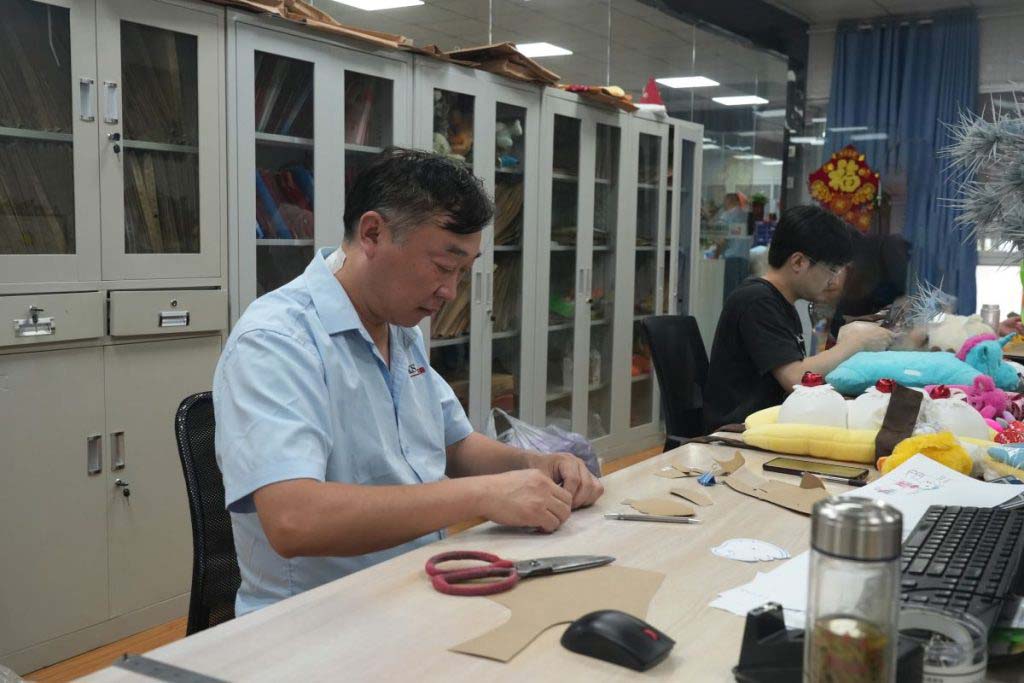
First-off inspection — the systematic quality assessment of the first three to five complete production units before the production run proceeds — is the most cost-efficient rework prevention tool available in the production phase. It catches setup errors — calibration mistakes, work instruction misinterpretations, pattern assembly errors — at the moment they produce the smallest possible number of affected units.
The commercial logic of first-off inspection is compelling: a setup error caught in the first five units requires rework of five units. The same error caught at the 500-unit IPQC check requires rework of 500 units. The same error caught at FQC requires rework of the entire batch. The inspection investment is the same in all three scenarios — but the rework cost is 100 to 1,000 times lower when the error is caught at first-off.
Here is a complete first-off inspection protocol for plush toys:
| First-Off Inspection Element | What Is Checked | Comparison Reference | Action if Deviation Found |
|---|---|---|---|
| Overall shape and proportion | Silhouette matches counter sample | Counter sample visual comparison | Stop production — assess pattern or stuffing issue |
| Fill weight measurement | Weight within target tolerance | Tech pack weight specification | Recalibrate stuffing machine before proceeding |
| Embroidery position | Feature coordinates within tolerance | Tech pack coordinate specification | Adjust hoop positioning before proceeding |
| Embroidery quality | Thread tension, coverage, color | Counter sample embroidery reference | Machine adjustment or thread replacement |
| Seam quality — primary | Stitch density and tension | Construction specification | Machine tension adjustment |
| Accessory placement | Position within tolerance | Tech pack position specification | Attachment technique adjustment |
| Accessory pull force | Meets minimum force requirement | EN71/ASTM threshold | Technique assessment and adjustment |
| Color accuracy | Within approved Pantone tolerance | D65 comparison to approved swatch | Fabric lot assessment |
| Surface quality | No visible defects on primary surfaces | Zero visible defect standard | Operator technique review |
| Label placement | Correct position and content | Label specification | Immediate correction |
Documenting First-Off Results
First-off inspection is most valuable when it produces documented results — not just a verbal pass/fail confirmation. A documented first-off report that records specific measurements (fill weight reading, embroidery coordinate measurements, seam stitch count) creates a production baseline that subsequent IPQC monitoring can compare against — revealing whether the production quality is drifting from the first-off baseline as the run progresses.
This documented baseline is also the reference for the production run’s quality record — providing evidence that the production process was correctly configured at the start of the run, which is relevant both for quality management purposes and for any dispute resolution that involves questions about when a quality deviation began.
How Does In-Process Monitoring Prevent Rework Accumulation Across Long Runs?
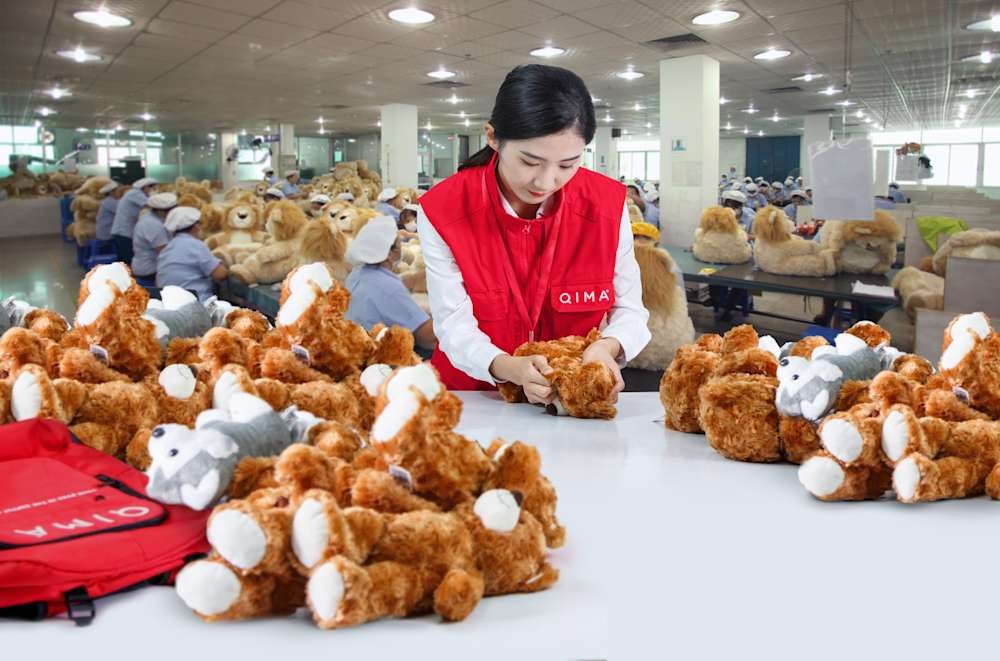
In-process monitoring is the ongoing quality surveillance system that catches quality drift — the gradual deviation of production quality from the established standard — before it accumulates across large numbers of units. Without in-process monitoring, drift develops invisibly throughout the production run, with the full scope of affected units only becoming apparent at final inspection — when the only correction option is rework at scale.
The specific quality dimensions that drift during plush toy production are well-established and predictable:
| Quality Dimension | Why It Drifts | Drift Rate | Monitoring Interval |
|---|---|---|---|
| Filling density | Stuffing machine heat and pressure change with operating temperature and fill rate | Gradual — detectable at 150–200 units | Every 150–200 units |
| Embroidery position | Cumulative hoop repositioning error | Can be rapid if hoop mechanism has play | Every 50 units |
| Thread tension | Thread spool tension changes as spool depletes, machine temperature changes | Gradual | Every 90 minutes |
| Accessory attachment | Operator technique drift from fatigue | Gradual — shift-length dependent | Every 2 hours |
| Fabric roll color | New roll may have subtle color difference | Immediate — at roll transition | Every roll transition |
| Surface finishing | Operator attention and trimming quality | Gradual — fatigue-dependent | Every 100 units |
The IPQC Interval Design Principle Revisited
The IPQC monitoring interval for each quality dimension should be calibrated to the rate at which that dimension drifts — specifically, to the number of units that can be produced before a drift event reaches the correction threshold. This calibration ensures that monitoring catches drift when only a small number of units have been affected, rather than after the drift has affected a production quantity that requires significant rework.
For filling density — which drifts gradually — a 150 to 200-unit interval is appropriate because the drift rate is slow enough that this interval catches deviations while the affected quantity is still small. For embroidery position — which can shift suddenly if the hoop mechanism develops play — a 50-unit interval is appropriate because a systematic position error can accumulate quickly enough that 50 units is already a meaningful rework scope.
The Deviation Response Protocol
When an IPQC check identifies a deviation outside the acceptable range, the response protocol is as important as the monitoring itself. An inadequate response — correcting the machine setting and continuing production without assessing the scope of affected units — leaves potentially defective units in the production flow.
The complete deviation response protocol:
Step 1 — Halt the affected operation. Do not produce additional units with the deviation setting.
Step 2 — Assess the scope. How many units have been produced since the last passing IPQC check? These units are potentially affected and must be set aside for assessment.
Step 3 — Identify the root cause. Machine drift, operator technique, material transition, or other — each has a different corrective action.
Step 4 — Implement the correction. Recalibrate, adjust technique, or address the root cause.
Step 5 — Verify the correction. Produce five units with the corrected settings and verify they meet the specification before resuming production.
Step 6 — Assess the potentially affected units. Inspect each unit from the affected period individually, classifying as acceptable, reworkable, or write-off.
Step 7 — Document the deviation and response. Record in the IPQC log for the production record.
This protocol limits the rework scope to the units produced in the interval between the last passing check and the detected deviation — typically 150 to 200 units — rather than allowing the deviation to propagate further while the correction is implemented.
How Do Operator Training and Technique Standards Reduce Rework at the Source?

Operator technique is one of the primary sources of rework in plush manufacturing — and one of the most efficiently addressed through training rather than inspection, because technique-based defects can be prevented before they occur rather than only caught after they have been produced.
Operator technique reduces rework through two mechanisms: training that establishes the correct technique for each operation before production begins, and ongoing technique monitoring that catches drift from trained standards before it accumulates into a pattern of rework-generating output.
Here is a rework-focused operator training framework for plush toy production:
| Operation | Technique Standard | Rework Type Prevented | Training Method |
|---|---|---|---|
| Panel alignment at sewing | Panel edges aligned to notch reference before sewing begins | Panel misalignment producing shape errors | Supervised practice until consistency is demonstrated |
| Seam start and end | Minimum 10mm backstitch at both ends | Seam opening at ends | Technique demonstration and verification |
| Curved seam management | Guide fabric through curve without pulling | Puckering and distortion at curves | Practice on sample panels before production |
| Stuffing sequence | Defined sequence — extremities before body | Uneven filling distribution | Work instruction with visual sequence diagram |
| Pre-closing distribution check | Visual and tactile check before closing seam | Filling distribution problems sealed in | Checkpoint habit training |
| Thread trimming technique | Trim to maximum 3mm, away from surface | Loose threads on product surface | Technique standard in work instruction |
| Accessory attachment | Tool seated fully, attachment verified by pull | Accessory detachment in use | Technique demonstration, pull verification habit |
| Embroidery hoop positioning | Registration mark alignment for every placement | Embroidery position drift | Registration system use training |
Task Specialization as Rework Prevention
One of the most effective structural approaches to operator-generated rework prevention is task specialization — assigning operators to specific operations rather than rotating them through all tasks. Operators who perform the same operation repeatedly develop the technique consistency and tactile feedback sensitivity that produces consistently acceptable output. Operators who rotate between operations do not develop equivalent expertise in any of them.
Task specialization is particularly important for precision-critical operations — embroidery hoop positioning, accessory attachment, face panel alignment, closing seam — where technique variation most directly produces rework. A specialized closing seam operator whose entire day’s work is closing seams develops the technique consistency that prevents the closing seam failures that are one of the most common rework causes in plush production.
Fatigue Management and Its Rework Impact
Operator fatigue is a physiological rework driver that operates across every shift — gradually degrading the technique precision that prevents defects, in ways that produce an increasing rework rate as shifts progress. Managing fatigue’s impact on rework requires scheduling precision-critical operations to the first half of shifts where possible, implementing rotation off high-precision tasks before fatigue-driven technique degradation occurs, and adjusting IPQC monitoring intensity as shift duration increases.
How Does Final Inspection Distinguish Reworkable from Non-Reworkable Defects?
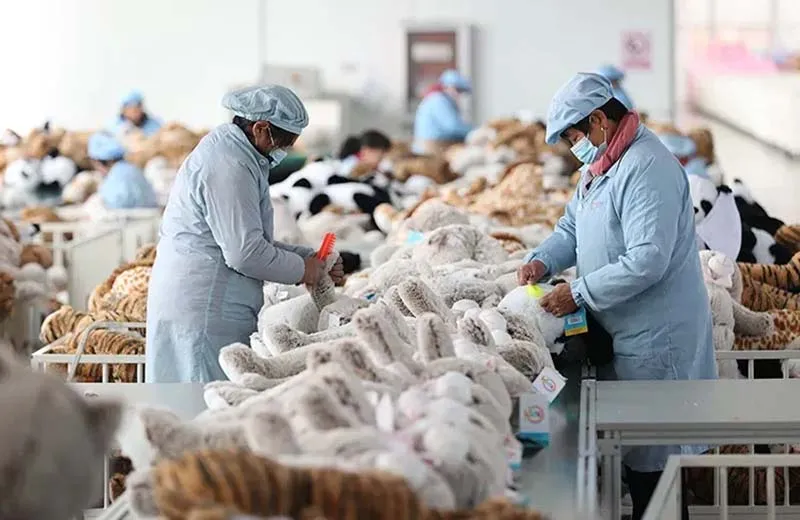
Final inspection for rework management requires a different analytical framing from final inspection for pass/fail batch assessment. Beyond determining whether the batch meets the AQL threshold, effective final inspection for rework management identifies specifically which defects are reworkable — correctable at acceptable cost — and which are non-reworkable — requiring write-off and replacement.
This distinction is commercially critical because the rework decision affects both cost and timeline. A defect that is reworkable at $2 per unit on 200 units costs $400 and takes two days. The same defect classification applied to a defect that is actually non-reworkable produces a $400 investment that yields nothing useful — while the actual solution (write-off and replacement) is delayed by the failed rework attempt.
Here is a reworkability classification framework for common plush toy defects:
| Defect Type | Reworkable? | Rework Method | Cost | Non-Rework Alternative |
|---|---|---|---|---|
| Loose thread — surface | Yes — easy | Trim and inspect | $0.10–$0.20 | N/A — always rework |
| Missing label | Yes — easy | Apply label to product | $0.15–$0.30 | N/A — always rework |
| Closing seam opening — small | Yes — moderate | Resew closing seam | $0.50–$1.50 | N/A — always rework |
| Under-filled — moderate | Yes — moderate | Open closing seam, add fill, resew | $1.00–$2.50 | Accept with discount if barely below threshold |
| Accessory position — within 5mm | Yes — moderate | Remove and reattach | $0.50–$1.50 | Accept if within commercial tolerance |
| Wrong label content | Yes — moderate if unstuck | Replace label | $0.30–$0.80 | Correct at destination if removable |
| Color deviation — significant | No — non-reworkable | Cannot change fabric color | N/A | Write-off or alternate market |
| Significant shape deformation | No — non-reworkable | Cannot reconstruct shape | N/A | Write-off |
| Compliance chemical failure | No — non-reworkable | Cannot change material composition | N/A | Write-off or non-regulated market |
| Accessory pull force failure — all units | Yes but complex | Remove and reattach all accessories | $1.50–$3.00 | Consider root cause before deciding |
| Significant embroidery position error | Yes — very difficult | Remove embroidery (destructive) and re-embroider | $3.00–$8.00 | Write-off if embroidery removal damages fabric |
| Seam opening with filling escape | Yes — moderate | Re-fill and resew | $1.00–$2.50 | N/A — always rework for safety |
Rework Priority Sequencing
When multiple defect types are present in a batch requiring rework, the sequencing of rework operations matters for efficiency. Operations that require the product to be in an unfinished state — opening the closing seam to add filling — must be completed before operations that require the finished state — label application, accessory reattachment. Rework sequencing that ignores this dependency produces a rework process where completed operations must be undone to enable others — multiplying the rework cost.
A well-organized rework workflow sequences operations in reverse of the original production sequence: open the unit if filling or seam rework is required, conduct all internal corrections, resew the closing seam, conduct all external corrections (accessories, labels, surface finishing), and complete a final quality check before returning the unit to the completed inventory.
How Can Buyers Build Rework Prevention Into Their Supplier Relationships?
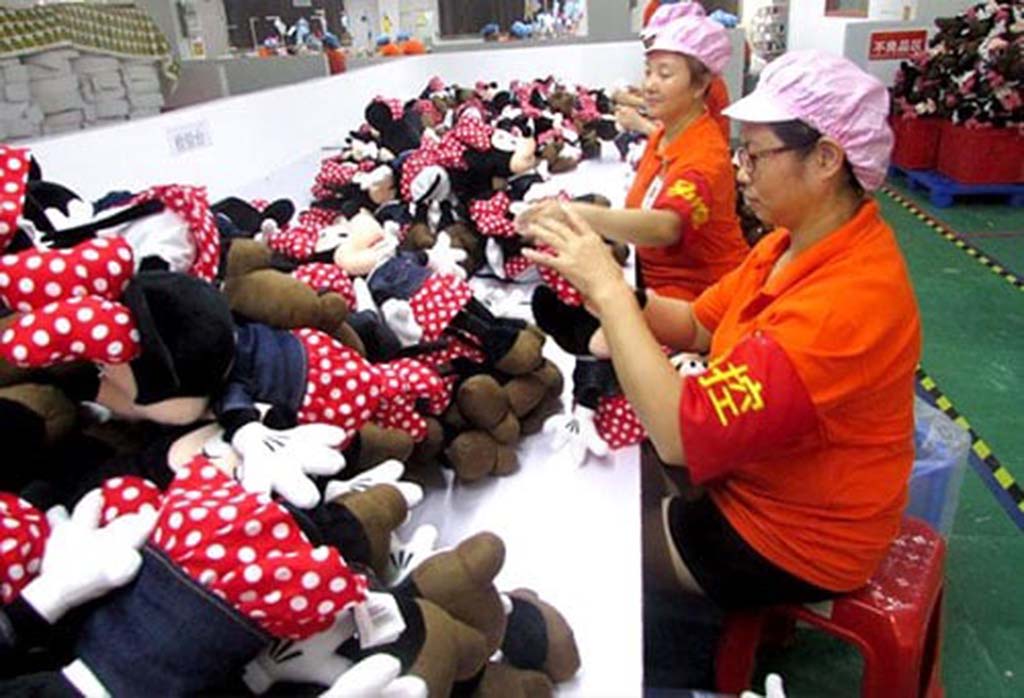
Rework prevention is most effective when it is built into the supplier relationship as a commercial standard — through contractual specifications that define acceptable defect rates, process requirements that mandate the prevention systems described in this guide, and verification rights that provide buyers with evidence that those systems are operational.
Here is a complete framework for building rework prevention into supplier relationships:
Contractual Defect Rate Standards
| Specification Element | Standard to Establish | Commercial Mechanism |
|---|---|---|
| Maximum acceptable defect rate | Define AQL level and defect classification | Pre-agreed pass/fail threshold for FQC |
| Rework cost allocation | Define when rework costs are factory-borne versus shared | Commercial accountability for quality failures |
| Reinspection requirement | Require reinspection after rework before payment | Payment retained until quality confirmed |
| Documentation provision | Require IPQC and FQC records | Visibility into quality management |
Process Requirements for Rework Prevention
| Requirement | What It Mandates | Rework Category Prevented |
|---|---|---|
| Counter sample before production | Production quality confirmed before bulk run | Sample-to-bulk quality gap rework |
| First-off inspection report | Setup errors caught before they scale | Setup error rework |
| IPQC weight monitoring — 150 unit intervals | Density drift caught before accumulation | Density rework |
| IPQC embroidery position — 50 unit intervals | Position drift caught before accumulation | Embroidery rework |
| Roll transition protocol | Color deviation caught at transition | Color consistency rework |
| Pre-closing distribution check | Filling distribution caught before sealing | Filling distribution rework |
| Work instructions at all stations | Technique variation reduced | Technique-based rework |
| Task specialization for precision operations | Technique consistency increased | Precision operation rework |
Buyer Verification Rights
| Verification Right | What It Enables | How to Exercise |
|---|---|---|
| IPQC log access | Review density and position monitoring | Request at 50% and 100% completion |
| First-off inspection report | Verify setup quality at run start | Request with production day 1 update |
| FQC report before balance payment | Review defect findings before payment | Condition payment on FQC report |
| Third-party inspection | Independent rework assessment | Commission before shipment for significant orders |
| Rework scope documentation | Verify rework was conducted and completed | Request when rework is required |
The Rework Cost Accountability Framework
Building rework cost accountability into supplier agreements creates the commercial incentive for rework prevention that the factory’s production economics alone may not provide. When quality failures that require rework are absorbed entirely by the buyer through reduced quality or accepted delivery of non-conforming goods, the factory has limited commercial incentive to invest in the prevention systems that would eliminate the rework.
A rework cost accountability framework allocates rework costs based on root cause:
| Rework Root Cause | Cost Allocation | Rationale |
|---|---|---|
| Material deviation not caught at IQC | Factory bears cost | Factory’s IQC responsibility |
| Setup error not caught at first-off | Factory bears cost | Factory’s first-off inspection responsibility |
| Process drift not caught at IPQC | Factory bears cost | Factory’s IPQC responsibility |
| Specification ambiguity from buyer brief | Shared or buyer-borne | Specification was buyer’s responsibility |
| Design characteristic not producible as specified | Shared after acknowledgment | Should have been identified at feasibility review |
| Random isolated defects within AQL | Buyer accepts | Statistical variation within accepted threshold |
At Kinwin, rework prevention is not a quality service we provide as an enhancement — it is the operational discipline that our production system is designed to deliver as a baseline. Our pre-production planning eliminates the specification gaps and calibration failures that produce setup rework. Our IQC catches material deviations before they enter production. Our first-off inspection catches setup errors before they scale. Our IPQC monitoring catches drift before it accumulates. And our operator training and specialization standards reduce technique-based defects at their source.
The result is a consistently low defect rate — typically 2 to 3 percent on complex products, lower on standard designs — that reflects the effectiveness of the prevention investment rather than the speed of our rework capability.
If you want to understand specifically how our rework prevention system would apply to your product — what IPQC intervals we would apply, what first-off criteria we would use, and what production documentation we would provide throughout the run — we would be glad to walk through it with you.
Reach out to our team at [email protected] or visit kinwintoys.com to start that conversation.
Conclusion
Rework in plush production is not a random outcome of manufacturing complexity — it is a predictable consequence of specific prevention failures at specific production stages. Every significant rework category has a specific prevention mechanism that is more cost-efficient than the rework it prevents.
Brief ambiguities that produce setup errors are prevented by pre-production specification completeness. Material deviations that produce quality failures are prevented by roll-level incoming inspection. Setup errors that scale across long runs are prevented by first-off inspection. Process drift that accumulates across shifts is prevented by calibrated IPQC monitoring. Technique variation that produces inconsistent defects is prevented by operator training and task specialization.
The investment in these prevention systems — in personnel time, in calibrated equipment, in structured process discipline — is consistently and substantially lower than the rework cost it prevents. Buyers who understand this economics, and who build the corresponding prevention requirements into their supplier relationships as commercial standards rather than optional quality enhancements, consistently achieve lower total production costs and more reliable delivery outcomes than those who accept rework as an inevitable part of plush manufacturing.
At Kinwin, we have built these prevention systems into our production process because we believe that excellence in manufacturing means producing right the first time — not producing quickly and correcting afterward.
FAQ
Q1: What is a realistic target defect rate for plush toy production, and how should buyers use this benchmark in supplier evaluation?
A realistic target defect rate for plush toy production varies by product complexity — simpler products with fewer quality-sensitive elements consistently achieve lower defect rates than complex multi-panel character products with multiple embroidered features, multiple accessories, and high fill density specifications. For standard plush products of moderate complexity, a professional manufacturer with mature quality systems should consistently achieve defect rates of 2 to 4 percent at FQC — meaning 96 to 98 percent of units pass final inspection without requiring rework. For complex character products with tight specifications, 4 to 6 percent is a realistic target. Defect rates above 8 percent on any product type indicate systematic quality management inadequacy that will not resolve without addressing the root cause prevention systems. In supplier evaluation, requesting the actual defect rate history from recent production runs — not the claimed defect rate in a presentation — reveals the true quality system performance. This request can be framed as asking for the FQC inspection records from two or three recent comparable product orders, which will show the defect quantities found at final inspection alongside the production quantities.
Q2: When rework is required on a batch, how should buyers determine whether to accept the reworked goods or reject the batch and require replacement production?
The decision between accepting reworked goods and requiring replacement production depends on three factors: the reworkability of the specific defects found, the confidence that rework will achieve the required quality standard, and the commercial impact of the timeline difference between receiving reworked versus replacement production. Rework acceptance is appropriate when the defect is genuinely reworkable, the rework method reliably restores the unit to the approved quality standard, the rework scope is manageable within the delivery timeline, and the quality of reworked units can be independently verified through reinspection. Replacement production is more appropriate when the defect type is not reliably reworkable — significant color deviation, structural failures, compliance failures — when the rework scope covers a large proportion of the batch such that 100 percent rework is essentially equivalent to replacement production cost, or when the root cause of the defect means that reworked units will not meet the approved standard even after correction. In all cases, the quality of reworked goods should be verified through formal reinspection — at the same AQL level applied to the original FQC — before the rework is accepted and payment is released.
Q3: How does rework prevention strategy change for rush production orders where the timeline does not allow for the full prevention protocol?
Rush production is inherently higher-risk for rework than standard-timeline production — because the prevention activities that eliminate rework at their source require time that rush schedules compress or eliminate. Managing rework risk under rush conditions requires a deliberate trade-off assessment: which prevention activities can be compressed without materially increasing rework risk, and which cannot be compressed without creating unacceptable rework exposure. Activities that can typically be compressed include the length of the pre-production planning meeting (though not the content), the time allowed for work instruction review, and some of the pre-production equipment calibration (which can be combined with the first-off verification). Activities that should not be compressed regardless of timeline pressure include the counter sample approval step, the first-off inspection (which can be conducted more quickly but must be completed), and the IPQC monitoring intervals (which should remain at the standard intervals rather than being extended to save inspection time). The consequence of compressing these activities — additional rework from the quality failures they prevent — is consistently greater than the time saved by the compression.
Q4: How should buyers respond when a factory attributes a high rework rate to design complexity rather than to quality management failures?
Design complexity does correlate with higher defect rates — complex products with many panels, multiple embroidered features, and tight specifications are genuinely harder to produce consistently than simple designs. However, the appropriate response to design complexity is the development of design-appropriate quality management systems — tighter IPQC intervals, higher operator skill requirements, additional first-off verification steps — not the acceptance of high rework rates as an inherent consequence of complexity. A factory that attributes high rework rates entirely to design complexity without explaining what specific quality management adaptations they have made to address that complexity is describing a passive response to quality challenges rather than an active management approach. The appropriate buyer response is to ask specifically what the factory’s defect rate is for products of comparable complexity in their existing portfolio, and to request the quality management protocol documents that describe how they address the specific rework risks of complex products. If the factory cannot provide comparable complexity portfolio defect rates that are materially lower than the current experience, or cannot describe specific quality management protocols for complex product challenges, the attribution to design complexity is not a complete explanation.
Q5: What is the most effective single rework prevention investment for a buyer working with a factory whose quality management is adequate but whose rework rate is higher than desired?
If a factory has adequate baseline quality management — IQC, IPQC, and FQC are present and documented — but maintains a higher-than-desired rework rate, the most likely gap is in one of two areas: the IPQC interval calibration or the operator technique standards. The most effective single investment to address this gap depends on which area is producing the majority of the rework. If rework analysis shows that the majority of rework is concentrated in specific operation types — closing seam failures, embroidery position errors, filling density variation — the root cause is likely operator technique or calibration, and the most effective intervention is targeted technique training for the specific operations producing the most rework, combined with a tighter IPQC interval for those specific quality dimensions. If rework analysis shows that rework is distributed across many operation types without a clear concentration, the most likely root cause is monitoring inadequacy — IPQC intervals are too wide to catch drift before it accumulates. The most effective intervention is a monitoring intensity review that calibrates each dimension’s monitoring interval to the rate at which that dimension produces detectable drift. Conducting the rework analysis before selecting the intervention — rather than defaulting to a generic quality improvement initiative — produces a more targeted and more cost-effective improvement outcome.