Skip to content
Of all the quality challenges in plush toy manufacturing, fabric consistency is among the most persistent and the most commercially consequential. It is persistent because textile manufacturing inherently involves batch-to-batch and even roll-to-roll variation — a characteristic of how fabrics are produced that cannot be fully eliminated, only managed. It is commercially consequential because fabric is the first thing customers see and the first thing they touch, making fabric quality variation the most immediately visible quality failure in any plush product.
The challenge is compounded by timing. Fabric consistency problems are often not identified until they are already built into finished products. A color deviation that is subtle on a fabric swatch becomes visible when dozens of units are displayed together on a retail shelf. A pile height inconsistency that appears minor on a sample roll creates a texture difference between units produced from different rolls that customers notice when they compare products in their hands.
Managing fabric consistency across a bulk production run — and across multiple reorders of the same design — requires a systematic approach that addresses every stage where fabric variation can enter the production system: specification precision, incoming inspection, lot management, in-process monitoring, roll transition management, and reorder verification. This guide explains each of these stages and the specific controls that make fabric consistency achievable rather than aspirational.
Why Fabric Consistency Is One of the Most Critical — and Most Difficult — Quality Challenges in Plush Production?
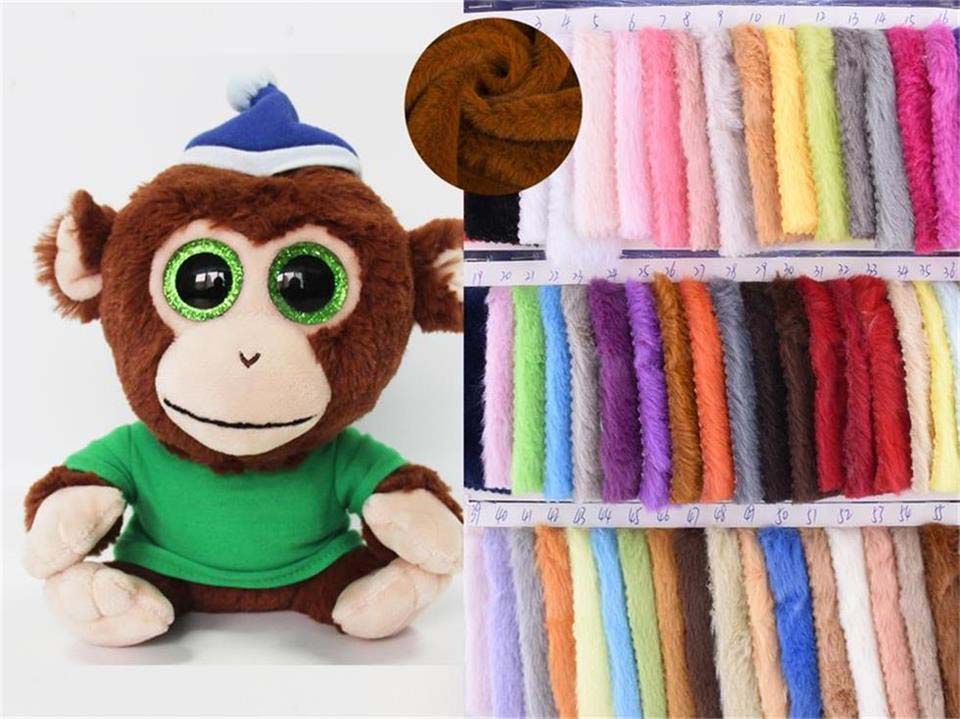
Fabric consistency is critical in plush production because fabric is simultaneously the most visually dominant, the most tactilely present, and the most variable material input in any plush toy. Unlike the filling, which is invisible, or the accessories, which are small, the fabric covers the entire visible and touchable surface of the product — meaning any fabric quality variation is immediately and unavoidably perceptible.
Fabric consistency is difficult because it involves managing natural variation that originates in the textile manufacturing process itself — before the fabric ever reaches the plush factory. Yarn composition, dye process parameters, finishing treatments, machine tension settings, and even atmospheric conditions during production all affect the resulting fabric’s color, pile height, pile density, and surface characteristics. These variations occur between production batches from the same supplier, between rolls within the same batch, and sometimes even within a single roll.
Here is a framework for understanding the sources and commercial impact of fabric consistency failures:
| Consistency Failure Type | Origin Point | Visibility to Customers | Commercial Consequence |
|---|---|---|---|
| Color deviation — batch level | Different dye lots | High — visible comparison | Customer complaints, returns |
| Color deviation — roll level | Within-batch variation | Medium — visible in bulk display | Quality complaints in retail |
| Pile height variation | Production setting differences | Medium — affects perceived softness | Quality perception gap |
| Pile density variation | Fiber count differences between rolls | Medium — affects surface weight and feel | Tactile inconsistency |
| Surface sheen variation | Finishing treatment inconsistency | High — visible under lighting | Visual quality gap |
| Fabric width variation | Loom setting inconsistency | Low for customers, high for production | Cutting yield and panel dimension impact |
| Pile direction inconsistency | Cutting error, grain line variation | High — creates shading effect | Immediate visual defect |
Why the Problem Compounds at Scale
A fabric consistency problem that appears minor at the sampling stage — where a single roll of a carefully selected fabric is used under controlled conditions — compounds significantly at bulk production scale. A bulk production order of 3,000 units may use fifteen to twenty fabric rolls. Each roll introduces a potential variation point. If any roll is not verified against the approved standard before use, and if that roll has a subtle color or pile characteristic difference, units produced from that roll will be visually inconsistent with units produced from the other rolls.
At retail display or in e-commerce fulfillment, where customers may receive units from different rolls in the same order, this inconsistency becomes a quality complaint. The buyer who experiences this problem typically discovers it after shipment — when the cost of resolution is at its highest and the options for prevention have all passed.
How Does the Fabric Specification Process Establish the Foundation for Consistency?
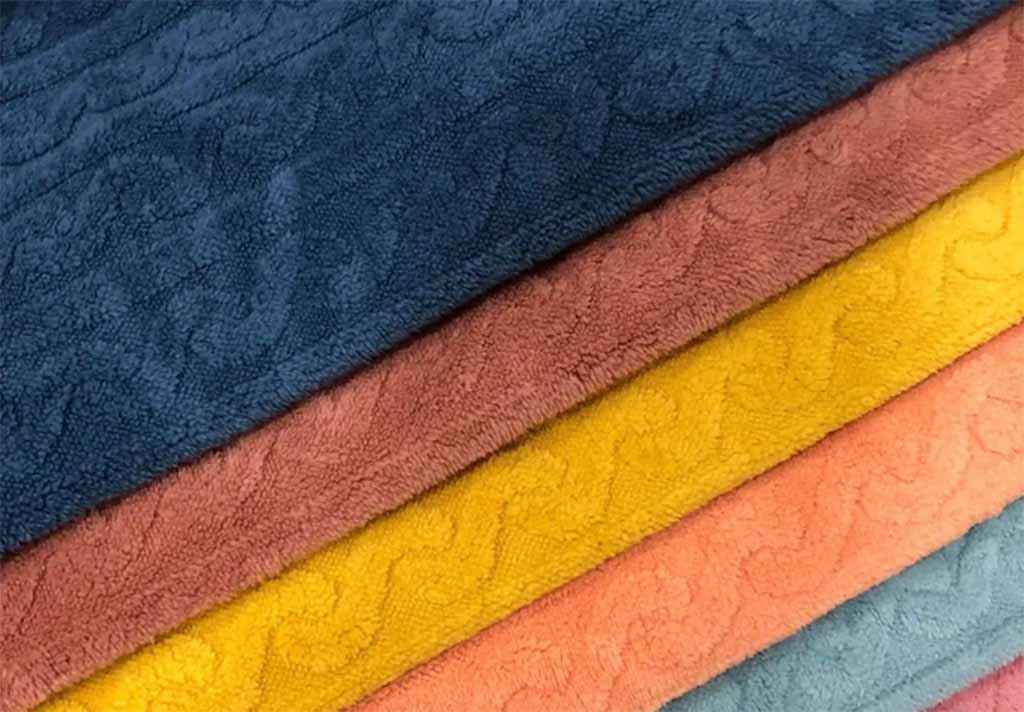
The fabric specification process is the foundation of all subsequent consistency management — because the precision of the specification determines how narrowly the fabric’s required characteristics are defined, and how narrowly they are defined determines how much variation is acceptable before a fabric deviation becomes a production problem.
A vague fabric specification — “soft blue plush fabric” — provides no objective basis for consistency verification at any stage. A precise fabric specification — including specific pile height, pile density, fabric construction, Pantone color reference, certification requirements, and physical reference swatch — provides an objective, measurable standard against which every incoming roll can be assessed for conformance.
Here is a complete framework for fabric specification that establishes an objective consistency standard:
| Specification Element | What It Defines | Measurement Standard | Why Precision Matters |
|---|---|---|---|
| Pile height | Length of fabric fibers in millimeters | Measured in mm to ±1mm tolerance | Direct tactile and visual quality determinant |
| Pile density | Fiber count per unit area | Weight per square meter (g/m²) | Determines fabric weight, fullness, durability |
| Fabric construction | Weave type, backing material, fiber composition | Material description | Determines behavior during cutting and sewing |
| Color reference | Precise color in Pantone TPX or TPG code | Pantone shade under D65 | Eliminates color interpretation |
| Color tolerance | Acceptable deviation range from reference | Maximum Pantone shade deviation | Defines pass/fail boundary for IQC |
| Width specification | Fabric width in centimeters | Measured to ±0.5cm | Affects cutting yield and panel dimensions |
| Certification requirement | OEKO-TEX, REACH, CPSIA compliance | Certificate reference and validity | Compliance foundation |
| Physical reference swatch | Approved physical fabric sample | Retained by factory and buyer | Definitive reference for visual comparison |
The Physical Reference Swatch — Most Important Specification Element
While all specification elements are important, the physical reference swatch is the most important because it provides a direct, tactile, and visual reference that cannot be captured in any written specification. Color descriptions, pile height measurements, and density specifications are all proxies for the actual sensory experience of the fabric — the physical swatch is the thing itself.
The approved fabric reference swatch should be retained in two locations: the factory’s quality control department, where it serves as the reference for all subsequent IQC and production consistency assessments, and the buyer’s location, where it serves as the independent verification standard if fabric consistency disputes arise. Both copies should be stored under conditions that protect them from fading, compression, or moisture — ideally in labeled, sealed bags away from light exposure.
When the physical swatch is the reference standard rather than a written description or a digital photo, fabric consistency verification becomes an objective physical comparison rather than a judgment call — significantly reducing the ambiguity that leads to consistency disputes.
How Does Incoming Quality Control Catch Fabric Deviations Before They Enter Production?

Incoming quality control is the primary fabric consistency protection mechanism — the systematic verification that every fabric roll delivered for production meets the approved specification before it is used in cutting. It is the earliest and most cost-efficient intervention point for fabric consistency management, because deviations caught at this stage cost nothing beyond the time of inspection and the delay of sourcing replacement material.
Incoming fabric quality control catches deviations through a structured inspection protocol that compares each incoming roll against the approved specification and physical reference swatch before the roll is accepted into production. The protocol covers color accuracy, pile height, pile density, surface quality, and compliance documentation — addressing every fabric characteristic that could produce a finished product quality problem if not caught at this stage.
Here is a complete incoming fabric inspection protocol:
| Inspection Step | What Is Verified | Method | Pass/Fail Criteria |
|---|---|---|---|
| Color comparison | Fabric color matches approved swatch | D65 light box comparison | Within approved Pantone tolerance |
| Pile height measurement | Pile height within specification | Physical measurement in mm | Within ±1mm of specification |
| Pile density assessment | Surface weight and fullness | Weight per square meter measurement or comparative compression | Within approved range |
| Surface quality scan | No surface defects, contamination, or inconsistencies | Visual inspection of first 3 meters and roll end | Zero visible defects |
| Pile direction verification | Consistent pile orientation throughout roll | Physical directional assessment | Consistent throughout |
| Width measurement | Fabric width within specification | Physical measurement | Within ±0.5cm of specification |
| Color consistency scan | Consistent color throughout roll, no shading gradient | Progressive sampling down roll | No visible gradient or inconsistency |
| Compliance documentation | Valid certification documentation for all certified fabrics | Document review | Current certificate, matches specification |
AQL Sampling Approach for Fabric IQC
For large fabric deliveries — multiple rolls of the same fabric type — 100 percent inspection of every roll is not always practical. Professional factories use an AQL-based sampling approach that selects a statistically representative number of rolls for inspection from the total delivery, with a higher inspection intensity for critical characteristics and a lower intensity for secondary characteristics.
The specific AQL level applied to fabric IQC varies based on the characteristic being assessed and the consequences of a failure reaching production. For color accuracy — the highest-impact fabric quality characteristic — a stricter sampling approach and tighter tolerance is appropriate. For secondary characteristics like fabric width — which affects production yield but has a lower direct quality impact — a more relaxed sampling approach may be acceptable.
When AQL-based sampling is used for fabric IQC rather than 100 percent roll inspection, it is important that rolls with documented IQC results are clearly identified — so that if a problem is discovered in production from a specific roll, the IQC record can be checked to determine whether that roll was in the sampled or unsampled portion of the delivery.
Rejection and Resolution Process
When an incoming fabric roll fails IQC, the professional response follows a defined process: the roll is quarantined and clearly marked as held, the failure is documented with specific measurements and photos, the fabric supplier is notified with the documentation, and a decision is made about whether to return the roll, source a replacement, or — in cases where the deviation is minor — obtain explicit buyer approval for use with full disclosure of the deviation.
The quarantine and documentation step is critical because it creates an unambiguous separation between approved and non-approved materials — preventing the rejected roll from being accidentally introduced into production and ensuring that the failure is captured in the production quality record.
How Do Fabric Lot Management and Roll Tracking Prevent Within-Order Inconsistency?
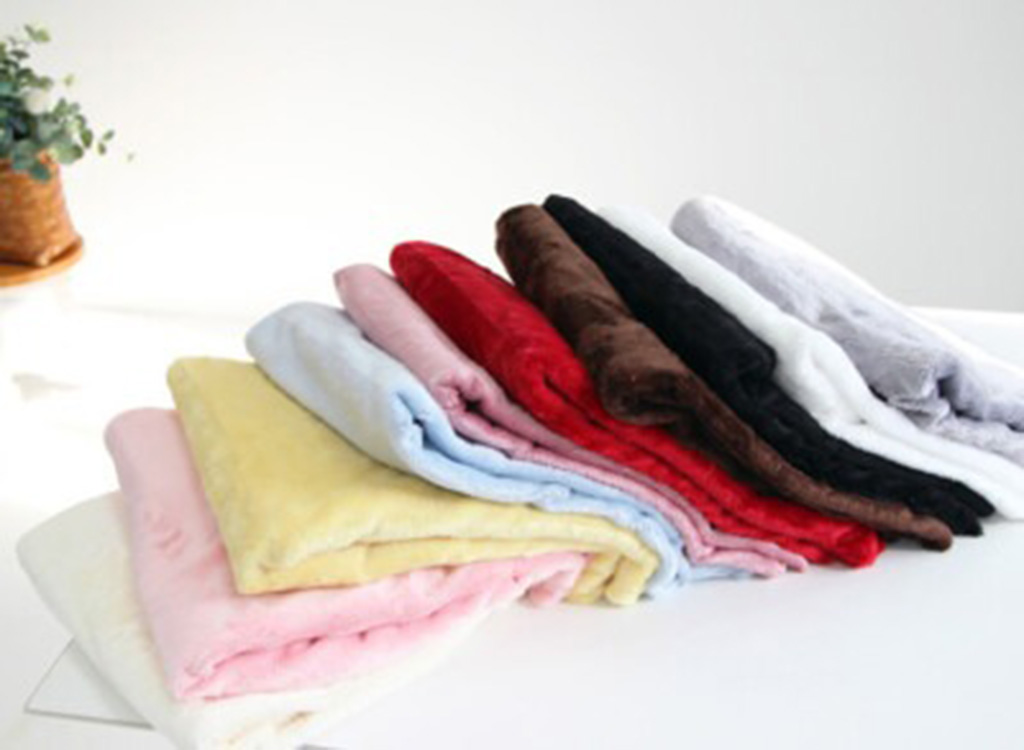
Even when all incoming fabric rolls have passed IQC, within-order fabric inconsistency can occur if rolls from different dye lots — which may have been approved individually but show subtle differences relative to each other — are mixed together in cutting without tracking. This mixing produces within-order inconsistency where units produced from different roll groupings show subtle color or pile differences — despite both groups being individually within the approved tolerance.
Fabric lot management and roll tracking prevent within-order inconsistency by maintaining systematic records of which rolls belong to which dye lot, organizing cutting sequences to minimize the number of lot changes within consecutive production, and creating clear documentation trails that allow any unit in the production run to be traced to the specific roll — and therefore the specific lot — from which its fabric was cut.
Here is a complete fabric lot management and roll tracking framework:
| Management Element | What It Controls | Implementation Method | Consistency Benefit |
|---|---|---|---|
| Dye lot identification | Each roll assigned to its production dye lot | Lot number recorded at IQC, marked on roll | Enables lot-consistent cutting grouping |
| Roll tracking log | Record of each roll’s characteristics and approval status | Spreadsheet or system with roll ID, lot, measurements, approval | Full traceability for any production unit |
| Lot-consistent cutting sequence | Units cut from same lot wherever possible | Production plan organized by lot grouping | Reduces within-order color variation |
| Roll-to-roll transition protocol | Verification step at each roll change | Standard operating procedure at cutting station | Catches between-roll variation before it enters production |
| Panel labeling system | Each cut panel identified by roll and lot | Label or color code on each panel | Enables problem tracing to roll level |
| Mixing strategy for unavoidable cross-lot use | When lot mixing is necessary, distribute evenly | Cross-lot units distributed across the production run | Prevents concentration of variation |
The Lot Grouping Strategy
The most effective approach to minimizing within-order color variation from lot differences is lot-grouped production — organizing the cutting sequence so that all fabric from the same dye lot is cut consecutively, and the transition to a different lot occurs as a defined event with specific verification steps rather than as an unmanaged occurrence.
This lot-grouped approach ensures that units produced within a lot group are internally consistent, because they are cut from the same dye lot. The consistency challenge is managed at the lot transition points — where a verification step confirms that the incoming lot is within acceptable deviation range relative to the previous lot before its use is authorized.
When lot differences are identified at a lot transition point that exceed the acceptable range — one lot is noticeably warmer or cooler than the previous — the factory has three options: source a closer-matching replacement lot, distribute units from the different lots across the production run so the difference is less concentrated, or obtain explicit buyer approval to proceed with full disclosure of the lot difference. All three options are preferable to proceeding without acknowledgment — which produces concentrated inconsistency that is difficult to explain or remediate after production is complete.
How Does In-Process Monitoring Detect Fabric Quality Changes During Production?
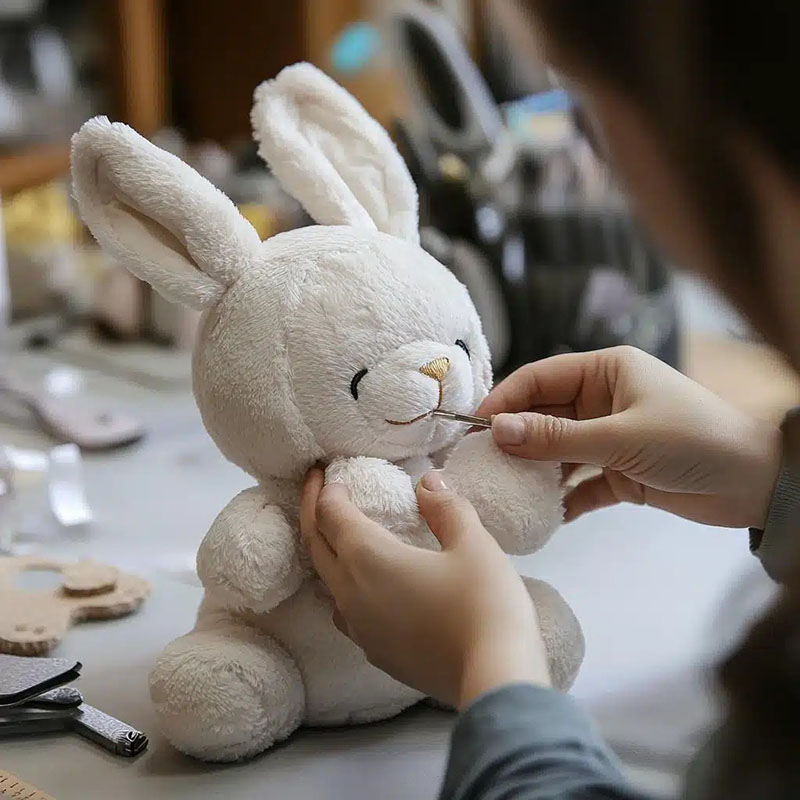
Even after thorough IQC and careful lot management, fabric quality changes can occur during the production process itself — not from material variation but from process-induced changes. Heat from sewing machines can compress or alter pile in adjacent areas. Improper fabric handling can create pile direction inconsistencies in areas near seams. Exposure to cutting table friction can affect surface pile characteristics. Each of these in-process changes affects the finished product’s fabric appearance in ways that IQC cannot prevent because they originate in production rather than in the material.
In-process monitoring detects fabric quality changes during production through regular visual assessments of production output at defined intervals — comparing the fabric surface quality, pile direction, and color appearance of units at different stages of production against the approved reference standard. This monitoring is distinct from the material-focused IQC that occurs before production begins — it focuses on how the fabric behaves through the production process rather than on its incoming characteristics.
Here is an in-process fabric quality monitoring framework:
| Monitoring Point | What Is Assessed | Interval | Reference Standard | Action Trigger |
|---|---|---|---|---|
| Post-cutting visual check | Pile direction consistency, surface integrity | Every 200 cut panels | Visual reference against approved cut pieces | Any pile direction error or surface defect |
| Post-sewing seam area check | Pile condition near seams, seam visibility | Every 100 sewn assemblies | Approved sample comparison | Pile compression or seam visibility deviation |
| Surface finishing check | Overall surface appearance after finishing | Every 50 finished units | Counter sample comparison under D65 | Any visible surface quality deviation |
| D65 color check — periodic | Color appearance of finished units | Every 200 finished units | Approved swatch comparison | Any color shift from approved reference |
| Pile direction — finished unit | Consistent pile direction across all panels | Random selection per IPQC interval | Counter sample visual check | Any inconsistency between adjacent panels |
The D65 Color Check During Production
One of the most important in-process fabric quality monitoring steps is the periodic D65 color check on finished units — comparing the color appearance of a random sample of finished, stuffed units against the approved physical swatch under standardized D65 lighting at defined production intervals.
This check serves a different function from the IQC color assessment at incoming inspection. While IQC confirms that individual rolls meet the color specification, the in-process D65 check confirms that the color appearance of the finished product — after the fabric has been cut, sewn, stuffed, and had accessories applied — matches the approved standard. Processing effects, seam shading, and pile compression can all affect color appearance in the finished product even when the incoming fabric was correctly approved.
Running this check at regular intervals during production — rather than only at final inspection — catches any color drift before it affects a large proportion of the production run, allowing investigation and correction when the number of affected units is small.
What Happens at Fabric Roll Transitions and Why They Are a High-Risk Consistency Point?
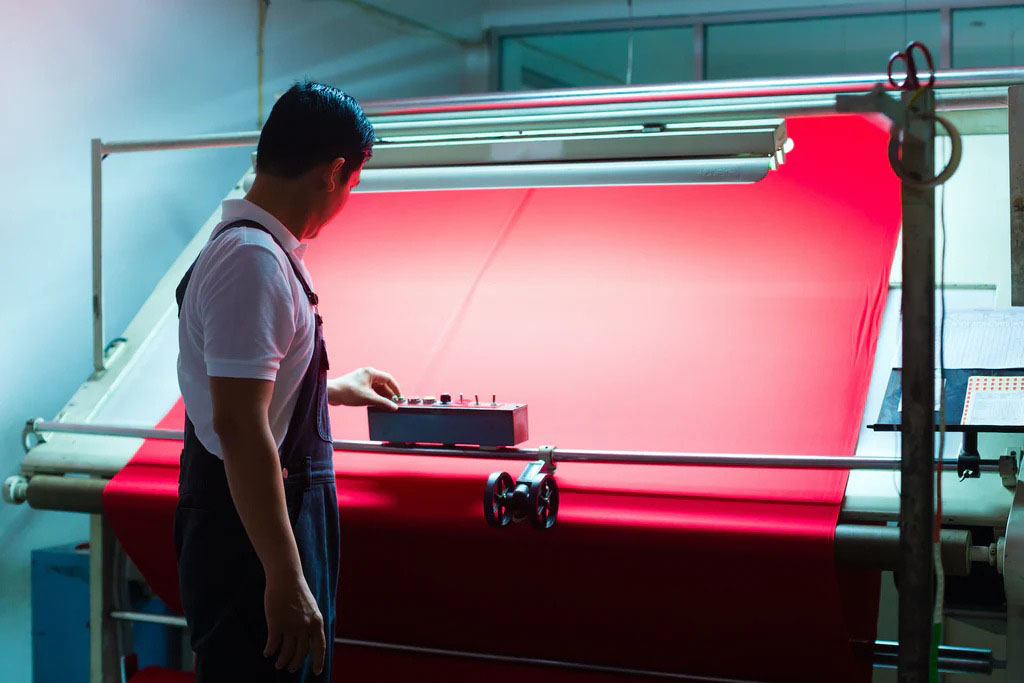
Fabric roll transitions — the points in the cutting sequence where one fabric roll is exhausted and a new roll begins — are the highest-risk consistency points in the entire production workflow. Even when all rolls have been individually approved at incoming inspection, subtle differences between rolls from the same dye lot, or more significant differences between rolls from different lots, can produce visible inconsistency in units cut from adjacent rolls.
Fabric roll transitions are high-risk because the transition occurs during an active production flow — where the cutting operator’s primary focus is throughput rather than quality assessment — and because the visual comparison between the closing and opening roll is easy to omit when the production pressure and operational habit of simply continuing cutting dominates. Factories without explicit roll transition protocols regularly produce orders where within-order fabric inconsistency is traceable to unmanaged roll transitions.
A professional roll transition protocol addresses this risk through specific, mandatory verification steps that must be completed before cutting from a new roll begins:
| Roll Transition Step | What Is Checked | Who Is Responsible | Documentation Required |
|---|---|---|---|
| New roll identification | Roll ID, lot number confirmed and logged | Cutting operator | Roll tracking log entry |
| Color comparison | New roll compared to closing roll and approved swatch under D65 | QC inspector or supervisor | Pass/fail recorded in roll log |
| Pile height spot check | New roll pile height measured and confirmed within specification | QC inspector | Measurement recorded in roll log |
| Pile direction confirmation | New roll pile direction consistent with specification | Cutting operator | Noted in roll log |
| Surface quality scan | First meter of new roll inspected for defects | QC inspector | Pass/fail recorded |
| Lot change authorization (if different lot) | Cross-lot transition authorized by QC supervisor | QC supervisor | Authorization signature in log |
| Production continuation | Cutting authorized to begin from new roll | QC supervisor | Continuation note in log |
The Color Comparison at Roll Transition
The most critical step in the roll transition protocol is the D65 color comparison — placing a sample of the new roll alongside a sample of the closing roll and the approved reference swatch, all under standardized D65 lighting, and visually assessing whether the new roll is within the acceptable color tolerance range.
This comparison must be conducted under D65 lighting rather than ambient lighting — because the color difference between two rolls that are visually similar under one light source may be clearly visible under D65 standardized daylight, which provides the most accurate and consistent color assessment environment.
When the D65 comparison at a roll transition reveals a color difference that falls outside the acceptable tolerance range, production from the new roll should not proceed until the discrepancy is resolved — either by sourcing a better-matching roll, by obtaining explicit buyer authorization to proceed with full disclosure, or by implementing a deliberate lot-mixing strategy that distributes the less-matching roll across the production run rather than concentrating it.
How Do Reorders Introduce New Fabric Consistency Risks and How Are They Managed?
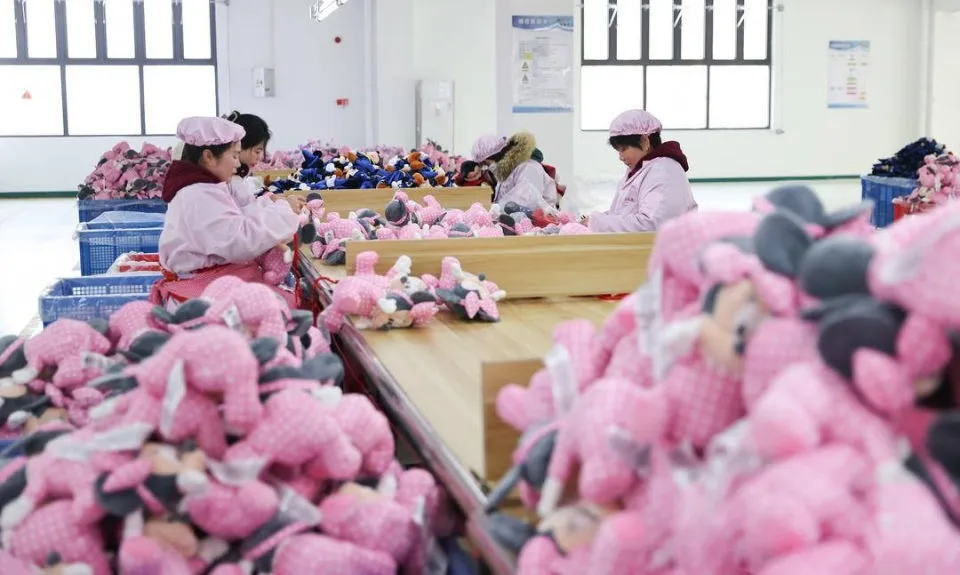
Reorders represent a fabric consistency challenge that is qualitatively different from the within-order consistency challenges described in the preceding sections. Within an order, the consistency challenge is managing variation between rolls from the same fabric sourcing event. In a reorder, the consistency challenge is ensuring that fabric sourced months later — for a completely new production run — matches the fabric used in the original order closely enough that products from the reorder are indistinguishable from products already in the market.
Reorders introduce new fabric consistency risks because textile manufacturers cannot guarantee exact color and pile replication between production runs that are separated in time. Dye lot variation is a natural and unavoidable characteristic of textile production — every new production batch of even the same fabric style will produce a fabric that differs slightly from the previous batch in color, pile characteristics, or both. The consistency question for reorders is not whether the fabric will be identical but whether it will be close enough to be commercially indistinguishable.
Here is a framework for understanding and managing reorder fabric consistency risks:
| Reorder Risk Factor | What Creates the Risk | Management Approach | Timing |
|---|---|---|---|
| New dye lot for same fabric style | Natural batch-to-batch color variation | Reorder sample and compare to original | Before bulk reorder committed |
| Different fabric supplier | New supplier’s production characteristics differ | Full IQC against original specification | Before cutting begins |
| Supplier formula drift | Supplier’s production parameters change over time | Request same formula as original order | At reorder inquiry stage |
| Original swatch degradation | Retained reference swatch fades over storage | Store reference swatches properly, renew if needed | Before each reorder |
| Time-since-original variation | Longer gap equals higher natural variation | Apply stricter IQC tolerance for longer gaps | At incoming inspection |
The Reorder Swatch Approval Process
The most effective management approach for reorder fabric consistency risk is a mandatory swatch approval step — requesting actual swatch samples from the proposed reorder fabric lot before the bulk fabric order is confirmed, and comparing those swatches against the retained original production reference under D65 lighting.
This swatch approval step should be conducted before the bulk fabric is ordered — at the inquiry stage with the fabric supplier — rather than at the point where the bulk fabric has already been delivered to the factory. Discovering at bulk delivery that the reorder fabric has a color deviation requires either accepting a consistency gap with the original order, sourcing replacement fabric that delays production, or proceeding with disclosed inconsistency and managing the commercial consequences.
Requesting swatches before bulk ordering shifts the decision to a point where the options are least constrained — if the first proposed fabric does not match, the supplier can be asked to provide swatches from alternative lots, or a different supplier can be approached while there is still time to source without production delay.
Managing Reorder Variation When Perfect Match Is Not Available
Sometimes, even with a thorough swatch approval process, the available fabric options for a reorder do not match the original reference as closely as ideal. In this situation, buyers and factories must make an informed commercial decision about how to proceed.
Options for managing imperfect reorder fabric matches include accepting the deviation if it falls within a commercially acceptable range — tested by displaying original and reorder products side by side to assess whether the difference is customer-perceptible. Adjusting the product design slightly — a new colorway or a declared variant — if the difference is significant enough to require acknowledgment. Or applying the variation strategically — for example, if the reorder fabric is slightly different, releasing the reorder as a refreshed season variant with the color described as a new seasonal shade rather than the same product.
The worst approach is proceeding without acknowledgment — shipping reorder products that look noticeably different from the original without disclosure, and allowing customers to discover the inconsistency independently. This generates quality complaints and undermines brand trust in a way that any managed approach to variation would prevent.
How Can Buyers Build Fabric Consistency Requirements Into Their Supplier Relationships?
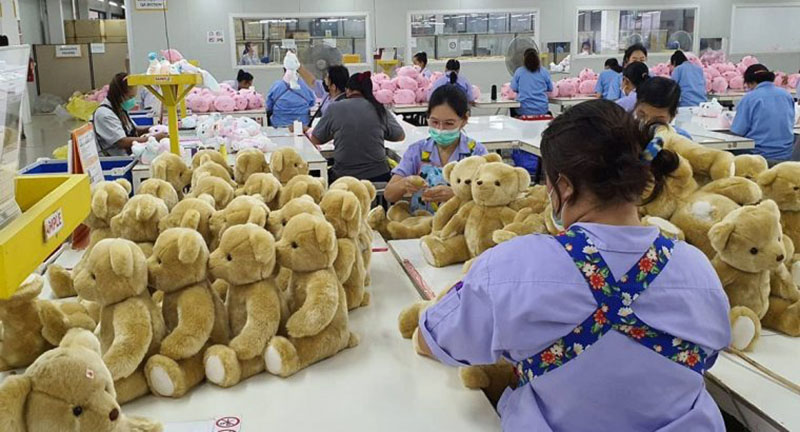
Fabric consistency is not solely a factory responsibility — buyers who actively engage in establishing fabric consistency requirements, verification processes, and communication protocols in their supplier relationships consistently experience better fabric consistency outcomes than those who treat it as entirely the factory’s domain.
Buyers can build fabric consistency requirements into their supplier relationships through four mechanisms: contractual specification, process requirements, verification rights, and communication protocols. Each mechanism addresses a different dimension of the buyer’s role in fabric consistency management.
Here is a comprehensive framework for buyer-led fabric consistency requirements:
| Mechanism | Specific Requirement | How to Establish | What It Prevents |
|---|---|---|---|
| Contractual Specification | |||
| Complete fabric specification | All specification elements documented in tech pack | Tech pack included in purchase agreement | Specification ambiguity |
| Color tolerance definition | Maximum acceptable Pantone deviation specified | Written in quality annex | Post-production color disputes |
| Material change prohibition | No fabric substitution without written buyer approval | Explicit clause in purchase agreement | Unauthorized substitution |
| Reorder match requirement | Reorder fabric must pass comparison to retained reference | Written reorder protocol | Reorder consistency failures |
| Process Requirements | |||
| IQC protocol mandate | Factory must conduct per-roll fabric IQC | Process requirement in agreement | Uninspected rolls entering production |
| Roll transition protocol | Mandatory color check at every roll change | Process requirement in agreement | Unmanaged roll transition variation |
| D65 lighting requirement | All color assessments under D65 standard | Process requirement in agreement | Lighting-dependent color assessment errors |
| Lot tracking documentation | Roll tracking log maintained throughout production | Documentation requirement in agreement | Untraceable within-order variation |
| Verification Rights | |||
| Material swatch approval | Buyer approves bulk fabric swatches before production | Approval right stated in agreement | Unapproved material entering production |
| IQC record access | Buyer can request IQC records for any production run | Record access right stated in agreement | Unverifiable IQC claims |
| Third-party inspection | Buyer can commission independent inspection | Inspection right stated in agreement | Undetected quality failures |
| Reorder swatch pre-approval | Buyer approves reorder fabric before bulk order | Pre-approval right in agreement | Reorder color mismatches |
| Communication Protocols | |||
| Material receiving notification | Factory notifies buyer when fabric is received and passes IQC | Communication protocol in agreement | Silent material failures |
| Deviation notification | Factory notifies buyer of any IQC deviation immediately | Communication protocol in agreement | Delayed problem disclosure |
| Roll transition log sharing | Factory shares roll tracking log at production midpoint | Communication protocol in agreement | Invisible within-order variation |
| Reorder swatch sharing | Factory shares reorder fabric swatches before bulk commitment | Communication protocol in agreement | Committed reorder with fabric mismatch |
The Material Swatch Pre-Approval Step
The most impactful single buyer action for fabric consistency management is requiring material swatch pre-approval before any fabric enters cutting. This means that before cutting begins for any production run — initial order or reorder — the factory must provide physical swatch samples from the actual production fabric rolls, and the buyer must review and approve those swatches against the retained reference standard before production authorization is given.
This requirement shifts the fabric consistency verification from a factory-internal process to a buyer-involved gate — ensuring that the buyer’s assessment of material acceptability is confirmed before irreversible production commitment is made. A factory that supplies swatches promptly and provides accurate color assessments is demonstrating exactly the transparency that makes long-term fabric consistency management effective. A factory that resists swatch pre-approval or provides swatches that are not representative of the actual production material is revealing a transparency deficit that will eventually produce fabric consistency problems.
Building Fabric Consistency Into Long-Term Relationships
In established long-term supplier relationships, fabric consistency management becomes progressively more efficient as both parties develop shared understanding of the specific tolerance levels that are commercially acceptable, the specific variation sources that most commonly arise in the production relationship, and the specific communication rhythms that keep fabric quality visible throughout production.
At Kinwin, fabric consistency is managed through a documented protocol that covers every stage described in this guide — from the initial specification development through IQC, lot management, in-process monitoring, roll transition verification, and reorder swatch pre-approval. We maintain physical reference swatches for all active products in our QC archive, conduct D65-standardized color assessments at every fabric evaluation stage, and provide buyers with IQC documentation and roll tracking records as standard production communication outputs.
Our goal is to make fabric consistency not a source of anxiety in the buyer-supplier relationship but a predictable, managed dimension of production quality — one that our clients can rely on without having to monitor it intensively themselves, because the systems managing it are robust, documented, and transparent.
If you are experiencing fabric consistency challenges with a current supplier, or want to understand how our fabric consistency management approach works before sourcing with Kinwin, we would be glad to walk through our specific protocols in detail.
Reach out to our team at [email protected] or visit kinwintoys.com to start that conversation.
Conclusion
Fabric consistency in plush production is achievable — but only through a systematic approach that addresses every stage where fabric variation can enter the production system. Precise specification establishes the objective standard. Rigorous incoming inspection catches deviations before they enter cutting. Lot management and roll tracking prevent within-order inconsistency from accumulating across the production run. In-process monitoring detects process-induced fabric quality changes before they affect large quantities. Roll transition protocols manage the highest-risk consistency points in the production sequence. Reorder swatch pre-approval prevents the most common cause of cross-order inconsistency. And buyer-established requirements ensure that all of these controls are contractually mandated and verifiably applied rather than optional and invisible.
The factories that deliver consistent fabric quality across initial orders and reorders are not those that use better fabric — they are those that manage fabric more systematically. And the buyers who experience consistent fabric quality are not those who accept whatever arrives — they are those who have built the specification precision, verification rights, and communication protocols that make consistent fabric a structural outcome rather than a hopeful expectation.
At Kinwin, systematic fabric consistency management is a standard component of our production quality system — not a premium service available only to major clients. Every order we produce benefits from the same documented fabric management protocols, because we understand that fabric quality consistency is the foundation of the visual and tactile quality standards that our clients’ customers experience in every product they receive.
FAQ
Q1: How should buyers store their retained reference fabric swatches to ensure they remain accurate references for future orders?
Retained fabric swatches lose their value as reference standards if they are stored in conditions that cause them to fade, compress, or acquire contaminants that change their color or texture appearance. The recommended storage approach is to seal each swatch in a labeled, opaque polybag that protects it from light exposure — the primary cause of color fading in textile samples — and store the sealed bags in a cool, dry location away from direct light sources. Each swatch should be clearly labeled with the product name, fabric style code, Pantone reference, date of approval, and the order number it was approved for. For high-value or frequently reordered products, maintaining two reference swatches — one for active use and one as a backup — provides protection against the reference being accidentally damaged or lost. Swatches that show signs of fading or compression change should be replaced with freshly sourced fabric from the same lot before the reference value is lost.
Q2: Is it realistic to expect perfect fabric color matching across multiple reorders over several years, and how should buyer expectations be calibrated?
Perfect color matching across multiple reorders over extended time periods is not realistic for any textile product — and buyers whose expectations are calibrated around perfect matching will consistently experience disappointment. The realistic expectation is close matching within a defined commercial tolerance — close enough that products from different production runs are indistinguishable to customers in normal retail or use environments. The tolerance that defines “close enough” varies by product category and market positioning. For fashion-sensitive products or those displayed in environments where side-by-side comparison is common, tighter tolerance is required. For products sold individually or used in settings where historical comparison is unlikely, slightly wider tolerance may be commercially acceptable. Establishing explicit written tolerance expectations before reorders — rather than leaving “close to original” undefined — creates a shared commercial understanding that allows both parties to assess reorder fabric objectively rather than through the subjective comparison that typically produces disputes.
Q3: What is the buyer’s best course of action when they discover fabric inconsistency after a bulk order has been delivered?
When fabric inconsistency is discovered after delivery, the most productive sequence of actions begins with systematic documentation — photographing the inconsistency clearly, with units from different fabric lots side by side under consistent lighting, and measuring the color deviation where possible using Pantone swatches or colorimetric measurement. This documentation serves both as evidence for the supplier discussion and as a baseline for assessing the commercial impact. The documentation should then be presented to the supplier alongside a specific request for root cause explanation — was the inconsistency within a single order from mixed rolls, or between reorders from different lots? Understanding the root cause determines the appropriate preventive measure. If the inconsistency is commercially significant — visible to customers, causing returns or complaints — a discussion about commercial resolution, whether through price adjustment, replacement production, or future production credits, is warranted based on whether the factory’s quality control process failed to catch a deviation it should have detected. If the inconsistency falls within a tolerance that was not explicitly agreed, the discussion is about establishing clearer standards for future orders rather than seeking compensation for a past order.
Q4: Can digital color measurement tools replace physical swatch comparison for fabric consistency verification, and what are their limitations?
Digital colorimetric measurement tools — spectrophotometers and colorimeters — can provide objective, numeric color measurements that are more precise than visual comparison under D65 lighting, and they are increasingly used in professional textile quality management as a supplement to visual assessment. For fabric consistency verification specifically, digital measurement tools can detect color differences that are below the threshold of reliable visual detection — making them more sensitive than visual comparison for identifying subtle lot-to-lot color drift before it reaches the customer-perceptible threshold. However, digital measurement tools have important limitations in plush fabric applications. The pile surface of plush fabrics scatters light in ways that make spectrophotometric readings highly sensitive to the measurement angle, pile direction, and compression applied during measurement — producing readings that vary based on how the instrument is positioned rather than solely on fabric color. For this reason, digital measurement in plush applications is most reliable when conducted with consistent methodology and interpreted alongside visual assessment rather than replacing it.
Q5: How does fabric consistency management change for products that use multiple different fabrics in the same design?
Multi-fabric designs — where the product combines two or more different fabric types in different areas — require applying the full fabric consistency management protocol to each fabric type independently, while also managing the consistency of the relationship between fabric types. This means maintaining separate reference swatches for each fabric, conducting separate IQC assessments for each fabric type at receiving, and verifying at the production stage that the color and texture relationship between different fabric areas in the finished unit matches the approved counter sample. Multi-fabric designs also introduce an additional consistency risk at lot transitions — when a transition occurs in one fabric type but not in the other, the relative color balance between the two fabric areas may shift subtly even if both individual fabrics remain within their individual tolerance ranges. Managing this requires that lot transitions in all fabric types used in the same product be coordinated so that the transition point assessment includes a check of the inter-fabric color relationship in the finished product, not just the individual fabric specifications.