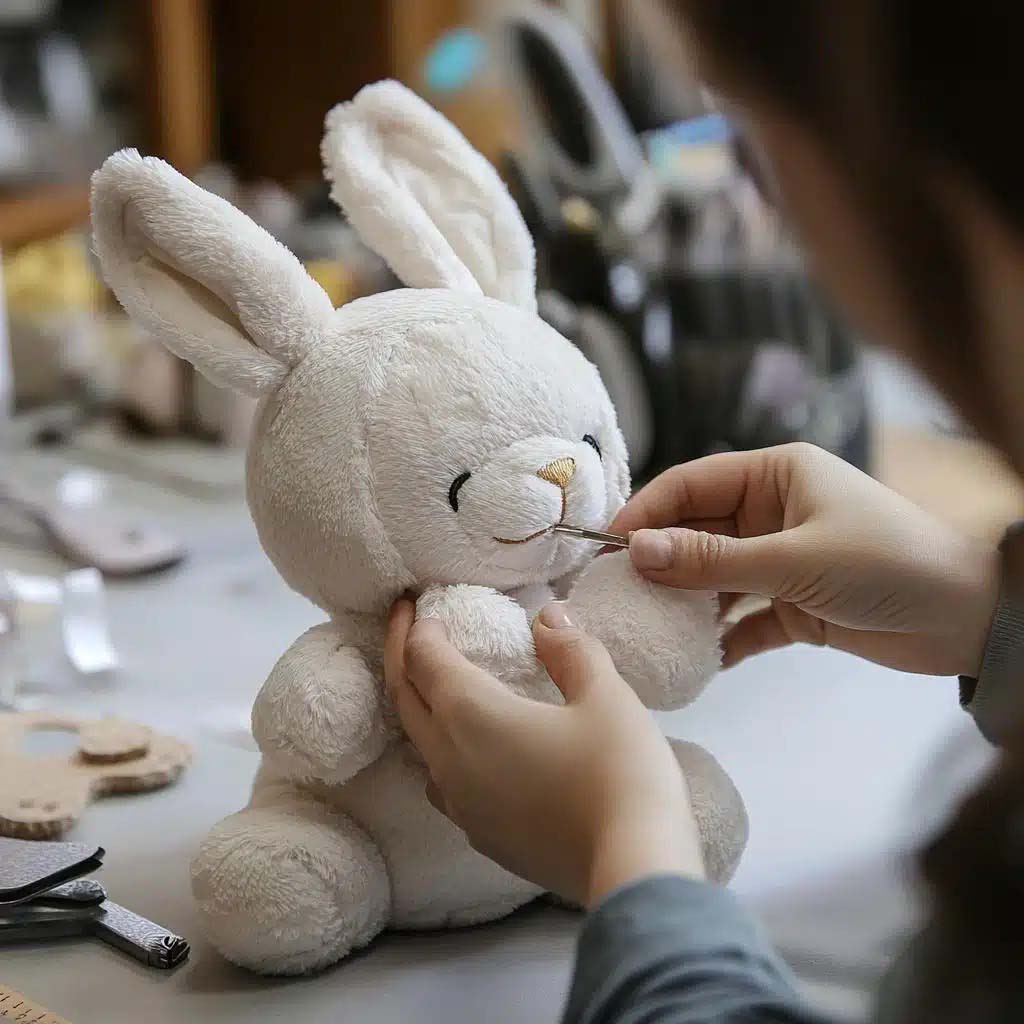
Bringing a custom plush toy from idea to finished product is not a simple process. There are many steps involved, and each one builds on the last. If any stage is rushed or skipped, the problems do not just stay in that stage—they carry forward and become more expensive to fix later.
For buyers working with overseas manufacturers for the first time, the development process can feel like a black box. You submit a design, wait, and hope the sample that arrives matches what you had in mind. When it does not, you are left wondering where things went wrong.
Understanding the full development process—from the very first product decision to the moment your order leaves the factory—gives you the clarity to manage your project more effectively, communicate better with your manufacturer, and make decisions at the right time rather than reacting to problems after they occur.
This guide walks through every stage of the plush toy development process in the order it happens, explaining what takes place at each step, why it matters, and what you as a buyer can do to keep things on track.
What Is the Plush Toy Development Process and Why Does Each Step Matter?
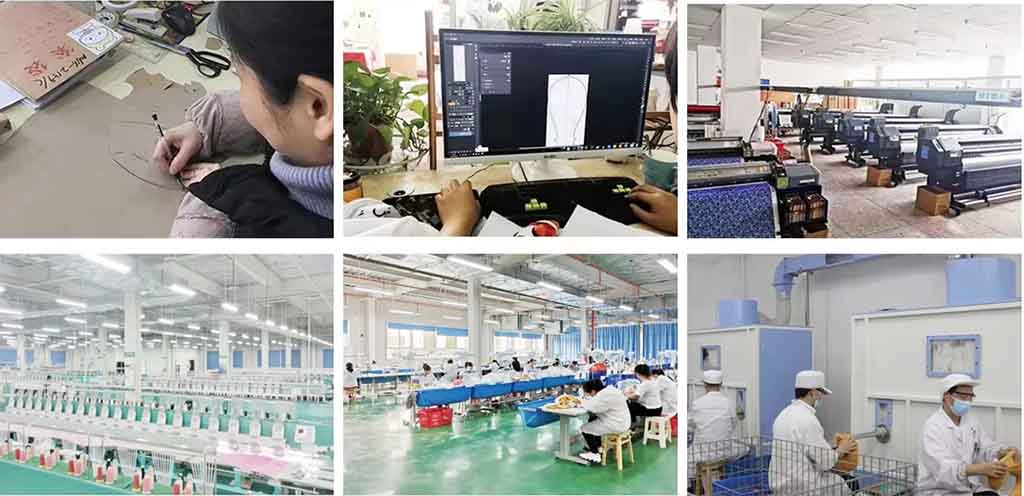
The plush toy development process is the complete sequence of steps required to take a product concept and turn it into a finished, production-ready item that can be manufactured consistently at scale. It covers everything from initial product definition through design, sampling, production, quality control, and final delivery.
The plush toy development process typically consists of seven to eight core stages: product definition, design and technical brief, pattern making, sampling, sample approval, mass production, quality control, and shipping. Each stage has a specific purpose and a direct impact on the cost, timeline, and quality of the finished product. Skipping or rushing any stage increases the risk of expensive problems appearing later in the process.
Here is a high-level overview of the full development process:
| Stage | Key Activity | Primary Output | Risk if Skipped |
|---|---|---|---|
| Product definition | Clarify goals, market, and specs | Clear project brief | Misaligned product development |
| Design and tech brief | Convert concept to technical document | Approved design file | Sampling errors and delays |
| Pattern making | Build cutting templates | Production-ready patterns | Inconsistent shape and fit |
| Sampling | Construct physical prototype | Approved sample | Unknown production issues |
| Sample approval | Review and confirm sample | Signed-off reference standard | Production deviates from intent |
| Mass production | Full-scale manufacturing | Finished product units | N/A — core production stage |
| Quality control | Inspect finished goods | QC report and approval | Defective shipment |
| Packaging and shipping | Prepare and dispatch order | Delivered product | Compliance or logistics failures |
One of the most important things to understand about this process is that it is sequential and cumulative. Decisions made in the early stages—such as material selection or size specification—directly affect the cost, timeline, and quality of every stage that follows. A poorly defined brief in stage one creates cascading problems through sampling, production, and delivery.
For buyers, this means that the most valuable investment of time is at the beginning of the process, not the end. The more clearly you define what you want before development begins, the more smoothly every subsequent stage will run.
How Do You Define Product Requirements Before Plush Toy Development Begins?
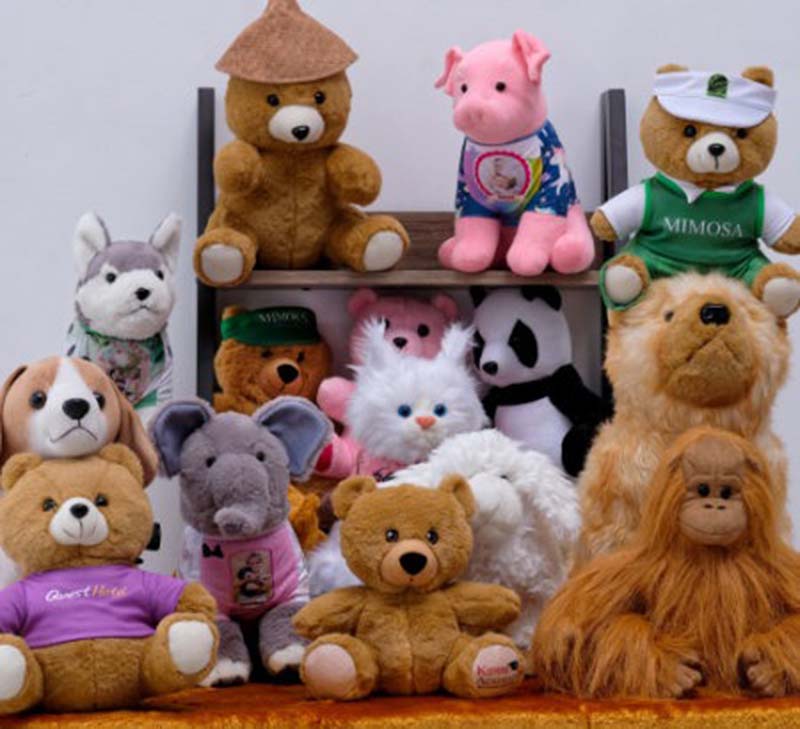
Product definition is the stage that most buyers underinvest in—and it is the stage that causes the most downstream problems when it is not done properly. Before any design work begins, before any patterns are made, and before any samples are requested, you need a clear and complete understanding of what you are trying to build and why.
Defining product requirements before plush toy development begins means establishing the core parameters of the product: its intended use, target market, size range, material standards, safety requirements, price point, and production volume. These parameters form the foundation of every decision that follows and prevent the most common—and costly—type of problem in custom development: building the wrong product.
Here is a framework for defining product requirements before development begins:
| Requirement Area | Questions to Answer | Why It Matters |
|---|---|---|
| Target market | Who is the end user? What age group? | Determines safety standards and design direction |
| Usage scenario | How will the product be used daily? | Affects size, weight, material durability |
| Retail channel | Where will it be sold? | Determines packaging and compliance needs |
| Price point | What is the target retail price? | Sets boundaries on material and production cost |
| Order volume | How many units do you need? | Affects MOQ, pricing, and factory selection |
| Safety requirements | Which markets will it be sold in? | Determines certification requirements |
| Customization needs | Logo, character, exclusive design? | Affects sampling complexity and tooling cost |
| Timeline | When does the product need to ship? | Determines how much time each stage has |
Many buyers approach factories with a design idea and a target price, but without having answered these foundational questions. The result is that the factory must make assumptions—about size, materials, construction standards, and compliance requirements—that may not align with what the buyer actually needs.
For example, a buyer developing a plush toy for the US retail market needs to account for ASTM F963 and CPSIA compliance from the very beginning. If this is not established at the product definition stage, the factory may source materials that are not certified for the US market, require expensive rework later, or delay shipment while compliance testing is arranged.
Taking the time to complete a thorough product definition—even if it takes a few extra days before development begins—consistently produces better outcomes, faster timelines, and fewer costly surprises throughout the rest of the process.
How Is a Plush Toy Design Translated from Concept into a Technical Brief?
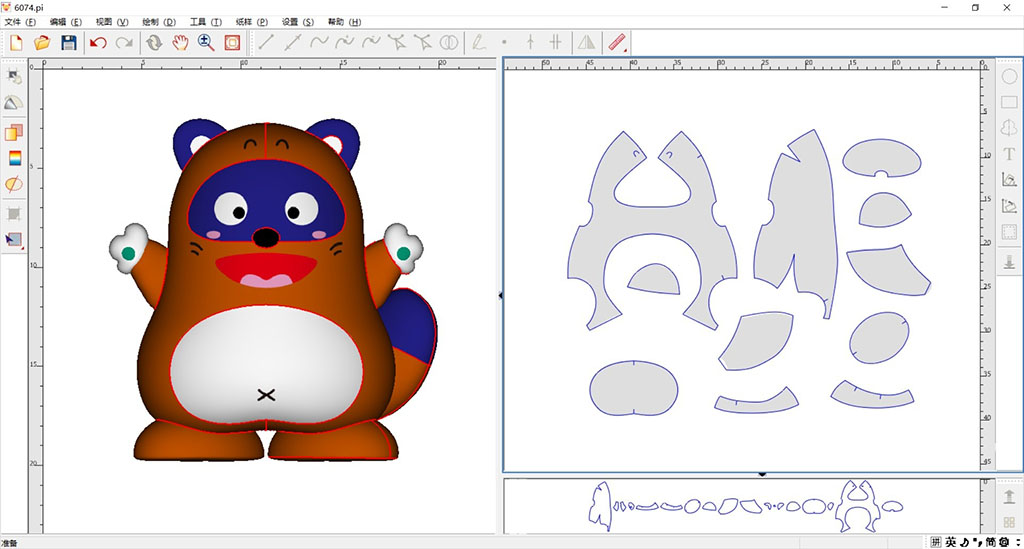
Once product requirements are defined, the next step is translating your design concept into a document that a factory can actually work from. This is the technical brief, and it is one of the most important documents in the entire development process. A strong technical brief bridges the gap between your creative vision and the factory’s production capabilities.
A plush toy technical brief translates a design concept into a precise, production-ready reference document that includes detailed specifications for shape, dimensions, materials, colors, construction methods, and quality standards. This document is what the factory uses to create patterns, source materials, and build the first prototype. The more complete and accurate the brief, the fewer revision rounds are needed during sampling.
Here is what a complete plush toy technical brief should include:
| Brief Component | What to Include | Format |
|---|---|---|
| Design reference | Front, back, and side view illustrations | Flat artwork or 3D render |
| Dimensions | Height, width, and depth with tolerances | Measurement table in cm |
| Color references | Pantone codes or physical fabric swatches | Pantone number or sample |
| Material specifications | Fabric type, pile height, filling type | Written description + sample |
| Facial features | Embroidery design, eye type and size | Artwork file + dimensions |
| Accessories | Attachments, labels, ribbons, sounds | Item list with specs |
| Construction notes | Seam type, stuffing density, closure method | Written notes |
| Packaging requirements | Box type, insert, labeling, barcode | Dieline or reference image |
| Compliance notes | Target market, required certifications | Written statement |
One area where buyers frequently create problems for themselves is color specification. Describing a color as “light blue” or “soft pink” is not sufficient for production. Without a specific Pantone color reference or a physical fabric swatch, the factory must interpret the color themselves—and their interpretation may not match yours. Providing Pantone codes eliminates this ambiguity entirely and prevents one of the most common causes of sample revision.
Material specification is equally important. If your brief simply says “soft plush fabric,” the factory will select the closest material from their existing stock, which may not match the quality or texture you have in mind. Specifying the fabric type, pile height, and feel—or providing a physical reference swatch—ensures that the factory sources materials that align with your expectations before sampling begins.
For buyers who do not have an in-house designer, working with the factory’s design team to develop the technical brief collaboratively is a practical alternative. Many experienced manufacturers, including Kinwin, offer design support services that help translate rough concepts or reference images into production-ready briefs. This is especially useful for buyers developing original characters or unique designs for the first time.
What Happens During the Pattern Making and Pre-Production Stage?
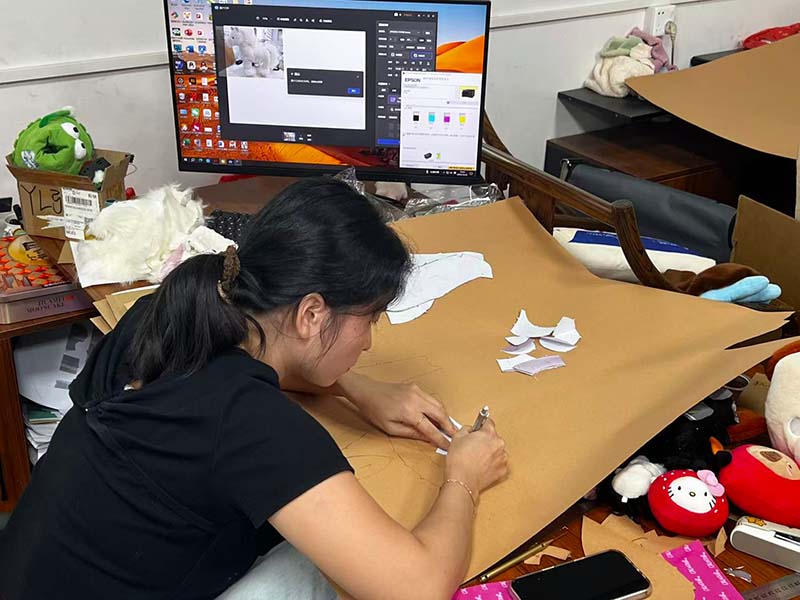
Once the technical brief is approved, the factory begins the pre-production stage. This is where the product transitions from a document into a physical reality for the first time. Pattern making is the critical technical step that determines whether the finished product will look and feel the way it should—and it happens before a single stitch of the actual sample is sewn.
Pattern making in plush toy manufacturing is the process of creating precise two-dimensional fabric cutting templates that, when sewn together, produce the correct three-dimensional shape of the product. It is a technically demanding process that requires both mathematical precision and an understanding of how different fabrics behave during cutting and sewing. Errors at this stage affect every unit produced from those patterns.
Here is what the pre-production stage involves:
| Pre-Production Task | Description | Time Required | Impact on Quality |
|---|---|---|---|
| Pattern drafting | Creating initial cutting templates | 2–4 days | Determines shape accuracy |
| Pattern grading | Adjusting proportions for correct fit | 1–2 days | Affects visual balance |
| Material preparation | Cutting and preparing fabric samples | 1–2 days | Affects texture consistency |
| Accessory sourcing | Procuring eyes, buttons, and trims | 2–5 days | Affects detail accuracy |
| Embroidery setup | Programming embroidery machine | 1–2 days | Affects facial and design accuracy |
| Internal review | Factory checks all components before sewing | 1 day | Prevents avoidable errors |
Pattern making for plush toys is more complex than it may appear because fabric behaves differently from rigid materials. Plush fabric has a pile direction—the direction in which the fibers naturally lie—and this must be accounted for in every pattern piece. If pile direction is inconsistent across panels, the finished product will have visible variations in how light reflects off different sections, creating a patchy or uneven appearance.
Seam allowances must also be calculated precisely. Plush fabrics are thick, and the seam allowance required for clean, durable construction is larger than in apparel manufacturing. If seam allowances are too small, seams may break under the stress of stuffing. If they are too large, the finished product will be smaller than the intended dimensions.
For buyers, the pre-production stage is largely invisible—it happens inside the factory without requiring direct input. However, being available to answer any clarifying questions during this stage is important. Factories may identify ambiguities in the brief that need to be resolved before pattern making can proceed accurately. Delayed responses at this stage slow down the entire sampling timeline.
How Does the Sampling Stage Work and What Should Buyers Expect?
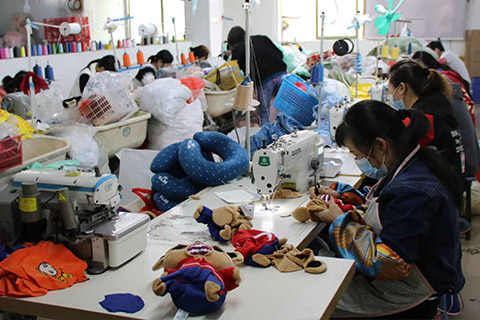
The sampling stage is where the development process becomes tangible. For the first time, you receive a physical product that you can evaluate, touch, measure, and test. It is also the stage where most projects encounter their first significant challenges—because no matter how detailed the brief, there are always elements that look or feel different in three dimensions than they appeared in two.
The sampling stage involves the factory constructing a physical prototype based on the approved technical brief and patterns, shipping it to the buyer for review, collecting detailed feedback, incorporating revisions, and repeating this cycle until the sample meets the required standard for mass production approval. Each cycle is called a revision round, and each round adds time and cost to the development timeline.
Here is a realistic guide to what buyers should expect during sampling:
| Sampling Phase | What Happens | Buyer Action Required | Typical Duration |
|---|---|---|---|
| First sample construction | Factory builds prototype | None — wait for sample | 7–14 days |
| Sample shipment | Sample is sent to buyer | Receive and inspect | 3–7 days shipping |
| Buyer review | Evaluate against brief | Document all feedback | 3–7 days |
| Revision submission | Send consolidated feedback to factory | Write clear revision notes | 1–2 days |
| Revision construction | Factory rebuilds based on feedback | None — wait for revision | 5–10 days per round |
| Sample approval | Final sample confirmed | Sign off formally | 1–2 days |
One of the most important things buyers can do during the sampling stage is evaluate the sample systematically rather than impressionistically. Looking at a prototype and deciding it feels “not quite right” without being able to articulate exactly what needs to change leads to vague revision notes, which in turn leads to inaccurate corrections and additional rounds.
A structured evaluation process covers the following areas in order: overall dimensions and proportions, shape accuracy, color accuracy, fabric quality and feel, facial feature placement and accuracy, stitching quality and seam strength, stuffing density and shape retention, accessory placement and attachment strength, and label positioning. Going through each of these areas methodically and documenting specific, measurable feedback gives the factory clear instructions for the revision.
It is also important to consolidate all feedback from a single review round into one comprehensive document before sending it to the factory. Sending feedback in multiple messages or adding new requests after the factory has already begun the revision creates confusion, delays, and sometimes forces the factory to restart work they have already completed.
How Is Mass Production Planned and Executed in a Plush Toy Factory?
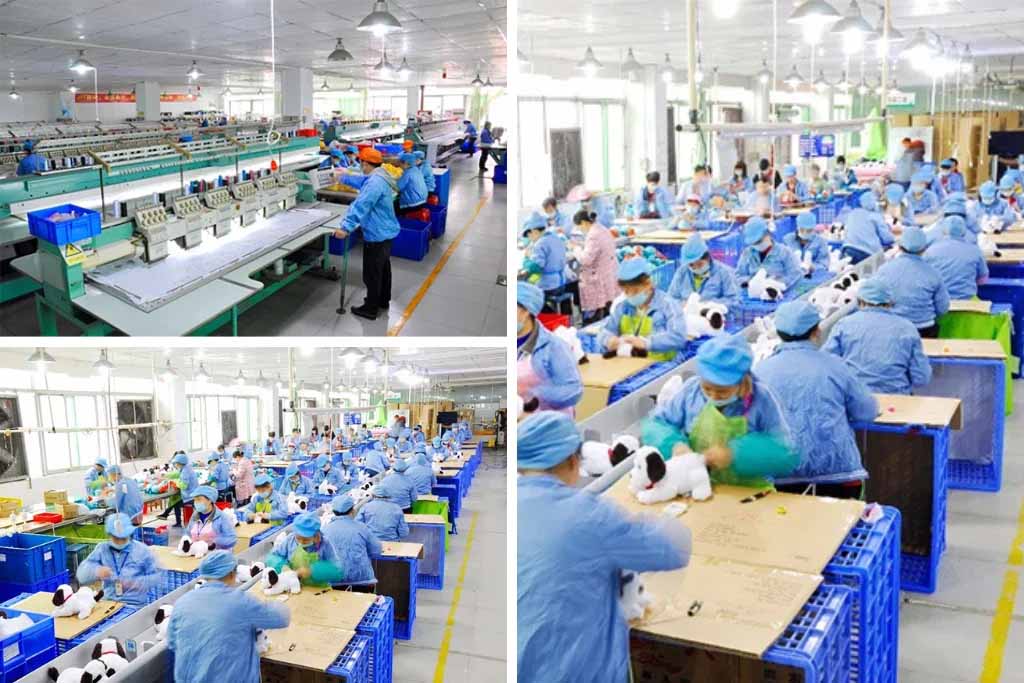
Once the sample is approved, the project moves into mass production. This transition is a significant shift—from careful, handcrafted prototype development to systematic, high-volume manufacturing. Managing this transition well is what separates consistent, high-quality bulk orders from unpredictable ones.
Mass production in a plush toy factory begins after the buyer formally approves the sample and confirms the production order. The factory then prepares a production plan, sources bulk materials, allocates production lines, and manufactures all units according to the approved sample and specifications. The approved sample serves as the definitive quality reference throughout the entire production run.
Here is how mass production is typically structured:
| Production Phase | Key Activity | Duration | Quality Control Point |
|---|---|---|---|
| Pre-production meeting | Align team on specs and standards | 1 day | Brief all departments |
| Bulk material ordering | Source and receive all materials | 5–14 days | IQC inspection |
| Cutting | Fabric cut to approved patterns | Varies by volume | Piece count verification |
| Sewing | Assemble all components | Varies by volume | IPQC line checks |
| Stuffing and closing | Fill and seal finished units | Varies by volume | Density and shape check |
| Accessory attachment | Apply eyes, labels, trims | Varies by volume | Attachment strength check |
| Cleaning and finishing | Remove threads, press and clean | Varies by volume | Visual inspection |
| Packaging | Pack into retail or shipping packaging | Varies by volume | Packaging accuracy check |
One of the most critical aspects of mass production management is material consistency. In bulk production, fabrics and fillings are sourced in large quantities from suppliers. Even when the same supplier is used, there can be subtle batch-to-batch variations in color, density, or texture. A factory with a strong IQC process catches these variations when materials arrive, before they affect production. Without this check, color or texture inconsistencies can appear across units within the same order.
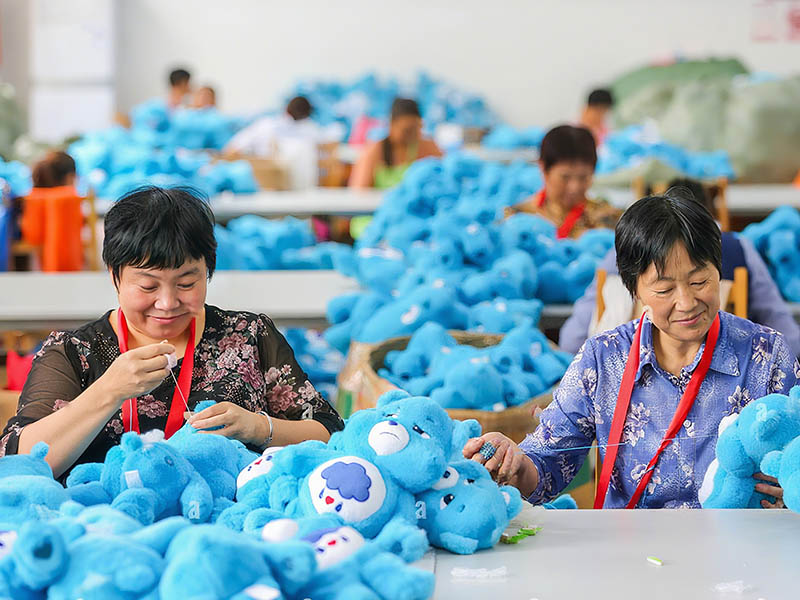
Production line allocation is another factor that affects quality consistency. On a busy production line, workers handle thousands of units per day. Maintaining consistent stitch tension, stuffing density, and assembly accuracy across an entire production run requires disciplined in-process quality monitoring—known as IPQC. Factories that conduct regular in-process checks catch process deviations early and correct them before they affect a significant portion of the order.
For buyers, the mass production stage requires less direct involvement than sampling, but staying in communication with your manufacturer throughout the production run is still important. Professional factories provide production updates at key milestones—such as after cutting is complete or when production is 50% finished—so buyers can be confident the order is progressing on schedule.
What Quality Control Steps Are Required Before a Plush Order Ships?
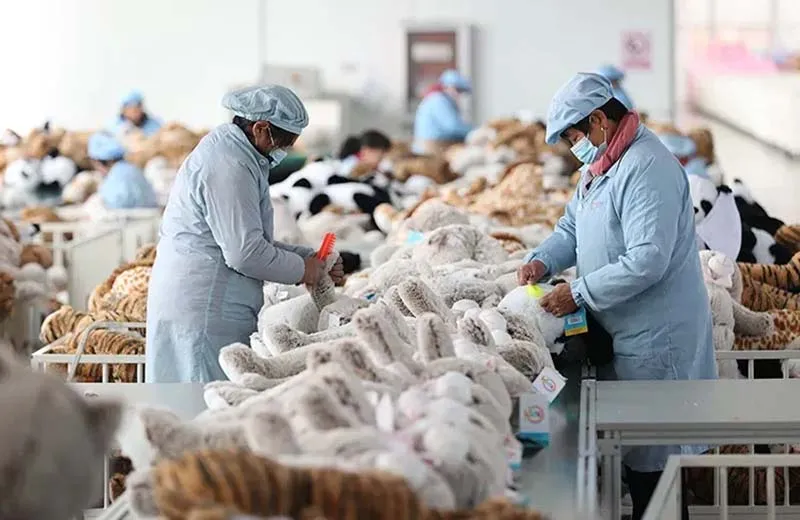
Quality control does not happen only at the end of production. In a well-managed plush toy factory, quality is monitored at every stage of the manufacturing process. However, the final quality control inspection—conducted on finished goods before shipment—is the last opportunity to catch any remaining issues before the product reaches the buyer.
Final quality control in plush toy manufacturing involves a systematic inspection of finished units against the approved sample and product specifications. This inspection checks dimensions, appearance, material quality, construction integrity, accessory attachment, labeling, and packaging accuracy. It is typically conducted using AQL sampling standards and may be performed by the factory’s own QC team, a third-party inspector, or both.
Here is a comprehensive overview of final QC inspection points:
| Inspection Area | What Is Checked | Standard Used | Defect Category |
|---|---|---|---|
| Dimensions | Height, width, proportions | Approved sample + tolerance | Major |
| Color accuracy | Match to approved sample | Visual comparison | Major |
| Fabric quality | Pilling, shedding, surface defects | AQL sampling | Major |
| Stitching integrity | Seam strength, stitch consistency | Pull test | Critical |
| Stuffing density | Shape retention, firmness | Compression test | Major |
| Accessory attachment | Pull force on eyes, buttons | EN71/ASTM pull test | Critical |
| Label accuracy | Content, placement, readability | Regulatory requirements | Major |
| Packaging condition | Correct packaging, no damage | Approved packaging sample | Minor-Major |
The AQL sampling framework determines how many units are inspected from a given production batch and what defect rate is acceptable. For most plush toy orders, AQL 2.5 is applied for major defects, meaning that if more than 2.5% of inspected units show a major defect, the batch should be rejected and addressed before shipment.
Third-party inspection is increasingly requested by buyers sourcing from overseas factories, particularly for large orders or when entering a new manufacturing relationship. Companies such as SGS, Bureau Veritas, and Intertek offer pre-shipment inspection services where a qualified inspector visits the factory, conducts an independent AQL-based inspection of the finished goods, and provides a detailed report. This gives buyers an independent confirmation of quality before payment is finalized.
For buyers who cannot conduct a physical factory visit, third-party inspection provides the closest equivalent to being present on the factory floor. It is a relatively low-cost safeguard relative to the value of the production order and the potential cost of receiving a non-conforming shipment.
How Do Packaging, Compliance, and Final Delivery Complete the Development Process?
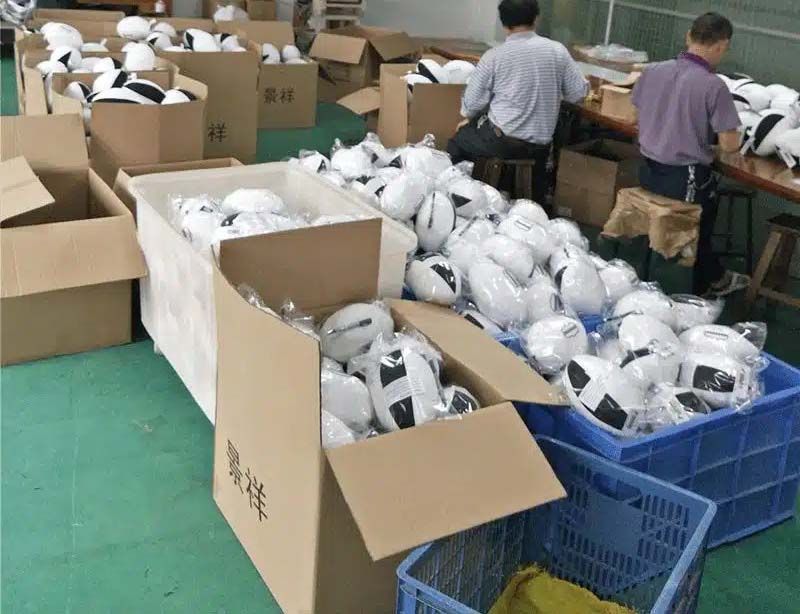
The final stage of the plush toy development process brings together three elements that are easy to overlook but critical to a successful product launch: packaging, regulatory compliance, and logistics. Each of these areas has the potential to delay your shipment, create costs you did not plan for, or prevent your product from reaching the market if not handled correctly.
Packaging, compliance documentation, and final delivery are the last critical steps in the plush toy development process. Packaging affects retail presentation and shipping efficiency. Compliance documentation—including safety test reports, labeling, and certifications—determines whether the product can legally enter your target market. Logistics planning determines how quickly and cost-effectively the finished goods reach you.
Here is a summary of what needs to be completed in the final stage:
| Final Stage Task | What It Involves | Who Is Responsible | Risk if Incomplete |
|---|---|---|---|
| Retail packaging production | Box printing, insert creation, assembly | Factory + buyer input | Poor shelf presentation |
| Compliance labeling | CPSIA tracking label, CE marking, care labels | Factory with buyer verification | Customs rejection |
| Safety test reports | ASTM, EN71, REACH documentation | Factory or third-party lab | Platform or retail rejection |
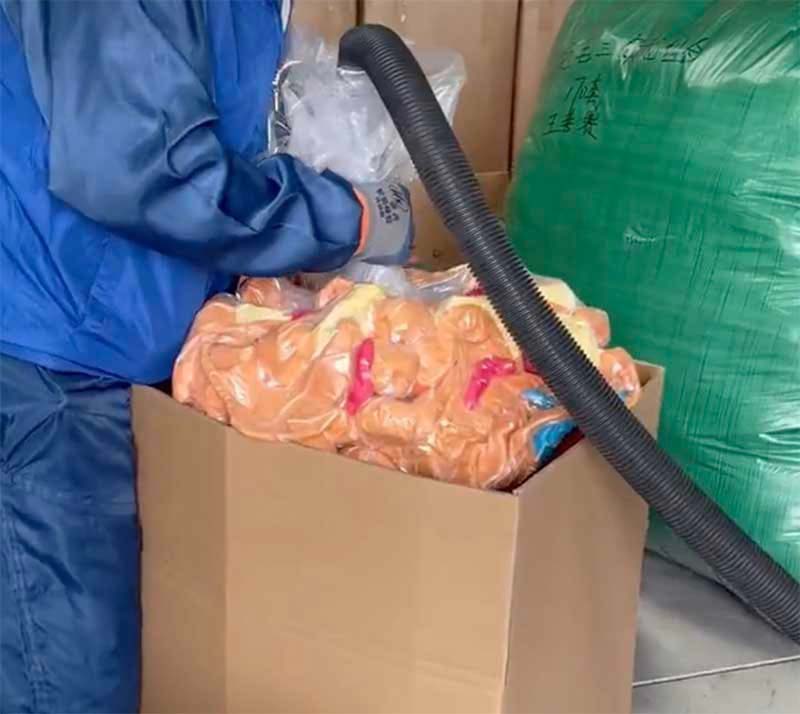
| Carton packing | Inner and outer carton preparation | Factory | Shipping damage |
| Shipping documentation | Commercial invoice, packing list, certificates | Factory + freight forwarder | Customs delay |
| Logistics arrangement | Sea, air, or express freight booking | Buyer or freight forwarder | Delivery delay |
Packaging decisions should ideally be made during the early stages of development, not at the end. The type of packaging you choose—polybag, window box, retail hanger, or gift box—affects production cost, shipping volume, and the customer’s unboxing experience. Leaving packaging design to the last minute often creates delays because printed packaging has its own minimum order quantity and production lead time.
Compliance documentation is non-negotiable for buyers selling in the US or European markets. Products arriving without proper test reports or labeling can be held at customs, rejected by retail partners, or removed from online platforms. Confirming with your manufacturer which tests have been conducted, which certifications are in place, and which labels are applied before the order ships is a critical final check.
At Kinwin, we support our clients through every step of this final stage—from packaging design and compliance verification to logistics coordination. Our goal is to ensure that when your order leaves our factory, it is fully prepared to enter your market without delays or compliance issues.
Whether you are developing your first custom plush toy or managing a complex multi-SKU product launch, having a manufacturer who understands and actively manages every stage of the development process makes the difference between a smooth, successful launch and a costly, stressful one.
Conclusion
The plush toy development process is a carefully sequenced series of decisions, technical steps, and quality checks—each one building on the last. Understanding the full process from product definition to final delivery gives buyers the clarity to plan effectively, communicate precisely, and respond to challenges before they become expensive problems.
The most successful custom plush projects are not necessarily those with the most creative designs or the most aggressive timelines. They are the ones where the buyer and manufacturer are aligned at every stage—starting with a clear brief, progressing through structured sampling, and completing with rigorous quality control and compliant delivery.
Every stage described in this guide represents a real step that happens in every serious plush toy development project. The factories that manage these steps professionally, transparently, and consistently are the ones worth building long-term relationships with.
At Kinwin, we guide our clients through each stage of the development process with clear communication, structured quality management, and manufacturing experience built across hundreds of custom plush projects for the US and European markets. If you are planning a new product launch or looking for a manufacturer who can support your development from concept to delivery, we would be glad to walk you through exactly how we work.