Trust is not something a manufacturer can claim. It is something that is built — through consistent quality, honest communication, reliable delivery, and the kind of support that makes a buyer’s job easier rather than harder.
At Kinwin, we have been building that trust with brands, retailers, and e-commerce businesses across the US, Europe, and beyond for years. The clients who come to us are not just looking for a factory that can produce plush toys. They are looking for a manufacturing partner who understands their market, respects their standards, and delivers what they promise — every time, not just the first time.
This page explains exactly why brands choose Kinwin, what they experience when they work with us, and what makes our approach to plush toy manufacturing different from the alternatives.
What Makes a Plush Toy Manufacturer Worth Trusting for Long-Term Brand Partnerships?
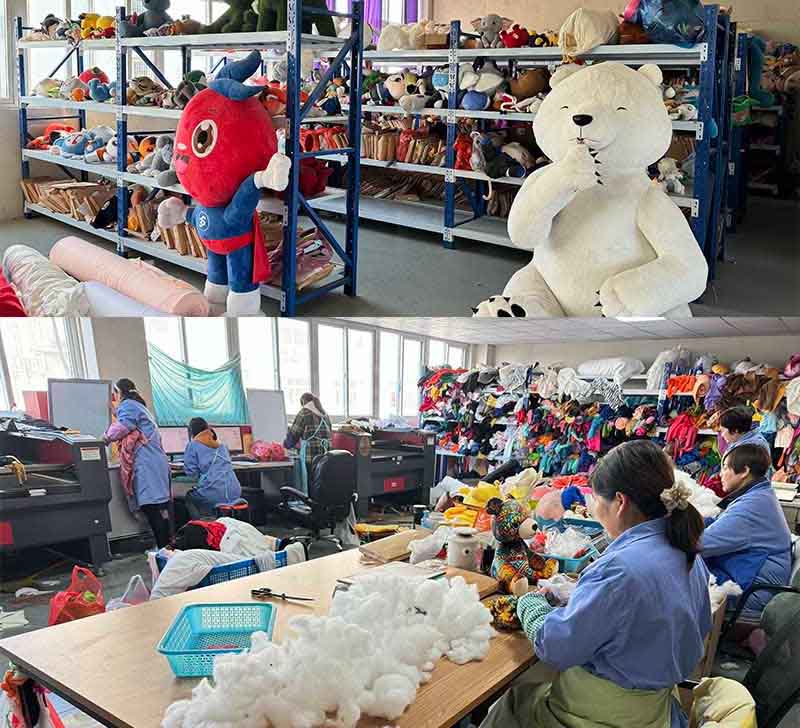
The plush toy manufacturing market is large and competitive. There are thousands of factories producing stuffed animals, plush dolls, and custom plush products across China and Southeast Asia. For a brand choosing a manufacturing partner, the challenge is not finding a supplier — it is identifying which supplier can actually deliver consistent quality, reliable communication, and genuine partnership over the long term.
A plush toy manufacturer worth trusting for long-term brand partnerships is one that combines proven production capability with transparent processes, certified compliance infrastructure, responsive communication, and a demonstrated track record of delivering consistent results across multiple orders and product types. These qualities do not appear in a factory profile — they are revealed through the details of how a manufacturer actually operates.
Here is what separates a genuinely trustworthy manufacturing partner from one that simply appears credible:
| Trust Factor | Surface Appearance | Real Evidence |
|---|---|---|
| Quality commitment | Claims consistent quality | Documented QC systems with records |
| Compliance capability | Lists certifications | Can provide current test reports on request |
| Communication standard | Responds quickly initially | Maintains same responsiveness throughout production |
| Production experience | States years in business | Demonstrates portfolio of relevant completed projects |
| Problem handling | Promises to resolve issues | Has clear, documented non-conformance process |
| Long-term orientation | Expresses interest in partnership | Offers flexible terms and invests in relationship development |
Why Surface Claims Are Not Enough
In international manufacturing sourcing, the gap between what a factory claims and what it delivers is one of the most persistent challenges buyers face. A factory’s Alibaba profile, website, and initial sales communication are curated representations designed to attract business — not objective assessments of production capability.
The only way to move from surface claims to grounded confidence is through direct verification: physical samples, factory documentation, third-party audit reports, and conversations with existing clients. This is the standard we welcome at Kinwin — because we are confident that direct evaluation of our operation, our quality systems, and our track record will give any serious buyer exactly the confidence they are looking for.
The Long-Term Partnership Standard
Most buyers are not looking for a factory that delivers one good order. They are building a supply chain that needs to perform consistently across many orders, across different product types, and through the inevitable challenges that arise in international manufacturing. A manufacturer who treats every order as a standalone transaction — rather than as part of an ongoing relationship — will never fully understand a brand’s standards, priorities, and market requirements.
At Kinwin, we invest in understanding every client’s business from the beginning — their target market, their quality expectations, their seasonal requirements, and their long-term growth plans. This investment pays off in faster development cycles, more accurate production, and fewer problems on every subsequent order. It is the foundation of the trust that our clients describe when they explain why they stay with us.
How Does Our Production Infrastructure Support Consistent Quality at Scale?
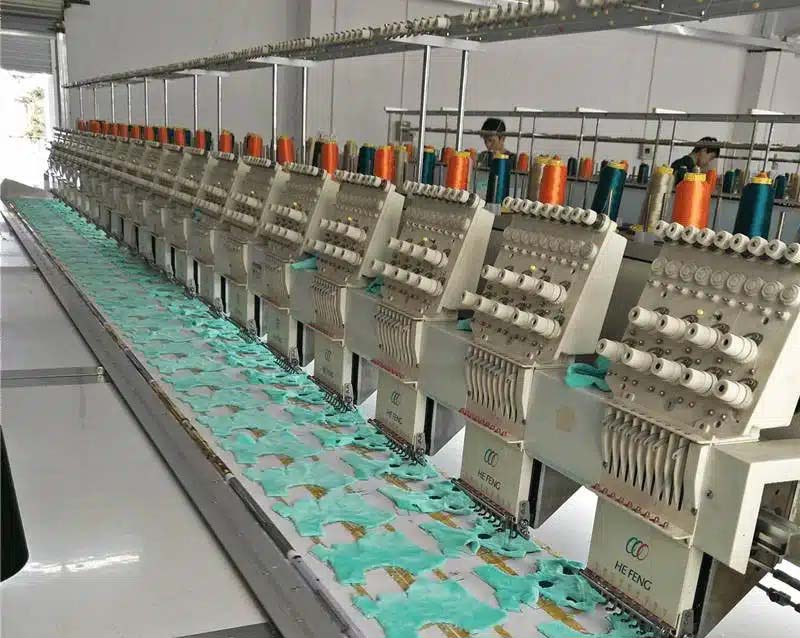
Behind every consistently delivered order is a production infrastructure that makes consistency possible. At Kinwin, we have built and continuously invested in the physical facilities, equipment, and operational systems that allow us to produce high-quality plush toys at scale — not just for a single order, but reliably across every production run.
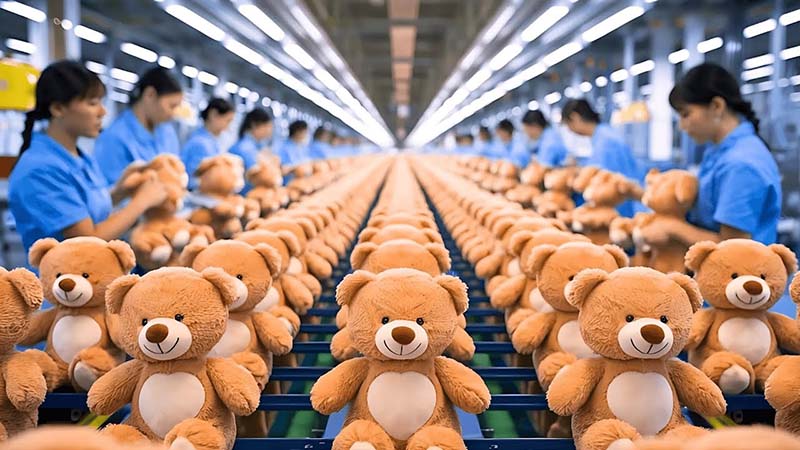
Kinwin’s production infrastructure is designed to support consistent, high-quality plush toy manufacturing across a wide range of product types and order volumes. Our factory is equipped with advanced sewing and embroidery systems, organized production line layouts, dedicated sampling facilities, and material storage systems that support both batch consistency and product traceability.
Here is an overview of our core production infrastructure:
| Infrastructure Area | What We Have | Why It Supports Consistency |
|---|---|---|
| Sewing equipment | Industrial sewing machines across multiple specialized lines | Consistent stitch quality across high-volume runs |
| Embroidery systems | Multi-head embroidery machines with digital programming | Precise, repeatable facial feature and logo execution |
| Cutting equipment | Structured cutting systems with pattern control | Dimensional consistency across all cut panels |
| Stuffing systems | Calibrated filling machines with density control | Consistent product weight and firmness |
| Sampling facility | Dedicated sampling area separate from production | Development quality unaffected by production pressure |
| Material storage | Organized, labeled material storage with batch tracking | Supports traceability and batch-to-batch consistency |
| Quality control area | Independent QC station with testing equipment | Objective, production-independent inspection |
Advanced Embroidery Capability
Embroidery is one of the most technically demanding aspects of plush toy production — and one where quality differences between factories become most visible. At Kinwin, our embroidery systems are operated by experienced technicians who program each design digitally and verify output against the approved artwork before production quantities are run.
This approach eliminates the positional drift and thread tension inconsistencies that commonly affect factories relying on manual embroidery setup. For brands whose product identity depends on precise facial expressions or logo placement, this level of embroidery control is a meaningful quality differentiator.
Dedicated Sampling Infrastructure
One of the most important structural decisions we made was to maintain a fully separate sampling facility — physically distinct from the main production floor. Our sampling team consists of experienced pattern makers and prototype sewers who work exclusively on development projects, without the capacity pressure and production targets that affect main production line workers.
This separation ensures that every prototype we produce receives the full attention of our most skilled development staff. It is why our first samples consistently achieve a high degree of accuracy relative to the design brief — and why our clients typically complete sampling in fewer revision rounds than they have experienced with other factories.
What Quality Control Systems Do We Use to Protect Every Order We Produce?
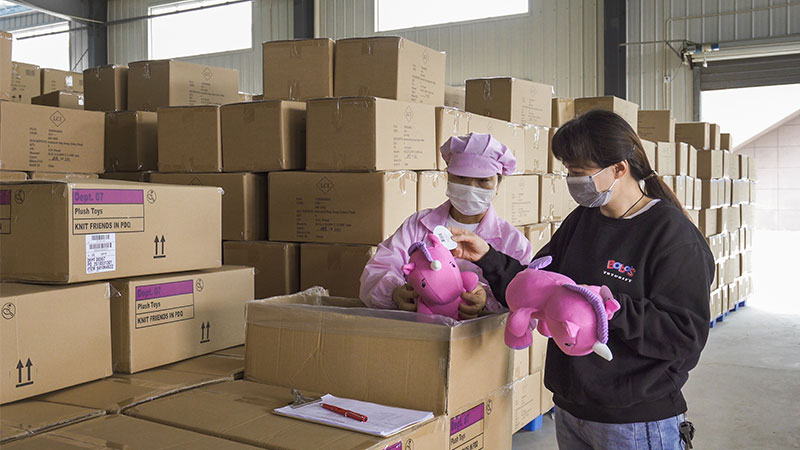
Quality control at Kinwin is not a final inspection conducted before shipment. It is a comprehensive, three-stage system embedded throughout the entire production process — designed to catch potential quality issues at the earliest possible point, where they are least expensive to address and least likely to affect the finished product.
Kinwin operates a complete IQC, IPQC, and FQC quality control system that covers every stage of production from incoming material inspection through in-process monitoring to final goods verification. This system is supported by dedicated QC personnel who operate independently from the production team, documented inspection procedures applied consistently across all production runs, and calibrated testing equipment that provides objective quality measurement rather than subjective assessment.
Here is how our three-stage QC system protects every order:
| QC Stage | When It Occurs | What We Inspect | How We Document |
|---|---|---|---|
| IQC | Before any cutting begins | Fabric, filling, accessories, thread, labels | Incoming inspection report per batch |
| Pre-production check | After pattern cutting, before sewing | Panel dimensions, color accuracy | Cut piece verification record |
| First-off inspection | After first completed units from line | Full product against approved sample | First-off report with photos |
| IPQC | Every 2–4 hours during production | Random unit sample from active line | In-process inspection log |
| Pre-packing inspection | Before units enter packaging | Appearance, accessories, finishing | Pre-pack inspection record |
| FQC | On completed packed goods | AQL sampling of full batch | Final inspection report |
Our Independent QC Team Structure
One of the most important structural features of our quality control system is the independence of our QC team from our production team. Our quality control personnel report directly to management — not to the production floor supervisor — which means their quality decisions are never influenced by production output pressure.
This independence is what allows our QC team to make objective decisions consistently. When a batch of incoming fabric shows a color deviation, our QC team can reject it without pressure to accept it in order to keep production on schedule. When an in-process inspection identifies a stuffing density issue, our QC team can halt the relevant line section for recalibration without being overruled by production targets.
Real-Time Documentation and Traceability
Every quality control check at Kinwin produces a written record. Incoming material inspection reports, first-off inspection findings, in-process check results, and final inspection reports are all maintained as part of each order’s production file.
This documentation serves two purposes. It gives us real-time visibility into quality performance throughout the production run, allowing us to identify and address any trends before they affect the full batch. And it provides our clients with complete, traceable quality records for every order — which is increasingly important for brands selling through major retail channels or online platforms that require quality documentation as a condition of listing.
How Do We Support Brands Through the Full Custom Development Process?
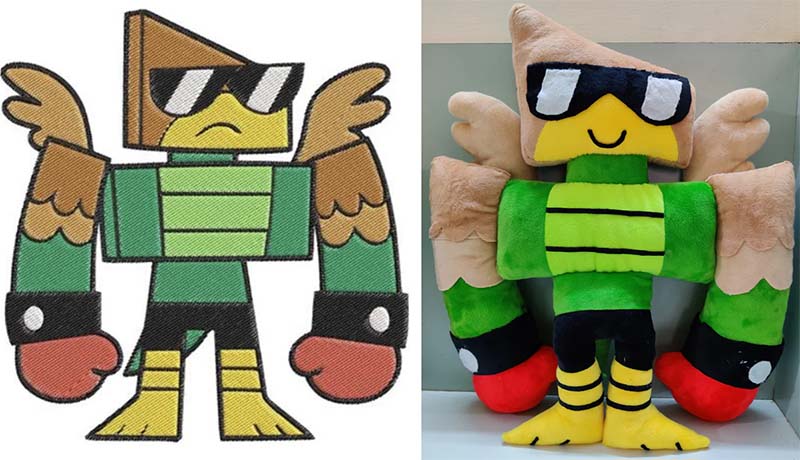
Custom product development is where the quality of a manufacturing partner becomes most apparent. It is a process that requires technical capability, creative collaboration, clear communication, and the experience to guide buyers through decisions that significantly affect the final product — often without the buyer having the manufacturing expertise to make those decisions independently.
At Kinwin, we support brands through every stage of the custom plush toy development process — from initial concept review and design brief preparation through pattern making, sampling, revision management, counter sample confirmation, and mass production. Our development support is designed to reduce the number of revision rounds required, accelerate time to market, and ensure that the approved sample translates accurately into consistent bulk production.
Here is an overview of how we support clients at each development stage:
| Development Stage | What We Provide | Client Benefit |
|---|---|---|
| Concept review | Design feasibility assessment and cost estimate | Identifies issues before investment is made |
| Brief preparation | Guidance on specifications, color references, materials | Reduces first-sample deviation |
| Pattern making | Experienced pattern makers with plush-specific expertise | Accurate first-sample shape and proportion |
| Material sourcing | Certified fabric and filling options with samples | Informed material selection before commitment |
| Sampling | Dedicated development team, 7–14 day turnaround | Fast, accurate prototype production |
| Revision management | Structured feedback process, clear change tracking | Efficient revision cycles, fewer rounds |
| Counter sample | Pre-production confirmation with actual bulk materials | Eliminates sample-to-bulk inconsistency risk |
| Mass production | Full tech pack reference, QC at every stage | Consistent bulk output matching approved standard |
Design Feasibility Assessment
One of the most valuable support services we provide early in the development process is a design feasibility assessment. When a client submits a design concept, our development team reviews it not just for aesthetic accuracy but for production practicality — identifying any elements that would be difficult or expensive to produce accurately, and suggesting alternatives that achieve the same visual result more efficiently.
This assessment prevents a common and costly pattern: a client invests in multiple sampling rounds for a design that has a fundamental production complexity issue that no amount of revision will fully resolve. Catching these issues before the first sample is built saves both time and money — and results in a better final product.
Material Selection Support
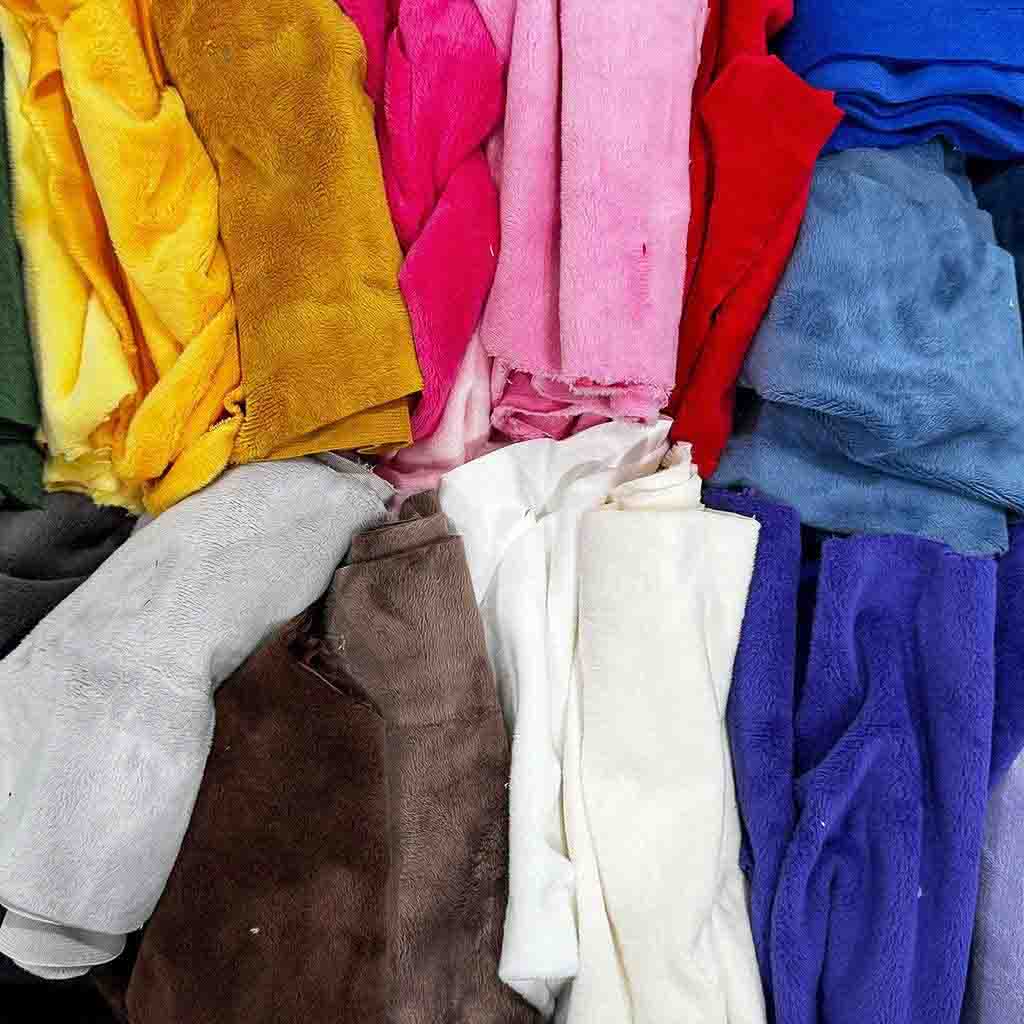
Material selection is one of the decisions that most significantly affects product quality, cost, and compliance — and it is also one where buyers who are new to plush toy manufacturing are most likely to need guidance. At Kinwin, we present clients with physical material options — fabric swatches, filling samples, accessory alternatives — at the beginning of the development process rather than making these selections unilaterally.
This collaborative approach to material selection ensures that the client understands the trade-offs between different options — cost versus quality, softness versus durability, standard versus certified — and makes informed decisions rather than discovering after sampling that the materials do not match their expectations.
What Safety Certifications and Compliance Standards Do Our Products Meet?
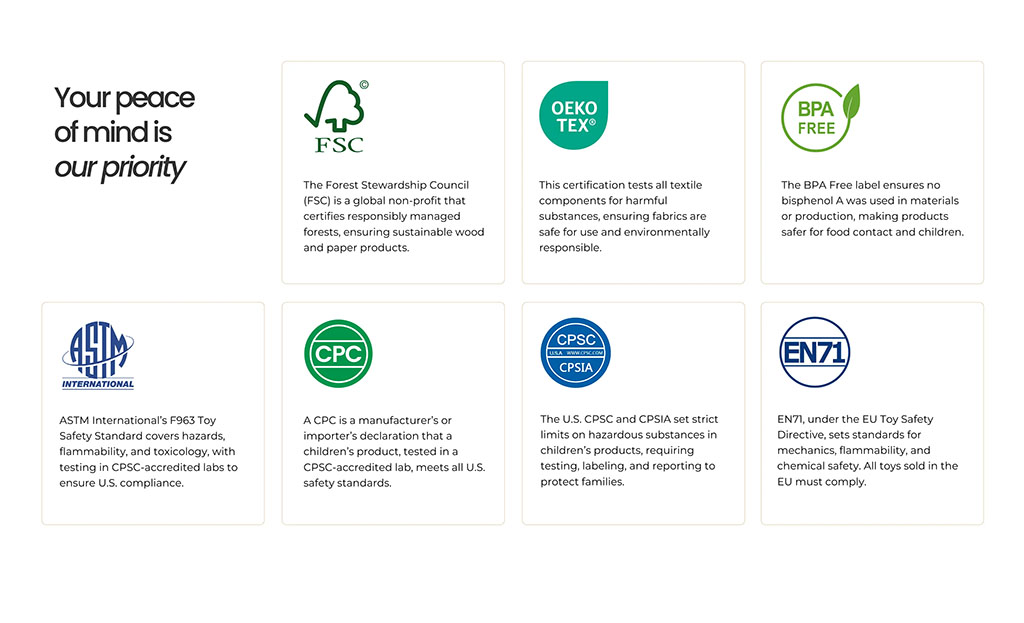
For brands selling plush toys in the US and European markets, compliance is not a secondary consideration — it is a prerequisite. Products that cannot demonstrate compliance with the relevant safety standards cannot legally be sold through major retail channels, cannot be listed on platforms like Amazon without documentation, and expose brands to significant legal and reputational risk if compliance failures occur after market entry.
At Kinwin, compliance is built into our production process from the material sourcing stage — not added as a documentation exercise at the end. We work with certified material suppliers, maintain relationships with accredited testing laboratories, and guide our clients through the specific compliance requirements of their target markets so that every product we produce is ready for market from the moment it ships.
Here is an overview of the key compliance standards our products support:
| Standard / Certification | Market | What It Covers | How We Support It |
|---|---|---|---|
| ASTM F963 | USA | Toy safety — mechanical, physical, and chemical | Certified materials, structural testing, lab referral |
| CPSIA | USA | Chemical safety, tracking labels, lead limits | Compliant materials, CPSIA label application |
| EN71 Parts 1–3 | Europe | Mechanical safety, flammability, chemical safety | Certified materials, seam strength compliance |
| REACH | Europe | Restricted chemical substances | Certified fabric and dye suppliers |
| CE Marking | Europe | Conformity with EU toy safety directive | Documentation and marking support |
| OEKO-TEX Standard 100 | Global | Harmful substance testing in textiles | Available on request for certified fabric options |
How We Handle Compliance for New Clients
When a new client comes to us with a product intended for the US or European market, our first step is to confirm the specific compliance requirements based on the product type, the target retail channel, and the age group the product is intended for. Different channels and age designations carry different compliance obligations, and getting this right at the beginning prevents costly corrections later.
We then confirm that all materials specified for the product are sourced from certified suppliers with current test documentation. For clients who require third-party product testing before market entry — which is the case for most US and EU retail and e-commerce channels — we connect them with our accredited laboratory partners and guide them through the testing process.
Compliance Documentation We Can Provide
For every order, we are able to provide material test reports from our certified fabric and filling suppliers, factory audit documentation, and CPSIA-compliant tracking label application. For clients who conduct third-party product testing, we prepare the product samples and coordinate with the testing laboratory to ensure the process runs efficiently.
This level of compliance support is not standard across all plush toy manufacturers — it is a capability that reflects years of experience working with brands in regulated markets and understanding exactly what is required to get a product to market without compliance delays.
How Do We Handle Communication, Timelines, and Transparency Throughout Production?
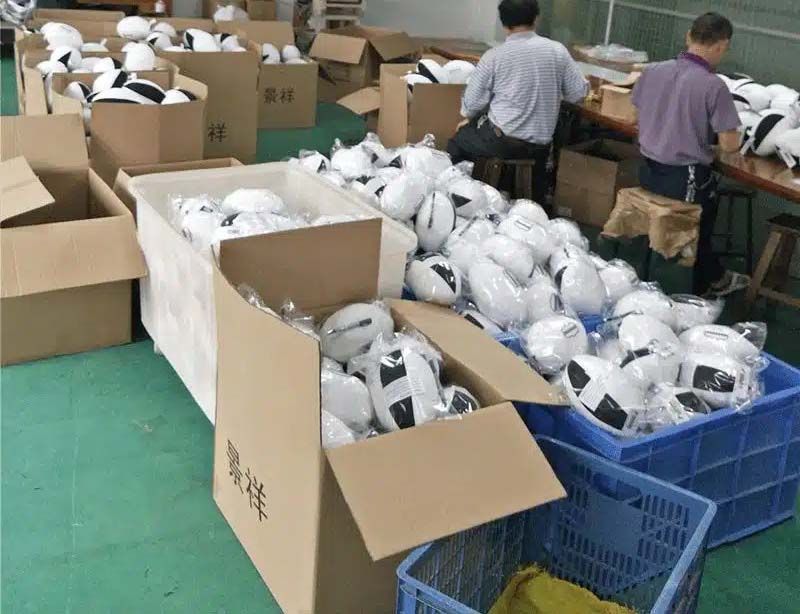
Communication quality is one of the most commonly cited reasons buyers leave one factory for another. A factory that communicates well during the sales process but becomes slow, vague, or reactive once an order is confirmed is one of the most frustrating experiences in international sourcing — and one of the most damaging to a buyer’s ability to plan and manage their business effectively.
At Kinwin, we treat communication as a core component of our service — not a secondary function that happens when problems arise. Our approach to communication is structured, proactive, and consistent from the first inquiry through final delivery.
Here is how we manage communication and transparency across the production lifecycle:
| Production Stage | Our Communication Standard | What Clients Receive |
|---|---|---|
| Inquiry and quotation | Response within 24 hours | Detailed, itemized quotation with timeline |
| Sampling | Proactive updates at each stage | Sample dispatch notification with photos |
| Order confirmation | Production schedule confirmed in writing | Stage-by-stage timeline with milestone dates |
| Material receiving | IQC results communicated | Material approval request if any deviation found |
| Production start | First-off results shared | Photos of first-off units with comparison notes |
| Mid-production | Progress update at 50% completion | Photo update with production status |
| Final inspection | FQC report shared before balance request | Full inspection report with photos |
| Shipment | Tracking information provided immediately | Shipping documents and tracking details |
Proactive Problem Communication
The test of a manufacturer’s communication culture is not how they communicate when everything is going well — it is how they communicate when something goes wrong. At Kinwin, our standard is to communicate any production issue or risk proactively — before it becomes a problem that the client discovers independently — and to present a proposed solution alongside the notification rather than simply reporting a problem without a path forward.
This approach requires a culture of accountability and transparency that we have deliberately built over many years. It is the difference between a manufacturing partner who helps you manage your business effectively and one who forces you to manage around their unpredictability.
Timeline Management and Realistic Commitments
We are committed to providing realistic production timelines rather than optimistic ones designed to win business. When a buyer asks for a shorter lead time than our production process can reliably support, we communicate this honestly and work with the client to find alternatives — whether that means adjusting the order start date, expediting specific stages, or restructuring the project — rather than confirming an unrealistic timeline and delivering late.
This honesty about timelines is sometimes less comfortable in the short term than telling a buyer what they want to hear. But it consistently produces better outcomes — fewer delays, more reliable planning, and a sourcing relationship built on realistic expectations rather than repeated disappointment.
What Do Our Clients Actually Experience When They Work With Kinwin?
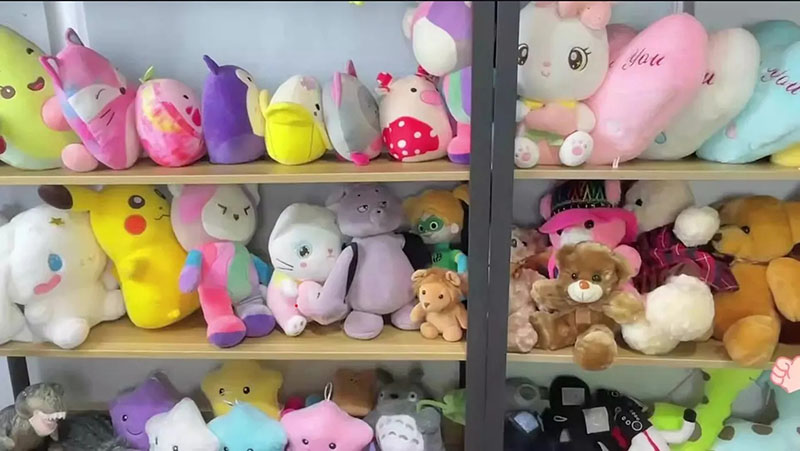
The most honest answer to why brands trust Kinwin comes not from what we say about ourselves, but from what our clients experience when they work with us. The patterns that appear consistently across our client relationships reflect the values and operational standards that define how we work.
Clients who work with Kinwin consistently describe three core experiences: products that match approved samples accurately in bulk production, communication that keeps them informed and in control throughout the production process, and a development partnership that helps them build better products than they would have arrived at working alone. These are not aspirational claims — they are the outcomes that our operational systems are specifically designed to produce.
Here is what the Kinwin client experience looks like across key touchpoints:
| Client Touchpoint | What Clients Experience | Underlying Operational Reason |
|---|---|---|
| First inquiry | Fast, detailed, professional response | Dedicated client-facing team with manufacturing knowledge |
| Design brief review | Practical feedback, not just acceptance | Development team assesses feasibility before sampling |
| First sample | High accuracy to brief, clear deviation notes | Experienced dedicated sampling team |
| Revision rounds | Efficient, targeted corrections | Structured revision process with change tracking |
| Bulk production | Consistent match to approved sample | Tech pack control, counter sample, three-stage QC |
| Problem handling | Proactive communication, solution-first approach | Accountability culture, independent QC reporting |
| Documentation | Complete, organized, available on request | Systematic record keeping across all production stages |
| Long-term reorders | Faster cycles, improving performance | Growing institutional knowledge of client’s standards |
What Clients Tell Us After Their First Order
The feedback we receive most consistently after a client’s first production run with Kinwin falls into two categories. The first is positive surprise at how closely the bulk production matches the approved sample — a result that many clients have not experienced with previous suppliers. The second is appreciation for the communication throughout the production process — the proactive updates, the honest reporting of any minor issues, and the overall sense of being kept informed rather than kept waiting.
These outcomes are not accidental. They are the direct result of the systems, training, and culture that we have built into our operation specifically to deliver them.
Building on the First Order
For most of our clients, the first order is the beginning of a relationship that grows over time. As we build deeper knowledge of a client’s products and standards, our performance on subsequent orders consistently improves — faster sampling, fewer revision rounds, more accurate first-off production, and better anticipation of the client’s requirements before they are expressed.
This improvement over time is one of the most tangible commercial benefits of a stable, long-term manufacturing partnership — and it is one of the strongest reasons our clients stay with us across many seasons and many product lines.
How Can Your Brand Start a Partnership With Kinwin?

Starting a partnership with Kinwin is a straightforward process designed to move efficiently from initial conversation to production-ready sample while giving both parties the information needed to confirm that the partnership is a strong fit.
Brands can begin a partnership with Kinwin by reaching out with their product concept, target market, and approximate order requirements. From this starting point, our team will provide a detailed response covering feasibility, indicative pricing, timeline, and recommended next steps — giving you everything you need to make an informed decision about whether to move forward to sampling.
Here is what the Kinwin onboarding process looks like:
| Step | What Happens | Timeframe |
|---|---|---|
| Initial inquiry | You share product concept, market, and volume needs | Day 1 |
| Response and assessment | We provide feasibility feedback, indicative pricing, and timeline | Within 24 hours |
| Brief submission | You provide full design brief and specifications | As ready |
| Quotation confirmation | We confirm detailed sample and production pricing | 1–2 days after brief |
| Sampling begins | Pattern making and material sourcing start | After sample fee confirmed |
| First sample delivery | Sample shipped to your location | 7–14 days from brief |
| Sample review and revision | You evaluate, we revise efficiently | 1–3 rounds typical |
| Production order confirmation | You confirm bulk order and production begins | After sample approval |
What to Prepare for Your First Conversation
The more context you can share in your initial inquiry, the more specific and useful our first response will be. Helpful information to include:
Your product concept or reference images, your target market and retail channel, your approximate order quantity, your timeline requirements, and any specific compliance or certification requirements for your market.
You do not need a complete tech pack to start the conversation — our team can help you develop the brief from a concept stage. But the more clearly you can describe what you are trying to build and who you are building it for, the faster we can provide a response that is genuinely useful rather than generic.
A Partnership Built on Mutual Standards
We are selective about the partnerships we enter into — not because we are unwilling to work with new clients, but because we believe that the best outcomes come from relationships where both parties are aligned on quality standards, communication expectations, and long-term intent from the beginning.
If you are a brand, retailer, or e-commerce business looking for a plush toy manufacturing partner who will take your standards as seriously as you do — and who will invest in understanding your business deeply enough to help it grow — we would be genuinely glad to start that conversation.
Reach out to our team at [email protected] or visit us at kinwintoys.com to begin.
Conclusion
Trust in a manufacturing partnership is earned through consistent performance across every order, honest communication when challenges arise, and the kind of deep product knowledge that only comes from a supplier who treats your business as their own responsibility.
At Kinwin, we have built our reputation on exactly these standards — rigorous quality control, certified compliance, transparent communication, and a development process that consistently delivers products our clients are proud to sell. Our clients trust us not because of what we say, but because of what they experience every time they work with us.
If you are looking for a plush toy manufacturing partner who will meet your standards, protect your brand, and grow with your business, Kinwin is ready to demonstrate exactly why brands choose us — and why they stay.
FAQ
Q1: What is the minimum order quantity for a first production run with Kinwin?
Our standard minimum order quantity for custom plush products is typically 300 to 500 units per design, depending on product complexity, material requirements, and customization scope. For brands launching a new product and wanting to test the market before scaling, we are open to discussing flexible arrangements — particularly when the client has a clear growth plan and long-term partnership intent. We recommend discussing your specific volume requirements directly with our team so we can propose the most practical approach for your situation.
Q2: How long does the full development process take from initial brief to first bulk shipment?
For a standard custom plush toy with moderate complexity, the typical timeline from approved design brief to first bulk shipment is 45 to 75 days. This covers pattern making and material sourcing (7 to 14 days), sampling and revision rounds (14 to 28 days depending on revision count), counter sample confirmation (5 to 7 days), mass production (20 to 35 days depending on order volume), and final QC and shipment preparation (3 to 5 days). Complex products with multiple components, custom tooling, or specialized materials may require a longer timeline, which we confirm during the initial feasibility assessment.
Q3: Can Kinwin help develop a product concept from scratch, or do I need to provide a finished design?
We support product development at every stage, including concept-stage briefs where the design direction is not yet finalized. Our development team can work from reference images, mood boards, or rough sketches to develop technical briefs and initial pattern concepts that translate a creative direction into a producible design. For brands without in-house design capability, this ODM support is one of the most practical ways to bring a product concept to market efficiently without the cost of hiring external designers.
Q4: Does Kinwin produce weighted plush toys, and what filling materials do you use for weighted products?
Yes — weighted plush toys are part of our production capability. We produce weighted plush products using fine glass beads as the primary weight material, combined with PP cotton for shape and softness. Our weighted product construction uses multi-compartment inner bags to ensure even weight distribution and prevent bead shifting during use. All materials used in our weighted products are available with certification documentation for US and EU market compliance. We recommend discussing your specific weight range and usage scenario requirements with our team during the development stage so we can recommend the most appropriate construction approach for your product.
Q5: How does Kinwin handle situations where a bulk order does not fully meet the agreed quality standard?
Our approach to quality non-conformance starts with prevention — our three-stage QC system, counter sample process, and independent final inspection are designed to catch and resolve issues before they affect the full production batch. In the event that a quality issue is identified in final inspection or upon receipt of goods, we follow a documented non-conformance process: the issue is assessed against the agreed specification, root cause is identified, and a resolution is proposed — which may include rework of affected units, replacement production for the non-conforming portion, or a financial adjustment depending on the nature and scale of the issue. We do not treat quality disputes as adversarial situations — we treat them as problems to be solved, and our goal is always to reach a resolution that protects the client’s commercial interests and restores confidence in the production standard.