When buyers talk with me, they often ask: “Is there any real difference between a plushie and a stuffed animal, or is it just a new word?”
From a factory view, both are soft toys made with fabric and stuffing. But in real usage, these two words carry different feelings, audiences, and expectations. “Stuffed animal” sounds classic and neutral. “Plushie” sounds cute, fan-driven, and more emotional. If you sell soft toys online or offline, this difference is important.
I’m Amanda from Kinwin in China. My factory produces plush toys and dolls for brands, retailers, e-commerce sellers, and promotional companies around the world. In this guide, I will explain how the two terms differ today, how materials and design may change by target user, how online communities use the word “plushie,” and how you can choose the right wording for SEO, retail, and packaging.
What does “plushie” mean compared with “stuffed animal” today?
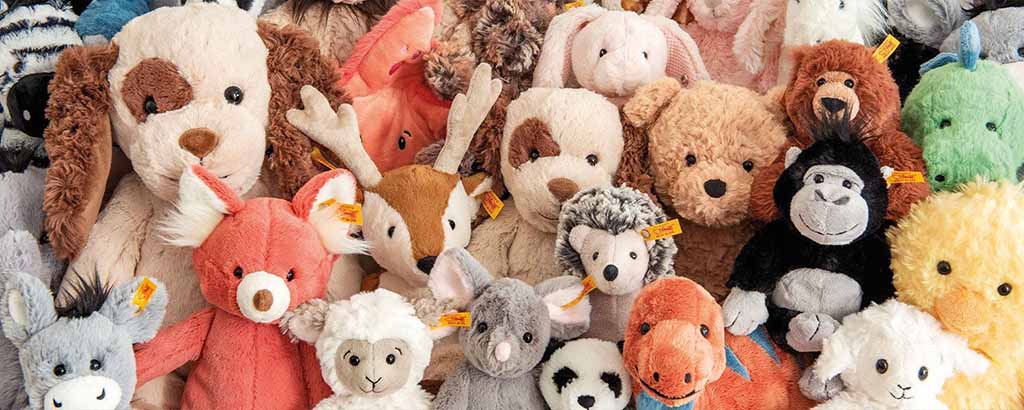
If we look only at the product, a plushie and a stuffed animal can be exactly the same thing: a soft toy with fabric on the outside and stuffing inside. The difference is language and tone.
“Stuffed animal” is the older, traditional term. It sounds:
- Neutral and descriptive
- Clear for parents and general shoppers
- Suitable for any age, but focused on children
- Good for formal use: safety documents, customs, purchase orders
When someone says “stuffed animal,” they usually mean an animal-shaped toy. Most people picture a teddy bear, dog, cat, or dinosaur made for kids. The phrase focuses on the function (a toy with stuffing) more than the emotional side.
“Plushie” is newer and more informal. It grew from “plush toy” (plush = the fabric) plus the “-ie” ending that makes English words sound friendly and cute, like “kitty” or “blankie.” Today, “plushie” usually means:
- A soft toy that may be an animal, food, object, or fantasy creature
- A character or companion, not just a toy
- Something that can be for kids or adults
- A product connected to fandom, gaming, anime, or online culture
When someone says “plushie,” they often talk as a fan or collector, not just as a parent. A plushie can be a dragon from a game, a boba tea with a face, a mascot from a VTuber, or a classic bear. The word is flexible and full of emotion.
So from my professional view:
- “Stuffed animal” = safe, clear, traditional term, especially for children’s products.
- “Plushie” = softer, more personal term that fits online communities and character brands.
They point to the same product category, but they send different messages to your customer.
Summary: plushie vs. stuffed animal (language and tone)
| Aspect | “Stuffed animal” | “Plushie” |
|---|---|---|
| Core meaning | Animal-shaped soft toy with stuffing | Any cute soft character toy (not only animals) |
| Tone | Neutral, traditional, descriptive | Cute, emotional, fan-style |
| Main associations | Children, gifts, classic toys | Fandom, collectors, lifestyle, comfort |
| Typical usage | Parents, general shoppers, stores | Teens, young adults, online communities |
| Best used in | Packaging, safety docs, general retail | Social media, fan shops, aesthetic branding |
How do materials and construction differ between plushies and stuffed animals?
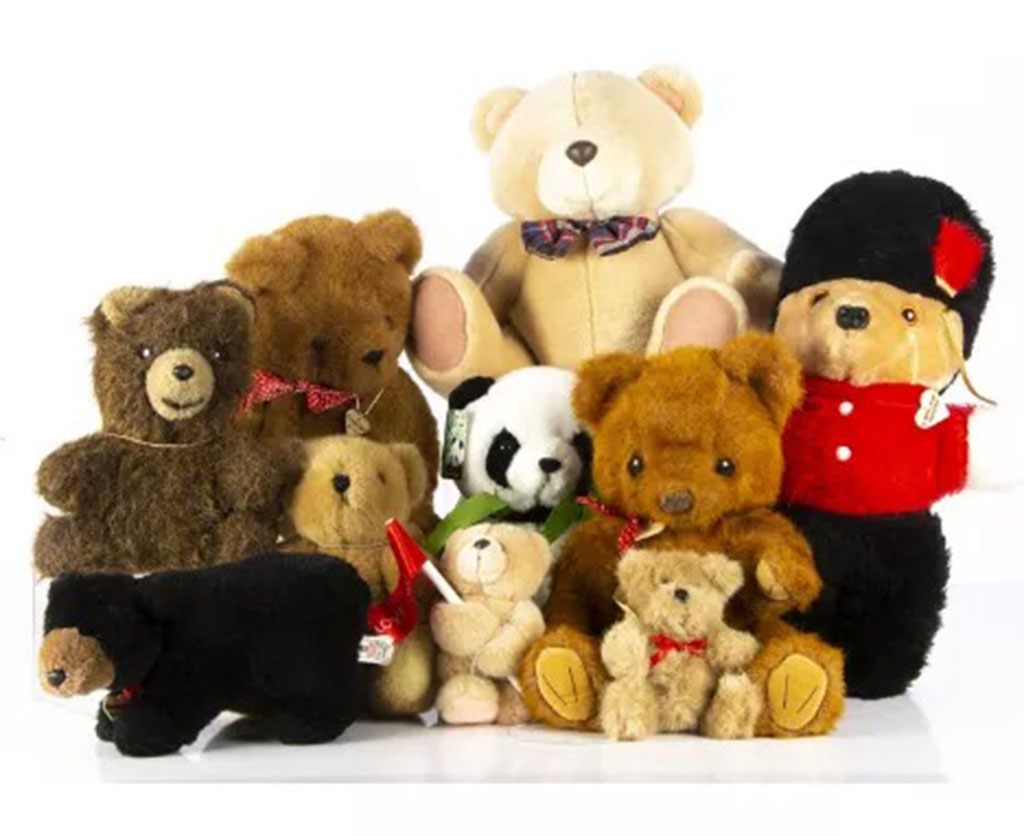
Technically, there is no rule that says, “If you use this fabric, it is a plushie; if you use that fabric, it is a stuffed animal.” Both can be made with the same materials. But in real projects, I do see different patterns.
For traditional stuffed animals, especially in mass retail and gift channels, factories often use:
- Standard short plush or velboa for the shell
- Sometimes fleece for lower-cost lines or clothing parts
- Regular polyester fiberfill inside
- Simple, sturdy construction with safe plastic eyes or embroidery
The goal is: safe, robust, and good value for families. These toys must pass tests, survive rough handling, and sit in a clear price band. They are built with durability and cost control in mind.
For plushies targeted at older fans or collectors, buyers are more likely to request:
- Softer or more premium fabrics such as minky, high-density short plush, or micro-plush
- More precise embroidery for eyes and small details
- Carefully tuned stuffing density (for example, extra soft and floppy, or slightly weighted)
- Sometimes special features like long pile fur, gradient printing, or custom textures
These plushies are designed to feel extra soft in the hand and look perfect on display or in photos. The buyer is less sensitive to a small cost increase and more sensitive to touch, finish, and accuracy.
When we develop samples at Kinwin, I usually see:
- “Stuffed animal” briefs focus on safety, strength, and age grading.
- “Plushie” briefs focus on softness, expression, and vibe.
Again, there is overlap. Many products could be sold under both names. But if you know your audience is a fandom or adult collector group, you will probably invest more in fabric quality, embroidery, and stuffing feel.
Typical material & construction patterns
| Dimension | Classic “stuffed animal” | Trend-led “plushie” |
|---|---|---|
| Shell fabrics | Standard short plush, velboa, fleece | Minky, micro-plush, high-density short plush |
| Stuffing | Regular polyester fiberfill, medium density | Softer fiberfill, cluster fiber, optional weighting |
| Touch / handfeel | Soft but practical, “good enough” for children | Extra-soft, silky, tuned for hugging and display |
| Detailing | Simple embroidery or plastic parts | Detailed embroidery, printed fabric, stylized shapes |
| Main priority | Safety, durability, price | Feel, aesthetics, character accuracy |
How do design style, proportions, and detailing vary between the two?
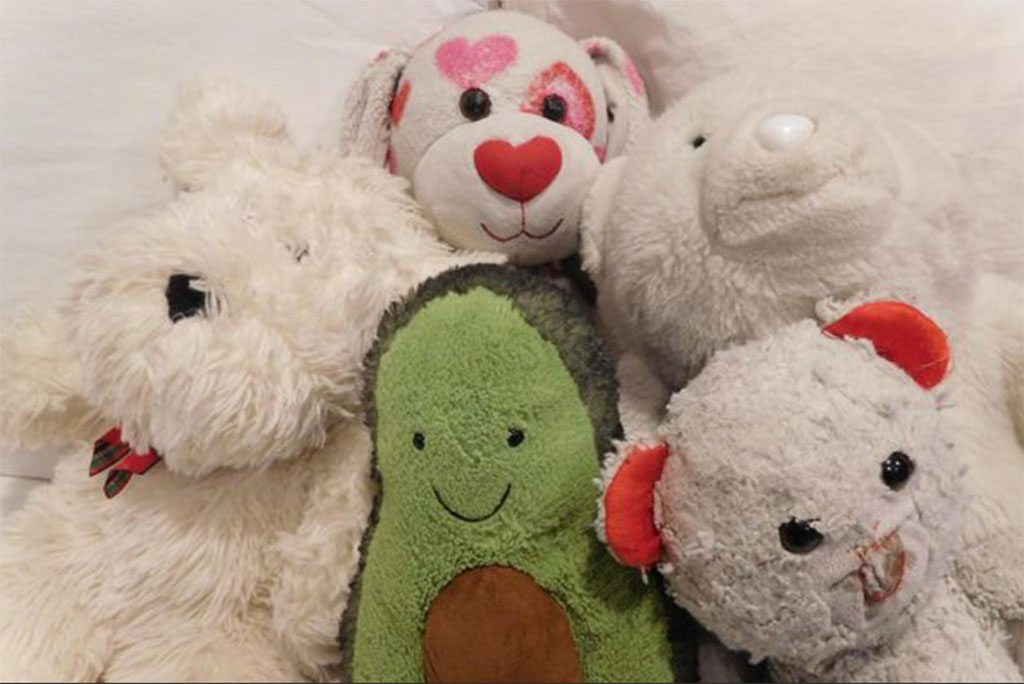
Design style is where the difference becomes very visible.
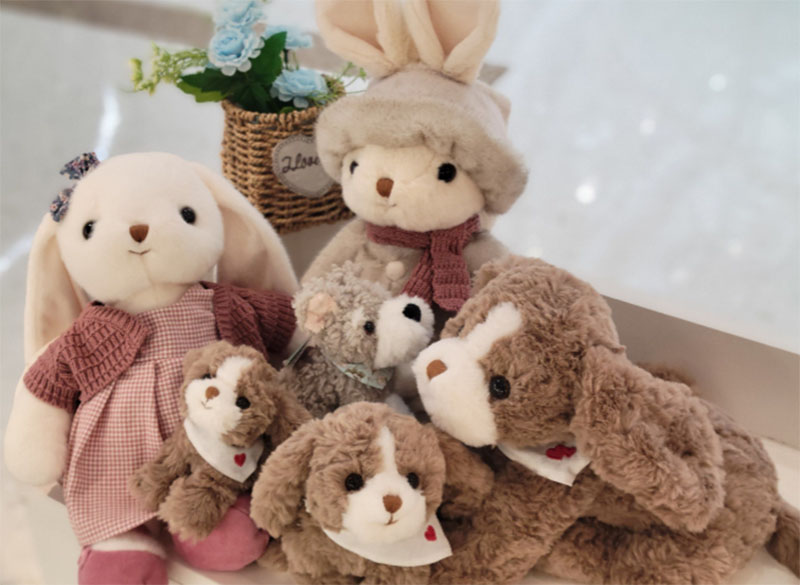
Most stuffed animals follow classic toy design rules:
- They are clearly animals (bears, dogs, cats, bunnies, farm animals, zoo animals).
- Proportions are soft and friendly: round belly, medium-sized head, normal limbs.
- Faces are simple: small eyes, simple nose, maybe a little smile.
- Colors are often natural or soft: browns, grays, pastels, basic prints.
These designs are meant to feel safe and timeless for children. They work well in family stores, supermarkets, gift shops, and general toy sections.
Plushies, especially those aimed at teens and adults, can be more creative and stylized:
- They may be animals, humans, food, objects, or fantasy creatures.
- Proportions are often exaggerated: very big head, tiny body, chubby body, huge eyes, long arms, or long legs.
- Faces can be very expressive: sparkly eyes, anime-style eyes, blushing cheeks, funny mouths, tears, fangs, etc.
- Colors can be bold or aesthetic: pastel gradients, neon accents, themed palettes (cottagecore, galaxy, pastel goth, etc.).
A plushie design often comes from a character sheet or an online avatar. It is not just “a bear.” It is this bear, with this personality.
Detailing also changes:
- Stuffed animals often use simple stitching lines for paws and muzzle.
- Plushies can use many embroidery layers, appliqué, and printed patterns for clothes, eyes, logos, and small symbols.
As a factory, I can usually tell from the design alone who the main user is supposed to be. A simple brown bear with a bow and basic face: that is a stuffed animal for general kids’ retail. A pastel bat with big shiny eyes and tiny wings: that is a plushie for online fans.
Design and detailing differences
| Design element | Stuffed animal style | Plushie style |
|---|---|---|
| Character type | Mostly animals | Animals + food + objects + fantasy characters |
| Proportions | Balanced, natural, rounded | Exaggerated (big head, chubby body, tiny limbs, etc.) |
| Facial expression | Simple, gentle, neutral | Highly expressive, stylized, sometimes dramatic |
| Color palette | Natural tones, simple solids or prints | Pastels, neons, themes, gradients |
| Surface detailing | Few details, minimal embroidery | Rich embroidery, appliqué, prints, small icons |
| Overall impression | Classic children’s toy | Character merch, collectible, aesthetic object |
How do target users and usage scenarios differ for each term?
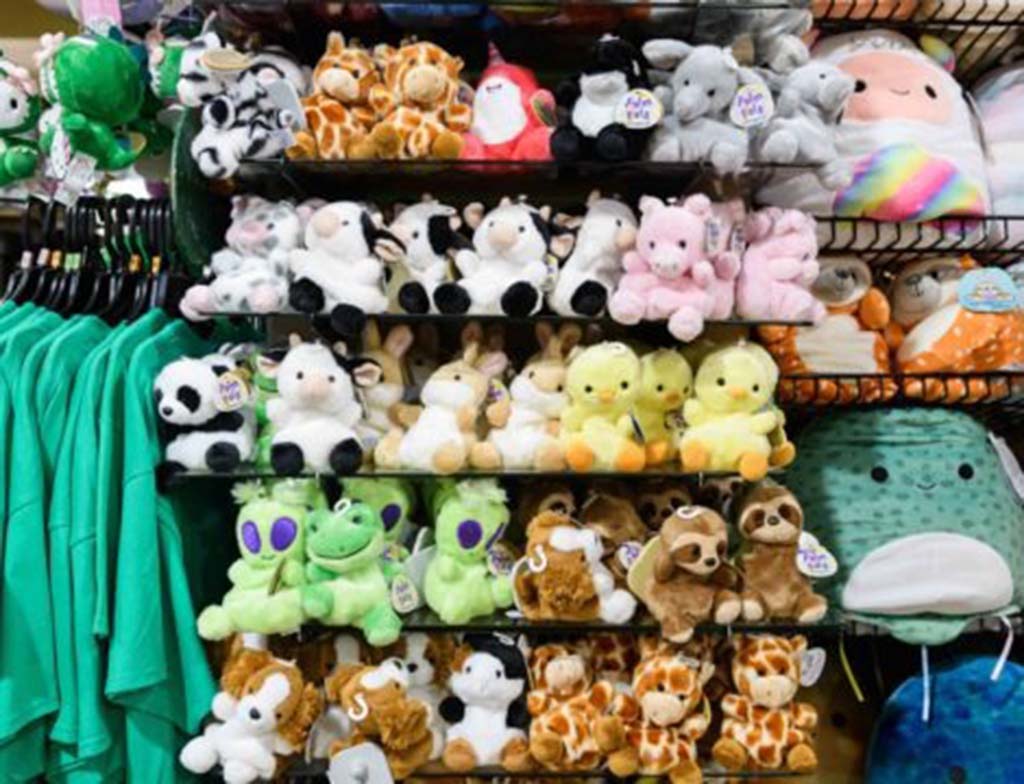
From my conversations with buyers, the target user is one of the easiest ways to separate “stuffed animal” and “plushie.”
Stuffed animals are mainly designed for:
- Babies and young children
- Family gifts (birthdays, holidays, baby showers)
- Occasions where an adult buys for a child
They are used for:
- Playtime, pretend games, sleeping, comfort
- Decoration in kids’ rooms and nurseries
- Traditional gifts—flowers plus a teddy, get-well-soon presents, etc.
The product must be safe, washable, and strong enough for rough handling and chewing. The buying decision is practical: “Is this safe? Is this a good size? Is the price OK?”
Plushies have a wider and older audience:
- Teens and young adults in fandoms, gaming, anime, or social media communities
- Adult collectors who display plush on shelves, desks, beds, and in photos
- Adults who buy plush as comfort items or stress relief, not just as decoration
They are used for:
- Desk or shelf decoration
- Display in photos and videos
- Comfort during work, study, or travel
- Collecting full sets, rare versions, and limited drops
The buying decision is more emotional: “Does this plushie match my favorite character, color scheme, or aesthetic? Will it look good in my space and my photos?”
Of course, the two worlds can overlap. A child may say “my plushie,” and a parent may say “stuffed animal.” But if you think about who you want to talk to, it becomes easier to choose the right term for each product line.
Target users & usage scenarios
| Aspect | Stuffed animal | Plushie |
|---|---|---|
| Main user | Babies, kids, families | Teens, young adults, collectors, plus some kids |
| Main buyer | Parents, grandparents, general gift shoppers | Fans, community members, online shoppers |
| Main use | Play, sleep, comfort, kids’ decor | Display, collection, comfort, aesthetic decor |
| Purchase reason | Classic gift, basic toy, impulse in store | Character love, fandom, mood, matching a theme |
| Care focus | Washability, durability, safety | Appearance, softness, long-term display |
How do online communities and collectors influence the word “plushie”?
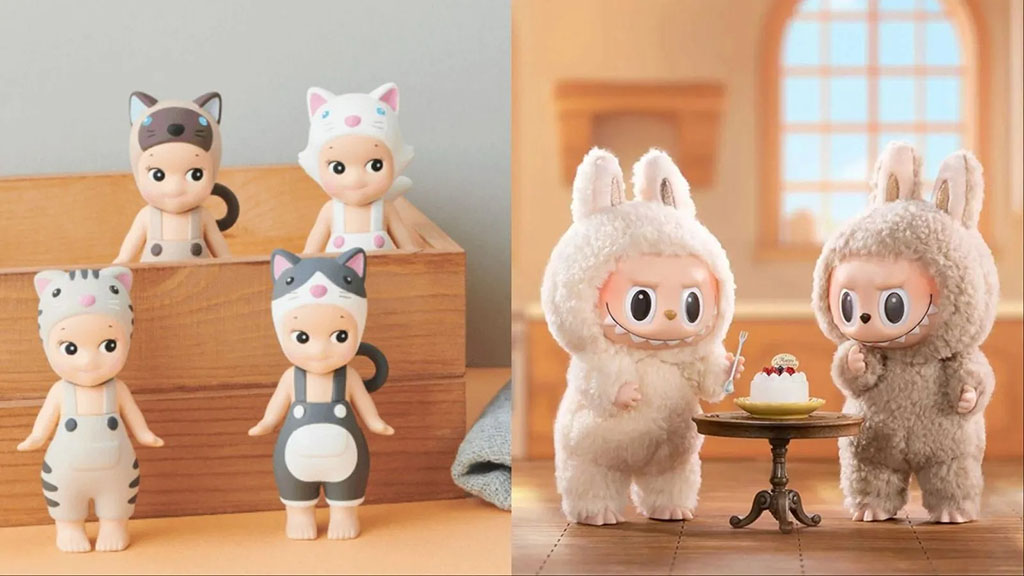
Online communities are the real reason the word “plushie” became so popular. They changed how people talk about soft toys, especially for older age groups.
In anime, gaming, and creator communities, people share:
- “Plushie hauls” and “plushie collection tours”
- Photos of plushies sitting on desks, beds, and shelves
- Travel photos where a plushie is the “companion” in each location
- Unboxing videos of limited plush drops and collabs
The word “plushie” appears naturally in these posts. It sounds friendly next to other casual words like “merch,” “stickers,” “pins,” and “charms.” It does not sound like a technical product label, so it fits well in captions, comments, and hashtags.
Collectors also use the word “plushie” to talk about value:
- “Grail plushie” for a dream item that is hard to find
- “Limited plushie drop” for a timed release
- “Exclusive plushie” for items from events or specific shops
Many of these collectors are adults with stable income. They are willing to pay more for special plushies that match their favorite IP or aesthetic. For brands, this is a very strong audience, but you need to speak in their language—“plushie,” not “stuffed animal.”
Because of this online culture, I often see B2B briefs that say things like:
- “We want a line of pastel plushies for our community.”
- “Our creator needs new plushies for their followers.”
When I read that, I know the project must:
- Use extra-soft fabrics and expressive designs
- Focus on quality of embroidery and finish
- Look good in photos, not only in store shelves
So online communities did not just change the word. They changed the product expectations behind the word.
Online community & collector impact
| Influence area | How “plushie” is used | Effect on products and demand |
|---|---|---|
| Social media posts | “My new plushie!”, “Plushie haul” | Increases visibility and normalizes the term |
| Collector language | “Grail plushie,” “exclusive plushie” | Frames plush as collectible, not just a toy |
| Creator & VTuber merch | “Official plushie” for fan communities | Pushes higher design and quality expectations |
| Adult comfort culture | Plushies as stress-relief or desk companions | Keeps demand strong beyond children’s markets |
| Global fandom sharing | Cross-border buying and trading of plushies | Creates international demand for specific styles |
How should brands label products for SEO, retail, and packaging?
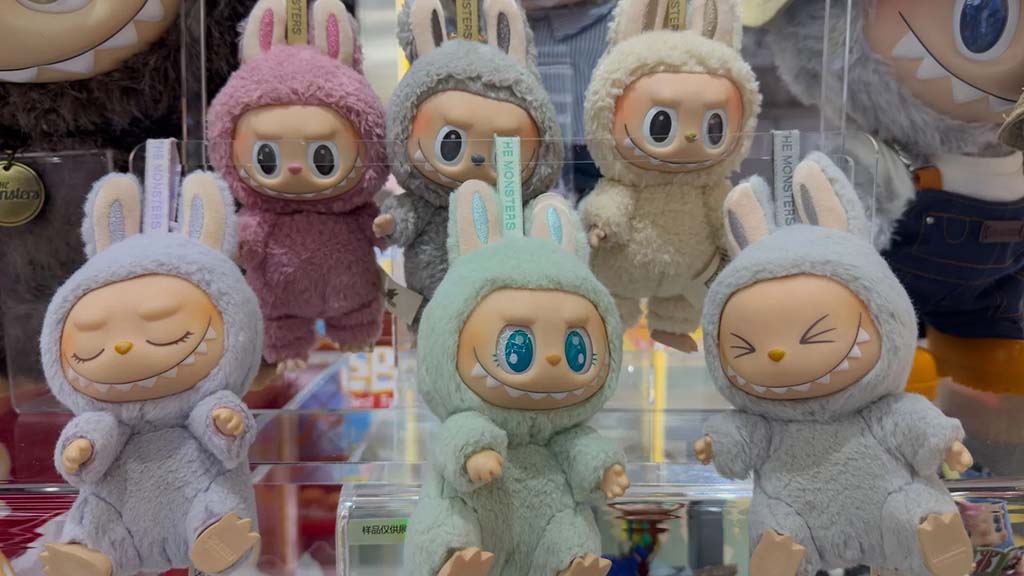
For brands, the big question is: Which word should we print and which word should we use online?
You do not need to choose one term forever. You can use different wording in different layers:
1. For legal, safety, and B2B documents
Use simple, formal, and widely understood terms such as:
- “Soft toy”
- “Plush toy”
- “Stuffed toy”
- “Stuffed animal”
These work well in:
- Test reports
- Customs and shipping papers
- Contracts and purchase orders
- Product spec sheets
Factories, test labs, and customs officers understand these terms clearly.
2. For retail packaging and shelf labels
Think about your main customer in that channel:
- Family supermarkets, toy aisles, classic gift shops
- Use “Soft Toy” or “Stuffed Animal” as the category name.
- Parents and grandparents find these words easy to understand.
- Design-driven, lifestyle, or fandom stores
- You can use “Plush Toy” or even “Plushie Collection” on hangtags or display cards.
- This fits better with character merch and adult buyers.
3. For SEO and online product listings
Here, you want to catch all search terms your buyer might type. A good pattern is to combine words in one title, for example:
- “Kawaii Cat Plushie – Soft Stuffed Animal Toy for Kids & Adults”
- “Pastel Dragon Plushie / Plush Toy – Cute Stuffed Animal Gift”
In the title and description, you can include:
- plushie
- plush toy
- stuffed animal
- soft toy
This helps you reach both parents searching “stuffed animal” and fans searching “plushie.”
4. For social media, community, and email marketing
Here, I recommend leaning into “plushie” if your audience includes teens, young adults, or fandoms. For example:
- “New plushies dropping this Friday!”
- “Show us your desk plushie in the comments.”
This tone sounds natural and builds emotional connection.
From a Kinwin perspective, I often suggest:
- Use “plush toy / soft toy” for packaging, safety, and B2B.
- Use “plushie” for community, influencers, and younger online shoppers.
- Use a mix in SEO so you don’t lose any search traffic.
Labeling strategy for brands
| Context / channel | Best main term(s) | Why it works |
|---|---|---|
| Safety & logistics docs | Soft toy, plush toy, stuffed toy, stuffed animal | Clear, formal, globally understood |
| Mass retail packaging | Soft toy, stuffed animal | Simple for families and casual shoppers |
| Fandom / lifestyle packaging | Plush toy, character plush, plushie collection | Matches character and design focus |
| SEO product titles | Combine “plushie,” “plush toy,” “stuffed animal” | Covers all search habits |
| Social media & community | Plushie, cute plushie, collectible plushie | Warm, personal tone; fits online culture |
Conclusion
From the factory side, a plushie and a stuffed animal can be built in almost the same way. But in real language, they are not the same.
- “Stuffed animal” is your safe, clear, traditional word—great for parents, general retail, and formal documents.
- “Plushie” is your emotional, modern word—perfect for online communities, collectors, and character-driven brands.
When you understand how each term feels to your customer, you can design better products and speak in a way that builds trust and connection.
At Kinwin, I help global buyers design and produce both classic stuffed animals and modern plushies—from fabric and stuffing choices to character style, labeling, and packaging. If you’re planning a new soft toy line or want to reposition your current products for both family and fandom markets, you’re welcome to email me at [email protected] or visit kinwintoys.com. My team and I can support you from idea to shipment so your wording, design, and quality all match the customers you want to reach.