As a manufacturer at Kinwin, I get this question often. Records matter for buzz and tourism, but they also teach us about materials, structure, and safety at extreme scale. Here’s the clear, practical guide—with the key facts verified.
What qualifies as the world’s biggest stuffed animal by official records?
For record bodies, the entry must be a soft textile figure that is stuffed (not an inflatable), measured by independent officials, and fully documented.
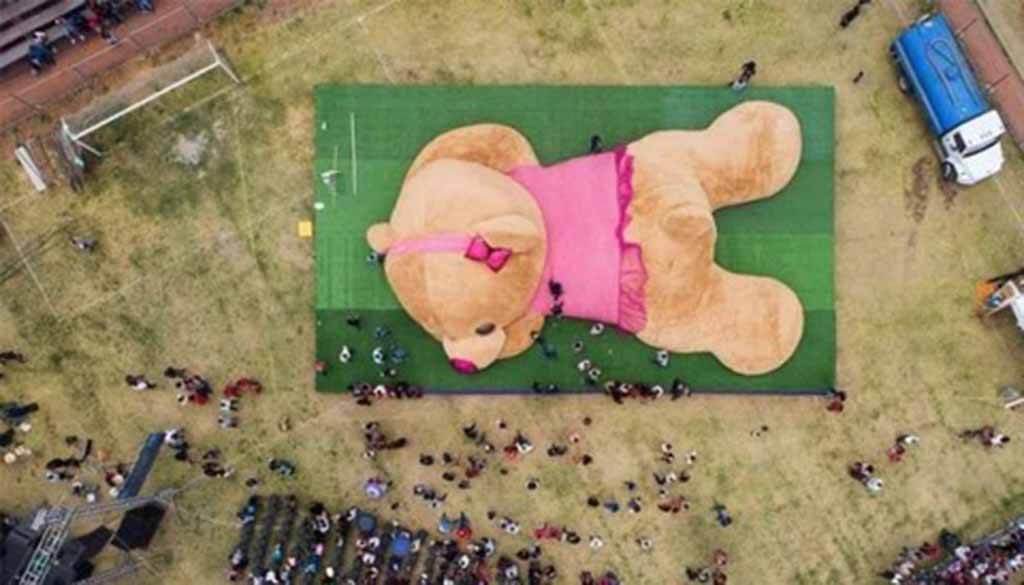
The current Guinness-recognized titleholder is “Xonita,” a reclining teddy bear from Xonacatlán, State of Mexico. She measures 19.41 m (63 ft 8 in) and was certified on 28 April 2019. 健力士世界紀錄
Quick facts (official):
| Item | Record data |
|---|---|
| Record title | Largest teddy bear |
| Holder | Municipality of Xonacatlán (with local partners) |
| Size (length) | 19.41 m / 63 ft 8 in |
| Certification date | 28 April 2019 |
| Location of measurement | Xonacatlán, Mexico (municipal stadium event) 健力士世界紀錄+1 |
How was the largest stuffed animal designed, built, and certified?
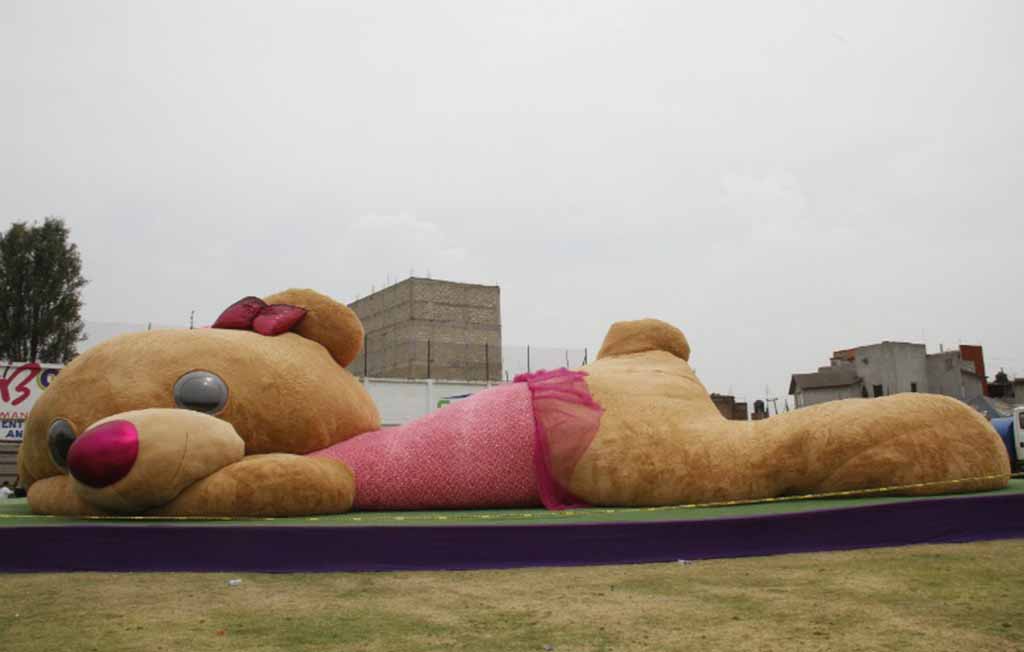
Local plush makers and artisans in Xonacatlán cut, sewed, assembled, and stuffed the bear over several months, then presented her at the Gustavo A. Vicencio municipal football stadium for on-site adjudication. Media reports note that the Guinness adjudicator spent hours measuring before confirming the record. UPI+1
During certification events and coverage, Xonita was described as weighing about four metric tons and built using the same sorts of materials as commercial teddy bears—just at monumental scale. Business Insider+1
Build snapshot
| Step | What the team did |
|---|---|
| Patterning & cutting | Oversized panels with reinforced allowances |
| Sewing & joining | Industrial machines; triple-stitched stress zones |
| Stuffing & shaping | High-volume fiberfill loaded in sections to control drift |
| Public measurement | Stadium setup; ground crew + survey instruments for length checks UPI |
What materials and structural supports are needed for such massive plush creations?
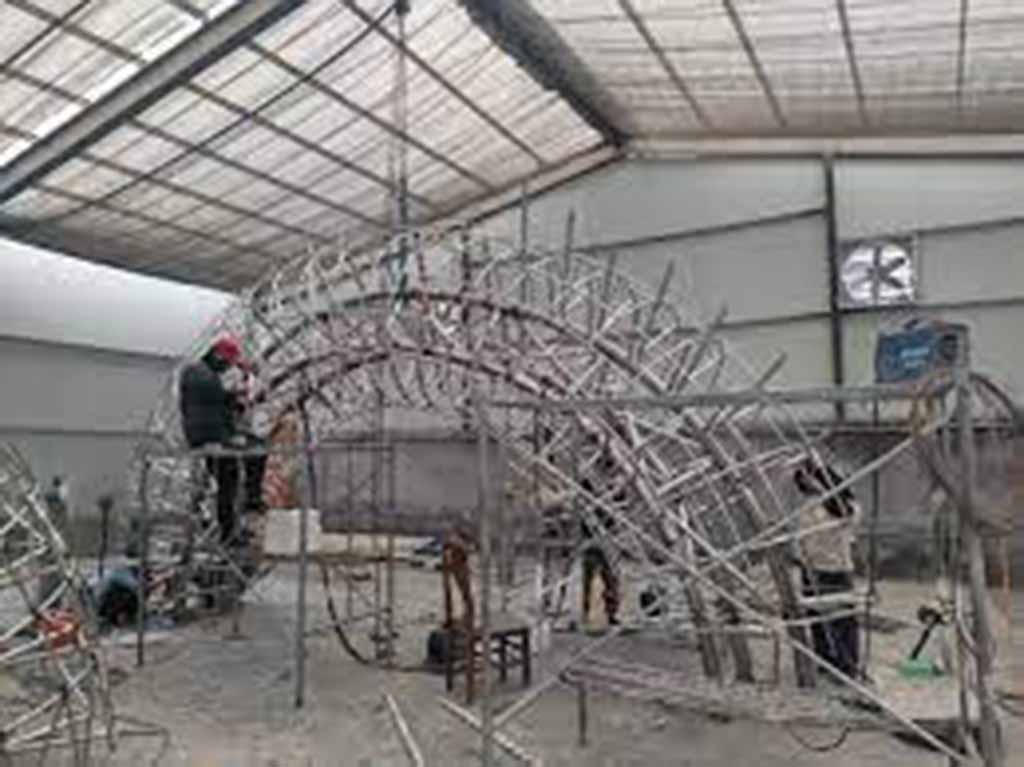
At record scale, a giant plush behaves like soft architecture. The materials stay familiar; the engineering changes.
- Outer shell: short-pile plush such as velboa/minky with reinforced backing and UV-tolerant dyes if displayed outdoors.
- Stuffing system: huge volumes of polyester fiberfill packed in segmented inner bags to prevent pooling; pre-weighed sacks help the team keep symmetry.
- Internal stabilization: hidden webbing belts, mesh liners, or baffled chambers to hold the silhouette; strategic foam blocks can support very broad surfaces (cheeks, belly).
- Seam engineering: wide allowances, heavy polyester thread, triple stitching at neck/limb roots; service zippers for maintenance.
- Surface details: outsized eyes/nose are mounted to reinforced panels; some reports on Xonita mention acrylic/fiberglass elements for durability. México Desconocido
| Component | Practical choice | Purpose |
|---|---|---|
| Shell fabric | Industrial velboa/minky | Soft feel + abrasion resistance |
| Fill | Polyester fiberfill (bagged) | Volume control + evenness |
| Sub-structure | Webbing + mesh baffles | Shape retention |
| Hard details | Acrylic/fiberglass caps (mounted safely) | Weather/handling durability |
Where can visitors see the biggest stuffed animal in the world today?
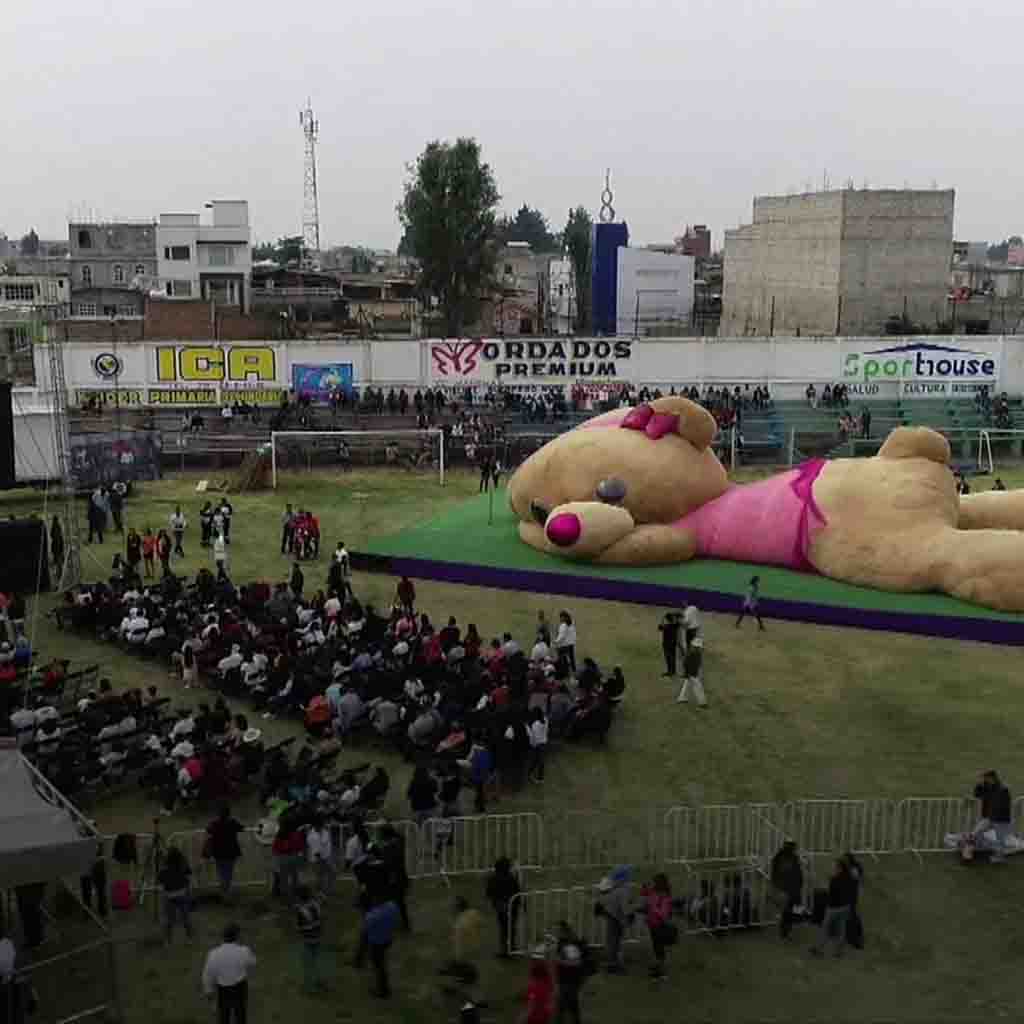
Xonita is associated with Xonacatlán in the State of Mexico. She was measured and shown at the local municipal stadium during the 2019 certification event. Public and press photos from that day show the display crowds and on-field setup. For current viewing arrangements, visitors should check local tourism or municipal channels, as large exhibits are often moved, stored, or shown during special events. UPI+1
How do oversized plush toys influence branding, events, and public engagement?
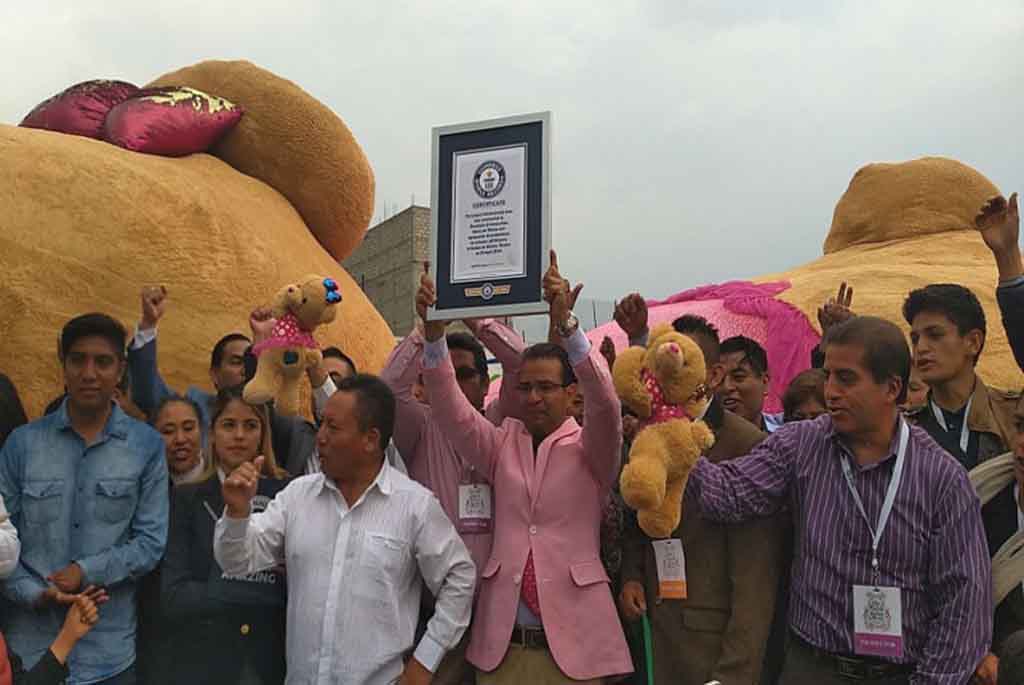
A record-breaking plush is a story engine for places and brands:
- Place branding & tourism: News about Xonita positioned Xonacatlán as a plush-making hub (“ciudad peluche”), attracting attention to local craft and factories. México Desconocido+1
- Event magnet: Stadium or plaza installations create earned media, selfies, and drone shots—great for city days and trade fairs.
- Education & industry pride: Shows off teamwork, pattern scaling, and seam engineering to local students and makers.
- Sponsor value: A permanent or touring giant plush delivers long-tail PR for municipal and private backers.
| Impact | What it delivers |
|---|---|
| Media reach | National/international coverage |
| Visitor flow | Footfall at events and markets |
| Community identity | Public pride in local manufacturing |
| Sales halo | Demand for smaller souvenir plush |
Are there engineering, safety, or preservation challenges with giant stuffed animals?
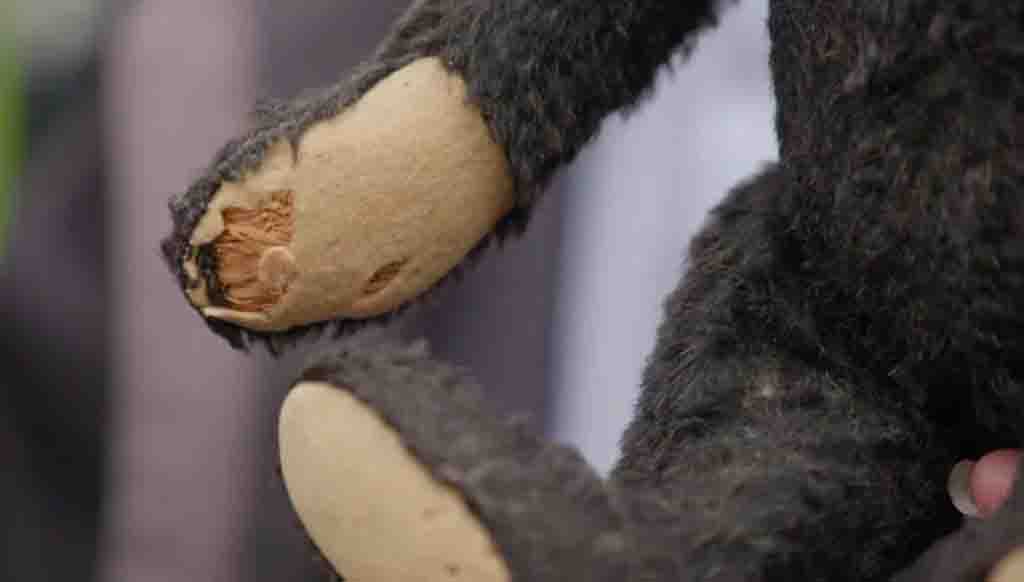
Yes—gravity, weather, and crowds introduce risks. Treat a giant plush like a museum exhibit that lives outdoors.
- Load & creep: Weight makes surfaces settle over time. Use baffles, webbing, and planned re-stuffing cycles.
- Seam stress: Long runs and tight curves need triple stitches and wide allowances; inspect after transport or public events.
- Weathering: Sun and rain degrade pile. Use UV-resistant textiles, removable covers, and indoor storage between shows.
- Hygiene & pests: Schedule vacuuming, spot-cleaning, and inspections; keep a dry environment.
- Public safety: Create no-climb barriers; mount noses/eyes to reinforced panels to avoid detachment; post weight and handling warnings.
- Documentation: Keep a maintenance log, material certificates, and measurement drawings—useful for insurers and future recertification.
Risk → mitigation
| Risk | Mitigation | Interval |
|---|---|---|
| Shape sagging | Segmented fill + access zips | Semi-annual or post-tour |
| Seam failure | Reinforced webbing + triple stitch | Inspect after each move |
| UV fading | UV-tolerant fabric + covers | Rotate display / shade hours |
| Moisture | Drainage mesh + drying fans | After rain/high humidity |
| Crowd damage | Barriers + staff | During events |
Buyer/organizer quick brief (use this to scope a giant plush)
| Topic | What to specify |
|---|---|
| Goal | Record attempt vs. touring attraction |
| Size & pose | Length, height, reclining vs. seated (affects structure) |
| Materials | Plush spec, reinforcement, rPET options |
| Fill plan | Fiber type, bagging scheme, target weights per zone |
| Structure | Webbing layout, baffles, service zips |
| Safety | Barriers, signage, load map, public access rules |
| Testing | Seam pulls, flammability set, weather trials |
| Logistics | Build site, measurement method, storage plan, insurance |
Final word
By official record, Xonita of Xonacatlán is the world’s largest stuffed animal—a 63-foot teddy crafted with the same materials we use every day, just engineered for massive scale. The project shows how plush can power tourism, pride, and global headlines, as long as teams plan for structure, safety, and maintenance. 健力士世界紀錄+1
At Kinwin, I help cities, brands, and agencies turn giant-plush ideas into safe, photogenic builds—pattern scaling, rPET options, documentation, and event-ready reinforcement.