Skip to content
When buyers ask me, “What fabric should we use for plushies?”, they are not only asking about material names. They are asking about softness, safety, durability, and price at the same time.
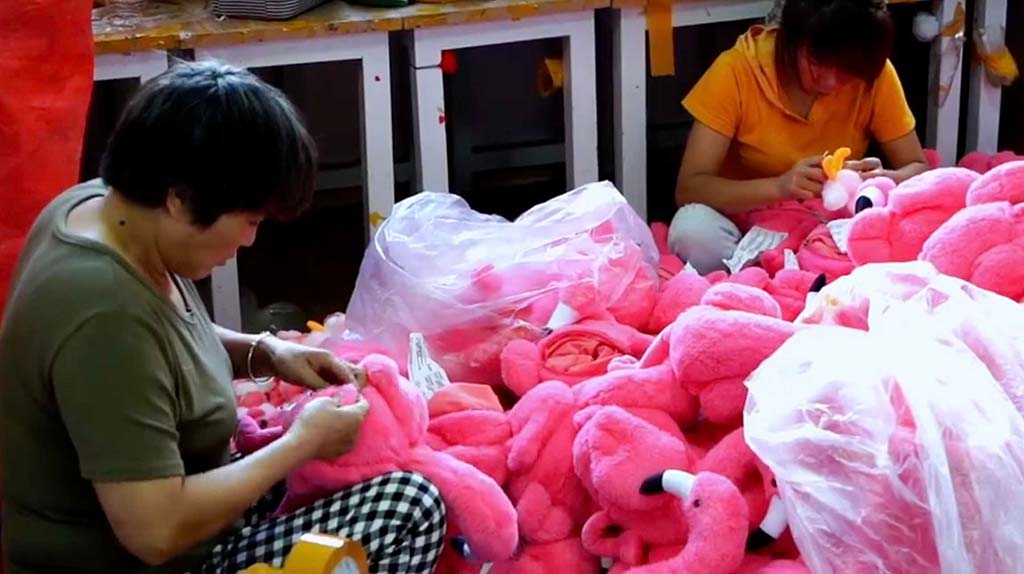
I’m Amanda from Kinwin, a plush toy factory in China. In this guide, I’ll walk you through the main fabric choices for modern plushies, how they perform, and how to match them with different markets such as baby, collectible, and budget lines. My goal is to help you talk to your factory with clear words, not vague “make it softer please.”
What primary fabric categories are used in modern plushies?

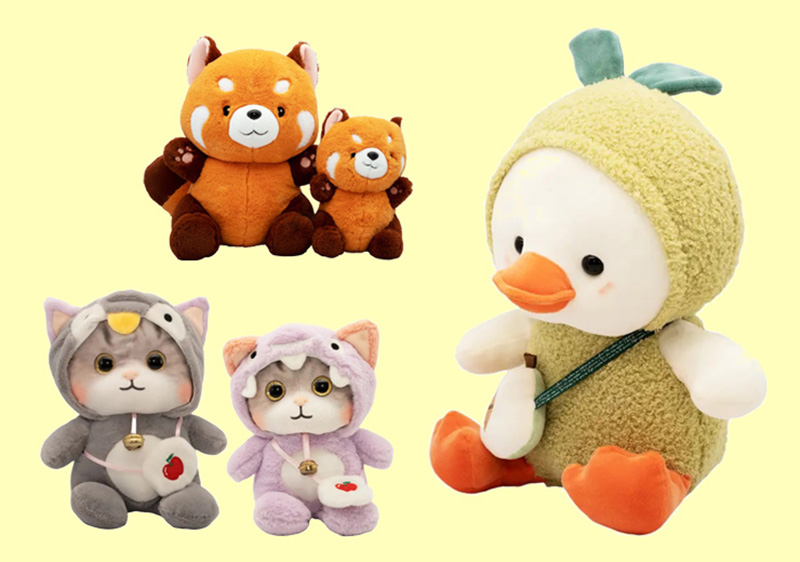
Most modern plushies use knit pile fabrics with a soft “fur” on the surface and a stable backing underneath. The main families you will meet in real projects are:
- Minky / micro-plush
- Short plush / velboa
- Fleece
- Faux fur / long plush
- Flannel / cotton blends
- Microfiber fabrics
Each has its own feel, strength, and best use.
Main fabric categories for plushies
| Fabric category | Simple description | Typical use in plushies | Key strengths |
|---|---|---|---|
| Minky / micro-plush | Very soft knit fabric with short–mid pile | Baby plush, cuddle toys, premium characters | “Buttery” softness, good drape |
| Short plush / velboa | Low–medium pile, smooth surface | Main bodies, faces, clear-detail character plush | Soft but tidy, strong detail definition |
| Fleece | Brushed knit with no real “fur” pile | Budget plush, clothing parts, winter themes | Cozy, cost-effective, easy to sew |
| Faux fur / long plush | High pile (sometimes very long), fur-like | Realistic animals, special editions, trim details | Strong visual impact, fluffy look |
| Flannel / cotton blends | Woven or brushed fabrics, usually flatter surface | Doll bodies, clothing, nostalgic or “natural” styles | Natural look, garment feeling |
| Microfiber / peach skin | Ultra-fine, smooth surface, sometimes almost no pile | Minimalist plush, pillows, character faces | Very smooth touch, modern look |
When you start a project, a good first step is to decide: Is this plush more about cuddling, clean character detail, or strong visual drama? That answer usually points to the right fabric family.
How do minky, velboa, and fleece differ in performance?
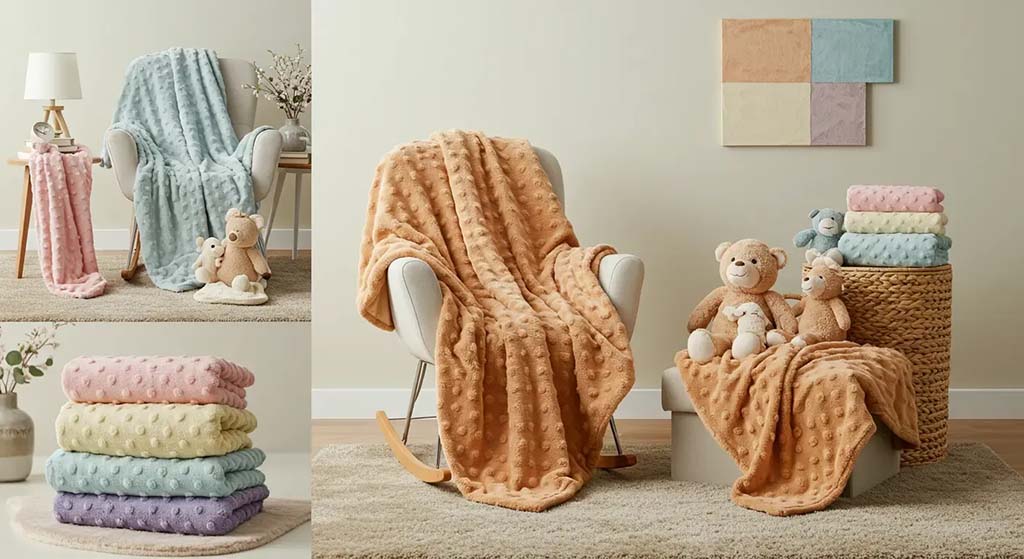
Minky, velboa, and fleece are the three names you will hear most often. They all can be “soft,” but they behave quite differently in real products.
Minky
- Knit base with short to mid pile (around 2–5 mm).
- Very smooth and “buttery” hand-feel.
- Drape is soft; fabric bends and flows easily around stuffing.
- Often used for baby plush, pillows, and comfort toys.
Minky feels very luxurious, but it has more stretch, especially across the width. This means patterns and sewing must be controlled, or sizes can vary.
Velboa (short plush)
- Knit base with low to medium pile (about 1–3 mm).
- Surface is smooth but less “liquid” than minky.
- Shows embroidery and printed details very clearly.
- Perfect for character faces, mascots, and clean silhouettes.
Velboa stretches less than minky, so it is easier to keep consistent shapes in large production runs.
Fleece
- Brushed knit with soft, fuzzy surface.
- No standing “fur” pile like minky or velboa.
- Good for budget plush, clothing on dolls, winter-themed designs.
- Can pill if the quality is low or washing is rough.
Fleece gives a cozy, sweatshirt-like feel. It is helpful when you want a soft product but must watch cost.
Performance comparison – minky vs velboa vs fleece
| Feature | Minky / micro-plush | Velboa / short plush | Fleece |
|---|---|---|---|
| Hand-feel | Silky, very soft, “buttery” | Soft, smooth, slightly firmer | Cozy, brushed, like a soft sweater |
| Surface look | Slight sheen, plush appearance | Clean, neat, low nap | Matte, fabric-like |
| Detail clarity | Good, but pile can blur very fine lines | Very good; best for small embroidery and logos | Medium; not ideal for tiny details |
| Stretch | Higher stretch, needs pattern control | Lower stretch, more stable shapes | Medium stretch |
| Typical price range | Medium to higher | Medium | Lower to medium |
| Best for | Baby plush, cuddle plush, pillows | Characters, mascots, faces, mid-range plushies | Budget lines, clothing parts, casual plush |
If your goal is premium cuddle, I often suggest minky or high-quality short plush. If your goal is clean character expression with stable shapes, velboa is usually the better choice. For cost-sensitive projects, fleece can help keep budget under control.
What fiber compositions optimize plush hand-feel, resilience, and pilling resistance?
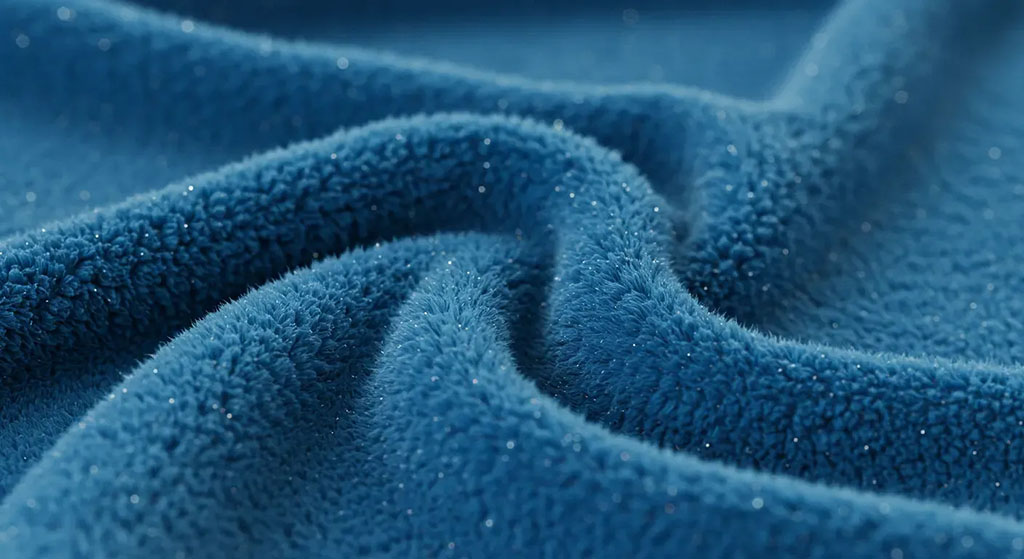
Most plush fabrics for toys use polyester as the main fiber. This is because polyester:
- Is washable and quick-drying
- Keeps color well
- Resists shrinking
- Can be made into very fine filaments for softness
Today, many buyers also look at recycled polyester (rPET) for sustainability, and some consider blends with acrylic, nylon, or cotton for special effects.
Common fiber options
- 100% polyester
- Most common choice.
- Good balance of softness, durability, and cost.
- When the filament is fine and the finishing is good, pilling can be low.
- Recycled polyester (rPET)
- Still polyester, but made from recycled sources (like PET bottles).
- Can feel almost the same as normal polyester if the mill is skilled.
- Supports eco marketing, but still needs normal quality tests.
- Polyester–acrylic blends
- Acrylic can add extra “fur-like” volume.
- Often used in faux fur and long pile fabrics.
- Must be tested carefully for shedding and pilling.
- Polyester–nylon blends
- Nylon can add strength and a slight cool touch or sheen.
- Good for fabrics that need extra abrasion resistance.
- May change how the fabric reacts to heat and dye.
- Cotton or natural blends
- Used more in flannel or woven parts, not main pile for most plushies.
- Give a natural story and garment-style feeling.
- Need more care for shrinking and colorfastness.
For plushies, the key balance is:
- Fine fibers for soft hand-feel
- Enough resilience to keep shape after hugging and washing
- Low pilling to keep surface clean over time
Fiber composition and performance overview
| Fiber / blend | Typical use in plush fabrics | Hand-feel & resilience | Pilling & care notes |
|---|---|---|---|
| 100% polyester | Minky, short plush, velboa, most toy fabrics | Soft, can be very fine, good recovery | Good if finished well; standard washing care |
| Recycled polyester (rPET) | Eco plush fabrics and stuffing | Similar to polyester when quality is high | Same pilling risks; extra focus on supplier |
| Poly–acrylic blends | Faux fur, very fluffy long plush | High loft, fur-like appearance | Watch shedding and pilling |
| Poly–nylon blends | Some short plush and technical fabrics | Stronger, sometimes cooler or shinier | Generally good, but test heat and dyeing |
| Cotton / natural blends | Flannel, woven bodies, clothing parts | Soft, garment-like, natural feeling | Shrinkage and colorfastness need attention |
When you talk to your factory, ask not only “Is it soft?” but also “What is the fiber composition?” and “How does it behave after washing?” This will help avoid surprises later.
How do GSM and pile height affect plush fabric quality?
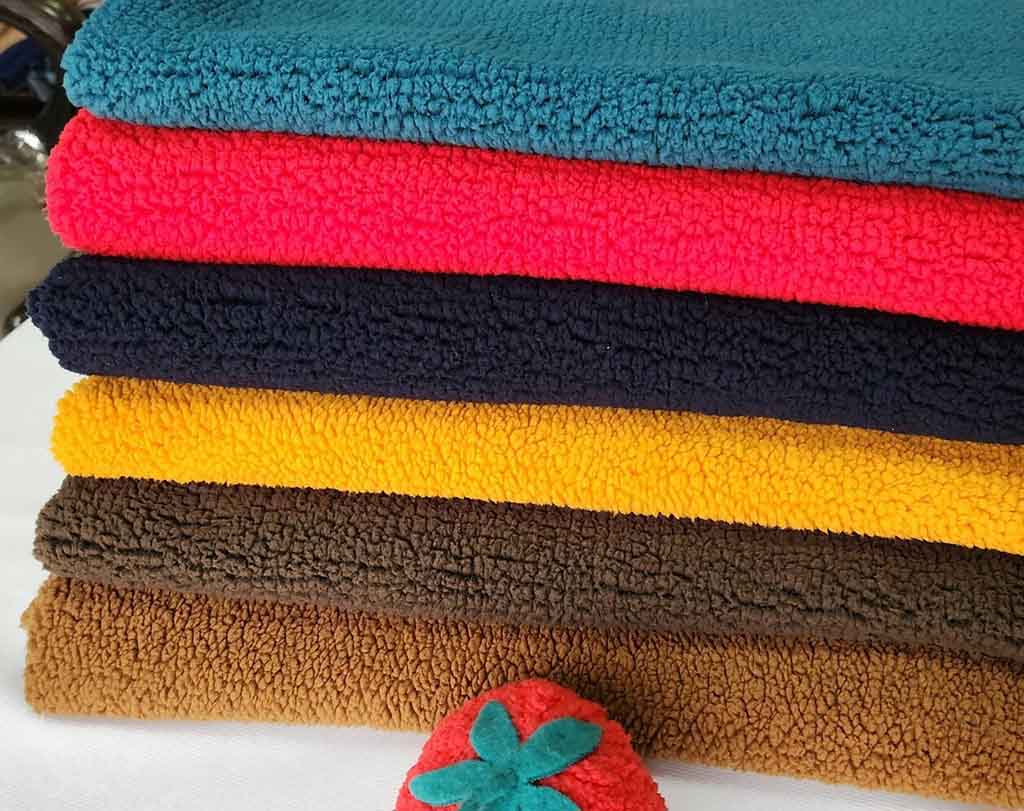
Two technical terms strongly affect how plush feels and performs:
- GSM – grams per square meter, a measure of fabric weight
- Pile height – how long the “fur” fibers are above the base
You do not need to be a textile engineer to use these. You just need to understand the basics.
GSM (fabric weight)
Higher GSM usually means:
- More fibers per area
- Better coverage (less see-through)
- Fuller, more “substantial” hand-feel
Very low GSM fabrics can feel thin and cheap, even if the fibers are soft. For plushies, especially for bodies, we normally stay in medium to higher GSM so the toy does not feel hollow.
Pile height
Pile height changes both touch and appearance:
- 1–2 mm – very short, neat surface; great for detail
- 2–4 mm – common range for soft, everyday plushies
- 5–10 mm – more fluffy, deeper hand-feel
- 10 mm+ – long pile / faux fur; dramatic and very fluffy
Shorter pile with fine fibers can still be soft, but will never look as “cloudy” as a long pile. Long piles look amazing but can hide details and need more care to avoid matting and shedding.
The best range for most character plush bodies is usually 2–4 mm pile, with a medium GSM and good fiber quality.
GSM & pile height – effect on plush quality
| Parameter | Lower values (thin / short) | Medium values (balanced) | Higher values (thick / long) |
|---|---|---|---|
| GSM (weight) | Light, may feel thin or weak | Feels stable, covers stuffing well | Heavy, warmer, can feel too stiff if overdone |
| Pile height | 1–2 mm: very neat, good for small details | 2–4 mm: soft, plush look, still clear details | 5–10 mm+: deep fluff, may hide seams and small details |
| Overall feel | Clean but may feel “flat” if GSM is also low | Soft, complete, good for most plush bodies | Very fluffy, more costume-like, needs more care |
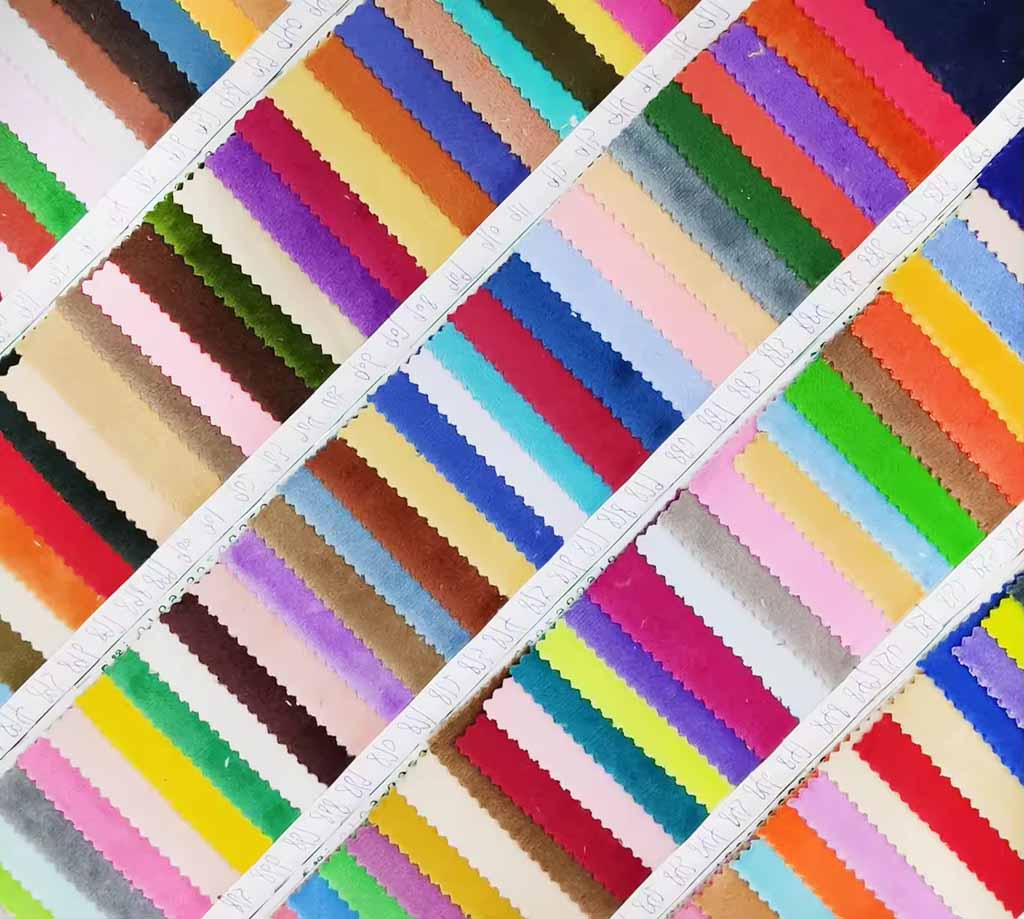
When I help buyers compare fabric swatches, I always ask the mill to write GSM and pile height on each card. This makes it much easier to repeat the same quality later or to ask, “Can we go 20 GSM heavier?” instead of just “a bit thicker.”
What safety and compliance standards govern fabric selection for plushies?
No matter how soft or beautiful a fabric is, it is not acceptable for plushies if it cannot meet safety and compliance needs in your target markets.
I cannot give legal advice, but I can share typical points we look at as a factory that exports mainly to the USA, Europe, Japan, South Korea, and the Middle East.
Key safety points for fabrics
- Mechanical safety
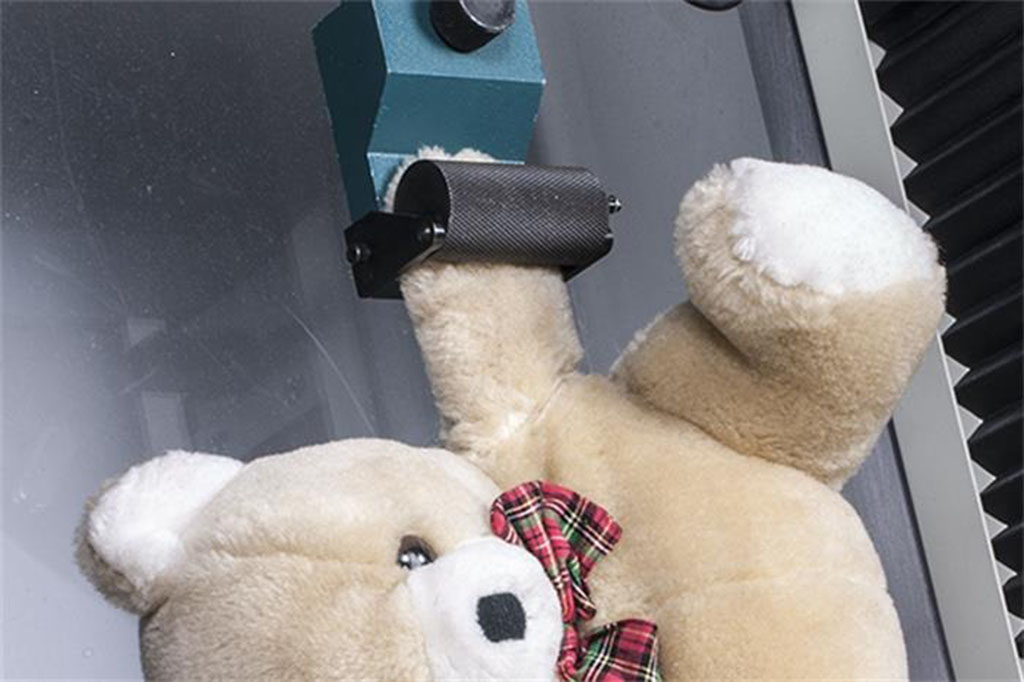
- Fabric must be strong enough so seams do not tear easily.
- Pile and backing should not rip with normal play and pull tests.
- No sharp fibers or hard inclusions.
- Chemical safety
- Fabrics must be free from harmful levels of heavy metals and restricted chemicals.
- Dyes and finishes must be suitable for children’s products in your market.
- We normally use toy-grade fabrics and work with third-party labs for tests.
- Flammability behavior
- Fabric should not burn too quickly or produce extreme flaming droplets.
- Different regions have different test methods, so your lab and factory must match the right standard for your market.
- Colorfastness and bleeding
- Colors should not bleed badly when wet or when rubbed.
- This is important for both safety and customer satisfaction.
- Lint and shedding
- Short-pile toy plush is designed to keep fiber shedding low.
- Very long or cheap fur fabrics may shed more, which is a concern for babies and small children.
From a process view, good factories:
- Choose reliable fabric suppliers who understand toy requirements.
- Keep fabric lots traceable.
- Test both materials and finished toys with third-party labs when needed.
Safety focus for plush fabrics
| Safety aspect | What we check in fabrics | Why it matters for plushies |
|---|---|---|
| Strength | Tear and seam performance | Prevents holes and exposed stuffing |
| Chemical content | Meets local toy chemical limits | Protects children from harmful substances |
| Flammability | Acceptable burning behavior for toy use | Reduces fire-related risks |
| Colorfastness | No strong bleeding in saliva, sweat, or washing | Keeps product clean and safe to suck or chew |
| Lint / shedding | Low loose fibers, especially for baby products | Reduces inhalation and ingestion concerns |
When you brief your factory, it is good to mention your main markets (for example “USA + EU”) so they plan testing and fabric sourcing with the correct standards in mind.
How should brands choose fabrics for baby, collectible, and budget plushies?
Different plush markets need different fabric strategies. I usually see three big groups in B2B work:
- Baby / infant plush
- Collectible / fandom / adult plush
- Budget / promotional plush
Each group has its own priorities.
1. Baby / infant plush
Main goals: safety, softness, washability
- Prefer short to mid pile minky, high-quality short plush, or fine micro-plush.
- Choose fabrics with low lint and good lab test history.
- Avoid very long fibers that may shed.
- Use gentle, stable colors and calm patterns.
For baby projects, I suggest spending a bit more on fabric quality. Parents care strongly about touch and safety.
2. Collectible / fandom / adult plush
Main goals: appearance, character accuracy, special feel
- Minky and high-density short plush work very well for faces and bodies.
- Faux fur and long plush can be used for hair, tails, or special effects.
- Fabric choices should follow the character design and brand style.
- Buyers tolerate higher price if the plush feels special and looks “exactly right.”
Here, you can play more with pile height, textures, and printing, as long as safety and quality are controlled.
3. Budget / promotional plush
Main goals: cost control, basic softness, strong construction
- Fleece, simple short plush, or mid-range velboa are common choices.
- GSM can be slightly lower, but not so low that the plush feels empty.
- Colors and patterns are usually simple.
- The plush still needs to pass safety tests, even if it is a “free gift.”
For this group, I help buyers find “entry-level” fabrics that are safe and pleasant, even if they are not ultra-luxury.
Fabric choice by plush market segment
| Market segment | Main priority | Recommended fabrics | Notes |
|---|---|---|---|
| Baby / infant plush | Safety, softness, washability | Minky, high-quality short plush, micro-plush | Focus on low lint and strong lab test history |
| Collectible / fandom plush | Appearance, detail, special textures | Minky, dense short plush, faux fur, specialty | Match IP style; buyers accept higher material cost |
| Budget / promo plush | Cost + basic comfort + durability | Fleece, mid-range short plush, simple velboa | Keep GSM reasonable, never sacrifice safety |
When you brief your factory, share:
- Who the end user is
- Where the plush will be sold (market and channels)
- Your target price band
This lets us suggest fabrics that support both your brand promise and your margin.
Conclusion
The fabric you choose for a plushie decides much more than just how it feels on day one. It controls softness, durability, safety, price, and even how your brand is perceived in the market.
If you focus on a clear target—baby, collectible, or budget—and talk with your factory about fabric family, fiber composition, GSM, pile height, and safety needs, you can avoid blind trials and move faster to reliable, repeatable quality.
At Kinwin, my team and I help global buyers match the right fabrics with the right plush projects—from minky baby lines to high-detail fandom plush and value-focused promotions. If you want to review fabric options for your next range or adjust an existing line, you’re welcome to email me at [email protected] or visit kinwintoys.com. We can look at samples, specs, and markets together and build a fabric plan that makes sense for your brand.