Skip to content
Plush toys are more than just cute decorations or children’s companions—they carry emotional value, design effort, and in the B2B world, they also represent a brand’s investment. Whether you’re a retailer, a gift shop owner, or a brand sourcing custom plush toys, the way you store them directly affects their quality, resale value, and customer satisfaction. I’ve seen many businesses lose thousands of dollars in unsellable stock simply because storage was treated as an afterthought.
A well-stored plush toy will stay soft, keep its original shape, retain vibrant colors, and smell fresh even after months or years in storage. Poor storage, on the other hand, can lead to fading, odor, mold, and even pest damage—problems that are costly to fix and sometimes impossible to reverse.
If you want your plush toys to last, whether for seasonal sales, wholesale distribution, or long-term inventory, you need to understand the right conditions, materials, and preparation methods. In this guide, I’ll share proven storage practices we use at Kinwin, based on years of experience supplying plush toys to clients in the USA, Europe, Japan, South Korea, and the Middle East.
1. What Factors Affect the Longevity of Plush Toys in Storage?
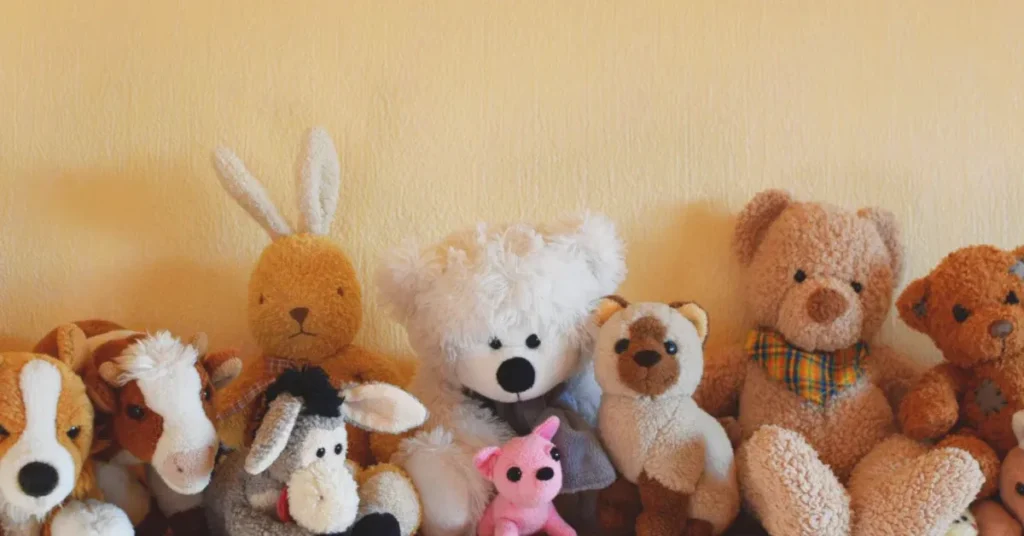
The lifespan of plush toys in storage depends on three main categories of factors: the toy’s materials, the environment it’s stored in, and the way it’s packed. Each plays a role in how well the toy resists aging and damage.
Plush toy longevity is influenced by fabric type, filling material, humidity, temperature, light exposure, and storage pressure. Polyester fabrics generally resist aging better than natural fibers, while cotton-based toys need extra protection from moisture. A stable, dry, and cool environment can significantly extend the life of any plush toy.
Fabric type and moisture resistance
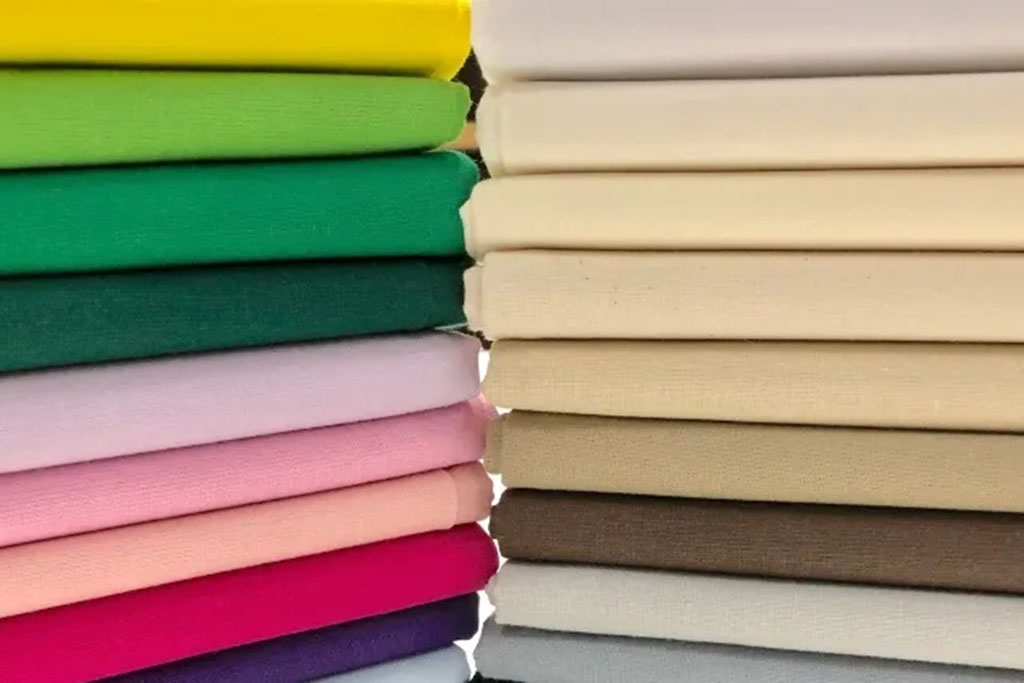
Plush fabrics like velboa, minky, or RPET polyester are more resistant to fading and mildew, while cotton blends absorb moisture easily and require breathable storage.
Filling type and shape retention
Polyester fiberfill holds shape well but can clump if damp. Foam inserts degrade faster in high humidity. Bead fillings (like PE or PP pellets) can flatten if toys are stored under heavy pressure.
Environmental control
Extreme heat makes fibers brittle, while cold can make them stiff. Humidity over 60% encourages mold; below 30% can dry out fibers. Prolonged sunlight exposure fades bright fabrics and weakens fibers.
Packing methods
Overpacking or stacking heavy items on plush toys compresses their shape. Airtight containers without moisture control can cause condensation and mold.
Example from a client
One of our European retail clients stored their Christmas-themed plush toys in a non-climate-controlled warehouse during the summer. The temperature inside reached 35°C, and the toys were wrapped in plastic without silica gel. After three months, the white plush turned yellowish, and some toys had a musty smell. This inventory loss could have been avoided with temperature regulation and moisture absorption.
Summary table
| Factor | Why It Matters | Common Mistake | Prevention |
| Fabric Type | Moisture & durability | Storing cotton plush in humid rooms | Use breathable covers & silica gel |
| Filling Type | Shape & texture | Compressing bead-filled toys | Store without heavy stacking |
| Temperature | Fiber strength | Storing near heat sources | Keep 18–24°C |
| Humidity | Mold prevention | No humidity monitoring | Use hygrometer & control devices |
| Light Exposure | Color retention | Leaving toys near windows | Use UV-blocking covers |
| Storage Pressure | Shape preservation | Overfilling boxes | Leave space & rotate stock |
2. How to Prepare Plush Toys for Short-Term and Long-Term Storage?
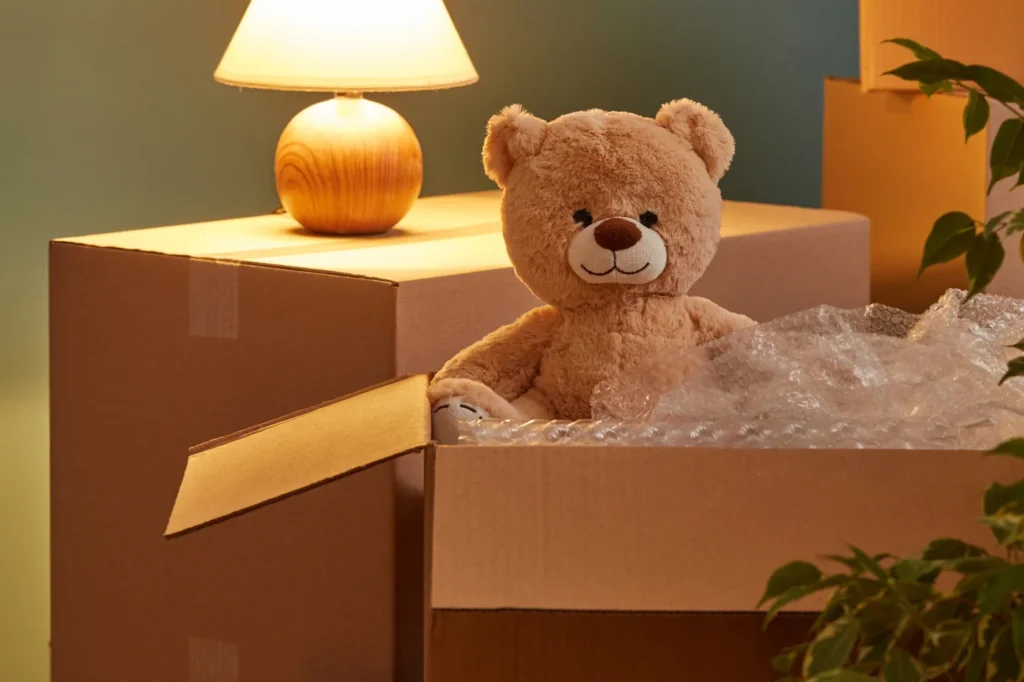
Storage starts long before the plush toy goes into a box. The preparation phase ensures that toys enter storage clean, dry, and protected—making it less likely for them to develop mold, odors, or damage later.
Short-term storage (1–6 months)
Ideal for situations like trade shows, seasonal sales, or short supply gaps.
Clean lightly – Remove dust with a lint roller or soft brush. Spot clean stains with mild detergent.
Dry completely – Never store a damp toy; air-dry under a fan if needed.
Use breathable covers – Cotton storage bags or fabric sheets protect from dust without trapping moisture.
Avoid sunlight and heat – Keep in a shaded, cool area to prevent fading.
Long-term storage (6 months or more)
Used for seasonal inventory, prototypes, or delayed campaigns.
Full cleaning – Wash according to care label or dry clean if necessary. Removes oils, dust, and residue.
Restore texture – Brush fur with a soft-bristle brush to prevent matting.
Acid-free wrapping – Wrap each plush in acid-free tissue to avoid yellowing.
Use moisture control – Place silica gel packs or activated charcoal in each container.
Organized labeling – Clearly label boxes to reduce unnecessary handling.
Common mistake to avoid
Many businesses skip cleaning to “save time,” thinking toys look fine. Even invisible residues from handling can cause odor or pest attraction over time.
Example from a US client
A children’s boutique ordered 3,000 custom plush animals for a promotional campaign, but due to event delays, half the stock needed to be stored for 9 months. We advised them to clean, wrap, and store the toys in acid-free boxes with moisture absorbers. When the campaign resumed, the stored toys were as fresh as the newly delivered ones, saving them from reordering or offering discounts.
Correct vs. Incorrect preparation
| Step | Correct Approach | Common Wrong Approach |
| Cleaning | Wash/spot clean before storage | Store without cleaning |
| Drying | Fully air dry before sealing | Store when slightly damp |
| Wrapping | Use acid-free tissue & breathable covers | Use plastic bags for months |
| Moisture Control | Add silica gel in sealed boxes | No moisture absorber |
| Labeling | Mark contents & storage date | No labels, frequent opening |
3. Which Storage Materials and Containers Best Protect Plush Toys?
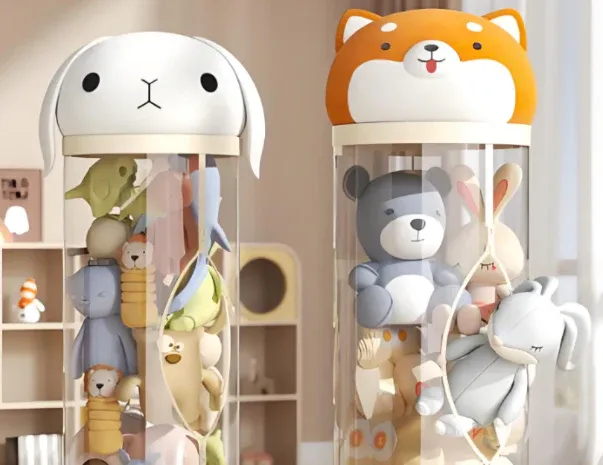
Not all storage materials are safe for plush toys. The right choice prevents dust, mold, and deformation without creating other problems.
Acid-free cardboard boxes
Best for long-term storage in dry, temperature-controlled rooms. They prevent yellowing, allow airflow, and protect against dust. Not waterproof, so avoid damp areas.
Cotton storage bags
Allow toys to breathe and prevent dust accumulation. Excellent for short-term or frequently accessed inventory. Do not protect against moisture.
Sealed plastic bins
Ideal for damp climates or storage near coastal areas. Completely pest-proof and waterproof when sealed. Must include silica gel or moisture absorbers to prevent condensation.
Vacuum storage bags
Useful for short-term transport of large toys to save space. Not suitable for long-term storage as compression can permanently change shape.
Example from a wholesale client
A Middle East distributor used sealed plastic bins with silica gel for toys stored in a coastal warehouse. After 14 months, the toys were mold-free and colors remained bright despite high humidity.
Comparison table
| Container Type | Best For | Benefits | Limitations |
| Acid-free cardboard box | Long-term, dry climates | Breathable, prevents yellowing | Not waterproof |
| Cotton storage bag | Short-term, easy access | Allows airflow | No moisture barrier |
| Sealed plastic bin | Damp climates | Waterproof, pest-proof | Needs moisture absorber |
| Vacuum storage bag | Short-term transport | Saves space | Can deform plush |
4. How Do Temperature and Humidity Control Impact Plush Toy Preservation?
Temperature and humidity control are the most important factors in preventing plush toy damage during storage.
Optimal range
Keep storage rooms between 18–24°C and 45–55% relative humidity.
In humid climates
Use dehumidifiers and silica gel in containers. Avoid storing toys directly on concrete floors, which release moisture.
In dry climates
Add small humidity packs to prevent static and fiber dryness. Avoid placing toys near heating vents.
Light exposure
Even in perfect humidity and temperature, direct sunlight will fade fabrics. Always use UV-protective covers or store in shaded areas.
Example from a Japanese retailer
They stored plush toys in an air-conditioned warehouse with humidity control at 50%. After two years, the toys were indistinguishable from fresh stock.
Temperature & Humidity Guide Table
| Climate Type | Ideal Temp (°C) | Ideal Humidity (%) | Key Risks if Not Controlled | Recommended Solution |
| Humid (e.g., Southeast Asia) | 20–24 | 45–50 | Mold growth, odor | Dehumidifier + silica gel |
| Dry (e.g., Southwest USA) | 18–22 | 45–55 | Fiber dryness, static | Humidity packs + cotton covers |
| Coastal | 20–23 | 50–55 | Salt-air corrosion on accessories | Sealed bins + moisture absorbers |
| Cold Storage | 16–20 | 45–50 | Fiber stiffness | Gradual acclimatization before sale |
5. What Are the Best Practices for Storing Large or Oversized Plush Toys?
Large plush toys require different handling to avoid sagging, misshaping, or fabric damage.
Upright or flat storage
Place oversized toys upright against a wall or lying flat on a clean surface. Avoid stacking heavy items on them.
Support structure
Use soft pillows, foam inserts, or rolled towels inside and around the toy to keep its shape.
Breathable covers
Cover with cotton or muslin fabric to prevent dust without trapping moisture.
Rotation
Change their position every 3–4 months to distribute pressure evenly.
Example from an event supplier
A company that rents oversized plush mascots used breathable covers and rotated storage positions every few months.
Oversized Plush Storage Tips Table
| Method | Purpose | Common Mistake | Correct Approach |
| Upright storage | Maintains vertical structure | Leaning without support | Use wall + soft cushions |
| Flat storage | Prevents limb sagging | Stacking heavy items | Store single layer |
| Internal support | Keeps shape intact | No support pillows | Fill gaps with foam rolls |
| Cover choice | Dust protection | Plastic wrap | Breathable cotton covers |
6. How to Prevent Mold, Odor, and Pest Damage in Plush Toy Storage?
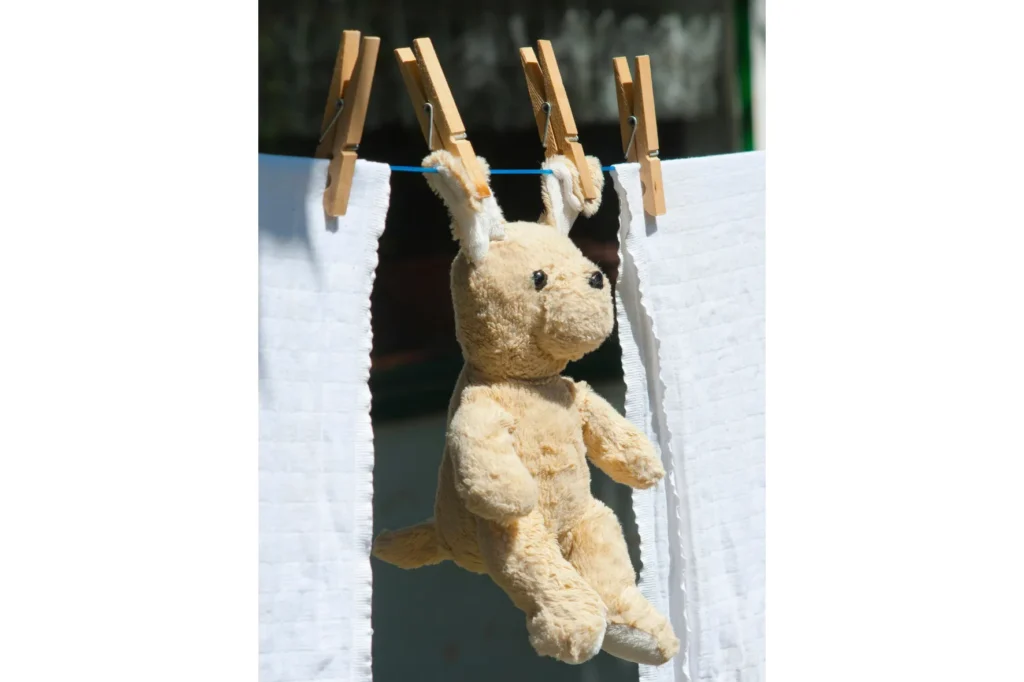
Mold, odor, and pests are the three main threats in long-term plush toy storage.
Mold prevention
Ensure all toys are 100% dry before storage. Use airtight containers with silica gel.
Odor control
Add activated charcoal or baking soda pouches to absorb smells. Avoid storing near strong odors like paint or cleaning chemicals.
Pest deterrence
Use cedarwood blocks or lavender sachets instead of chemical mothballs to avoid strong smells and fabric damage.
Example from a gift shop chain
After finding moth larvae in stored stock, they switched to cedarwood sachets in all storage bins and implemented quarterly pest inspections.
Storage Problem & Solution Table
| Problem | Cause | Prevention | Natural Solution |
| Mold | Moisture, poor ventilation | Fully dry toys + moisture absorbers | Silica gel, charcoal |
| Odor | Stale air, residue | Clean before storage, avoid chemicals | Baking soda, charcoal |
| Pests | Food residue, warm areas | Clean toys, seal containers | Cedarwood, lavender |
Proper storage keeps plush toys beautiful, safe, and ready for your customers. At Kinwin, we help our clients not only create high-quality plush toys but also deliver them in packaging that’s storage-ready for months or even years.
Contact Kinwin today at [email protected] or visit https://kinwintoys.com/ to get custom plush solutions designed for durability from factory to shelf.