When buyers ask me for the strongest dog toy materials, I look at tear strength, puncture resistance, abrasion, elasticity, and safe chemistry—then match those to chewer type (moderate vs. aggressive), toy format (ball, ring, bone, tug), and manufacturing method (molding, extrusion, lamination, stitching). I’m Amanda from Kinwin. Below is a practical, factory-level guide in clear English with tables you can paste into RFQs and SOPs.
What material properties determine strongest dog toy performance?
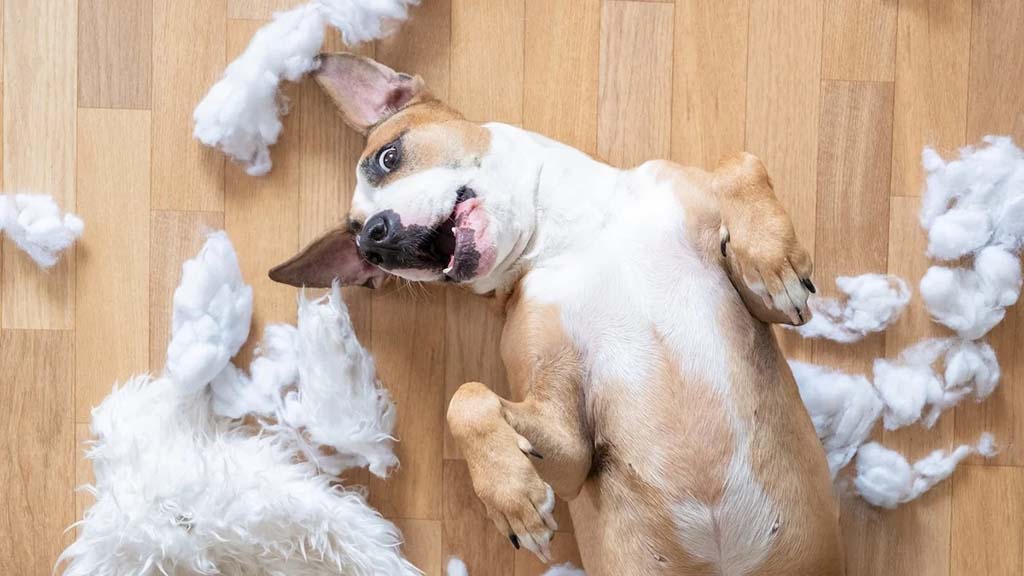
“Strong” is not just hard. A great power-chew material resists tear initiation, puncture, and abrasion while keeping elastic recovery so it doesn’t crack. We also confirm cold-temperature toughness (no brittle failure on winter walks) and safe chemistry (no heavy metals, no restricted phthalates). For molded toys, we balance Shore hardness with elongation at break; for textiles/ropes, we look at denier/tex, yarn construction, and seam/knit integrity.
Table 1 — Key performance properties for dog-chew durability
| Property | Why It Matters | Good Target (Guide)* | Notes |
|---|---|---|---|
| Tear resistance | Stops small nicks from ripping | ≥ 60–100 kN/m (elastomers) | Higher is better for rings/tugs |
| Puncture resistance | Resists canine incisors/canines | High N at failure on probe test | Thick, tough skins help |
| Abrasion resistance | Slows wear from repeated gnaw | Low volume loss (DIN/Taber) | Crucial for balls/fetch toys |
| Tensile strength & elongation | Prevents snap; allows flex | 8–25 MPa & 300–700% (rubbers) | Balance with hardness |
| Shore hardness | Controls “give” vs. chip risk | A60–A90 (rubbers) | Too hard may chip teeth |
| Low-temp toughness | Winter safety | No cracks at −10~−20 °C | Add impact modifiers if needed |
| Safe chemistry | Non-toxic play | Pass heavy metals/phthalates | Use food-grade pigments when possible |
*Guide values vary by recipe and wall thickness—validate on your geometry.
Which rubbers—natural, TPR, TPU—maximize tear and puncture resistance?
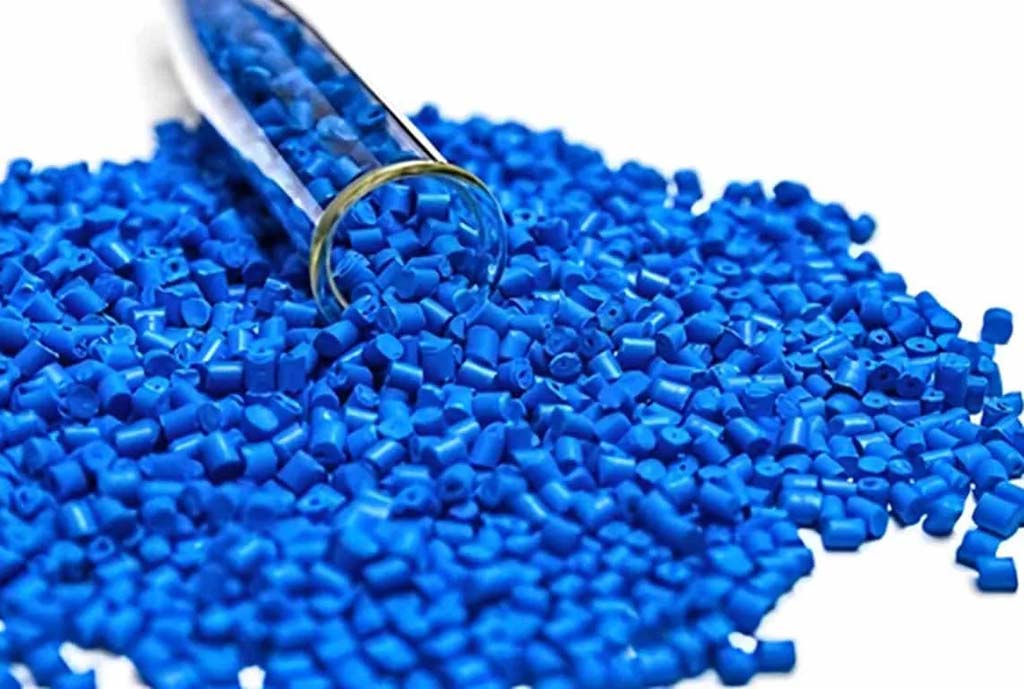
Natural rubber (NR) delivers classic bounce and excellent tear resistance in thick, seamless molds. TPR (thermoplastic rubber) is easier to process, cost-efficient, and can be tuned from soft to firm; high-grade TPR blends handle abrasion well but can notch-tear if walls are thin. TPU (thermoplastic polyurethane) excels at cut/tear growth resistance and abrasion; it’s great for thin fins, ribs, and textured surfaces that still must survive heavy chewing.
Design notes:
- Aim for generous radii, no sharp internal corners, and consistent wall thickness (avoid thin hinge lines).
- Use solid cores or ribbed skeletons where dogs focus bite force.
- Matte textures hide wear; bright colorants must be pet-safe and migration-tested.
Table 2 — Rubbers for power chewers (molded toys)
| Material | Strengths | Watch-outs | Best Use Cases | Typical Shore (A) |
|---|---|---|---|---|
| Natural Rubber (NR) | High tear, elastic bounce | Can age with UV/oils | Solid balls, rings, tugs | 60–80 |
| TPR (SEBS/SBS) | Tunable hardness, cost-efficient, recyclable | Notch tear if thin; heat history matters | Grooved fetch toys, moderate power chews | 65–90 |
| TPU (ester/ether) | Premium cut/abrasion resistance; cold-tough | Cost ↑; process control needed | Ribbed bones, textured chews | 70–95 |
How do nylon and PU composites compare for aggressive chewers?

Nylon (PA6/PA66) is king for hard chews shaped like bones or ridged sticks. It offers very high abrasion resistance and heat-tolerant molding, but it’s rigid, so we design rounded edges to protect teeth and gums. Flavor infusions stay stable in nylon matrices. PU composites (cast or reaction-injection) allow tough-but-slightly-flex builds; fiber-reinforced PU can boost stiffness without turning brittle. For safety and dental comfort, many brands combine nylon cores with over-molded TPR/TPU sleeves to add give where dogs bite hardest.
Table 3 — Hard chews and composite strategies
| Material/System | Strengths | Risks & Mitigations | Best Formats | Notes |
|---|---|---|---|---|
| Nylon (PA) | Extreme wear life; shapeable textures | Rigid → round edges; avoid thin spikes | Classic bones, ridged sticks | Add micro-textures for grip |
| PU (tough grades) | Tough with slight flex; good detail | Mix ratio control; avoid sharp ribs | Chew sticks, patterned chews | Post-cure QC for properties |
| Nylon + TPR/TPU over-mold | Hard core + soft bite | Bond line must be robust | Dual-durometer bones | Reduces tooth stress |
What test methods quantify durability—Shore hardness, tensile, abrasion?
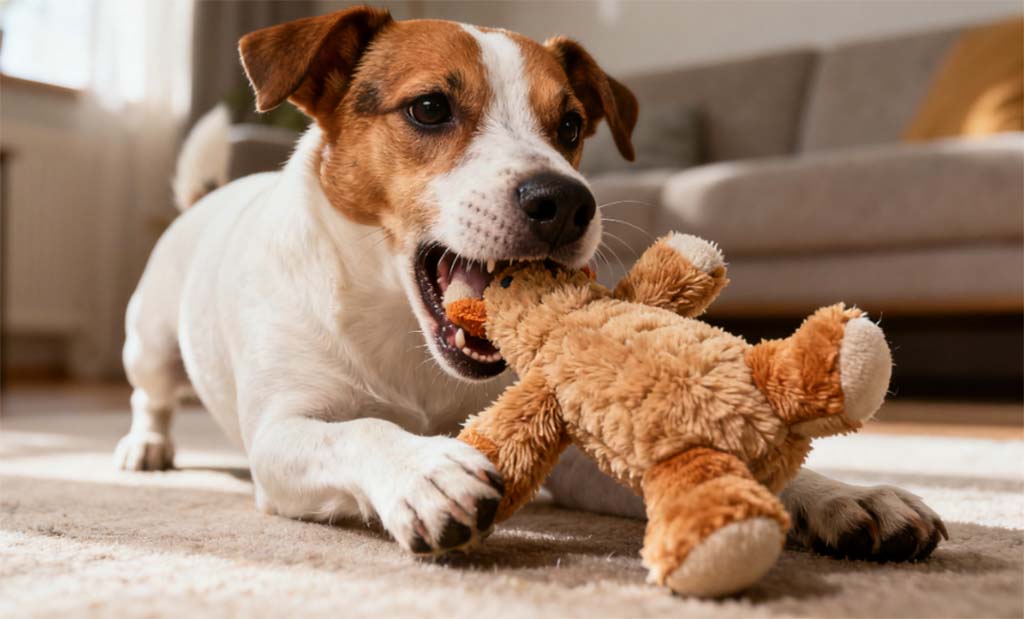
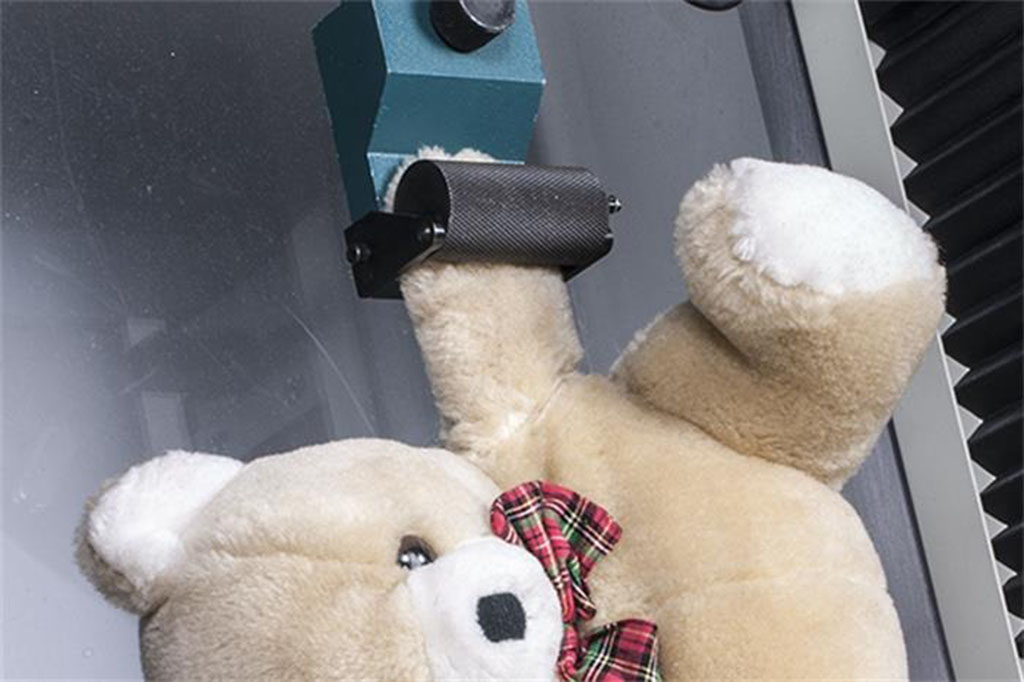
Numbers keep marketing honest. For elastomers we measure Shore A hardness, tensile strength/elongation (ISO 37/ASTM D412), tear resistance (ISO 34/ASTM D624), puncture (custom probe or ASTM F1342-style), and abrasion (DIN 53516 or Taber ASTM D4060). For hard chews, add flexural (ASTM D790) and Charpy/Izod impact. Field validation matters too: bite-cycle rigs and breed-panel tests (e.g., 30–60 minute sessions over multiple days) catch failures lab data can miss.
Table 4 — Durability test toolkit (spec in RFQs)
| Test | What It Shows | Good Result (Guide) | Notes |
|---|---|---|---|
| Shore A hardness | Surface firmness | A60–A90 (chew toys) | Balance with tooth safety |
| Tensile & elongation | Stretch before break | 8–25 MPa; 300–700% | Elastomers only |
| Tear resistance | Nick growth resistance | ≥ 60–100 kN/m | Critical for rings/tugs |
| Abrasion (DIN/Taber) | Wear rate | Low volume loss | For balls/fetch |
| Puncture probe | Tooth-like attack | High N at puncture | Standardize tip & speed |
| Impact/flex (hard chews) | Chip/break risk | No brittle failure | Nylon/PU composites |
Are reinforced fabrics or ropes suitable for power chewers safely?

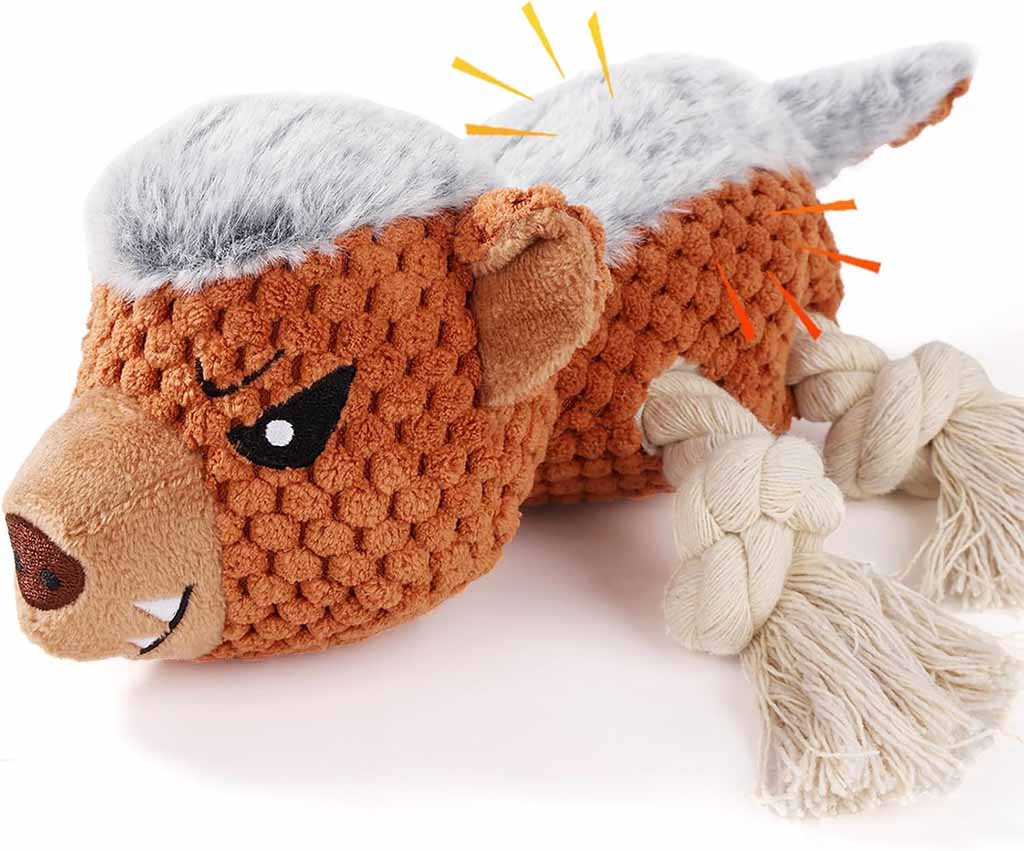
Reinforced fabrics—ballistic nylon, layered polyester with TPU films, or coated canvas—can work for tugs and fetch, not continuous gnaw. Stitching must use heavy polyester thread, wide seam allowances, and optionally a hidden binding tape. Ropes (cotton/poly blends) are great for interactive play; use tight lay, large knots, and heat-sealed or whipped ends to reduce fray. For true power-chewers, fabric shells should encase a molded rubber core, so when fabric wears, the toy remains structurally safe. Always avoid loose squeakers in heavy-chew SKUs; if included, they must be caged or ultrasonically welded inside a secondary chamber.
Table 5 — Textiles & ropes: when and how to use
| Build | Strengths | Safe Use | Not Recommended For | Engineering Tips |
|---|---|---|---|---|
| Ballistic nylon shell | Light, tough surface | Tug/fetch | Solo gnaw marathons | Bar-tack stress points; TPU film inner |
| Coated canvas/TPU-laminate | Better puncture barrier | Tug, light chew | Aggressive chewers | Bond test; smooth seam turns |
| Cotton/poly rope | Great for tug; dental flossing effect | Supervised play | Persistent chewers | Tight lay; sealed ends |
| Fabric over rubber core | Dual feel, safer wear-out | Mixed play | None (if core is strong) | Strong core; stitched sleeve |
How do material safety standards address toxins and ingestion risks?
Pet toys don’t always have one global law like children’s toys, so responsible manufacturers adopt stricter benchmarks. We screen to heavy-metal and phthalate limits similar to children’s toy standards (e.g., EN 71-3 migration, ASTM F963 chemicals) and align with REACH/SVHC and CA Prop 65 where relevant. For colorants and flavorings, we prefer food-grade or pet-safe systems and run overall/ specific migration screens on elastomer matrices. We also validate odor/VOC, and we design toys to minimize ingestible fragments—using one-piece molds, no brittle inserts, and bond-line pull tests on over-molds.
Table 6 — Safety & compliance guardrails for dog toys
| Risk | Control | What to Test/Document | Buyer Note |
|---|---|---|---|
| Toxic elements | Clean pigments, metal-free catalysts | EN 71-3-style migration, REACH | Request 3rd-party reports per color |
| Plasticizers | Phthalate-free elastomers | Phthalate screening | Specify non-phthalate TPR/TPU |
| VOC/odor | Low-odor recipes | VOC/odor panel | Keep fragrance loads low |
| Fragment ingestion | Robust geometry & materials | Bite-cycle + tear/puncture tests | Avoid fragile squeakers in power chews |
| Labeling/use | Honest guidance | “Supervise,” “Replace if damaged” | Include size/breed guidance |
Conclusion
The strongest dog toy builds combine the right material family with smart geometry and verified chemistry: TPU or natural rubber for tear resistance, nylon for hard bones, TPR for versatile mid-chews, and reinforced textiles only where they make sense. Specify tests, validate the care/use labels, and your power-chew line will last longer—and stay safer—in real homes.
If you want a dog-toy range engineered for durability and compliance, Kinwin can help—from material selection and bite-cycle validation to clean-chemistry sourcing and production QC.
Contact: [email protected] | kinwintoys.com