Skip to content
A stuffed toy feels premium when every material choice supports comfort, safety, and consistency—from the shell fabric your customer touches to the hidden filling and the trims that must survive play and washing. I’m Amanda from Kinwin. Below, I explain the materials we rely on in real factory work: which base fabrics dominate, how minky/velboa/fleece differ, which fillings keep toys soft and shapely, how trims affect compliance, what chemical/flammability standards drive selection, and how recycled options like rPET perform at scale. I’ll keep the language simple, add practical tips, and include a table in every section you can paste into RFQs and SOPs.
What base fabrics dominate modern stuffed toy manufacturing?
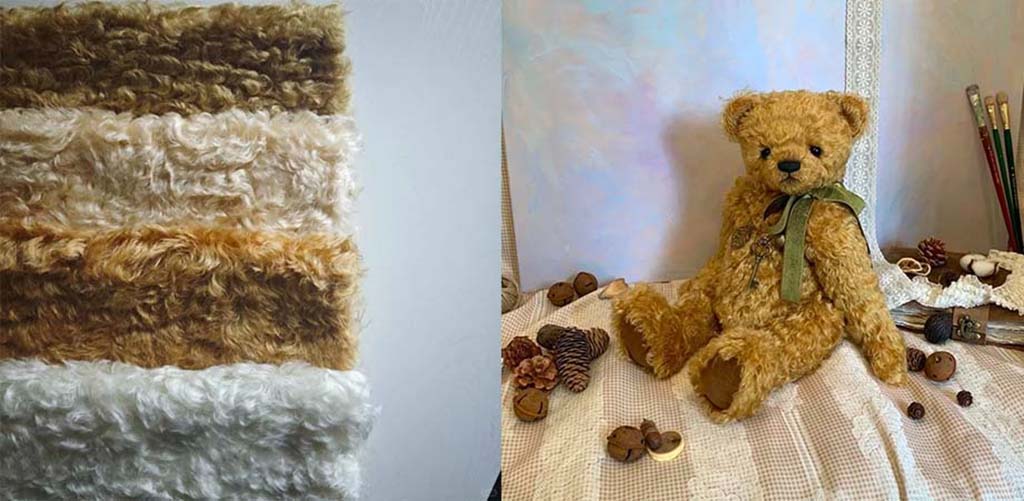
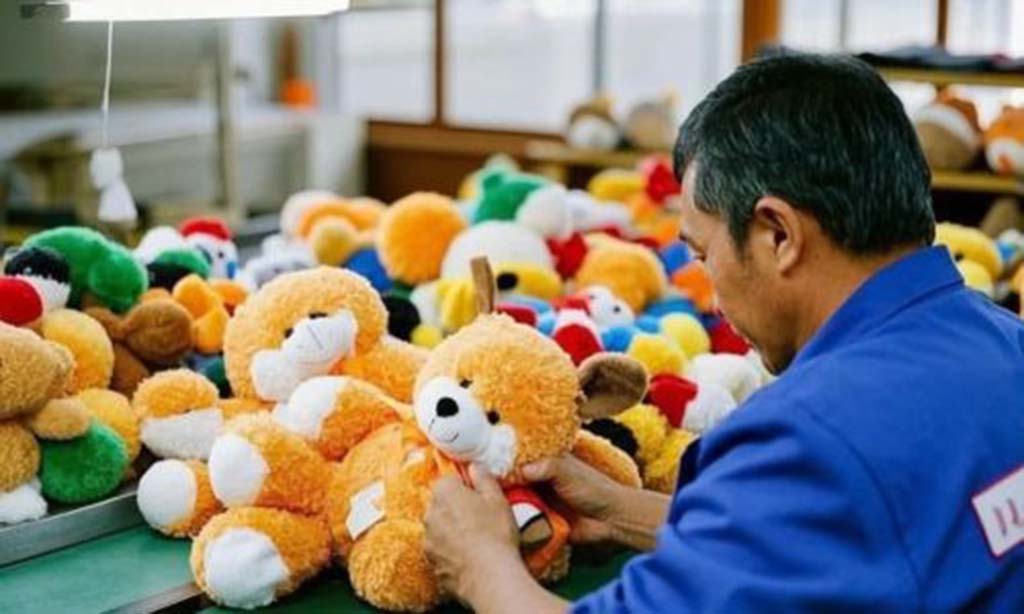
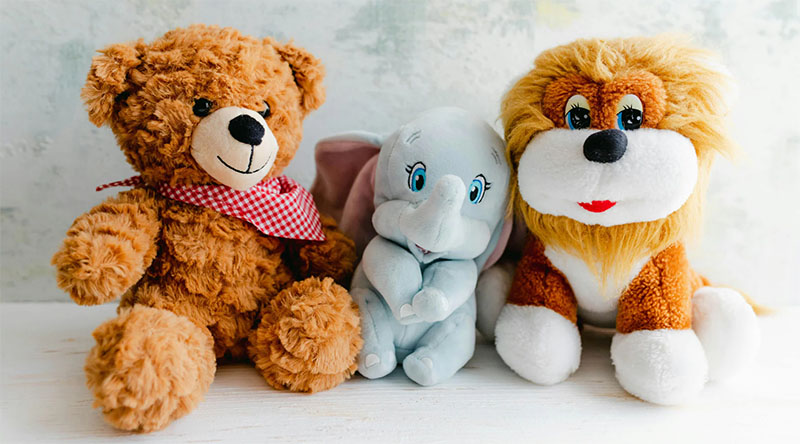
Most high-volume plush shells are polyester knits because they are soft, color-stable, widely available, and predictable in testing. In daily production, three fabrics carry most of the workload: minky, velboa/short plush, and anti-pill microfleece. We place them where they work best: minky on cuddle zones for a buttery, cloud-like hand; velboa on faces and small parts for crisp embroidery and low lint; microfleece on lightweight bodies or cost-sensitive lines where operator speed and tidy seams matter. For drama, winter capsules, or lifelike species features, we add faux fur and sherpa; for premium accents like muzzles or paw pads, microfiber suede delivers a matte, camera-clean look. The production secret is matching fabric to geometry: broad curves for thicker naps, tight control for faces, and nap arrows on markers to keep color flow and shadow consistent across panels. When you combine these thoughtfully, even entry-price plush can photograph like premium and pass wash tests honestly.
Table 1 — Core shell fabrics used in modern plush
| Fabric | Typical Spec | Best Use | Why It Works | Watch-Outs & Fixes |
|---|---|---|---|---|
| Minky | 3–5 mm pile; 260–360 gsm | Bodies/cuddle zones | Ultra-soft, high perceived value | Wider seam (0.5–0.7 cm); align nap |
| Velboa / Short Plush | 1.5–2.5 mm; tight backing | Faces/small parts | Crisp embroidery; low lint | Add thin batting under face |
| Anti-pill Microfleece | 180–260 gsm | Lightweight bodies | Easy sewing; quick training | Choose anti-pill grades; test darks |
| Faux Fur / Sherpa | 10–35 mm | Manes, trims, premium bears | Visual depth; seasonal appeal | Trim bulk; post-sew brush |
| Microfiber Suede | 180–260 gsm | Muzzles/paw pads | Matte, premium look | Round corners; avoid sharp angles |
How do minky, velboa, fleece differ in performance?
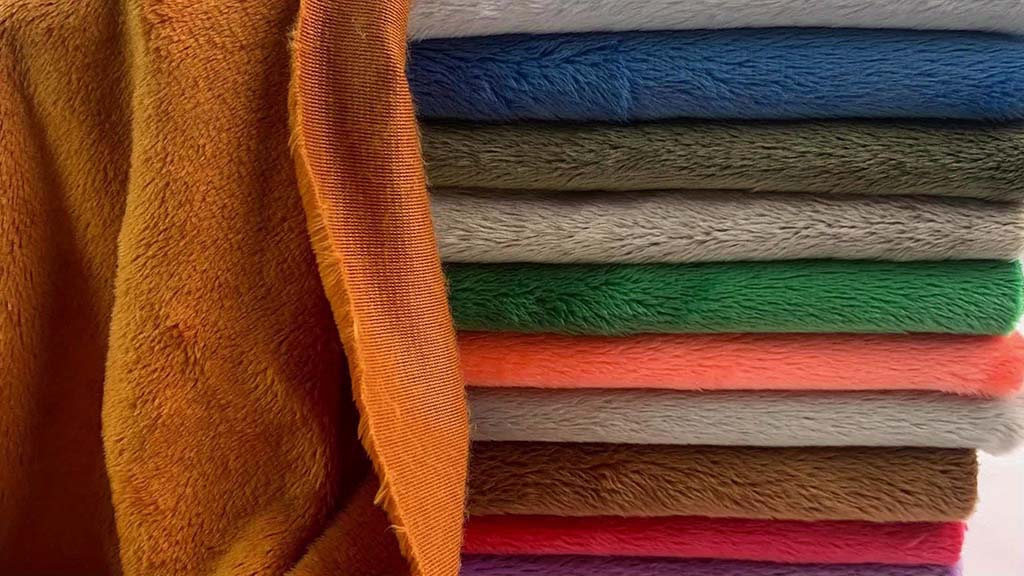
Each fabric has a clear superpower. Minky converts browsers into buyers because the nap throws rich shadows in photos and feels luxurious in hand. It needs a bit more seam allowance on curves and careful turning so edges stay round, not dented. Velboa/short plush is the precision tool: it’s thin, stable, and perfect for faces—embroidery sits flat, lines look clean, and the matte surface reduces glare for cameras and store lighting. Anti-pill microfleece is the operator’s friend: non-fray, quick to turn and close, and forgiving on stitch alignment; it’s ideal for warm markets and budget lanes that still want calm, warm texture. We often mix them: velboa face for clarity, minky body for cuddle, microfleece for variants that must hit lower price points without looking cheap. Whatever you choose, validate the darkest color first for saliva/sweat fastness and print only the care icons you can prove with a real bag-wash test.
Table 2 — Minky vs Velboa vs Microfleece (production lens)
| Criterion | Minky | Velboa / Short Plush | Anti-pill Microfleece |
|---|---|---|---|
| First-touch softness | ★★★★★ (cloudy) | ★★★★☆ (smooth matte) | ★★★★☆ (warm, calm) |
| Face embroidery clarity | ★★★★☆ | ★★★★★ (best) | ★★★★☆ |
| Seam behavior on curves | Thicker; needs 0.5–0.7 cm | Very stable; thin | Very stable; flat |
| Photo look (e-commerce) | Rich shadows; plushy | Ultra-clean lines | Low glare; tidy |
| Pilling/abrasion | High with good finish | Very high | High if true anti-pill |
| Cutting yield/efficiency | Medium (nap alignment) | High | High |
Which fillings ensure softness, resilience, and shape retention?
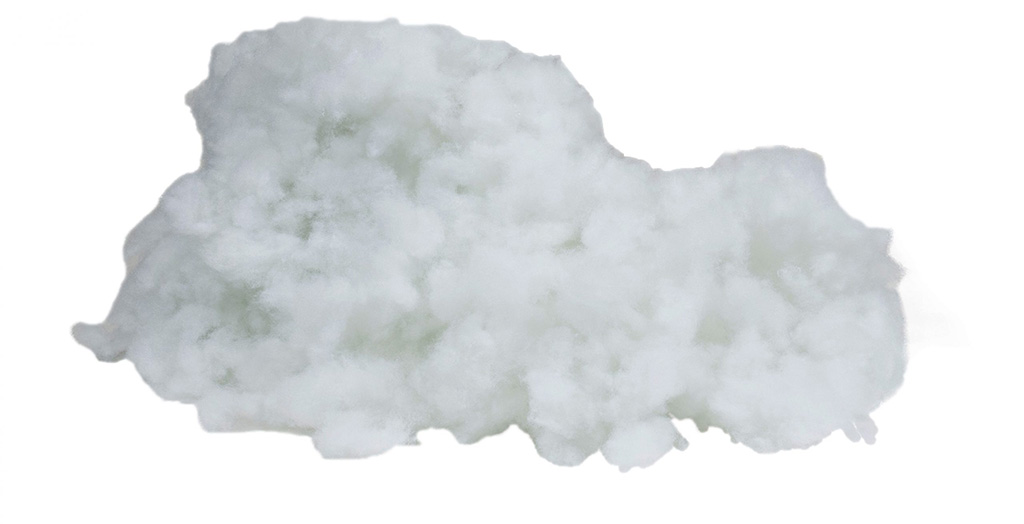
Filling turns fabric into feeling. The reliable default for children’s plush is polyester fiberfill (PP cotton): springy, clean, and resilient with the right denier, crimp, and staple length. For premium “melt-in-hand” comfort, microfiber polyester fill gives a denser, silkier hand and smooth contours; just avoid over-packing faces so features don’t get hard. To keep embroidery glass-smooth, we place a thin sheet of batting behind face panels—this hides fiber edges and prevents “stitch sink.” If a design needs calm weight or better sit-stability, we add sealed, segmented liners with glass/ceramic microbeads and tack the liner to interior seams so weight never migrates. Naturals like cotton, wool, kapok bring a story but absorb moisture and compress faster; we reserve them for adult décor or controlled-care gifts. The factory trick is a density map: lighter cheeks and head, medium limbs, slightly heavier in the belly/base. That single sheet keeps silhouettes repeatable from sample to container.
Table 3 — Common fillings and behavior over time
| Filling | Feel & Recovery | Best Use | Key Controls | Avoid |
|---|---|---|---|---|
| Polyester fiberfill (PP) | Springy; good rebound | Most children’s plush | Denier/crimp/staple spec; grams/zone | Big clumps; uneven load |
| Microfiber polyester | Silky; excellent contour | Premium cuddle zones | Lint/odor check; don’t over-pack | Hard faces from overfill |
| Sheet batting (poly) | Smooths surfaces | Behind face/appliqués | Thin layer; wash-validate | Replacing real fill with sheets |
| Bead liners (glass/ceramic) | Gentle weight; grounded | Teen/adult comfort; sit-stability | Sealed & segmented, seam tacks | Loose beads; no leakage test |
| Naturals (cotton/wool/kapok) | Natural story; variable | Adult décor gifts | Dry storage; clear care | Child SKUs without strict care plan |
How do trims and accessories impact safety compliance?
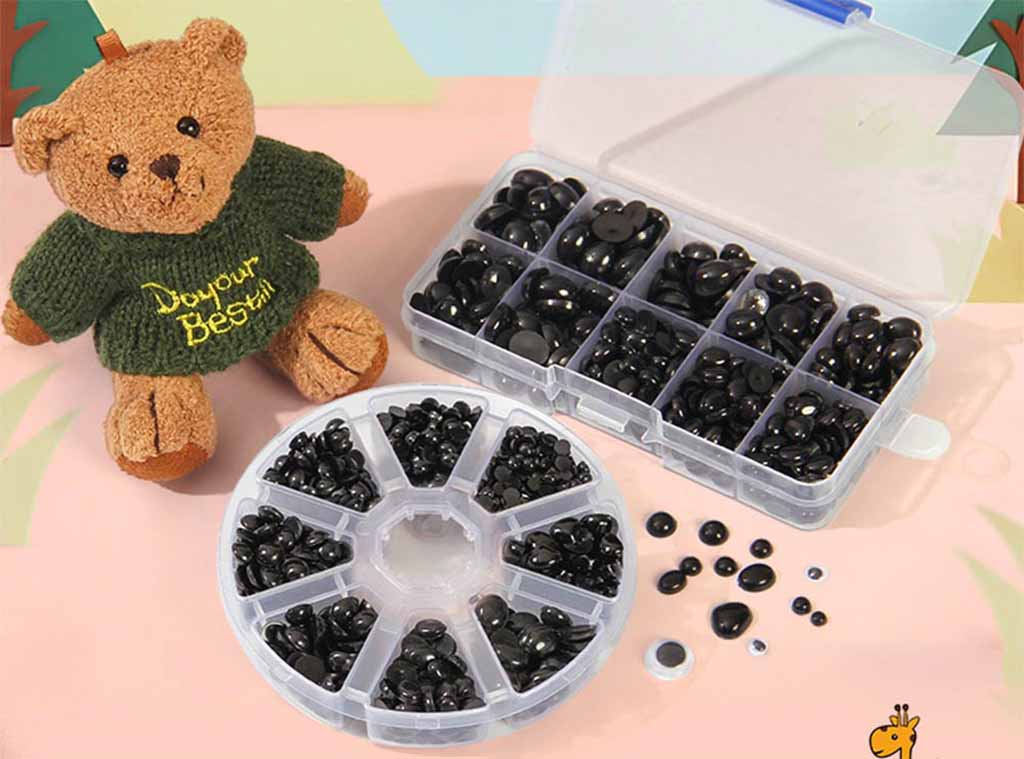
Most test failures come from trims, not fabric. For 0–3 years, keep features embroidered, use short-pile faces to reduce lint, and keep outfits sewn-on so nothing detaches. For older kids, removable clothing and selective hard parts are fine—but only after torque/tension testing and with nick-free edges. Weighted variants must use sealed, segmented liners and pass leakage, drop, and seam-pull tests. Labels should be soft and stitched cleanly, with CPSIA tracking (factory/date/lot) and only honest care icons proven on real units. If accessories (zippers, snaps, buttons) are requested, align with age grading and validate in the darkest colors, which are most likely to reveal finish or colorfastness issues. These choices keep users safe, reduce rework, and protect your margin.
Table 4 — Trim decisions that pass tests the first time
| Area | Safe Default | When to Use Hard Parts | Mandatory Controls | Care/Label Note |
|---|---|---|---|---|
| Eyes/nose/mouth | Embroidery on velboa | 4+ yrs only, if needed | Small-parts + torque/tension | Match age grade |
| Clothing | Sewn-on for 0–3 yrs | Removable for 4+ yrs | Seam pull on attachments | Validate post-wash fit |
| Weighted option | Sealed bead liner | — | Leakage/drop; seam pull | Disclose finished weight/age |
| Accessories | Avoid under 3 | 4+ with testing | Smooth edges; secure anchors | Often surface clean |
| Labels & tracking | Soft woven/satin | — | CPSIA tracking; lot link | Print only validated icons |
What chemical and flammability standards govern material selection?

Safety is a system, not a slogan. In the USA, stuffed toys must meet ASTM F963 and CPSIA (including tracking labels, lead/phthalates limits). In the EU, EN 71 applies: Part 1 mechanical/physical (seams, small parts), Part 2 flammability (the composite fabric + fill), and Part 3 migration of certain elements (dyestuffs/finishes). Many buyers also ask for REACH/SVHC awareness and sometimes ISO 8124 alignment. Testing happens on the finished toy, not just swatches, because seams, fills, and trims change real-world behavior. We also verify the care label with bag-wash cycles at 30 °C on the darkest colorway, then air-dry and visually compare to the golden sample. If icons are not true, we change the label or the material—never the promise.
Table 5 — Standards map for materials and builds
| Standard | Scope | Material Impact | What Proof to Request |
|---|---|---|---|
| ASTM F963 (US) | Mechanical, flammability, chemicals | Strong seams; safe trims; composite flammability | Third-party report per color/lot |
| CPSIA (US) | Lead/phthalates; tracking | Clean chemistry; traceability | Tracking label + ERP lot link |
| EN 71-1 (EU) | Mechanical/physical | No small parts; stitch integrity | Seam pull/attachment tests |
| EN 71-2 (EU) | Flammability | Test actual shell + fill | Composite pass report |
| EN 71-3 (EU) | Migration of elements | Approved dyes/finishes | Dark-shade saliva/sweat results |
| REACH/SVHC (EU) | Substances of concern | Low-VOC auxiliaries | Supplier declarations; SDS |
How do eco-certified and recycled materials perform in production?
The eco path that scales now is recycled polyester (rPET)—available as velboa, minky, fiberfill, and batting. Well-made rPET can match virgin softness and rebound, but we always pilot: check odor/VOC, shade stability, post-wash recovery, and hand-feel against the approved virgin baseline. Keep the paper trail tight: GRS certificates, roll/lot IDs, and identity-preserved flow from roll → marker → carton → tracking label. For dark core shades, dope-dyed (solution-dyed) polyester reduces water/chemicals and improves fastness. Natural programs (organic/BCI cotton) are excellent for outfits and trims, provided shrink and pilling are managed by pre-wash and stitch-density control. Eco choices should never outrun performance—your best win is a credible claim paired with a plush that still feels premium after washing.
Table 6 — Eco options that actually scale in plush
| Eco Material | Where It Fits | Verify in Pilot | Production Tip | Documentation |
|---|---|---|---|---|
| rPET velboa/minky | Shell fabrics | Odor/VOC; wash recovery | Start with tight palette | GRS + lot mapping |
| rPET fiberfill/batting | Fill & face smoothing | Rebound vs. virgin; odor | Tune grams/zone to match feel | GRS + COAs |
| Dope-dyed polyester | Core dark colors | Fastness; shade stability | Great for black/grey/navy | Supplier declaration |
| Organic/BCI cotton | Outfits & trims | Shrink/pill control | Bio-wash; pre-shrink | Fiber cert + test photos |
Conclusion
Stuffed toys succeed when materials behave like a team: velboa (or short plush) for clean faces, minky for emotional softness, microfleece for efficient builds, and PP or microfiber fills tuned by a density map. Add embroidered features, honest care labels proven by wash tests, and—if you want an eco story—rPET with full documentation. That’s how your plush feels premium in hand, looks perfect on camera, and clears audits without drama.
At Kinwin, we design and validate that system end-to-end—fabric maps, filling specs, sealed liners for weight, composite flammability, wash validation, VOC/odor panels, and batch traceability—so your shipments arrive photo-ready, cuddle-ready, and audit-ready in every market.
Contact [email protected] or visit kinwintoys.com to plan your next collection with confidence.