Skip to content
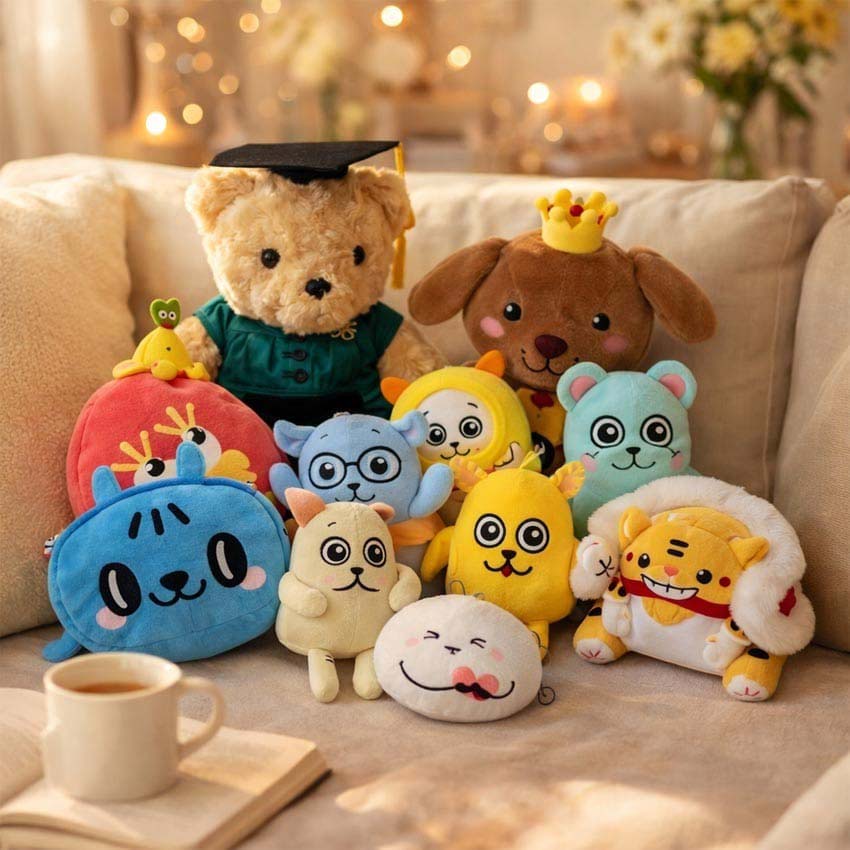
When people hear the name Jellycat, they immediately think of plush toys that are irresistibly soft, stylishly designed, and full of character. These plushies are not just toys—they are design icons that combine whimsical imagination with luxury-grade textile engineering.
In this complete guide, I’ll explain what makes Jellycat different: how the brand evolved, what materials and designs define its famous softness, how its collections compare, what safety standards it follows, how to identify authentic pieces, and how to clean and maintain them properly to keep that signature Jellycat feel.
What is a Jellycat stuffed animal and how did the brand evolve?

Jellycat is a British plush toy brand founded in London in 1999 by Thomas Gatacre and William Gatacre. The brand started with a playful idea—combine quirky British humour with luxurious fabrics. Within a few years, Jellycat expanded across the U.K., U.S., and Europe, becoming one of the world’s most recognizable soft toy brands.
Its breakthrough came with the Bashful Bunny series—minimalist, pastel-coloured rabbits with incredibly smooth fur. Over time, Jellycat introduced whimsical designs like Amuseables (happy fruit and plants) and Cordy Roy (ribbed corduroy animals), turning simple soft toys into lifestyle gifts and collectibles.
The company celebrated its 25th anniversary in 2024, showing how a niche British startup turned into a global design icon loved by adults and children alike.
Table 1 — Jellycat brand milestones and global expansion
| Year | Milestone | Significance |
|---|---|---|
| 1999 | Brand founded in London, UK | Introduced a new concept of luxury plush toys |
| 2001 | Entered the U.S. market | Gained fast traction through gift retailers |
| 2005–2010 | Bashful Bunny launched | Became the flagship design and best-seller |
| 2012–2015 | Introduced Amuseables line | Expanded into lifestyle & humor-based plush |
| 2018 | Expanded into baby product lines | Broadened audience; improved safety grading |
| 2024 | Celebrated 25 years | Maintained premium softness and brand loyalty |
Jellycat’s charm lies in its mix of timeless simplicity and playful creativity—a design philosophy that inspires many plush manufacturers today, including factories like ours at Kinwin, where we study premium market standards to help B2B buyers build better plush lines.
Which design signatures and materials define Jellycat’s softness and hand-feel?

Jellycat plushies are known for their distinct tactile experience. Each one feels silky, smooth, and slightly weighted, creating a realistic, huggable sensation. This comes from their strict control of fabric pile, fiber type, and inner filling density.
Most Jellycat toys use high-grade polyester plush for the exterior, often with a short-pile velour or minky texture. The filling is typically polyester fiberfill, evenly distributed to keep softness consistent across the body. Some designs include small bead pouches inside for balance and a gentle weighted feel.
The combination of soft fabric, precision cutting, and symmetrical filling creates that signature Jellycat look—round cheeks, drooping limbs, and a calm, cozy aesthetic.
Table 2 — Key materials and design features of Jellycat softness
| Component | Typical Material | Function | Contribution to Feel |
|---|---|---|---|
| Outer fabric | High-density polyester plush (minky or velour) | Skin-contact surface | Smooth, soft handfeel |
| Backing knit | Elastic tricot | Stabilizes pile direction | Prevents overstretching |
| Filling | PP cotton / polyester fiberfill | Volume and rebound | Creates hug softness |
| Weight inserts | Microbeads in liner | Stability | Balanced sitting position |
| Stitching | Ladder stitch / tight overlock | Seam durability | Maintains round shape |
| Finishing | Steam brushing & QC trimming | Surface refinement | Visual and tactile uniformity |
Jellycat’s engineering of “touch emotion” has become a benchmark.
Many factories—like Kinwin—study these material pairings to replicate similar ultra-soft textures for custom OEM plush projects.
How do Jellycat sizes and collections compare, and which lines are best-sellers?
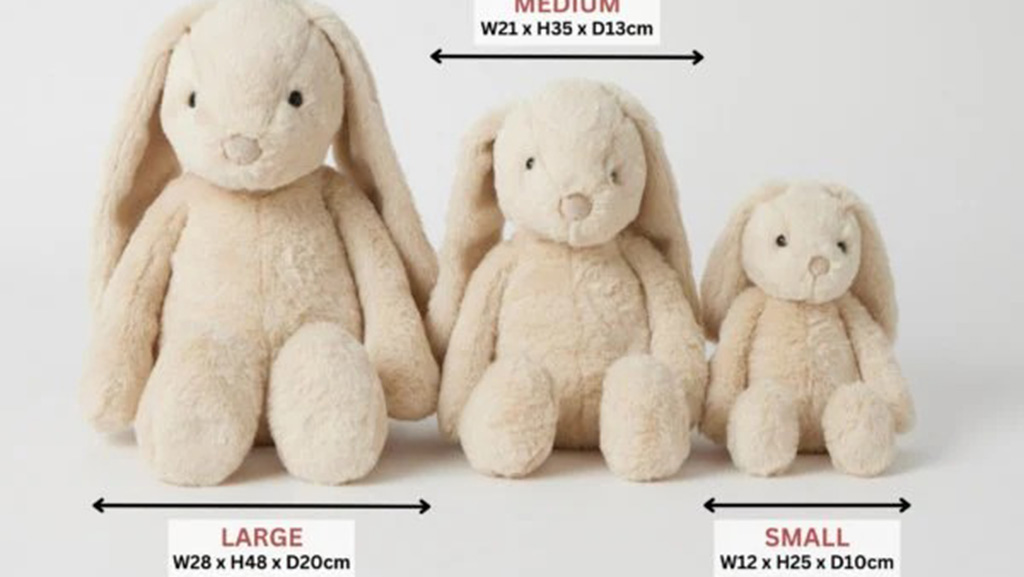
Jellycat offers a wide variety of sizes and collections, each aimed at a different market segment.
Most characters come in multiple heights—from tiny 13 cm bag charms to giant 108 cm plush—allowing flexible retail price points and gifting occasions.
Its most famous line, Bashful Bunnies, includes dozens of colours and sizes.
Other successful series include Amuseables (cute food and plant characters), Animals, and Baby Soothers. Each series keeps the same softness standards but varies in design personality.
Table 3 — Comparison of popular Jellycat collections and size chart
| Collection | Core Theme | Common Sizes (H × W × L cm) | Target Audience | Market Notes |
|---|---|---|---|---|
| Bashful Bunny | Classic rabbit in soft tones | 18 × 9 × 9 (Small) to 51 × 21 × 15 (Huge) | All ages | Best-seller; flagship design |
| Amuseables | Everyday objects with faces | 10–40 cm | Adults, collectors | Viral on social media |
| Animals | Bears, dogs, jungle creatures | 20–45 cm | Kids, gift buyers | Timeless gift appeal |
| Baby Series | Soothers, rattles, books | 20–30 cm | Infants | Gentle textures, safety-tested |
| Limited / Seasonal | Holiday & themed releases | 10–50 cm | Collectors | Often retired fast |
Jellycat’s marketing strength lies in seasonal refreshes—it retires designs regularly, encouraging repeat purchases and high resale value for retired editions.
How do safety standards and age grading apply to Jellycat plush toys?

Behind Jellycat’s charm is strict compliance with global toy safety standards.
Each item is labelled with clear age recommendations and care instructions, following the European EN 71, U.S. ASTM F963, and CPSIA frameworks.
Most Jellycat plushies are safe from birth, except for items containing parts unsuitable for infants (like bean bags, long hair, or metal components). Each product label and website page specifies if it’s “Suitable from Birth” or for “12 months +.”
The brand also runs batch-level testing to maintain uniform safety documentation—a process that professional factories emulate to guarantee market compliance.
Table 4 — Safety standards and testing applied to Jellycat plush
| Regulation | Region | Focus Area | Jellycat Compliance Practice |
|---|---|---|---|
| EN 71 (Parts 1-3) | Europe | Mechanical, flammability, chemical | All toys tested pre-shipment |
| ASTM F963 / CPSIA | USA | Heavy metals, small parts, labeling | Verified through lab reports |
| REACH / SVHC | EU chemical control | Substances of concern | Material screening |
| GB 6675 | China | National toy safety | Applied to factory audits |
| Care Label Validation | Global | Wash method accuracy | Tested at 30 °C gentle cycle |
| Age Grading | Product-specific | “From birth” / “12 m+” | Printed on hangtags & pages |
These standards explain why Jellycat plushies are trusted in baby boutiques, museums, and design stores around the world—safety is as important as softness.
How can buyers verify authenticity and avoid counterfeits in global markets?

Because of their popularity, Jellycat toys are frequently copied.
Authentic pieces carry high-quality labeling, precise embroidery, and a specific brand tag design.
Counterfeits often feel rougher, use lower-grade polyester, and misspell product names or have incorrect fonts on the hangtag.
To protect both end-buyers and resellers, Jellycat provides verification guidance through official retailers and its website.
Authorized shops appear on their Store Locator, and the company warns against suspiciously cheap online listings.
Table 5 — Authenticity checklist for Jellycat plush buyers
| Feature | Authentic Jellycat | Common Fake Signs | How to Verify |
|---|---|---|---|
| Fabric texture | Ultra-soft, even pile | Rough, uneven, dull | Compare close-up photos |
| Hangtag | Cream paper tag with silver logo | Misaligned print / wrong font | Cross-check official images |
| Sewn fabric tag | “Jellycat London” logo, even stitches | Missing or wrong color thread | Check placement on side seam |
| Product code | Matches Jellycat website | Random letters/numbers | Confirm code before purchase |
| Retail source | Authorized store list | Unknown marketplaces | Use Jellycat Store Locator |
| Price range | Consistent global pricing | Too low / bulk offers | Compare with official SRP |
Authenticity matters not only for collectors but also for safety. Counterfeits skip EN 71/ASTM testing and may use unverified dyes or fillings. Always buy from official distributors or well-known retailers to ensure compliance and resale value.
How should Jellycat plush be cleaned and maintained to preserve softness and value?

Proper care keeps Jellycat plush toys beautiful for years.
Although many designs can be machine-washed, the brand recommends reading the label on each item—some are surface wash only, especially those with beads or special trims.
The general rule is wash at 30 °C gentle, do not tumble dry, and reshape while damp.
Never use bleach, iron, or dry cleaning, as high heat or chemicals can harden the fibers and dull the surface.
To maintain texture, lightly brush the nap after drying, or use a hand steamer on low setting to lift flattened fur.
Collectors should store plush in dry, shaded areas to prevent dust and UV discoloration.
Table 6 — Jellycat care and maintenance reference
| Goal | Safe Method | Tools or Tips | What to Avoid |
|---|---|---|---|
| Routine refresh | Air out weekly; shake gently | Soft brush | Sunlight exposure |
| Spot cleaning | Damp cloth + mild detergent | Gentle circular motion | Soaking or scrubbing |
| Full wash (if label allows) | Wash bag, 30 °C cycle | 2 clean balls to maintain shape | Tumble dryer |
| Drying | Air-dry flat, reshape | Towel underneath | Radiator or direct heat |
| Storage | Cool, dry, shaded area | Cotton bag | Plastic bags in humidity |
| Restoration | Low-steam brush | Comb with nap direction | High-pressure steam |
Well-maintained Jellycats retain their colour, softness, and collector value. For gift retailers, including care cards enhances customer satisfaction and brand trust.
Conclusion
A Jellycat stuffed animal is more than a plush toy—it’s a piece of tactile design that combines luxurious materials, child-safe engineering, and imaginative storytelling. Its success comes from the perfect balance between softness, character, and reliability.
For professional plush makers like Kinwin, Jellycat represents an industry benchmark. Understanding its material choices, safety workflow, and emotional design helps global buyers develop their own high-end plush lines that meet international expectations.
Contact [email protected] or visit kinwintoys.com to discuss how our OEM & ODM expertise can help you create plush toys that match the softness, quality, and charm customers love worldwide.