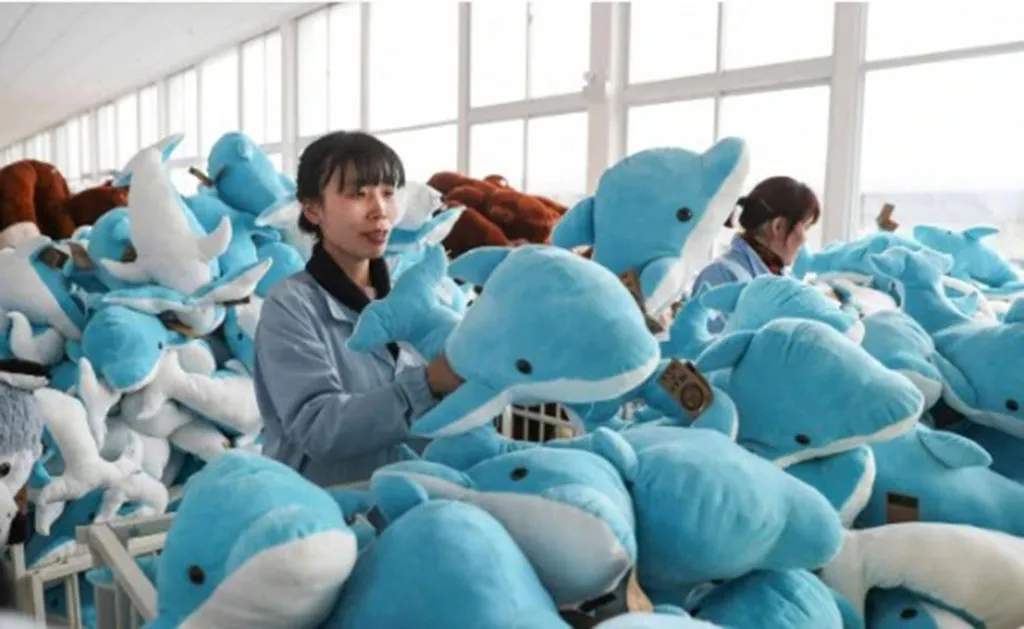
I’m Amanda from Kinwin in China. I help brands choose fillings that feel soft, pass audits, and protect margin. When teams ask, “What’s the cheapest stuffing for stuffed animals?” my answer is: it depends on yield, compliance, and how the toy is built. A low fiber price is useless if recovery is poor, AQL fails rise, or freight explodes because you packed air. Below I map the true cost drivers, compare low-cost fillings, explain loft efficiency, highlight compliance traps, show sourcing levers, and finish with a price-vs-performance playbook you can run this month.
What cost drivers—fiber price, denier, GSM-to-loft yield—most influence stuffing cost per unit?

Stuffing cost per toy is not only the price per kilogram. It’s the grams needed to achieve the look and squeeze, the loft stability after packing, and the time to stuff evenly. Three big levers:
- Fiber price & denier: Lower denier hollow fibers often feel softer and fill more volume per gram. But ultra-fine fibers can raise price/kg and increase fly loss on lines without good housekeeping.
- Yield (GSM-to-loft): The question is “how many liters per kg can I get at my target firmness?” Higher yield means fewer grams per unit.
- Labor & line speed: Easy-flow fibers reduce clogging and let operators hit fill maps faster. Hard-to-place blends push labor minutes up—hidden cost.
Table 1 — Cost Drivers That Matter Most
| Driver | What lowers cost per unit | What raises cost per unit |
|---|---|---|
| Fiber price/kg | Commodity virgin poly at stable index | Boutique fibers; short-run specials |
| Denier & crimp | Hollow, consistent crimp → higher loft | Coarse, inconsistent crimp → flat look |
| Loft yield (L/kg) | Higher volume per gram → fewer grams | Low yield → over-stuffing to look full |
| Labor time | Smooth flow, simple baffles | Lumpy fibers, many micro-cavities |
| Scrap & loss | Stable staple length, less fly | Shedding/matting; cleanup downtime |
| Freight/packing | Compressible fiber with good recovery | Poor recovery → bigger cartons |
Which low-cost fillings (virgin polyfiber, rPET recycled fiber, shredded foam, cotton/kapok, PP pellet blends) are cheapest by region and spec?
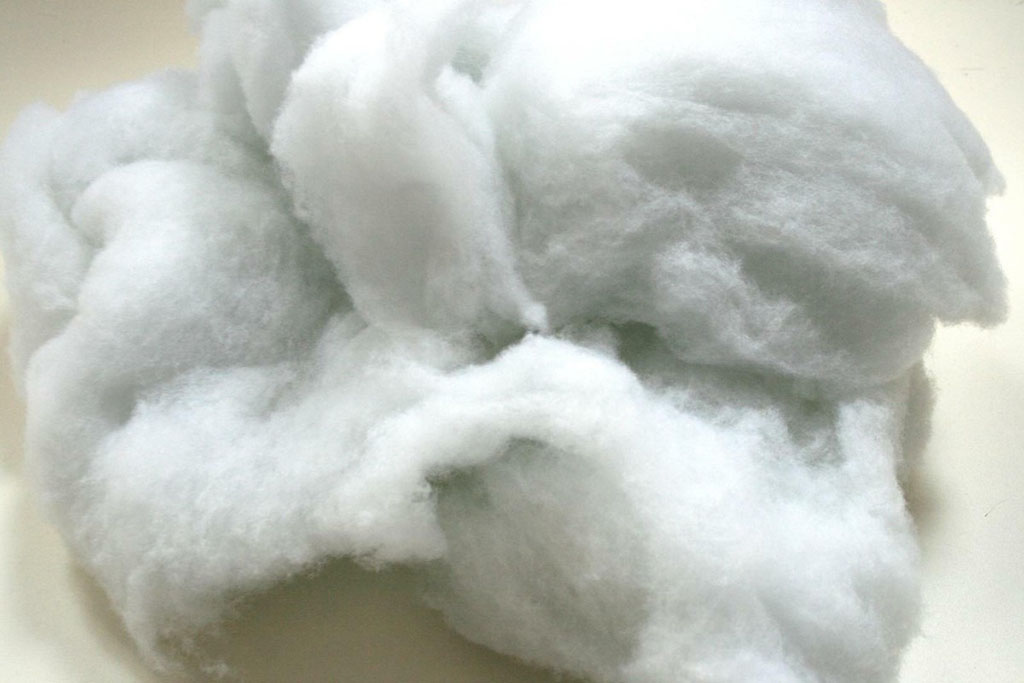
“Cheapest” varies by region, spec, and scale. In most projects, virgin hollow polyester fiber wins on price + yield + compliance. rPET recycled fiber is often close in cost for large MOQs and comes with a brand story (verify certificates). Shredded foam can be lowest per kg but is heavy, inconsistent, and risky for kids’ ranges. Cotton/kapok is natural but packs down over time and can complicate flammability. PP pellets are not “stuffing,” but micro-blends reduce fiber grams; use double-pouched systems and note weight-driven freight.
Table 2 — Low-Cost Filling Comparison (Directional)
| Filling | Typical cost posture | Yield & feel | Compliance reality | Where it fits |
|---|---|---|---|---|
| Virgin hollow polyfiber | Lowest overall | Cloud-soft; good recovery | Easiest to pass EN71/ASTM/CPSIA | Kids’ plush, mass retail |
| rPET hollow fiber | Low–mid (close to virgin at scale) | Like virgin if quality | Needs lot-level rPET certs | Eco lines, retail narratives |
| Shredded foam | Low per kg, heavy per unit | Supportive, slower recovery | Spot-clean only; particulate risk | Adults, décor pillows |
| Cotton/kapok | Mid but low-tech | Natural, compresses with time | Moisture & flammability care | Craft/vintage looks |
| PP pellet blends | Fiber grams ↓, freight ↑ | Weighted, grounded feel | Double-pouch, leakage tests | Weighted bases, 3+ or adult |
Regional note: In China/Vietnam hubs, virgin and rPET fibers are widely available; rPET price narrows with volume and steady color specs.
How do loft efficiency, compression ratio, and packing density change cost-per-liter and perceived softness?
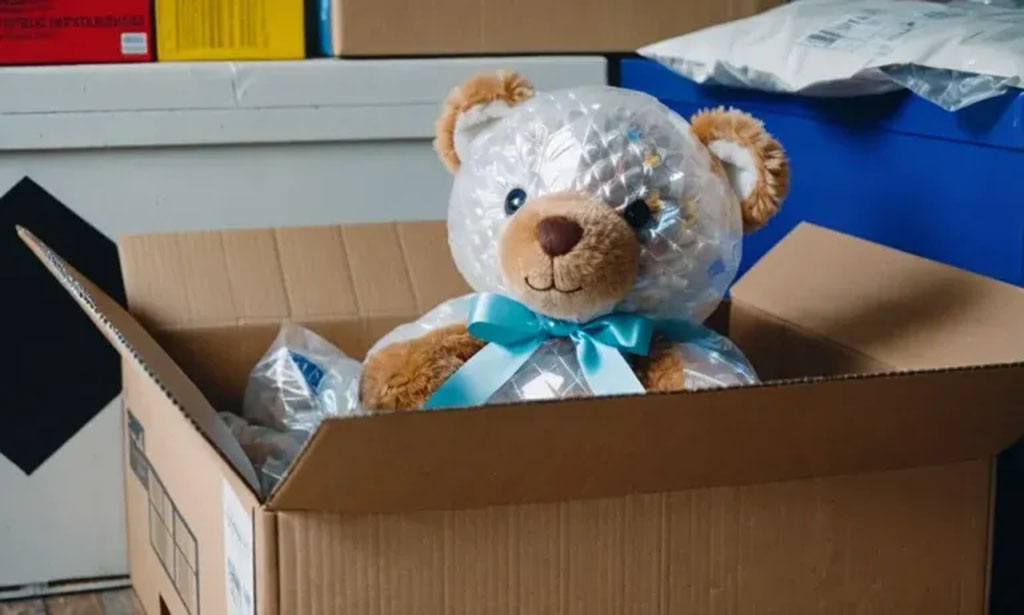
Think in liters, not only grams. A fiber with high loft efficiency (L/kg at target squeeze) uses fewer grams to fill the same body, cutting direct cost and carton count. Compression ratio matters for freight: if you can safely compress stuffed units (short-pile cushions) and recover shape, your landed cost drops. Packing density (how many units per carton) ties to silhouette and how forgiving the fiber is after compression.
Table 3 — Loft & Packing Math (Simple Rules)
| Metric | What it means | Cheaper when… | Watch-outs |
|---|---|---|---|
| Loft efficiency (L/kg) | Volume delivered per kg | Higher L/kg → fewer grams per toy | Over-lofty fibers can look airy, not plush |
| Compression ratio | How small units go for shipping | Safe compression + good recovery | Long pile/faux fur often no compress |
| Packing density | Units/carton at safe ECT | More units without deforming | Test for ear/muzzle deformation |
| Perceived softness | Squeeze + surface glide | Right loft at lower grams | Under-stuffing reads cheap online |
Action: Run a pilot pack test: compress for 48 hours, measure recovery in 24 hours, photograph faces before/after.
What compliance and safety considerations (EN71/ASTM/CPSIA, flammability, migration) can make “cheap” fillings more expensive in practice?

A “cheap” fill turns expensive when it fails. For children’s markets, you must pass EN71-1/2/3 (EU/UK) or ASTM F963 + CPSIA (U.S.). Stuffing integrity and seam strength are critical—poor fiber causes lumps and seam stress. Flammability screens can be harder for certain natural fills. Chemical migration (heavy metals, phthalates where relevant) must be clean across all components—not just the shell. For weighted items, you must prove pellet containment. If scented features are used, follow IFRA and keep them removable.
Table 4 — Compliance Traps That Inflate Cost
| Risk | Why it appears | Hidden cost if ignored | Fix |
|---|---|---|---|
| Seam pops | Over-stuffing low-loft fiber | Rework, scrap, fails | Better fiber yield; SPI tuning |
| Lumps/collapse | Inconsistent staple length | Resampling labor; returns | Tighter fiber spec; baffles |
| Flammability flags | Natural fibers, long pile | Extra tests, redesign | Short-pile face; proper finishes |
| Pellet leaks | Single pouch; weak stitching | Recalls, reputational risk | Double-pouch, leakage tests |
| Greenwashing | rPET claim w/o docs | Relabel, markdowns | Lot-tied certificates |
How do sourcing terms—MOQs, staple length tolerances, colorfastness grades, and lab testing—affect total stuffing cost?
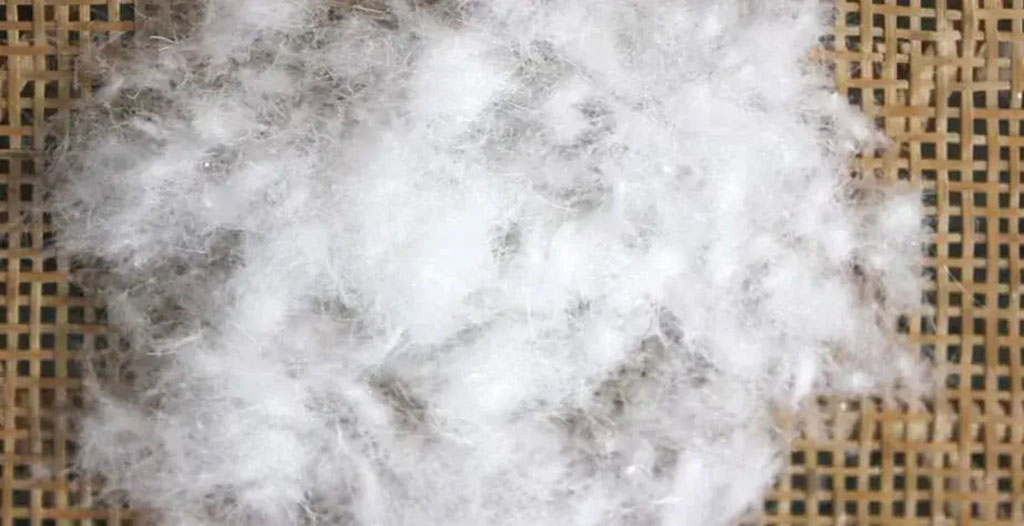
Stuffing cost is negotiated on paper long before the line runs. MOQs lower price/kg; staple length tolerances reduce machine loss; colorfastness grades matter when the fill shows at seams (white fiber for white shells). Lab testing at the component level saves rework: if you switch fiber vendor or dye lot for shell fabrics, plan re-tests.
Table 5 — Sourcing Levers That Lower True Cost
| Lever | Ask your supplier for… | Benefit |
|---|---|---|
| MOQ & cadence | Rolling releases aligned to your forecast | Stable price; fewer rush fees |
| Staple length | Tight tolerance window | Smoother flow; less fly |
| Crimp & denier spec | Written spec with sample retainers | Repeatable loft and feel |
| White point & cleanliness | Clear whiteness grade for light shells | No grey show-through |
| Lot-tied lab data | EN71/ASTM/CPSIA on actual lots | Fewer surprises at FRI |
| Recovery proof | Simple compression test report | Freight planning confidence |
How should brands balance price vs. performance on durability, recovery, wash care, and AQL failure risk?

Use a tiered approach: pick one economy fill for value SKUs, one standard for core, and one premium for hero pieces. For 0–3 years, prefer short-pile shells + hollow poly (or verified rPET) with panel gram maps and baffles. For décor or adult comfort, you can introduce weighted bases or foam components—but label care honestly (surface/gentle; no heavy claims).
Table 6 — Price–Performance Matrix (Copy-Ready)
| Line tier | Filling choice | Why it works | Guardrails |
|---|---|---|---|
| Value | Virgin hollow polyfiber | Lowest cost with good yield | Keep short-pile; avoid heavy compression |
| Core | rPET hollow fiber (verified) | Similar feel + eco story | Certificates per lot; same fill grams |
| Hero / décor | Hollow poly + double-pouched pellets | Premium handfeel, sit-stability | Leakage tests; AQL focus |
| Niche | Shredded foam (adult) | Supportive, unique squeeze | Spot clean; not for kids ranges |
Quick RFQ snippets (paste-ready)
Value Cuddle Bear (Kids 3+)
- Fill: virgin hollow polyfiber, target L/kg ≥ X at standard squeeze
- Shell: velboa 2.0–2.5 mm, 220 GSM; embroidery + safety eyes (qualified)
- Fill map: grams per panel provided; baffles at torso
- Tests: EN71-1/2/3; ASTM F963; CPSIA; tracking label
Eco Core Bunny (Kids 0+)
- Fill: rPET hollow fiber with lot certificates
- Shell: minky 2.5–3.0 mm, 240 GSM; embroidery-only face
- Care: gentle machine; low spin
- Docs: CPC/DoC + lot-tied reports
Décor Fox with Weight (Adult/Tween)
- Fill: hollow poly + PP pellets 120 g, double-pouched
- Shell: faux fur body + velboa face insert; trim mask defined
- Care: surface/gentle; brush-after-dry
- Packaging: gift box
Conclusion
The cheapest stuffing for stuffed animals is usually virgin hollow polyester—when the spec delivers high loft per gram and the line can stuff it efficiently. rPET can match it at scale with a verified eco story. Real savings come from yield, baffles, compression tests, and lot-tied compliance—not from chasing the very lowest price/kg. If you want a factory partner to benchmark fills and lock a fill map that protects both softness and margin, email [email protected] or visit kinwintoys.com—my team at Kinwin can take you from brief to PPS to on-time mass.