Skip to content
Professional plush manufacturers save money in a different way from low-price suppliers. They do not only reduce a number on a quotation sheet. They reduce the total cost of turning a custom plush idea into approved, consistent, sellable inventory. For B2B buyers, that difference matters because the cheapest visible price is not always the lowest real cost.
Plush manufacturing cost is affected by many decisions: product size, pattern efficiency, fabric choice, stuffing amount, embroidery density, sewing complexity, sample revisions, order quantity, quality control, packaging, carton volume, inspection results, shipment timing, and communication quality. A weak supplier may reduce cost by cutting corners. A professional factory reduces cost by preventing waste, defects, confusion, and late-stage corrections.
This is especially important for brands, importers, retailers, promotional buyers, and licensing teams. A plush project does not only cost money when goods are produced. It also costs money when samples are repeated, materials are wrong, bulk production is inconsistent, inspection fails, shipping volume is inefficient, or buyers spend weeks chasing updates. Professional factories save money by making the project more predictable.
The best cost-saving work begins before bulk production. A strong manufacturer studies the design, identifies risks, suggests practical adjustments, plans materials, builds a repeatable sample, controls the production process, and prepares packaging and inspection early. These actions may not look dramatic, but they prevent the expensive problems that often appear when projects are managed only by price pressure.
Reduce Cost Through Early Design Review
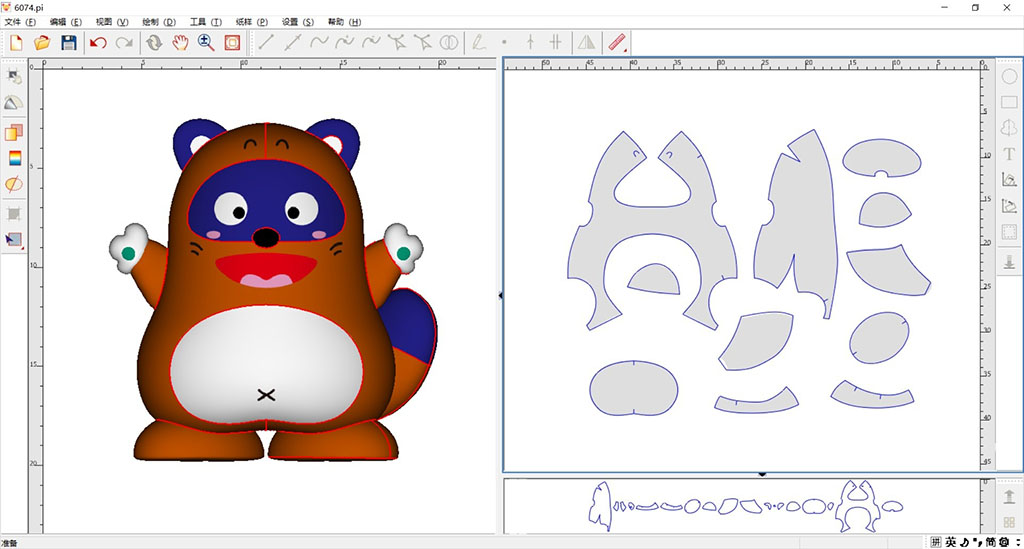
One of the most effective ways professional plush manufacturers save money is by reviewing the design before production decisions are locked. Many cost problems are created at the design stage, long before fabric is cut. A plush toy may include details that look attractive in artwork but create high labor cost, material waste, sewing difficulty, weak structure, or packaging inefficiency.
Experienced factories can identify which design details are essential and which details create cost without adding much buyer value. For example, a small hidden seam curve may require extra sewing time but may not be visible to the customer. A complicated accessory may increase labor, inspection, and safety review. A slightly oversized part may reduce carton efficiency. A dense embroidery area may look premium but slow production and increase thread cost.
Design review does not mean weakening the product. It means protecting the product’s commercial purpose while removing unnecessary cost. The factory should preserve brand-recognizable details such as face, shape, color, texture, and character expression. At the same time, it can suggest more practical construction methods, safer attachments, better size proportions, or simplified internal structures.
This step is especially valuable when buyers are developing a new plush item from sketches, 3D files, brand artwork, or reference photos. A professional manufacturer can explain what is easy, what is risky, what requires sampling, and what may affect cost or lead time. This prevents buyers from discovering expensive limitations only after several sample rounds.
Early design review saves money because it reduces repeated development, avoids unrealistic specifications, and helps the buyer make cost decisions while changes are still easy. Once bulk materials are purchased or panels are cut, design changes become much more expensive.
| Design Review Area | Cost-Saving Action | Buyer Benefit |
|---|---|---|
| Shape and structure | Adjust patterns, seams, and proportions before sampling | Reduces difficult sewing and improves repeatability |
| Decoration details | Review embroidery, printing, accessories, and visible priorities | Keeps important brand details while avoiding unnecessary labor |
| Size and packaging impact | Check whether the design creates excessive carton volume | Controls freight and packing cost before the product is locked |
Save Money by Making Sampling More Accurate

Sampling can become expensive when the factory and buyer keep correcting the same problem. Each sample round consumes technician time, materials, shipping cost, communication time, and project calendar. Professional plush manufacturers save money by improving sample accuracy and making each revision purposeful.
A strong sample process starts with clear interpretation of buyer requirements. The factory should confirm size, fabric type, stuffing feel, target market, artwork details, embroidery files, print method, label position, packaging direction, and safety concerns before making the first sample. If the sample room begins with incomplete information, the first sample may be far from what the buyer expects.
Professional manufacturers also document revision comments carefully. Instead of relying on vague comments such as “make it better” or “adjust the face,” they use marked photos, measurement notes, material references, and version records. This reduces misunderstanding between the buyer, sales team, sample room, and production team.
Accurate sampling also protects bulk production cost. If the approved sample is not production-ready, the factory may later discover that the construction is too slow, the fabric is hard to source, the stuffing cannot maintain shape, or the decoration is difficult to repeat. A professional factory checks whether the sample can be reproduced at scale before treating it as the final standard.
Buyers save money when the factory reduces unnecessary sample cycles and creates a benchmark that production can follow. Fewer sample rounds mean faster approval, lower development cost, less uncertainty, and earlier material planning.
| Sampling Control | How It Saves Money | Risk If Weak |
|---|---|---|
| Requirement confirmation | Prevents first sample from being built on wrong assumptions | More revision rounds and longer development time |
| Version tracking | Keeps every change clear and measurable | Repeated misunderstandings between buyer and sample room |
| Production feasibility | Ensures approved sample can be repeated in bulk | Bulk production becomes slower or less consistent than expected |
Control Material Waste and Purchasing Risk
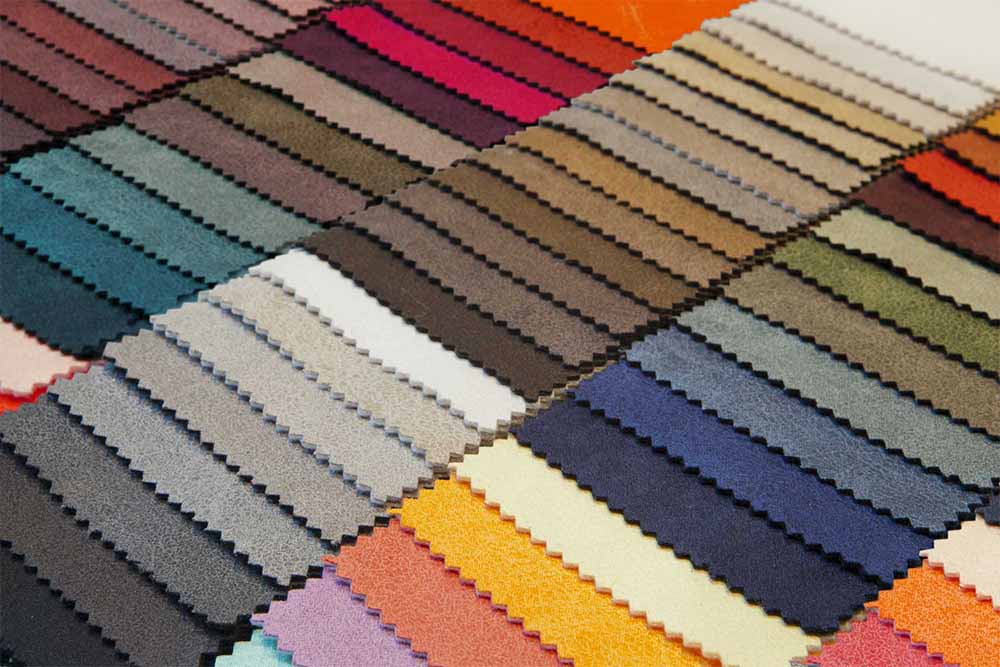
Materials are a major part of plush toy cost. Professional manufacturers save money by planning materials accurately, reducing waste, avoiding wrong purchases, and matching material choices to the product’s real requirements. Poor material planning can create shortages, excess inventory, color inconsistency, production delays, and unnecessary cost.
Plush materials include main fabric, lining, stuffing, embroidery thread, printed fabric, accessories, safety eyes, pellets, sound modules, labels, hangtags, polybags, cartons, and retail packaging. Each material has its own MOQ, lead time, color tolerance, supplier reliability, and quality risk. A professional factory manages these inputs as a system instead of treating them as isolated purchases.
Material waste often happens when the product pattern is inefficient, fabric direction is misunderstood, color lots are mixed, or the order quantity does not match supplier MOQ. Experienced factories can optimize pattern layout, estimate consumption more accurately, and warn buyers when a design or quantity creates material waste. They can also suggest material alternatives that maintain the required look and feel while improving cost.
However, material savings must be controlled. Using cheaper fabric without buyer approval may reduce factory cost but damage the product. Professional cost reduction is transparent: the buyer sees swatches, sample comparisons, and tradeoffs before approving material changes. This protects quality while still allowing practical savings.
Good material planning also reduces delays. When materials are confirmed early, the factory can reserve supplier capacity, schedule cutting, and avoid emergency purchasing. That stability saves money because last-minute solutions are usually more expensive.
| Material Area | Professional Cost Control | Cost Risk Prevented |
|---|---|---|
| Fabric consumption | Optimize pattern layout and fabric direction before cutting | Excess fabric waste and inaccurate material budgeting |
| Supplier planning | Confirm MOQ, lead time, batch, and color standard early | Shortages, mixed lots, and urgent purchasing cost |
| Material alternatives | Compare approved swatches and sample results before switching | Uncontrolled quality differences from cheap substitutes |
Improve Production Efficiency Without Weakening Quality
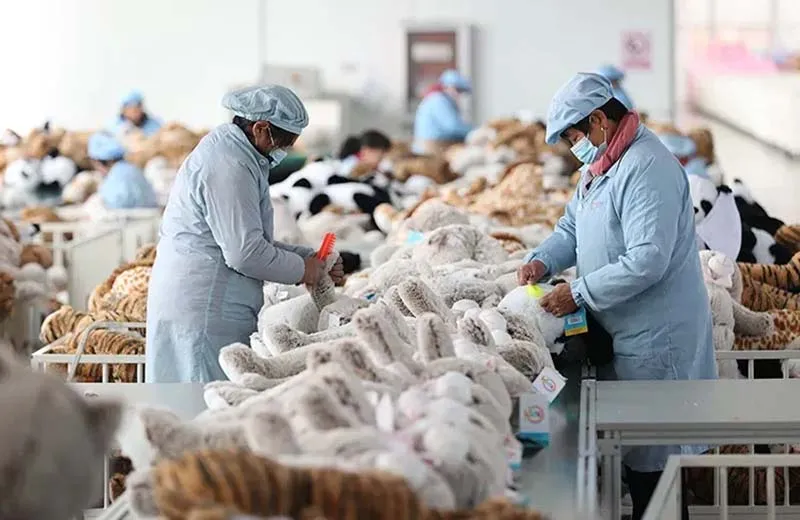
Professional plush manufacturers save money by making production more efficient, not by removing necessary quality controls. Efficiency comes from stable processes, trained operators, clear work instructions, correct tools, and early problem detection. When production is organized well, the factory spends less time correcting mistakes and more time producing consistent goods.
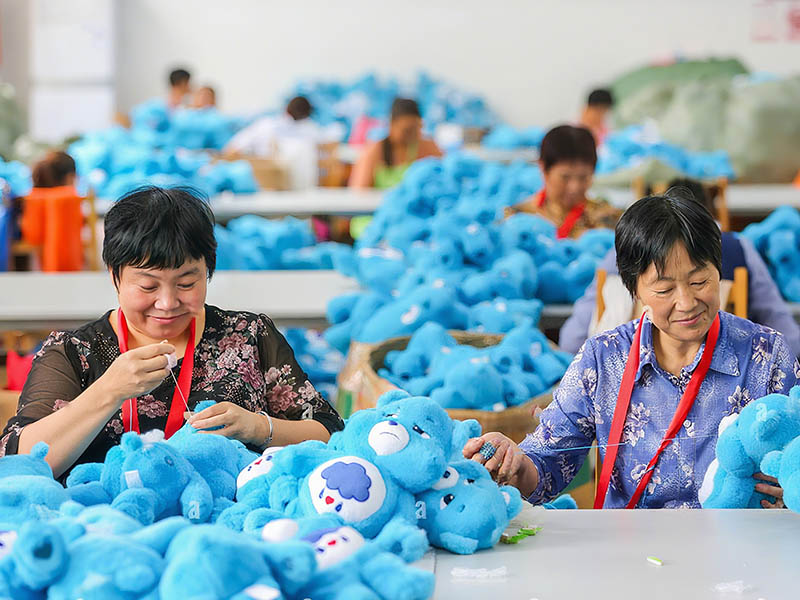
Plush manufacturing includes many labor-sensitive steps: cutting, sewing curves, attaching small parts, embroidery alignment, stuffing, closing, trimming, brushing, labeling, and packing. Small inefficiencies across these steps can add significant cost. A professional factory studies the product and decides how to arrange operations so workers can repeat the approved result with fewer errors.
First-piece approval is one useful method. Before full-speed production begins, the factory checks early line output against the approved sample. If sewing curves, stuffing amount, facial placement, or accessory position are wrong, the issue can be corrected before hundreds or thousands of pieces are affected. This saves labor and material that would otherwise go into rework.
Production efficiency also depends on clear standards. Workers need to know seam allowance, stuffing range, trimming requirements, label placement, and quality limits. If standards are unclear, different workers make different choices, and the factory loses time sorting and correcting inconsistent goods.
Buyers benefit because efficient production supports better pricing and more reliable delivery. The important point is that professional efficiency is controlled efficiency. It does not mean rushing workers or skipping inspection. It means designing the workflow so fewer mistakes occur.
| Efficiency Method | Money Saved | Quality Protection |
|---|---|---|
| First-piece approval | Prevents large-scale repeated defects | Confirms bulk output matches the approved sample |
| Clear work instructions | Reduces time lost to guessing and correction | Keeps sewing, stuffing, trimming, and labeling consistent |
| Operator training | Improves output speed on difficult details | Reduces variation across workers and batches |
Prevent Rework Through Strong Quality Control
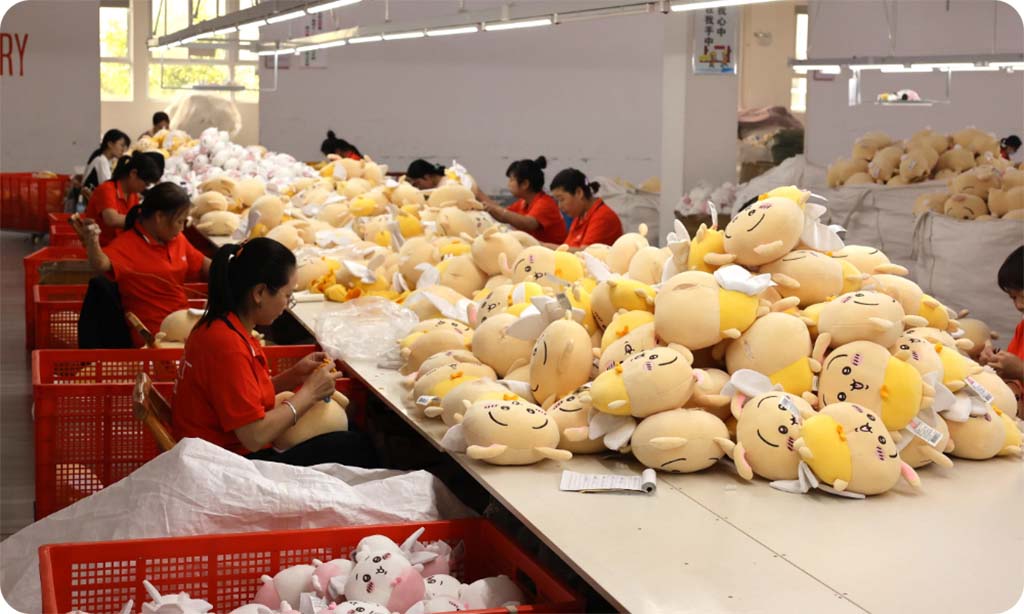
Rework is expensive. It consumes labor, delays packing, increases inspection pressure, and can damage delivery schedules. Professional plush manufacturers save money by preventing defects early instead of fixing them at the end. This is one of the clearest differences between professional cost control and simple low-price manufacturing.
Quality control begins before production. Material inspection catches fabric defects, color issues, missing components, or wrong labels before they enter the line. First-piece inspection verifies that the production method matches the approved sample. Inline QC catches repeated defects during cutting, sewing, stuffing, and finishing. Final inspection confirms that finished goods are ready for shipment.
When QC is weak, defects multiply quietly. An incorrect sewing method, wrong label position, loose accessory, uneven embroidery, or poor stuffing process can affect many units before anyone notices. Fixing those units later costs much more than correcting the method early. In some cases, goods cannot be repaired and must be remade.
Professional factories also record defect trends. If the same defect repeats, the problem may be training, equipment, material, or unclear standards. Records allow managers to correct the root cause rather than only repairing individual pieces. This reduces future defects and improves repeat-order performance.
For buyers, strong QC saves money by improving inspection pass rate, protecting shipment timing, reducing claims, and preventing customer complaints. The cost of quality control is usually smaller than the cost of failed quality.
| QC Stage | Cost-Saving Role | Problem Avoided |
|---|---|---|
| Material inspection | Stops wrong or defective inputs before cutting | Waste from re-cutting or remaking parts |
| Inline QC | Finds repeated defects while correction is still efficient | Large-scale sorting, repair, or remake |
| Final inspection | Confirms shipment readiness before goods leave factory | Claims, delays, and buyer-side receiving problems |
Optimize Packaging and Shipping Volume
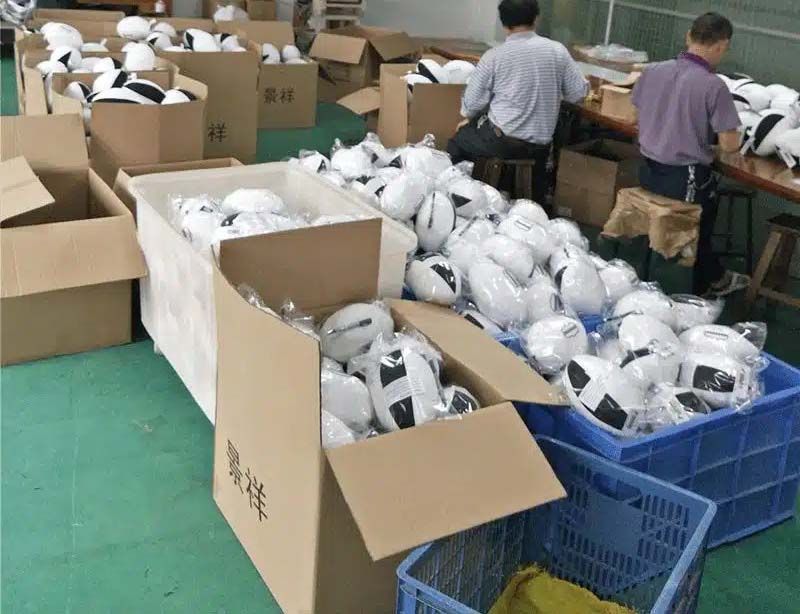
Packaging and shipping can change total plush project cost significantly. Plush toys are often light but bulky, so freight cost is strongly affected by carton size, packing method, units per carton, retail packaging, and dimensional weight. Professional manufacturers save money by considering packaging and shipping volume early, not after production is finished.
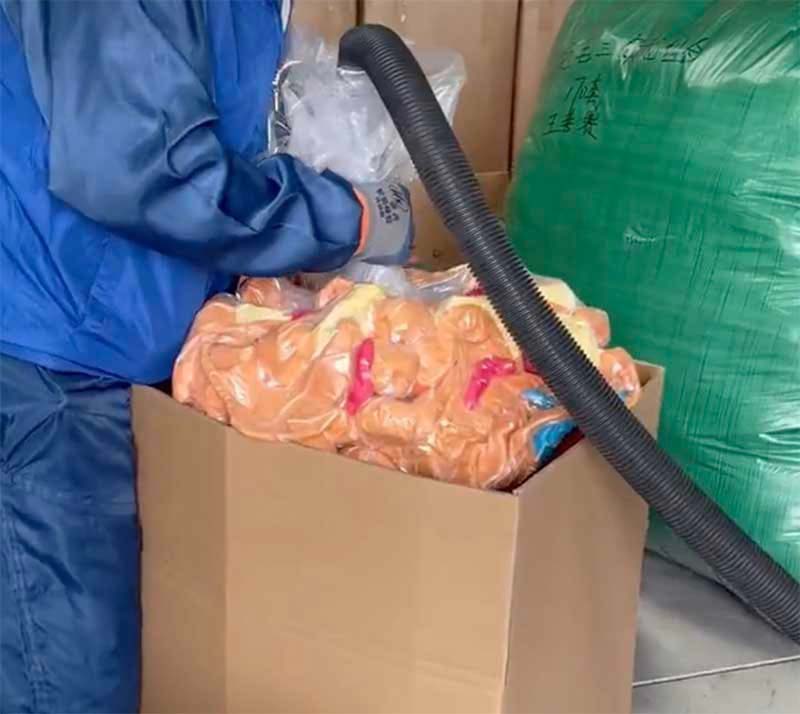
A plush toy packed loose in a polybag has a different cost profile from the same product in a rigid retail box. Vacuum packing may reduce volume for some products, but it can damage shape or presentation if not tested. Larger cartons may improve packing speed but increase freight volume or warehouse handling problems. Smaller cartons may protect goods better but increase carton count and labor.
A professional factory can run packing trials and compare options. It can check how many units fit per carton, whether the product recovers shape after compression, whether labels remain visible, and whether packaging meets retail or marketplace requirements. This gives the buyer real data instead of assumptions.
Packaging cost is not only the price of the bag or carton. It includes labor, product protection, shipping volume, barcode accuracy, carton marks, warehouse receiving, and customer experience. Saving money on weak packaging may create damage, deformation, or retailer rejection. Good packaging control balances cost and protection.
For bulk plush orders, even small improvements in carton efficiency can reduce freight cost. Professional manufacturers help buyers see these savings before shipment, when there is still time to adjust packing method or carton specification.
| Packaging Factor | Cost-Saving Action | Risk to Control |
|---|---|---|
| Carton utilization | Test units per carton and carton dimensions | Paying freight for unnecessary air space |
| Packing method | Compare normal, compressed, or retail packing options | Shape damage or poor shelf presentation |
| Label and carton data | Confirm barcode, marks, quantity, and packing list accuracy | Warehouse receiving errors and shipment delays |
Reduce Buyer Management Time Through Better Communication
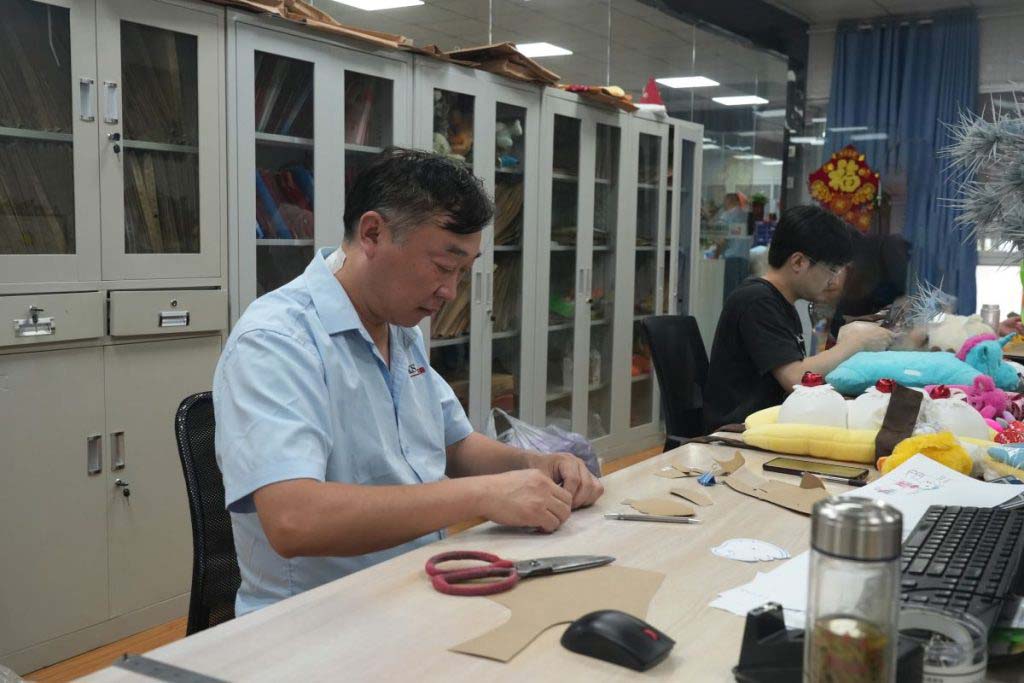
Buyer management time is a real cost, even if it does not appear directly on the factory invoice. When suppliers communicate poorly, buyers spend hours chasing updates, clarifying details, correcting misunderstandings, and explaining uncertainty to internal teams. Professional plush manufacturers save money by reducing this hidden management burden.
Useful communication means giving the buyer specific, timely information. During development, this includes sample status, open technical questions, material options, and revision points. During production, it includes material readiness, cutting start, sewing progress, QC findings, packing plan, and final inspection schedule. During shipment, it includes carton data, packing list, shipping marks, and document status.
Good communication also prevents wrong decisions. If a material delay appears, the factory should explain options and consequences early. If a design detail increases cost, the factory should explain why and suggest alternatives. If QC finds a defect trend, the factory should report the corrective action before the issue affects shipment.
Professional communication is structured. It does not rely only on casual messages. Project records, photos, approval notes, version tracking, and milestone updates all reduce confusion. This is especially important for buyers managing several products, SKUs, approvals, or stakeholders.
When communication is strong, buyers can make decisions faster and with less stress. That saves time, reduces mistakes, and improves the chance that the project stays within budget and schedule.
| Communication Area | Cost Saved | Professional Practice |
|---|---|---|
| Sample development | Fewer repeated clarifications and revision mistakes | Use marked photos, version notes, and clear approval points |
| Production tracking | Less buyer time spent chasing basic status | Report milestones, quantities, risks, and next actions |
| Problem solving | Faster decisions before issues become expensive | Provide options, cost impact, timing impact, and recommendation |
Lower Long-Term Cost Through Repeat-Order Learning
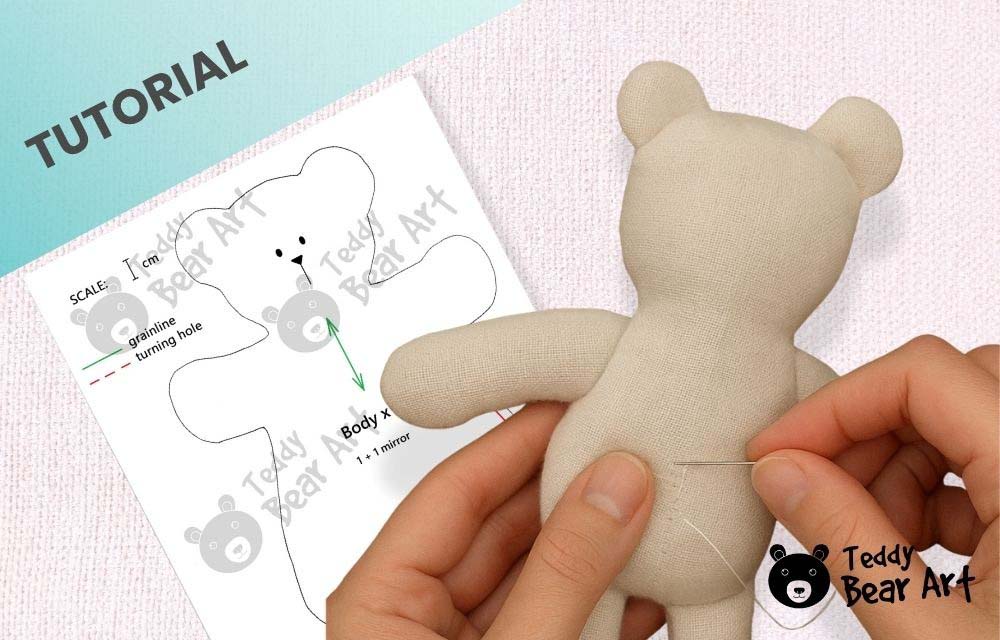
Professional plush manufacturers save the most money over time when they turn each order into learning for the next order. Repeat orders should become smoother, not start from zero every time. A strong factory keeps records of approved materials, patterns, sample standards, QC issues, packing data, shipment details, and buyer preferences.
This information reduces future cost. If the pattern is already stable, sampling can be faster. If material consumption is known, quotations become more accurate. If previous defect points are recorded, QC can focus on the right risks. If carton data is known, freight estimates improve. If the buyer’s preferences are documented, communication becomes more efficient.
Repeat-order learning also supports better production planning. The factory can reserve materials earlier, schedule capacity more accurately, and reduce setup time. For brands with ongoing plush lines, this reliability can be more valuable than a small one-time discount.
Professional factories also use repeat orders to suggest improvements. They may recommend better packaging, a more efficient material, a cleaner sewing method, or a revised inspection checklist based on the previous production experience. These improvements reduce cost without damaging the product.
For buyers, long-term supplier cooperation can create compounding savings. The factory understands the brand better, the buyer spends less time explaining basic requirements, and the project becomes easier to control. This is one reason choosing a professional manufacturing partner can save more money than constantly switching to the cheapest new supplier.
| Repeat-Order Record | How It Saves Money | Buyer Advantage |
|---|---|---|
| Approved standards | Reduces repeated sample work and approval uncertainty | Faster restart for repeat production |
| Production history | Uses previous defect and efficiency data to improve control | Lower rework risk and more stable quality |
| Packing and shipment data | Improves freight estimates and carton planning | Better landed-cost visibility before reorder |
Conclusion
Professional plush manufacturers save money by reducing the total cost of the project, not by cutting corners. They help buyers control cost through early design review, accurate sampling, material planning, production efficiency, quality control, packaging optimization, clear communication, and repeat-order learning.
For B2B buyers, these savings are practical. Fewer sample rounds, less material waste, lower rework risk, better inspection results, more efficient packaging, and fewer urgent decisions all protect margin. The factory’s process directly affects the buyer’s real cost.
The best plush supplier is not simply the one that gives the lowest initial quote. It is the partner that can explain where money is saved, where quality must be protected, and how the order will be managed from idea to shipment. That is how professional manufacturing creates lasting cost control.
FAQ
How do professional plush manufacturers save buyers money?
They save money by reducing waste, rework, repeated sampling, production defects, packaging inefficiency, shipment problems, and buyer management time.
Is cost saving the same as choosing the cheapest supplier?
No. Cost saving means reducing total project cost while protecting quality, safety, delivery, and brand value. The cheapest supplier may create higher hidden costs.
Why does sampling accuracy affect cost?
Accurate sampling reduces repeated revisions, speeds approval, improves material planning, and creates a benchmark that bulk production can follow.
How can material planning reduce plush toy cost?
Material planning reduces waste, avoids wrong purchases, improves fabric consumption estimates, controls supplier MOQ, and prevents urgent replacement buying.
Does stronger quality control increase cost?
Quality control has a cost, but it usually reduces total cost by preventing defects, inspection failure, shipment delays, claims, and remake work.
How does packaging optimization save money?
Packaging optimization improves carton utilization, reduces freight volume, protects product condition, and prevents warehouse or retail receiving problems.
Why are repeat orders cheaper to manage with a professional factory?
Repeat orders benefit from existing samples, patterns, material records, QC history, and packing data, which reduces uncertainty and improves efficiency.