Skip to content
A plush toy pre-shipment inspection process is the final structured check before finished goods leave the factory. For B2B buyers, this stage is important because most commercial risk becomes expensive after shipment. Once cartons are loaded, problems such as wrong labels, weak stitching, poor shape, failed needle detection, mixed colors, or incorrect packing are no longer simple factory corrections. They become logistics delays, rework costs, warehouse disputes, customer complaints, or missed launch dates.
Pre-shipment inspection does not replace good production control. It confirms whether the approved sample, production requirements, packaging instructions, and buyer quality standards have been followed consistently enough for release. A professional plush manufacturer should already control quality during material inspection, cutting, embroidery, sewing, stuffing, finishing, needle detection, and packing. The final inspection checks the result of that system.
For custom plush projects, the inspection process must be more than a quick visual look. Plush toys have soft structures, flexible shapes, fabric direction, filling variation, hand-sewn closing areas, embroidery details, accessories, labels, and packaging requirements. The inspector needs a clear method, an approved reference sample, an AQL sampling plan, defined defect categories, and a practical decision rule for release, hold, or rework.
Confirm Inspection Readiness Before Carton Sampling
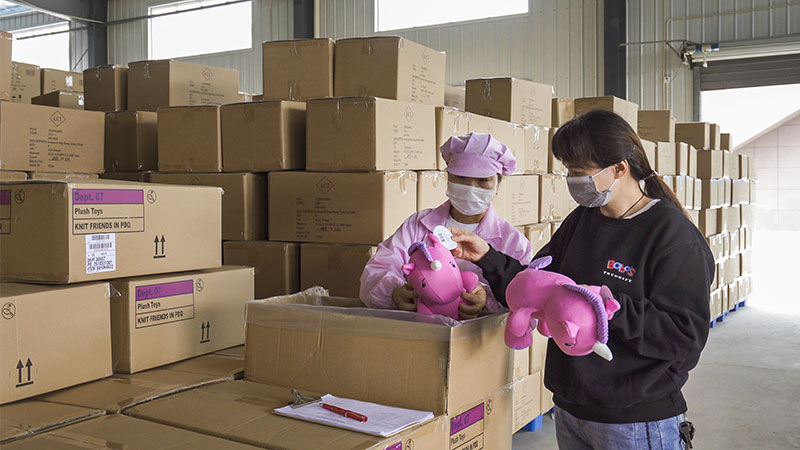
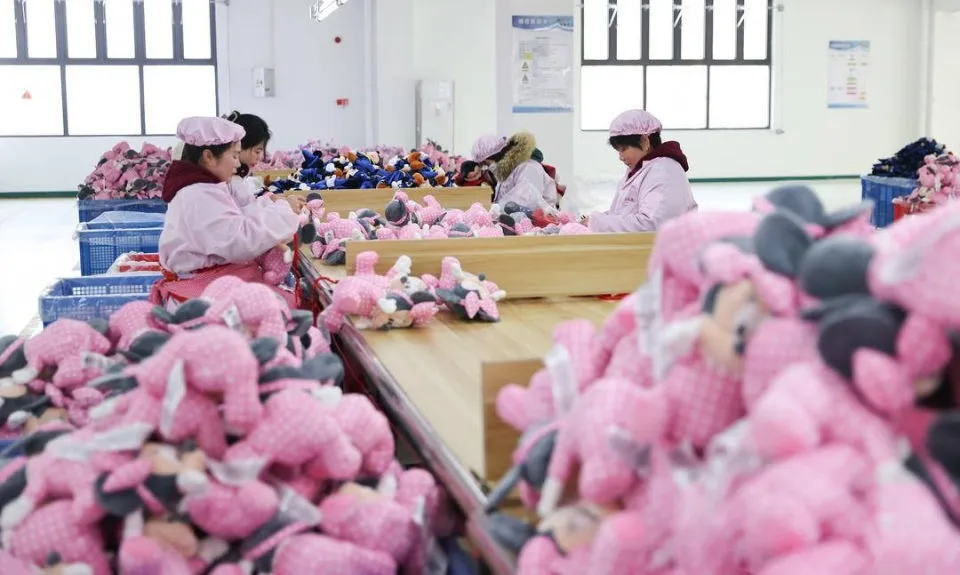
The pre-shipment inspection should begin only when the order is actually ready for inspection. This usually means production is complete, goods are packed into final cartons, carton marks are applied, and the factory can identify the full shipment quantity. Inspecting too early can create a false result because unfinished goods, unpacked products, or mixed lots do not represent the shipment that will be delivered to the buyer.
Readiness confirmation protects both buyer and supplier. If the inspector arrives before goods are finished, the factory may rush packing or move incomplete products into the inspection area. This increases the chance of missing defects. If the buyer schedules inspection too late, there may not be enough time for rework before the vessel closing date or courier pickup. A disciplined schedule keeps inspection useful rather than ceremonial.
The factory should prepare the purchase order, approved sample, packing list, artwork files, label requirements, carton mark layout, testing requirements, and any buyer-specific inspection checklist. These documents give the inspector an objective reference. Without them, the inspection can become subjective, especially for plush products where shape, expression, softness, and finishing details need comparison against an approved standard.
Readiness also includes lot separation. If one order contains several SKUs, colors, sizes, or packaging versions, the factory should separate them clearly before sampling starts. Mixed cartons make it difficult to confirm quantity, defect distribution, and packing accuracy. For buyers managing retail channels or promotional campaigns, this step reduces the risk that one warehouse receives the wrong assortment while another receives shortages.
| Inspection Point | What the Inspector Checks | Why It Matters |
|---|---|---|
| Order completion | Packed quantity, carton count, SKU split, and production lot readiness | Inspection results are valid only when the checked cartons represent the shipment. |
| Reference documents | PO, approved sample, spec sheet, packaging artwork, and label files | Objective references reduce disputes about whether a detail is acceptable. |
| Inspection timing | Factory readiness date, rework buffer, and shipping deadline | A useful inspection leaves enough time to correct problems before shipment. |
Use Approved Samples and Specifications as Benchmarks
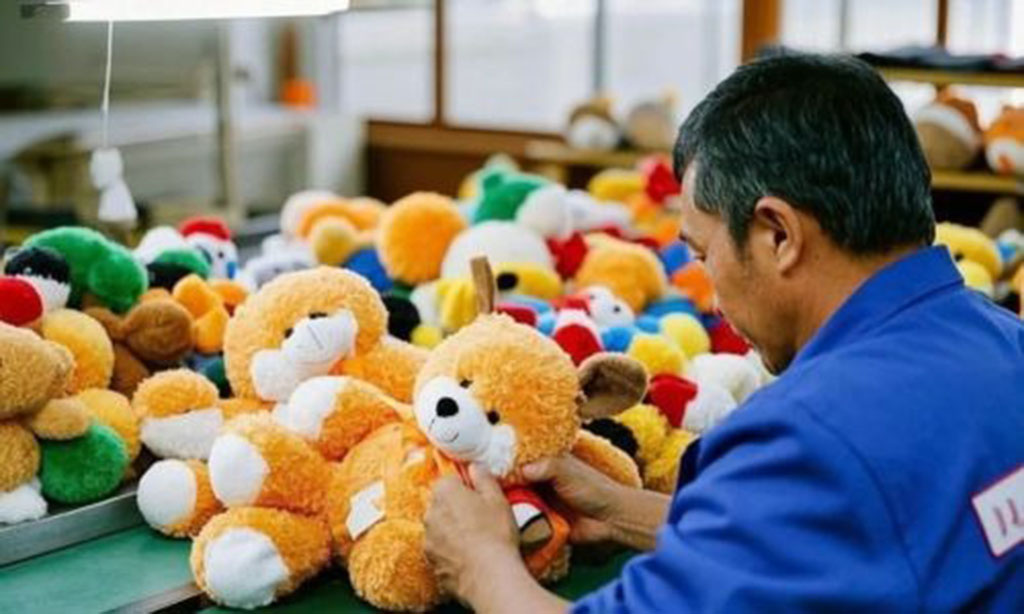
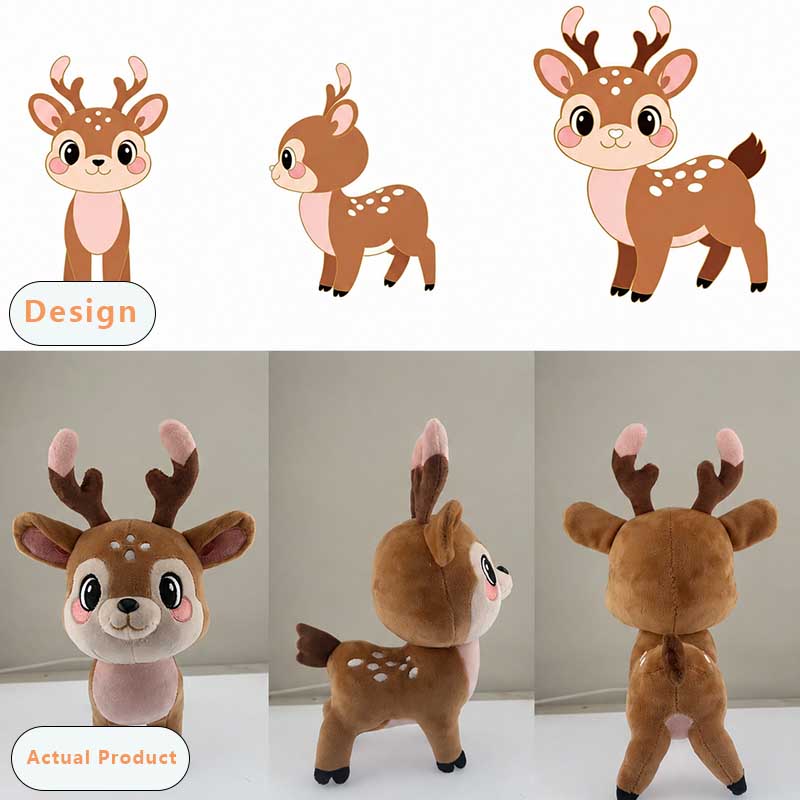
The approved sample is the main benchmark for plush toy inspection. It shows the expected size, fabric, color, shape, face expression, embroidery position, stuffing firmness, label placement, accessory details, and general workmanship level. For custom plush toys, written specifications alone are often not enough because the product has three-dimensional softness and character personality that must be judged visually.
A professional factory should protect the approved sample and make sure production teams understand it before mass production. During pre-shipment inspection, the inspector compares randomly selected finished goods against this benchmark. The goal is not to demand that every unit is mathematically identical. Plush toys naturally have minor handmade variation. The goal is to confirm that the bulk goods remain within the buyer’s approved quality range.
Specification sheets still matter. They define measurable items such as finished height, width, filling weight, fabric composition, color code, embroidery thread, label content, carton quantity, barcode, and packaging method. The best inspection uses both the physical sample and written specifications. The sample controls appearance, while the specification controls measurable and contractual details.
When there are approved deviations, they should be written down before final inspection. For example, the buyer may approve a slightly different fabric shade because the final bulk fabric is within tolerance, or accept a small embroidery adjustment that improved durability. If these decisions are not recorded, an inspector may reject goods that already match the latest buyer approval. Clear benchmark management prevents avoidable delays.
| Inspection Point | What the Inspector Checks | Why It Matters |
|---|---|---|
| Approved sample | Shape, expression, fabric hand feel, stuffing level, and visible finish | It prevents subjective inspection and keeps bulk goods aligned with buyer approval. |
| Specification sheet | Measurements, materials, labels, packing method, and tolerance range | It gives the inspector measurable standards instead of general impressions. |
| Revision record | Final comments from sample approval and any accepted deviations | It avoids rejecting details that the buyer already approved or allowed. |
Follow a Defined Sampling Plan and AQL Standard
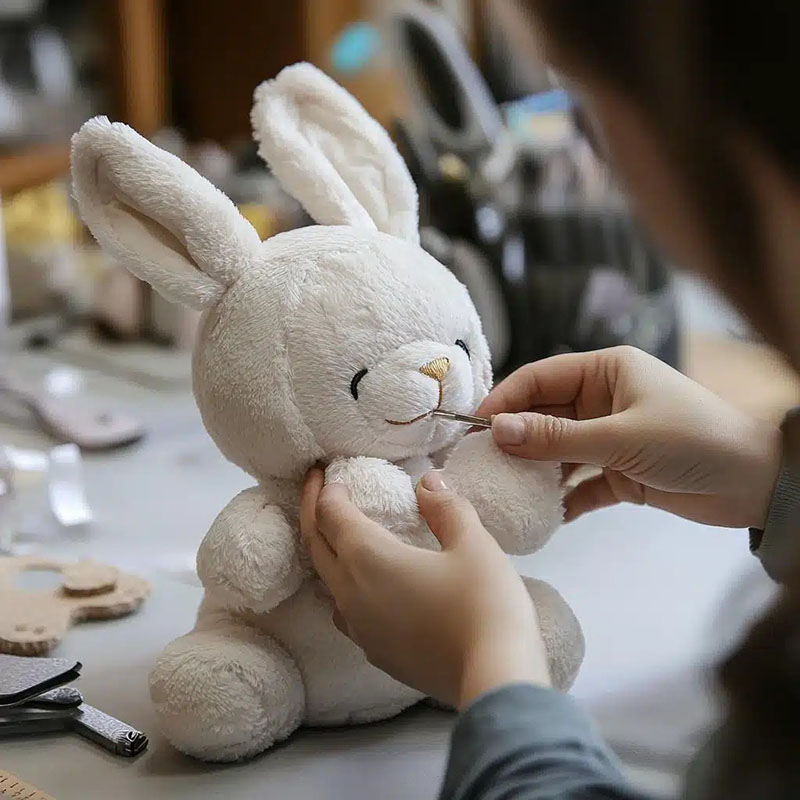
A pre-shipment inspection should not check only a few convenient cartons from the front of the warehouse. The inspector should use a defined sampling method so the result reflects the full shipment. For many export orders, final random inspection follows an AQL standard, where sample size and acceptance numbers are based on lot quantity and inspection level.
AQL does not mean the shipment is perfect. It means the sampled goods meet an agreed statistical acceptance level. Buyers and suppliers should define critical, major, and minor defects before inspection. Critical defects may involve safety risks, contamination, sharp points, loose small parts, broken needles, or wrong compliance labels. Major defects affect saleability or function. Minor defects are small workmanship issues that do not seriously affect use or appearance.
For plush toys, defect classification must be practical. A tiny thread end hidden inside fur may be minor, while an open seam near stuffing is major. A loose plastic eye may be critical for children’s products. A wrong barcode may be major because it affects receiving and retail scanning. When the categories are clear, the inspection decision becomes easier to defend.
Sampling should also cover different carton positions. Inspectors commonly select cartons from the top, middle, bottom, front, and back of the packed lot. This matters because packing teams may complete different production batches at different times. If only the most accessible cartons are checked, the result may miss defects from an earlier sewing batch, a later packing shift, or one specific color lot.
| Inspection Point | What the Inspector Checks | Why It Matters |
|---|---|---|
| Sampling method | Random carton selection across the full packed lot | It reduces the risk of checking only the best or most accessible cartons. |
| AQL levels | Sample size and accept or reject numbers for each defect category | It gives buyers and suppliers a shared release rule. |
| Defect categories | Critical, major, and minor defects defined before inspection | Clear categories prevent arguments after problems are found. |
Inspect Appearance, Workmanship, and Shape Consistency
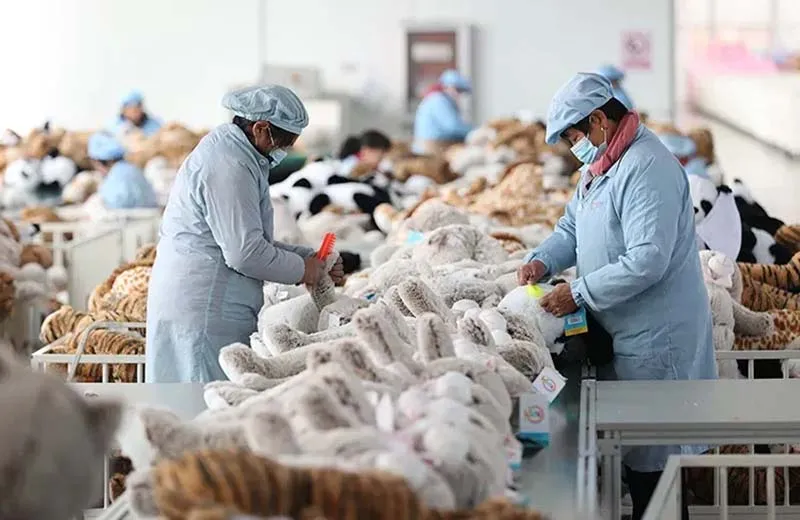
Appearance inspection is especially important for plush toys because buyers often sell emotion, character recognition, and gift value. A product can pass basic construction checks but still fail commercially if the face expression looks wrong, the body shape collapses, the fabric direction is inconsistent, or the toy does not match the approved sample on shelf appearance.
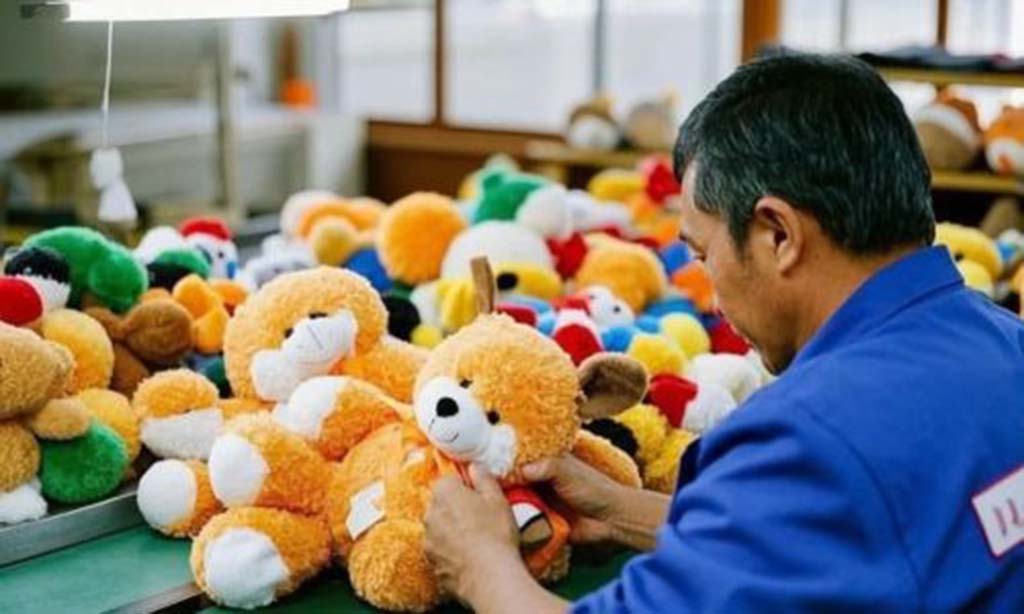
The inspector checks seam alignment, fabric cleanliness, embroidery quality, applique position, trimming, loose threads, exposed filling, oil marks, stains, uneven stuffing, poor symmetry, and deformation from packing. For animal plush, mascot plush, or licensed characters, facial expression usually deserves special attention. Small changes in eye placement, mouth curve, or head shape can make the character look different from the approved design.
Workmanship inspection should also consider how the product will recover after packing. Some plush toys are compressed in cartons or vacuum packed to reduce volume. The inspector needs to distinguish between temporary packing compression and real shape instability. If the product cannot recover to the approved appearance after normal handling, it may create buyer complaints even if the sewing itself is acceptable.
The inspector should record repeated workmanship patterns, not only isolated defects. One open seam may be a random issue. Multiple open seams in the same position may show that the seam allowance, sewing method, or operator training is not adequate. Pattern-based findings are more useful because they help the factory decide whether to trim, repair, reinspect, or stop shipment for broader corrective action.
| Inspection Point | What the Inspector Checks | Why It Matters |
|---|---|---|
| Surface appearance | Stains, dirt, fabric shade difference, pile direction, and trimming quality | Visible defects directly affect retail value and customer perception. |
| Sewing quality | Open seams, skipped stitches, uneven seams, exposed filling, and weak closing | Sewing defects can cause returns, rework, or safety concerns. |
| Shape consistency | Head shape, body balance, limb position, symmetry, and stuffing firmness | Plush products must match the approved sample closely enough for brand consistency. |
Check Measurements, Labels, and Functional Details
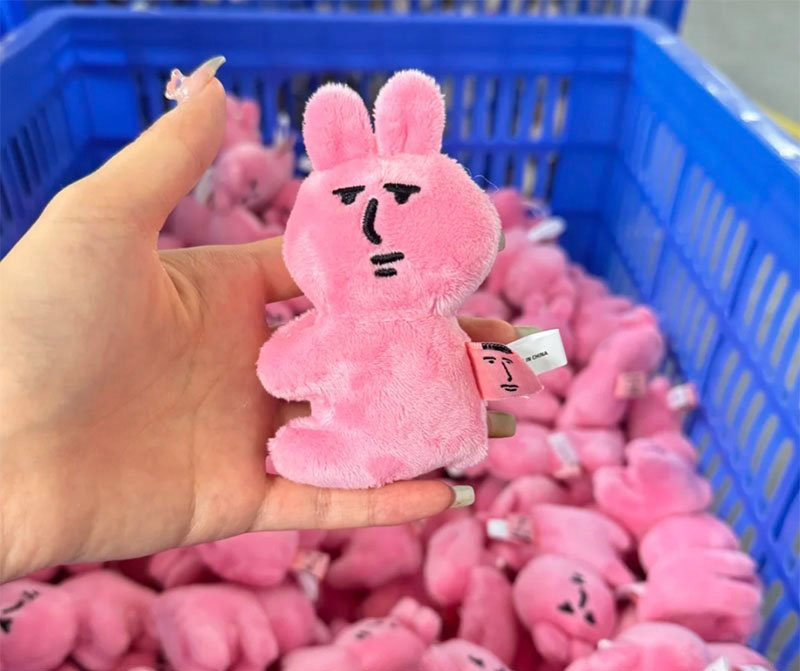
Measurement inspection verifies whether finished plush toys match the approved size range. Because plush is soft, measurement must be done consistently. The inspector should measure from defined points and avoid compressing the toy in a way that changes the result. A reasonable tolerance should be agreed before production because handmade plush goods can have natural variation.
Labels are another high-risk area. The care label, law label, age label, warning label, brand label, barcode, hangtag, and carton label must match the buyer’s requirement and destination market. A plush toy with good workmanship can still be rejected if the label content, language, tracking code, or barcode is wrong. Label mistakes are often expensive because correcting them after packing requires opening cartons and reworking finished goods.
Functional details depend on the product. For plush keychains, the inspector checks metal rings, clips, and attachment strength. For sound plush, the inspector checks sound clarity, button position, battery compartment, and activation. For pillow plush, the inspector checks zipper or seam finish if applicable. For weighted plush, filling weight and distribution need closer attention.
Measurement and function checks should use enough samples to reveal process variation. One perfect unit does not prove the shipment is consistent. The inspector should compare measurements across the selected sample group and note whether variation is random or concentrated around one size, color, or production batch. This helps buyers understand whether a problem is cosmetic, operational, or potentially systemic.
| Inspection Point | What the Inspector Checks | Why It Matters |
|---|---|---|
| Measurements | Height, width, sitting height, limb length, and agreed tolerance points | Size consistency affects retail listing accuracy, packaging fit, and buyer acceptance. |
| Labels and tags | Care label, law label, warning label, barcode, hangtag, and brand label | Incorrect labels can block sales, customs clearance, or retail receiving. |
| Functional parts | Sound module, zipper, keychain, suction cup, battery box, or other features | Functional failures create a higher complaint risk than normal cosmetic defects. |
Verify Safety Checks and Needle Detection Records
Safety checks are central to plush toy pre-shipment inspection, especially for children’s products. The inspector should review whether the factory completed required internal controls such as metal control, needle control, broken needle procedures, component checks, and final needle detection. These steps are not only paperwork. They are part of preventing dangerous contamination from reaching the buyer.
Needle detection is particularly important in plush manufacturing because sewing needles can break during production. A professional factory should have a broken needle control procedure, including machine stoppage, missing fragment search, replacement records, and isolation of affected goods. Before shipment, packed or finished goods should pass through needle detection equipment according to the factory’s control plan and buyer requirements.
Other safety checks may include pull tests for eyes, noses, accessories, seams, and labels. The inspector may also review whether small parts are secure, whether sharp edges exist on accessories, whether cords or loops create hazards, and whether batteries or electronic parts are correctly protected. If the product requires laboratory testing, pre-shipment inspection should confirm that the tested design and shipped goods are the same.
Safety documentation should be treated as part of the shipment evidence. The inspector may not repeat every laboratory test during final inspection, but they can verify whether the factory has the correct reports, component approvals, material records, and internal control logs. For regulated markets, this paper trail is important because the buyer may need proof long after the goods have left the factory.
| Inspection Point | What the Inspector Checks | Why It Matters |
|---|---|---|
| Needle control | Broken needle records, isolation procedure, and final needle detection result | Metal contamination is a serious safety risk and must be controlled before shipment. |
| Pull tests | Eyes, noses, accessories, labels, seams, and attached components | Weak attachments may create choking or durability risks. |
| Compliance match | Production materials and components compared with tested or approved samples | A passed test report is useful only if bulk production matches the tested design. |
Inspect Packaging, Carton Marks, and Packing Accuracy
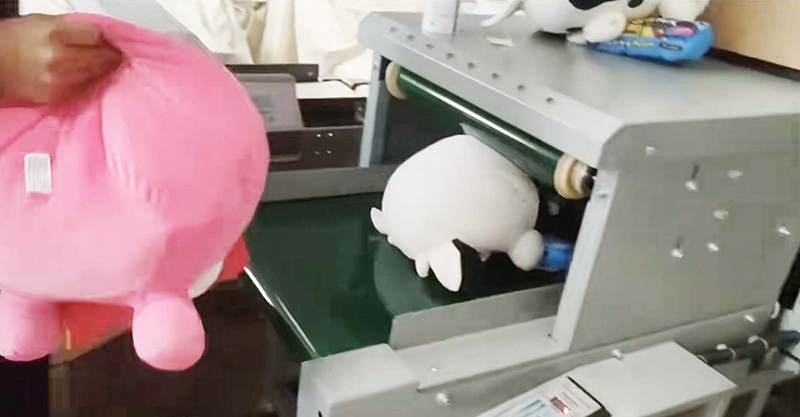
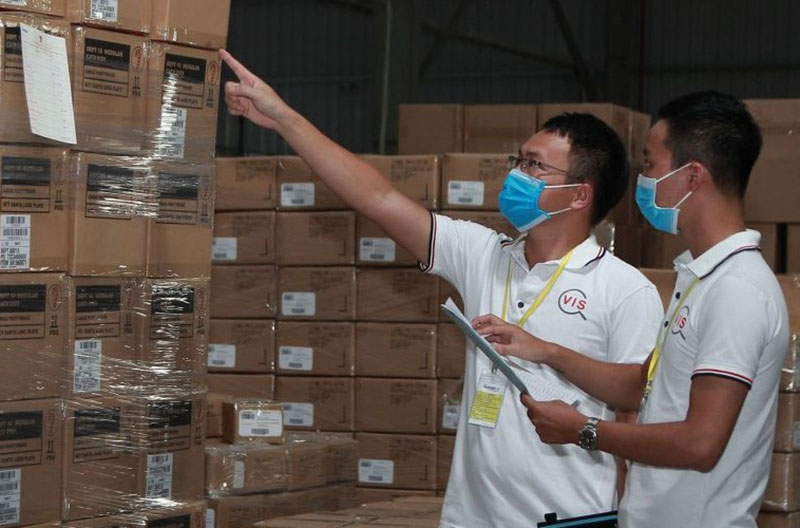
Packaging inspection confirms that the finished plush toys are protected, countable, scannable, and ready for logistics. The inspector checks individual packaging, hangtags, barcode stickers, inner cartons, master cartons, carton marks, carton strength, packing quantity, assortment ratio, and any buyer-specific shipping marks. Packaging errors can delay warehouse receiving even when product quality is acceptable.
For plush toys, packaging also affects shape recovery. Over-compression, unsuitable vacuum packing, or weak cartons may deform the product during transport. If retail appearance is important, the packing method should protect the toy’s face, body shape, accessories, and fabric surface. The inspector should check both the first visible product and randomly selected items inside cartons.
Carton marks must match the buyer’s instruction. This may include PO number, SKU, item description, quantity, carton number, destination, country of origin, gross weight, net weight, carton size, barcode, and handling marks. Wrong carton marks can create receiving confusion and extra relabeling work. For multi-SKU shipments, packing accuracy is as important as workmanship.
Packaging inspection should include practical handling checks. Cartons may look acceptable when stacked in the factory, but weak board, poor sealing, incorrect tape, or excessive compression can fail during inland trucking, container loading, or courier handling. A good final inspection considers whether the packaging protects the plush toy through the full logistics route, not only whether it looks neat at the packing table.
| Inspection Point | What the Inspector Checks | Why It Matters |
|---|---|---|
| Individual packaging | Polybags, hangtags, barcode stickers, warnings, and retail presentation | Correct unit packaging protects the toy and supports sales channel requirements. |
| Carton packing | Quantity per carton, assortment ratio, inner packs, compression, and carton strength | Packing mistakes affect freight, receiving, and product appearance after transport. |
| Shipping marks | PO number, SKU, carton number, weights, dimensions, and destination marks | Accurate marks reduce warehouse disputes and shipment handling errors. |
Review Inspection Findings Before Shipment Release
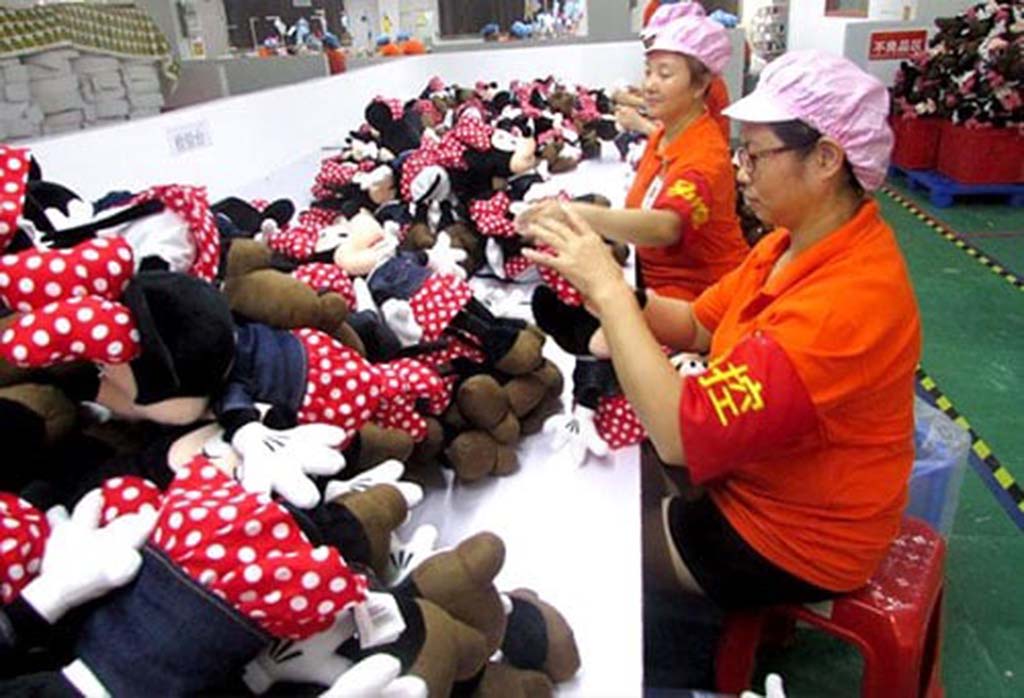
The inspection result should be documented clearly before shipment release. A proper report records the order information, inspected quantity, sampling size, defect list, photos, measurement results, packaging checks, carton condition, AQL conclusion, and any special notes. The report should make it clear whether the shipment passed, failed, or requires conditional approval after rework.
If defects are found, the buyer and factory should separate corrective action from commercial decision. Some issues can be repaired quickly, such as trimming thread ends or replacing incorrect hangtags. Some problems require wider reinspection, such as open seams, wrong filling level, wrong labels, or failed needle detection. Serious safety issues should not be released only because the shipment date is urgent.
A professional supplier should treat the inspection report as a control tool, not a formality. The report helps identify whether problems are isolated, batch-related, or system-related. It also creates evidence for future improvement. If the same defect repeats across orders, the factory should update training, inline inspection, material control, or production methods before the next shipment.
The release decision should be documented in writing. If the shipment passes, the factory can proceed according to the agreed delivery term. If it fails, the report should define what must be reworked and whether reinspection is required. If the buyer grants a waiver for a non-critical issue, that decision should also be recorded so the warehouse, sales team, and supplier all understand the accepted risk.
| Inspection Point | What the Inspector Checks | Why It Matters |
|---|---|---|
| Inspection report | Photos, defect counts, measurement data, packaging checks, and AQL result | Clear evidence supports release decisions and avoids subjective disputes. |
| Corrective action | Rework scope, responsible team, reinspection method, and completion timing | Defects should be corrected in a controlled way before shipment approval. |
| Release decision | Pass, fail, hold, conditional release, or buyer waiver | Shipment release must be based on documented facts and agreed risk level. |
Conclusion
A plush toy pre-shipment inspection process protects buyers by verifying that finished goods match the approved sample, specification, safety requirements, packaging instructions, and shipment documents before cartons leave the factory. It is most effective when the factory prepares the correct references, the inspector follows a defined sampling plan, and the buyer uses clear acceptance criteria.
For custom plush manufacturing, final inspection should cover more than appearance. It should include workmanship, shape consistency, measurement, labels, functional details, safety checks, needle detection records, packaging accuracy, carton marks, and documented release decisions. When these steps are handled professionally, pre-shipment inspection becomes a practical risk-control system rather than a last-minute formality.
FAQ
What is a plush toy pre-shipment inspection?
It is the final inspection of packed or nearly packed plush toys before shipment. The process checks product quality, workmanship, safety, labels, packaging, carton marks, and acceptance results against buyer requirements.
When should pre-shipment inspection be arranged?
It should be arranged when production is complete and goods are packed in final cartons, while still leaving enough time for rework if problems are found before the shipping deadline.
Does pre-shipment inspection replace inline quality control?
No. Inline quality control prevents problems during production. Pre-shipment inspection confirms whether the finished shipment meets the approved standard before release.
Why is AQL important in plush toy inspection?
AQL provides a defined sampling and acceptance method. It helps buyers and suppliers judge whether the defect level is acceptable instead of relying on a few random opinions.
What defects are critical for plush toys?
Critical defects may include broken needles, sharp objects, unsafe small parts, loose eyes or accessories, contamination, incorrect safety labels, or issues that may create user injury or compliance failure.
Should packaging be checked during final inspection?
Yes. Packaging mistakes can cause product deformation, receiving delays, barcode problems, and shipment disputes. Carton marks, packing quantity, and individual packaging should all be checked.
What should buyers do if inspection fails?
The buyer should review defect evidence, require corrective action, and arrange reinspection when necessary. Safety or compliance issues should be resolved before shipment release.