Skip to content
Quality control at scale is a fundamentally different challenge from quality control on small orders. Many plush toy factories perform acceptably on orders of 300 to 500 units — where the production run is short, the supervisor-to-operator ratio is favorable, material variation is limited to a few rolls, and any process deviations that occur affect a manageable number of units before they are caught.
At 5,000 units, the same quality control approach that was adequate at 500 is no longer sufficient. The production run extends over days or weeks. Operators fatigue across long shifts and days of repetitive work. Machines develop subtle setting changes as they warm up and cool down across production cycles. Material rolls turn over many times, each transition introducing a potential variation point. And the cost of a quality problem that goes undetected for two days of production is not 200 units — it is 2,000.
This scaling reality is why buyers who have placed their first large production order with a supplier they trusted at small volumes sometimes receive a shipment that performs significantly below the quality level of the earlier, smaller orders. The supplier was not necessarily worse — the quality control approach that worked at small scale simply was not built for the volume demands of a large run.
This guide explains exactly what quality control at scale requires — the specific systems, processes, and organizational structures that make consistent, high-quality output achievable across high-volume plush toy production — and what buyers can do to verify and reinforce those systems in their supplier relationships.
Why Quality Control at Scale Is Fundamentally Different from Quality Control on Small Orders?

The quality control requirements for large-scale plush toy production differ from small-order requirements not because the quality standards change but because the production conditions that the standards must be maintained across change dramatically. Every factor that affects quality consistency becomes more challenging at scale — and the systems required to manage those factors must be proportionally more robust.
Quality control at scale is fundamentally different because the duration of production runs, the number of material inputs consumed, the number of operator shifts, and the total number of equipment cycles involved all multiply by factors of ten or more as order volume scales from hundreds to thousands of units. Each multiplication creates new opportunities for quality variation that did not exist at small scale and that require dedicated management to prevent from accumulating into commercially significant defect rates.
Here is a direct comparison of the quality control environment at different production scales:
| Quality Control Factor | 500-Unit Order | 5,000-Unit Order | Scaling Challenge |
|---|---|---|---|
| Production duration | 2–3 days | 2–3 weeks | Fatigue, drift, and turnover across extended run |
| Fabric rolls consumed | 3–5 rolls | 30–50 rolls | 30–50 roll transition checkpoints required |
| Operator shifts | 4–6 shifts | 40–60 shifts | Quality must be maintained across all shifts equally |
| Stuffing machine cycles | ~500 | ~5,000 | More drift opportunities, more calibration checks needed |
| Embroidery hoop repositionings | ~500 | ~5,000 | Position drift accumulation across 5,000 events |
| Material lots used | 1–2 lots | 3–8 lots | More batch variation events requiring management |
| IPQC checks required | 5–8 checks | 50–80 checks | Sustained monitoring across full production period |
| QC documentation volume | Low | High | System required for organized record management |
The Attention-Per-Unit Problem
The most fundamental challenge of quality control at scale is the attention-per-unit problem — the reduction in quality management attention applied to each individual unit as production volume increases. On a 300-unit order, a quality-focused production supervisor can maintain close observation of many individual units throughout the run. On a 5,000-unit order, the same supervisor can observe only a small fraction of individual units — and the quality management system must compensate for reduced individual attention through structured, systematic monitoring mechanisms that provide statistically adequate coverage without requiring per-unit oversight.
This is precisely why the quality management systems described in this guide — structured IPQC intervals, calibrated equipment maintenance schedules, lot management protocols, and AQL-based final inspection — are not optional features on large orders. They are the structural solution to the attention-per-unit problem that makes consistent quality achievable at scale when per-unit individual attention is not feasible.
How Does Pre-Production Planning Establish the Quality Foundation for High-Volume Runs?
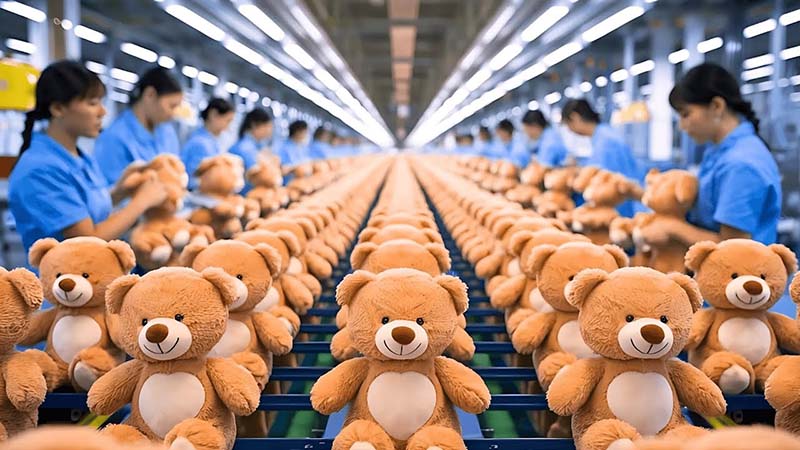
Pre-production planning is more commercially critical for large runs than for small ones precisely because the consequences of starting production with inadequate quality preparation are proportionally larger. A process setup error on a 300-unit order affects a few dozen units before it is caught. The same error on a 5,000-unit order can affect hundreds or thousands of units before it is identified — if the monitoring system is not designed to catch it early.
Pre-production planning establishes the quality foundation for high-volume runs by resolving every significant quality-affecting production decision before the first unit enters the line — ensuring that materials, equipment, personnel, instructions, and reference standards are all correctly configured before production begins and that the monitoring protocols are in place to detect and correct any deviation from that configuration as production proceeds.
Here is a comprehensive pre-production quality planning checklist for large-scale plush production:
| Planning Element | What Is Confirmed | Quality Risk Addressed | Timing |
|---|---|---|---|
| Counter sample approval | Production-environment sample matches approved standard | Sample-to-bulk quality gap | Before production day 1 |
| Bulk material IQC completion | All production fabric rolls and filling lots inspected and approved | Material batch variation entering production | Before cutting begins |
| Material lot inventory | All material lots documented, lot assignments planned for production sequence | Within-order lot mixing inconsistency | Before cutting begins |
| Equipment calibration verification | Stuffing machines, embroidery machines set to confirmed parameters | Process configuration defects | Before production day 1 |
| Pattern verification | Production patterns confirmed accurate from counter sample | Dimensional and shape defects | Before cutting begins |
| Tech pack distribution | All departments have current specification document | Specification interpretation variation | Before production day 1 |
| Work instruction distribution | Station-specific technique guidance at all workstations | Operator technique variation | Before production day 1 |
| QC team briefing | QC personnel briefed on product-specific inspection criteria | Incorrect or inconsistent QC assessment | Before production day 1 |
| IPQC schedule establishment | Monitoring intervals and checkpoint assignments confirmed | Unstructured or sporadic monitoring | Before production day 1 |
| Counter sample placement | Approved counter sample placed at QC inspection station | No reference for in-production comparison | Before production day 1 |
| Production schedule buffer | Timeline includes buffer for QC corrections without delaying shipment | Quality shortcuts driven by timeline pressure | At order planning stage |
The Production Schedule Buffer — Critical for Quality at Scale
One of the most important — and most commonly neglected — pre-production quality planning decisions is building a timeline buffer into the production schedule that allows quality corrections to occur without creating delivery pressure that forces shortcuts.
When a production timeline is built without buffer, any quality problem that requires production to be halted for correction — a first-off inspection failure, a mid-run IPQC deviation requiring recalibration, a material roll that fails the transition check — immediately creates pressure to rush subsequent stages to recover lost time. This pressure is the enemy of quality control at scale, because it incentivizes exactly the monitoring shortcuts and operator speed-ups that allow quality drift to accumulate.
A production timeline with adequate buffer — typically an additional 10 to 15 percent of the base production time — allows quality corrections to occur without timeline pressure, maintaining the quality management discipline that large-scale consistent output requires.
How Does Incoming Material Control Prevent Quality Failures Before Large Runs Begin?
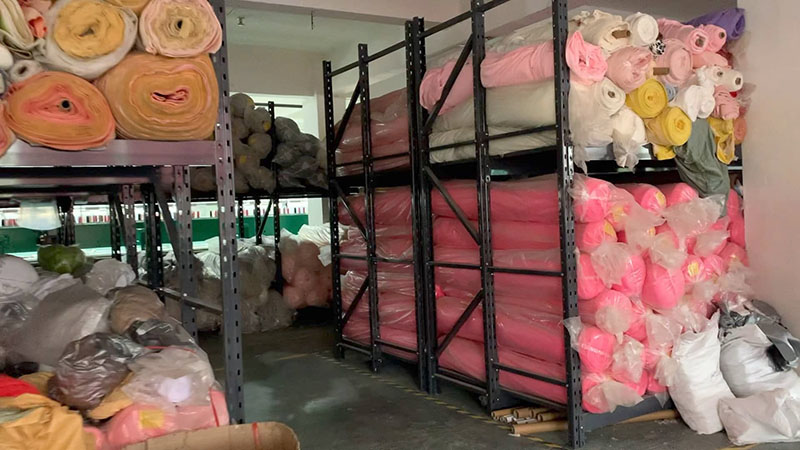
The scale of material inputs in a large production run dramatically increases the importance and complexity of incoming material control. A 500-unit order might consume five fabric rolls from a single dye lot. A 5,000-unit order consumes fifty rolls that may span multiple dye lots, and the consistency management challenge multiplies proportionally.
Incoming material control for large runs requires a more systematic and comprehensive approach than for small runs — covering not just whether the materials are generally acceptable but whether they are consistent with each other across the full quantity required for the production run, and whether the compliance documentation covers all materials at the volume and from the specific lot or lots that will actually be used.
Here is a complete incoming material control framework for large-scale plush production:
| IQC Element | Small-Order Approach | Large-Order Requirement | Why the Difference Matters |
|---|---|---|---|
| Roll sampling rate | 1–2 rolls checked per delivery | Every roll individually checked | 50 rolls with more variation opportunities |
| Color comparison method | Visual under D65 against approved swatch | D65 comparison plus colorimetric measurement for critical colors | Higher variation risk requires more objective measurement |
| Dye lot documentation | Note lot number for reference | Map all rolls to lot groups, plan production sequence by lot | Enables lot-consistent cutting sequence |
| Pile height measurement | Spot check on representative rolls | Measured on every roll | Higher volume means pile variation from one end of run to other |
| Compliance documentation | One certificate covers general material | Certificate covers specific lot quantities used in production | Compliance must cover actual production materials |
| Filling lot consistency | Single bale checked | All bales checked for density consistency | Filling variation across many bales affects stuffing control |
| Accessory lot verification | Sample check | Full lot dimensional verification | Higher volume requires consistent accessory dimensions |
Material Lot Inventory and Production Sequence Planning
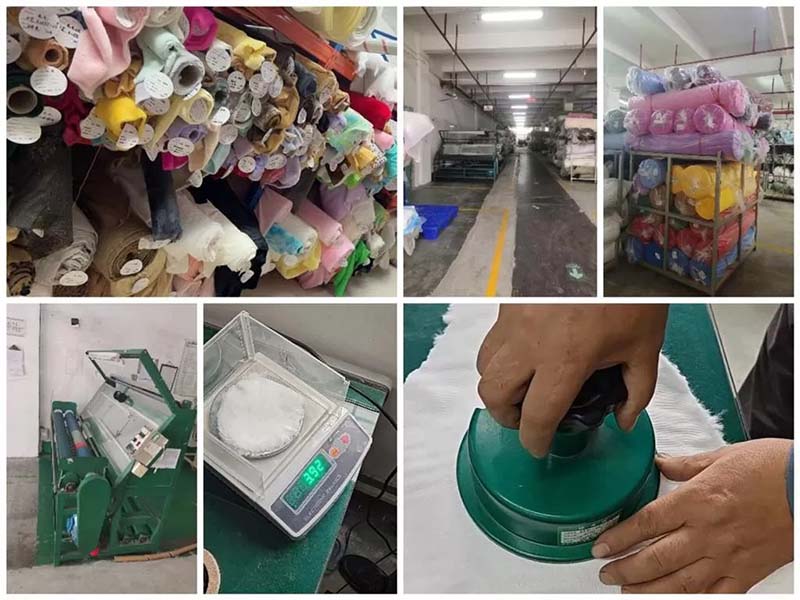
For large orders, incoming material control must go beyond individual material acceptance to include systematic lot inventory management — tracking which rolls belong to which dye lot, planning the cutting sequence to minimize lot transitions, and establishing the procedures that will govern each lot transition when it occurs.
A production lot map — a document that assigns each fabric roll to its dye lot group and sequences the cutting plan to work through each lot group consecutively before transitioning to the next — is the planning tool that makes lot-consistent cutting achievable at scale. Without this plan, cutting operators naturally work through rolls in whatever sequence is most convenient, producing a production run where lots are mixed in an uncontrolled pattern that generates within-order color variation distributed across many units.
With the lot map, lot transitions occur at defined, planned points in the production sequence — each transition managed through the roll transition protocol that verifies color consistency before cutting from the new lot begins. This planned approach to lot management is one of the most effective structural controls for color consistency at scale.
How Is In-Process Quality Monitoring Structured to Catch Drift Across Extended Production Runs?
In-process quality monitoring for large-scale production must be structured as a systematic, documented, time-scheduled program — not as an informal series of checks that happen when supervisors have time or when obvious problems become visible. At scale, the production rate is high enough that informal monitoring leaves large windows of unmonitored production where drift accumulates invisibly until it exceeds the acceptable threshold.
In-process quality monitoring at scale is structured through a defined IPQC protocol that specifies exactly which quality dimensions are checked, at what production intervals, by which personnel, against what reference standard, with what pass/fail criteria, and with what corrective action trigger. Every element of this protocol is specified in advance and applied consistently across the full production run — not subject to supervisor discretion about when checks are needed.
Here is a complete IPQC structure for large-scale plush toy production:
| IPQC Checkpoint | Monitoring Interval | Sample Size | Reference Standard | Corrective Action Trigger | Documentation |
|---|---|---|---|---|---|
| Stuffing density | Every 200 units | 3 units weighed | Target weight ±5% | Any reading outside range triggers recalibration | Weight log |
| Embroidery position | Every 50 units | 3 units measured | Coordinate standard ±3mm | Any deviation triggers hoop adjustment | Position log |
| Fabric roll transition | Every new roll | 2 units from new roll | Approved swatch under D65 | Color deviation triggers roll hold for QC review | Transition log |
| Seam quality | Every 90 minutes | 5 units inspected | Construction specification | Visible stitch deviation triggers machine adjustment | Inspection log |
| Accessory attachment | Every 2 hours | 5 units pull-tested | ASTM/EN71 force threshold | Any failure triggers technique reinforcement | Pull test log |
| Pile direction | Every 200 cut sets | 5 panels inspected | Grain line specification | Any error triggers immediate rework of affected panels | Cutting log |
| Color consistency | Every 200 units | 3 units checked | D65 comparison to swatch | Any deviation triggers material investigation | Color check log |
| Surface finishing | Every 100 units | 5 units inspected | Zero visible defect standard | Any defect triggers finishing team correction | Finishing log |
The IPQC Interval Design Principle
The monitoring intervals in the IPQC protocol are not arbitrary — they are designed based on the rate at which each type of drift typically develops and the number of units that are acceptable to have produced with an uncorrected deviation before it reaches the correction threshold.
For stuffing density — where machine drift is gradual — a 200-unit interval is appropriate because density drift typically develops slowly enough that 200 units can be produced before the drift reaches the correction threshold. For embroidery position — where hoop repositioning error can be systematic from the first repositioning after a drift event — a 50-unit interval is appropriate because systematic position drift can accumulate quickly enough to become visible within 50 units if unchecked.
Setting intervals too wide creates the risk of large defect accumulations between monitoring events. Setting intervals too narrow creates excessive QC overhead that reduces production efficiency disproportionately. The protocol intervals for any specific product should be calibrated to the production rate and the known drift characteristics of each quality dimension for that product type.
Managing Multiple Production Lines Simultaneously
At scale, large orders are often produced across multiple simultaneous production lines — increasing throughput but also increasing QC monitoring requirements proportionally. A single-line production of 5,000 units requires N monitoring events per IPQC interval. A two-line simultaneous production of 5,000 units requires 2N monitoring events across the same calendar time.
Managing quality across multiple simultaneous lines requires either proportionally more QC personnel or a structured prioritization of which checkpoints are most critical and must be monitored at full frequency across all lines, and which can be managed at reduced frequency on secondary lines with compensating final inspection scrutiny. This multi-line QC management is a specific capability that distinguishes factories with mature quality systems from those that apply IPQC protocols designed for single-line production to multi-line operations without adjustment.
How Do Workforce Management and Operator Consistency Affect Quality at Scale?
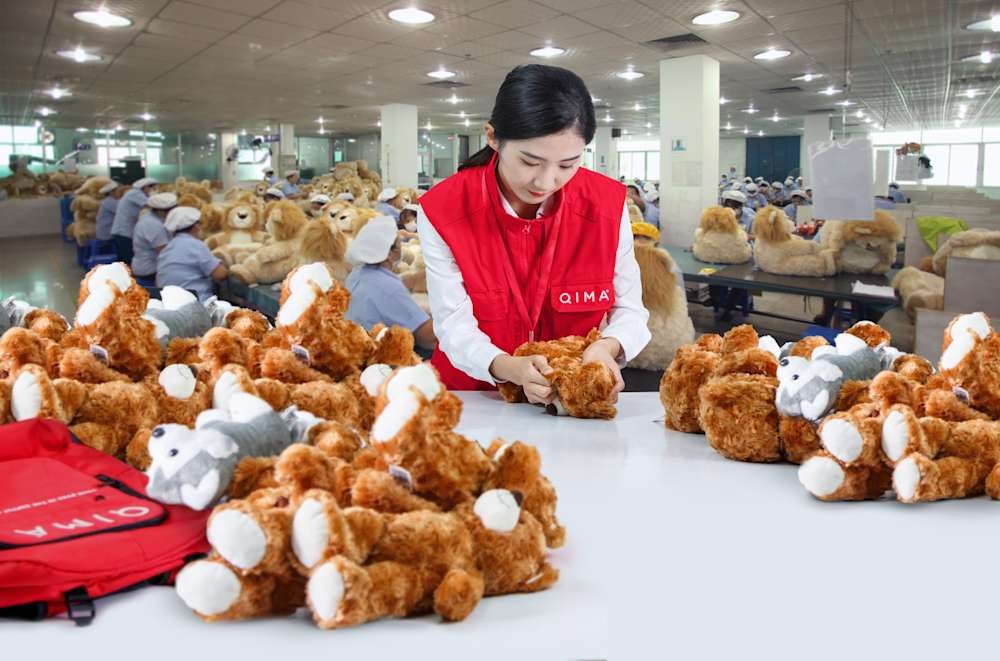
Workforce management is one of the most significant quality levers in large-scale plush production — and one that operates through mechanisms that are less visible and less easily verified than equipment or process controls. The consistency of operator performance across a large production run is determined by how operators are trained, how their tasks are organized, how their performance is monitored, and how the working conditions across an extended production run affect their precision and attention.
Workforce management affects quality at scale because human operator performance changes over the course of a long production run in ways that produce quality variation — fatigue reduces precision, repetition reduces attention, and the absence of supervisory feedback allows individual technique drift to accumulate uncorrected. Managing these human performance factors through deliberate workforce organization and management practices is essential for consistent quality across high-volume production.
Here is a framework for workforce management practices that support quality at scale:
| Workforce Management Practice | Quality Mechanism | Scale-Specific Importance | Implementation |
|---|---|---|---|
| Task specialization | Operators develop deep expertise in specific operations | Higher at scale — more units affected by operator-skill variation | Assign precision operations to consistently specialized operators |
| Shift scheduling for precision | Precision-critical operations scheduled when operators are freshest | Higher at scale — more shift transitions, more fatigue periods | Schedule complex operations in first half of shift where possible |
| Operator rotation at defined intervals | Prevents accumulated fatigue from degrading precision | Higher at scale — longer run means more fatigue accumulation | Rotate operators on high-precision tasks every 2–3 hours |
| Quality performance feedback | Operators know their output quality and can self-correct | Higher at scale — individual operator variation affects more units | Daily or shift-level quality performance sharing |
| Technique refresher training | Counteracts technique drift across long production periods | Higher at scale — more time for drift to develop | Scheduled refresher at production midpoint for precision operations |
| Supervisor-to-operator ratio | Direct supervision of technique at precision-critical operations | Higher at scale — supervisor attention spread across more operators | Maintain adequate supervisor coverage at key stations |
| Workforce stability during run | Consistent operators produce more consistent output | Higher at scale — operator changes during run introduce variation | Minimize operator changes mid-run for precision-critical operations |
The Fatigue Management Challenge
Fatigue-related quality degradation is one of the most predictable and most commonly unmanaged quality risks in large-scale plush production. Operator fatigue reduces the precision of fine motor operations — panel alignment, embroidery hoop positioning, accessory attachment — in ways that are difficult to detect through visual supervision but that accumulate into measurable quality differences between early-run and late-run production.
Managing fatigue-related quality risk requires scheduling practices that limit continuous exposure to high-precision operations, rotation protocols that distribute fatigue across the workforce rather than allowing it to accumulate in the operators handling the most quality-sensitive tasks, and IPQC monitoring intervals that are designed to detect precision degradation at the frequency at which it typically develops.
A factory that understands this dynamic schedules the most precision-critical operations — embroidery positioning, face panel alignment — to the first half of each shift, monitors those operations more frequently as the shift progresses, and rotates operators at defined intervals to prevent fatigue-driven precision loss from accumulating into sustained quality deviation. This scheduling discipline is one of the specific operational practices that distinguishes factories whose quality management is calibrated to human performance reality from those whose quality systems are designed in theory without accounting for workforce dynamics.
How Does Equipment Management and Calibration Maintain Output Consistency at Volume?
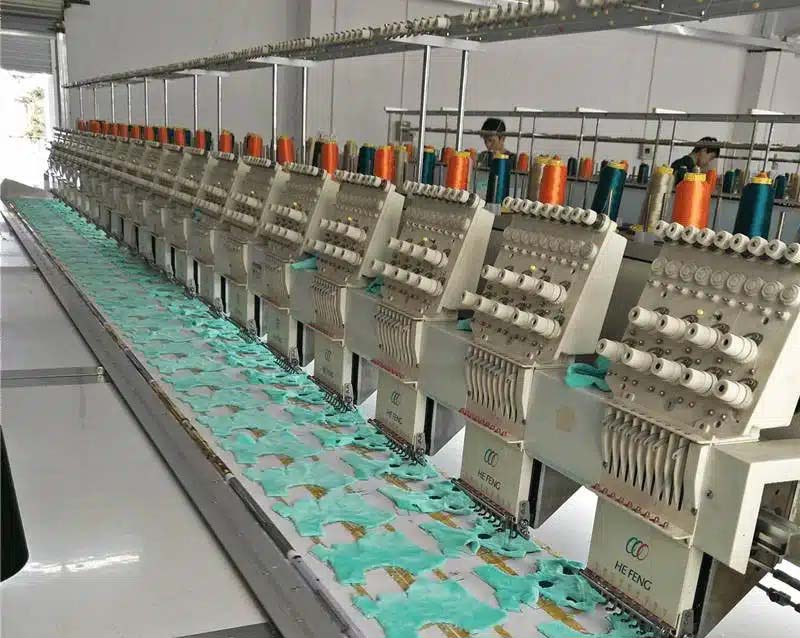
Equipment management and calibration are the mechanical counterparts to workforce management in quality control at scale. Just as human operators experience performance variation across a long production run, production equipment develops settings drift — changes in machine parameters from their calibrated configuration that occur gradually through use and that affect output quality in predictable ways if not detected and corrected.
Equipment management and calibration maintain output consistency at volume through a structured program of pre-production calibration verification, in-production monitoring for drift indicators, scheduled recalibration at defined intervals, and maintenance procedures that prevent equipment failures that would disrupt production and require unplanned timeline adjustments.
Here is a complete equipment management framework for large-scale plush production:
| Equipment Type | Drift Mechanism | Pre-Production Calibration | In-Production Monitoring | Recalibration Trigger |
|---|---|---|---|---|
| Stuffing machines | Feed rate and air pressure drift with heat | Calibrate to target density weight before run | Weight IPQC every 200 units | Any weight outside ±5% of target |
| Embroidery machines | Hoop mechanism wear, thread tension drift | Program verification, tension setting confirmation | Position IPQC every 50 units | Any position outside ±3mm of coordinate |
| Sewing machines | Thread tension variation with thread spool changes | Tension setting at production start | Seam quality IPQC every 90 minutes | Any visible tension deviation |
| Cutting equipment | Blade wear, alignment drift | Blade condition and alignment check | Panel dimension check every 200 sets | Any dimension outside tolerance |
| D65 light equipment | Lamp aging reduces color rendering accuracy | Lamp age verification, color rendering check | N/A — periodic lamp replacement | Lamp at scheduled replacement age |
Stuffing Machine Management at Scale
Of all production equipment, stuffing machines require the most active management at large scale — because stuffing density is one of the most commercially visible quality attributes, because density drift from machine settings is one of the most predictable quality risks in extended production, and because the cumulative effect of uncorrected density drift across thousands of units produces a distribution of finished product firmness that is perceptible to customers comparing units from the same order.
Stuffing machine management at scale involves three specific practices. Pre-run calibration establishes the machine settings that produce the target density — verified through test runs that produce units weighed against the target weight range. In-run weight monitoring at defined intervals catches setting drift before it accumulates — when a weight reading falls outside the target range, production is paused for recalibration before continuing. Post-shift calibration verification confirms that the machine settings have not drifted significantly across the shift before production resumes for the next shift.
This three-part management approach maintains density consistency across a production run that may span two to three weeks and involve hundreds of thousands of stuffing machine cycles — each cycle an opportunity for gradual setting drift that cumulative weight monitoring is designed to detect and correct.
How Does Final Inspection Confirm Quality Across High-Volume Batches?
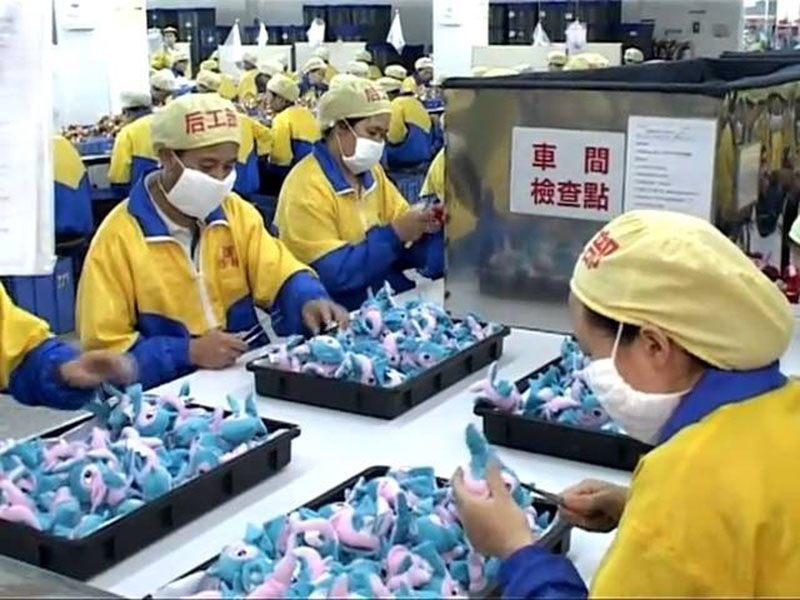
Final inspection on high-volume batches is the last quality gate before shipment approval — and at scale, it must provide statistically reliable assurance about the quality of thousands of units based on a manageable sample. Achieving this requires correct application of AQL sampling methodology, a comprehensive inspection scope that covers all quality-relevant attributes, clear pass/fail criteria derived from the approved production standard, and documentation that creates a verifiable quality record for the batch.
Final inspection at scale is structured differently from final inspection on small orders in two important ways. The sample size is larger in absolute terms — because larger batches require larger samples to maintain the same statistical confidence level. And the inspection scope is more formally structured — because the inspector must systematically verify all quality attributes across a larger sample without the intuitive overview that is feasible when the entire batch is small enough to be comprehensively viewed.
Here is a complete FQC framework for large-scale plush batches:
| FQC Element | Small-Order Application | Large-Order Requirement | Statistical Basis |
|---|---|---|---|
| Sample size | Determined by AQL table for batch quantity | Determined by AQL table for larger batch — larger absolute sample | ISO 2859 Inspection Level II |
| Defect classification | Critical, major, minor as defined | Same — but more precise definition required at scale | AQL 1.5 critical, 2.5 major, 4.0 minor |
| Inspection scope | All standard attributes | Same — but structured inspection sheet required for consistency | Tech pack criteria |
| Reference standards | Counter sample at inspection station | Counter sample at inspection station — multiple inspectors require same reference | Approved counter sample |
| Documentation | Basic inspection record | Complete inspection record with defect mapping | Batch inspection report |
| Inspector independence | Single QC inspector | Multiple inspectors for large batches, with calibration check | Independent from production |
| Third-party involvement | Optional for small orders | Recommended for large orders | Pre-shipment inspection |
AQL Calculation at Scale
The AQL sampling table determines inspection sample size based on two inputs: total batch quantity and inspection level. For most plush toy final inspection, Inspection Level II is standard. At a 5,000-unit batch quantity, Inspection Level II specifies sample size code letter N, corresponding to a sample size of approximately 300 units. At an AQL 2.5 level for major defects, the acceptance number for this sample size is 14 — meaning that if 15 or more major defects are found in the 300-unit sample, the batch fails.
Understanding this calculation helps buyers assess whether a supplier’s quoted inspection approach is genuinely adequate. A factory that claims to “inspect every order” but conducts only a 30-unit spot check on a 5,000-unit batch is not applying AQL methodology — they are conducting an inspection that is statistically insufficient to detect a defect rate at the 2.5 AQL threshold with meaningful confidence.
Third-Party Final Inspection for Large Orders
For high-volume orders, independent third-party pre-shipment inspection from accredited organizations — SGS, Bureau Veritas, Intertek — provides the most reliable quality confirmation available to remote buyers. A third-party inspector conducting a full AQL inspection on a 5,000-unit batch will draw a statistically adequate sample, inspect comprehensively against the buyer’s specified criteria, and produce a documented report that provides independent evidence of the batch’s quality status.
This independent verification is particularly important at scale because the commercial exposure of a quality failure on a large order — the cost of non-conforming goods, the impact on the delivery timeline, the effect on customer satisfaction if quality problems reach the market — is proportionally large. The cost of third-party inspection — typically $400 to $600 for a standard pre-shipment visit — is a small fraction of the exposure it protects against.
How Can Buyers Actively Manage and Verify Quality on Large Plush Orders?

Buyer engagement in quality management on large orders is not passive — waiting to receive a shipment and then evaluating what arrives. It is active — establishing quality standards before production, requiring documented evidence of quality management throughout production, and commissioning independent verification before approving shipment.
Buyers can actively manage and verify quality on large plush orders through a structured engagement framework that provides visibility into quality management at every critical stage of the production run — not just at the end when problems can no longer be prevented efficiently.
Here is a complete buyer quality management framework for large plush orders:
| Engagement Stage | Buyer Action | What It Prevents | When |
|---|---|---|---|
| Pre-production | Approve bulk material swatches before cutting | Material batch variation in production | Before day 1 |
| Pre-production | Confirm counter sample approval | Sample-to-bulk quality gap | Before day 1 |
| Pre-production | Establish written quality standards and AQL level | Post-delivery quality disputes | At order confirmation |
| Pre-production | Schedule third-party inspection in advance | Inspection availability delay | At order confirmation |
| Production day 1 | Request first-off inspection report with photos | Early process setup errors | Day 1 of production |
| Production at 25% | Request progress update with QC findings | Early drift accumulation going unreported | At 25% completion |
| Production at 50% | Request IPQC summary log and any issues | Mid-run quality management verification | At 50% completion |
| Production at 75% | Request updated production status | Late-run timeline and quality status | At 75% completion |
| Pre-shipment | Commission third-party AQL inspection | Quality failures reaching buyer undetected | Before payment |
| Pre-shipment | Review factory FQC report | Internal quality confirmation baseline | Before payment |
| Pre-shipment | Confirm compliance documentation complete | Customs and market entry problems | Before shipment |
| Payment | Release balance only after passing inspection | Commercial leverage for quality enforcement | After inspection report |
Structuring the Communication Protocol Before Production
The buyer quality management framework described above requires a communication protocol that is established before production begins — not improvised as the production run progresses. A purchase agreement that specifies the milestone communications the factory will provide, in what format, within what timeframe, creates the contractual basis for the production visibility that makes active buyer quality management possible.
Factories that resist establishing clear communication protocols in purchase agreements are typically doing so because those protocols create accountability they prefer to avoid. Professional manufacturers — those whose quality management systems genuinely produce the consistent output they represent — welcome structured communication requirements because they are already producing the documentation those requirements call for, and the protocols simply make that documentation visible to the client.
The structure of this communication protocol is one of the most revealing quality signals available in supplier evaluation — and establishing it as a written requirement before production begins is one of the highest-value quality management investments available for any large plush order.
Retaining Commercial Leverage Through Payment Structure
On large orders, the payment structure is a quality management tool as well as a cash flow arrangement. Retaining the majority of the order value — typically 70 percent — until after independent quality verification has confirmed that the batch meets the agreed standard maintains the commercial leverage that motivates thorough quality management throughout the production run.
When the balance payment is released before inspection — either voluntarily or under supplier pressure — the buyer loses the primary commercial mechanism for motivating quality remediation. The factory has been fully paid, and any remaining quality issues must be resolved through negotiation rather than through the leverage that a retained balance creates.
Maintaining the balance retention policy on large orders — even when the supplier relationship is established and the temptation to streamline payment is strong — is the most consistent structural protection against quality failures reaching the buyer without adequate remediation.
At Kinwin, we actively support buyers in implementing the quality management framework described in this guide — because we understand that buyers who have visibility into their production quality are better partners, make better decisions, and build the kind of long-term relationships that benefit both parties. Our IPQC documentation, first-off inspection reports, production milestone updates, and pre-shipment FQC reports are standard production outputs for all orders — and we facilitate third-party inspection for any client who requests it, at any order scale.
If you are planning a large plush toy order and want to understand specifically how our quality control system operates at scale — what IPQC intervals we apply, how we manage lot transitions, how we handle first-off deviations, and what documentation we produce throughout the production run — we would be glad to walk through it with you in detail.
Reach out to our team at [email protected] or visit kinwintoys.com to start that conversation.
Conclusion
Quality control at scale is not a larger version of quality control at small volumes — it is a structurally different challenge that requires specifically designed systems, organizational commitments, and buyer engagement practices that address the specific quality risks that only emerge when production extends across days and weeks, when material inputs span many lots and rolls, when operator performance varies across shifts and fatigue cycles, and when equipment settings drift across thousands of production cycles.
The factories that deliver consistent quality on large orders are those that have invested in the systems that make consistency achievable at scale — documented IPQC protocols with defined intervals, lot management plans that control material variation, workforce management practices that address fatigue and technique drift, equipment calibration programs that prevent and detect settings deviation, and AQL-based final inspection that provides statistically adequate quality confirmation on large batches.
Buyers who verify these systems before placing large orders — through documentation requests, factory audits, reference checks, and structured production communication protocols — are the ones who consistently receive bulk goods that match their approved samples. Those who evaluate large-order suppliers using the same criteria as small-order suppliers — primarily unit price and sample quality — consistently discover the difference between small-scale and large-scale quality management capability through the quality of their shipments rather than through their evaluation process.
At Kinwin, quality control at scale is an operational standard — built into our production system through the specific mechanisms described in this guide and applied consistently across every large order we produce.
FAQ
Q1: At what order volume should buyers begin applying the large-scale quality management framework described in this guide?
The transition from small-order to large-scale quality management approach is not triggered by a specific unit threshold but by the point at which the production run duration, material input volume, and operator workforce requirements exceed what informal quality management can reliably cover. As a practical guideline, orders above 1,500 to 2,000 units benefit from the more structured IPQC protocols, lot management planning, and milestone communication requirements described for large-scale production — because these orders typically extend beyond a few days of production, consume enough material to introduce meaningful lot variation risk, and involve enough operator shifts to make fatigue management and technique drift monitoring relevant. Orders below this threshold can often be managed adequately with the less structured approach appropriate for shorter runs, though the preventive measures of counter sample confirmation and material swatch pre-approval are valuable at any order size.
Q2: How should buyers evaluate a factory’s quality management capability at scale before placing their first large order?
The most reliable evaluation approach for scale-specific quality management capability combines three evidence sources. First, request IPQC documentation from a recently completed large order — asking specifically for the stuffing density log, embroidery position log, and fabric roll transition log from an order of comparable scale. A factory that can produce these records promptly and in organized form is demonstrating that the monitoring system is genuinely operational rather than theoretically designed. Second, request reference contacts from buyers who have placed large orders — specifically asking whether quality was consistent between early-production and late-production units, which is the most direct indicator of drift management capability. Third, ask the factory to describe their lot management approach for a large fabric order — specifically how they plan the cutting sequence to minimize lot mixing and how they manage roll transitions. A factory with genuine large-scale capability will describe a specific, structured approach rather than a general assurance.
Q3: How does quality control at scale change for products with multiple design variants — for example, four colorways of the same character produced simultaneously?
Multi-variant production at scale introduces additional quality management complexity because each variant has its own material lot management requirements, its own first-off inspection baseline, and its own IPQC monitoring protocol — while sharing production lines and QC personnel with the other variants. The primary risk is cross-variant confusion — panels from one variant entering the production sequence for another, or QC assessments for one variant being made against the approved standard for a different variant. Managing this requires clear physical separation of variant-specific materials and work-in-progress, explicit variant identification labeling on all components, separate first-off inspections for each variant at the start of its production, and IPQC protocols that specify which variant standard each inspection checkpoint is assessing. For buyers who are running multi-variant production at scale, explicitly confirming with the factory how variant separation is managed — and requesting that the IPQC documentation identifies the variant assessed at each checkpoint — provides the quality visibility needed to catch cross-variant confusion before it produces a mixed delivery.
Q4: What is the most cost-effective way for buyers to increase their quality assurance on a large order without dramatically increasing the total project cost?
The highest-return single quality investment for large orders is a structured production communication protocol established before production begins — requiring first-off inspection report with photos, mid-production milestone update at 50% completion, and factory FQC report before balance payment. This protocol costs nothing in direct fees — the factory produces this documentation as part of their production management process — but it creates the production visibility that allows buyers to identify emerging quality issues before they affect the full batch rather than discovering them after shipment. If a single additional investment beyond the communication protocol is to be made, the pre-shipment third-party inspection is the most cost-effective standalone quality assurance tool — providing independent, documented quality confirmation at a cost of $400 to $600 that protects against quality failures whose remediation would cost many times more.
Q5: How should buyers handle a situation where mid-production IPQC results reveal a quality deviation that has already affected a significant portion of the order?
When mid-production IPQC reveals a deviation that has affected a significant portion of an ongoing production run, the response should follow a defined sequence. First, halt production of the affected operation immediately to prevent further units from being produced with the deviation. Second, assess the scope — how many units have been produced since the last passing IPQC check, and what proportion of those units are likely affected by the deviation. Third, identify the root cause — is it a machine setting change, a material lot transition, an operator technique drift, or another specific cause? Fourth, implement the correction — recalibrate the equipment, replace the material, retrain the operator, or address whatever specific cause produced the deviation. Fifth, verify the correction through a post-correction first-off inspection that confirms the correction has restored production to the required standard. Sixth, assess the affected units — either through 100 percent re-inspection of units produced since the last passing check, rework of units confirmed as non-conforming, or — if the deviation is within acceptable tolerance — explicit documentation that the affected units were assessed and accepted at the observed deviation level. The buyer should be notified of the deviation and the corrective action immediately — not after the correction is implemented — because the buyer’s input on acceptable deviation tolerance may affect the assessment decision, and because early notification enables the buyer to adjust any downstream planning that depends on the production timeline.