Every buyer who has sourced plush toys has encountered the experience of a project that costs significantly more than the original quotation suggested. The unit price was competitive. The sample looked good. The order was placed with reasonable confidence. And then — across the development cycle, the production run, the compliance process, or the delivery — costs appeared that were not in any quotation and were not anticipated in any budget.
These costs are not random. They are not bad luck. They are predictable consequences of specific decisions, omissions, and information gaps that occur at specific stages of the plush manufacturing process — and they recur consistently across buyers at different stages of experience, with different suppliers, and across different product types.
Understanding where hidden costs originate — which sourcing decisions create exposure, which supplier practices generate unexpected charges, and which process stages most commonly produce budget overruns — is the foundation for building a sourcing approach that delivers predictable total costs rather than a series of surprises.
This guide explains every major source of hidden cost in plush manufacturing and provides specific, actionable practices for preventing each category before it affects the project budget.
Why Hidden Costs Are More Common in Plush Manufacturing Than Most Buyers Expect?

Hidden costs are more prevalent in plush manufacturing than in many other sourcing categories because the product’s complexity creates more decision points where costs can emerge unexpectedly, and because the quotation process in the plush industry typically represents only a portion of the true total project cost.
A plush toy quotation reflects unit production cost at a specified volume. What it typically does not reflect — unless the buyer specifically requests it — is the development investment required before production can begin, the compliance and testing investment required before market entry can occur, the quality management costs embedded in the production process, or the remediation costs that arise when quality or compliance targets are not met. Each of these categories is a real and often significant cost that determines the true total investment in a plush product launch.
Here is an overview of where hidden costs most commonly emerge and their relative impact:
| Hidden Cost Category | How It Manifests | Typical Magnitude | Prevention Difficulty |
|---|---|---|---|
| Excess sampling rounds | Revision fees and shipping costs beyond initial budget | $300–$2,000 per design | Moderate — requires brief discipline |
| Unauthorized material substitution | Compliance failure, rework costs | $2,000–$20,000 per incident | Moderate — requires contractual protection |
| Compliance testing exclusions | Testing fees not in quotation | $400–$1,200 per product | Low — requires explicit confirmation |
| Compliance testing failure | Rework, replacement production, retesting | $3,000–$25,000 per incident | Moderate — requires certified materials |
| Quality rework on delivery | Rework labor, reinspection, delay costs | $500–$5,000 per order | Moderate — requires QC system verification |
| Packaging minimum order misalignment | Excess packaging purchased beyond product quantity | $500–$3,000 per launch | Low — requires MOQ alignment |
| Third-party inspection fees | Not included in supplier quote | $300–$600 per inspection | Low — requires explicit budgeting |
| Late delivery commercial impact | Expedited shipping, missed revenue window | $500–$10,000 per incident | Moderate — requires supplier reliability assessment |
| Management time overhead | Internal cost of problem management | Varies significantly | Moderate — requires supplier quality assessment |
Why the Quotation Is Structurally Incomplete
The quotation incompleteness that generates hidden costs is not always a deliberate concealment by suppliers — in many cases, it reflects the industry convention that quotations represent unit production cost rather than total project cost, combined with buyers who accept this convention without explicitly requesting the full cost picture.
A buyer who receives a unit price quotation and asks specifically about sampling fees, compliance testing support, packaging MOQs, and third-party inspection availability will receive complete information. A buyer who accepts the unit price as the complete cost basis will encounter each additional cost category as a surprise when it appears — not because the supplier was deceptive but because the buyer did not ask the right questions.
Building the habit of asking those questions systematically — before committing to a supplier relationship rather than after costs have already been incurred — is the most fundamental change that converts hidden cost exposure into transparent total cost management.
How Do Sampling and Development Fees Create Unexpected Cost Exposure?
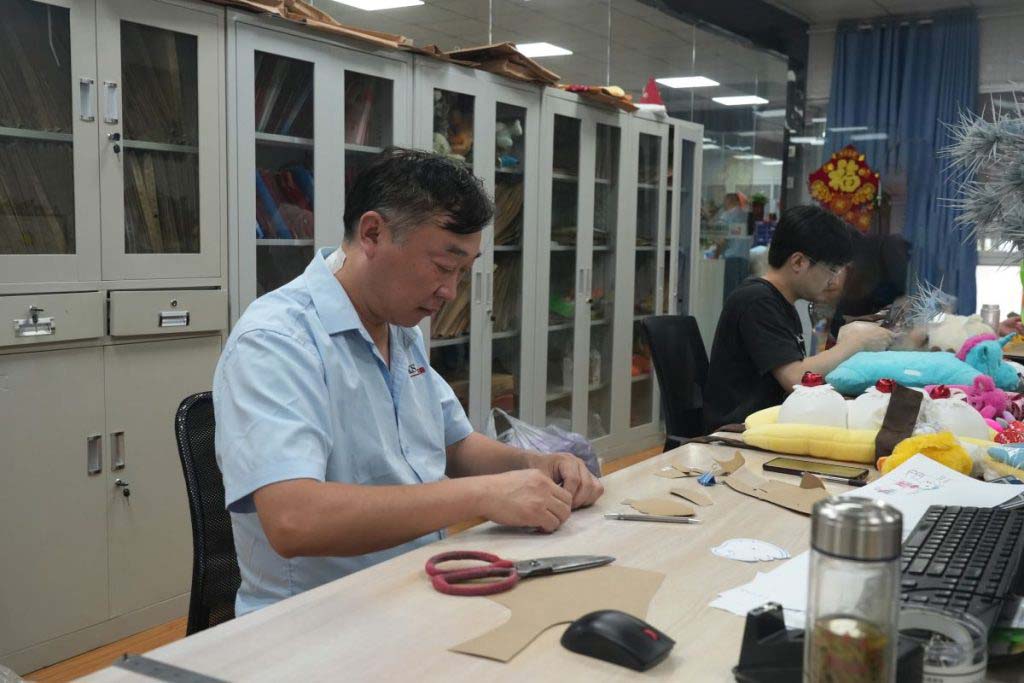
Sampling and development fees are the most commonly underestimated cost category in plush manufacturing — both because buyers underestimate how many revision rounds a design will require and because the cumulative cost of multiple samples with their associated shipping charges is rarely included in the initial project budget.
Sampling fees create unexpected cost exposure through three mechanisms: the initial sampling fee itself, which is a fixed cost per design that occurs before any production commitment, the per-round revision fee and shipping cost for each correction cycle, and the tooling fees for custom accessories or packaging that are often quoted separately after the design is confirmed rather than as a component of the initial quotation.
Here is a breakdown of how sampling cost exposure accumulates across a typical development cycle:
| Sampling Cost Component | Single Design Cost | Three-Design Launch Cost | Notes |
|---|---|---|---|
| First sample fee | $100–$400 | $300–$1,200 | Varies with complexity |
| Revision round 1 (if needed) | $80–$200 | $240–$600 | Plus shipping each round |
| Revision round 2 (if needed) | $80–$200 | $240–$600 | Plus shipping each round |
| Revision round 3 (if needed) | $80–$200 | $240–$600 | Plus shipping each round |
| Sample shipping per round | $60–$120 per round | $180–$360 per round | International express shipping |
| Custom accessory tooling | $200–$600 per mold | $600–$1,800 total | Often quoted separately |
| Embroidery programming | $30–$100 per design | $90–$300 total | Sometimes included, sometimes separate |
| Counter sample | $80–$200 per design | $240–$600 | Often omitted from initial discussion |
| Realistic total — 2 revision rounds | $560–$1,640 | $1,680–$4,920 | Vs initial expectation of sample fee only |
The Revision Round Underestimation Problem
The most predictable source of sampling cost overrun is revision round underestimation. Most buyers entering a new development cycle expect one to two revision rounds. The actual number depends on brief quality, design complexity, and supplier capability — and for buyers with incomplete briefs working with factories of moderate capability, three to four revision rounds are common even for designs of moderate complexity.
Each unexpected revision round adds not just the revision fee but the shipping cost of sending the sample to the buyer, the time cost of the evaluation and feedback cycle, and the timeline extension that delays production start. A design that required three revision rounds instead of one has added approximately $500 to $1,000 in sampling and shipping cost, three to four weeks in development timeline, and the management overhead of three additional feedback cycles — all of which were not in any quotation.
Tooling Fees Disclosed Late
Custom accessory tooling — molds for unique eye shapes, custom-molded noses, embossed packaging dies — is frequently quoted only after the design is confirmed and the specific accessories are identified, rather than at the initial quotation stage. This late disclosure means that the tooling investment is not included in the buyer’s initial budget and appears as an additional charge after the project commitment has already been made.
The prevention is straightforward: explicitly ask every supplier at the initial quotation stage whether the design includes any elements that would require custom tooling, what those tools would cost, and whether those costs are included in the quotation or will be invoiced separately. This question surfaces the tooling cost before commitment rather than after — and the answer also reveals how thoroughly the supplier has reviewed the design brief, since a supplier who cannot answer this question has not actually assessed the design.
How Do Material Specification Gaps Lead to Quality Failures and Cost Overruns?
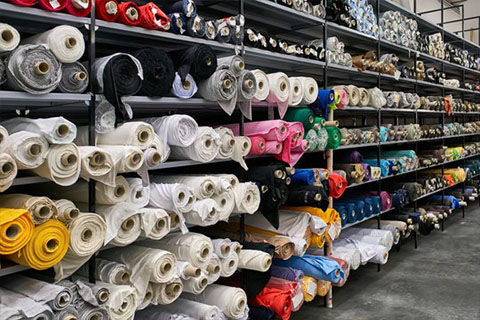
Material specification gaps — situations where the design brief does not precisely specify the required material characteristics — create hidden costs through two distinct pathways. The first is direct: when the factory sources materials that do not match the buyer’s intent because the specification was ambiguous, the resulting quality mismatch generates revision rounds, material replacement costs, and production delays. The second is indirect: when unspecified materials are not compliance-certified for the target market, and the compliance failure is discovered during testing rather than before production, the remediation costs can be very large.
Material specification gaps lead to quality failures and cost overruns because factories fill specification gaps with their own material selections — which are made primarily based on cost and availability rather than on the buyer’s quality and compliance requirements. The materials that factories select for unspecified elements are typically adequate for producing a functional sample but may not meet the quality, tactile, or compliance standards that the buyer requires for their specific market and product positioning.
Here is how specific material specification gaps create cost exposure:
| Specification Gap | Factory Default Behavior | Quality or Compliance Risk | Cost Consequence |
|---|---|---|---|
| No Pantone color reference | Factory matches color from reference image | Color requires correction in revision rounds | 1–2 additional revision rounds |
| No pile height specification | Factory uses standard pile from available stock | Pile height may differ from intended quality level | Material replacement or quality compromise |
| No certification requirement stated | Factory sources cheapest available material | Non-compliant material enters production | Testing failure, rework, or replacement |
| No filling density specification | Factory uses standard density | Density may not match intended feel and shape | Revision required or quality gap accepted |
| No accessory specification | Factory selects nearest available component | Wrong size or style, may fail pull test | Revision required, potential safety issue |
| No fabric construction specification | Factory selects from available stock | Different construction affects cutting and sewing | Unexpected production challenges |
The Compliance Specification Gap — Most Expensive Consequence
Of all material specification gaps, the absence of compliance requirements is the most expensive in its consequences. When a buyer specifies a product for the US or EU market without stating compliance requirements in the brief, the factory sources materials without ensuring they meet applicable safety standards. The product is produced, tested — and fails. The cost of a compliance testing failure includes the failed test fees, the cost of identifying and replacing the non-compliant material, the rework or replacement of affected production units, retesting fees for the corrected product, and the shipping and timeline costs of the delays involved.
Total remediation costs for a compliance failure regularly reach $5,000 to $20,000 or more depending on order size and the severity of the failure. Every dollar of this cost originates in a material specification gap that could have been prevented by stating the compliance requirement in the design brief before sampling began — at zero cost.
Building Complete Material Specifications Before Brief Submission
The prevention is systematic brief completion before any supplier engagement. A complete material specification includes fabric type with pile height and density, Pantone color references for all color areas, filling type and density target, accessory specifications with dimensions, certification requirements for the target market, and a physical swatch reference for critical materials. Completing all of these elements before the brief is submitted to the factory eliminates the specification gaps that generate both revision round costs and compliance failure costs.
For buyers who are unsure about which certification requirements apply to their specific product and market, the most efficient approach is to ask the factory’s compliance team as part of the pre-development consultation — before sampling begins rather than after production is complete. A factory with genuine compliance capability will answer this question specifically and correctly. A factory without compliance depth will provide a vague or incomplete answer — which is itself useful information for supplier evaluation.
How Do Compliance and Testing Costs Catch Buyers Off Guard?

Compliance and testing costs are one of the most consistently underestimated hidden cost categories in plush manufacturing — because they are typically not included in the supplier’s unit price quotation, and because buyers who are not familiar with the regulatory requirements of their target markets often do not know to ask about them until the compliance question is raised by a retailer, platform, or customs authority.
Compliance and testing costs catch buyers off guard through two mechanisms. First, omission from the quotation: most factory quotations do not include testing fees because testing is conducted by third-party laboratories rather than by the factory, and whether testing is required — and who pays for it — is determined by the buyer’s market requirements rather than by the production process. Second, failure costs: when products are tested after production is complete and fail to meet applicable standards, the remediation costs — rework, replacement, retesting — dramatically exceed the original testing investment.
Here is an overview of the compliance costs that most commonly surprise buyers:
| Compliance Cost | When It Occurs | Typical Cost | Included in Standard Quote? |
|---|---|---|---|
| ASTM F963 product testing | Before US market entry | $350–$600 | No — separate laboratory fee |
| EN71 product testing | Before EU market entry | $400–$800 | No — separate laboratory fee |
| CPSIA compliance | Before US market entry | Included in ASTM testing | No — but requires certified materials |
| REACH chemical testing | Before EU market entry | $200–$400 per material | No — separate laboratory fee |
| CE Declaration of Conformity | Before EU market entry | $100–$300 (document preparation) | No |
| Third-party inspection | Pre-shipment quality verification | $300–$600 per visit | No — separate inspection fee |
| Compliance failure rework | When testing fails | $2,000–$20,000+ | No — unexpected cost |
| Expedited retesting | After compliance failure correction | $600–$1,500 | No — unexpected cost |
The Two-Stage Testing Cost Structure
Compliance testing for plush toys intended for regulated markets typically involves two stages: material-level testing — verifying that specific materials meet chemical safety requirements before production — and product-level testing — verifying that the finished product meets all applicable mechanical and chemical safety standards.
Many buyers are aware of product-level testing but not of material-level testing. When non-compliant materials are used in production — because material compliance was not verified before production began — the product-level test fails, and the cost of resolving the failure (rework, replacement production, retesting) is many times higher than the cost of material-level testing would have been before production started.
The cost-effective compliance approach is to conduct material compliance verification before sampling begins, product-level testing on the approved sample before bulk production is authorized, and retain the test reports as standard documentation for market entry. This sequence treats compliance as a production stage investment rather than a post-production problem — and the total cost of compliance managed proactively is consistently lower than the total cost of compliance failures managed reactively.
How Do Production Quality Failures Generate Hidden Costs After Orders Are Placed?
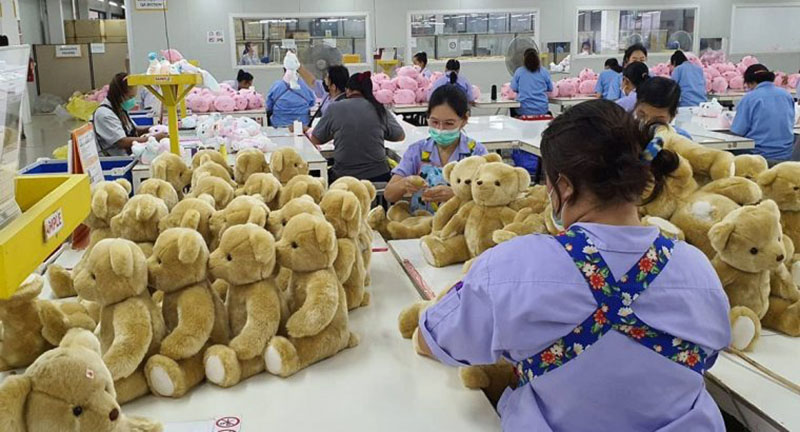
Production quality failures — situations where the bulk order does not meet the quality standard established in the approved sample — generate hidden costs through the remediation process required to bring the goods to an acceptable standard or replace goods that cannot be remediated. These costs occur after the order is placed and often after the balance payment has been made, leaving buyers with limited leverage and high remediation expenses.
Production quality failures generate hidden costs through several specific mechanisms: rework of non-conforming units (labor cost applied to already-completed production), rejection and replacement of units that cannot be reworked (double production cost for the affected proportion), third-party inspection to assess the extent of the quality failure (inspection fees not in the original budget), expedited shipping to meet the delivery window despite production delays caused by the rework process, and the management time required to document, communicate, negotiate, and oversee the resolution.
Here is a cost model showing how quality failure remediation accumulates:
| Remediation Cost Component | Scenario: 10% Defect Rate, 1,000 Units | Scenario: 25% Defect Rate, 1,000 Units |
|---|---|---|
| Units affected | 100 units | 250 units |
| Rework cost (if possible) | $150 (100 units × $1.50) | $375 (250 units × $1.50) |
| Replacement production (if needed) | $550 (100 units × $5.50) | $1,375 (250 units × $5.50) |
| Third-party reinspection | $400 | $400 |
| Expedited shipping premium | $600 | $1,200 |
| Management time (10 hours) | $500 | $750 |
| Total remediation cost | $1,800–$2,200 | $4,100–$4,500 |
| Original unit price saving vs professional mfr | Possibly $700–$1,500 | Possibly $700–$1,500 |
How Quality Failures Originate — And Why Prevention Costs Less
Most production quality failures that generate hidden costs originate in one of three process failures: inadequate incoming material inspection that allows non-conforming materials to enter production, absent or insufficient in-process quality monitoring that allows production drift to accumulate without correction, or the absence of a counter sample that fails to verify whether the production environment can replicate the approved standard.
Each of these failures is preventable through quality management investments that cost less than the remediation they prevent. Incoming material inspection requires inspection personnel time and D65 equipment. In-process monitoring requires QC personnel time and defined monitoring protocols. Counter sample production requires one additional sampling fee and one to two weeks of development time.
The combined cost of these preventive investments is typically $500 to $1,500 per order. The remediation cost of the quality failures they prevent is typically $2,000 to $20,000 per incident. The economics of quality prevention over quality remediation are clear — but only when the prevention investments are treated as standard production costs rather than optional extras that can be eliminated to reduce the initial investment.
Protecting Against Quality Failure Costs Through Payment Structure
One of the most effective structural protections against quality failure hidden costs is a payment structure that retains the majority of the order value — typically 70 percent — until after quality is confirmed through a passing inspection report. This structure means that the buyer retains commercial leverage at the point where quality problems are most commonly identified: pre-shipment final inspection.
When balance payment is contingent on a passing quality inspection, the factory has a direct commercial incentive to resolve quality issues before requesting payment — rather than shipping non-conforming goods and then negotiating remediation. This payment structure does not prevent quality problems but it changes the commercial dynamic around their resolution in a way that consistently produces better outcomes for buyers.
How Do Packaging, Labeling, and Shipping Requirements Add Unexpected Expenses?

Packaging and labeling are cost categories that many buyers treat as secondary to the core product costs — and this undervaluation consistently produces budget surprises when the full packaging and compliance requirements become clear during production rather than before it.
Packaging, labeling, and shipping requirements add unexpected expenses through three specific mechanisms: packaging minimum order quantities that require buyers to purchase more packaging than their current product order needs, compliance labeling requirements that were not identified before production began, and shipping cost surprises from volume or weight specifications that were not accurately estimated at the quotation stage.
Here is a breakdown of the packaging and shipping hidden costs most commonly encountered:
| Cost Category | How It Creates Unexpected Expense | Typical Magnitude | Prevention |
|---|---|---|---|
| Packaging MOQ excess | Packaging minimum exceeds product quantity | $500–$3,000 | Confirm packaging MOQ before order |
| Custom box setup fee | Die-cutting and printing setup charged separately | $200–$800 | Request all setup fees upfront |
| Compliance label requirements | Required labels not in original brief | $0.10–$0.50 per unit + setup | Confirm all labeling requirements before brief |
| CPSIA tracking label application | Retroactive label application if not pre-planned | $0.15–$0.30 per unit | Include in production specification |
| Carton marking requirements | Retailer or customs marking requirements | $0.05–$0.20 per unit | Confirm destination requirements before production |
| Shipping volume premium | Product larger than estimated, freight cost higher | 15–40% over estimate | Confirm packed dimensions and weight before order |
| Dimensional weight pricing | Lightweight but bulky products charged at volume weight | 20–60% over actual weight cost | Calculate dimensional weight before freight planning |
| Destination port fees | Customs and handling at destination | $200–$800 | Request landed cost estimate including all fees |
The Packaging MOQ Misalignment Problem
One of the most predictably avoidable packaging hidden costs is the minimum order quantity misalignment — when the packaging supplier’s MOQ for custom-printed boxes is significantly higher than the buyer’s product order quantity. A buyer ordering 500 units who discovers that custom boxes have a 1,000-unit MOQ must either purchase 500 excess boxes, switch to a different packaging format with a lower MOQ, or increase the product order quantity to align with the packaging MOQ.
All three options cost more than the original plan — either the cost of unused packaging inventory, the cost and timeline impact of changing packaging direction mid-project, or the inventory risk of a larger product order than originally planned. This cost is entirely avoidable by confirming packaging MOQ requirements before the packaging design is developed and before the product order is placed.
Compliance Labeling Discovered Late
Compliance labeling requirements — CPSIA tracking labels for the US market, CE marking requirements for the EU, safety warnings for age-graded products — are often not included in an initial product brief, and their absence only becomes apparent when a retailer, platform, or customs authority requests compliance documentation. At this point, labels must be applied retroactively — at per-unit labor cost — or products must be recalled and relabeled before they can enter the market.
The prevention is to identify all labeling requirements for the target market and retail channel before production planning begins — and to include those requirements in the product specification so that labels are applied during production rather than retroactively. This is a zero-cost step at the brief stage. It is a significant cost step if the requirement is discovered after production is complete.
How Do Communication Failures and Supplier Reliability Issues Create Indirect Costs?

Communication failures and supplier reliability problems are the hidden cost categories that are most difficult to quantify in advance but most consistently expensive in practice. They generate costs not through specific charges but through the consequences of information that was not communicated, decisions that were not made at the right time, and production problems that were not identified early enough for efficient resolution.
Communication failures and supplier reliability issues create indirect costs through four specific mechanisms: delayed problem disclosure (which converts manageable issues into crises by the time the buyer learns of them), production timeline overruns (which trigger expedited shipping costs and missed market windows), management time absorption (which diverts buyer resources from growth activities to problem management), and the opportunity cost of quality failures that reach customers and reduce repeat purchase rates and brand reputation.
Here is a cost framework for indirect costs from communication and reliability failures:
| Indirect Cost Category | How It Is Generated | Conservative Estimate | Severe Estimate |
|---|---|---|---|
| Expedited shipping from delay | Production overrun requires air freight instead of sea | $1,500–$4,000 | $5,000–$15,000 |
| Missed seasonal window | Late delivery misses peak selling period | $2,000–$10,000 in lost revenue | $10,000–$50,000+ |
| Management time — problem resolution | Hours spent diagnosing, communicating, and managing resolution | $1,000–$3,000 per incident | $5,000–$10,000 |
| Customer quality complaints | Returns, refunds, negative reviews affecting future sales | $500–$5,000 per incident | $5,000–$50,000+ |
| Platform listing impact | Negative review accumulation reducing organic visibility | Difficult to quantify | Very significant at scale |
| Supplier relationship restart costs | Finding and qualifying a new supplier after failure | $2,000–$8,000 | $10,000–$30,000 |
The Late Disclosure Amplification Effect
The most costly communication failure pattern is late problem disclosure — when a factory identifies a quality or production problem but delays communicating it to the buyer, allowing the problem to develop further before resolution is attempted. A material problem disclosed at incoming inspection costs a sourcing delay. The same problem disclosed after 2,000 units have been produced with the non-conforming material costs a batch rejection, replacement production, and the expedited shipping required to meet the delivery window.
This amplification effect makes the timing of problem disclosure as commercially significant as the problem itself. A factory that discloses problems immediately — before they have been incorporated into significant production volume — enables early intervention at low cost. A factory that discloses problems late — after production has proceeded and options for resolution are limited — generates costs that are many times higher than early disclosure would have allowed.
Buyers who want to protect against late disclosure costs should structure their production communication protocols to require milestone updates at defined production stages — ensuring that any problems developing during production become visible to the buyer before they have been allowed to accumulate into costly crises. Factories that resist transparent production communication are typically revealing the kind of disclosure culture that generates late problem discovery — and this resistance is a meaningful red flag in supplier evaluation.
How Can Buyers Build a Hidden Cost Prevention Framework Into Their Sourcing Process?

The most effective approach to hidden cost prevention is not to react to hidden costs as they appear but to build a systematic framework that addresses each category of hidden cost at the specific process stage where it can be prevented most efficiently. This framework converts hidden cost management from a reactive, problem-driven exercise into a proactive, system-driven process that is applied consistently across every sourcing engagement.
A complete hidden cost prevention framework addresses all major cost categories through specific prevention actions at specific process stages — before brief submission, during supplier evaluation, before production authorization, during production, and before payment release.
Here is a complete framework organized by prevention stage:
Stage 1: Before Brief Submission
| Prevention Action | Hidden Cost Category Addressed | How to Implement |
|---|---|---|
| Complete all material specifications | Material gap costs, compliance failure costs | Pantone references, pile height, certification requirements |
| Internal design alignment | Revision round costs from scope changes | All stakeholders agree on design before briefing |
| Compliance requirement confirmation | Compliance testing and failure costs | Confirm applicable standards for target market and channel |
| Packaging MOQ research | Packaging excess costs | Confirm packaging MOQ for intended design before order |
| Labeling requirement identification | Retroactive labeling costs | Identify all required labels before production planning |
Stage 2: During Supplier Evaluation
| Prevention Action | Hidden Cost Category Addressed | How to Implement |
|---|---|---|
| Request itemized quotation | All quotation omission costs | Ask for sampling fees, tooling, compliance, inspection |
| Confirm revision round policy | Sampling cost overrun | Ask cost per revision and what is included |
| Confirm compliance support capability | Compliance failure risk | Ask for test reports and laboratory relationships |
| Assess QC system depth | Quality failure costs | Request documentation examples, ask about IPQC |
| Evaluate communication culture | Indirect communication costs | Assess response quality and proactivity in evaluation |
| Confirm counter sample policy | Sample-to-bulk quality gap costs | Confirm counter sample is standard, not optional |
| Request reference contacts | Reliability and quality track record | Speak with existing clients about actual experience |
Stage 3: Before Production Authorization
| Prevention Action | Hidden Cost Category Addressed | How to Implement |
|---|---|---|
| Approve bulk material swatches | Material substitution and batch variation costs | Physical swatch comparison before cutting authorization |
| Confirm counter sample | Sample-to-bulk quality gap costs | Approve counter sample before production begins |
| Establish written quality standards | Quality dispute costs | Documented AQL level and defect tolerances in agreement |
| Structure payment terms | Quality failure leverage costs | Retain balance until passing inspection report |
| Budget third-party inspection | Late-discovery quality failure costs | Budget and schedule inspection before production starts |
| Confirm packaging and labeling plan | Packaging and labeling hidden costs | All packaging and labeling specified before production |
Stage 4: During Production
| Prevention Action | Hidden Cost Category Addressed | How to Implement |
|---|---|---|
| Request first-off inspection report | Early-stage quality deviation costs | Establish as standard communication protocol |
| Request mid-production update | Accumulating quality drift costs | Milestone update at 50% production completion |
| Monitor IPQC documentation | Process drift and density deviation costs | Request log summary at production completion |
| Confirm shipping dimensions and weight | Freight cost surprise | Confirm packed carton dimensions before freight booking |
| Track production timeline against plan | Expedited shipping costs | Regular timeline confirmation with factory |
Stage 5: Before Payment Release
| Prevention Action | Hidden Cost Category Addressed | How to Implement |
|---|---|---|
| Commission third-party inspection | Quality failure costs | SGS, Bureau Veritas, or Intertek pre-shipment inspection |
| Review FQC report before payment | Quality failure costs | Factory FQC report required before balance authorization |
| Confirm compliance documentation | Customs and market entry costs | Complete documentation package before shipment approval |
| Verify carton markings and labels | Compliance and retailer requirement costs | Physical or photo verification before shipping |
The Investment in Prevention vs the Cost of Discovery
The total investment required to implement this framework across a standard plush manufacturing project is approximately $1,500 to $3,000 — covering enhanced brief preparation time, more thorough supplier evaluation, third-party inspection fees, and the management time associated with systematic milestone communication.
The total hidden costs that this investment prevents — across the sampling, compliance, quality, packaging, and reliability categories — regularly amount to $5,000 to $30,000 or more per project depending on order size and the specific risks that materialize when these prevention steps are absent.
At Kinwin, we actively support buyers in implementing this prevention framework — because we understand that buyers who are well-protected from hidden costs are better clients to work with, build more sustainable businesses, and develop the kind of long-term manufacturing partnerships that benefit both parties. We provide itemized quotations, disclose all costs before commitment, conduct mandatory counter samples, share production documentation proactively, and support third-party inspection as a standard — not as a concession.
If you want to understand specifically how our process addresses each category of hidden cost described in this guide, we would be glad to walk through it with you in detail before any commitment is made.
Reach out to our team at [email protected] or visit kinwintoys.com to start that conversation.
Conclusion
Hidden costs in plush manufacturing are not random or unforeseeable. They originate in specific, identifiable places — incomplete briefs, unverified material specifications, omitted compliance requirements, absent quality controls, undisclosed quotation exclusions, and supplier communication cultures that disclose problems late rather than early.
Understanding these origins transforms hidden cost management from a reactive exercise in damage control into a proactive system of targeted prevention. The prevention actions are specific, implementable, and consistently less expensive than the costs they prevent. The framework for applying them is systematic and can be built into every sourcing engagement regardless of supplier, product type, or market.
The buyers who avoid hidden costs consistently are not those with the best luck or the most experience — they are those who ask the right questions before commitment, establish clear standards before production, verify quality before payment, and build relationships with manufacturing partners who support transparency rather than resistance to it.
At Kinwin, we believe that a sourcing relationship built on complete information, proactive communication, and documented quality management is better for both parties than one built on competitive price claims that become less competitive when total costs are honestly accounted for.
FAQ
Q1: How should buyers handle a situation where a factory refuses to provide an itemized quotation and only offers a single unit price?
A factory that refuses to provide an itemized quotation is withholding information that the buyer needs to make an informed total cost assessment. The appropriate response is to treat this refusal as a significant due diligence concern and to ask the factory directly why the breakdown cannot be provided. If the factory continues to resist, the buyer should at minimum confirm in writing whether the unit price includes sampling, compliance support, third-party inspection, and counter sample — and document the factory’s responses. A factory that cannot or will not specify what its price includes is creating a high-hidden-cost exposure environment where every excluded cost category becomes a potential surprise. For high-value orders or orders with significant compliance requirements, this resistance is a strong signal to continue the supplier evaluation with factories that provide transparent, complete quotation information.
Q2: At what order volume does the investment in a comprehensive hidden cost prevention framework become economically justified?
The prevention framework described in this guide is economically justified at essentially any order volume above minimal test quantities — because the prevention investment is largely fixed regardless of order size, while the hidden costs it prevents scale with order size. At 300 units, the $1,500 to $3,000 prevention investment may equal or slightly exceed the potential hidden cost exposure. At 1,000 units and above, the prevention investment consistently represents a small fraction of the hidden costs it prevents. For buyers who are concerned about the prevention investment at lower volumes, the most important single prevention action is explicit compliance confirmation before material sourcing — which costs only the time of a specific question and prevents the compliance failure costs that are the single most expensive hidden cost category. All other prevention actions have value that scales with order size.
Q3: How can buyers accurately estimate shipping costs before freight is booked to avoid freight cost surprises?
Freight cost surprises most commonly arise from underestimating the dimensional weight of plush toy shipments — the calculated weight based on the package volume that freight carriers use for lightweight, bulky products. The formula for dimensional weight is length × width × height (in cm) divided by 5,000 for air freight, or the actual weight, whichever is higher. Before the production order is placed, buyers should ask the factory for the estimated packed carton dimensions and weight for their specific product and confirm whether freight will be charged on actual weight or dimensional weight. For products with high volume-to-weight ratios — large plush toys with low-density filling — the dimensional weight calculation can produce freight charges significantly higher than an estimate based on actual product weight. Confirming this calculation before freight is booked prevents one of the most commonly encountered logistics hidden costs.
Q4: How should buyers approach the cost of compliance testing for products being sold simultaneously in both the US and EU markets?
Products sold simultaneously in both the US and EU markets require testing against both ASTM F963 (US) and EN71 (EU) standards — but the testing programs have significant overlap that allows some efficiency. Many of the mechanical safety tests required under ASTM F963 are equivalent or similar to those required under EN71 Part 1, and accredited laboratories that conduct both test programs can structure a combined test approach that shares certain tests between the two standards rather than conducting each completely independently. The combined cost of dual-market testing through this approach is typically $700 to $1,200 — less than the sum of the two standards tested completely independently. Buyers targeting both markets should explicitly request a combined US/EU test program from their laboratory partner rather than ordering each standard test separately, and should budget for this combined investment as a standard line item in their project cost rather than treating it as a potential surprise discovered after production.
Q5: What is the most cost-effective single action buyers can take to reduce their total hidden cost exposure in plush manufacturing?
Of all the prevention actions in the framework, the single highest-return investment is completing the material specification — including compliance certification requirements — before the design brief is submitted to the factory. This single action prevents the two most expensive hidden cost categories simultaneously: compliance testing failure (which generates $3,000 to $25,000 or more in remediation costs when non-compliant materials are discovered after production) and material quality gap revision rounds (which generate $500 to $2,000 or more in additional sampling and shipping costs when material characteristics do not meet the buyer’s expectations). Both of these costs originate in the same root cause — incomplete material specification — and both are eliminated by the same prevention action. The investment required is the time to prepare a complete material specification before brief submission — typically one to three additional hours of preparation work. The return on that time investment, measured in avoided hidden costs, consistently makes it the highest-value prevention action available in the entire sourcing process.