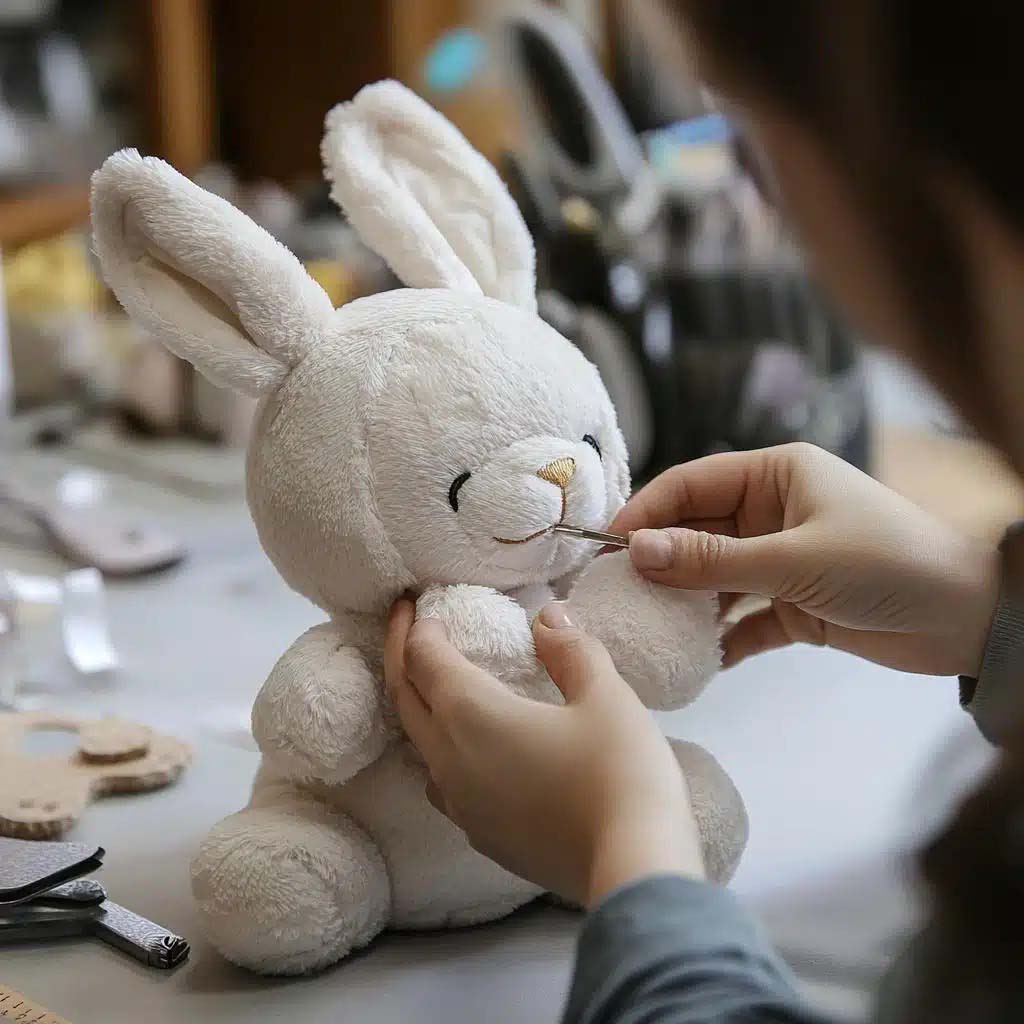
Consistency is one of the most important — and most underestimated — challenges in bulk plush toy production. Most buyers focus heavily on getting the first order right. They invest time in sampling, refine the design carefully, and approve a product they are genuinely happy with. Then the bulk order arrives and something is different.
The color is slightly off. The stuffing feels less firm than the sample. A facial feature sits at a marginally different angle. Individually, these differences might seem minor. But when you are receiving 3,000 units that will go directly to customers or retail shelves, even small deviations create real problems — inconsistent product presentation, customer complaints, and damage to brand credibility that takes far longer to repair than the production issue that caused it.
What makes consistency difficult is that it does not happen by accident. It requires deliberate systems, clear standards, and disciplined execution at every stage of the production process. This guide breaks down exactly what consistency means in bulk plush production, where inconsistency typically comes from, and what both buyers and manufacturers need to do to maintain quality standards across every order — not just the first one.
What Does Consistency Actually Mean in Bulk Plush Toy Production?

Before addressing how to achieve consistency, it is worth being precise about what the word actually means in the context of bulk plush manufacturing. Consistency is not perfection — minor unit-to-unit variation is an inherent reality of any textile-based manufacturing process. What consistency means in practice is that every unit in a production run falls within a defined, acceptable range of variation relative to the approved standard.
In bulk plush toy production, consistency means that every finished unit — regardless of when it was produced within the run, which operator handled it, or which material batch it came from — meets the same defined standards for dimensions, color, fabric quality, stuffing density, construction integrity, and finishing. It is not about achieving zero variation but about ensuring that variation stays within boundaries that are invisible to the end customer and acceptable to the buyer.
Here is a breakdown of the key consistency dimensions in plush toy production:
| Consistency Dimension | What It Covers | Acceptable Variation Range | Risk if Uncontrolled |
|---|---|---|---|
| Dimensions | Height, width, and overall proportions | ±5% of approved specification | Products look visibly different in size |
| Color accuracy | Fabric, thread, and accessory color matching | ±1 Pantone shade under standard lighting | Color variation visible across units |
| Stuffing density | Firmness and shape of filled product | ±10% of approved density specification | Some units firm, others soft and flat |
| Fabric quality | Pile height, surface texture, density | Matches approved fabric swatch | Inconsistent feel and appearance |
| Facial feature placement | Position of eyes, nose, embroidery | ±3mm from approved position | Units look different from each other |
| Stitching quality | Seam strength, stitch density, alignment | No visible deviation from standard | Seam inconsistency affects durability |
| Finishing standard | Thread trimming, surface cleanliness | Zero visible loose threads or marks | Unprofessional presentation at retail |
Why Acceptable Variation Needs to Be Defined in Advance
One of the most common sources of post-shipment disputes is the absence of predefined variation tolerances. When a buyer simply refers to the “approved sample” as the quality standard without specifying acceptable ranges, every deviation becomes a subjective disagreement. The buyer sees a problem; the factory sees normal manufacturing variation. Without agreed tolerance levels, neither party has an objective basis for resolving the dispute.
Defining acceptable variation ranges — in writing, as part of the product specification document — before production begins transforms quality assessment from a subjective argument into an objective measurement. This protects both parties and makes final inspection a straightforward process rather than a negotiation.
Why Do Quality Inconsistencies Happen Between Samples and Bulk Plush Orders?
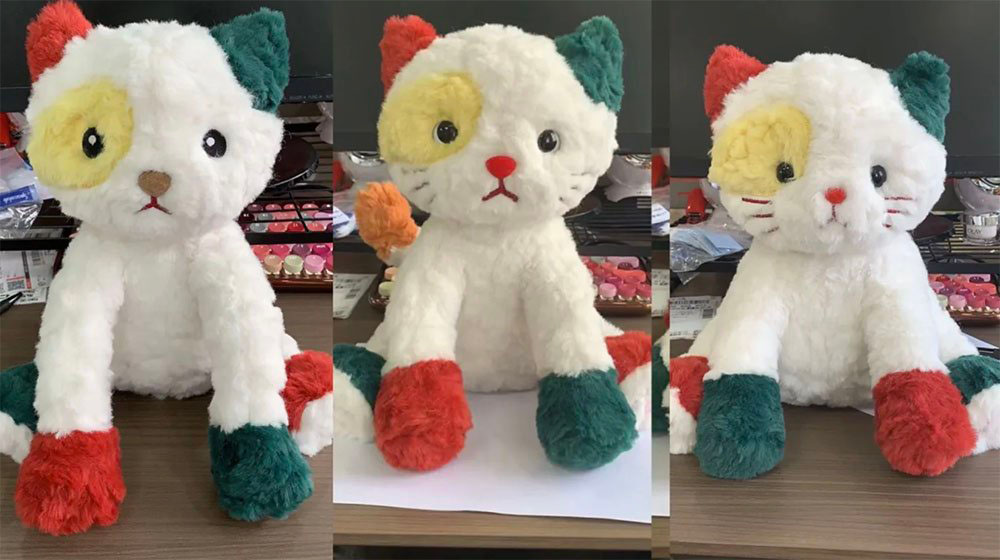
The gap between sample quality and bulk production quality is one of the most consistent frustrations in plush toy sourcing. Understanding exactly why this gap exists — and which factors contribute most significantly — is essential for putting the right preventive measures in place.
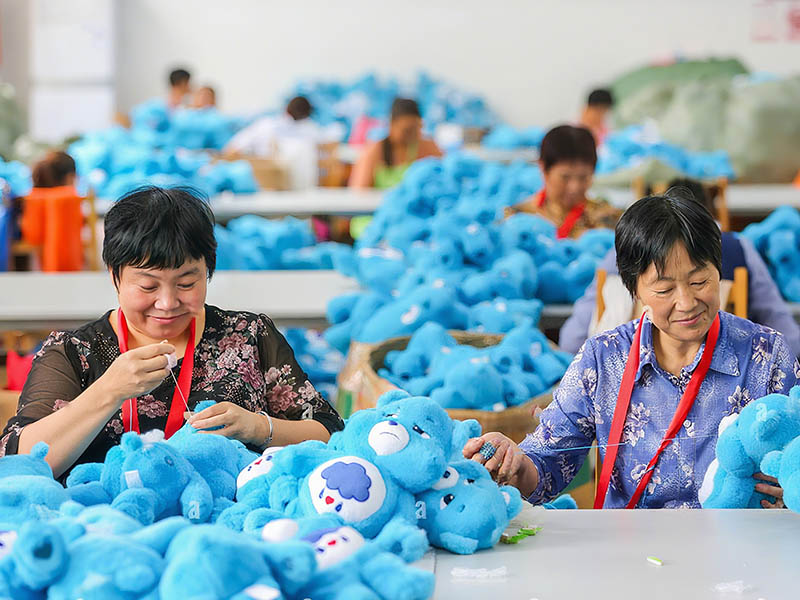
Quality inconsistencies between samples and bulk plush orders occur because the conditions, processes, and resources used during sampling are fundamentally different from those used in mass production. Samples are typically built by the factory’s most skilled workers using hand-selected materials, with close attention to every detail. Mass production operates at scale, with different labor conditions, automated or semi-automated processes, and the inevitable variability that comes from producing thousands of units rather than one.
Here is a breakdown of the most common root causes of sample-to-bulk inconsistency:
| Root Cause | How It Creates Inconsistency | How Common |
|---|---|---|
| Different workers on bulk vs sample | Production operators have varying skill levels | Very common |
| Material batch variation | Fabric or filling from new batch differs subtly | Common |
| Process shortcuts under volume pressure | Speed prioritized over precision in bulk | Common |
| Inadequate tech pack documentation | Workers interpret standards subjectively | Very common |
| Weak in-process quality monitoring | Deviations not caught until end of production | Common |
| Material substitution without approval | Supplier changes fabric or filling without notifying buyer | Less common but high impact |
| Stuffing machine calibration drift | Density settings shift during long production runs | Moderate |
The Skilled Worker Gap
During sampling, factories typically assign their most experienced pattern makers and sewers to prototype development. These individuals have the skill to interpret a brief accurately, make fine adjustments in real time, and produce a high-quality result through careful handwork.
During bulk production, the same product is handled by general production line workers whose primary metric is output volume. The skill gap between a sample sewer and a production line operator is real, and without compensating controls — detailed work instructions, in-process monitoring, supervisor oversight — this gap translates directly into quality variation.
Material Batch Variation
Even when a factory orders the exact same fabric from the same supplier for a repeat production run, subtle batch-to-batch differences in color, pile height, and density can occur. These differences are normal in textile manufacturing but become visible quality issues in finished products if they are not caught and addressed during incoming material inspection.
This is one of the strongest arguments for rigorous IQC — incoming quality control — on every production run, not just the first one. A factory that only inspects materials at the start of a new product’s production history but skips this step on reorders is leaving a significant consistency risk unmanaged.
How Does a Standardized Tech Pack Prevent Variation in Bulk Plush Production?
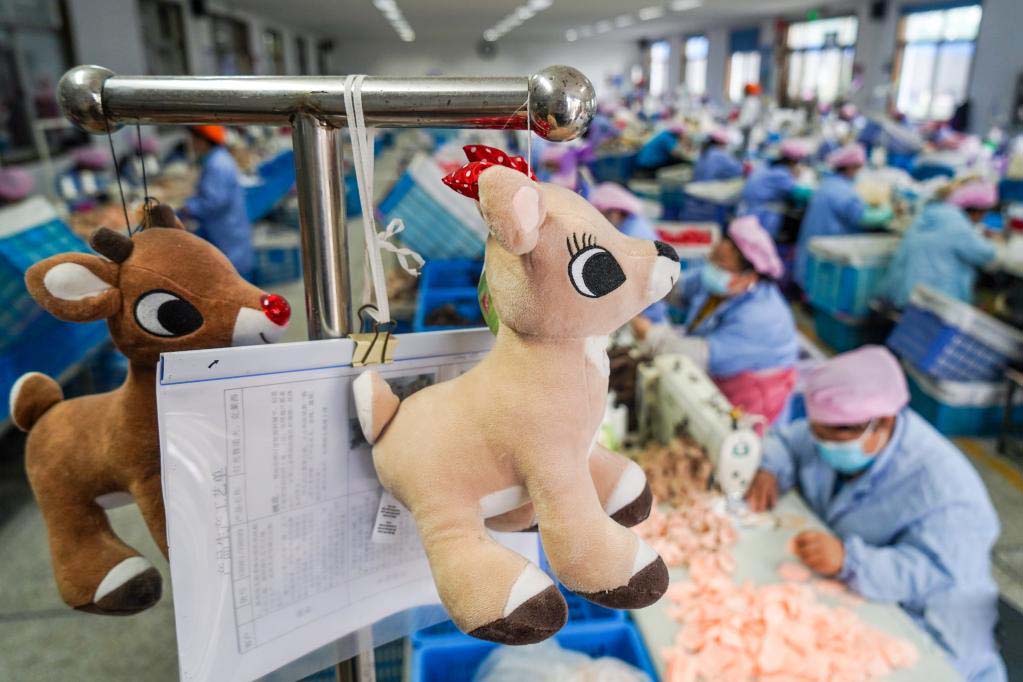
A tech pack — or technical specification document — is the single most important document in the entire production process for maintaining consistency. It is the bridge between the approved sample and the production line, translating the physical reality of the prototype into written, measurable standards that every worker in the factory can reference.
A standardized tech pack prevents variation in bulk plush production by providing every department — pattern making, cutting, sewing, stuffing, finishing, and quality control — with a single, authoritative reference document that defines all product standards in objective, measurable terms. When all production decisions are made against a common standard rather than individual interpretation, the range of output variation narrows significantly.
Here is what a complete plush toy tech pack should contain:
| Tech Pack Component | What It Specifies | Why It Matters for Consistency |
|---|---|---|
| Technical drawings | Front, back, side views with measurements | Ensures shape and proportion accuracy |
| Dimension table | All key measurements with tolerances | Provides objective size standard |
| Material specifications | Fabric type, pile height, filling type and density | Prevents unauthorized substitution |
| Color references | Pantone codes for all color areas | Eliminates color interpretation errors |
| Construction notes | Seam type, stitch density, closure method | Standardizes production technique |
| Embroidery file | Digital artwork with placement coordinates | Ensures facial feature consistency |
| Accessory specifications | Eye size, button type, trim dimensions | Controls detail accuracy |
| Stuffing density standard | Target weight or compression specification | Maintains consistent product feel |
| Packaging specification | Box dimensions, insert placement, label position | Controls retail presentation |
| Quality checkpoints | Key inspection steps with pass/fail criteria | Guides in-process and final QC |
The Difference Between a Good and Poor Tech Pack
A poor tech pack describes what the product looks like in general terms — “soft blue plush bear, approximately 30cm tall, embroidered face.” A good tech pack specifies every attribute in measurable terms — fabric pile height of 15mm, Pantone 2727C for the main body fabric, height 30cm ±1.5cm, eye diameter 18mm positioned 8cm from top seam.
The difference in production outcome between these two levels of specification is significant. Vague descriptions require workers to make judgment calls at every step — and those judgment calls will vary between operators, between shifts, and between production runs. Precise specifications eliminate the need for judgment by giving workers a clear, objective standard to work against.
Tech Packs as Living Documents
A tech pack should be treated as a living document that is updated every time a design change is approved. When a buyer approves a revision — a slightly different stuffing density, a new fabric, a repositioned eye — this change should be formally incorporated into the tech pack before the next production run begins. A factory working from an outdated tech pack will produce products to the old standard, creating exactly the kind of inconsistency the document is designed to prevent.
Which Quality Control Checkpoints Are Essential for Maintaining Consistency at Scale?
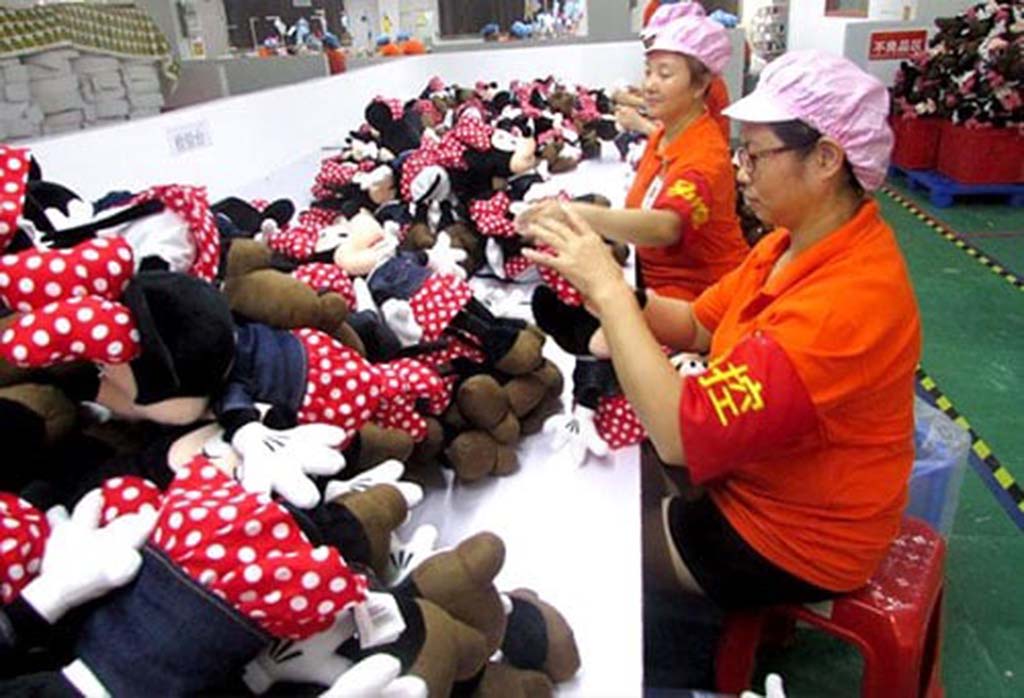
Quality control in bulk plush production is not a single event that happens at the end of the manufacturing process. It is a series of checkpoints distributed across the entire production timeline, each targeting a specific type of potential variation at the stage where it is most efficiently caught and corrected.
Maintaining consistency in bulk plush orders requires quality control checkpoints at three critical stages: incoming material inspection before production begins, in-process inspection at key production milestones, and final goods inspection before shipment. Each checkpoint serves a distinct function, and the absence of any one of them leaves a significant gap in the consistency management system.
Here is a detailed overview of essential QC checkpoints for bulk plush production:
| QC Stage | When It Occurs | What Is Inspected | Consistency Risk Addressed |
|---|---|---|---|
| IQC — Material receiving | Before any cutting begins | Fabric, filling, accessories, thread | Batch variation, unauthorized substitution |
| Pre-production check | After patterns are cut, before sewing | Cut panel dimensions, color accuracy | Pattern drift, color deviation |
| First-off inspection | After first completed units | Full product against approved sample | Process setup errors |
| Mid-production IPQC | At 30–50% of production completion | Random unit sample from line | Drift in density, placement, stitching |
| Pre-packing inspection | Before units enter packaging | Appearance, accessories, finishing | Surface defects, missing components |
| FQC — Final inspection | On packed finished goods | AQL sampling of full batch | Overall batch quality confirmation |
The First-Off Inspection
One checkpoint that is frequently overlooked — even by factories with otherwise mature quality systems — is the first-off inspection. This is a thorough review of the first two to five fully completed units from the production run, conducted before the line continues producing additional units.
The first-off inspection is the earliest opportunity to identify process setup problems — incorrect stuffing density, misaligned embroidery, color deviations from the material batch — before they affect the entire run. A problem caught at the first-off stage might affect five units. The same problem, undetected, can affect five thousand.
Mid-Production IPQC and Drift Management
One of the subtler consistency risks in long production runs is process drift — the gradual change in output quality that occurs as machines are used continuously, workers fatigue across a shift, or material characteristics vary subtly from roll to roll.
A factory managing mid-production IPQC effectively will pull random samples from the production line at defined intervals — typically every two to four hours or at every 500 units — and compare them against the first-off standard and the tech pack specifications. Any drift identified triggers a production pause and process recalibration before the run continues. Without this monitoring, drift can accumulate invisibly across an entire production run, resulting in units at the end of production that differ meaningfully from units produced at the beginning.
How Do Material Sourcing Standards Directly Impact Batch-to-Batch Consistency?

Materials are the foundation of every consistency decision made later in production. If the materials entering the factory vary from batch to batch — in color, density, texture, or composition — the finished products will vary too, regardless of how well the production process is managed. Consistent output requires consistent input, and consistent input requires disciplined material sourcing standards.
Material sourcing standards directly impact batch-to-batch consistency in plush toy production because the physical properties of fabric, filling, and accessories determine the baseline quality characteristics of every unit produced. When material standards are rigorously maintained — through approved supplier lists, incoming inspection against spec, and material batch tracking — the variability introduced by material differences is minimized and production consistency improves significantly.
Here is a framework for understanding how different material factors affect batch consistency:
| Material Factor | Consistency Risk | How It Is Managed | Impact if Unmanaged |
|---|---|---|---|
| Fabric color batch | Different dye lots produce subtle color shifts | Inspect against approved swatch at receiving | Visible color variation within order |
| Pile height variation | Different fabric rolls have slightly different pile | Pile height measured at IQC | Inconsistent texture feel across units |
| Filling density | PP cotton density varies between bales | Weight-per-unit specification enforced | Some units firmer, others softer |
| Accessory dimensions | Eye or button size varies between supplier batches | Dimensional check at IQC | Inconsistent facial proportion |
| Thread color | Dye lot differences affect color match | Thread matched to approved reference | Visible stitch color variation |
| Bead size uniformity | Glass bead size affects weight distribution | Sieve test on each batch | Uneven pressure in weighted products |
Approved Supplier Lists and Material Traceability
One of the most effective material consistency controls available to a well-managed factory is an approved supplier list — a defined set of vetted material suppliers whose product quality has been verified and whose materials are authorized for use in production. When a factory sources all materials exclusively from approved suppliers, the baseline quality and consistency of incoming materials is significantly higher than when materials are sourced opportunistically based on price or availability.
Material traceability — recording which batch of fabric, filling, and accessories was used in each production run — is equally important. When a consistency problem is identified after shipment, traceability records allow the root cause to be identified quickly and precisely. Without these records, diagnosing and preventing recurrence of a material-related consistency problem is significantly more difficult.
The Risk of Unauthorized Material Substitution
One of the most damaging consistency risks in international plush toy sourcing is unauthorized material substitution — when a factory changes the fabric, filling, or accessory supplier without informing the buyer. This typically happens when the approved material becomes unavailable or when the factory identifies a cheaper alternative. The substitute material may appear similar to the approved material, but subtle differences in quality, color, or performance create visible inconsistency in the finished product.
Requiring written approval for any material change — and making this a formal contractual requirement before production begins — is the most effective way to prevent unauthorized substitution. A factory that understands this requirement and respects it is demonstrating the kind of transparency and process discipline that supports long-term consistency.
What Role Do Pre-Production Approvals Play in Locking Down Quality Before Mass Production?

Pre-production approvals are the formal confirmation steps that occur between sample approval and the start of mass production. They are the last opportunity to verify that everything the factory plans to use and do during production matches the agreed standard — before any bulk units are produced. Skipping or rushing these approvals is one of the most common causes of bulk production quality failures.
Pre-production approvals play a critical role in maintaining consistency by establishing a verified, documented baseline for every key production input before manufacturing begins. This includes approval of bulk material samples, confirmation of the production tech pack, sign-off on the first-off production units, and alignment on quality inspection standards. Each approval step closes a potential gap between the agreed standard and actual production conditions.
Here is an overview of essential pre-production approval steps:
| Approval Step | What Is Confirmed | Who Approves | Timing |
|---|---|---|---|
| Bulk material approval | Fabric, filling, and accessories from actual production batch | Buyer or QC team | Before cutting begins |
| — | Counter sample approval | Factory-made pre-production sample matching all specs | Buyer |
| Tech pack sign-off | All specifications confirmed and distributed to production team | Factory QC manager | Before production start |
| First-off approval | First completed units from production line meet standard | Factory QC + buyer if possible | First day of production |
| Packaging approval | Retail packaging matches approved design and dimensions | Buyer | Before packing begins |
Bulk Material Approval — The Most Overlooked Step
Of all the pre-production approval steps, bulk material approval is the one most frequently skipped by both factories and buyers — and it is often the source of the most significant consistency problems.
Bulk material approval means physically comparing the actual materials that will be used in mass production against the materials used in the approved sample. This is important because the fabric sourced for the approved sample may have come from a small sample cut, while the bulk production fabric comes from a new roll or even a different production batch from the same supplier. Subtle differences in color, pile height, or texture that are not caught at this stage will be built into every unit produced.
Requesting bulk material swatches for approval before production begins is a reasonable and standard request. A factory that resists or dismisses this step is removing an important quality safeguard without a good justification.
Counter Sample as a Production Baseline
A counter sample — sometimes called a pre-production sample — is a unit built by the factory using the actual bulk production materials, patterns, and processes, before the main production run begins. It is distinct from the development sample, which was built during the design and approval stage.
The counter sample serves as the definitive production baseline. If the counter sample is approved by the buyer, it becomes the on-floor reference standard against which all bulk units are compared during IPQC and FQC. If it reveals any deviations from the original approved sample — due to material differences or process changes — these can be addressed before bulk production generates thousands of non-conforming units.
How Can Buyers Use Third-Party Inspections to Protect Consistency in High-Volume Orders?
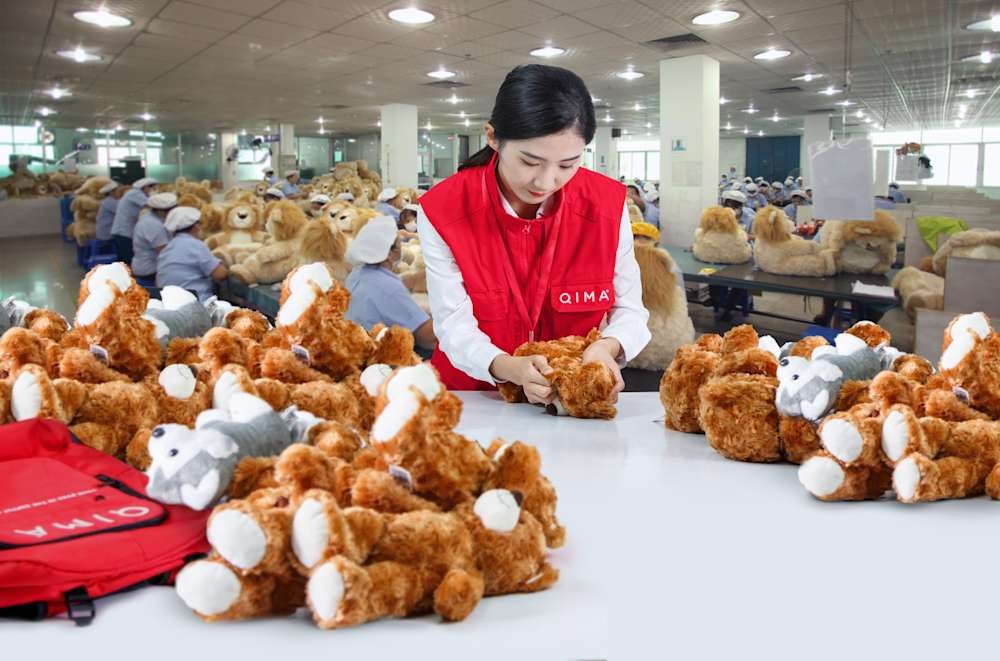
Third-party inspection is one of the most effective tools available to buyers who cannot be physically present in the factory during production. It provides independent, objective verification of product quality at the point closest to shipment — giving buyers actionable quality information before the goods leave the factory and before the balance payment is made.
Third-party inspection protects consistency in high-volume plush orders by providing an independent assessment of finished goods quality against the agreed standard, conducted by a qualified inspector from a recognized organization such as SGS, Bureau Veritas, or Intertek. This assessment uses standardized AQL sampling methodology to determine whether the production batch meets the defined quality threshold, and produces a detailed written report that gives the buyer objective evidence of compliance or non-conformance before shipment is approved.
Here is a guide to how third-party inspections work in the context of bulk plush orders:
| Inspection Element | What It Covers | Standard Used | Output |
|---|---|---|---|
| AQL sampling | Statistical sample drawn from full batch | AQL 1.5 / 2.5 / 4.0 depending on defect class | Pass or fail determination |
| Dimensional check | Key measurements against tech pack spec | Buyer’s tolerance specification | Measurement report |
| Visual inspection | Appearance, color, fabric quality, finishing | Approved sample comparison | Defect classification list |
| Functional testing | Accessory attachment, zipper operation, closures | EN71 / ASTM pull-force reference | Test result documentation |
| Packaging check | Carton marking, inner packaging, label accuracy | Buyer’s packaging specification | Packaging conformance report |
| Quantity verification | Actual count against purchase order | Purchase order | Quantity confirmation |
Choosing the Right AQL Level
AQL — Acceptable Quality Level — is the statistical framework that determines how many units are inspected from a batch and what defect rate is acceptable before the batch is considered non-conforming. Selecting the right AQL level for your product and market is an important decision that directly affects both the stringency of the inspection and the cost.
For most plush toy buyers, a standard approach is AQL 1.5 for critical defects — those affecting safety or presenting a significant risk — and AQL 2.5 for major defects such as visible quality deviations, dimensional failures, or functional issues. AQL 4.0 may be applied to minor defects such as slight finishing imperfections that do not affect product function or appearance significantly.
Using Inspection Reports as a Negotiation Tool
A third-party inspection report documenting specific quality deviations provides a buyer with objective, independently verified evidence that is far more powerful in supplier negotiations than subjective buyer feedback alone. When a factory receives an inspection report from SGS or Intertek identifying a specific defect rate in a production batch, the conversation shifts from “we think quality is not good enough” to “an independent inspector found these specific issues at this measured rate.”
This objectivity makes resolution faster, fairer, and more productive. It also creates a historical quality record for the supplier relationship that helps identify patterns — whether quality is improving, declining, or remaining stable — across multiple production runs.
How to Structure a Long-Term Supplier Relationship That Sustains Quality Across Every Order?
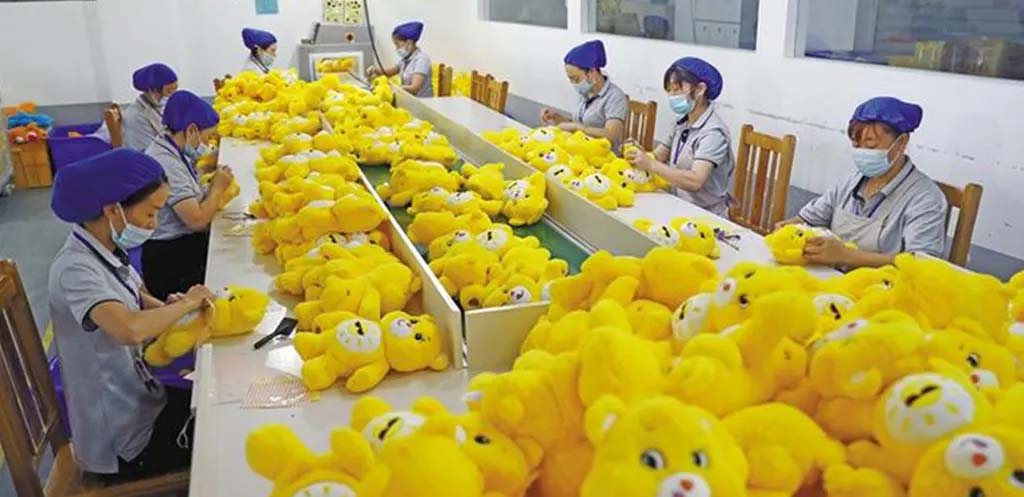
The ultimate solution to consistency challenges in bulk plush production is not a single inspection or a perfectly written tech pack — it is a well-structured, mutually understood long-term supplier relationship built on clear standards, honest communication, and shared accountability for quality outcomes.
A long-term supplier relationship sustains plush toy production quality across multiple orders by establishing a shared understanding of quality standards, building institutional knowledge of the buyer’s specific requirements, creating accountability systems that reward consistent performance, and developing the kind of trust that makes honest communication about problems possible before they become crises.
Here is a framework for structuring a quality-focused long-term supplier relationship:
| Relationship Element | How to Implement | Benefit to Consistency |
|---|---|---|
| Documented quality standards | Maintain updated tech packs for all active products | Single authoritative reference for all production |
| Regular performance reviews | Review quality metrics after each order | Identifies trends before they become patterns |
| Open problem communication | Create environment where factory reports issues proactively | Early warning of problems reduces impact |
| Forecast sharing | Share upcoming order plans in advance | Factory allocates best resources to your orders |
| Incremental volume growth | Increase orders as performance is demonstrated | Factory prioritizes relationship over time |
| Joint quality improvement | Collaborate on process improvements, not just complaints | Factory invests in capability development for your account |
Building Institutional Knowledge
One of the most valuable assets in a long-term factory relationship is the institutional knowledge the factory develops about your specific products and standards over time. A factory that has produced your product ten times understands its nuances — the specific stuffing density your market expects, the exact color matching approach that works for your fabric, the finishing standard your buyers require — in a way that cannot be fully captured in a tech pack.
This knowledge reduces friction on every subsequent order. Briefing time decreases. Sample revision rounds shorten. QC processes become more targeted and efficient. The practical result is faster time to market, lower total production costs, and more consistent output across every run.
Incentivizing Consistent Quality
A relationship structure that clearly links volume commitment to quality performance creates a positive incentive for the factory to invest in maintaining standards. When a factory understands that consistent quality leads directly to growing order volumes — and that quality failures will result in reduced or redirected business — they have a commercial motivation to solve consistency problems proactively rather than reactively.
At Kinwin, we approach every long-term client relationship with this philosophy. We track quality performance across production runs, maintain updated documentation for all active products, and communicate proactively when we identify any risk to consistency before it affects production. Our goal is not just to produce what is asked — it is to build a sourcing relationship where consistent quality is the expected standard, not the exception.
Conclusion
Consistency in bulk plush orders is not a passive outcome — it is the result of deliberate systems working together across every stage of production. Clear specifications, rigorous material standards, structured quality checkpoints, and disciplined supplier relationships all contribute to an environment where every unit produced meets the same standard as the one before it.
For buyers, the practical takeaway is straightforward. Invest time in building precise, comprehensive tech packs before production begins. Insist on pre-production material approvals. Establish clear, measurable quality tolerances in writing. Use third-party inspection to verify finished goods independently. And treat your manufacturing relationship as a long-term partnership — because the factory that knows your products and standards deeply will always deliver more consistent results than one that is learning them for the first time.
For brands competing in markets where product quality directly affects customer trust, repeat purchase rates, and long-term brand reputation, consistency is not a production detail. It is a competitive advantage.
At Kinwin, maintaining consistency across bulk plush orders is built into every stage of how we work — from the rigorous incoming material inspection that begins every production run to the final AQL-based goods inspection before any shipment leaves our factory. If you are looking for a plush toy manufacturing partner who treats consistency as a standard, not a request, we would be glad to show you exactly how we deliver it.
FAQ
Q1: How do I ensure consistency when I reorder the same product six months after the original production run?
Reorder consistency depends on three things being preserved from the original run: the tech pack with all specifications, the approved sample kept as a physical production reference, and the material sourcing records identifying which fabric and filling batches were used. Before a reorder begins, request bulk material swatches from the factory for comparison against your archived reference. If materials have changed — even from the same supplier — request a counter sample before authorizing mass production. Factories that maintain organized production records from previous runs make this process significantly more reliable than those who treat each order as a fresh start.
Q2: What is the best way to communicate quality standards to a factory that does not speak English as a first language?
Visual documentation is consistently more effective than written descriptions alone when communicating across language barriers. A tech pack that relies primarily on dimensioned drawings, annotated photographs, color swatches, and physical reference samples will be interpreted more accurately than one that depends on detailed written descriptions. For critical quality points — stuffing density, facial feature placement, color matching — providing physical limit samples that show the boundary between acceptable and unacceptable helps production teams calibrate their judgment without relying on language interpretation.
Q3: How many units should a third-party inspector check to get a reliable assessment of a bulk order?
The number of units inspected is determined by the AQL sampling table rather than a fixed number, and it varies based on total batch size and the AQL level selected. For a batch of 3,000 units inspected at AQL 2.5 — a common standard for major defects in plush toys — the sample size is typically around 125 units. This may seem like a small proportion of the total batch, but AQL methodology is statistically validated to provide a reliable estimate of the overall batch defect rate when the sampling process is conducted correctly by a qualified inspector.
Q4: Can consistency problems be caused by issues inside my own supply chain rather than the factory?
Yes — and this is more common than most buyers realize. If a buyer changes packaging specifications after production has begun, requests additional units that must be sourced from a second production batch, or ships products through a logistics chain that exposes them to conditions — extreme heat, humidity, or compression — that affect material quality, the consistency problems that result are not the factory’s responsibility. Maintaining consistency across the full supply chain means applying the same standards discipline to logistics, warehousing, and packaging as to production.
Q5: How should I handle it if a factory consistently delivers good quality on first orders but quality drops on reorders?
A pattern of declining quality on reorder is one of the clearest signals of a structural problem in how the factory manages repeat production. It typically indicates that the factory assigns its best resources — materials, workers, supervisors — to first orders from new clients to win the relationship, then reduces that investment as the account becomes established. Addressing this requires making clear to the factory — in writing and in conversation — that your quality standards are non-negotiable on every order, not just the first one, and that reorder volume is directly conditional on consistent quality performance. Requesting a counter sample on every reorder, regardless of how many times the same design has been produced, is also an effective structural safeguard.