Skip to content
Pricing is usually the first question buyers ask when they start a custom plush toy project. But the answer is rarely simple. Custom plush toys are not off-the-shelf products—every element of the design, material, and production process has a direct impact on the final cost.
From my experience working with brands, retailers, and e-commerce sellers across the US and Europe, most pricing surprises happen because buyers focus only on unit price without understanding what drives it. When you understand the full cost structure, you can make smarter decisions, negotiate more effectively, and avoid budget overruns.
In this guide, I will break down every major factor that affects custom plush toy pricing, so you can plan your project with confidence and find the right balance between cost and quality.
What Factors Have the Biggest Impact on Custom Plush Toy Pricing?

Custom plush toy pricing is not determined by one single element. It is the result of multiple factors working together—material selection, order quantity, design complexity, compliance requirements, and production setup all contribute to the final cost.
The unit price of a custom plush toy is influenced by a combination of order quantity, material quality, design complexity, safety certification requirements, and production setup costs. Understanding how these factors interact helps buyers make better sourcing decisions and avoid unexpected expenses.
Here is a clear overview of the main pricing drivers:
| Pricing Factor | Low-Cost Scenario | Higher-Cost Scenario | Impact Level |
|---|---|---|---|
| Order quantity | 5,000+ units | Under 500 units | Very High |
| Material quality | Standard plush fabric | Premium minky or organic | High |
| Design complexity | Simple shape, few colors | Multi-part, detailed design | High |
| Safety certification | No testing required | ASTM, EN71, CPSIA | Medium-High |
| Sampling and tooling | Reuse existing molds | Custom molds and patterns | Medium |
| Packaging | Plain polybag | Custom retail box | Medium |
Most buyers are surprised to find that order quantity and material selection are the two biggest cost drivers—not design complexity, as many assume. A simple design made with premium materials can cost more than a complex design made with standard fabrics.
Another important point is that pricing is not static. As your order volume grows and your relationship with the manufacturer deepens, costs naturally decrease. This is why long-term sourcing partnerships tend to deliver better value than one-time spot orders.
For buyers entering the custom plush market, the smartest approach is to understand the full cost structure before requesting a quote. This prevents misaligned expectations and helps you have more productive conversations with suppliers.
How Does Order Quantity Affect the Unit Cost of Custom Plush Toys?
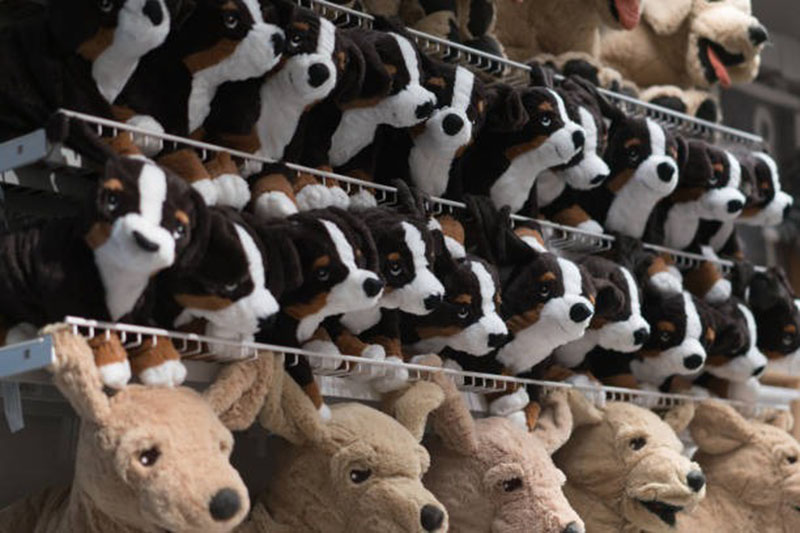
Order quantity is one of the most powerful levers in custom plush toy pricing. The relationship between volume and unit cost is straightforward—the more units you order, the lower the cost per piece. But understanding exactly how this works helps you plan more effectively.
In custom plush manufacturing, higher order quantities allow factories to spread fixed costs—such as pattern making, tooling, and setup—across more units. This reduces the per-unit burden and lowers the overall price. Most factories offer tiered pricing based on MOQ brackets.
Here is a typical pricing tier structure based on order quantity:
| Order Quantity | Relative Unit Cost | Fixed Cost Per Unit | Production Efficiency |
|---|---|---|---|
| 100–300 units | Highest | Very high | Low |
| 300–500 units | High | High | Moderate |
| 500–1,000 units | Moderate | Medium | Good |
| 1,000–3,000 units | Lower | Low | High |
| 3,000+ units | Most competitive | Very low | Maximum |
For new buyers, the challenge is balancing risk with cost. Ordering a large quantity reduces unit price but increases upfront investment and inventory risk. Ordering a small quantity is safer but significantly more expensive per unit.
There are several strategies that experienced buyers use to manage this balance. One approach is to launch with a medium quantity—typically 500 to 1,000 units—to test the market before scaling. This gives you enough volume to get a reasonable price while limiting exposure.
Another strategy is to consolidate multiple SKUs into one order. For example, if you are launching three colorways of the same design, ordering all three together can help you reach a higher volume tier and reduce cost across the entire range.
It is also worth understanding what drives the high cost at low quantities. Pattern making, sample adjustments, machine setup, and material cutting all require time and labor regardless of how many units are produced. When these fixed costs are divided among only 200 units, the per-unit impact is significant. When divided among 2,000 units, the impact becomes much smaller.
For buyers who are just starting out, I always recommend being honest with your supplier about your growth plans. A factory that understands your potential volume is more likely to offer flexible pricing on initial orders, knowing that the relationship will grow over time.
How Do Material Choices Drive Price Differences in Custom Plush Production?
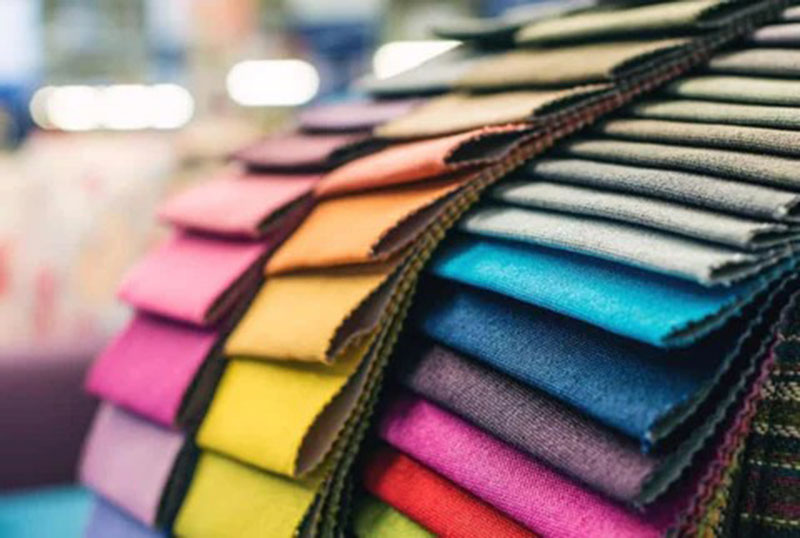
Material selection has a direct and significant impact on the cost of a custom plush toy. In fact, for many products, materials account for 40% to 60% of the total production cost. Choosing the right materials is not just about quality—it is about aligning cost with your target market and price point.
The type of fabric, filling, accessories, and lining used in a custom plush toy all contribute to the final unit cost. Premium materials improve product quality and customer satisfaction but increase production cost, while standard materials reduce cost but may limit product positioning in mid-to-high-end markets.
Here is a comparison of common material options and their cost implications:
| Material Type | Cost Level | Key Advantage | Best For |
|---|---|---|---|
| Standard plush fabric | Low | Cost-effective | Promotional, budget products |
| High-density plush | Medium | Better texture and durability | Retail, mid-range |
| Minky / ultra-soft fabric | High | Premium feel, skin-friendly | Premium, adult market |
| Organic or recycled fabric | High | Eco-friendly positioning | Sustainability-focused brands |
| PP cotton filling | Low | Lightweight, widely available | Standard products |
| Glass bead filling | Medium-High | Adds weight, smooth feel | Weighted plush toys |
| Accessories (eyes, buttons) | Varies | Design detail | All product types |
One area where buyers often underestimate cost is accessories and embellishments. Plastic safety eyes, embroidered features, ribbons, and sound modules all add to the bill of materials. A product with five separate accessories can cost noticeably more than a simpler design, even if the base fabric is the same.
Fabric quality also affects long-term product performance. A cheaper fabric may save money upfront but lead to higher return rates and negative reviews. For brands selling on platforms like Amazon or in retail stores, the cost of poor material decisions often shows up later in the form of damaged reputation and lost repeat business.
Another consideration is fabric certification. If you are selling in the US or Europe, materials must comply with regulations such as REACH in the EU or CPSIA in the US. Certified fabrics typically cost slightly more than uncertified alternatives, but they are essential for legal market entry.
At Kinwin, we help clients compare material options across different price tiers during the sampling stage. This allows you to see and feel the difference before committing to a full production run, which reduces the risk of material-related disappointment later.
How Does Design Complexity Influence Custom Plush Manufacturing Costs?
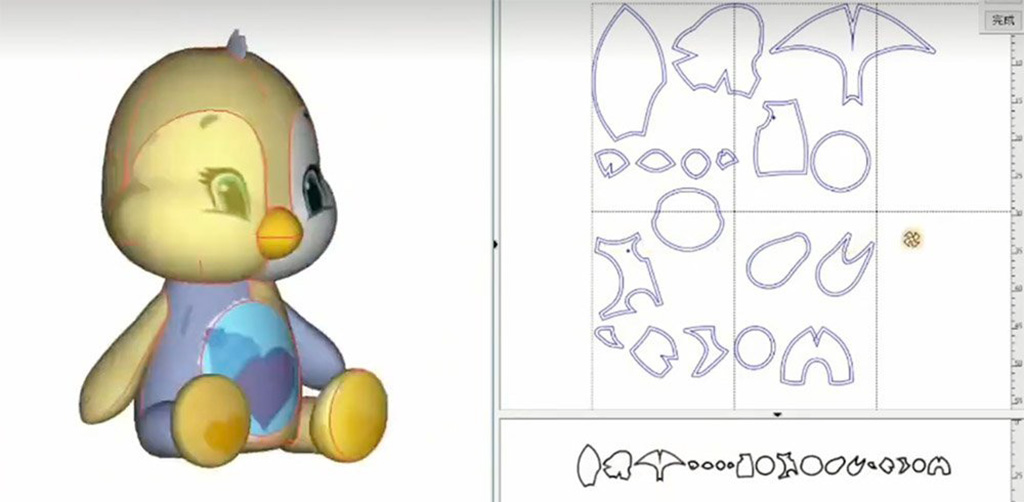
Design is where many buyers first think about cost, but it is important to understand exactly which design elements increase price and which do not. Not all complexity is equally expensive—some details add significant cost, while others have minimal impact.
Design complexity affects custom plush toy pricing through its influence on pattern count, sewing labor, material waste, and production time. Products with multiple fabric panels, intricate embroidery, movable parts, or detailed shape structures require more skilled labor and longer production time, which increases the unit cost.
Here is a breakdown of how specific design elements affect cost:
| Design Element | Cost Impact | Reason | Buyer Tip |
|---|---|---|---|
| Number of fabric panels | Medium-High | More cutting and sewing steps | Simplify where visible impact is low |
| Embroidery detail | Medium | Requires programming and extra time | Use for key features only |
| 3D sculpted shapes | High | Complex pattern making and labor | Budget extra for sampling |
| Movable parts (limbs, zippers) | High | Additional components and assembly | Confirm function vs cost trade-off |
| Multiple colors | Low-Medium | More fabric management | Consolidate colorways where possible |
| Sound or light modules | High | Electronics sourcing and integration | Test functionality before bulk |
One important distinction is between design complexity during sampling and complexity during mass production. Some designs that are difficult to sample become efficient in bulk once the pattern is finalized. Others remain labor-intensive regardless of volume.
Embroidery is a good example of managed complexity. A simple embroidered face adds minimal cost but significantly improves product quality and perceived value. A highly detailed embroidered scene across the entire body, however, can add substantial labor cost per unit.
Shape complexity is another key area. A standard bear or bunny shape uses established patterns and is straightforward to produce. A highly customized character with unique proportions, asymmetrical features, or multiple attached accessories requires new pattern development and longer sampling cycles, both of which add cost.
For buyers working with a limited budget, the best approach is to identify which design elements are most important to the end user and prioritize investment there. A premium fabric with a simple design often delivers better perceived value than a complex design made with standard materials.
At Kinwin, we review designs with our clients during the development stage and flag any elements that are likely to increase cost significantly. This helps buyers make informed decisions before sampling begins, saving both time and money.
What Role Do Safety Certifications and Compliance Testing Play in Pricing?
Safety certification is one of the most overlooked cost factors in custom plush toy sourcing. Many buyers focus on unit price and material costs but forget to budget for testing and compliance, which can add unexpected expenses to the total project cost.
Safety certifications and compliance testing add to the overall cost of a custom plush toy project but are non-negotiable for market entry in the US and Europe. Required tests include ASTM F963 and CPSIA for the US market and EN71 for Europe. These tests typically cost between $300 and $800 per product depending on the scope and laboratory used.
Here is an overview of common certification requirements and their cost implications:
| Certification / Test | Market | Estimated Cost | Frequency |
|---|---|---|---|
| ASTM F963 | USA | $300–$600 | Per product |
| CPSIA compliance | USA | Included in ASTM testing | Per batch |
| EN71 (Parts 1–3) | Europe | $400–$800 | Per product |
| REACH chemical testing | Europe | $200–$400 | Per material |
| CE marking | Europe | Based on test scope | Per product |
| OEKO-TEX certification | Global | $500–$1,000 | Per fabric |
It is important to understand that testing costs are largely fixed regardless of order size. Whether you order 500 units or 5,000 units, the laboratory fees remain the same. This means certification costs have a much greater impact on per-unit cost at low volumes.
For example, if testing costs $600 total and you order 500 units, that adds $1.20 per unit. If you order 3,000 units, the same testing cost adds only $0.20 per unit. This is another reason why higher order quantities offer better overall economics.
Beyond laboratory fees, there are also internal costs related to compliance. Manufacturers must use certified materials, maintain proper documentation, and apply required labeling such as CPSIA tracking labels. These processes require time and resources that are reflected in the product price.
For buyers selling on Amazon, Walmart, or major retail chains, compliance is not optional—it is a prerequisite. Products that cannot provide test reports risk being removed from listings or rejected at customs, which creates costs far greater than the original testing investment.
At Kinwin, we support our clients through the certification process by recommending appropriate tests based on target market, connecting with accredited laboratories, and ensuring all materials used in production meet the required standards before bulk manufacturing begins.
How Do Sampling, Tooling, and Setup Fees Affect Your Total Project Cost?
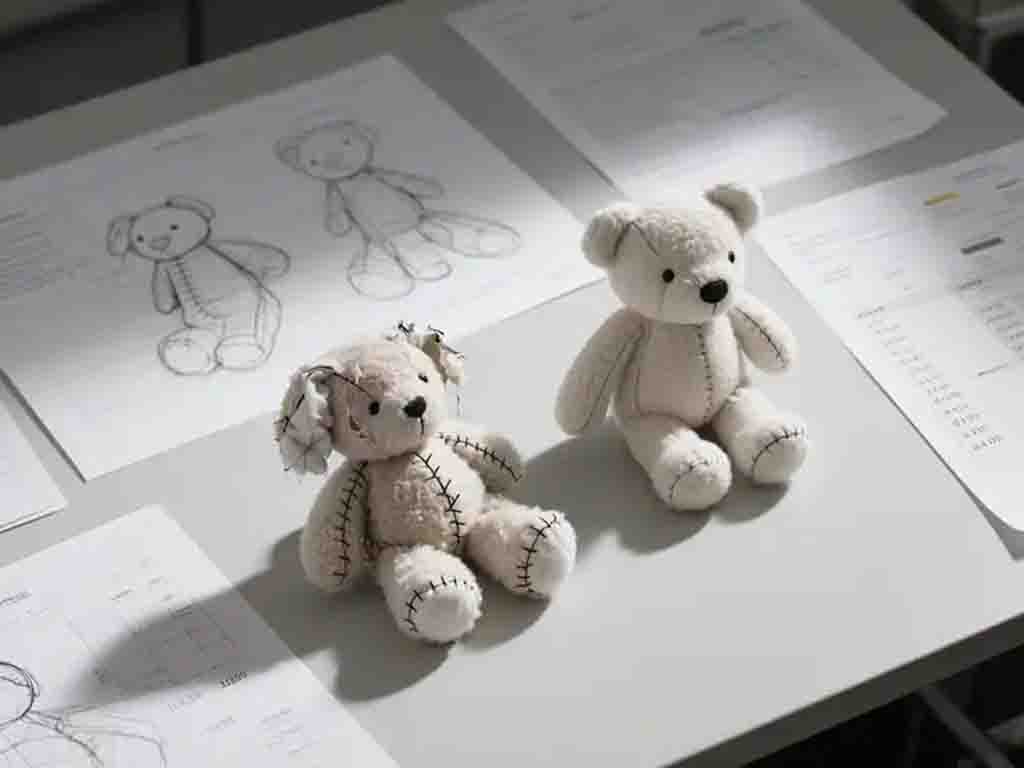
Before a single unit goes into mass production, there are several upfront costs that every custom plush project requires. These are often called pre-production costs, and they can significantly affect the total budget for new product launches—especially at lower order quantities.
Sampling, tooling, and setup fees are one-time or project-based costs that cover the development work required before mass production begins. These include pattern making, prototype development, mold creation for accessories, and production line setup. While these costs do not recur with repeat orders of the same design, they must be factored into the total cost of a new product launch.
Here is a breakdown of typical pre-production costs in custom plush manufacturing:
| Pre-Production Item | Typical Cost Range | Recurrence | Notes |
|---|---|---|---|
| Pattern making | $50–$200 | Once per design | Reused for repeat orders |
| First sample | $80–$300 | Once per design | Complexity affects cost |
| Revision samples | $50–$150 per round | Per revision | Minimize with clear brief |
| Custom molds (accessories) | $200–$600 | Once per mold | Eyes, buttons, badges |
| Embroidery programming | $30–$100 | Once per design | Required for new artwork |
| Packaging design setup | $100–$300 | Once per packaging | Dieline and print setup |
One of the most common mistakes new buyers make is forgetting to include sampling costs in their project budget. A single product development cycle with two or three sample revisions can easily cost $300 to $600 before mass production even begins. For brands launching multiple SKUs at once, this adds up quickly.
The good news is that most of these costs are non-recurring. Once the pattern is finalized and the production line is set up, repeat orders of the same design do not require new tooling fees. This is one reason why established supplier relationships become more cost-efficient over time.
Another important factor is sample revision management. Each revision round adds cost and delays the production timeline. Buyers who provide clear, detailed design briefs with accurate reference materials, color codes, and technical specifications from the start tend to complete sampling in fewer rounds, saving both time and money.
At Kinwin, we provide detailed feedback after each sample round and clearly communicate what changes are being made and why. This transparent approach helps our clients minimize unnecessary revisions and move from concept to production-ready sample as efficiently as possible.
How Can Buyers Reduce Custom Plush Toy Costs Without Sacrificing Quality?
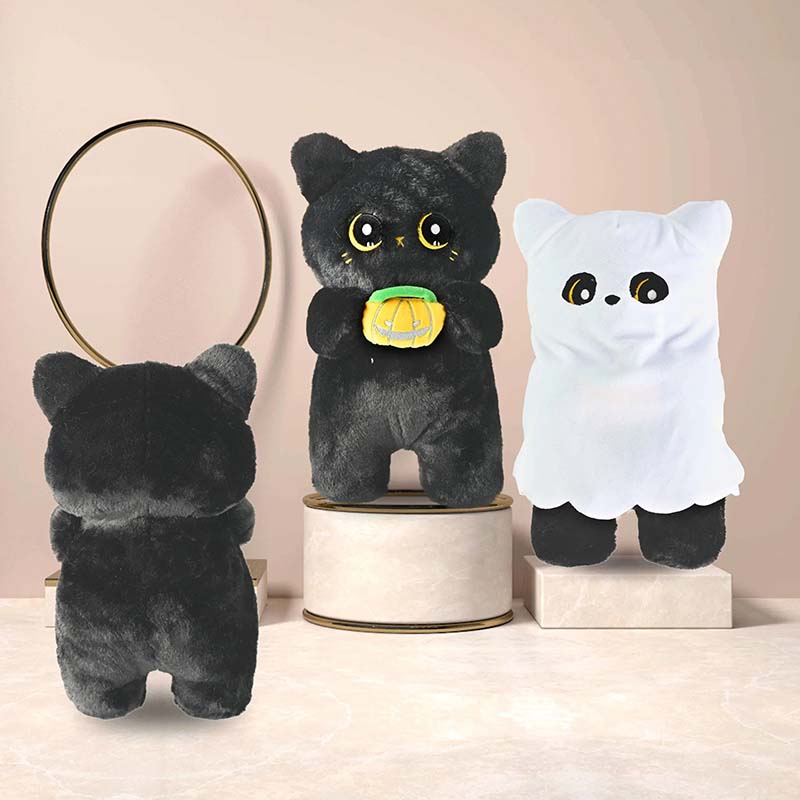
Cost reduction is a priority for most buyers, but the wrong approach can lead to quality problems that cost more to fix later. The key is to reduce cost strategically—by optimizing the areas that have the least impact on user experience and product performance.
Buyers can reduce custom plush toy costs without sacrificing quality by optimizing order quantities, simplifying non-critical design elements, selecting materials that match the product’s intended market, consolidating SKUs, and building long-term supplier relationships that unlock better pricing over time.
Here is a practical cost reduction framework:
| Strategy | Potential Saving | Quality Risk | Recommended For |
|---|---|---|---|
| Increase order quantity | High | None | Buyers ready to scale |
| Simplify non-visible design details | Medium | Low | All buyers |
| Consolidate SKUs in one order | Medium | None | Multi-product launches |
| Choose standard over premium fabric | Medium | Medium | Budget or promo products |
| Reduce packaging complexity | Low-Medium | None | Cost-sensitive markets |
| Reuse existing patterns across designs | Medium | None | Product line extensions |
One of the most effective strategies is to simplify design elements that customers do not directly notice. For example, the internal lining fabric, the type of thread used in hidden seams, or the construction of non-visible sections can often be optimized without affecting how the product looks or feels to the end user.
Another often-overlooked strategy is packaging simplification. Custom retail packaging significantly increases cost—not just for the packaging itself, but also for setup fees, minimum order quantities for printed boxes, and additional assembly labor. For products sold primarily online, simpler packaging can reduce cost without affecting customer satisfaction.
Building a long-term relationship with your manufacturer is one of the most sustainable ways to reduce cost over time. Factories prioritize reliable, repeat clients. As your order history grows, you gain more leverage to negotiate better pricing, priority production slots, and more flexible terms.
At Kinwin, we regularly work with clients to review their product specs and identify cost optimization opportunities. Our goal is not just to produce what is asked, but to help our clients build profitable products that work in their target markets.
How to Find a Reliable Custom Plush Toy Manufacturer That Offers Transparent Pricing?
Finding the right manufacturer is just as important as getting the right price. A supplier who offers the lowest quote but lacks transparency, quality control, or communication will end up costing you more in the long run through delays, quality issues, and costly revisions.
A reliable custom plush toy manufacturer should offer clear, itemized pricing that breaks down material costs, labor, tooling, testing, and packaging separately. Transparent pricing reflects a factory’s professionalism, reduces the risk of hidden charges, and allows buyers to make informed decisions when comparing suppliers.
Here is a framework for evaluating manufacturers based on pricing transparency and reliability:
| Evaluation Criteria | Green Flag | Red Flag |
|---|---|---|
| Quote format | Itemized breakdown | Single lump sum only |
| Sample cost policy | Clearly stated upfront | Vague or hidden |
| MOQ flexibility | Negotiable based on project | Rigid, no discussion |
| Compliance support | Proactive certification guidance | No mention of testing |
| Communication speed | Responds within 24 hours | Slow or unclear replies |
| Production experience | Proven weighted or complex plush history | Only standard products |
When evaluating suppliers, always request an itemized quotation rather than a single total price. A detailed quote that separates material cost, labor, tooling, packaging, and testing gives you much better visibility into where your money is going and which areas can be negotiated.
It is also worth asking suppliers how they handle price changes during production. Material prices can fluctuate, and a reliable manufacturer will communicate proactively if costs change rather than surprising you with an adjusted invoice at the end.
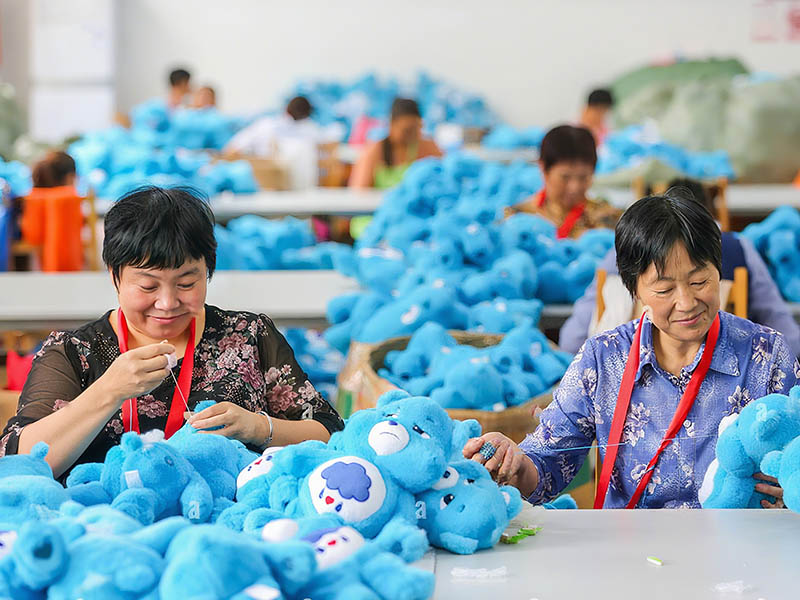
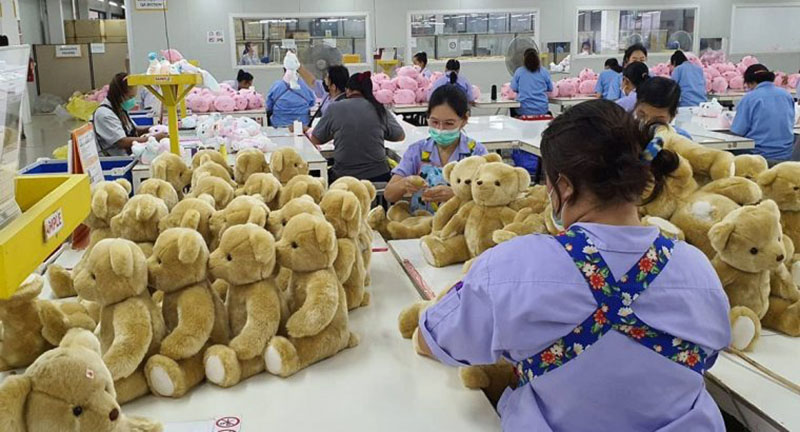
Factory visits or video calls are another effective way to verify a supplier’s capability and transparency. Seeing the production environment directly—or reviewing factory footage—helps you assess whether the operation matches what is presented in their marketing materials.
At Kinwin, we provide full itemized quotations for every project, clearly outlining costs at each stage from sampling through mass production. We also guide our clients through certification requirements, material options, and design optimization to ensure there are no hidden surprises.
Whether you are launching your first custom plush product or scaling an existing line, we are here to support you with reliable production, consistent quality, and clear communication at every step.
Conclusion
Custom plush toy pricing is not just about finding the lowest unit cost. It is about understanding the full picture—how quantity, materials, design, compliance, and supplier quality all work together to determine the real value of your investment.
When you approach pricing with this level of clarity, you can make smarter decisions, avoid common sourcing mistakes, and build products that are both cost-efficient and market-ready.
The brands that succeed in the custom plush market are not always those who spend the least. They are the ones who invest in the right areas—quality materials, reliable manufacturing, and proper compliance—while optimizing intelligently in areas that do not affect the end user experience.
If you are planning a custom plush toy project and want a partner who can guide you from concept to production with transparent pricing and consistent quality, Kinwin is ready to help. With years of experience in OEM and ODM plush manufacturing for the US and European markets, we understand what it takes to deliver products that meet your standards and your customers’ expectations.