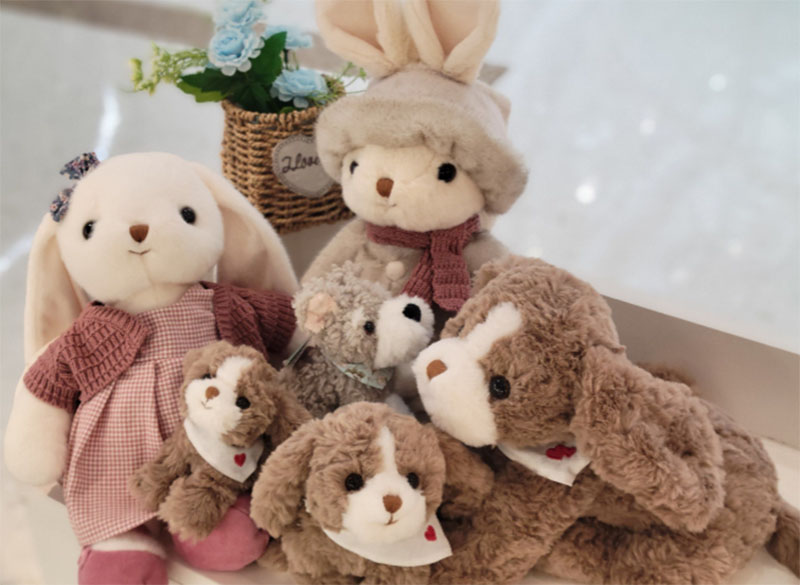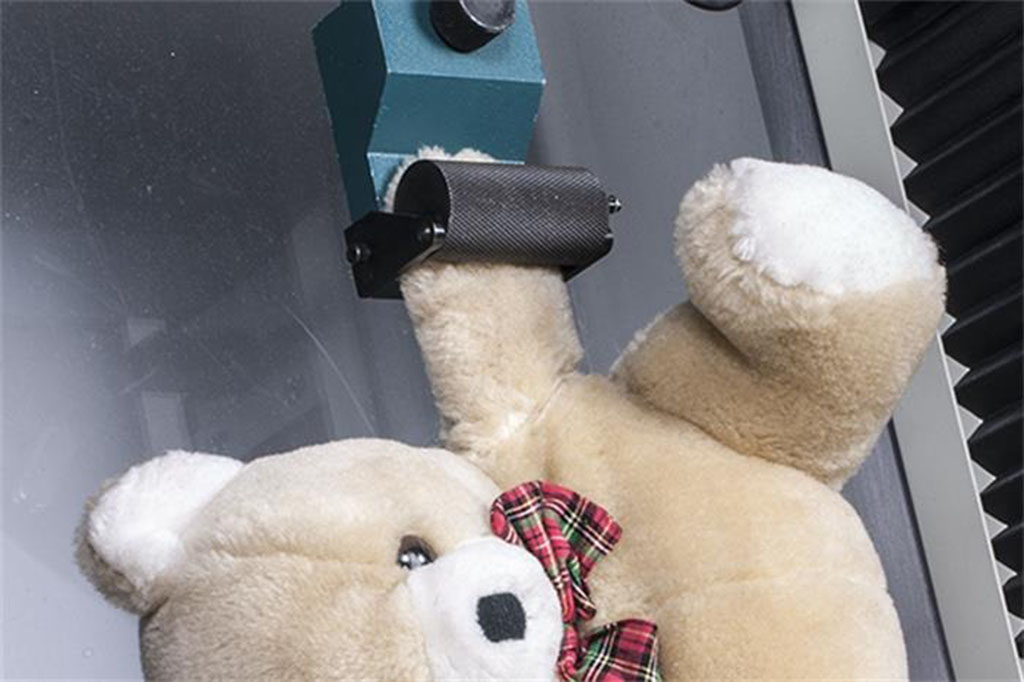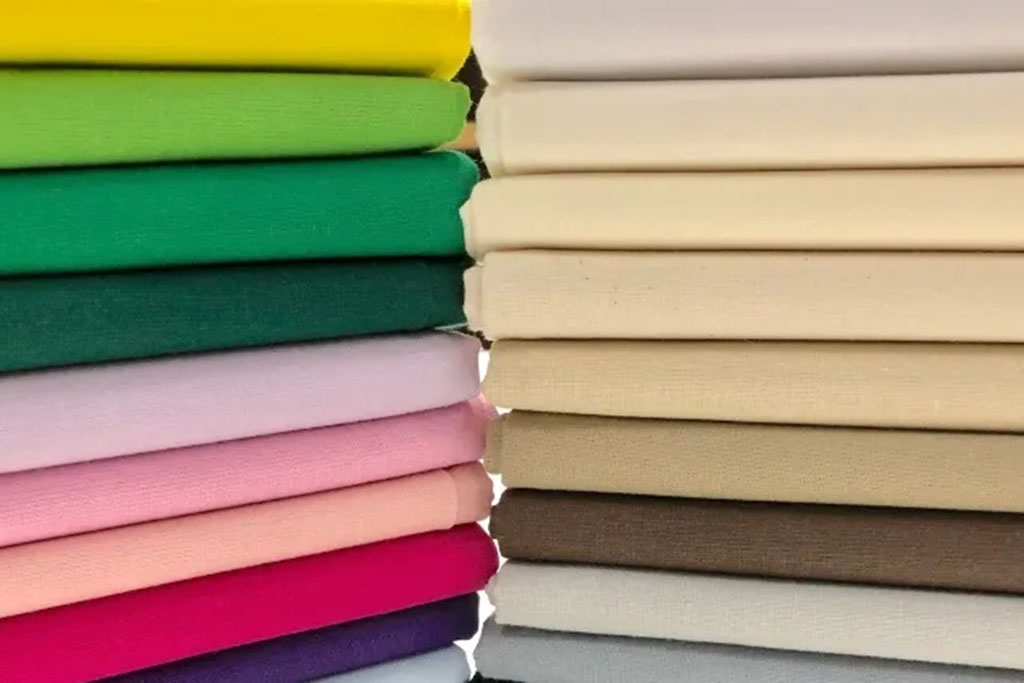
Softness is one of the first qualities buyers notice in a plush toy. It determines how huggable, comforting, and premium the toy feels. From classic teddy bears to modern anime-inspired plushies, fabric choice plays a critical role in customer satisfaction and repeat purchases. In today’s toy industry, softness is not only about comfort—it also influences branding, safety, durability, and even sustainability.
This guide breaks down the fabrics most associated with softness, explaining their properties, benefits, and how they align with global market demand.
What criteria define softness in plush toy fabrics?
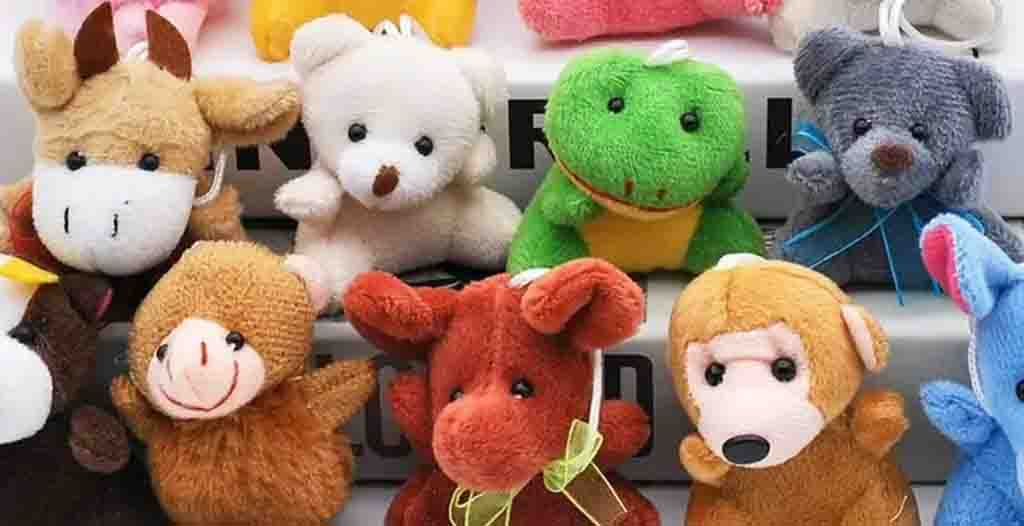
Softness in plush fabrics is both a tactile quality and a perception of comfort. Manufacturers and buyers look at several criteria to judge whether a fabric qualifies as “soft.”
Core Criteria
- Fiber type – Synthetic fibers like polyester or microfiber allow ultra-fine strands that feel silky.
- Pile length and density – Longer, denser fibers tend to feel softer and more luxurious.
- Surface finish – Brushed or velvety surfaces enhance smoothness.
- Resilience – Softness must last after multiple washes or extended play.
- Temperature feel – Some fabrics (like fleece or minky) retain warmth, which consumers perceive as cozy.
Why this matters in sourcing
Buyers who source plush toys must balance softness with safety and durability. Too long a pile risks shedding; too soft a weave may reduce seam strength. Certifications like EN71 and ASTM ensure that softness does not come at the expense of safety.
| Softness Factor | How It Impacts Fabric | Buyer Implication |
|---|---|---|
| Fiber type | Determines fineness & feel | Choose microfibers for premium lines |
| Pile density | Controls plushness & cushion | Higher density = softer but costlier |
| Surface finish | Adds tactile appeal | Brushed & velvety finishes attract buyers |
| Resilience | Defines long-term softness | Must withstand wash & use |
| Warmth | Affects comfort perception | Seasonal plush may need warm-touch fabrics |
How does minky fabric achieve ultra-soft texture for plush toys?
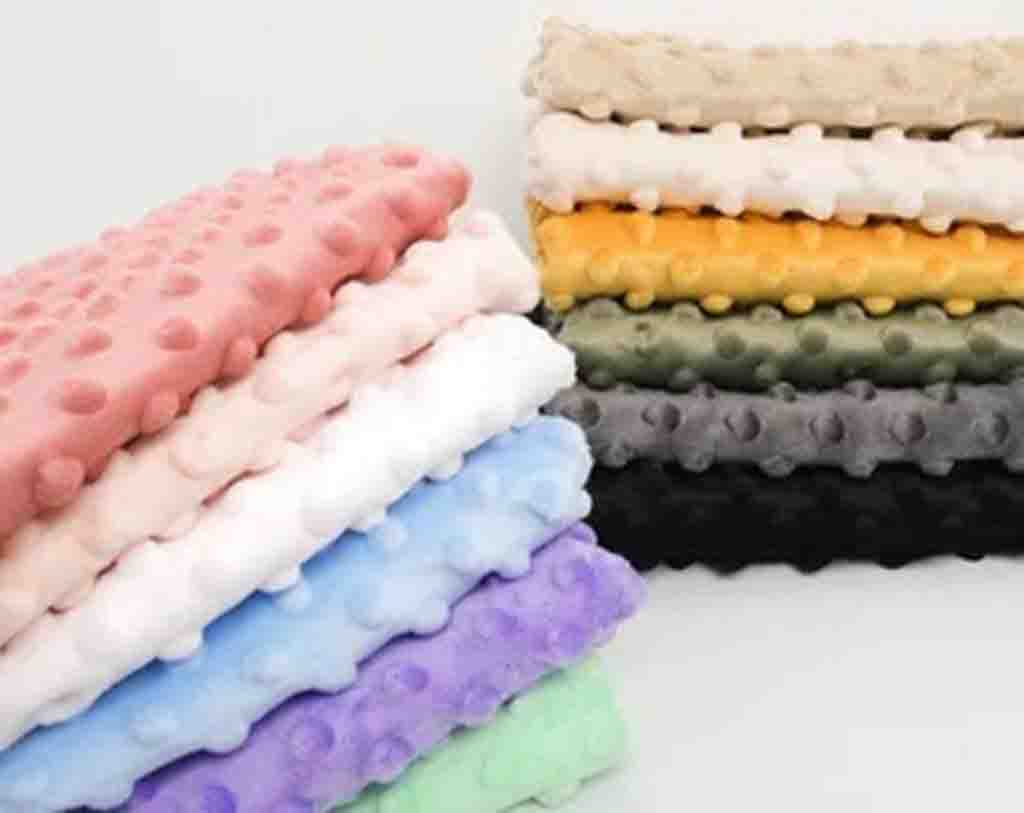
Minky fabric is widely considered the softest and most luxurious fabric for plush toys today. It is a type of microfiber polyester designed with a silky, smooth surface.
Key Features of Minky
- Ultra-fine fibers – Much thinner than cotton, giving a silky touch.
- Raised textures – Available with dot embossing, swirl patterns, or extra pile for sensory stimulation.
- Warmth and coziness – Retains heat, making it especially popular in baby and comfort toys.
- Color versatility – Holds dyes well, offering vibrant and fade-resistant finishes.
Market Application
Minky is widely used for baby plush, comfort plushies, weighted toys, and premium collectibles. It is more expensive than velboa or fleece, but the softness justifies higher retail pricing. Buyers who want to enter the premium plush segment often lead with minky-based products.
| Attribute | Performance | Market Position |
|---|---|---|
| Softness | Very High | Luxurious touch |
| Durability | High | Retains quality |
| Cost | Medium-High | Premium plush segment |
Why is velboa considered a smooth and durable plush fabric?
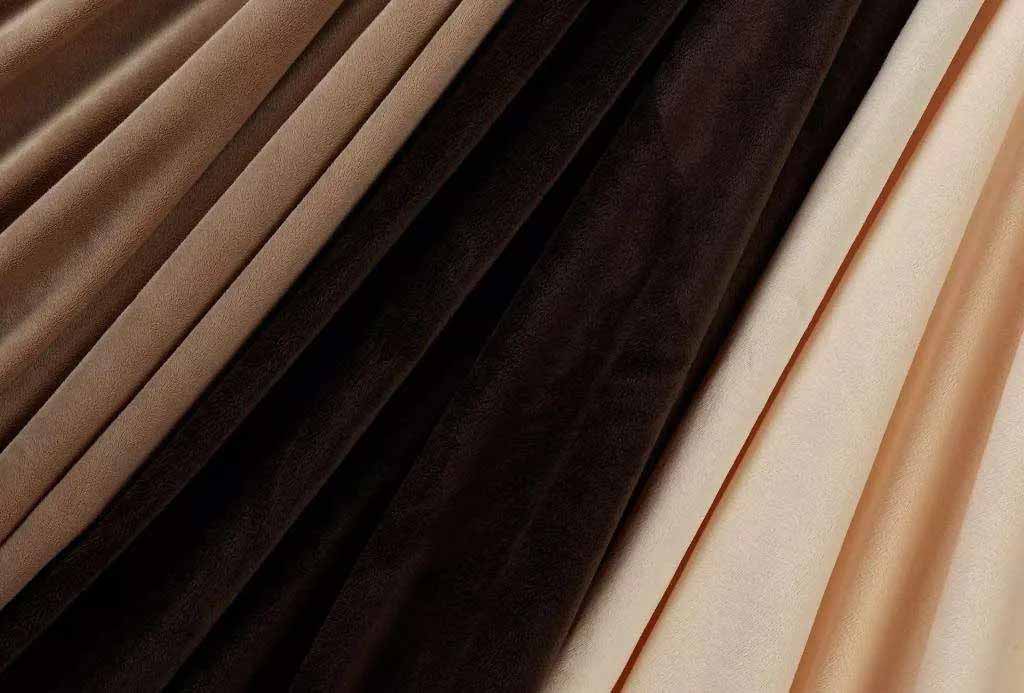
Velboa is another polyester-based fabric, but it is short-pile and tightly woven, creating a smooth surface with excellent durability.
Key Features of Velboa
- Short pile finish – Smooth and resistant to matting.
- High durability – Ideal for plush that will face heavy play.
- Affordability – Less costly than minky while still soft to the touch.
- Customization – Works well with embroidery and printing.
Market Application
Velboa is often used in mass-market plush toys, promotional plush, and mid-range retail collections. It balances softness with cost efficiency, making it attractive to large retailers or brands sourcing high volumes.
| Attribute | Performance | Market Position |
|---|---|---|
| Softness | Medium-High | Smooth feel |
| Durability | Very High | Everyday play |
| Cost | Low-Medium | Bulk production |
How does faux fur combine softness with a realistic look?
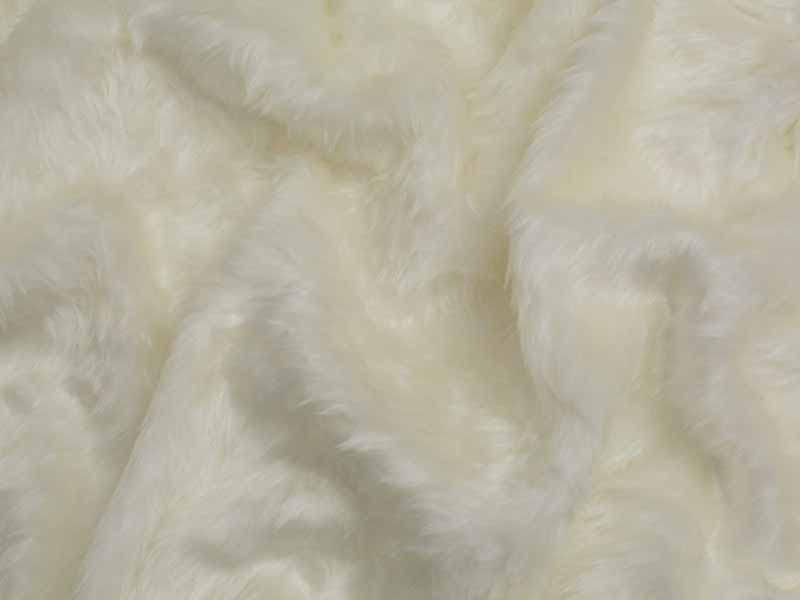
Faux fur is used when buyers want a lifelike, luxurious appearance. Unlike minky or velboa, faux fur emphasizes realism alongside softness.
Key Features of Faux Fur
- Long pile fibers – Mimic the feel and look of animal fur.
- Variety of textures – Ranges from ultra-soft to coarse, depending on effect desired.
- High visual appeal – Creates premium plush toys that double as decorative pieces.
- Ethical choice – Appeals to buyers who want animal-friendly alternatives.
Market Application
Faux fur is popular in collectible plush, wildlife-themed plush, or home décor plush. It is less common in baby plush because long fibers may shed if not manufactured to strict standards.
| Attribute | Performance | Market Position |
|---|---|---|
| Softness | High (varies by pile) | Realistic plush |
| Durability | Medium-High | With care |
| Cost | Medium | Premium collectible |
Are natural fabrics like cotton competitive in softness compared to synthetics?
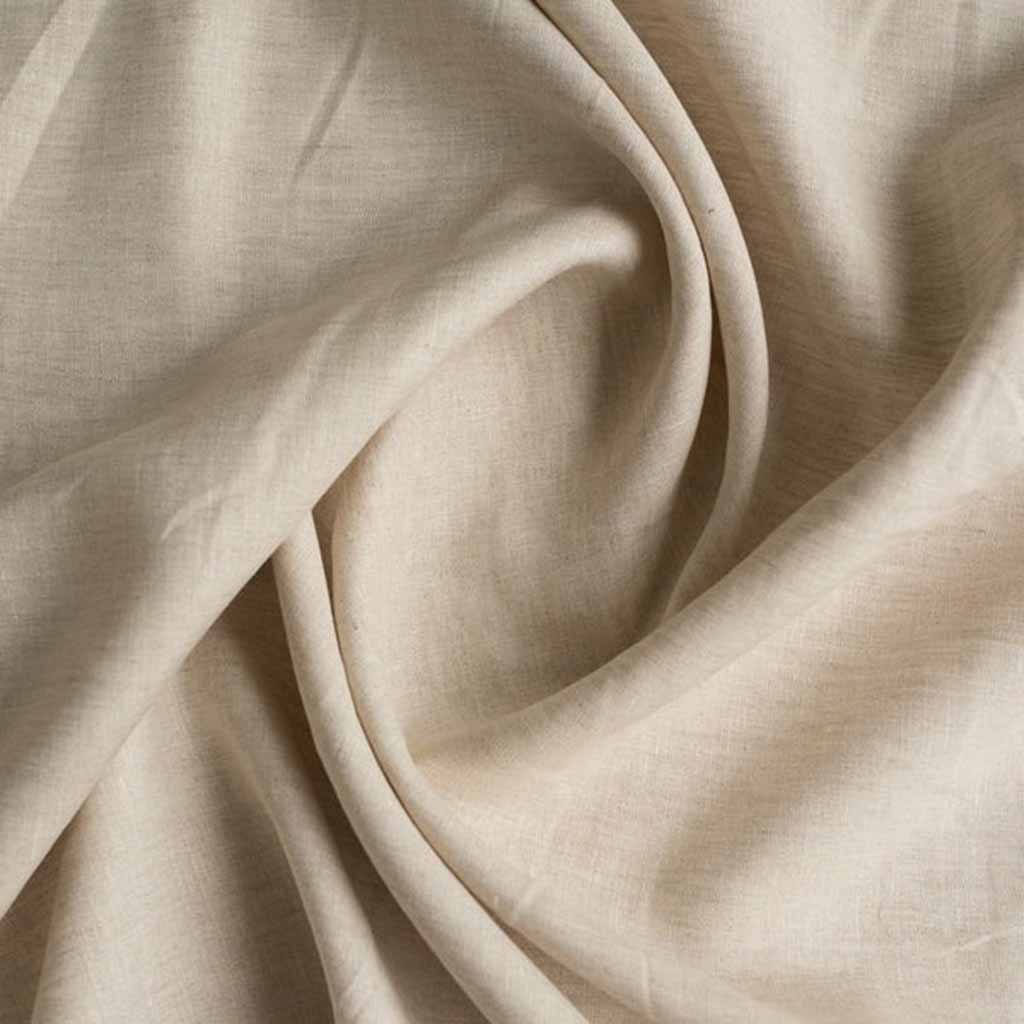
Cotton has long been a traditional fabric in plush toys, especially for baby dolls and eco-conscious products. While soft, it is not as silky as synthetic fabrics like minky.
Key Features of Cotton
- Natural and breathable – Gentle for sensitive skin.
- Soft but less silky – Softer than canvas or linen, but less plush than polyester-based fabrics.
- Eco-friendly appeal – Organic cotton is a strong selling point for green buyers.
- Durability concerns – Cotton fabrics may pill or fade faster under heavy use.
Market Application
Cotton plush toys are well-suited for baby toys, organic collections, and markets where eco-certifications drive purchasing decisions. For mainstream plush toys, however, synthetics dominate because they deliver greater softness and longer-lasting durability at scale.
| Attribute | Performance | Market Position |
|---|---|---|
| Softness | Medium | Natural comfort |
| Durability | Medium | Wears faster |
| Eco Score | High | Organic segment |
What innovations are emerging in eco-friendly and soft plush fabrics?
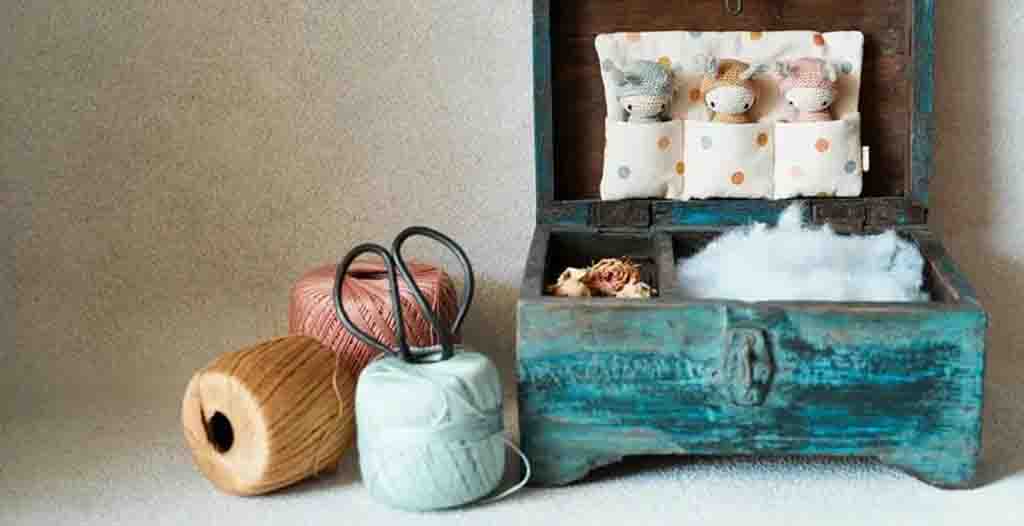
With sustainability becoming a global market demand, new fabrics are being developed to balance softness, safety, and eco-credentials.
Emerging Fabric Innovations
- rPET plush – Polyester made from recycled plastic bottles, achieving softness close to standard polyester while reducing environmental impact.
- Bamboo fabrics – Naturally soft, breathable, and biodegradable; increasingly used in plush doll lines.
- Corn fiber plush – Derived from renewable resources, hypoallergenic, and surprisingly soft.
- Hybrid blends – Combining cotton with recycled polyester to achieve both eco-appeal and long-term softness.
Market Application
These innovations are especially popular in Europe and North America, where eco-certifications influence purchasing. For brands, promoting eco-friendly plush fabrics not only attracts environmentally conscious buyers but also positions products as premium, future-proof choices.
| Fabric Innovation | Softness | Eco Value | Market Segment |
|---|---|---|---|
| rPET Polyester | High | High | Mass eco plush |
| Bamboo | High | Very High | Premium eco plush |
| Corn Fiber | Medium | High | Baby plush |
| Cotton-Poly Blend | Medium-High | Medium-High | Mid-market eco |
Conclusion
The softest plush fabrics are defined by both touch and long-term comfort. Minky stands out as the softest and most luxurious, while velboa offers smooth durability for mass markets. Faux fur adds realism, and cotton appeals to eco-conscious buyers, though it lacks the silky feel of synthetics. With rPET, bamboo, and corn-based fibers on the rise, softness and sustainability are no longer at odds.
At Kinwin, we help buyers match fabrics to their target markets—whether that means minky for premium collections, velboa for cost-efficient mass retail, or bamboo for eco lines. Every product is tested under EN71, ASTM, CPSIA, and ISO standards, ensuring both softness and safety.
📧 Contact us at [email protected]
🌐 Visit kinwintoys.com
Let’s create plush toys that are irresistibly soft, safe, and aligned with tomorrow’s trends.