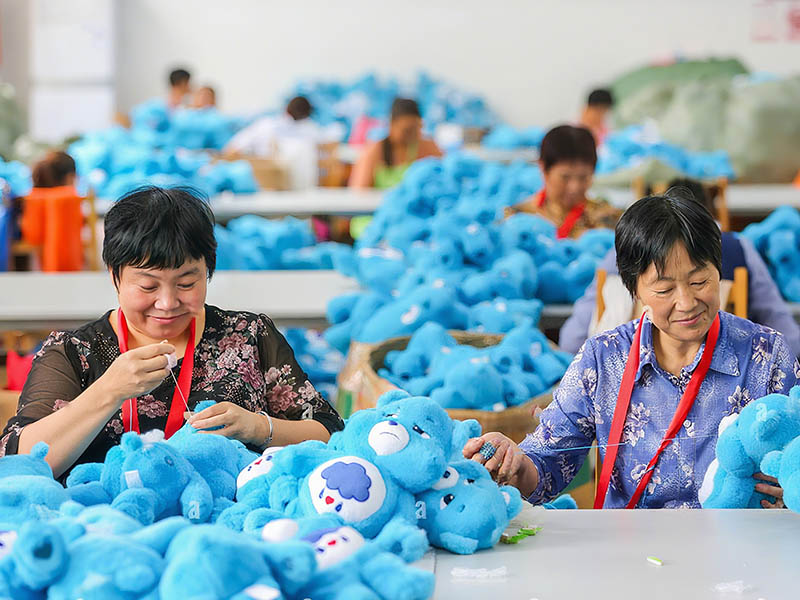
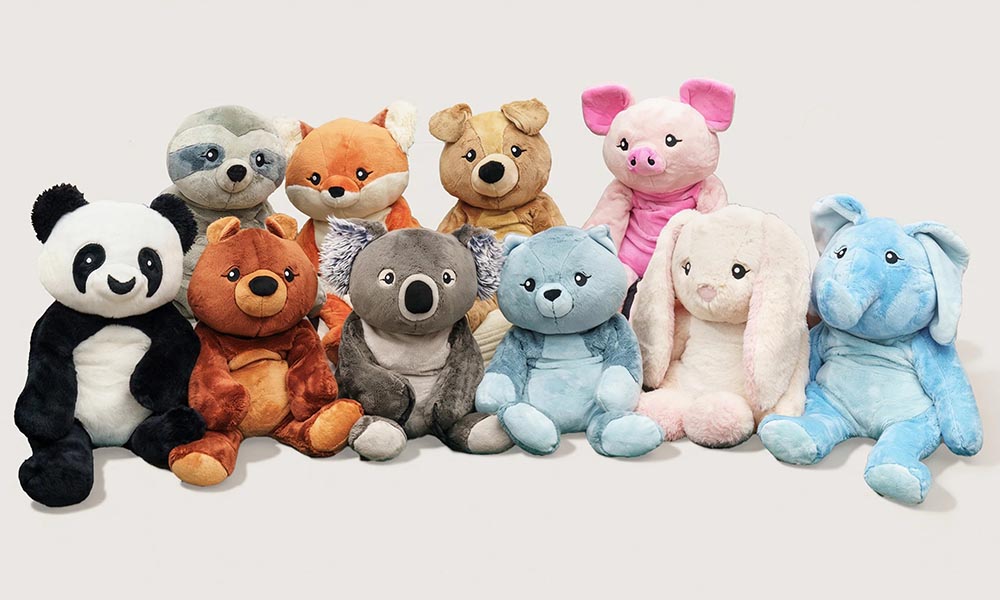
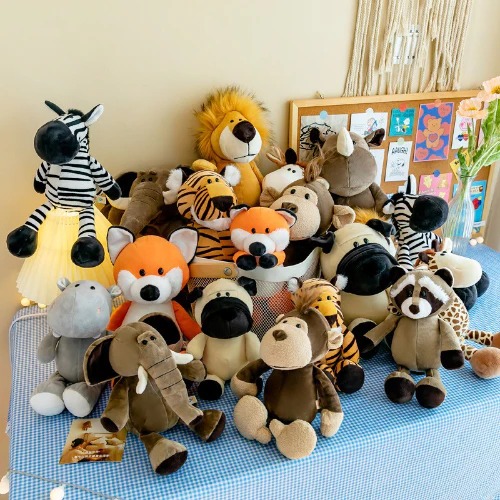
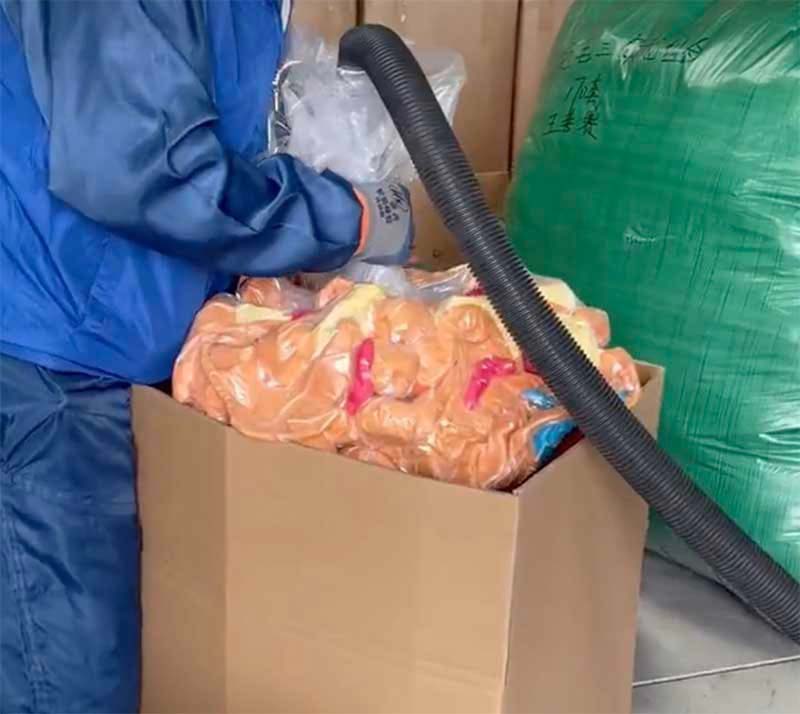
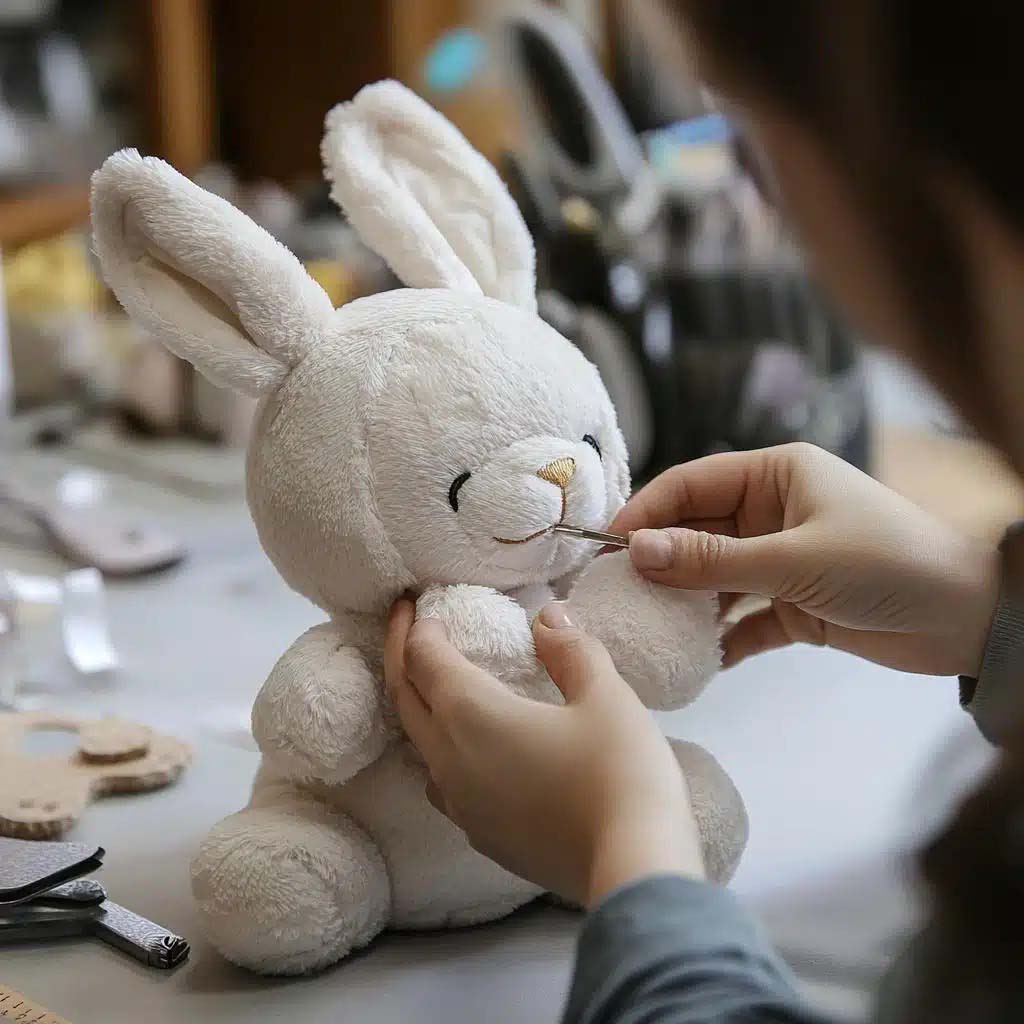
Not every plush toy is a simple bear with a round head, two arms, and a sewn smile. Some of the most commercially successful plush products on the market today involve multi-panel construction, intricate embroidery, custom-molded accessories, functional elements like zippers or sound modules, and character proportions that require precise pattern engineering to look right in three dimensions.
These are complex designs — and handling them well is one of the most significant capability differences between plush toy factories. A factory that can reliably produce a basic stuffed animal may struggle considerably when faced with a plush toy that has seventeen fabric panels, asymmetric facial features, weighted limbs, and a custom-printed hang tag.
For buyers developing products in this category, understanding what makes a design complex, how complexity affects the development and production process, and what to look for in a manufacturing partner capable of executing complex designs successfully is essential knowledge. It is the difference between a product development experience that stays on budget and on schedule, and one that spirals into revision rounds, cost overruns, and compromised final quality.
This guide covers everything buyers need to know about handling complex plush designs — from briefing and pattern making through construction, material selection, quality control, and factory evaluation.
What Makes a Plush Toy Design “Complex” from a Manufacturing Perspective?
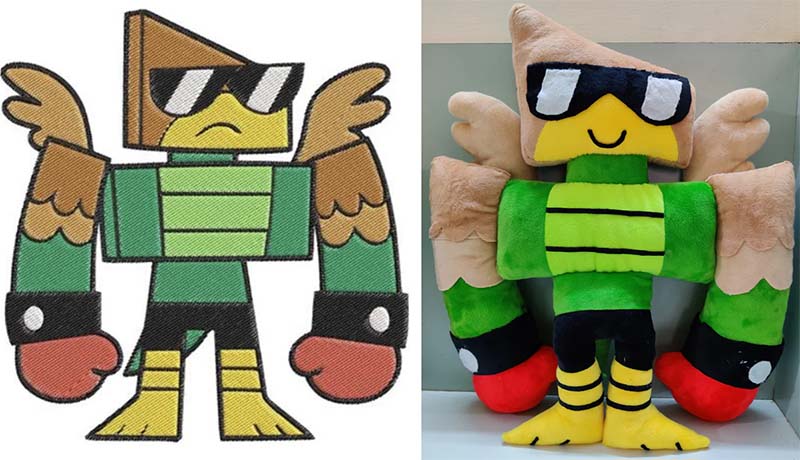
The word “complex” means different things to different people. To a buyer, a design might feel complex because of its detailed artwork or emotional character concept. To a factory, complexity is defined by specific technical factors that directly affect how difficult and time-consuming the product is to produce accurately and consistently at scale.
From a manufacturing perspective, a plush toy design is complex when it involves a high number of fabric panels, unusual or asymmetric proportions, multi-material construction, functional components, fine embroidery detail, custom-molded accessories, or any combination of these elements that requires above-standard skill, time, and precision to execute. Complexity is not purely about how the product looks — it is about what it takes to make it look that way, repeatedly, across an entire production run.
Here is a breakdown of the key complexity factors in plush toy manufacturing:
| Complexity Factor | Why It Increases Difficulty | Production Impact |
|---|---|---|
| High panel count (10+ pieces) | More cutting, alignment, and sewing steps | Longer production time, higher skill requirement |
| Asymmetric design | Left-right differences require additional pattern pieces | More complex pattern management |
| Multiple fabric types | Different fabrics behave differently in cutting and sewing | Requires more careful handling and process adjustment |
| 3D sculpted features | Complex stuffing and shaping techniques required | Higher labor intensity |
| Fine embroidery detail | Precise programming and positioning required | Machine time, skill, and verification steps |
| Custom-molded accessories | New tooling required, integration into design | Tooling cost, additional assembly steps |
| Functional elements | Zippers, pockets, sound modules require integration | Component sourcing, assembly complexity |
| Miniature scale | Tiny tolerances, harder to handle | Slower production, higher defect risk |
| Weighted construction | Internal compartment design, bead containment | Additional structural and QC requirements |
The Compounding Effect of Multiple Complexity Factors
A single complexity factor is manageable for most experienced factories. The challenge escalates when multiple complexity factors are combined in a single design. A product with a high panel count is demanding. A product with a high panel count, multiple fabric types, and fine embroidery is significantly more demanding. Add a weighted filling system and custom-molded accessories and you have a product that only a small number of factories can execute accurately and consistently.
This compounding effect is important for buyers to understand because it affects how they should evaluate factory capability. A factory that produces excellent simple designs may not have the pattern-making expertise, the embroidery precision, or the structural engineering capability to handle a design where five complexity factors are combined. Matching the factory’s capability profile to the actual complexity of your design is one of the most important decisions in the sourcing process.
How Complexity Affects Commercial Outcomes
Design complexity has a direct and predictable impact on every commercial dimension of a product’s development: sampling cost, revision rounds, unit production cost, lead time, minimum order quantity, and the range of factories capable of producing it. Buyers who understand this impact can plan their projects more realistically and make better decisions about where to invest design complexity and where to simplify.
How Do Complex Designs Affect Sampling Cost, Timeline, and Revision Rounds?
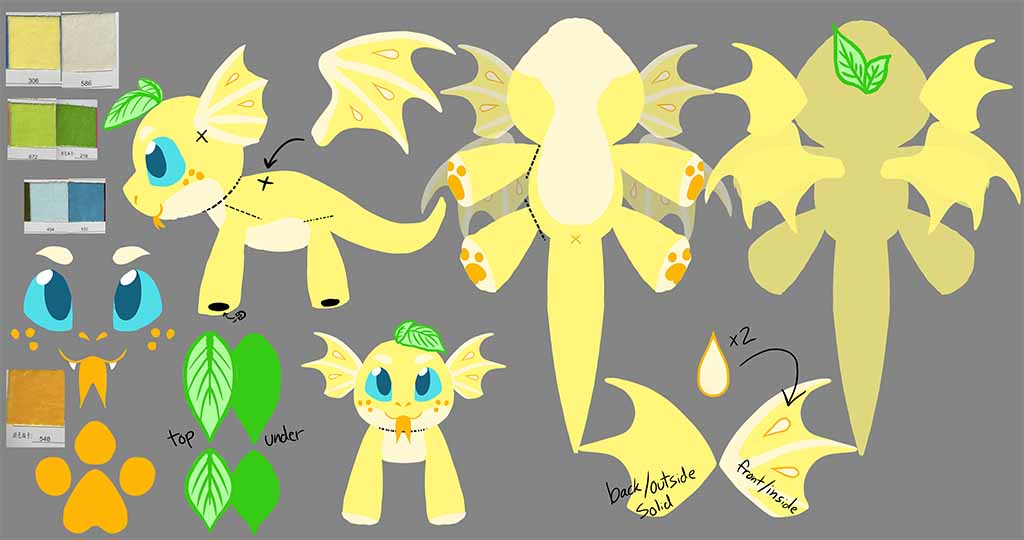
Complexity has a multiplier effect on sampling investment. Every element that adds manufacturing difficulty also adds time, skill, and cost to the prototype development process. Understanding exactly how complexity drives sampling cost and timeline helps buyers plan their development budgets more accurately and avoid the most common form of project budget overrun — underestimating the sampling investment required for a complex design.
Complex plush designs require higher sampling investment because they involve more pattern pieces, more skilled labor per unit, more material sourcing steps, and more opportunities for deviation from the design brief — each of which increases the likelihood and number of revision rounds. Buyers should expect sampling timelines for complex designs to be 40 to 100 percent longer than for simple designs, with proportionally higher fees per round.
Here is a realistic comparison of sampling investment across design complexity levels:
| Complexity Level | Typical Panel Count | First Sample Timeline | Typical Revision Rounds | Estimated Sampling Cost Range |
|---|---|---|---|---|
| Simple | 4–6 panels | 7–10 days | 1–2 rounds | $100–$200 |
| Moderate | 7–10 panels | 10–14 days | 2–3 rounds | $200–$350 |
| High | 11–16 panels | 14–21 days | 3–4 rounds | $350–$600 |
| Very High | 17+ panels, multiple complexity factors | 21–35 days | 4–6 rounds | $600–$1,200+ |
Why Complex Designs Generate More Revision Rounds
The relationship between design complexity and revision rounds is not accidental — it is structural. Complex designs have more elements that can deviate from the brief, more decision points where the factory must interpret ambiguous specifications, and more opportunities for small errors in one component to affect the overall visual result.
A simple bear design might generate one revision round focused on stuffing density and color accuracy. A complex character design with sculpted features, multi-panel construction, and detailed embroidery might generate four revision rounds — one addressing overall proportion, one refining embroidery positioning, one adjusting fabric alignment across panels, and one confirming that all changes from previous rounds have been correctly incorporated.
Each of these rounds adds time and cost. Minimizing revision rounds on complex designs requires investing more heavily in brief preparation — providing more detailed reference material, more specific dimensional guidance, and more precise color and material specifications than would be necessary for a simpler design.
The Value of Digital Mockups for Complex Designs
For complex designs specifically, digital mockups or 3D renderings are one of the most cost-effective tools available. By working through proportion, panel arrangement, and overall silhouette decisions in a digital environment before physical sampling begins, buyers can resolve the issues most likely to drive early revision rounds before any physical prototype investment is made.
A digital mockup round that identifies and corrects a proportion problem in three days prevents a physical revision round that would take two to three weeks and cost several hundred dollars. For complex designs with multiple structural elements, this front-loaded investment in digital development consistently reduces total sampling cost and timeline.
How Should Buyers Brief a Factory on a Complex Plush Design?
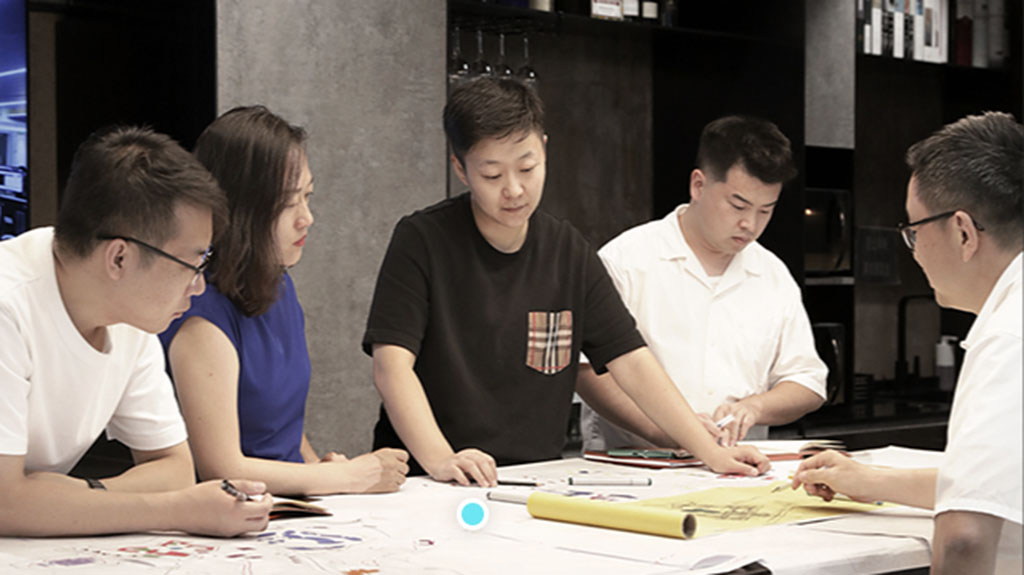
The complexity of a design brief should scale proportionally with the complexity of the design itself. A simple plush toy can be briefed with basic reference artwork, approximate dimensions, and a fabric description. A complex plush design requires a significantly more detailed and structured brief — one that anticipates the interpretation challenges the factory will face and resolves them in the document before sampling begins.
Buyers briefing a factory on a complex plush design should provide a multi-view design reference with panel breakdowns, precise dimensions for all structural elements, Pantone color references for every color area, detailed embroidery artwork files with placement coordinates, specifications for all custom accessories and functional components, material specifications with physical swatches where possible, and construction notes addressing any non-standard techniques required. The more completely these elements are specified before sampling begins, the fewer assumptions the factory needs to make — and the fewer revision rounds result from those assumptions.
Here is a structured checklist for briefing a complex plush design:
| Brief Element | Requirement for Simple Design | Requirement for Complex Design |
|---|---|---|
| Design reference | Front and back view illustration | Front, back, side, and 3/4 views with panel breakdown |
| Dimensions | Overall height and width | All major and minor elements with tolerances |
| Color references | Pantone codes for main colors | Pantone codes for every color area including accessories |
| Embroidery | Basic description | Digital artwork file with thread color codes and placement coordinates |
| Panel specification | Not required | Numbered panel diagram with fabric assignment per panel |
| Accessories | Item list with approximate sizes | Technical drawing with dimensions and attachment method |
| Functional elements | Not applicable | Component specification with integration notes |
| Construction notes | Standard seam type | Detailed notes for any non-standard techniques |
| Material swatches | Optional | Strongly recommended for all key fabrics |
| Limit samples | Not required | Recommended for critical quality attributes |
Providing Panel Breakdowns for Multi-Panel Designs
One of the most valuable additions to a complex design brief is a numbered panel diagram — a technical drawing that identifies each fabric panel in the design, numbers it, and specifies which fabric type and color applies to each panel.
Without this diagram, the factory’s pattern maker must determine panel boundaries from the design artwork — a process that involves significant interpretation and often produces panel arrangements that differ from what the buyer intended. With a numbered panel diagram, the factory has a clear, unambiguous reference for the physical structure of the design before pattern making begins.
Communicating Asymmetric Features
Asymmetric designs — where the left and right sides of the product differ — require specific briefing attention because asymmetry is one of the most commonly misinterpreted design elements in plush manufacturing. Factories that primarily produce symmetric designs may default to mirroring elements that are intended to be different, producing a sample that looks correct in overall form but loses the specific asymmetric character detail that defines the design.
Highlighting asymmetric elements explicitly in the brief — with annotated references showing clearly which elements differ between left and right — prevents this interpretation error before it appears in the first sample.
What Pattern Making Challenges Come with Highly Customized Plush Designs?
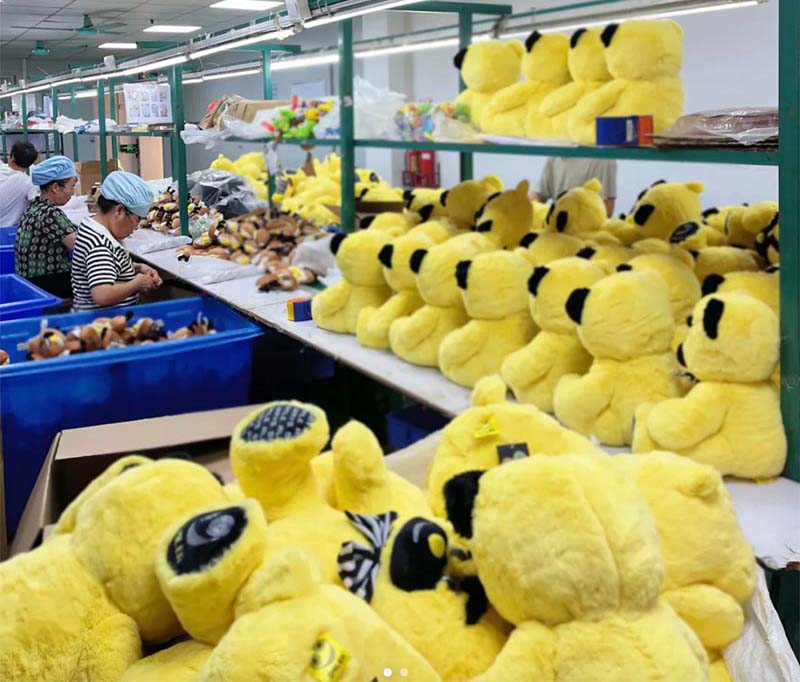
Pattern making is where the gap between factory capability levels becomes most apparent for complex designs. A pattern maker working on a standard bear design is solving a problem with well-established solutions — the proportions, panel arrangements, and construction sequences for basic plush shapes are deeply familiar to any experienced plush pattern maker.
A pattern maker working on a highly customized character design with unique proportions, sculpted three-dimensional features, and multiple fabric types is solving a novel engineering problem with limited precedent. The quality of the solution they develop directly determines the quality of the first sample — and the efficiency of the revision process that follows.
Pattern making for highly customized plush designs presents specific challenges including three-dimensional shape engineering from two-dimensional panels, proportion control in sculpted areas, pile direction management across multiple fabric types, seam placement that minimizes visual disruption, and tolerance management for small or asymmetric elements. Each of these challenges requires specific technical expertise and experience that not all plush pattern makers possess.
Here is an overview of the key pattern making challenges in complex plush design:
| Pattern Making Challenge | Why It Is Difficult | Impact on Product If Handled Poorly |
|---|---|---|
| 3D shape from 2D panels | Requires precise geometric calculation and experience | Incorrect shape — product does not match design |
| Proportion control in sculpted areas | Small changes in pattern produce large shape changes | Proportions look wrong in finished product |
| Pile direction consistency | Each panel must be cut on correct grain | Shading inconsistency across the product surface |
| Seam placement optimization | Seams must sit in visually unobtrusive positions | Seams visible in wrong places, disrupting design |
| Tolerance management for small elements | Small tolerances leave no room for error | Misalignment of fine details |
| Multi-fabric panel integration | Different fabrics have different stretch and handling properties | Panels misalign, puckering, or distortion |
The Role of Experience in Complex Pattern Making
Pattern making for complex plush designs is a skill that develops significantly with experience. A pattern maker who has worked on twenty complex character designs has developed an intuitive understanding of how design elements translate from two dimensions to three — which proportional adjustments produce which shape results, where seams should sit to minimize visual disruption, and how different fabric types need to be handled differently in cutting and sewing.
This experience is difficult to document in a process manual — it lives in the judgment of the individual. This is why the experience level of a factory’s pattern making team is one of the most important capability factors to assess when evaluating manufacturers for complex plush designs. A factory with experienced, specialized pattern makers will produce more accurate first samples, require fewer revision rounds, and deliver more consistent bulk production than one relying on less experienced staff.
Managing Pile Direction in Complex Multi-Panel Designs
Pile direction — the direction in which the fabric fibers naturally lie — is one of the most technically demanding aspects of complex plush pattern making. In a simple design with two or three panels, managing pile direction is straightforward. In a complex design with seventeen panels of multiple fabric types in different orientations, ensuring that pile direction is consistent and visually coherent across the entire product requires careful planning at the pattern stage.
When pile direction is incorrect or inconsistent, the finished product appears patchy — different panels reflect light differently, creating a visually fragmented appearance that is immediately noticeable and significantly reduces the product’s perceived quality. Correcting pile direction errors discovered in a sample requires rebuilding the affected panels from scratch — making this one of the most important elements to get right in the initial pattern development.
Which Construction Techniques Are Used to Execute Complex Plush Toy Designs?
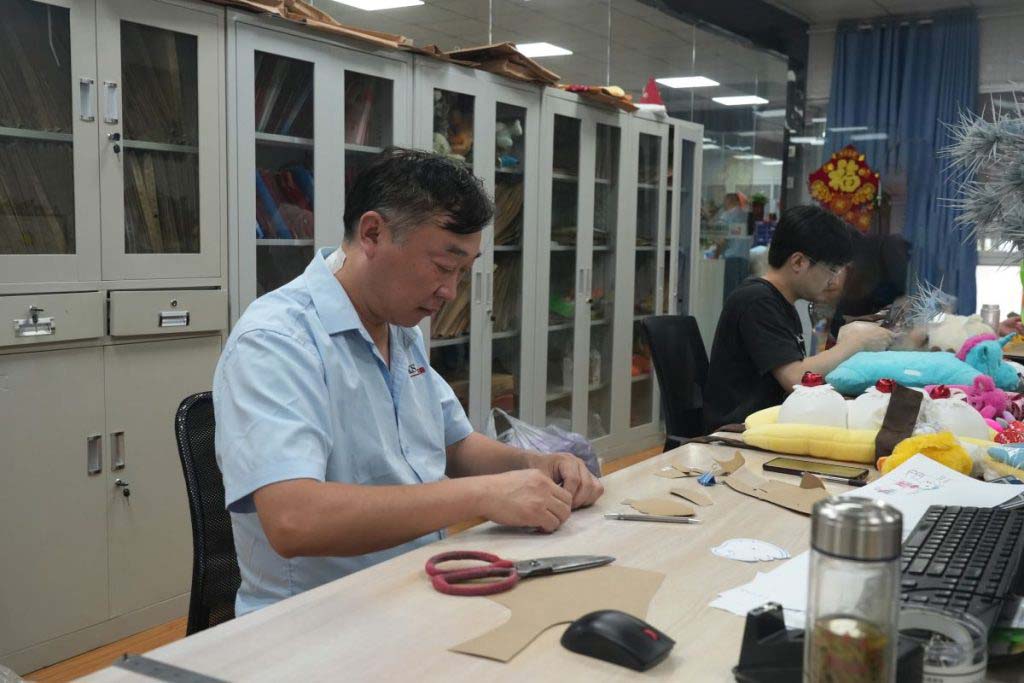
The construction techniques used in complex plush toy production go significantly beyond the standard sewing and stuffing methods used for basic designs. Executing a complex design accurately and consistently requires specialized techniques for shaping, joining, and finishing — many of which require above-standard operator skill and machine setup.
Complex plush toy designs are executed using a combination of specialized construction techniques including multi-panel precision sewing, three-dimensional shaping through strategic stuffing and internal armature, sculpted feature construction, compartmentalized filling systems, functional component integration, and multi-stage finishing processes. Each technique addresses a specific design element and requires specific equipment and operator skill to execute correctly.
Here is an overview of key construction techniques used in complex plush production:
| Construction Technique | What It Achieves | Skill Level Required | Equipment Needed |
|---|---|---|---|
| Multi-panel precision sewing | Accurate assembly of many panels | High | Industrial sewing machines, alignment guides |
| 3D stuffing and shaping | Achieving correct three-dimensional form | High | Experience-based judgment, shaping tools |
| Compartmentalized filling | Even weight or density distribution | Medium-High | Inner bag construction, calibrated stuffing |
| Sculpted feature attachment | Creating dimensional facial or body features | High | Hand sculpting, specialized stitching |
| Functional component integration | Installing zippers, pockets, sound modules | Medium-High | Component-specific tools and techniques |
| Surface embellishment | Applying ribbons, badges, decorative elements | Medium | Precision placement tools |
| Multi-stage finishing | Thread removal, surface dressing, pressing | Medium | Finishing tools, lint removal equipment |
Three-Dimensional Shaping Techniques
Achieving correct three-dimensional shape in a complex plush design is one of the most skill-intensive aspects of construction. The shape of the finished product depends not only on the pattern — which determines the geometric structure — but also on how the product is stuffed, which areas receive more or less filling density, and how the filling is distributed to create the intended visual form.
For designs with sculpted features — a prominent nose, rounded cheeks, dimensional ears — achieving the correct shape requires a combination of precise pattern engineering and skilled manual stuffing. Operators working on these products must develop an intuitive sense of how the filling distributes under the fabric and how much filling each area requires to produce the intended form. This judgment cannot be fully automated — it is a craft skill that develops with experience on specific product types.
Functional Component Integration
Integrating functional components — zippers, internal pockets, sound modules, weighted filling systems — into a complex plush design requires careful planning at the pattern making stage and specific construction sequencing during production.
A zipper, for example, must be positioned precisely in the seam structure to be functional without disrupting the visual design. A sound module must be enclosed securely, positioned to project sound effectively, and accessible for battery replacement if required. A weighted filling compartment must be constructed to contain the filling securely while maintaining the outer form of the product.
Each of these requirements adds steps to the production process, requires specific operator training, and introduces additional quality check points that must be built into the QC system for the product.
How Do Material Choices Impact the Manufacturability of Complex Plush Designs?
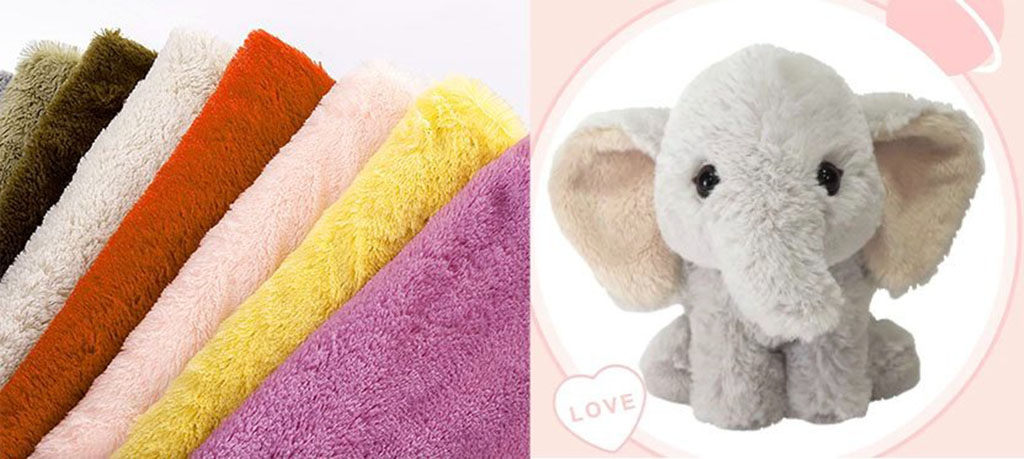
Material selection in complex plush designs is not just a quality decision — it is a manufacturability decision. The materials chosen for a complex design directly affect how difficult it is to cut, sew, stuff, and finish the product to the required standard. Some material combinations that look excellent in design concept create significant production challenges that increase cost, extend timelines, and introduce consistency risks.
Material choices impact the manufacturability of complex plush designs through their effect on cutting precision, sewing behavior, pile direction management, surface consistency, and finished product durability. Premium materials generally produce better finished products but may require more careful handling and specialized techniques. Incompatible material combinations — fabrics with very different stretch properties, for example — can create alignment problems that are difficult to manage at production scale.
Here is a guide to how common material choices affect complex design manufacturability:
| Material Factor | Manufacturing Impact | Risk if Poorly Managed | Recommended Approach |
|---|---|---|---|
| High-pile fabric | Pile direction critical, harder to align | Shading inconsistency across panels | Strict pile direction control in patterns |
| Multiple fabric types | Different stretch properties require adjustment | Panel misalignment, puckering | Test fabric combination in sampling |
| Minky fabric | Very soft but slippery to handle | Cutting and sewing inaccuracy | Use alignment guides, experienced operators |
| Velboa / short pile | Easier to handle, less pile direction sensitivity | Lower end perception | Use for less visible panels |
| Custom accessories | Sourcing lead time, integration complexity | Production delay if sourced late | Source accessories parallel to sampling |
| Glass bead filling | Compartment construction required | Bead leakage, uneven distribution | Double-layer compartment construction |
| Weighted elements in limbs | Structural reinforcement of limb seams required | Seam failure under weight | Reinforced stitching at weighted areas |
Managing Multiple Fabric Types in a Single Design
Complex designs often combine multiple fabric types — for example, a character with a minky body, velboa face panels, and fleece inner ear details. Each fabric type has different physical properties: different pile heights, different stretch characteristics, different cutting and sewing behavior.
Managing these differences at production scale requires careful operator training, consistent cutting and sewing techniques adapted to each fabric type, and careful attention to seam alignment where panels of different fabrics meet. If operators apply the same handling technique to fabrics with very different stretch properties, panels will not align correctly and the finished product will show visible misalignment at fabric boundaries.
Testing multi-fabric combinations during sampling — specifically checking seam alignment and surface consistency across fabric boundaries — is an essential step that some buyers and factories skip in the interest of time. The problems created by incompatible material handling are significantly easier and cheaper to identify and address in sampling than in bulk production.
Material Availability and Sourcing Lead Time for Complex Designs
Complex designs often require materials that are not standard stock items — specific pile heights, unusual colors, custom-dyed fabrics, or specialized functional materials. Sourcing these materials takes longer than sourcing standard fabrics, and sourcing delays at the material stage directly extend the overall development timeline.
Identifying all required materials at the brief stage — and confirming their availability and lead time before sampling begins — is an important pre-development step for complex designs. If a required material is not available within the timeline the buyer needs, this creates an opportunity to make material adjustments early in the process rather than discovering the sourcing gap mid-development.
What Quality Control Adjustments Are Needed for Complex Plush Production?
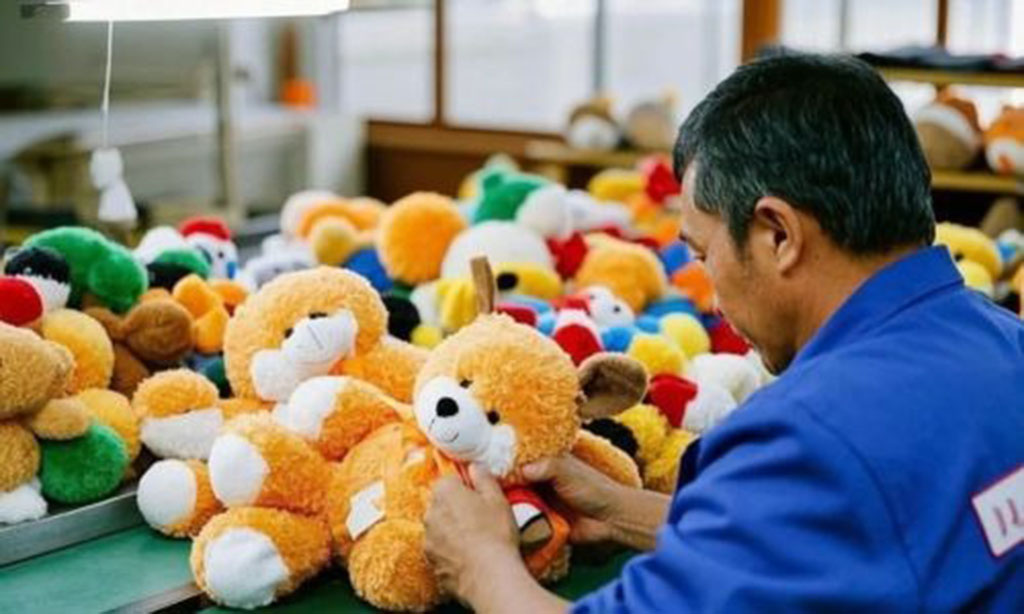
Standard quality control processes designed for simple plush toys are not sufficient for complex designs. The additional construction elements, higher skill requirements, and greater number of potential deviation points in complex production require a more detailed, more frequent, and more technically specific QC system.
Quality control for complex plush production requires additional checkpoints, more detailed inspection criteria, higher-skill QC personnel, and more frequent in-process monitoring than standard plush QC. Each complexity factor in the design introduces specific quality risks that must be addressed at a defined point in the production process — not caught in aggregate at the final inspection.
Here is how QC requirements scale with design complexity:
| QC Element | Standard Design | Complex Design |
|---|---|---|
| IQC scope | Fabric, filling, basic accessories | All materials plus custom accessories, functional components |
| Pre-production check | Panel dimensions, color | Panel dimensions, pile direction, fabric combination alignment |
| First-off inspection | Overall appearance, basic dimensions | Detailed dimensional check of all elements, embroidery position, feature placement |
| IPQC frequency | Every 2–4 hours | Every 1–2 hours or every 200–300 units |
| IPQC criteria | Basic appearance and stuffing | Panel alignment, embroidery consistency, feature symmetry, functional element operation |
| FQC scope | Standard AQL on finished goods | Extended AQL with additional complexity-specific checks |
| Functional testing | Accessory pull test | Pull test plus functional operation of all components |
Specialized QC Criteria for Complex Designs
For complex designs, the QC team must be briefed on product-specific inspection criteria that go beyond standard plush toy inspection points. A product with a custom character face requires specific criteria for embroidery positioning, eye placement symmetry, and facial expression consistency — criteria that do not exist in a standard plush toy inspection checklist.
Developing these product-specific QC criteria during the sampling stage — as part of the process of defining what the approved standard looks like — ensures that the QC team has precise, actionable inspection standards before bulk production begins. Without product-specific criteria, QC personnel must exercise subjective judgment at every inspection point, which reduces consistency and increases the risk of non-conforming units passing inspection.
Managing Embroidery QC at Scale
Embroidery quality management is one of the most demanding QC challenges in complex plush production. Embroidery positioning must be checked on every unit — or on a statistically meaningful sample — because positional drift can occur gradually across a production run as the embroidery machine setup shifts subtly over time.
Establishing a clear positioning standard — with defined coordinates for key embroidery elements relative to fixed reference points on the product — and checking against that standard at regular intervals during production is the most reliable way to maintain embroidery consistency across a complex plush order. Factories that rely on visual judgment alone for embroidery positioning will inevitably show more variation across a production run than those using a defined coordinate-based standard.
How to Choose a Manufacturer Capable of Handling Complex Plush Designs at Scale?
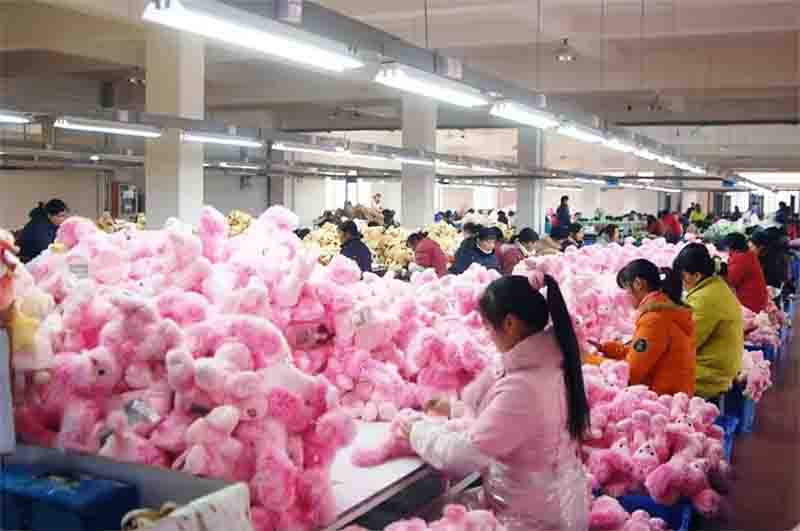
The capability gap between plush toy manufacturers becomes most visible on complex designs. A factory that produces excellent simple products may be entirely unable to execute a complex character design accurately — not because of a lack of effort, but because it lacks the specific technical infrastructure, skilled personnel, and development processes that complex production requires.
Choosing a manufacturer capable of handling complex plush designs at scale requires evaluating pattern making expertise, embroidery system capability, construction technique range, dedicated sampling infrastructure, QC system depth, and demonstrated experience with comparable design complexity — not just general production volume and price competitiveness.
Here is a comprehensive evaluation framework for assessing complex design capability:
| Capability Area | What to Evaluate | Strong Indicator | Weak Indicator |
|---|---|---|---|
| Pattern making team | Experience with complex character designs | Can show examples of 15+ panel designs produced accurately | Only produces standard shapes |
| Embroidery capability | Machine quality and programming precision | Multi-head machines with coordinate-based positioning | Single-head machines, visual positioning only |
| Sampling infrastructure | Dedicated complex design sampling capability | Separate team for development, experienced with complex briefs | Production workers handle sampling |
| Construction range | Ability to integrate functional elements | Has produced products with zippers, weighted filling, sound modules | Standard fill-and-close construction only |
| Material flexibility | Experience with multiple fabric types combined | Demonstrates multi-fabric samples | Works primarily with single fabric type |
| QC depth | Product-specific inspection criteria | Can describe how they develop QC criteria for new complex designs | Standard checklist applied to all products |
| First sample accuracy | Rate of accurate first samples on complex designs | Can show development history with minimal revision rounds | First samples consistently require significant rebuilding |
Requesting a Complexity Benchmark Sample
One of the most direct ways to assess a factory’s complex design capability is to request a sample of an existing product from their portfolio that demonstrates complexity comparable to your intended design. Specifically requesting a multi-panel character design, a product with functional elements, or a weighted plush toy — depending on what is most relevant to your product — gives you direct physical evidence of the factory’s execution capability.
Evaluating this benchmark sample against the criteria in this guide — panel alignment, pile direction consistency, embroidery positioning, construction integrity, material quality — gives you a grounded assessment of what the factory can actually deliver, before any investment in your own product’s development.
Why Complex Designs Require a Partnership Approach
Complex plush designs benefit significantly from a manufacturing relationship where the factory is treated as a development partner rather than a production vendor. When a factory understands the design intent deeply — the character concept, the market positioning, the quality standard the brand needs to achieve — they can bring their technical expertise to bear on the development process in ways that go beyond simply executing instructions.
A pattern maker who understands why a specific proportion matters to the character design will make better pattern engineering decisions than one who is simply trying to match a dimensional specification. An embroidery technician who understands the emotional expression the facial design needs to convey will program and position embroidery with more precision and care than one treating it as a technical task.
At Kinwin, we bring this partnership approach to every complex design project we undertake. Our development team invests in understanding not just the technical specifications but the design intent and market context behind every product — because that understanding produces better technical decisions and better finished products than specification-following alone.
Our pattern making team has extensive experience with complex character designs across a wide range of construction approaches. Our embroidery systems deliver precise, repeatable positioning across high-volume production runs. Our dedicated sampling facility ensures that complex prototypes receive the full attention of our most skilled development staff. And our extended QC system provides the product-specific inspection depth that complex designs require.
If you are developing a complex plush design and want a manufacturing partner with the genuine technical capability to execute it accurately and consistently at scale, we would be glad to walk you through our development process and demonstrate our capability with relevant portfolio examples.
Reach out to our team at [email protected] or visit kinwintoys.com to start the conversation.
Conclusion
Complex plush designs represent some of the most commercially differentiated products in the market — but they also represent the most demanding manufacturing challenge in the plush toy category. Executing them well requires more than production capacity. It requires specialized pattern making expertise, advanced embroidery capability, experienced construction techniques, material selection knowledge, and a QC system detailed enough to maintain consistency across every one of the many elements that define a complex product.
For buyers, the most important decisions in a complex plush design project are made before sampling begins — in the quality of the design brief, the depth of the pre-development consultation, and the capability of the manufacturing partner selected. A well-briefed complex design in the hands of a capable manufacturer will consistently deliver a better result, in fewer rounds, at lower total cost, than a poorly briefed design or a capable design in the wrong factory.
The complexity of a product is not a problem to be managed around. In the right hands, it is a competitive advantage — a product that competitors cannot easily replicate, that customers respond to emotionally, and that builds brand equity with every unit sold.
At Kinwin, complex designs are where we do some of our best work. We would be glad to show you what that looks like in practice.
FAQ
Q1: At what level of design complexity should a buyer consider working with a factory’s design team rather than developing the design independently?
The practical threshold is usually when the design involves structural or proportional elements that require manufacturing knowledge to resolve correctly — such as how a specific sculpted feature should be paneled to achieve the right shape, or how weighted elements should be distributed across a character’s body to maintain correct visual balance while meeting functional requirements. For buyers who are developing a design independently and finding that their references are not translating accurately into three-dimensional form across multiple revision rounds, engaging the factory’s pattern making team in a collaborative brief development process — rather than continuing to provide design references and waiting for the factory to interpret them — often produces better results faster.
Q2: How do factories typically price complex designs differently from standard plush products?
Complex designs carry higher costs across multiple dimensions. Sampling fees are higher because more pattern making time, more skilled labor, and often more specialized materials are required. Unit production costs are higher because the manufacturing time per unit is longer, operator skill requirements are greater, and QC intensity is higher. Minimum order quantities may also be higher because the production line setup cost for a complex design is more significant and needs to be spread across a larger number of units to make the economics viable. Buyers should request itemized cost breakdowns from their factory that clearly show how complexity is affecting each cost component rather than accepting a single unit price without understanding what is driving it.
Q3: Is it possible to simplify a complex design without losing its commercial appeal?
In most cases, yes — and this is one of the most valuable contributions an experienced manufacturing partner can make during the design review stage. Many design elements that appear essential to the visual impact of a product can be achieved through simpler construction approaches than the original design implies. A sculpted cheek can sometimes be achieved through strategic stuffing rather than a separate panel. A complex accessory can sometimes be replaced with a high-quality embroidered or printed alternative. An asymmetric design element can sometimes be made symmetric without meaningfully affecting the character’s personality. Identifying these opportunities requires manufacturing knowledge that most buyers do not have independently — which is why the pre-development feasibility review is particularly valuable for complex designs.
Q4: How should buyers protect their complex design IP when sharing detailed technical information with a factory?
Sharing detailed technical briefs, panel diagrams, embroidery artwork, and accessory specifications with a factory is necessary for development but creates IP exposure risk if the relationship does not have clear contractual protection. Before sharing any detailed design files, ensure that a non-disclosure agreement covering the specific design elements is in place. For complex original character designs specifically, consider whether design registration in your primary market is appropriate before sharing design files with any manufacturing partner. A factory that resists signing an NDA before receiving detailed design information is demonstrating exactly the kind of IP management culture you want to identify before — not after — sharing your design.
Q5: How long should buyers realistically budget for the full development cycle of a highly complex plush design?
For a genuinely complex design — combining multiple fabric types, sculpted features, detailed embroidery, and functional elements — buyers should budget for a full development cycle of 10 to 16 weeks from approved brief to bulk production start. This covers pattern development and material sourcing, four to six sampling and revision rounds, counter sample confirmation, and pre-production setup. Buyers who plan for a shorter timeline on highly complex designs consistently find themselves either compromising on the quality of the development process — rushing revision rounds and accepting marginal results — or missing their intended market entry date because the development took longer than the plan allowed. Building realistic development timelines from the beginning is one of the most important planning decisions in a complex plush project.