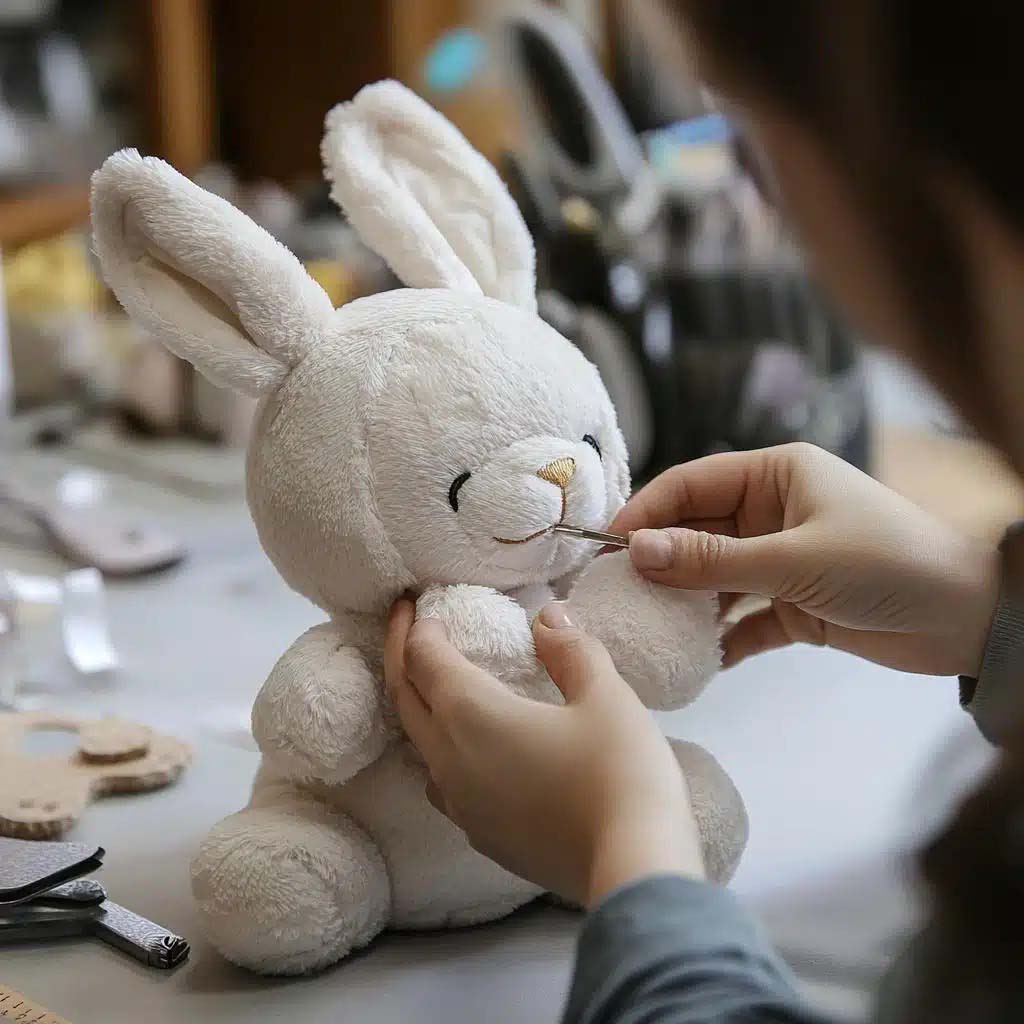
Launching a plush product is rarely as straightforward as it looks from the outside. There is the product itself — the design, the materials, the construction, the safety requirements. There is the manufacturing relationship — finding the right factory, managing sampling, controlling quality, staying on timeline. And there is the market — understanding what sells, positioning the product correctly, and getting it to the right channel at the right time.
Most buyers who come to Kinwin are not just looking for a factory. They are looking for a partner who can help them navigate all of these dimensions without getting lost in the complexity — someone who understands not just how to make plush toys, but how to help a brand bring a plush product to market successfully.
This is exactly what we have built our operation to do. From the first conversation about a product concept to the moment the finished goods arrive at your warehouse, every part of our process is designed to make your launch smoother, faster, and more likely to succeed.
What Does a Successful Plush Product Launch Actually Require?
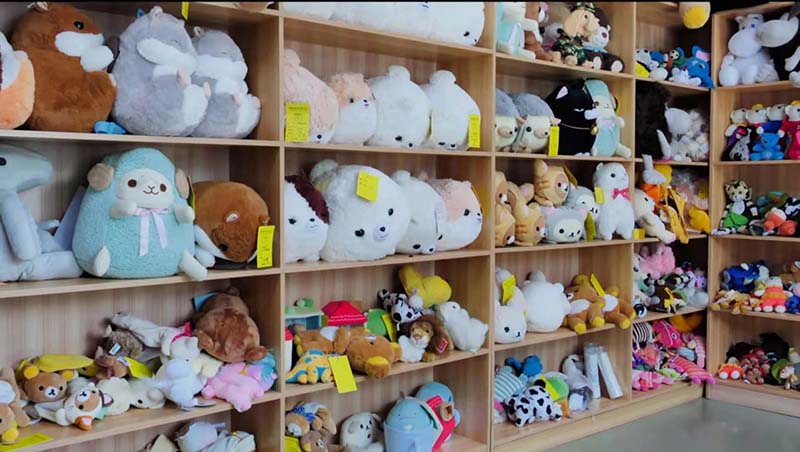
Before talking about how we help, it is worth being clear about what a successful plush product launch actually involves — because many buyers underestimate the full scope of what needs to go right between having an idea and having a product on the market.
A successful plush product launch requires alignment across six interconnected areas: a clearly defined product that meets real market needs, a manufacturing process that can execute the design accurately and consistently, a quality control system that protects against defects and compliance failures, a timeline that allows the product to reach the market at the right moment, compliance documentation that meets the legal requirements of the target market, and a supplier relationship that is transparent and reliable enough to manage problems when they arise.
Here is a breakdown of what each success factor requires in practice:
| Success Factor | What It Requires | Risk if Unaddressed |
|---|---|---|
| Product definition | Clear brief with materials, specs, and market alignment | Wrong product developed, wasted sampling investment |
| Manufacturing execution | Experienced factory with relevant capability | Quality failures, timeline overruns |
| Quality control | Systematic QC at every production stage | Defective bulk orders, customer complaints |
| Timeline management | Realistic schedule with buffer for revision and QC | Late market entry, missed seasonal opportunities |
| Compliance | Certified materials, tested product, correct labeling | Market rejection, platform listing removal |
| Supplier transparency | Proactive communication, honest problem reporting | Unmanaged risks become crises |
Why Most Launch Problems Are Predictable
The majority of plush product launches that go wrong do not fail because of bad luck. They fail because one or more of these six factors was not properly addressed before production began. A product developed without a clear brief generates excessive sampling rounds. A supplier selected without proper capability verification delivers inconsistent bulk quality. A compliance step skipped to save time results in a shipment that cannot enter the target market.
At Kinwin, our role is to help buyers address all six factors systematically — not to manage production alone, but to be an active partner in making the launch succeed across every dimension.
How Do We Help Buyers Define the Right Product Before Development Begins?
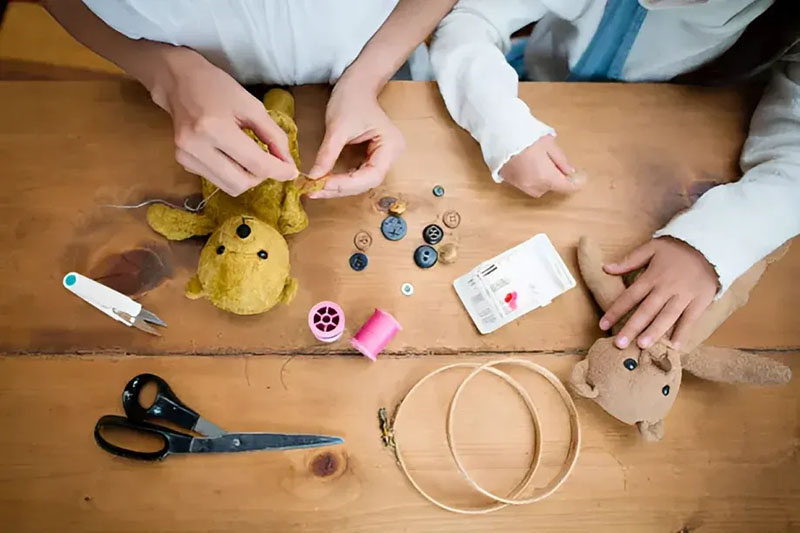
The most common and most expensive mistake in plush product development is beginning production without a fully resolved product definition. When buyers approach us with a rough concept and expect the sampling process to fill in the gaps, the result is extended development timelines, high revision costs, and sometimes a fundamental redesign that could have been avoided with better upfront planning.
Our approach is to invest time in product definition before any patterns are made or materials are sourced. This investment at the beginning of the project consistently produces faster, more accurate sampling, fewer revision rounds, and a finished product that is better aligned with the buyer’s actual market requirements.
We help buyers define the right product through a structured pre-development consultation that covers target market and user, product function and usage scenario, size and weight requirements, material and compliance standards, price point and production volume, and competitive positioning. Each of these inputs shapes the product specification in ways that directly affect cost, timeline, and market performance.
Here is how our pre-development consultation process works:
| Consultation Area | Questions We Help Answer | How It Shapes the Product |
|---|---|---|
| Target market | Who is the end user? What age group? What context? | Determines safety standards and design direction |
| Usage scenario | How will the product be used day to day? | Affects size, weight, material durability |
| Price point | What is the target retail price? | Sets boundaries on materials and production approach |
| Compliance needs | Which markets will it be sold in? | Determines certification requirements |
| Volume expectations | How many units in the first order and subsequent runs? | Affects MOQ, pricing, and factory resource allocation |
| Competitive context | What else is in the market at this price point? | Identifies differentiation opportunities |
Feasibility Assessment Before Sampling Begins
Once we understand the product requirements, our development team conducts a feasibility assessment — reviewing the design concept against our production capabilities, material availability, and cost parameters before any sampling investment is made.
This assessment identifies potential issues that would create problems in production: design elements that are difficult to execute consistently at scale, material specifications that are not available within the required budget, construction approaches that would significantly extend the production timeline, or compliance requirements that need to be factored into material selection from the start.
By addressing these issues at the concept stage, we help buyers avoid the most expensive type of sampling waste — discovering a fundamental design or specification problem after multiple revision rounds have already been completed.
Helping Buyers Who Are Starting from Scratch
Not every buyer comes to us with a complete design. Many come with a market opportunity, a customer need, or a rough reference image — and need a manufacturing partner who can help translate that starting point into a producible product brief.
For these buyers, our ODM development capability is particularly valuable. Our design team works with buyers to develop original concepts based on their market direction, selecting materials, proposing shapes, and developing initial designs that are both commercially appealing and production-efficient. This collaborative design process bridges the gap between what a buyer wants to sell and what a factory can produce reliably — a gap that, without an experienced development partner, often produces a first sample that disappoints on one dimension or the other.
How Does Our Development Process Turn Concepts into Market-Ready Plush Products?
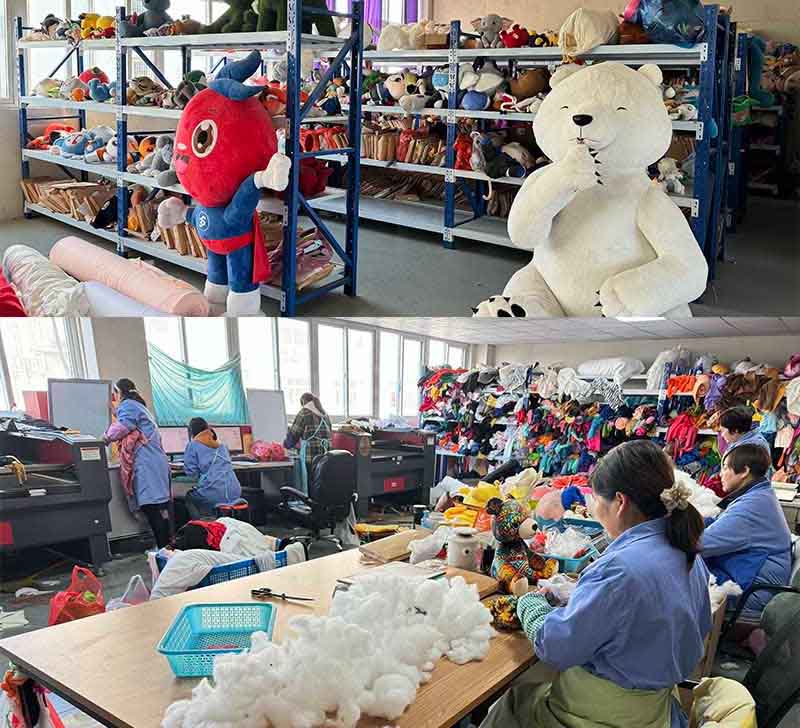
Once the product definition is established and the design brief is complete, the development process begins. This is where a concept becomes a physical product — and where the quality of the manufacturing partner’s technical capability becomes directly visible in the accuracy of the first sample, the efficiency of the revision process, and the reliability of the transition from approved sample to bulk production.
Our development process is structured to move from brief to bulk-production-ready sample in the fewest possible rounds, with clear communication and documented progress at every stage. We achieve this through experienced pattern makers who interpret briefs accurately, a dedicated sampling team that works exclusively on prototype development, a structured revision management process that tracks every change, and a counter sample stage that confirms production readiness before mass manufacturing begins.
Here is an overview of our full development process:
| Development Stage | What We Do | Timeline | Client Action Required |
|---|---|---|---|
| Brief review | Assess design feasibility, identify risks, confirm materials | 1–2 days | Confirm or adjust brief based on feedback |
| Pattern making | Develop cutting templates from approved brief | 3–7 days | None — factory work |
| Material sourcing | Source and confirm all specified materials | 3–7 days | Approve material swatches if required |
| First sample construction | Build prototype with dedicated sampling team | 7–14 days | None — factory work |
| Sample dispatch | Ship sample with deviation notes and photos | 1–3 days | Receive and evaluate sample |
| Revision round | Incorporate consolidated buyer feedback | 5–10 days per round | Submit structured feedback document |
| Sample approval | Buyer confirms final sample meets standard | 1–2 days | Formal sign-off |
| Counter sample | Build pre-production sample with bulk materials | 5–7 days | Approve before bulk begins |
| Mass production | Full production run to approved standard | 20–35 days | Monitor via production updates |
Our Dedicated Sampling Team
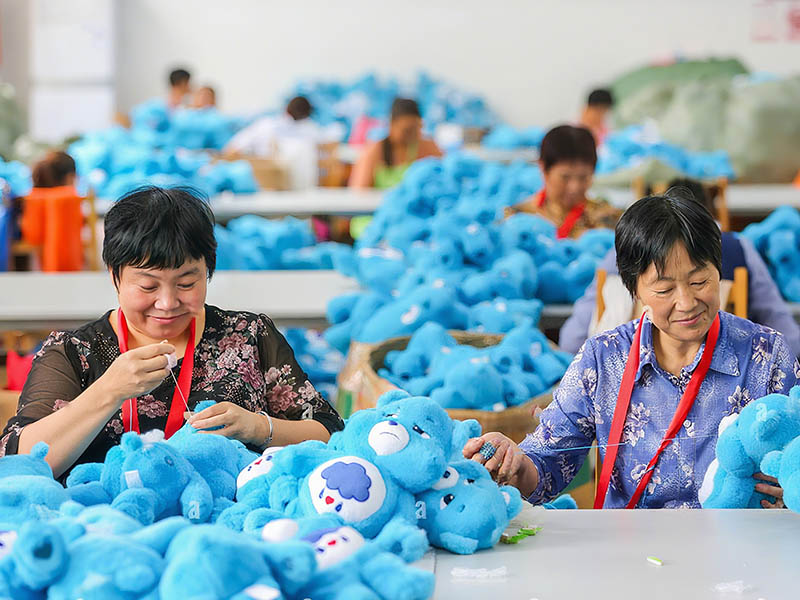
One of the most important structural decisions we have made is to maintain a fully dedicated sampling team — experienced pattern makers and prototype sewers who work exclusively on development projects, separate from the main production floor.
This separation ensures that every prototype receives the full attention of our most skilled development staff, without the pressure of production targets that affects main line workers. It is why our first samples consistently achieve a high level of accuracy relative to the design brief — and why our clients typically complete the sampling process in fewer rounds than they have experienced at other factories.
Structured Revision Management
Every revision round at Kinwin is managed through a documented process. When a client submits revision feedback, our development team reviews each requested change, confirms understanding, and prepares a revision action list before any work begins. This list is shared with the client for confirmation before the revision sample is built — ensuring that both parties have a shared, written record of exactly what is being changed and why.
This approach prevents the most common revision waste pattern: a factory addressing some feedback points but missing others, resulting in an additional round to catch the items that were missed. With a confirmed revision action list, every change is tracked and every item is addressed before the revision sample is completed.
How Do We Protect Product Quality from the First Sample to the Final Shipment?
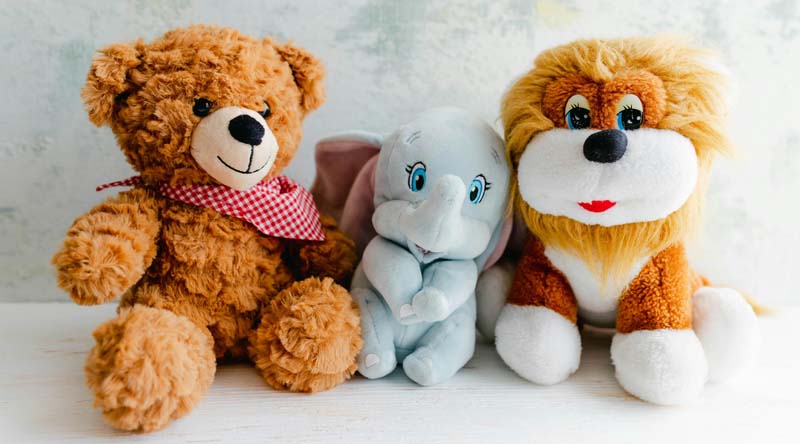
Quality protection at Kinwin is not a single inspection at the end of production. It is a continuous, documented system that covers every stage of the manufacturing process — from the moment incoming materials arrive at our facility to the moment the finished goods are packed and ready for shipment.
We protect product quality through a three-stage QC system — IQC, IPQC, and FQC — supported by an independent quality control team, calibrated testing equipment, and complete documentation for every production run. This system is designed to catch potential quality issues at the earliest possible point, where they are least expensive to resolve and least likely to affect the finished product.
Here is how our quality protection system operates across the production timeline:
| QC Stage | Timing | What We Check | Documentation Produced |
|---|---|---|---|
| IQC | Before cutting begins | Fabric, filling, accessories, thread — all against spec | Incoming inspection report |
| Pre-production check | After cutting, before sewing | Panel dimensions, color accuracy against approved | Cut piece verification record |
| First-off inspection | First completed units from line | Full product against approved sample | First-off report with photos |
| IPQC | Every 2–4 hours during production | Random units from active production line | In-process inspection log |
| Pre-packing inspection | Before packaging begins | Appearance, accessories, finishing standard | Pre-pack inspection record |
| FQC | On completed, packed goods | AQL sampling of full batch | Final inspection report |
Our Independent QC Team
Our quality control team operates independently from our production team — reporting directly to management rather than to the production floor. This structural independence is what allows our QC personnel to make objective quality decisions without pressure to prioritize output volume over quality standards.
When our QC team identifies a batch of incoming fabric with a color deviation, they reject it — regardless of where the production schedule stands. When an in-process inspection identifies a stuffing density inconsistency, the relevant line section is halted for recalibration before production continues. These decisions are made on quality grounds alone, and that is only possible because our QC team has no production targets to meet.
How We Support Third-Party Inspection
For buyers who want independent verification of finished goods quality — which we actively encourage for first orders and large production runs — we fully support third-party inspection by organizations such as SGS, Bureau Veritas, and Intertek.
We coordinate with the inspection company to schedule the visit at the appropriate production completion stage, prepare the goods for inspection according to AQL requirements, and make all quality documentation — including our own FQC report — available to the inspector. We have found that buyers who use third-party inspection alongside our internal QC process have the highest confidence in their shipments — and the smoothest experience from production to delivery.
How Do We Support Compliance and Certification for US and EU Market Entry?
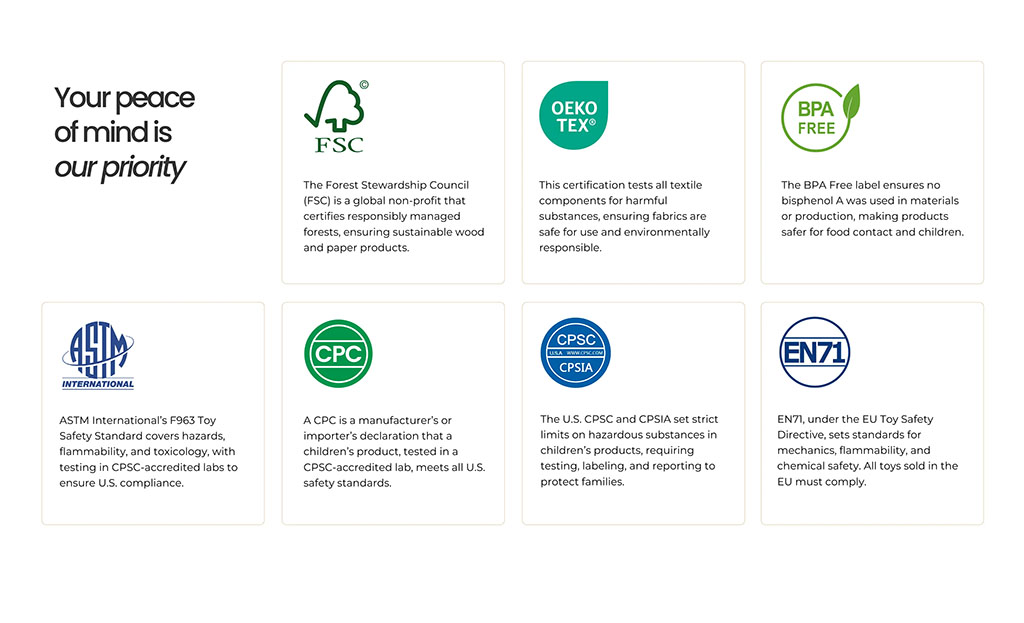
Compliance is one of the areas where buyers most frequently encounter unexpected problems — and one where having an experienced manufacturing partner makes the most significant practical difference. A factory that understands the compliance requirements of the US and European markets, and builds compliance into the production process from the start, is a fundamentally different partner from one that treats testing and certification as an afterthought.
At Kinwin, we support buyers through the complete compliance process for their target markets — from material selection using certified suppliers through product testing coordination and final documentation. Our goal is to ensure that every product we produce is market-ready from a compliance perspective before it leaves our facility — not after it arrives at the buyer’s warehouse.
Here is an overview of the compliance standards we support and how:
| Standard | Market | What It Covers | How We Support It |
|---|---|---|---|
| ASTM F963 | USA | Toy safety — mechanical, physical, chemical | Certified materials, structural compliance, lab referral |
| CPSIA | USA | Chemical safety, lead limits, tracking labels | Compliant materials, CPSIA label application on all units |
| EN71 Parts 1–3 | Europe | Mechanical safety, flammability, chemical safety | Certified materials, seam strength compliance |
| REACH | Europe | Restricted chemical substances | Certified fabric and dye supplier documentation |
| CE Marking | Europe | EU toy safety directive conformity | Documentation preparation and marking support |
| OEKO-TEX Standard 100 | Global | Harmful substance testing in textiles | Available on request for premium fabric options |
Compliance-First Material Sourcing
One of the most important ways we protect our clients’ compliance position is by sourcing all materials exclusively from certified suppliers with current test documentation. This means that when a buyer places an OEM or ODM order with Kinwin, the materials entering their product have already been verified for chemical safety compliance — before the product itself goes to a testing laboratory.
This compliance-first approach to material sourcing significantly reduces the risk of a product failing chemical testing — which is one of the most costly compliance failures a buyer can experience, because it typically requires either reworking or destroying an entire production batch.
Testing Laboratory Coordination
For buyers who require third-party product testing before market entry — which is a requirement for most US and EU retail and major e-commerce channels — we coordinate directly with our accredited laboratory partners to manage the testing process efficiently.
We prepare the test samples, provide all required product documentation to the laboratory, and follow up to ensure results are received within the timeframe the buyer needs. For buyers who are new to the compliance process for their target market, we walk through the specific tests required for their product type and channel, so there are no surprises in terms of cost or timeline when testing begins.
How Do We Keep Buyers Informed and in Control Throughout the Entire Process?
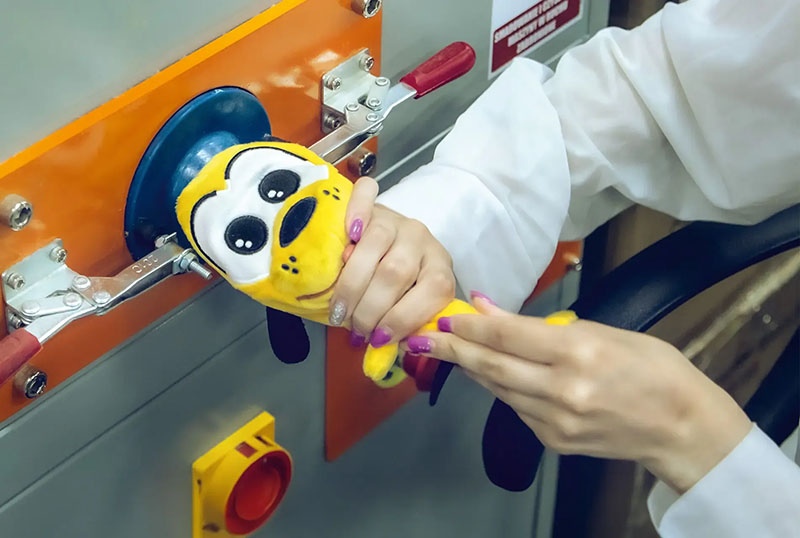
One of the most common frustrations in international plush toy sourcing is the feeling of losing visibility once an order is placed. A buyer confirms production, payment clears, and then weeks pass with little or no meaningful update — until either the goods arrive or a problem surfaces that should have been communicated much earlier.
At Kinwin, we treat communication as a core part of our service — not a reactive function that activates when something goes wrong. Our communication standard is proactive, structured, and consistent from the first inquiry through final delivery, ensuring that our clients always know where their order stands and have the information they need to make decisions at the right time.
Here is our communication framework across the production lifecycle:
| Stage | What We Communicate | Format | Timing |
|---|---|---|---|
| Quotation | Detailed itemized quote with timeline | Written document | Within 24 hours of inquiry |
| Sampling start | Confirmation of brief receipt and timeline | Email update | Within 1–2 days of brief |
| Sample dispatch | Notification with photos and deviation notes | Email with attachments | Day of dispatch |
| Production confirmation | Stage-by-stage production schedule | Written timeline | Within 2 days of order |
| Material receiving | IQC results and any deviation flags | Email update | Within 1–2 days of material arrival |
| First-off inspection | Photos and results of first completed units | Email with photos | First day of production |
| Mid-production update | Progress confirmation at 50% completion | Email update | At production midpoint |
| FQC completion | Full inspection report before balance request | Written report with photos | Before payment request |
| Shipment | Tracking information and shipping documents | Email with attachments | Day of shipment |
Proactive Problem Communication
The true test of a manufacturing partner’s communication culture is how they handle problems — not how they communicate when everything is going smoothly. At Kinwin, our standard is to communicate any issue or risk as soon as it is identified, alongside a proposed resolution rather than a standalone problem report.
This approach requires a culture of accountability that we have deliberately built into our operation. It is not always comfortable to communicate a problem proactively — but our clients consistently tell us that this transparency is one of the things they value most about working with us. Knowing about a problem early, with a solution already in development, is always better than discovering it late with no path forward.
Dedicated Client Contact
Every client at Kinwin is assigned a dedicated contact who manages their account from inquiry through delivery. This means that every communication goes through a single person who knows your project, your history, and your standards — rather than being handled by a rotating team where context is constantly being rebuilt.
This continuity of contact is particularly valuable when problems arise. A dedicated contact who knows your production history can respond to a quality question or timeline concern with full context immediately — rather than spending time reconstructing the background before addressing the issue.
What Happens After the First Order — How Do We Support Long-Term Growth?

A successful first order is not the end of the relationship — it is the beginning of it. For buyers building a plush toy product line, the most valuable manufacturing partner is one that gets better over time as their knowledge of your products, standards, and business deepens.
At Kinwin, we invest actively in the long-term development of every client relationship. This means maintaining complete, updated documentation for all active product designs, building institutional knowledge of each client’s specific quality expectations, proactively sharing market and material developments that may be relevant to their product line, and adapting our service to support their business as it grows.
Here is how our long-term partnership support develops across successive orders:
| Partnership Stage | What Improves | Client Benefit |
|---|---|---|
| Second order | Production familiarity with design | Shorter lead time, fewer QC flags |
| Third order | Deeper material knowledge | More accurate first-off, faster production |
| Established relationship | Full institutional knowledge | Near-zero revision rounds on reorders |
| Growing account | Priority capacity allocation | Better scheduling during peak periods |
| Long-term partnership | Proactive development input | Factory contributes to product improvement |
Reorder Efficiency
One of the most tangible benefits of a long-term manufacturing relationship is reorder efficiency. By the time a design has been produced two or three times, our team knows every technical detail of the product — the exact stuffing density, the precise embroidery positioning, the specific fabric batch characteristics — in a way that significantly reduces the management overhead of each subsequent order.
This efficiency translates directly into commercial value for our clients: faster sampling on design variations, more accurate first-off production, fewer QC issues requiring resolution, and more reliable delivery timelines. The practical result is that the cost of managing production — in both time and money — decreases with every order as the relationship matures.
Supporting Product Line Expansion
As our clients’ businesses grow, their product development needs evolve. A buyer who started with a single hero product may want to expand into new character variants, new product categories, or new markets with different compliance requirements. A brand that launched with catalog ODM products may be ready to invest in proprietary OEM designs that differentiate their range more strongly.
At Kinwin, we actively support this evolution — bringing product development expertise, material sourcing capability, and compliance knowledge to every new project, building on the trust and efficiency already established in the existing relationship. Our goal is to be the manufacturing partner that grows with our clients — not one they outgrow.
How Do Buyers Get Started with Kinwin on a New Plush Product Launch?
Starting a new plush product launch with Kinwin is designed to be straightforward and low friction — from the first conversation to the first production-ready sample. Our onboarding process is structured to gather the information we need to respond helpfully, while giving buyers a clear and honest picture of what working with us looks like before any financial commitment is made.
Buyers can start a new plush product launch with Kinwin by reaching out with their product concept, target market, approximate volume requirements, and timeline. From this starting point, our team provides a detailed response covering development feasibility, indicative pricing, timeline, compliance requirements, and recommended next steps — giving buyers everything they need to make an informed decision about whether to move forward.
Here is what the Kinwin onboarding process looks like from first contact to first sample:
| Step | What Happens | Who Acts | Timeframe |
|---|---|---|---|
| Initial inquiry | Buyer shares concept, market, volume, timeline | Buyer reaches out | Day 1 |
| Feasibility response | Kinwin provides assessment, indicative pricing, timeline | Kinwin responds | Within 24 hours |
| Pre-development consultation | Product requirements refined, compliance confirmed | Both parties | 1–3 days |
| Brief submission | Buyer provides complete design brief | Buyer | As ready |
| Quotation confirmation | Kinwin confirms detailed sample and production pricing | Kinwin | 1–2 days after brief |
| Sample fee confirmation | Buyer confirms sample order | Buyer | Day of quotation |
| Development begins | Pattern making and material sourcing start | Kinwin | Immediately |
| First sample delivery | Sample shipped with photos and deviation notes | Kinwin ships | 7–14 days from brief |
| Revision and approval | Efficient revision cycles to production-ready standard | Both parties | 1–3 rounds typical |
| Production order | Buyer confirms bulk order, production schedule confirmed | Both parties | After sample approval |
What to Prepare Before Reaching Out
The more context you can provide in your initial inquiry, the more specific and actionable our first response will be. You do not need a finished design to start the conversation — but having clear answers to the following questions will make our initial assessment significantly more useful:
What is the product concept or category you are developing? Who is the intended end user and what market are you selling in? What is your approximate target order quantity? What is your required delivery timeline? Are there specific compliance or certification requirements for your channel?
If you have design references, material preferences, or examples of products that represent the quality level you are targeting, sharing these with your inquiry will allow us to give you a more precise feasibility assessment and pricing indication from the first response.
Starting Small and Scaling with Confidence
We understand that many buyers — particularly those launching a first product or entering a new category — want to start with a manageable initial order that limits risk while validating market response. We actively support this approach, offering flexible discussions around initial order quantities for buyers with clear growth intent, and structuring the development process to give you the quality confirmation you need before committing to bulk production.
Our goal is not to maximize the size of your first order. It is to make your first order successful — so that your second, third, and fourth orders follow naturally as your business grows.
Reach out to our team at [email protected] or visit kinwintoys.com to start the conversation about your next plush product launch. We would be glad to show you exactly how we can help make it a success.
Conclusion
Launching a plush product successfully requires more than finding a factory that can make what you need. It requires a manufacturing partner who understands your market, invests in getting the product definition right before sampling begins, executes development and production with the technical precision required to deliver consistent quality, supports compliance from material selection through final documentation, and communicates with the transparency and proactivity that keeps you in control throughout the process.
This is exactly what Kinwin is built to do. Every part of our operation — our dedicated sampling team, our three-stage quality control system, our compliance-first material sourcing, our structured communication framework, and our long-term partnership approach — exists to give buyers the best possible chance of launching a plush product that succeeds in the market and grows into a stable, profitable part of their business.
If you are planning a new plush product launch and want a manufacturing partner who will be genuinely invested in making it succeed, we would be glad to start that conversation.
FAQ
Q1: Do I need to have a complete design ready before approaching Kinwin, or can you help develop the concept?
You do not need a finished design to start working with us. Many of our clients come to us at the concept stage — with a market direction, a reference image, or a general product idea — and our development team works with them to translate that starting point into a producible design brief. For buyers who want the factory to take a more active role in design development, our ODM capability allows us to develop original concepts based on your market direction and present design options for your selection. The important thing is not the completeness of the design at the outset, but the clarity of the market need and product direction — because those inform every development decision that follows.
Q2: What is the typical sampling fee for a new custom plush design at Kinwin?
Sampling fees at Kinwin typically range from $100 to $400 per design, depending on the complexity of the product, the number of fabric types and accessories involved, and whether custom tooling or embroidery programming is required. We provide a detailed sampling fee breakdown before any development work begins, so there are no surprises. For clients who proceed to a bulk production order above a minimum volume threshold, sampling fees are partially or fully deductible from the production invoice — a policy we confirm in writing at the start of the project.
Q3: Can Kinwin produce plush toys that meet the requirements of both the US and EU markets simultaneously?
Yes — and this is a common requirement for brands selling across multiple markets simultaneously. US and EU safety standards share significant overlap in their core requirements, and products designed to meet both ASTM F963 and EN71 simultaneously are achievable with the right material selection and construction approach from the beginning. The key is to identify the dual-market compliance requirement at the product definition stage rather than after sampling is complete — because material and construction decisions made early in development have a direct impact on the compliance testing outcomes. We guide clients through this process as part of our pre-development consultation.
Q4: How does Kinwin handle rush orders or tight launch deadlines?
We handle rush requests on a case-by-case basis, depending on current production capacity and the specific requirements of the order. For sampling, we can often accelerate the timeline by prioritizing material sourcing and dedicating additional sampling team resource to the project — typically reducing the standard 7 to 14 day first sample timeline by 3 to 5 days for straightforward designs. For bulk production, timeline compression is more limited by the physical constraints of the manufacturing process, but we can often optimize scheduling to reduce non-production waiting time. We are always honest about what is realistically achievable — because confirming an unrealistic rush timeline and delivering late is consistently worse for our clients than setting accurate expectations from the beginning.
Q5: How do I know the bulk production will match the sample I approved?
The consistency between approved sample and bulk production is protected by four specific systems we have built into our process. First, a complete tech pack is produced and distributed to all production departments before manufacturing begins — ensuring every worker has the same reference standard. Second, a counter sample is built using actual bulk production materials before the main run starts, confirming that the production environment can reproduce the approved design accurately. Third, our first-off inspection reviews the first completed units from the production line against the approved sample on the first day of production — catching any process setup issues before they affect the full batch. Fourth, our mid-production IPQC monitoring checks random units at regular intervals throughout the run, ensuring that any production drift is identified and corrected before it affects a significant portion of the order.