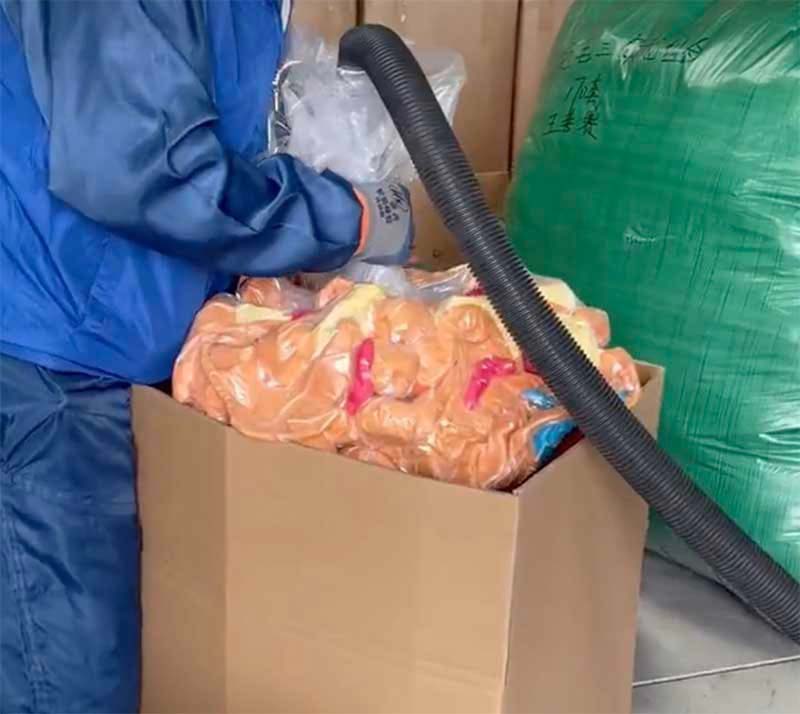
Filling is the invisible component of a plush toy — invisible to the customer who evaluates the product on its shelf, invisible to the photographer who shoots the product listing image, and invisible to the buyer who reviews the sample and makes the approval decision. What filling is not is unimportant. It is, in fact, one of the most commercially significant quality dimensions of any plush toy — because the filling determines the product’s shape, its feel in the hand, its shape retention over time, and much of the sensory experience that determines whether customers perceive the product as premium or cheap.
The invisibility of filling creates a specific sourcing risk: because buyers cannot directly assess filling quality from visual inspection alone, filling is one of the areas where cost pressure most frequently produces undetected quality compromises. A factory that reduces filling quality to improve margin produces a product that looks identical to a correctly filled product in photography, passes casual sample inspection, and reveals its quality gap only when it reaches the customer’s hands — and then only after the product has already been paid for, shipped, and delivered.
Understanding how to specify, verify, and monitor filling quality — at every stage from design brief through final inspection — is the practical capability that transforms filling from a hidden risk into a managed quality dimension. This guide provides that complete capability framework.
Why Filling Quality Is the Hidden Foundation of Every Plush Toy’s Commercial Performance?
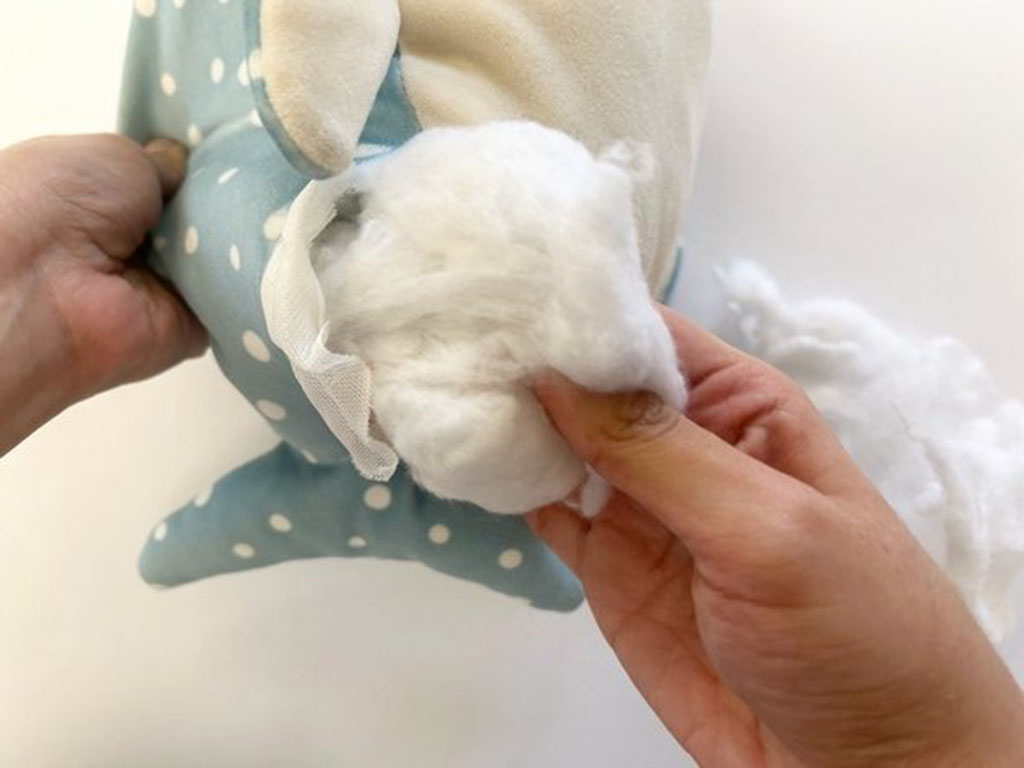
Filling quality is the hidden foundation of plush toy commercial performance because the filling determines most of the product’s tactile and structural characteristics — the dimensions of quality that customers experience most directly but that are least visible in the product development and sourcing process.
A plush toy is evaluated by its customers primarily through touch — how it feels in the hand, how it responds to being held, whether it maintains its shape after being set down, whether it feels substantial or limp. All of these evaluations are filling-quality evaluations, even when customers do not think of them that way. A customer who describes a plush toy as “cheap feeling” or “poorly made” is often describing a filling quality failure — insufficient density, poor loft recovery, or incorrect material — rather than a construction or fabric failure.
Here is a framework for understanding how filling quality dimensions connect to commercial outcomes:
| Filling Quality Dimension | Customer Experience Impact | Commercial Consequence |
|---|---|---|
| Filling density | Product feels substantial or limp | Price-point perception, review sentiment |
| Loft recovery | Shape maintained after compression | Long-term customer satisfaction |
| Fiber uniformity | Consistent surface form | Visual quality consistency |
| Cleanliness and whiteness | No visible contamination through light-colored fabric | Quality perception, potential safety concern |
| Fiber length consistency | Surface texture and shape uniformity | Tactile quality consistency |
| Hypoallergenic characteristics | Safety for sensitive users | Compliance, customer safety |
| Fill weight consistency | Same density across all units | Customer expectation consistency |
| Filling migration resistance | Shape retention over time and use | Long-term customer satisfaction |
The Review-Driven Commercial Impact
In e-commerce channels where plush toys are predominantly sold, customer reviews are the primary driver of organic visibility and conversion rate. The review dimensions that most commonly reference filling quality — without customers necessarily using that terminology — include “feel,” “softness,” “stuffing,” “shape,” and “quality.” Products with positive reviews on these dimensions command higher conversion rates, better organic placement, and higher price tolerance. Products with negative reviews citing softness, limpness, or shape problems experience progressive commercial decline that is difficult to reverse.
This review-driven commercial impact makes filling quality not just a production quality concern but a brand equity concern — one that compounds over the product’s commercial life in ways that make the investment in correct filling specification and quality management a high-return business decision rather than merely a compliance exercise.
How Do Different Filling Materials Compare Across Quality, Safety, and Application Dimensions?

Filling material selection is the foundational filling quality decision — the choice that determines what quality outcomes are achievable before any production process decisions are made. Different filling materials have fundamentally different quality profiles, safety characteristics, and application suitability — and understanding these differences is essential for matching the filling specification to the product’s quality requirements and market positioning.
Here is a comprehensive filling material comparison across the dimensions that most directly affect commercial quality outcomes:
| Filling Material | Loft Recovery | Tactile Quality | Safety Profile | Cost Level | Recommended Application |
|---|---|---|---|---|---|
| Premium high-loft PP cotton | Excellent | Plush, substantial | High — no chemical risk | Medium-High | Premium retail, character plush |
| Standard PP cotton | Good | Adequate | High | Medium | Standard retail plush |
| Low-grade PP cotton | Poor | Thin, limp | Medium — cleanliness variable | Low | Not recommended for quality products |
| Recycled PP cotton | Variable | Variable | Medium-High — depends on source | Low-Medium | Sustainable positioning — verify quality |
| Polyester fiber fill | Good | Slightly coarser | High | Medium | Standard applications |
| Memory foam inserts | Excellent at insert | Firm, structural | High | High | Premium specialty applications |
| Kapok fiber | Good — natural | Soft, natural | High — natural, hypoallergenic | Medium | Natural/organic positioning |
| Wool fill | Good | Warm, natural | High — allergen consideration | High | Specialty natural products |
| Glass beads (weighted) | N/A — weight function | Dense, fluid | High — inert | Medium-High | Weighted plush — pressure function |
| Plastic pellets (weighted) | N/A — weight function | Dense, plastic | Medium — compliance required | Low | Budget weighted products |
The PP Cotton Quality Gradient — Most Important Distinction
For the vast majority of standard plush toys, PP cotton — polypropylene fiber fill — is the primary filling material. Within PP cotton, however, there is a significant quality gradient that produces very different commercial outcomes despite the materials being described identically in a simple specification.
The quality gradient in PP cotton is defined primarily by four characteristics: fiber length, fiber whiteness, loft recovery after compression, and fiber uniformity. Premium PP cotton uses longer, more uniform fibers that are processed to maximize loft — the volume of air trapped between fibers that creates the full, soft feel of high-quality plush filling. Standard PP cotton uses shorter, less uniform fibers with lower loft. Low-grade PP cotton uses the shortest, least uniform fibers, often with visible contamination and poor whiteness, that produce the limp, thin feel of cheap stuffed products.
The commercial importance of this gradient cannot be overstated — because a product filled with premium high-loft PP cotton and a product filled with low-grade PP cotton can weigh exactly the same, use the same fabric, and be constructed with the same technique, while delivering entirely different customer experiences. The only reliable way to specify the correct filling grade is through physical reference samples and measurable performance standards — not through the label “PP cotton.”
How Is Filling Quality Specified Before Production Begins?

Filling quality specification is the first and most important quality control action available for filling — because a precise, complete specification provides the objective standard against which every subsequent quality verification is conducted. An incomplete or imprecise filling specification creates ambiguity that factories fill with their own quality decisions — which are typically made based on cost rather than on the buyer’s quality requirements.
Here is a complete filling quality specification framework with all elements that should be included in the design brief:
| Specification Element | What to Specify | Why It Matters | Specification Format |
|---|---|---|---|
| Filling material type | Specific material with grade designation | Defines the baseline quality level | e.g., “Premium high-loft PP cotton — Grade A” |
| Target fill weight | Total weight per unit with tolerance | Controls density — primary shape retention factor | e.g., “180g ±10g for 30cm product” |
| Density specification | Compression resistance standard | Defines functional density requirement | e.g., “Compress to 60% height — recover to 90% within 24 hours” |
| Fiber whiteness | Minimum whiteness standard | Prevents visible contamination through light fabrics | e.g., “Minimum 85% whiteness (CIE scale)” |
| Loft recovery standard | Recovery percentage after compression | Defines long-term shape retention requirement | e.g., “Minimum 85% loft recovery after 100 compression cycles” |
| Cleanliness standard | Maximum contamination allowance | Safety and quality | e.g., “No visible contamination, no dark fiber specks” |
| Hypoallergenic requirement | Whether hypoallergenic certification required | Safety for sensitive users | e.g., “OEKO-TEX Standard 100 certified” |
| Physical reference | Sample of approved filling quality | Tactile reference for IQC and sampling | Physical swatch retained by factory and buyer |
| Compliance requirement | Applicable chemical safety standards | Market entry requirement | e.g., “REACH compliant, CPSIA compatible” |
The Physical Reference — Most Important Specification Element
Written specifications communicate objective, measurable properties. Physical references communicate the tactile experience of the filling — its hand feel, its loft, its responsiveness to compression — that no written specification can fully capture. The approved filling reference sample is the definitive quality standard against which all production filling will be compared.
The physical reference should be prepared at the counter sample stage — when the filling that will be used in bulk production has been sourced and its quality confirmed through IQC — and should be retained in two locations: at the factory’s QC station for production comparison, and at the buyer’s location for independent verification if filling quality disputes arise.
This physical reference is the practical foundation of filling quality control — the tangible standard that makes IQC, IPQC, and FQC assessments objective rather than subjective. Without it, every filling quality assessment is a subjective judgment without a clear reference point.
How Does Incoming Quality Control Verify Filling Standards Before Production?
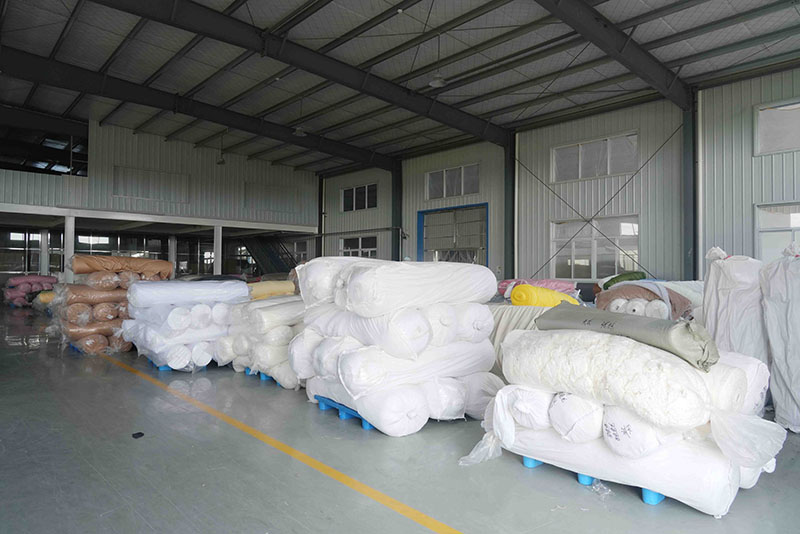
Incoming quality control for filling is the first production-stage filling quality checkpoint — the systematic verification that the filling material delivered for production meets the specification before it enters any production unit. Given that filling quality is difficult to assess in finished units without destructive testing, catching filling quality problems at the incoming stage — before any production investment is made with the filling — is the most cost-effective filling quality protection available.
Incoming filling quality control verifies filling standards through a structured inspection protocol that assesses every quality dimension specified in the filling specification against physical measurement, reference comparison, and documentation review.
Here is a complete incoming filling quality control protocol:
| IQC Inspection Step | What Is Verified | Method | Pass/Fail Standard |
|---|---|---|---|
| Visual appearance check | No visible contamination, consistent whiteness | Visual inspection of sample from each bale | Matches approved reference — no visible dark fibers or contamination |
| Whiteness assessment | Fiber whiteness within specification | Comparison to whiteness reference under standard lighting | Within approved whiteness range |
| Loft assessment | Filling volume per unit weight matches approved reference | Compress sample, assess recovery — compare to reference | Matches reference loft characteristics |
| Fiber length consistency | Fiber length uniformity matches approved grade | Visual comparison to reference sample | No visible length inconsistency vs reference |
| Contamination check | No foreign material in filling | Hand-sort sample from each bale | Zero visible foreign contamination |
| Cleanliness check | No dust, residue, or process contamination | Shake sample over clean surface | No visible dust or particulate |
| Weight per volume check | Density consistent with approved reference | Weigh defined volume against approved reference | Within ±5% of reference density |
| Compliance documentation | Current certificates available for approved filling | Document review | Current OEKO-TEX or equivalent certificates available |
| Physical comparison to reference | Overall quality matches approved physical reference | Side-by-side comparison and handling | Comparable to approved reference in all tactile dimensions |
AQL Sampling Approach for Filling IQC
For large filling deliveries — multiple bales of PP cotton for a significant production run — 100 percent inspection of every bale is not practical. Professional factories apply an AQL-based sampling approach to filling IQC — selecting a statistically representative number of bales for inspection and using the sample’s quality to assess the full delivery.
For filling, the most important characteristic to sample is loft consistency across bales — because bales from the same delivery can vary in processing quality, particularly for less uniformly processed grades. Sampling from both the top and bottom of several bales, rather than just from the most accessible surface layer, provides more representative evidence of the filling quality throughout the delivery.
When a sampled bale fails any IQC criterion, the full delivery should be quarantined and assessed more intensively before any filling is approved for production. A single bale failure is a signal that the delivery lot may have quality inconsistency that requires comprehensive assessment rather than the inference that the remainder of the delivery is acceptable.
How Is Filling Density Calibrated and Maintained During Production?

Filling density calibration is the production process step that establishes the correct machine settings to deliver the target fill weight consistently across the production run. It is the operational translation of the fill weight specification from the design brief into the specific machine parameters that the production team uses to control filling output.
Filling density calibration requires a systematic approach that goes beyond setting the machine and assuming the output is correct — because stuffing machines drift from their calibrated settings during production in ways that produce progressive density variation if not actively monitored and corrected.
Here is a complete filling density calibration and maintenance framework:
| Calibration Step | What Is Done | Timing | Output |
|---|---|---|---|
| Pre-production calibration | Machine set to target output, calibration verified with test units | Before any production units are produced | Calibrated machine setting, documented |
| Calibration verification | Test units weighed against target — confirm within tolerance | Immediately after calibration | Calibration record with weights |
| Warm-up period management | Machine allowed to reach operating temperature before production units | After calibration, before production | Temperature stabilization confirmed |
| Post-warm-up recalibration check | Test units produced and weighed after warm-up | After warm-up period | Post-warm-up weight confirmed within tolerance |
| Production authorization | Confirmed calibration authorizes production start | After calibration and warm-up checks | Signed production start authorization |
| Drift monitoring during production | Weight measurements at defined intervals throughout run | Every 150–200 units | Weight log with all measurements |
| Corrective calibration | Recalibration when weight drifts outside tolerance | Immediately upon drift detection | Corrective calibration record |
| End-of-shift verification | Weight check to confirm calibration maintained through shift | At end of each production shift | Shift-end weight record |
The Machine Warm-Up Effect on Filling Density
One of the most practically important calibration management considerations is the machine warm-up effect — the change in stuffing machine output characteristics that occurs as the machine heats up from its cold-start temperature to its steady-state operating temperature. Most stuffing machines show different output density when cold versus when warmed up, because the mechanical characteristics of the filling feed system change with temperature.
Factories that do not account for the warm-up effect calibrate their machines in the cold state and then produce the first units of the run at a different density than the calibrated target — typically at a lower density than calibrated, because the warm machine feeds more freely. This early-run density variation produces units at the beginning of the production run that are lighter than units produced later — creating within-run density inconsistency that fails the consistency standard even when the average density across the run is within tolerance.
Managing the warm-up effect requires either allowing the machine to reach operating temperature before calibrating and starting production, or calibrating at operating temperature with a planned warm-up sequence before production authorization. Both approaches produce consistent density from the first production unit rather than after the machine has warmed up through the first batch.
The Two-Stage Stuffing Process for Complex Products
For products with multiple body sections — head, body, limbs — that require different filling densities in different areas, a two-stage stuffing process with separate calibration for each area provides more precise density control than a single calibration for the whole product.
The head of a character plush typically requires a different density from the body — usually denser to maintain the facial feature definition that defines the character’s visual identity. Limbs may require yet another density — firmer than the body to maintain their shape under gravity, but not so firm that they feel rigid and unnatural.
A two-stage stuffing process calibrates the machine for each area separately and stuffs each area at its specific calibrated density before closing the intermediate seam and moving to the next area. This approach is more complex than single-calibration stuffing but produces superior shape consistency — particularly in character products where the visual quality of the finished form depends on the correct density in each specific body area.
How Does In-Process Monitoring Catch Filling Quality Deviations Across a Production Run?
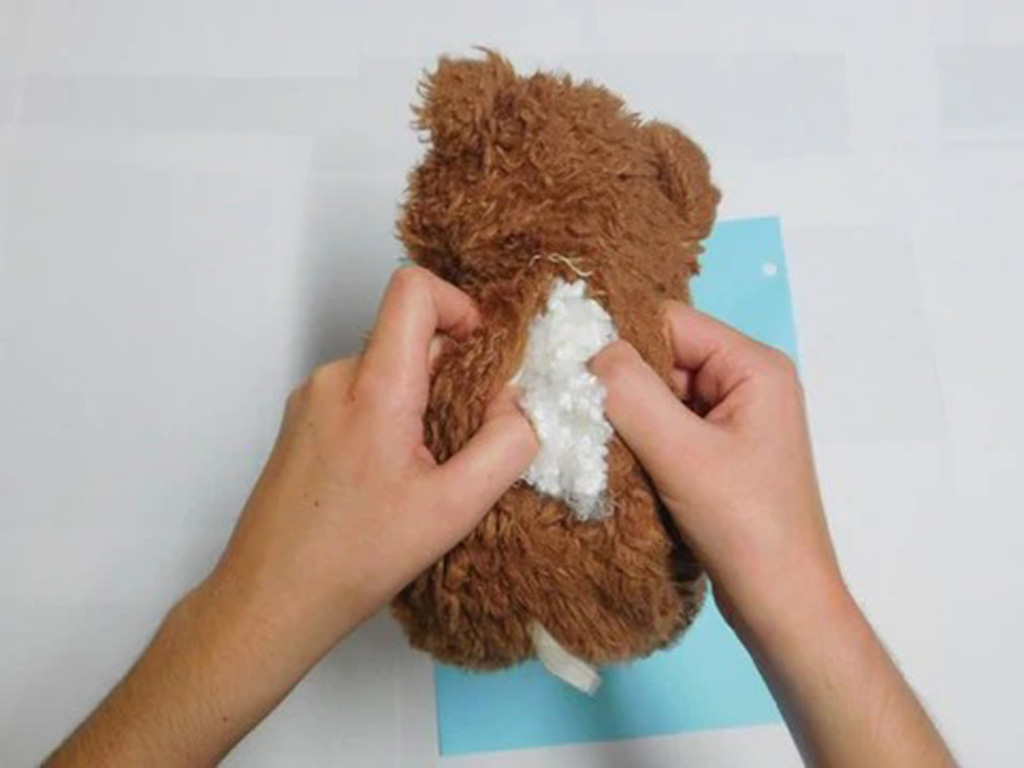
In-process monitoring for filling quality is the continuous surveillance system that catches density drift and filling distribution problems during the production run — before they accumulate into quality failures that affect large numbers of units. Because filling quality problems are invisible from the outside of a finished, correctly sewn unit, in-process monitoring that checks filling density at defined production intervals is the only mechanism available to detect density drift before it becomes a batch-level quality failure.
In-process filling quality monitoring operates through three parallel monitoring systems: weight-based density monitoring that checks unit fill weight at defined intervals, compression-based shape monitoring that assesses shape retention at defined intervals, and visual distribution monitoring that assesses filling distribution through the pre-closing seam inspection.
Here is a complete in-process filling quality monitoring framework:
| Monitoring System | What Is Monitored | Interval | Method | Corrective Action Trigger |
|---|---|---|---|---|
| Weight monitoring | Unit fill weight against target | Every 150–200 units | Scale measurement | Any reading outside ±5% of target |
| Compression recovery | Shape retention after compression | Every 300–400 units | Compress, release, assess after 30 minutes | Recovery below 90% of pre-compression height |
| Visual distribution check | Filling distribution before closing seam | Every 50–100 units | Visual inspection before seam closure | Any visible uneven distribution |
| Seam stress monitoring | Seam integrity under filling load | Every 2 hours | Pull test at main seams | Any visible weakness or thread exposure |
| Machine drift indicators | Stuffing machine consistency | Continuous — operator observation | Audible or visible machine behavior change | Any unusual machine sound or behavior |
| Post-closing shape assessment | Overall shape against counter sample | Every 100 units | Visual comparison | Any visible shape deviation from counter sample |
The Pre-Closing Seam Inspection — High-Value Low-Cost Control
The pre-closing seam inspection — a visual check of filling distribution before the closing seam is sewn — is one of the highest-value in-process controls available for filling quality management, at almost zero additional cost, because it catches filling distribution problems at the last point where correction requires only manual redistribution rather than seam-opening and re-stuffing.
Before the closing seam is sewn, the factory QC inspector or operator can verify that:
- Filling is evenly distributed throughout the product body
- No area is visibly underfilled or overfilled
- The filling in complex areas — head, around facial features, in limbs — is correctly positioned
- The overall form of the product matches the counter sample reference
Any distribution problem identified at this point can be corrected by manual redistribution — a low-cost intervention. The same problem, identified after the closing seam is sewn, requires seam opening, redistribution, and re-closing — a significantly more expensive correction. And the same problem, not identified until FQC, requires either rework of the completed unit or acceptance of a deformed product.
Managing Filling Quality Across Multiple Production Days
For large production runs that extend across multiple days or shifts, filling quality monitoring must account for the possibility that different filling batches — from different bales opened on different days — may have slightly different quality characteristics. Professional factories manage this through bale tracking — recording which bale was opened for each production period and cross-referencing any density or loft variations with the specific bale source.
This tracking enables root cause analysis when a weight monitoring deviation occurs: if the deviation correlates with the introduction of a new bale, the bale is the likely cause and the remaining filling from that bale should be assessed against the IQC standard before continued use. If the deviation does not correlate with a bale change, the stuffing machine calibration is the more likely cause and recalibration is the appropriate response.
How Does Final Inspection Verify Filling Quality Across a Completed Batch?

Final inspection for filling quality is the last quality gate before shipment — the systematic verification that the completed, packed production batch meets the filling quality standard across the full range of AQL-sampled units. Given that filling quality cannot be assessed by visual inspection alone, FQC for filling must include physical testing methods that provide objective evidence of density and loft quality.
Final inspection filling quality verification covers three distinct quality dimensions: fill weight (the total amount of filling in each unit), fill distribution (how the filling is distributed within the unit), and fill recovery (how the unit’s shape responds to compression and recovery). Each dimension provides different evidence about filling quality and requires a different assessment method.
Here is a complete FQC filling quality verification framework:
| FQC Filling Check | What Is Assessed | AQL Application | Method | Pass/Fail Standard |
|---|---|---|---|---|
| Unit weight sampling | Fill weight within tolerance across batch | AQL 2.5 — major defect | Scale measurement of sampled units | Within ±5% of target weight |
| Shape assessment | Visual shape against counter sample | AQL 2.5 — major defect | Visual comparison under consistent lighting | Within visual tolerance of counter sample |
| Compression recovery spot test | Recovery after compression on subset | Non-AQL — spot test on 5 units | Compress to 60% height, release, measure after 24 hours | Minimum 85% recovery |
| Surface firmness consistency | Filling distribution consistency across visible surfaces | AQL 2.5 — major defect | Hand assessment of firmness consistency | No identifiable soft or hard spots |
| Filling migration check | Filling position consistent across positions | Non-AQL — spot test | Reposition 5 units, assess distribution | Filling remains correctly distributed after repositioning |
| Seam integrity under filling load | Seams not stressed or distorted by filling | AQL 1.5 — critical | Visual and manual assessment | No visible seam distortion or thread exposure |
Third-Party Inspection Filling Verification
For orders where filling quality is a high commercial priority — character plush where shape integrity defines product identity, weighted plush where fill weight is a marketed product attribute, premium products where filling quality is a primary differentiator — commissioning third-party inspection that includes specific filling quality checks provides independent verification beyond the factory’s internal FQC.
Third-party inspectors from SGS, Bureau Veritas, or Intertek can include weight measurement, shape assessment, and surface firmness check in their inspection protocol alongside the standard visual and compliance checks. The weight measurement in particular provides objective, documented evidence of fill weight consistency across the inspected sample — the most reliable external verification of filling density available without destructive testing.
When specifying third-party inspection for filling quality verification, buyers should include explicit instructions covering: weight measurement on a defined sample of units, the target weight and tolerance against which measurements are assessed, the shape comparison standard (typically the approved counter sample photograph), and any specific filling distribution checks relevant to the product type.
How Can Buyers Build Filling Quality Requirements Into Their Supplier Relationships?

Filling quality requirements are most effectively built into supplier relationships through three complementary mechanisms: contractual specification that establishes filling quality as a defined, measurable obligation, process requirements that mandate specific quality control activities, and verification rights that enable buyer access to filling quality evidence throughout the production process.
Here is a complete framework for building filling quality requirements into supplier relationships:
Contractual Specification Elements
| Contractual Element | What It Specifies | Why It Protects the Buyer |
|---|---|---|
| Filling material grade | Specific material with grade designation | Prevents substitution with lower-grade material |
| Fill weight with tolerance | Target weight and acceptable range | Creates measurable compliance standard |
| Density specification | Compression resistance requirement | Defines functional quality threshold |
| Physical reference retention | Factory retains approved reference sample | Ensures consistent comparison standard throughout relationship |
| Change authorization requirement | Any filling change requires buyer approval | Prevents unauthorized substitution |
| Compliance documentation | Specific compliance certificates required | Ensures market-appropriate filling used |
Process Requirements
| Process Requirement | What It Mandates | Quality Benefit |
|---|---|---|
| Pre-production calibration | Machine calibrated before any production units | Prevents early-run density variation |
| Weight monitoring documentation | Fill weight log maintained throughout run | Creates verifiable density consistency record |
| Bale tracking | Filling source tracked throughout production | Enables root cause analysis of density variations |
| Pre-closing inspection | Distribution check before closing seam on sample units | Catches distribution problems before they are sealed in |
| IPQC frequency for filling | Weight check at defined intervals | Prevents undetected density drift |
Verification Rights
| Verification Right | What It Enables | How to Exercise |
|---|---|---|
| IQC record access | Review of incoming filling inspection results | Request IQC records before production authorization |
| Weight log access | Review of density monitoring throughout run | Request weight log as part of production update |
| Filling reference sample access | Physical comparison against approved reference | Request reference sample be available during any factory visit or video audit |
| Third-party inspection with filling check | Independent filling quality verification | Include filling weight and shape checks in third-party inspection scope |
| Filling sample from production | Physical sample of filling used in production | Request filling sample for comparison to approved reference |
The Filling Substitution Prevention Priority
Of all the filling quality protections available to buyers, preventing unauthorized filling substitution is the most commercially important — because substitution with lower-grade filling is the most common mechanism through which filling quality failures occur in commercial plush manufacturing. A factory that replaces premium high-loft filling with standard or low-grade filling reduces its material cost by a commercially meaningful amount while producing a product that is invisible in quality terms until it reaches customers.
Preventing this requires three elements working together: a filling specification precise enough that “premium high-loft PP cotton” and “standard PP cotton” are not interchangeable — ideally with a physical reference that makes the quality difference tangible; a contractual prohibition on material changes without buyer approval; and IQC verification that includes physical comparison to the approved reference at incoming inspection.
At Kinwin, filling quality management is built into our standard production process across all three dimensions — specification, process control, and verification. Our filling quality approach includes sourcing from approved suppliers with quality certifications, per-delivery IQC that includes physical reference comparison, machine calibration with post-warm-up verification, weight IPQC at 150-unit intervals, pre-closing distribution checks on sample units, and FQC weight measurement on AQL-sampled units from every production run.
For clients where filling quality is a primary commercial differentiator — premium character plush, therapeutic weighted products, products competing in quality-sensitive market segments — we work with clients at the design and brief stage to establish filling specifications that precisely define the quality standard, and we provide weight log documentation from every production run as a standard component of our production quality records.
If you are developing a plush product where filling quality control is a priority, we would be glad to discuss specifically how our filling quality management approach addresses your product’s requirements.
Reach out to our team at [email protected] or visit kinwintoys.com to start that conversation.
Conclusion
Filling quality in plush toys is not a background production variable that can be managed through general quality assurance practices — it is a specific, measurable quality dimension that requires dedicated specification, targeted incoming inspection, calibrated production processes, systematic in-process monitoring, and objective final verification to control reliably.
The filling quality failures that most commonly reach customers — limp, under-filled products that feel cheap; deformed products that have lost their shape in transit; products with inconsistent firmness across units in the same order — all originate in specific, preventable gaps in the filling quality management system. Each gap has a specific prevention: imprecise specification is prevented by complete specification with physical reference; unauthorized substitution is prevented by contractual protection and IQC verification; density drift is prevented by calibration and weight monitoring; distribution inconsistency is prevented by pre-closing inspection; and FQC failures are prevented by the upstream controls that ensure filling quality before the final inspection gate.
Buyers who build this complete filling quality management framework into their product specifications and supplier relationships consistently deliver products that meet their customers’ quality expectations — contributing to the review scores, repeat purchase rates, and brand reputation that are the commercial foundation of sustainable plush toy brand growth.
FAQ
Q1: How can buyers tell from a physical sample whether premium or standard PP cotton has been used, and what are the practical assessment methods?
Several physical assessment methods can distinguish premium from standard PP cotton in a finished sample without destructive testing. The compression recovery test — squeezing the product firmly to approximately 60 percent of its original size and then releasing it, observing how quickly and completely it returns to its original shape — is the most reliable indicator. Premium high-loft PP cotton recovers quickly and fully, typically returning to 90 percent or more of original shape within a few minutes. Standard PP cotton recovers more slowly and less completely. The weight assessment — holding the product and assessing whether its weight feels appropriate for its size, compared to a reference product of known filling quality — provides a supplementary check. And the surface firmness assessment — pressing multiple areas of the product’s surface and noting whether some areas feel significantly firmer or softer than others — reveals filling distribution inconsistency that is more common in standard than premium filling. For a definitive quality assessment, weighing the product against its specification — comparing the actual weight to the target weight — provides objective density evidence that correlates with filling grade.
Q2: What is the most cost-effective filling quality improvement available to buyers who are currently using standard PP cotton and experiencing quality perception problems?
The most cost-effective filling quality improvement for products currently using standard PP cotton is typically a density increase — specifying a higher fill weight per unit — rather than a material grade change. Increasing fill density improves shape retention and surface firmness perception, which are the quality characteristics most commonly referenced in negative customer reviews related to filling. The cost impact of a 15 to 20 percent density increase is a 15 to 20 percent increase in filling material cost — typically representing a 3 to 8 percent increase in total unit cost, depending on the product type. This cost increase must be weighed against the commercial benefit of improved review scores and reduced return rates. For most products where negative review sentiment on “stuffing” or “softness” is a visible commercial problem, the density increase investment produces a return through improved reviews and conversion that significantly exceeds its cost — though this calculation is product- and market-specific.
Q3: How should filling quality requirements be managed for reorders of the same product to ensure consistency with the original production run?
Reorder filling consistency requires three specific management actions that should be built into the reorder protocol. First, the physical reference sample from the original approved run should be retained and used as the comparison standard for IQC of the reorder filling — not a general description of the original filling grade. Second, the factory should source filling from the same supplier and, where possible, the same grade specification as the original run — confirmed through the bale tracking records from the original production. Third, the fill weight specification from the original tech pack should be applied without modification to the reorder, with the same calibration and weight monitoring protocol used in the original production run. If the original supplier is unable to provide filling of equivalent quality, the new filling should be evaluated against the retained reference sample before the reorder production is authorized — and any deviation from the approved standard should be communicated to the buyer before production proceeds.
Q4: Can filling quality be verified through non-destructive testing methods, or does verification require cutting open finished products?
Most practically relevant filling quality verifications can be conducted without destructive testing. Fill weight — the most important filling quality parameter — can be measured by weighing the completed, sealed unit on a precision scale. Shape retention and distribution can be assessed by visual comparison and surface firmness assessment without opening the product. Compression recovery can be tested by compressing and releasing the product — a physical test that does not require destructive access. Seam integrity under filling load can be assessed visually and through manual pull force application. The filling characteristics that require destructive access — direct visual inspection of the filling material, fiber length assessment, contamination check — are most efficiently conducted at the IQC stage before filling enters production, when the filling material is directly accessible, rather than in finished products where accessing it requires destructive testing. This is one of the practical arguments for rigorous incoming filling inspection: it provides direct filling material assessment at the most accessible and least costly stage, eliminating the need for destructive finished-product testing.
Q5: How do filling quality requirements change for products that will be marketed as machine washable, and what additional testing should buyers specify?
For products marketed as machine washable, filling quality requirements must include verification of filling performance after washing — because the wash process subjects filling to mechanical agitation, temperature, and chemical exposure that can permanently alter its quality characteristics. The additional specifications for washable products include filling loft recovery verification after a defined number of wash cycles — typically five to ten — at the wash temperature specified in the care label; fill weight verification after washing to confirm that the filling has not absorbed and retained water in a way that changes its weight or recovery characteristics; and visual assessment of the product’s shape after washing to confirm that filling has not migrated or matted in ways that cause visible deformation. These verifications should be conducted at the counter sample stage — on a counter sample that has been through the washing protocol — before bulk production is authorized for a washable product. The specifications derived from this counter sample testing become the quality standard for the washable product, and the wash durability of the filling quality is verified as a distinct compliance and quality dimension alongside the standard filling quality parameters.