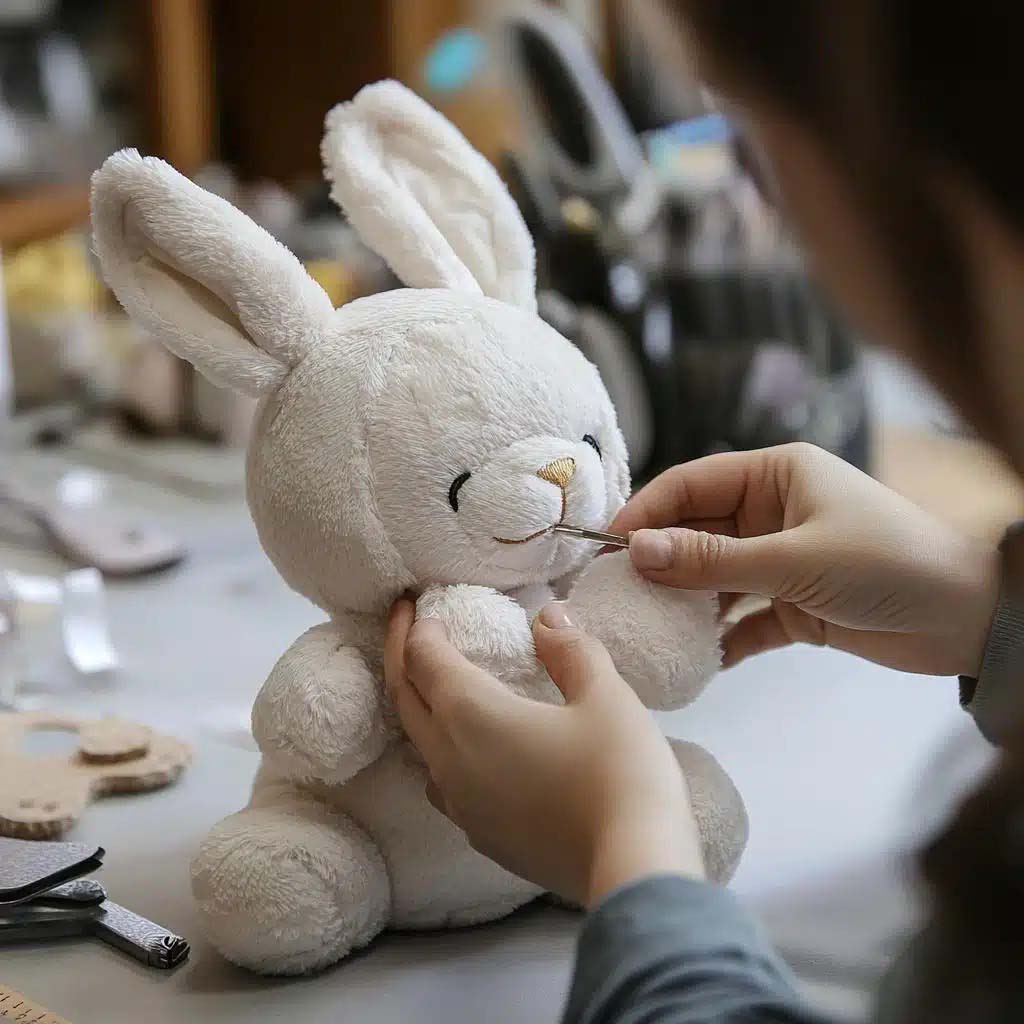
Fabric flammability is one of the compliance dimensions that buyers most commonly underestimate when developing plush toy products — not because it is obscure but because it appears straightforward from a distance and becomes significantly more complex when production decisions are actually being made.
The apparent simplicity is that toys sold in regulated markets must meet flammability standards. The actual complexity is in how those standards translate into specific fabric selection decisions, how different approaches to flame resistance compare across safety, quality, and compliance dimensions, how requirements differ between markets, and how fabric flammability interacts with the broader compliance and quality management decisions that determine whether a product is genuinely market-ready.
Buyers who understand these dimensions make better fabric selection decisions, avoid the specific compliance failures that most commonly arise from inadequate flammability management, and build better supplier briefs that result in products that pass flammability testing on the first attempt rather than requiring material changes after production has already begun.
This guide provides the complete framework for understanding flame retardant plush fabric requirements — what they are, how they work, what options exist, and how to specify and verify them in the sourcing process.
Why Flame Retardant Requirements Matter for Plush Toy Fabric Selection?
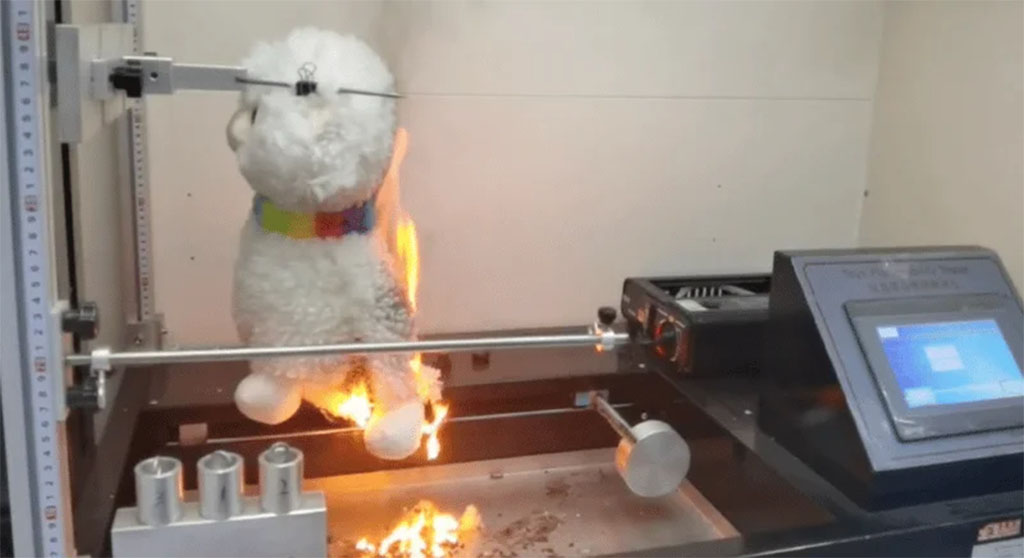
Flame retardant requirements matter for plush toy fabric selection because fabric flammability is a fire safety characteristic that is fundamentally determined at the material selection stage — not at the production stage or after manufacturing is complete. Unlike chemical compliance issues that can sometimes be addressed through material substitution after testing reveals a failure, a fabric that does not meet flammability standards cannot be made compliant through any production process change. The fabric itself must meet the standard, or it must be replaced.
This makes fabric flammability one of the most consequential specification decisions in plush toy product development. A product built on non-compliant fabric must either be reworked with compliant fabric — at substantial cost and time investment — or cannot enter the regulated market at all. For products that have already completed development sampling with non-compliant fabric, the discovery of a flammability failure means restarting a significant portion of the development process.
Here is an overview of why flammability requirements create specific risks when not addressed early:
| Risk Scenario | Cause | Cost Consequence | Prevention |
|---|---|---|---|
| Development sample fails flammability test | Non-compliant fabric specified in brief | Resample with compliant fabric — $300–$800 + timeline | Specify compliant fabric before brief submission |
| Bulk production fails flammability test | Non-compliant fabric approved through sampling | Full batch rework or destruction — $5,000–$30,000+ | Verify fabric compliance before bulk authorization |
| Market entry blocked at customs | Product missing flammability compliance documentation | Shipment held, certification required — $1,000–$5,000 | Ensure test reports in place before shipment |
| Retail rejection post-delivery | Retailer compliance audit reveals inadequate documentation | Product return, resourcing — $3,000–$15,000 | Obtain and maintain current test reports |
| Platform listing removal | E-commerce compliance check reveals missing documentation | Revenue loss during reinstatement — variable | Proactive compliance documentation maintenance |
The Fire Safety Context
Beyond the compliance dimension, flame retardant requirements exist for a genuine safety reason: plush toys are frequently used in domestic environments near soft furnishings, bedding, and other flammable materials, and by users — particularly children — who may be in proximity to flame sources. A plush toy that ignites readily and burns quickly in these environments presents a real fire safety risk that regulatory standards are specifically designed to limit.
Understanding this safety context helps buyers approach flammability requirements as a genuine product safety obligation rather than a regulatory hurdle — and makes the investment in compliant fabric selection feel proportionate to the risk it manages.
What Are the Key Flammability Standards That Apply to Plush Toy Fabrics?
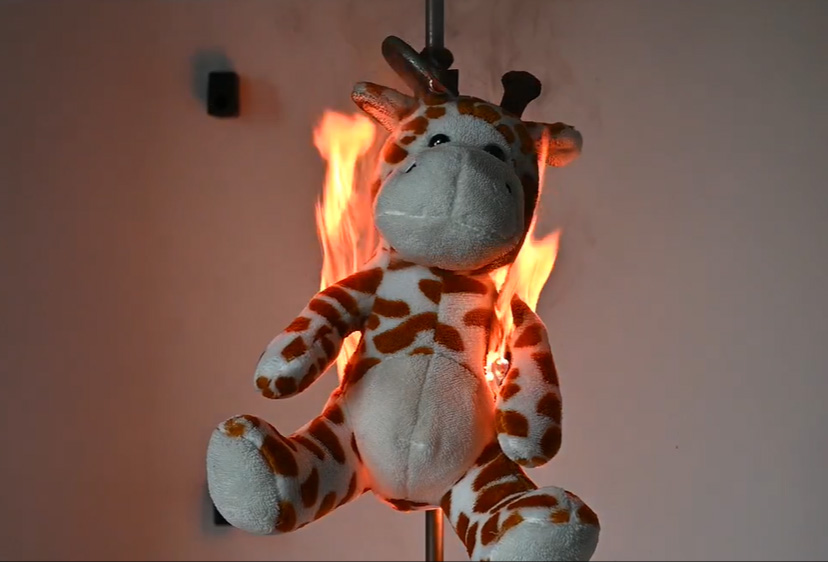
The flammability standards applicable to plush toy fabrics vary by market — with the US and EU having the most developed and most commonly encountered requirements for export manufacturers serving these markets. Understanding the specific requirements of each standard helps buyers identify what their products must demonstrate and what testing is needed to confirm compliance.
Here is a comprehensive overview of the primary flammability standards applicable to plush toy fabrics across major markets:
| Standard | Market | Scope | Specific Requirement for Plush | Testing Method |
|---|---|---|---|---|
| 16 CFR Part 1610 | USA | General clothing textiles and surface fabrics | Class 1 (normal flammability) required | Surface burning test — 45° angle |
| ASTM F963 Section 4.2 | USA | Toy safety — references 16 CFR 1610 | Compliance with 16 CFR 1610 for fabric surfaces | As per 16 CFR 1610 |
| EN71 Part 2 | EU/UK | Toy flammability | Plush toys must not ignite easily; specific burn rate limits | Various — surface and edge ignition |
| BS 5852 / EN 597 | UK | Upholstered products — sometimes applied to large plush | Resistance to cigarette and match ignition | Smoulder and flame ignition tests |
| AS/NZS 1249 | Australia | Children’s nightwear and related products | Applied when plush products marketed as sleep products | Burn rate test |
| GB 6675.2 | China domestic | Toy safety — national standard | Aligned with EN71 for flammability | Consistent with EN71 Part 2 |
16 CFR Part 1610 — The US Standard
16 CFR Part 1610 is the US Consumer Product Safety Commission’s standard for the flammability of clothing textiles — referenced in ASTM F963 as the applicable flammability standard for toy fabric surfaces. The standard establishes three flammability classes:
Class 1 — Normal flammability — is the acceptable standard for plush toy fabrics. Class 2 — Intermediate flammability — and Class 3 — Rapid and intense burning — are not acceptable for products sold in the US market.
The test method burns a fabric sample mounted at a 45-degree angle and measures the time to flame spread across a defined distance. Fabrics that extinguish before the flame reaches the measurement point — or that spread flame too slowly to ignite the indicator thread at the base of the sample — pass as Class 1.
EN71 Part 2 — The EU Standard
EN71 Part 2 specifies the flammability requirements for toys sold in the European market, including plush toys. Its requirements are more comprehensive than 16 CFR Part 1610 for plush products specifically — addressing not just the surface fabric but the complete toy assembly including the filling and any internal structural components.
The EN71 Part 2 test evaluates the toy as a complete product rather than just the surface fabric, which means that a fabric that passes flammability testing in isolation may produce a different result when tested as part of a complete toy — particularly when the filling material contributes to the burning characteristics of the assembly.
Key EN71 Part 2 requirements for plush toys include that the toy shall not ignite and continue to burn or glow after the ignition source is removed, that it shall not melt and drip in a way that creates additional fire risk, and that it shall not produce burning droplets that could ignite surrounding materials.
How Do Inherently Flame Resistant and Chemically Treated Fabrics Compare?
There are two fundamentally different approaches to achieving flame retardant performance in plush fabrics: inherent flame resistance, which is built into the fiber chemistry at the manufacturing stage, and chemical treatment, which adds flame retardant compounds to the fabric surface or fiber after manufacture. Each approach has specific advantages, limitations, and implications for product safety, compliance, and quality.
Here is a comprehensive comparison of the two approaches:
| Comparison Dimension | Inherently Flame Resistant Fabrics | Chemically Treated Fabrics |
|---|---|---|
| Mechanism | Fiber chemistry provides flame resistance — not added later | Flame retardant compounds added to fiber or fabric surface |
| Durability of flame resistance | Permanent — does not diminish with washing | Variable — surface treatments can diminish with repeated washing |
| Chemical safety profile | Generally simpler — fewer added chemicals | More complex — FR chemicals require specific compliance verification |
| OEKO-TEX certification availability | Readily available for most inherent FR fiber types | Available for compliant FR treatments but fewer options |
| Fabric tactile quality | Typically excellent — fiber quality unchanged | Variable — some treatments affect fabric feel |
| Cost | Higher — specialty fiber manufacturing | Lower — treatment added to standard fabric |
| Range of available styles | More limited — fewer inherently FR fibers | Wider — any fabric can potentially be treated |
| Regulatory chemical concerns | Minimal — fiber chemistry is well-established | Higher — some FR chemicals are restricted under REACH |
| Wash durability testing requirement | Typically tested once — permanent performance | May require testing after washing to confirm retained performance |
| Best application | Premium products, children’s products, therapeutic | Mid-range products where cost is a priority |
Inherently Flame Resistant Fiber Types
The most common inherently flame resistant fiber types available in plush fabric applications include:
Modacrylic fibers — a copolymer of acrylonitrile with other monomers that provides inherent flame resistance through the fiber chemistry. Modacrylic fibers are widely used in premium plush fabrics because they provide excellent flame resistance without chemical treatment, are compatible with OEKO-TEX certification, and maintain good pile quality and tactile characteristics. Many premium plush fabrics labeled as “flame resistant” are modacrylic or modacrylic-blend constructions.
Flame resistant polyester — polyester fiber formulations that incorporate flame retardant elements during the fiber manufacturing process. These fibers are more widely available than modacrylic and are typically less expensive while still providing durable flame resistance. Performance is generally good for standard plush applications.
Wool and wool blends — natural wool fiber has inherent flame resistant properties and can be used in specialty plush applications. However, wool plush is uncommon in mainstream toy applications due to cost, allergen considerations, and processing requirements.
The Chemical Treatment Safety Concern
Some flame retardant chemical treatments that have historically been used on textiles have been identified as human health concerns — particularly halogenated flame retardants including various brominated and chlorinated compounds. Several of these chemicals are restricted or banned under REACH in the EU and are subject to increasing regulatory scrutiny in the US market.
Buyers specifying chemically treated flame retardant fabrics must ensure that the specific chemical treatment used is compliant with all applicable restrictions in their target markets — REACH in the EU, relevant California Proposition 65 requirements in the US, and any other applicable chemical safety regulations. The fabric supplier should be able to provide documentation specifying the treatment chemistry and confirming compliance with applicable restrictions.
This chemical compliance requirement for treated fabrics is an additional compliance burden beyond the flammability compliance itself — which is one of the reasons that inherently flame resistant fabrics are often preferred for premium products and children’s products, where the additional compliance simplicity is commercially valuable.
What Fabric Types and Constructions Perform Best in Plush Flammability Testing?
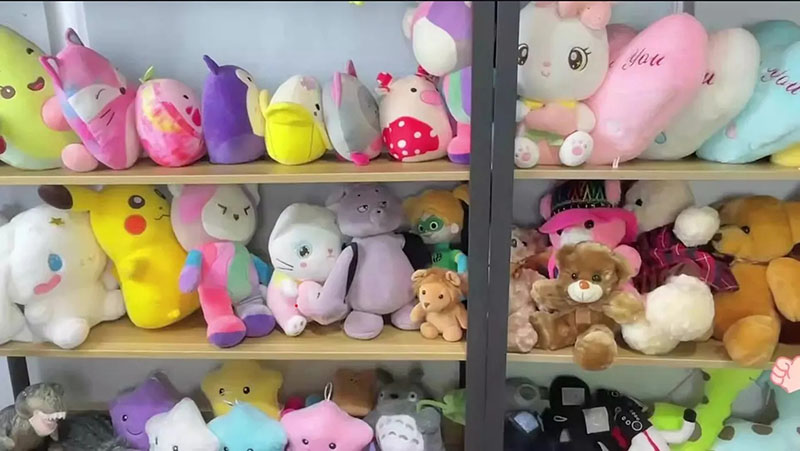
Fabric type and construction significantly affect flammability performance — both in terms of how fabrics behave during testing and whether the resulting fire behavior is acceptable under applicable standards. Understanding the flammability characteristics of different fabric types helps buyers make preliminary assessments of fabric selection before formal testing confirms compliance.
Here is a flammability performance guide across the most common plush fabric constructions:
| Fabric Type | Pile Height | Fiber Content | Typical Flammability Behavior | Class 1 Achievable? |
|---|---|---|---|---|
| Standard plush — polyester | 5–15mm | 100% polyester | Melts and retracts from flame — typically passes | Yes — typically without treatment |
| High pile plush — polyester | 20–40mm | 100% polyester | Longer pile creates higher fire risk | Variable — may require treatment or inherent FR fiber |
| Ultra-soft/minky — polyester | Very short pile | 100% polyester | Tight construction — typically passes | Yes |
| Modacrylic plush | Variable | Modacrylic or modacrylic blend | Inherently resistant — chars without spreading | Yes — inherent |
| Acrylic plush | Variable | 100% acrylic | Burns — potential Class 2 or 3 | Not without treatment |
| Cotton plush | Variable | 100% cotton | Burns readily — typically Class 3 without treatment | Requires treatment |
| Nylon plush | Variable | 100% nylon | Melts and drips — may fail on drip characteristic | Variable |
| Wool plush | Variable | 100% wool | Chars — inherently better performance | Yes — inherent |
The Pile Height Flammability Relationship
One of the most important relationships in plush fabric flammability is the correlation between pile height and fire risk. Longer pile creates a more open fiber structure with greater surface area exposed to potential ignition sources — and more air circulation that supports combustion once ignition occurs. This is why the same polyester fiber that produces a Class 1 fabric at short pile height may produce a different result at very long pile heights.
For standard plush toy applications — pile heights typically in the 5 to 20mm range — polyester-based fabrics generally achieve Class 1 flammability performance without specialized treatment because the melting and retraction behavior of polyester fiber tends to extinguish the flame rather than propagate it. For decorative or premium long-pile plush — pile heights above 25mm — the flammability risk increases and specialized testing should be conducted on the actual fabric before specification is confirmed.
Construction Factors Beyond Fiber Content
Beyond fiber content, fabric construction characteristics — pile density, backing construction, and finishing treatments — affect flammability performance. More densely packed pile creates a tighter surface that may be harder to ignite but burns more intensely once ignited. Backing construction affects how the fabric behaves as a complete assembly — a flame-resistant backing can provide a secondary containment layer that affects the overall test performance.
These construction-performance relationships mean that flammability testing should always be conducted on the actual production fabric in its complete form — not inferred from fiber content alone — because construction variables can produce significantly different results from the same fiber type.
How Does Flame Retardant Treatment Affect Fabric Quality, Safety, and Compliance?
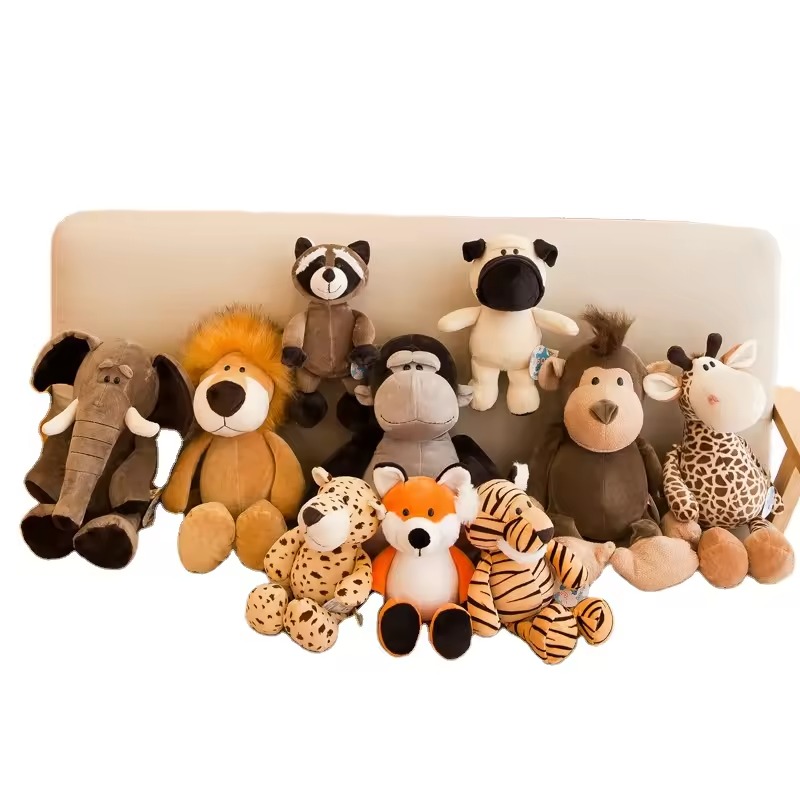
For buyers who are using chemically treated fabrics rather than inherently flame resistant fabrics, understanding how the treatment affects the fabric’s quality characteristics, safety profile, and compliance requirements is essential for making informed sourcing decisions.
Flame retardant treatments affect fabric quality through their physical interaction with the fiber — some treatments coat the fiber surface, changing the tactile character; others penetrate the fiber structure, affecting softness and drapability. The type and concentration of treatment applied, and the application method used, determine how significant these quality effects are.
Here is a comprehensive assessment of how FR treatment affects different fabric dimensions:
| Fabric Dimension | Effect of FR Treatment | Severity | Management Approach |
|---|---|---|---|
| Tactile softness | Some treatments reduce softness — surface coating effect | Low to Medium | Test tactile quality before specification |
| Pile aesthetics | Surface coating can affect pile luster and appearance | Low to Medium | Visual comparison to untreated reference |
| OEKO-TEX compatibility | Treatment chemistry must be compliant | Variable | Specify OEKO-TEX-compatible treatment only |
| Wash durability | Treatment may diminish over wash cycles | Medium | Specify wash durability testing requirement |
| Color fastness | Some treatments affect dye uptake or stability | Low | Test color fastness on treated fabric |
| Skin contact safety | FR chemicals may create skin contact risk | Variable — depends on chemistry | Require skin contact safety testing |
| REACH compliance | Some FR chemicals are restricted | High | Confirm specific treatment chemistry compliance |
| Product color range | Treatment may affect achievable colors | Low | Test color range on treated fabric specification |
Wash Durability — The Most Commercially Important Treatment Quality Issue
For products that will be washed by consumers — which includes most plush toys, particularly children’s products — the wash durability of chemical flame retardant treatment is the most commercially significant quality dimension. A treatment that meets the flammability standard when the product is new but loses its effectiveness after five or ten wash cycles creates a product that is compliant at the point of sale but potentially non-compliant in use.
Most regulatory standards test new, unwashed products — which means that wash durability is not technically required to pass the compliance test. However, the safety intent of flammability standards is for products to remain flame resistant throughout their use life. For children’s products particularly, where the product may be washed many times, specifying a wash-durable treatment and verifying durability through testing on washed fabric samples is the responsible approach even when the compliance standard does not explicitly require it.
The practical specification is to require that the fabric maintains its Class 1 flammability classification after a defined number of wash cycles — typically 10 to 20 cycles at the wash temperature specified in the care label — and to verify this through testing on washed samples at the fabric approval stage.
How Do Flammability Requirements Differ Across Target Markets and Product Categories?
Flammability requirements are not uniform across all markets and all product categories — they vary based on the regulatory framework of the target country, the product category and its intended users, the specific materials and construction of the product, and sometimes the specific retail channel through which the product is sold.
Understanding these differences helps buyers determine exactly which requirements apply to their specific product — and avoid both the cost of over-compliance (applying more stringent requirements than necessary) and the commercial risk of under-compliance (failing to meet applicable requirements).
Here is a market and category comparison of flammability requirements:
| Market / Category | Primary Standard | Testing Required | Notes |
|---|---|---|---|
| US — general plush toys | 16 CFR Part 1610 (via ASTM F963) | Yes — Class 1 compliance required | Standard for all plush sold in US |
| US — children’s sleepwear | 16 CFR Parts 1615 and 1616 | Yes — more stringent than 1610 | Applies if product marketed as sleepwear |
| EU — plush toys | EN71 Part 2 | Yes — full toy assembly test | Tests complete product, not just fabric |
| UK — plush toys post-Brexit | UK Toy Safety Regulations (equivalent to EN71) | Yes | UKCA marking required |
| EU — upholstered furniture (large plush) | EN 597 Parts 1 and 2 | Sometimes — for large format products | May apply to very large plush products |
| Australia — children’s products | AS/NZS standards | Market-specific assessment needed | Varies by product category |
| Japan — toys | ST Mark / Japan Toy Safety Standard | Market-specific | Different test methodology |
| Retail-specific requirements | Retailer compliance programs | Variable by retailer | Some retailers apply stricter standards |
Sleepwear Classification — The Most Significant Category Distinction
One of the most commercially important market and category distinctions for weighted plush and comfort plush products is the sleepwear classification. Products that are marketed as sleep aids, bedtime comfort products, or nighttime anxiety relief tools may be evaluated by regulators under sleepwear flammability standards — which are significantly more stringent than general toy flammability standards — rather than toy flammability standards alone.
In the US, 16 CFR Parts 1615 and 1616 govern children’s sleepwear flammability and require either inherently flame resistant fabric or chemically treated fabric that maintains flame resistance after 50 wash cycles — a far more demanding requirement than the 16 CFR Part 1610 standard applicable to general toys. Adult sleepwear standards exist but are less prescriptive.
Buyers developing weighted plush or comfort plush products intended for sleep use should carefully consider how their product is described and marketed — because marketing language that emphasizes sleep benefits may trigger sleepwear classification by regulators or retailers, requiring compliance with more stringent flammability standards than general toy compliance would require.
Retailer-Specific Requirements
Beyond regulatory standards, many major retailers apply their own compliance programs that may specify additional flammability testing requirements or documentation standards. Large US retailers including Walmart, Target, and Amazon have specific compliance requirements for toys and children’s products that may require additional testing or documentation beyond the regulatory minimum.
Buyers developing products for these retail channels should confirm the specific compliance requirements of each target retailer at the product development stage — not after production is complete — to ensure that the fabric and construction specifications meet the retailer’s requirements in addition to the applicable regulatory standards.
How Should Buyers Specify and Verify Flame Retardant Fabric Requirements?
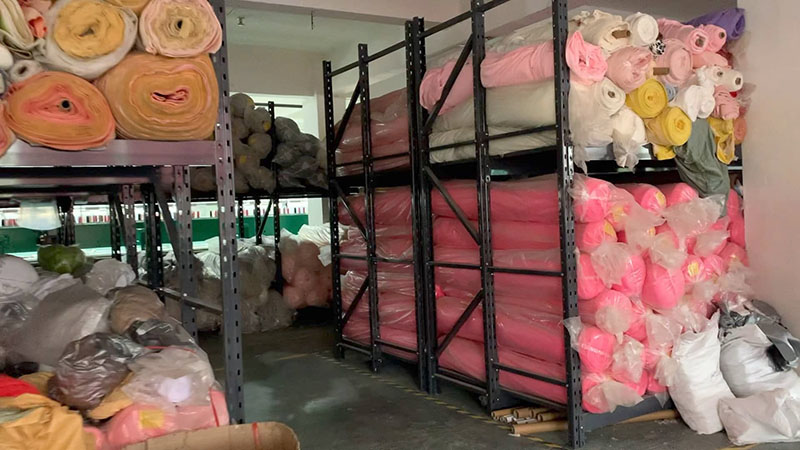
Flame retardant fabric requirements should be specified explicitly in the design brief rather than being assumed or left to the factory’s discretion. Because the consequences of non-compliance are expensive — requiring material substitution and potentially complete resampling — establishing the compliance requirement before any material is sourced is the most cost-efficient approach.
Here is a comprehensive framework for specifying and verifying flame retardant fabric requirements across the product development process:
Specification Stage — Design Brief
| Specification Element | What to Include | Why It Matters |
|---|---|---|
| Target markets | All geographic markets where product will be sold | Different markets have different requirements |
| Applicable standard | Specific standard code for each market | Defines exact test method and acceptance criteria |
| Fabric approach preference | Inherently FR fiber or chemical treatment | Affects compliance simplicity and quality profile |
| OEKO-TEX requirement | Whether OEKO-TEX certification is required | Constrains FR treatment chemistry options |
| Wash durability requirement | Number of wash cycles after which compliance must be maintained | Particularly important for washable products |
| Minimum pile height compliance | Pile height at which Class 1 must be achieved | Ensures specification covers intended product construction |
Material Approval Stage — Before Production
| Verification Action | What Is Confirmed | Documentation Required | Timing |
|---|---|---|---|
| Fabric flammability test report review | Proposed fabric meets applicable standard | Test report from accredited laboratory | Before fabric approved for sampling |
| Test report validity check | Report covers current fabric specification and test method version | Issue date and standard version confirmed | At report review |
| Fiber content verification | Fabric fiber content matches test report specification | Fiber content certificate or test | At material IQC |
| Chemical treatment documentation (if treated) | FR treatment chemistry identified and compliant | Treatment chemistry documentation | At material approval |
| OEKO-TEX certificate (if required) | Fabric meets OEKO-TEX Standard 100 or equivalent | Current OEKO-TEX certificate | At material approval |
Counter Sample and Pre-Production Stage
| Verification Action | What Is Confirmed | Documentation Required |
|---|---|---|
| Bulk fabric flammability verification | Bulk production fabric meets same standard as approved fabric | Test report or swatch comparison to approved |
| Alternative fabric flammability testing | If fabric source changes from approved | New test report required |
| Complete toy assembly test (for EN71) | Full product assembly meets EN71 Part 2 | May require complete toy testing if assembly different from tested sample |
Pre-Shipment Stage
| Verification Action | What Is Confirmed | Documentation Required |
|---|---|---|
| Current test report availability | Test reports available and current for all target markets | Test report file review |
| Retail compliance documentation | Retailer-specific requirements met | Retailer compliance checklist completed |
| Declaration of Conformity (EU) | CE marking documentation includes flammability compliance | DoC prepared and available |
| Third-party inspection flammability check | Fabric type consistent with compliance specification | Inspector confirms fabric type in inspection report |
Fabric Test Report Requirements
A valid flammability test report for plush toy fabric should specify: the exact fabric style, construction, and fiber content tested; the specific test method and version applied; the test results in the units required by the standard; the acceptance criteria and pass/fail determination; the testing laboratory accreditation and report issuance date; and the specific fabric sample identification linking the report to the specific fabric tested.
Test reports that lack specific fabric identification — providing only a general fabric category — do not provide reliable compliance evidence for a specific production fabric and should not be accepted as adequate compliance documentation.
How Does Kinwin Manage Flame Retardant Fabric Compliance in Production?
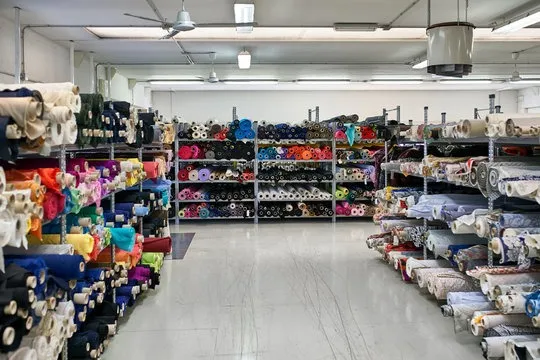
At Kinwin, flame retardant fabric compliance is managed as a standard component of our material sourcing and quality management process — not as an optional documentation exercise applied only when buyers explicitly request it.
Our approach to fabric flammability compliance covers every stage from initial material sourcing through production documentation:
Material Sourcing Stage
We source plush fabrics from suppliers who maintain current flammability test reports for their standard fabric offerings. When reviewing fabric options for a new product, we confirm that the proposed fabric has a current test report covering the applicable standard for the product’s target market before approving it for sampling. For products targeting both the US and EU markets, we verify compliance with both 16 CFR Part 1610 and EN71 Part 2.
For products where the target market or product category creates specific flammability requirements beyond standard toy testing — weighted plush with sleep positioning, children’s comfort products, large format plush — we identify and communicate these additional requirements at the pre-development consultation stage so that fabric selection can account for them from the beginning.
Sampling Stage
When new fabric is approved for a product’s sampling stage, we verify the fabric’s flammability test report as part of the fabric approval process. If the sampling requires a fabric that does not have a current test report for the applicable standard, we coordinate with the fabric supplier to obtain testing before the fabric is approved for production use.
For products where EN71 Part 2 requires complete toy assembly testing rather than just fabric surface testing, we coordinate with accredited testing laboratories at the sample approval stage to ensure that the complete product configuration is tested — not just the surface fabric — before bulk production is authorized.
Production Authorization Stage
Before bulk production is authorized, we confirm that the bulk production fabric — which may come from a different lot or roll than the fabric used in sampling — has been verified as the same specification as the tested fabric. Where the bulk fabric specification is identical to the tested sample, the existing test report covers the bulk production. Where there is any specification difference — different pile height, different fiber content ratio, different backing construction — new flammability testing is required before bulk production authorization.
Documentation Management
We maintain current flammability test reports for all standard fabrics used in our production, organized by fabric code and test standard version. For each client’s products, we maintain a documentation file that includes the specific test reports applicable to the fabrics used in that product — available to clients on request and included in the pre-shipment documentation package.
For products where retailers require specific compliance documentation formats — retailer compliance portals, specific certificate structures, or additional third-party verification — we support clients in preparing these documents as part of our pre-shipment support.
If you are developing a plush product where fabric flammability compliance is a concern — whether because of specific market requirements, product category considerations, or retail channel requirements — we would be glad to discuss the specific requirements that apply to your product and how our material sourcing and compliance management process addresses them.
Reach out to our team at [email protected] or visit kinwintoys.com to start that conversation.
Conclusion
Flame retardant fabric compliance in plush toys is a non-negotiable market entry requirement for products sold in regulated markets — and a genuine product safety consideration that protects the end users of the products buyers develop and sell. Managing it effectively requires early, explicit specification of flammability requirements in the design brief, selection of fabric types whose performance characteristics align with those requirements, verification of compliance through appropriate test reports before production is authorized, and maintenance of current documentation that supports market entry and retailer compliance requirements.
The buyers who manage flammability compliance most cost-effectively are those who address it at the design stage — before any sampling investment is made with potentially non-compliant fabric — rather than discovering compliance gaps through testing failures after production is underway or complete. The investment in compliant fabric selection at the brief stage is the most efficient possible approach to a compliance requirement whose cost of failure is many times larger than the cost of prevention.
At Kinwin, fabric flammability compliance is integrated into our material management process because we understand that market-ready products require compliance to be built in from the start — not applied as a remediation layer after quality and production investments have already been committed.
FAQ
Q1: If a plush toy product uses multiple different fabrics in the same design, does each fabric need individual flammability testing or is it sufficient to test the complete product?
The answer depends on the applicable standard and how different the fabrics are from each other. For 16 CFR Part 1610 compliance — the US standard — each distinct fabric type should have its own test report because the standard evaluates fabric samples rather than complete products. If two fabrics in the same product have different fiber contents, pile heights, or constructions, each requires separate testing. For EN71 Part 2 compliance — the EU standard — the standard evaluates the complete toy assembly, which means that a single complete product test covers all fabrics in combination. However, the complete product test result may be more conservative than individual fabric results because the interaction between fabrics in the assembly may affect overall flammability behavior. The safest approach for multi-fabric products is to obtain individual fabric test reports for US compliance purposes and conduct a complete product assembly test for EU compliance purposes.
Q2: How long are fabric flammability test reports valid, and when do buyers need to arrange new testing?
Fabric flammability test reports do not have a universal expiry date, but their practical validity is linked to the consistency of the tested fabric specification. A test report from three years ago for a specific fabric style remains valid as long as the fabric’s specification — fiber content, pile height, construction, and finishing — has not changed. The risk is when fabric specifications are updated by the supplier between production runs, or when a new fabric lot from a different source is used — in either case, the existing test report may no longer cover the actual fabric being used in production. For buyers who reorder the same product regularly, confirming at each reorder that the fabric specification has not changed — and that the existing test reports still cover the specification — is the practical management approach. When regulatory standards are updated or revised, existing test reports conducted under previous versions of the standard may need to be supplemented with testing under the revised standard.
Q3: Can flame retardant fabric test reports obtained by the fabric supplier be used for product compliance purposes, or does the buyer need to commission independent testing?
Supplier-provided fabric test reports from accredited third-party laboratories — SGS, Intertek, Bureau Veritas — are generally accepted for fabric compliance purposes under both US (16 CFR Part 1610) and EU (EN71 Part 2) standards, provided that the report is from an accredited laboratory, covers the specific fabric specification being used, and tests to the applicable standard version. The buyer does not need to commission independent fabric testing if supplier-provided test reports meet these criteria. Independent testing becomes necessary when the product is being tested as a complete assembly under EN71 Part 2 — in which case the product developer or importer typically commissions the complete toy test — or when a retailer or platform requires testing under a specific laboratory program rather than accepting supplier-provided reports. For products where the buyer wants independent verification of compliance rather than relying on supplier-provided documentation, commissioning independent fabric testing provides a higher level of assurance.
Q4: How does the application of additional surface treatments — waterproofing, anti-microbial — affect a fabric’s flammability compliance, and do treated fabrics need to be retested?
Surface treatments applied to an already-tested fabric can affect the fabric’s flammability behavior — either improving it (some coatings provide additional flame resistance) or degrading it (some coatings increase the fabric’s flammability). If a plush fabric will receive surface treatments — waterproofing finishes, anti-microbial treatments, water-repellent coatings — after the base fabric has been flammability tested, the treated fabric should be retested for flammability in its finished state. This is particularly important for coatings that add organic compounds to the fabric surface, which could increase flammability, or for treatments that change the fabric’s surface energy in ways that affect ignition behavior. The practical approach is to conduct flammability testing on a fabric sample that has received all intended treatments — in the same sequence and concentration as they will be applied in production — before the treated fabric specification is finalized for production use.
Q5: Are there situations where plush toys are exempt from flammability testing requirements, and how should buyers assess whether their product qualifies for an exemption?
Most major regulatory frameworks include limited exemptions or alternative pathways for specific product categories or construction types. Under 16 CFR Part 1610, certain fabrics are deemed to comply without testing — primarily plain surface fabrics with specific fiber content and weight characteristics. Very tight constructions with dense, heavy fibers may qualify for deemed-compliant status without testing. However, the specifications for these exemptions are narrow and technically defined, and determining whether a specific plush fabric qualifies requires careful comparison of the fabric’s characteristics against the specific exemption criteria in the regulation. The safer approach for buyers who do not have compliance expertise is to require flammability testing for all fabrics rather than attempting to determine exemption eligibility independently — particularly because misapplication of an exemption is a compliance failure that carries the same market access consequences as a testing failure. For buyers who believe a specific fabric may qualify for an exemption, consulting with a compliance specialist or accredited testing laboratory to confirm exemption eligibility before relying on it in the product specification is the appropriate approach.