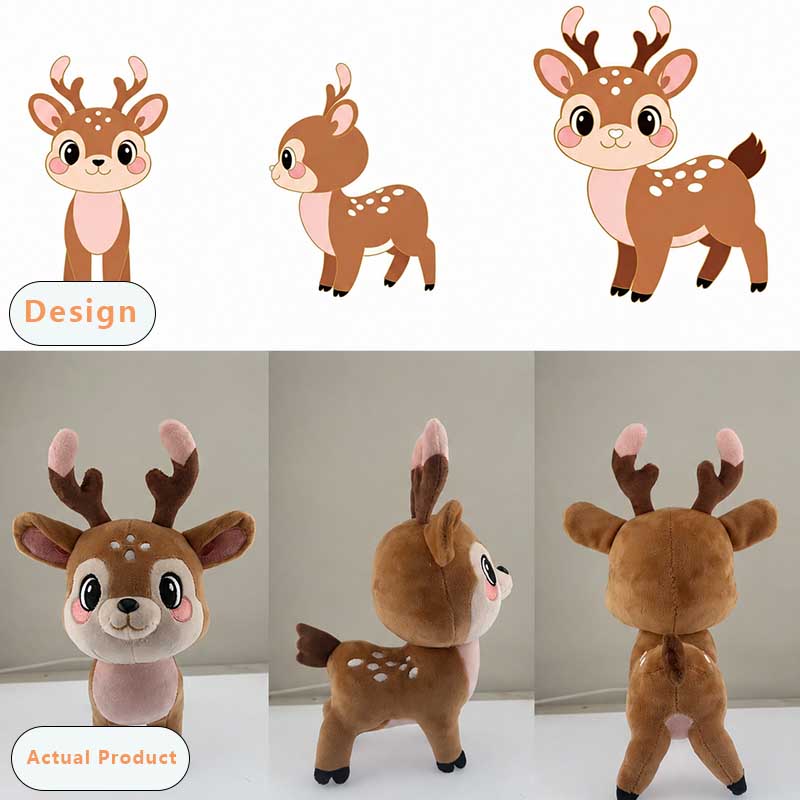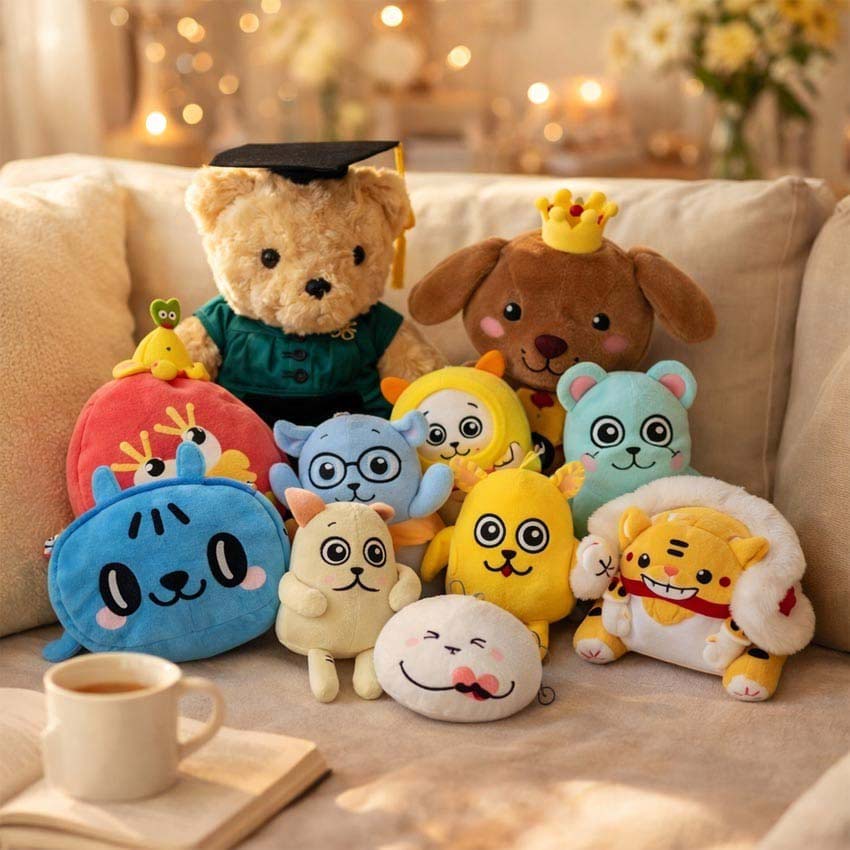
Building a custom plush product is not a single purchase. It is a chain of decisions that begins with a brand idea and continues through design interpretation, sampling, compliance, production, packaging, shipping, and repeat-order management. Brand owners often enter this process with a strong understanding of their audience but limited visibility into how a soft toy factory converts a character, mascot, or product concept into stable bulk production.
Our role is therefore broader than sewing plush toys. We help brand owners translate creative intent into specifications that purchasing, engineering, production, quality, and logistics teams can all use. At every stage, we identify the decision that must be made, the evidence needed to make it, the risk created by delay or ambiguity, and the record that should remain after approval.
This step-by-step support is especially important for startups, licensed-character teams, promotional agencies, retailers, creators, and established brands launching a new plush line. Each may have different internal resources, but they face the same underlying challenge: the finished product must look emotionally right, work technically, meet market requirements, arrive on time, and remain commercially viable.
The following workflow explains how we support brand owners from the first inquiry through long-term production. It also shows what buyers should expect from a professional plush manufacturer at each stage.
Turn the Brand Idea into a Clear Product Brief
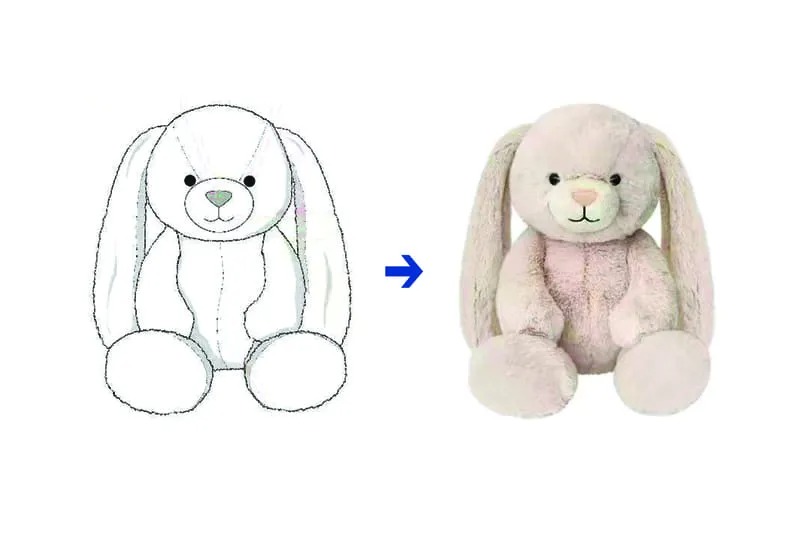
The first step is not quotation. It is clarification. A logo, illustration, 3D rendering, physical character, or reference photo may communicate the creative direction, but it rarely contains all the information needed to develop a manufacturable plush toy. Before calculating cost, we help the brand owner define what the product is expected to achieve.
We begin with the commercial context. Is the plush intended for retail, a crowdfunding campaign, a corporate promotion, an amusement program, a subscription box, a licensed collection, or a gift with purchase? Who will use it, where will it be sold, and what price position must the brand protect? These questions influence material selection, testing, packaging, labeling, construction, minimum order quantity, and acceptable unit cost.
We then separate fixed brand elements from flexible production elements. The character’s silhouette, facial expression, signature colors, logo, and recognizable accessories may be non-negotiable. By contrast, exact fabric construction, internal support, embroidery technique, packaging format, or minor seam placement may be adjusted if the visual result remains faithful. Making this distinction early prevents the factory from optimizing something that should remain protected.
A useful brief also identifies size, quantity, target market, age grading, expected launch date, packaging preference, required certifications, and reference standard. If some answers are not yet known, we mark them as open decisions rather than quietly making assumptions. This creates a project map that both sides can update.
The benefit to the brand owner is control. A clear brief reduces vague quotations, incompatible samples, repeated explanations, and late-stage surprises. It also gives internal stakeholders a shared definition of what the project must deliver.
| Brief Element | What We Confirm | Why It Matters |
|---|---|---|
| Commercial purpose | Sales channel, audience, price position, launch use, and expected order pattern | Aligns construction and cost with the business model |
| Brand essentials | Protected shape, colors, expression, logos, and signature details | Prevents cost engineering from weakening recognition |
| Project constraints | Size, quantity, market, deadline, packaging, testing, and budget range | Creates a realistic development path from the beginning |
Review the Design for Manufacturability and Brand Accuracy
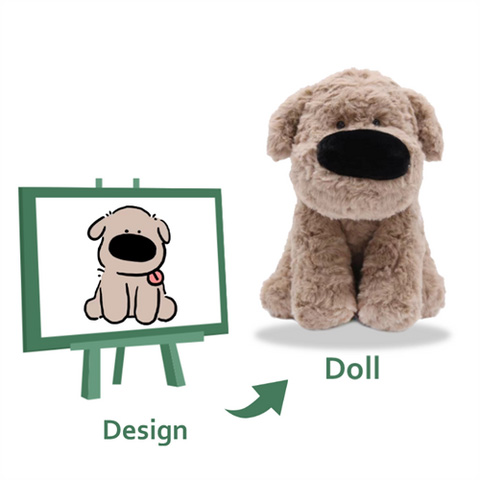
Once the brief is clear, we review how the design can be constructed. Plush products are three-dimensional soft objects made from two-dimensional fabric pieces. Artwork may show a perfect front view while leaving side depth, back details, balance, seam placement, stuffing distribution, and attachment methods undefined. Our job is to close those gaps without losing the character’s identity.
We examine proportions first. Head-to-body ratio, limb length, ear angle, eye spacing, muzzle projection, and body width determine whether the finished toy feels like the original character. Some shapes that look natural in an illustration require gussets, darts, curved panels, internal reinforcement, or a weighted base to work in fabric. We explain these construction choices in visual language that a brand team can evaluate.
Next, we review every decorative feature. Very thin outlines may not embroider cleanly at the intended size. Tiny printed details may become inconsistent on long-pile fabric. A complex accessory may require a separate pattern, applique, heat transfer, or safe attachment method. Instead of simply declaring a feature impossible, we compare practical alternatives and show how each affects appearance, durability, cost, and lead time.
Material selection is part of the same review. Pile length changes the perceived color and can hide small embroidery. Stretch affects shape stability. Backing strength affects seam performance. Filling type and density affect hand feel, posture, recovery, and shipping volume. We use available swatches and comparable products to help the brand owner choose deliberately.
The output of this stage is a development direction: proposed dimensions, construction approach, main materials, decoration methods, risk points, and items requiring sample validation. It is not yet a final production specification, but it prevents the sample room from working from unexplained guesses.
| Review Area | Factory Question | Brand Decision |
|---|---|---|
| Shape engineering | Which panels, gussets, darts, or supports are needed? | Whether the proposed structure preserves the intended silhouette |
| Decorative details | Should each detail be embroidered, printed, appliqued, or constructed? | Which method best balances accuracy, durability, and cost |
| Material behavior | How will pile, stretch, backing, and filling affect the result? | Which tactile and visual qualities are essential to the brand |
Build a Transparent Quotation and Project Plan
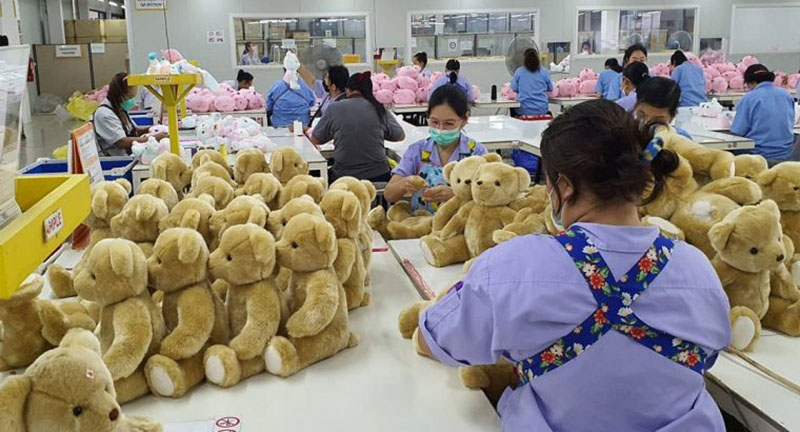
A useful quotation should explain the commercial structure of the project, not hide it behind one unit price. After reviewing the design, we identify the major cost drivers: fabric consumption, material minimums, embroidery or printing, sewing complexity, accessories, filling, labels, packaging, testing, labor, order quantity, and delivery terms.
This matters because brand owners often need to make tradeoffs. A rigid retail box may strengthen presentation but increase packaging and freight cost. Multiple custom-dyed fabrics may improve color accuracy but create minimum order commitments. A highly detailed accessory may add substantial labor while contributing little to customer value. When the drivers are visible, the buyer can protect the details that matter and simplify those that do not.
We also distinguish confirmed cost from estimated cost. Before the sample is made, final consumption and labor time may not be fully known. Testing requirements may depend on market and age grade. Freight depends on final carton dimensions and shipment timing. We state which assumptions are being used and when the figure can be confirmed. This reduces the chance that an attractive early price becomes unrealistic later.
The project plan connects approvals to lead time. Sample development, revision, material booking, label artwork, compliance testing, production, inspection, packaging, and shipment are linked activities. If the launch date is fixed, we work backward and identify the latest practical approval dates. The brand owner can then see which decisions are urgent and which have flexibility.
We recommend comparing total project cost rather than unit price alone. Sample rounds, testing, tooling, packaging setup, inspection, freight volume, customs documents, rework risk, and buyer management time all affect the real investment. Transparent planning helps brands avoid savings that only move cost into a later stage.
| Planning Item | What We Show | Buyer Value |
|---|---|---|
| Cost drivers | Materials, processes, packaging, testing, quantity, and complexity | Makes optimization choices understandable |
| Quotation assumptions | What is confirmed, estimated, excluded, or subject to sample validation | Reduces unexpected price changes |
| Milestone schedule | Approval dates, dependencies, production window, and shipment target | Connects daily decisions to the launch deadline |
Manage Sampling as a Controlled Decision Process
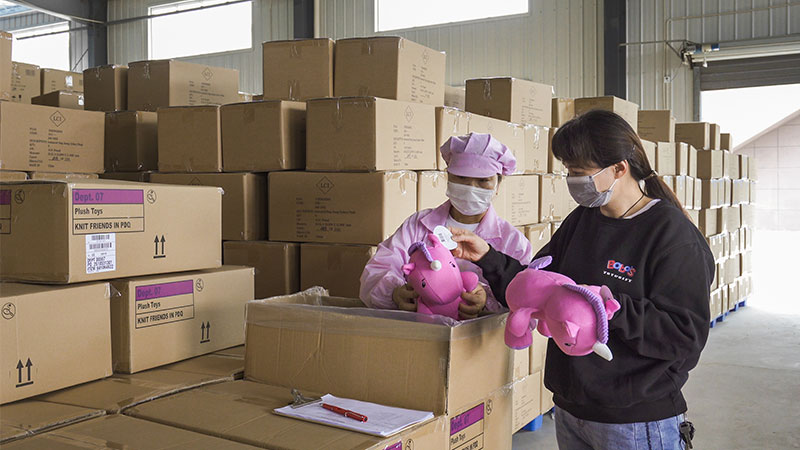
Sampling is where the design becomes physical, but a sample is more than a preview. It is the main tool for resolving shape, material, workmanship, safety, and commercial questions before bulk production. We manage it as a controlled decision process so that every round has a clear purpose.
The first prototype usually tests interpretation and construction. It may reveal that the head needs more depth, an ear needs reinforcement, a color looks different in pile fabric, an embroidered expression needs repositioning, or the stuffing level affects posture. We photograph and label the sample carefully, then separate objective defects from design preferences. This keeps feedback precise.
Brand owners receive the best results when comments are consolidated. Different stakeholders may focus on marketing appearance, character accuracy, safety, packaging, or cost. We encourage one marked revision list tied to a named sample version. Measurements, annotated photos, color references, and ranked priorities are more actionable than scattered messages such as “make it cuter” or “the face feels wrong.”
We track every accepted change. If eye position moves, the embroidery file and pattern reference must change together. If fabric changes, color, hand feel, seam behavior, and unit cost may need review. If product size changes, packaging and freight assumptions may also change. Version control prevents an approved improvement in one area from being lost in the next round.
Before final approval, we confirm whether the sample represents production materials and methods. A showroom material or hand-finished detail may create the wrong bulk benchmark. The approved sample should be realistic enough to guide production and inspection. We retain the agreed reference and translate it into written checkpoints rather than relying only on visual memory.
| Sample Stage | Primary Purpose | Approval Evidence |
|---|---|---|
| First prototype | Validate interpretation, proportions, structure, and major materials | Marked photos and a consolidated change list |
| Revision sample | Verify that requested corrections work together | Version number, measurements, and resolved/open items |
| Final approval sample | Set the realistic benchmark for bulk production | Signed approval, retained sample, files, and written checkpoints |
Prepare Compliance, Labels, and Technical Records
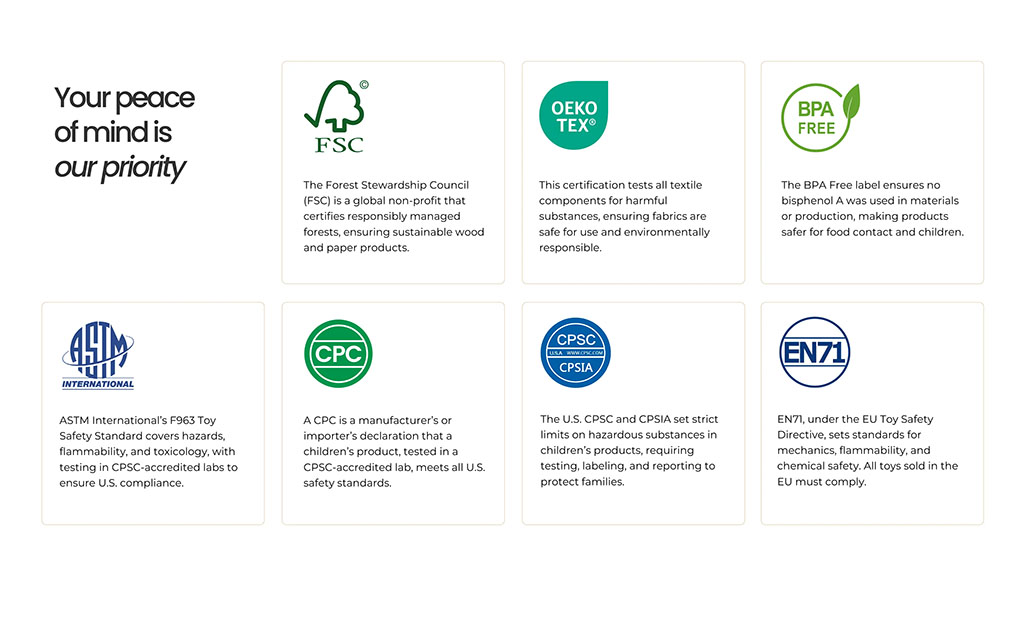
Compliance cannot be added at the end of production. The target market, user age, product function, material choices, accessories, labels, and packaging determine what requirements must be considered. We support brand owners by turning those requirements into practical factory actions before bulk materials are committed.
For the United States, European Union, United Kingdom, Canada, Australia, and other markets, the applicable standards and documentation can differ. A product intended for children may require mechanical and physical tests, flammability assessment, chemical restrictions, tracking information, and market-specific labeling. A promotional item or adult collectible may still have general product safety and importer obligations. The buyer should confirm requirements with its compliance adviser or laboratory, while the factory provides accurate product and material information needed for testing.
We review risk-sensitive design details such as small parts, eyes, noses, buttons, bells, magnets, batteries, wires, hard internal components, long cords, accessible filling, seam strength, and detachable accessories. When a construction choice creates unnecessary risk, we propose safer alternatives early. For example, embroidered eyes may be preferable for a baby product, while a securely attached plastic component may be acceptable for another age grade under the correct test plan.
Label and artwork control are equally important. Care labels, fiber content, country of origin, importer information, warning statements, tracking codes, barcodes, hangtags, and carton marks may come from different stakeholders. We request final files and approvals with enough time to avoid rushed printing. A technically good plush toy can still be delayed or rejected if its labeling is wrong.
We organize product records around the approved version: bill of materials, color references, embroidery files, pattern version, label artwork, packaging specifications, test reports, and approval notes. This file supports production, inspection, investigations, and repeat orders. It also helps the brand owner maintain traceability when several SKUs are developed at once.
| Compliance Area | Support Provided | Control Objective |
|---|---|---|
| Market and age grade | Identify information needed for the buyer’s test plan and laboratory | Avoid applying the wrong requirement set |
| Design risk | Review small parts, attachments, hard components, seams, and accessibility | Reduce preventable safety failures before production |
| Records and labels | Control approved artwork, specifications, reports, and traceability data | Keep the manufactured product aligned with documentation |
Control Bulk Production Against the Approved Standard
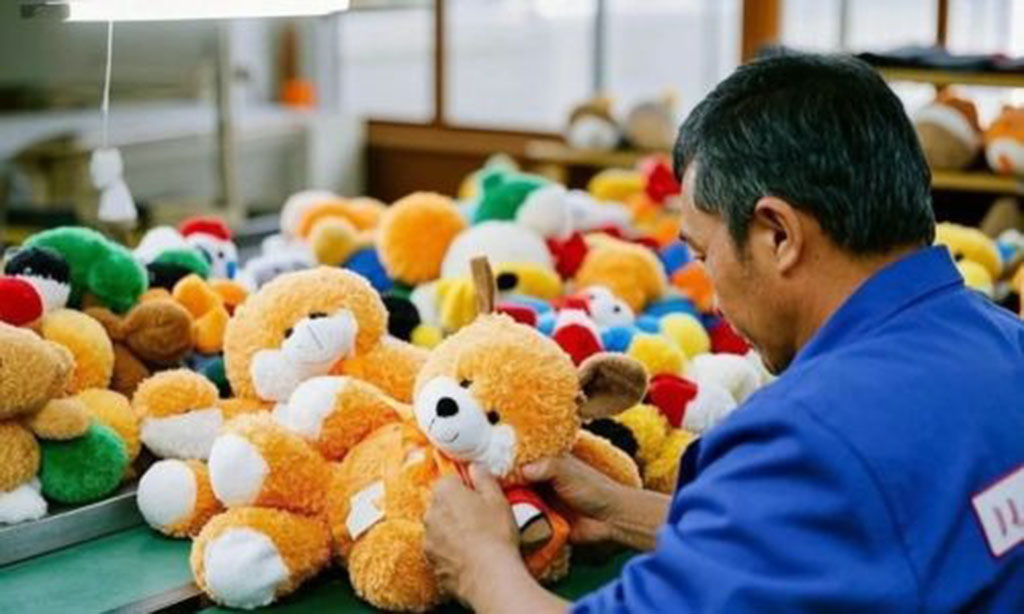
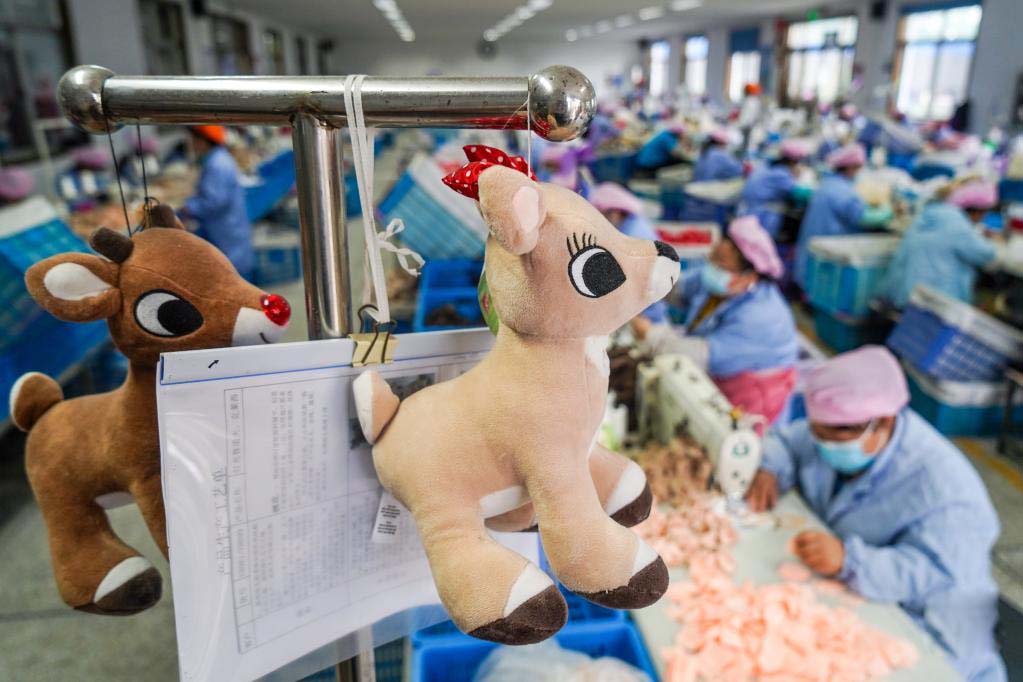
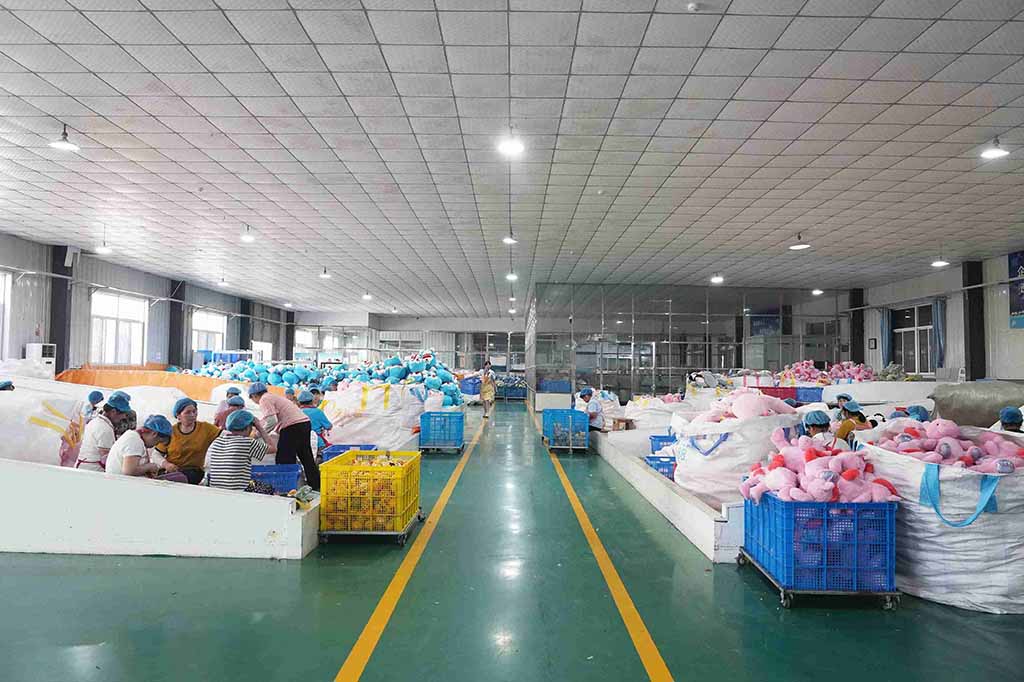
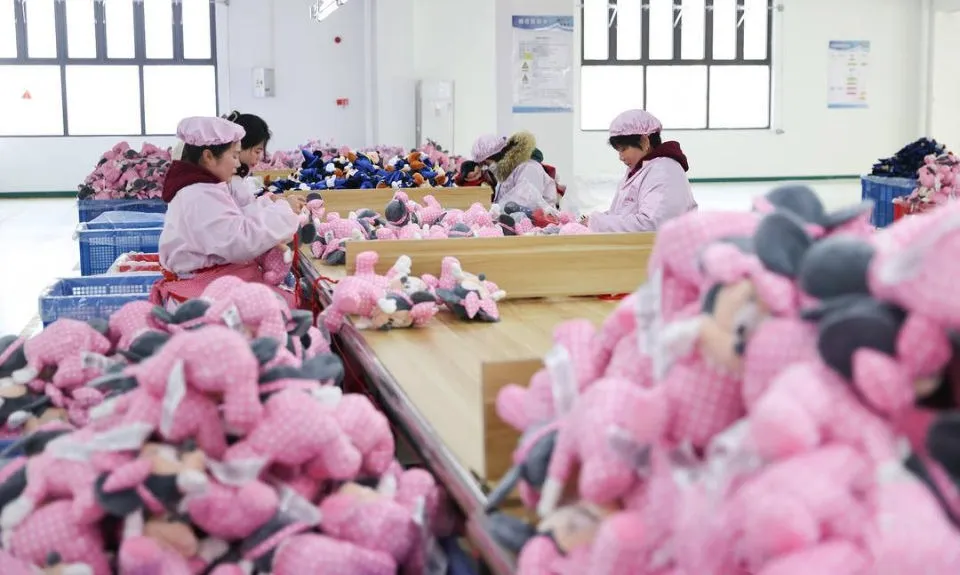
Bulk production is the point where a successful sample must become a repeatable process. The sample room may use highly experienced technicians and spend more time on one piece than a production line can. We therefore convert the approved result into material controls, work instructions, first-piece checks, inline inspections, and final acceptance criteria.
Before cutting, incoming materials are checked against approved references. We review fabric type, color, pile direction, backing, defects, embroidery thread, labels, accessories, filling, and packaging inputs. Lot differences are important because two materials with the same supplier name may still vary in shade or hand feel. Problems found before cutting are less expensive to solve.
Production preparation includes pattern version, cutting direction, embroidery placement, sewing sequence, seam allowance, stuffing target, closing method, accessory position, grooming, label placement, and packing instruction. The factory’s technical and quality teams focus on details that strongly affect brand recognition, safety, or inspection results.
First-piece approval checks whether the production line can reproduce the sample under normal conditions. Inline quality control then looks for trends rather than isolated defects. If facial embroidery begins drifting, a seam is creating asymmetry, or stuffing varies by operator, correction should happen while the process is running. Waiting until final inspection can turn a small process issue into a large rework problem.
We provide milestone updates appropriate to the project, such as material readiness, cutting, embroidery, sewing, stuffing, finishing, packing, and inspection status. Useful updates include completed quantity, current risk, corrective action, and next milestone. This gives brand owners visibility without requiring them to manage every factory movement.
| Production Control | What Is Checked | Risk Reduced |
|---|---|---|
| Incoming material check | Specification, shade, defects, labels, accessories, and packaging inputs | Wrong materials entering full production |
| First-piece and inline QC | Shape, construction, embroidery, stuffing, attachments, and workmanship trends | Repeated defects spreading across the order |
| Milestone reporting | Completed quantity, schedule status, risks, actions, and next step | Late discovery of delivery or quality problems |
Coordinate Packaging, Inspection, and International Delivery
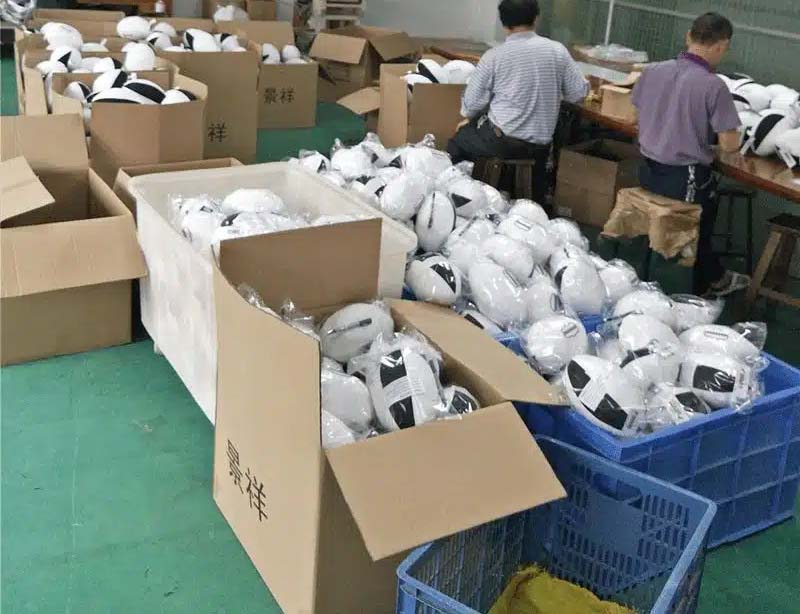
A plush project is not complete when sewing ends. Finished goods still need to recover their intended shape, pass inspection, meet presentation requirements, fit the shipping plan, and arrive with correct documents. We coordinate these final steps so that the product the brand approved is also the product the warehouse can receive and sell.
Packaging is reviewed for protection, presentation, labor, freight volume, and channel requirements. A simple polybag may suit bulk distribution, while retail programs may require printed boxes, display-ready cartons, hangtags, barcode labels, warning text, or marketplace-specific packaging. Compression can reduce volume, but it must be tested for shape recovery, fabric appearance, accessory damage, and customer experience.
We confirm the packing specification through a trial: bag dimensions, folding method, units per carton, carton size, gross and net weight, barcode position, carton marks, assortment, and sealing method. These details affect freight quotations and warehouse receiving. Final carton data is more useful than an early estimate, especially for soft products whose volume changes with packing pressure.
Final inspection is planned rather than improvised. Depending on the buyer’s requirement, it may be performed by factory QC, the buyer, or a third-party inspection company. The inspection standard should reference the approved sample and written criteria, including quantity, workmanship, measurements, appearance, function, labels, packaging, and any required safety checks. Nonconformities need a documented disposition before shipment.
For international orders, we support preparation of commercial invoice data, packing list details, carton information, shipping marks, and coordination with the nominated forwarder. The importer remains responsible for destination-specific customs and regulatory obligations, but accurate factory documentation reduces avoidable delays. We also communicate cargo-ready timing early enough for booking decisions.
| Delivery Stage | Key Confirmation | Brand Protection |
|---|---|---|
| Packaging trial | Presentation, protection, recovery, carton utilization, and labeling | Controls damage, freight volume, and customer experience |
| Final inspection | Quantity, quality, measurements, function, labels, and packing | Prevents known nonconformities from being shipped |
| Export coordination | Cargo-ready date, carton data, invoice, packing list, marks, and booking handoff | Reduces logistics confusion and document delays |
Use Production Learning to Support Reorders and Brand Growth
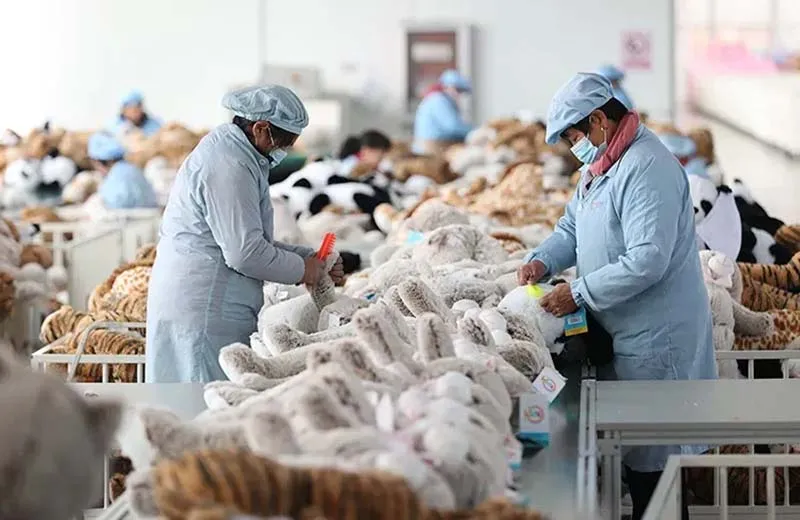
Professional support continues after shipment. The first production run creates information that can make every future order more accurate: actual material consumption, labor difficulty, defect patterns, inspection findings, packing efficiency, carton data, lead-time performance, and market feedback. We use these records to improve the next production cycle.
After delivery, we ask the brand owner to share receiving results and customer observations. Did the product recover correctly after unpacking? Were colors consistent with expectations? Did any accessory, seam, label, or package create complaints? Did the retailer or fulfillment center encounter barcode or carton issues? A low complaint rate is encouraging, but specific feedback is more useful because it can be converted into action.
For repeat orders, we confirm both continuity and change. The approved sample, pattern, embroidery file, material references, labels, packaging, and inspection standard form the baseline. We then list changes in quantity, market, color, artwork, packaging, delivery split, or compliance requirement. This prevents the dangerous assumption that a reorder is automatically identical.
Supply continuity also needs active management. Fabrics can be discontinued, dye lots can shift, accessory suppliers can change, and minimum order quantities can move. We review availability early and submit any necessary substitute for approval before bulk purchasing. Silent substitution may reduce short-term delay but can damage brand consistency.
As the brand grows, the workflow can expand from one product to a coordinated program. We can support SKU naming, shared material planning, staggered launches, forecast discussions, capacity reservations, common packaging components, and consolidated inspections. The goal is to make growth more controlled, not merely increase order volume.
A reliable manufacturing relationship becomes more efficient over time because both sides retain knowledge. The brand spends less effort re-explaining requirements, and the factory becomes better at protecting the details that matter. That accumulated understanding is one of the strongest advantages of a long-term plush partner.
| Growth Activity | Record Used | Improvement Created |
|---|---|---|
| Post-shipment review | Receiving results, complaints, inspection findings, and customer feedback | Turns market experience into corrective or preventive action |
| Repeat-order confirmation | Approved standards plus a clear list of new changes | Protects continuity while avoiding outdated assumptions |
| Multi-SKU planning | Forecasts, material families, capacity needs, and launch calendar | Supports growth with better cost, timing, and quality visibility |
Conclusion
Supporting brand owners step by step means making the plush development process visible and manageable. It begins by understanding the commercial purpose and protecting the brand’s essential details. It continues through manufacturability review, transparent costing, controlled sampling, compliance preparation, production quality control, packaging, inspection, and international delivery.
The value of this approach is not paperwork for its own sake. Each step prevents a specific type of failure: an unclear brief prevents misaligned samples; design review prevents impossible or unstable construction; transparent planning prevents budget and schedule surprises; version control prevents lost approvals; compliance preparation prevents late redesign; inline QC prevents repeated defects; packing trials prevent freight and presentation problems; and production records protect future reorders.
Brand owners should expect a plush manufacturer to do more than respond to instructions. A capable partner asks the right questions, explains consequences, records decisions, reports risks early, and provides evidence that the order is moving toward the approved result. That support gives the brand more confidence to launch, learn, reorder, and grow.
FAQ
What information should a brand owner send for a custom plush quotation?
Send available artwork or reference photos, desired size, estimated quantity, target market, user age, required delivery date, packaging preference, brand-critical details, and any target price range. If some information is unknown, a professional supplier should identify it as an open decision and explain how it affects the quotation.
Can a plush factory work from a 2D illustration?
Yes. A 2D illustration is a common starting point, but the factory must interpret side depth, back details, seam placement, balance, materials, and three-dimensional proportions. Clear communication and physical sampling are necessary before bulk production.
How many sample rounds are normally required?
There is no fixed number. A clear design with available materials may need only limited revision, while a complex licensed character, electronic plush, unusual structure, or highly precise color program may require more. The important point is that each round has defined goals and consolidated feedback.
When should compliance requirements be confirmed?
They should be considered before sample construction and confirmed before bulk material purchasing. Target market, age grade, features, attachments, materials, labels, and packaging can all affect the test plan. The buyer should coordinate with its compliance specialist or laboratory while the factory supplies accurate technical information.
How do brand owners control plush quality during production?
Use an approved production-realistic sample, written specifications, material references, first-piece approval, inline inspections, defect criteria, milestone reporting, and final inspection. Quality is more stable when control begins before cutting rather than only at shipment.
Can packaging be optimized to reduce shipping cost?
Often yes. The factory can test bag size, folding, compression, units per carton, and carton dimensions. However, compression must be evaluated for shape recovery, fabric condition, accessories, retail presentation, and end-customer experience before approval.
What makes repeat orders easier?
Retained approval samples, pattern and embroidery versions, material records, label artwork, quality findings, packing data, and shipment history make reorders faster and more predictable. The supplier should still confirm changes and current material availability rather than assuming everything remains identical.
Why is a step-by-step manufacturing partner valuable to a growing brand?
Growth creates more SKUs, stakeholders, deadlines, markets, and compliance decisions. A structured partner preserves product knowledge, makes risks visible, improves repeatability, and reduces the amount of operational follow-up required from the brand team.