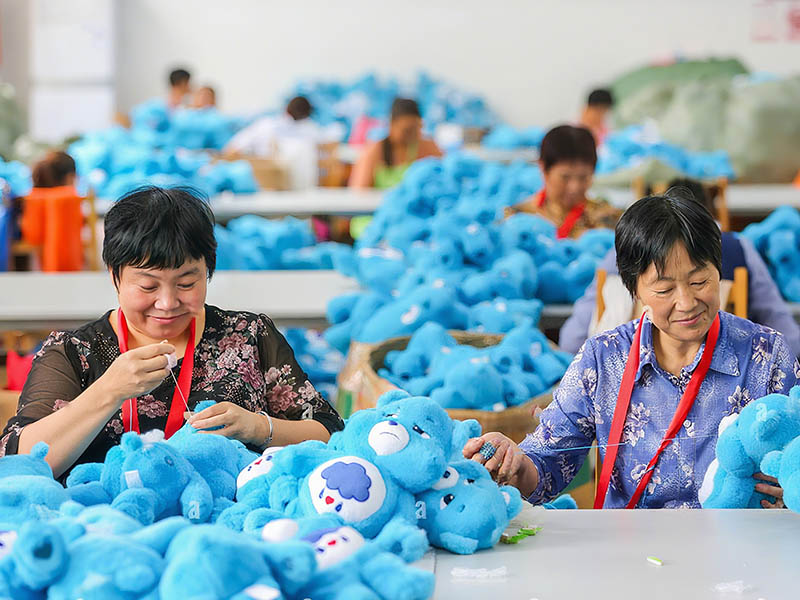
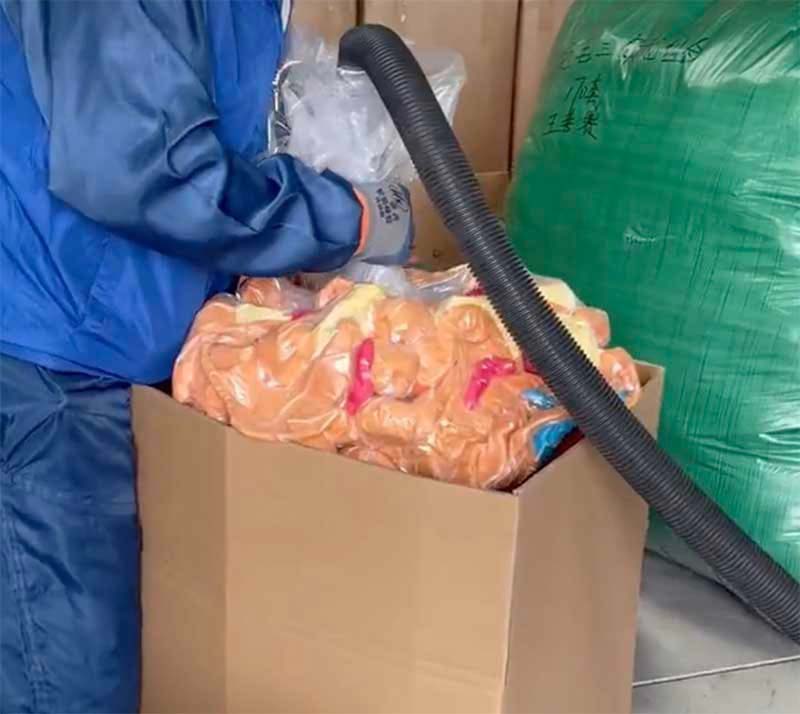
The sample stage is where most plush toy projects either establish a foundation for successful production or accumulate the problems that will make everything that follows more expensive, more frustrating, and less commercially successful than it should have been.
Buyers who are new to plush toy sourcing often focus on sample cost as a key evaluation criterion — choosing the factory that quotes the lowest sampling fee or accepts samples at minimal cost. The logic is understandable: before a production commitment is made, minimizing the investment in an uncertain outcome seems prudent. Why pay more for a sample when the sample is just the starting point?
The answer is that the sample is not just the starting point. It is the first test of the factory’s development capability — its ability to interpret a design brief accurately, engineer pattern solutions that produce the intended three-dimensional form, source materials that match the specification, and construct a prototype that demonstrates what bulk production will deliver. A cheap sample from a factory without genuine development capability does not provide this information. It provides a series of problems to solve, a series of revision rounds to fund, and ultimately a product that either never reaches its potential or reaches it only after consuming far more development investment than a capable factory would have required.
This guide explains specifically why cheap plush samples fail — what specific development capability gaps produce the specific types of sample failures that buyers most commonly encounter — and how to evaluate samples to identify the capability level behind them before committing to a production relationship.
What Makes a Cheap Plush Sample Different from a Professional Development Sample?
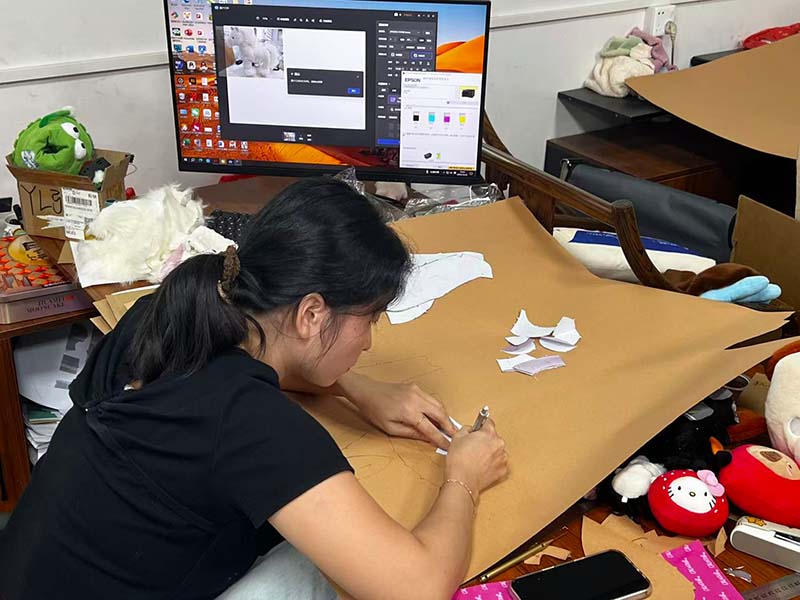
The difference between a cheap plush sample and a professional development sample is not primarily a difference in materials or construction quality — although those differences exist. It is a difference in the development process behind the sample: the expertise applied to interpreting the design brief, the engineering capability applied to pattern making, the discipline applied to brief review before sampling begins, and the quality of the institutional knowledge applied to the entire development exercise.
A professional development sample is the output of a deliberate development process conducted by a capable team. A cheap sample is the output of an improvised process conducted by whoever was available — typically production workers handling sampling as a secondary duty alongside their regular work.
Here is a framework for understanding the structural differences between the two:
| Development Element | Professional Factory Sample | Cheap Factory Sample |
|---|---|---|
| Brief review | Structured technical review — ambiguities identified and resolved before sampling | Brief accepted without review — problems discovered in physical sample |
| Pattern making | Dedicated experienced pattern maker | Production worker or junior staff with limited pattern experience |
| Material sourcing | Access to wide material range — correct materials sourced before sampling | Limited material access — substitutions made without disclosure |
| Sample construction | Dedicated skilled sample sewers working exclusively on development | Production operators pulled from line — sampling as secondary activity |
| Deviation documentation | Deviations from brief documented and communicated to buyer | Deviations undisclosed — buyer discovers by comparison |
| Counter sample | Standard step before production authorization | Absent or optional |
| Development feedback loop | Structured action list confirmation before revision begins | Informal — some items addressed, others missed |
| First sample accuracy | 75–85% — refinement remaining | 40–60% — fundamental reconstruction often required |
The First Sample Accuracy Diagnostic
First sample accuracy — how closely the first physical prototype reflects the design brief — is the most reliable single indicator of factory development capability available to buyers. A factory whose first samples consistently achieve 75 to 85 percent accuracy has genuine development capability: experienced pattern makers who interpret briefs correctly, adequate material access to source what was specified, and skilled sample sewers who construct accurately.
A factory whose first samples consistently achieve 40 to 60 percent accuracy does not have genuine development capability. The gap between the brief and the sample is not a minor refinement question — it is a fundamental interpretation failure that requires the kind of reconstruction work that should have been done correctly the first time.
Requesting the development history of an existing product from a factory — specifically asking to see the first sample, any intermediate samples, and the final approved sample, along with the number of rounds required — reveals this accuracy level more reliably than any verbal representation the factory makes about its capabilities.
Why Do Brief Interpretation Failures Produce Inaccurate First Samples?

Brief interpretation is the first development activity — the process of converting a design brief into a pattern engineering plan before any physical construction begins. A factory with genuine development capability conducts a structured brief review that identifies any element of the brief that is ambiguous, technically challenging, or underspecified, and resolves those issues through dialogue with the buyer before sampling begins.
A factory without genuine development capability does not conduct this review. The brief is passed to whoever is handling sampling, assumptions are made about ambiguous elements, and the physical construction proceeds based on those assumptions — which may or may not match the buyer’s intent. The result is a first sample whose failures are specific to the assumptions that were made incorrectly.
Here is a guide to the most common brief interpretation failures and their sample consequences:
| Brief Element | Misinterpretation | Sample Consequence |
|---|---|---|
| Scale reference absent | Factory uses internal reference scale | Product produced at wrong size — may be significantly larger or smaller than intended |
| Multi-view artwork missing | Factory interprets 3D form from single view | Incorrect depth, width, or back construction |
| Proportion ambiguity | Factory applies generic character proportions | Character personality altered — proportions define expression |
| Color reference imprecise | Factory selects nearest available fabric | Color significantly different from intended |
| Fabric description vague | Factory selects cheapest available matching description | Wrong pile height, density, or texture |
| Accessory type unspecified | Factory uses standard stock accessories | Wrong eye style, size, or color |
| Construction detail absent | Factory applies default construction approach | Seam placement, closure method, or stuffing approach differs from intent |
The Assumption Cascade
Brief interpretation failures do not produce isolated problems — they produce cascades of interconnected errors, because an incorrect interpretation at one point in the development process creates problems that propagate forward into all subsequent decisions.
For example: if the factory misinterprets the scale of the character and builds the first sample at 20 percent larger than the intended size, every subsequent dimension in the product is also wrong. The face proportions are wrong. The accessory sizes are wrong. The fabric quantities are wrong. The stuffing density produces a different feel at the wrong scale. What appears to be a simple “size correction” on the revision request is actually a fundamental pattern rebuild that requires reconstructing every dimension of the product.
A factory with a structured brief review process catches the scale ambiguity before sampling begins — with a single clarifying question that takes 30 seconds to answer. A factory without this process builds the entire first sample on the incorrect assumption, producing a prototype that requires complete reconstruction rather than refinement.
How Do Material Shortcuts in Cheap Samples Create Development Traps?

Material selection in the sampling stage is one of the most consequential and most frequently mismanaged development decisions. The materials used in a sample define the quality appearance, tactile character, and compliance characteristics of the prototype — and the buyer’s approval of the sample constitutes approval of those material choices unless the development process explicitly identifies and agrees on material specifications before or during sampling.
Cheap factories use the materials they have available rather than sourcing the materials the brief specifies. This produces samples that are built on material compromises — lower-grade filling, shorter pile fabric, standard accessories rather than the specified alternatives — that the buyer may not immediately identify as compromises rather than design choices.
Here is a guide to the most common material shortcuts in cheap samples and their development consequences:
| Material Shortcut | How It Appears in Sample | Development Trap |
|---|---|---|
| Lower-grade PP cotton | Product feels softer/limper than intended | Buyer approves sample not knowing density is wrong — bulk will match the wrong standard |
| Wrong pile height | Visual appearance differs from reference | Multiple revision rounds attempting to match reference by changing colors, proportions — real problem is pile height |
| Non-specified accessories | Wrong eye style changes character expression | Character approval requires accessory correction — adds rounds and sourcing time |
| Approximate color matching | Color off from reference | Color-focused revision rounds don’t resolve problem if underlying issue is wrong fabric base color |
| Uncertified materials | Cannot be identified visually | Sample approved and built into production — compliance failure at testing stage |
| Wrong filling type | Different tactile character | Buyer may interpret as density issue — adjusting density doesn’t resolve material character problem |
The Approval Trap
The most commercially damaging consequence of material shortcuts in cheap samples is the approval trap — where a buyer approves a sample without realizing that the materials used in the sample do not match the brief, and the approved sample then becomes the production standard including those material compromises.
When the bulk production arrives and the quality is lower than expected, the factory’s position is technically defensible: “The bulk matches the approved sample.” And it does — it matches the sample that was built with the wrong materials, which the buyer approved without realizing the substitution.
Escaping this trap after it has closed requires either accepting the quality compromise or reopening the development process — commissioning a new sample with the correctly specified materials and reapproving. Both options cost more time and money than the material specification discipline that would have prevented the problem.
The Compliance Trap
The compliance version of the approval trap is particularly expensive: a sample is built with uncertified or non-compliant materials, the buyer approves it without knowing the materials’ compliance status, bulk production proceeds with the same materials, and compliance testing then fails.
At this point, the buyer has a completed production batch built on non-compliant materials — requiring either batch rework with compliant materials or batch destruction and reproduction. The total remediation cost is typically $5,000 to $30,000 or more, depending on order size.
The prevention is requiring compliance documentation for all materials specified in the brief before sampling begins — which is a zero-cost request that reveals whether the factory has the compliance infrastructure to source correctly and creates the compliance foundation that prevents this trap entirely.
Why Does Poor Pattern Engineering in Cheap Samples Compound Across Revision Rounds?

Pattern engineering is the technical discipline of converting a two-dimensional fabric panel system into a correctly proportioned three-dimensional form when assembled and stuffed. It requires understanding how different panel shapes interact when sewn together, how stuffing changes the apparent proportions of a finished product relative to the unstuffed panels, and how to engineer pattern adjustments that achieve the intended form rather than a visually similar approximation.
Poor pattern engineering produces specific, identifiable sample problems: proportions that are incorrect in ways that resist correction through simple size adjustments, forms that collapse or distort in certain positions, surfaces that pucker or gather where they should be smooth, and face panels whose assembled form produces different character expressions than the design intended.
These problems compound across revision rounds because they originate in the pattern rather than in the construction — which means that correcting the visible symptom without addressing the underlying pattern engineering failure produces a sample that appears improved but still has the same structural weakness that will reassert itself in the next round.
Here is a guide to pattern engineering failures and how they compound:
| Pattern Failure | Visual Symptom | Why It Compounds |
|---|---|---|
| Incorrect proportion engineering | Character looks different from design — proportions wrong | Round 1 adjusts the most visible proportion; rounds 2–4 chase remaining proportions |
| Insufficient panel count for curved form | Surface is faceted or angular rather than smooth | Adding panels requires pattern rebuild; adjustment attempts don’t fix faceting |
| Wrong seam placement | Seam visible at front or in character’s expression area | Moving seam requires pattern rebuild; smoothing attempts don’t eliminate visibility |
| Volume miscalculation | Character looks deflated at correct stuffing or distorted at higher density | Both density and pattern need correction; changing density alone doesn’t fix form |
| Facial panel proportion error | Character expression differs from design | Expression is locked in panel geometry; surface adjustment doesn’t change it |
| Limb attachment geometry error | Limbs attach at wrong angle or protrude incorrectly | Attachment geometry is a pattern decision; positioning adjustments don’t resolve it |
The Circular Revision Pattern
The clearest symptom of poor pattern engineering is the circular revision pattern — where the same problems appear in round three that appeared in round one, addressed but not resolved. This circularity is characteristic of sampling processes where individual visible problems are corrected without addressing the underlying pattern engineering failure that produced them.
A buyer experiencing circular revisions — changing the same proportion multiple times without convergence, adjusting the same color in multiple rounds without matching the reference, fixing the same seam placement issue in round three that was supposedly fixed in round one — is experiencing the symptoms of a factory whose pattern engineering capability is insufficient for the design complexity.
The resolution is not more revision rounds — it is recognizing that the factory cannot engineer this pattern correctly and either simplifying the design to match the factory’s pattern engineering capability or switching to a factory with the capability the design requires.
How Do Construction Shortcuts in Cheap Samples Mislead Buyers About Bulk Production Quality?

Construction shortcuts in cheap samples are one of the most practically deceptive elements of the cheap sample problem — because they can produce a sample that appears visually acceptable while hiding construction quality that cannot be maintained at production scale.
Cheap sample construction shortcuts work because sample sewers — even unskilled ones — can compensate for inadequate patterns, imprecise machine settings, and insufficient technical guidance through manual adjustments, hand finishing, and the kind of individual attention that is simply not possible at production scale. The result is a sample that looks better than the production process that built it can actually deliver.
Here is a guide to construction shortcuts and their production-scale consequences:
| Construction Shortcut | How It Looks in Sample | How It Performs in Bulk |
|---|---|---|
| Hand adjustment of panel alignment | Panels aligned correctly by manual manipulation | Production operators cannot replicate manual alignment — misalignment systematic |
| Hand stuffing at correct density | Density correct in sample | Production machine stuffing at incorrect calibration — different density in bulk |
| Manual closing seam reinforcement | Closing seam appears secure | Production closing without reinforcement — higher seam failure rate |
| Individual attention to embroidery positioning | Embroidery positioned correctly by careful repositioning | Production hoop positioning without equivalent care — position drift |
| Individual thread trimming after construction | Clean surface in sample | Production trimming inconsistent — loose threads in bulk |
| Hand shaping after stuffing | Correct form achieved by manual shaping | Form in bulk determined by pattern and density alone — may differ |
The Scale Revelation Problem
The scale revelation problem is the specific mechanism through which cheap sample construction shortcuts produce bulk quality failures. A shortcut that an individual skilled sample sewer can compensate for with manual attention becomes a systematic defect when production operators cannot apply equivalent individual attention to each of 5,000 units.
This reveals itself consistently in the sample-to-bulk quality gap — the difference between the quality of the approved sample and the quality of the bulk goods. The gap is not random. It reflects specifically the construction shortcuts in the sample that manual compensation disguised, which the production process then reveals by being unable to reproduce.
Buyers who have experienced this gap — approving a sample and then receiving bulk goods that look and feel meaningfully different — have experienced the scale revelation problem. Understanding its cause — construction shortcuts in the sample that the production process cannot reproduce — transforms it from a confusing disappointment into a predictable consequence of inadequate sample construction that can be prevented through better sample evaluation.
Why Do Cheap Samples Fail to Predict Bulk Production Outcomes?
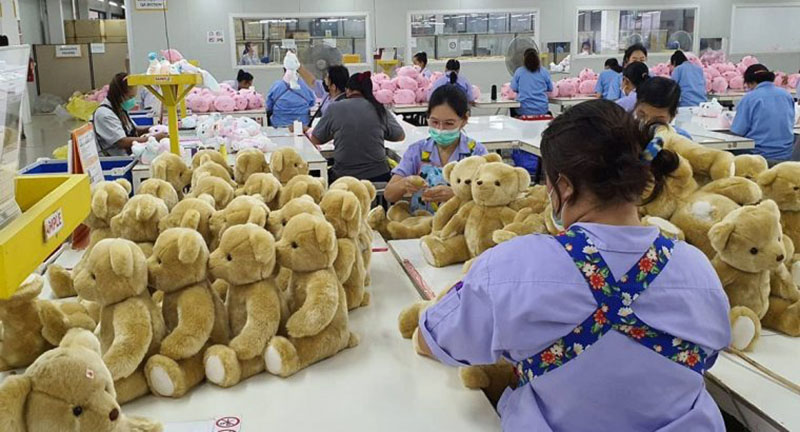
A sample’s primary commercial function — beyond demonstrating design direction — is to predict what the bulk production will look and feel like. A sample that predicts bulk production accurately gives the buyer genuine confidence in their approval decision. A sample that does not predict bulk production accurately gives the buyer false confidence — which is commercially worse than uncertainty, because it leads to production commitments that produce disappointing results.
Cheap samples fail to predict bulk production outcomes because the conditions under which they are built differ fundamentally from the conditions of bulk production in ways that systematically produce better sample quality than bulk quality:
| Development Condition | Sample Stage (Cheap Factory) | Bulk Production |
|---|---|---|
| Personnel on product | Dedicated attention — one person on one product | Production operator with throughput target |
| Time per unit | Unlimited — sample quality over speed | Controlled — target production rate |
| Materials | Whatever is available — may be better than production materials | Sourced for production economics |
| Equipment | Hand and machine as appropriate | Production line equipment only |
| Guidance | Individual judgment and adjustment | Work instructions and machine settings |
| Quality monitoring | Maker checks own work | External QC at intervals |
The Counter Sample — The Missing Bridge
The counter sample is the development stage that specifically addresses the gap between sample-stage quality and bulk production quality — by building a verification prototype under actual bulk production conditions, using the bulk production materials and equipment, before authorizing the full production run.
A counter sample built by production operators on production equipment with bulk production materials under production conditions reveals the actual quality that bulk production will deliver — not the idealized quality that sample-stage individual attention produces. The gap between the approved sample and the counter sample is the quality difference that needs to be closed before production authorization — either by improving the production process to replicate the sample quality, or by adjusting the buyer’s quality expectations to match what the production process can consistently achieve.
Cheap factories typically do not conduct counter samples — either because they do not have the development process sophistication to include this step, or because they understand that a counter sample would reveal the quality gap that they prefer the buyer not discover until bulk delivery.
For buyers, the absence of a counter sample requirement in a factory’s development process is one of the clearest signals of development process immaturity — and one of the most reliable predictors of sample-to-bulk quality gaps.
How Do Cheap Sample Failures Create Hidden Development Costs?

Cheap sample failures are not free — they create specific, measurable costs that accumulate across the development cycle and that consistently exceed the sampling fee savings that motivated the cheap sample choice.
Here is a comprehensive accounting of the hidden costs that cheap sample failures generate:
Direct Sampling Costs
| Cost Element | Professional Factory | Cheap Factory | Cost Difference |
|---|---|---|---|
| First sample fee | $150–$300 | $60–$120 | Cheap saves $90–$180 |
| Revision round 1 | $100–$200 | $80–$150 | Similar |
| Revision round 2 (not needed at professional factory) | $0 | $80–$150 | Cheap costs $80–$150 more |
| Revision round 3 (not needed at professional factory) | $0 | $80–$150 | Cheap costs $80–$150 more |
| Revision round 4 (occasionally required at cheap factory) | $0 | $80–$150 | Cheap costs $80–$150 more |
| Sample shipping — additional rounds | $0 | $180–$360 | Cheap costs $180–$360 more |
| Total sampling cost | $250–$500 | $500–$1,080 | Cheap costs $250–$580 more |
Downstream Development Costs
| Cost Element | Professional Factory | Cheap Factory |
|---|---|---|
| Design timeline extension | None — 1–2 rounds needed | 3–6 weeks additional for extra rounds |
| Material correction after approval trap | None — materials specified before sampling | $200–$500 if wrong materials discovered |
| Counter sample requirement | Standard — included | Often absent — sample-to-bulk gap not caught |
| Compliance testing of production (with compliant materials) | First test typically passes | First test may fail — $500–$1,500 retest cost |
| Management time — extra rounds and problem resolution | Standard | Additional 5–15 hours |
The Scale Effect Across Multiple Designs
For buyers developing multiple designs in the same cycle — a common scenario for product range launches and seasonal additions — the cheap sample cost multiplication applies to every design simultaneously:
| Development Scenario | Professional Factory | Cheap Factory |
|---|---|---|
| 5-design range — sampling cost | $1,250–$2,500 | $2,500–$5,400 |
| Additional development timeline | Standard | +4–10 weeks |
| Compliance risk exposure | Low | Medium-High — any design may have material issues |
| Management time overhead | Standard | Additional 25–75 hours across all designs |
The $1,250 to $2,900 additional sampling cost across a 5-design range — before accounting for compliance costs and management time — typically far exceeds the sampling fee savings that motivated the cheap sample choice.
How Should Buyers Evaluate Sample Quality to Identify Development Capability?
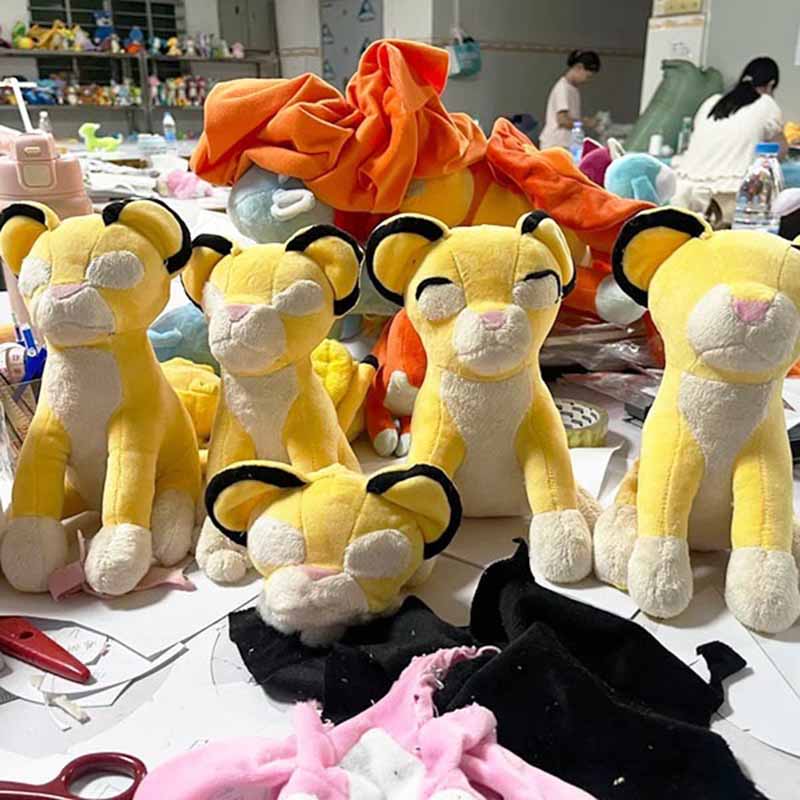
Evaluating a sample to identify the development capability behind it requires going beyond the instinctive question — “does this look like what I wanted?” — to a systematic assessment of specific quality dimensions that reveal whether the sample represents genuine development work or a process of improvisation that will continue to produce problems across the production relationship.
Here is a complete sample evaluation framework organized by the capability dimension each assessment reveals:
Brief Interpretation Capability
| Assessment | Method | What It Reveals |
|---|---|---|
| Proportion accuracy | Compare finished sample proportions to design reference proportions | Whether pattern maker correctly interpreted the character’s intended dimensions |
| Scale accuracy | Measure finished sample against specified dimensions | Whether factory correctly interpreted the scale reference in the brief |
| Color accuracy | Compare under D65 to Pantone reference | Whether factory sourced correctly specified materials or substituted |
| Accessory accuracy | Compare accessories to specification or reference | Whether factory sourced specified components or substituted from stock |
| Construction approach | Assess seam placement, closure method, construction sequence | Whether factory interpreted construction requirements correctly |
Pattern Engineering Capability
| Assessment | Method | What It Reveals |
|---|---|---|
| Surface smoothness | Visual inspection for puckering, gathering, or faceting | Whether panel geometry is correctly engineered |
| Seam placement | Assess whether seams fall at logical structural positions or in visible/expression areas | Whether seam placement was engineered intentionally |
| Three-dimensional form accuracy | Compare stuffed product form to design reference from multiple angles | Whether pattern accounts for stuffing effect on proportions |
| Curved section quality | Assess quality of form at curved body sections | Whether curves are engineered correctly or forced |
| Symmetry | Assess left/right symmetry of bilateral elements | Whether pattern is accurately mirrored |
Material Quality Assessment
| Assessment | Method | What It Reveals |
|---|---|---|
| Pile height | Measure pile height — compare to specification | Whether specified pile height was used |
| Filling density | Compression test — compare recovery to specification | Whether filling grade and density are correct |
| Color depth | Assess whether color is rich and consistent across surface | Whether fabric dye quality is appropriate |
| Fabric compliance status | Request material compliance documentation | Whether factory sources certified materials |
| Accessory compliance | Request pull force test result documentation | Whether safety-critical accessories meet standards |
Construction Quality Assessment
| Assessment | Method | What It Reveals |
|---|---|---|
| Seam consistency | Assess stitch density and alignment across all seams | Whether construction was done with appropriate care and correct settings |
| Closing seam security | Manual pull test on closing seam | Whether closing technique is adequate |
| Thread trimming quality | Visual inspection of all surface areas for loose threads | Whether finishing quality is consistently applied |
| Accessory attachment | Manual pull test on all attached accessories | Whether attachment technique and security are adequate |
| Overall construction consistency | Compare construction quality across all areas of the product | Whether quality is uniform or variable (indicating mixed attention) |
Development Process Assessment
| Assessment | Method | What It Reveals |
|---|---|---|
| Deviation documentation | Ask whether factory provided a deviation report with the sample | Whether factory has a structured development process |
| Material specification | Ask for the material specifications applied to this sample | Whether factory documents material choices |
| Brief review | Ask what technical questions factory raised during brief review | Whether factory conducted a structured review |
| Revision process | Ask about the action list confirmation process before revisions | Whether factory manages revisions systematically |
| Counter sample policy | Ask whether a counter sample is standard before production | Whether factory has full development process capability |
At Kinwin, our sample development process is built around the professional development standards described throughout this guide. Our dedicated pattern making team conducts structured brief reviews before any sampling begins — identifying ambiguities and resolving them through specific questions rather than assumptions. Our material sourcing team accesses a wide range of compliant fabrics and components to source what is specified rather than substituting what is available. Our sample sewers work exclusively on development — not as production operators handling sampling as a secondary duty.
The result is first samples that consistently achieve 75 to 85 percent accuracy relative to the design brief — reducing the revision rounds required to reach approval and producing samples that accurately predict bulk production quality rather than disguising production quality limitations through sample-stage craftsmanship.
If you are at the early stage of a product development project and want to understand how our development process would approach your specific design brief — what questions our team would ask, what material options we would recommend, and what the realistic sample timeline and revision expectations are — we would be glad to start that conversation.
Reach out to our team at [email protected] or visit kinwintoys.com to start the conversation.
Conclusion
Cheap plush samples fail because they are produced by development processes that lack the specific capabilities that accurate, production-predictive sampling requires: structured brief review, experienced pattern engineering, correct material sourcing, and construction that reflects production-scale conditions rather than sample-stage individual attention.
The failures are not random — they are specific consequences of specific capability gaps that produce specific types of problems. Brief interpretation failures produce wrong proportions and wrong materials. Pattern engineering failures compound across revision rounds without convergence. Material shortcuts create approval traps that lock wrong quality into the production standard. Construction shortcuts produce samples that flatter the buyer’s confidence without predicting the bulk production quality.
The hidden cost of these failures — accumulated across extra revision rounds, material corrections, compliance testing failures, and management time — consistently exceeds the sampling fee savings that motivated the cheap sample choice. The buyer who chose the lower sampling fee in order to minimize development investment typically spends more on development than they would have with a capable factory from the start.
The evaluation framework in this guide gives buyers the tools to assess development capability through sample quality rather than through factory claims — which is the only reliable basis for the supplier selection decision that determines whether the entire production cycle will proceed efficiently or accumulate the problems that cheap development consistently produces.
FAQ
Q1: How many revision rounds should a buyer expect before approving a plush toy sample, and at what point does the number of rounds indicate a factory capability problem?
For a product of moderate complexity — a standard character design with 8 to 12 panels, embroidered facial features, and standard accessories — a capable factory typically requires one to two revision rounds to reach an approvable sample from a complete, well-prepared brief. The first round addresses any elements where the factory made assumptions that differed from the buyer’s intent. The second round — if needed — refines remaining details. Three or more revision rounds on a moderate-complexity product indicates that the factory has not correctly addressed core design elements across previous rounds — which is either a pattern engineering problem (the factory cannot solve a specific construction challenge), a brief interpretation problem (the factory is not correctly understanding feedback), or a process problem (revision feedback is being partially rather than fully addressed). Four or more revision rounds on any product indicates a fundamental capability gap that additional rounds are unlikely to resolve, and buyers experiencing this pattern should assess whether switching to a more capable factory — starting fresh with the experience of the previous rounds — would be more efficient than continuing to iterate with a factory that has demonstrated it cannot solve the design.
Q2: If a buyer has already approved a cheap sample that was built with incorrect materials, is it possible to correct the material specification before bulk production without restarting the development process?
Yes — correcting the material specification after sample approval is possible and is significantly less expensive than discovering the material problem at bulk delivery. The process is: identify specifically which materials in the approved sample do not match the intended specification, source the correct materials and obtain compliance documentation, produce a targeted counter sample using the correct materials, compare the counter sample to the approved sample to confirm that the material change achieves the intended quality improvement, and re-approve on the basis of the counter sample. This targeted material correction process — sometimes called a pre-production material verification — is not a full re-sampling exercise. It requires only a counter sample fee (typically $100 to $200) and the material sourcing time. The counter sample also serves the standard counter sample function of verifying that the production environment can replicate the quality standard — so this process simultaneously corrects the material specification and confirms production readiness. The key is identifying the material discrepancy before production is authorized rather than after production is committed.
Q3: Can buyers improve cheap sample results by providing more detailed briefs, or does development capability matter regardless of brief quality?
Brief quality significantly affects sample quality at any factory — a better brief produces better first samples regardless of factory capability. However, factory development capability determines the ceiling on what is achievable regardless of brief quality. A factory with genuine pattern engineering capability and material sourcing access will produce a better first sample from a complete brief than from an incomplete one — and its performance improves meaningfully when brief quality improves. A factory without genuine development capability will produce an inaccurate sample from both a complete and an incomplete brief — because the limitations are in the pattern engineering and material sourcing, not in the information available. The practical implication is that improving brief quality is always worth doing — it reduces revision rounds with capable factories and may modestly reduce them with less capable ones — but brief improvement alone cannot compensate for fundamental development capability gaps. A buyer who has been experiencing multiple revision rounds despite progressively improving briefs is experiencing a factory capability problem that better briefs alone cannot resolve.
Q4: How should buyers handle a situation where they have already committed to a production order with a cheap factory whose sample quality suggested capability problems?
When a production commitment has been made with a factory whose sample quality suggests capability concerns, the most important immediate action is establishing specific, measurable quality standards before production begins — through a complete tech pack, a formal counter sample requirement, and written AQL specifications — to create the objective basis for quality enforcement that the sample evaluation should have revealed was necessary. Additionally: commission a third-party pre-shipment inspection (booked before production begins, not after), retain the majority of the balance payment until after a passing inspection result, and request first-off inspection documentation and IPQC weight logs as standard communication throughout the production run. These measures do not eliminate the capability gap that the sample revealed — but they create the monitoring and enforcement infrastructure that maximizes the probability of acceptable bulk quality and provides commercial leverage if the quality falls below the standard. For future orders, the production experience with this factory will provide definitive evidence of whether the capability gap is manageable within these controls or whether a supplier transition is necessary.
Q5: Is there a reliable way to distinguish between a factory whose cheap sample reflects genuine development capability at a lower price point versus one whose cheap sample reflects genuine development inadequacy?
The most reliable distinguishing test is the structured capability evaluation described in this guide — specifically the combination of: reviewing the development history of an existing comparable product (first sample, revision samples, final approved sample with round count), requesting QC documentation from a recent production run (which reveals whether the quality management infrastructure behind production matches the development capability demonstrated in sampling), and conducting reference conversations with existing clients about second and third order quality consistency relative to first orders. A factory that offers lower pricing because of genuine efficiency — lower overhead, production specialization, operational optimization — will pass all three of these evaluations. Its development history will show accurate first samples. Its production QC documentation will be organized and complete. Its reference clients will report consistent quality across multiple orders. A factory whose lower pricing reflects capability limitations will fail at least one of these evaluations — typically in the development history (too many revision rounds on comparable products) or in the reference conversations (quality decline after the first order as new-relationship attention moves elsewhere). Price alone is not diagnostic. The capability evaluation framework is.