Safety testing is one of the most important — and most frequently misunderstood — requirements in plush toy sourcing. Every buyer knows that testing exists. Far fewer understand exactly which tests apply to their specific product, why those tests are required, what they actually measure, and what happens if a product fails one of them after it has already been shipped.
The consequences of getting this wrong are serious. A plush toy that fails safety testing in the US or European market cannot be legally sold. Products discovered to be non-compliant after reaching the market face mandatory recall, platform delisting, customs seizure, and potential legal liability. For brands that have invested in product development, production, and inventory, a compliance failure at this stage is one of the most costly outcomes in the entire sourcing process.
The good news is that compliance failures are almost entirely preventable — when buyers understand which tests apply, work with manufacturers who build compliance into the production process from the start, and engage with accredited testing laboratories at the right stage of development.
This guide explains every major test category required for plush toys, how the testing process works, what documentation buyers need, and how to approach compliance as a structured part of product development rather than an afterthought managed at the end.
Why Is Safety Testing Non-Negotiable for Plush Toys Entering Global Markets?
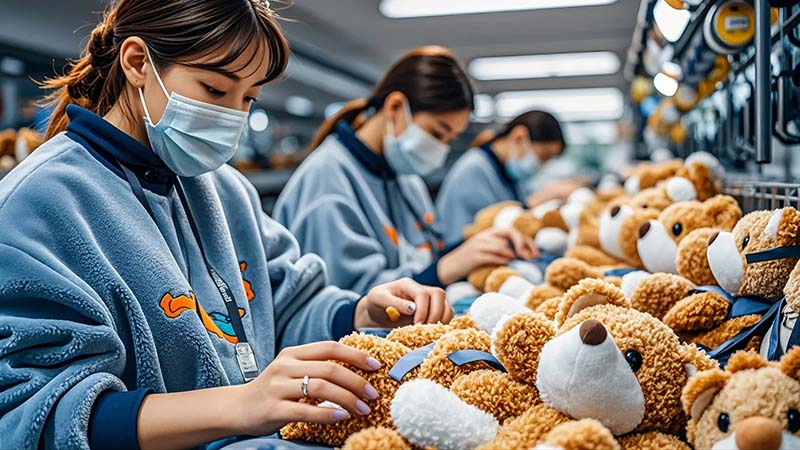
Plush toys occupy a unique regulatory position among consumer products. They are purchased with high emotional investment, given to vulnerable users including children, used in close physical contact with the body, and expected to perform safely under the kind of handling — pulling, squeezing, chewing, throwing — that accelerates wear and reveals structural weaknesses quickly.
These characteristics make plush toys the subject of some of the most comprehensive consumer product safety regulations in the world. In the United States, Europe, Japan, and most other major markets, plush toys cannot be legally sold without demonstrating compliance with specific safety standards through testing by accredited laboratories. This is not a voluntary standard — it is a legal requirement enforced through market surveillance, customs inspection, and platform compliance programs.
Safety testing is non-negotiable for plush toys because regulatory bodies in major markets require documented evidence of compliance before products can be sold, not after. Without valid test reports demonstrating that a product meets the applicable standards, a plush toy cannot be legally imported, listed on major e-commerce platforms, or placed in retail stores in regulated markets.
Here is an overview of the regulatory framework across the major export markets for plush toys:
| Market | Primary Standard | Regulatory Authority | Enforcement Mechanism |
|---|---|---|---|
| United States | ASTM F963 + CPSIA | CPSC (Consumer Product Safety Commission) | Market surveillance, import inspection, platform compliance |
| European Union | EN71 + CE Marking | National market authorities | CE marking requirement, customs inspection |
| United Kingdom | UK Toy Safety Regulations + UKCA | OPSS | UKCA marking requirement, market surveillance |
| Japan | ST Mark / Food Sanitation Law | JTRA / MHLW | Voluntary standard with customs chemical requirements |
| Australia | AS/NZS 8124 | ACCC | Mandatory standard for toy safety |
| Canada | Canada Consumer Product Safety Act | Health Canada | Mandatory chemical and mechanical requirements |
The Business Cost of Non-Compliance
Beyond the legal requirement, the business cost of compliance failure is substantial. A product recalled due to safety non-compliance generates direct costs — product recovery, destruction, regulatory notification — that typically far exceed the original testing investment. Platform delistings on Amazon or Walmart require remediation evidence before reinstatement. Customs seizures create shipment delays and potential forfeiture of the entire consignment.
For brands that have built customer trust over multiple product cycles, a safety recall carries reputational damage that extends well beyond the specific product involved. Customers who associate a brand with a recalled product are significantly less likely to purchase from that brand in the future — a loss that is difficult to quantify but very real in its commercial impact.
Why Testing Should Happen During Development, Not After Production
One of the most important strategic decisions in plush toy compliance is timing. Many buyers treat testing as a final step — submitting the finished bulk product for testing after production is complete. This approach creates maximum risk: if the product fails testing, a complete production run may need to be reworked or destroyed.
The more effective approach is to integrate testing into the development process. Testing fabric and filling materials for chemical compliance before sampling begins ensures that non-compliant materials are identified and replaced before they are built into the product. Testing the approved sample before bulk production confirms that the design and construction meet mechanical requirements — so that any structural issues can be addressed before the full run is produced.
What Are the Core Mechanical and Physical Tests Required for Plush Toys?
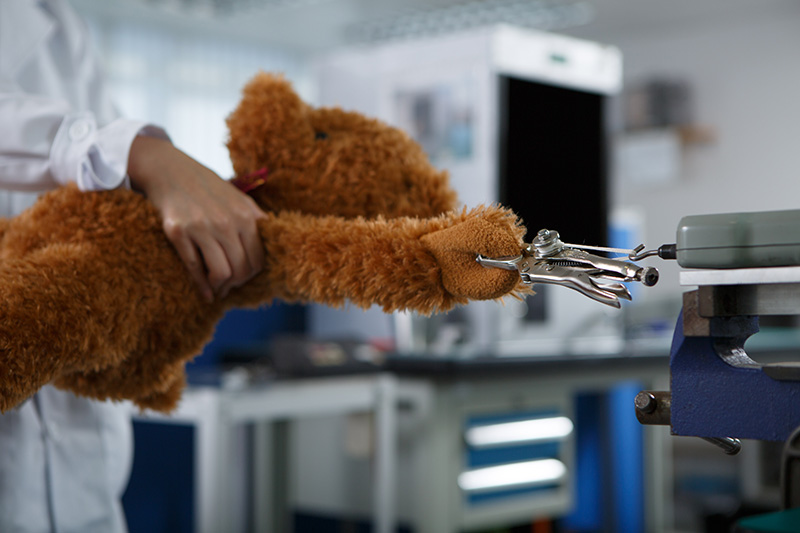
Mechanical and physical testing evaluates whether a plush toy is structurally safe for its intended use — whether it can withstand the physical forces it will be subjected to during normal handling without creating safety hazards. These tests are designed to simulate the ways that users, particularly children, interact with toys under both normal conditions and foreseeable misuse scenarios.
The core mechanical and physical tests required for plush toys cover structural integrity, small parts assessment, edge and point sharpness, noise level of sound-producing features, and stability under use conditions. These tests are specified in ASTM F963 for the US market and EN71 Part 1 for the European market, with significant overlap in the specific requirements between the two standards.
Here is an overview of the primary mechanical and physical tests applied to plush toys:
| Test Category | What Is Tested | Standard Reference | Purpose |
|---|---|---|---|
| Bite and chew simulation | Structural integrity under biting force | ASTM F963, EN71-1 | Identifies accessible hazardous parts |
| Pull force test | Attachment strength of accessories | ASTM F963, EN71-1 | Prevents detachment of small parts |
| Torque test | Resistance of attached components to twisting | ASTM F963, EN71-1 | Prevents detachment under rotation |
| Drop test | Structural integrity after repeated dropping | ASTM F963, EN71-1 | Identifies components released by impact |
| Small parts assessment | Size of any detached components | ASTM F963, EN71-1 | Prevents choking hazard |
| Compression test | Structural integrity under sustained pressure | ASTM F963, EN71-1 | Identifies hazards from compression |
| Tension test | Seam strength under pulling force | ASTM F963, EN71-1 | Prevents seam failure in use |
| Sharp edges and points | Assessment of exposed edges and points | ASTM F963, EN71-1 | Prevents laceration hazard |
| Sound level test | Decibel level of noise-producing features | ASTM F963, EN71-1 | Prevents hearing damage |
The Pull Force Test — Most Critical for Plush Toys
Of all mechanical tests, the pull force test is the most directly relevant to plush toy construction and the most frequently cited in compliance failures. This test measures the force required to detach accessories — eyes, noses, buttons, ribbons, and any other attached components — from the plush toy body.
For toys intended for children under three years of age, the pull force threshold is particularly stringent, because this age group presents the highest risk of small part ingestion. Any component that detaches under the required test force — which simulates the pulling force a child can apply — must be either redesigned to achieve secure attachment or replaced with an alternative that does not present a detachment risk.
For plush toy manufacturers, passing the pull force test requires specific construction approaches: safety eyes with locking washer backing, reinforced attachment points for ribbons and labels, and stitching techniques at accessory attachment sites that are specifically designed to resist the test force rather than standard decorative stitching.
Seam Strength and Structural Testing
The tension test for seam strength evaluates whether the stitching holding a plush toy together can withstand the pulling forces applied during normal and reasonably foreseeable use. Seam failures not only represent a structural quality issue — they also create safety hazards by exposing filling materials that may be hazardous if ingested.
For weighted plush toys specifically, seam strength testing is critical because the weight of the internal filling places significantly higher stress on seams than standard PP cotton filling. Factories producing weighted plush products must use reinforced stitching techniques and higher thread density at critical seam locations to ensure that the product passes seam strength testing under the additional stress created by the weighted filling.
Age Grading and Its Impact on Test Requirements
The specific mechanical and physical tests applied to a plush toy — and the thresholds that must be met — depend significantly on the age grade for which the product is intended. Products marked as suitable for children under 36 months face the most stringent requirements, including stricter small parts assessment, higher pull force thresholds, and more comprehensive structural testing.
Products intended for older children or adults face somewhat less stringent mechanical requirements in some categories — but this does not mean they are exempt from testing. Products intended for adults must still demonstrate that they do not present safety hazards under foreseeable use conditions, and many platforms and retailers apply toy safety standards to plush products regardless of the stated age grade.
Which Chemical Safety Tests Apply to Plush Toys Sold in the US and Europe?
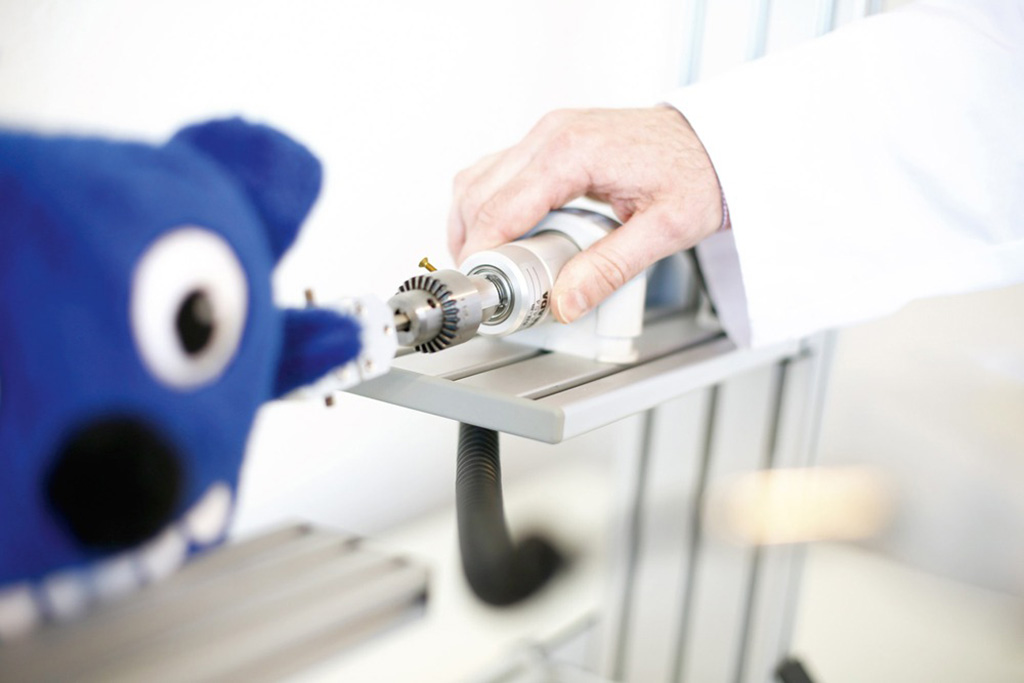
Chemical safety testing evaluates whether the materials used in a plush toy — fabrics, dyes, filling materials, accessories, and coatings — contain restricted substances at concentrations that exceed permitted limits. Chemical testing is required because certain substances commonly used in textile and toy manufacturing — including heavy metals, phthalates, azo dyes, and formaldehyde — present health risks to users, particularly children who may have prolonged skin contact with or mouth contact with plush toys.
Chemical safety tests for plush toys sold in the US and Europe cover heavy metal content, phthalate concentrations, azo dye compounds, formaldehyde levels, and other restricted substances defined in CPSIA, REACH, and EN71 Part 3. Both markets prohibit the presence of these substances above defined threshold concentrations — and compliance must be demonstrated through testing by accredited laboratories, not through supplier declarations alone.
Here is a comprehensive overview of chemical tests required across major markets:
| Chemical Test | Substance Tested | US Standard | EU Standard | Risk if Failed |
|---|---|---|---|---|
| Heavy metals | Lead, cadmium, chromium, antimony, others | CPSIA Section 101, ASTM F963 | EN71-3 | Neurotoxicity, organ damage |
| Phthalates | DEHP, DBP, BBP, DINP, DIDP, DNOP | CPSIA Section 108 | REACH Annex XVII | Endocrine disruption |
| Azo dyes | Carcinogenic aromatic amines | Not separately mandated but REACH applies if imported | EN71-9, REACH | Carcinogenicity |
| Formaldehyde | Free formaldehyde in textiles | Not federally mandated but platform requirements exist | REACH, national standards | Skin irritation, carcinogenicity |
| Nickel | Nickel release from metal components | ASTM F963 | EN1811 (REACH) | Allergic contact dermatitis |
| pH value | Acidity/alkalinity of textiles | Not mandated | Various national standards | Skin irritation |
| Organotin compounds | Tributyltin, dibutyltin, others | ASTM F963 | REACH | Neurotoxicity |
CPSIA and Lead Content Requirements
The Consumer Product Safety Improvement Act — CPSIA — is the primary federal law governing chemical safety for children’s products in the United States. For plush toys, CPSIA’s most significant requirements cover lead content in substrate materials and surface coatings, and phthalate concentrations in accessible plastic and vinyl components.
Under current CPSIA requirements, the lead content limit for substrate materials in children’s products is 100 ppm (parts per million). For surface coatings — paints, dyes, and coatings on accessible surfaces — the limit is 90 ppm. These limits apply to all materials accessible to children in the product, which for plush toys includes the outer fabric, embroidery thread, accessories, and any plastic components such as safety eyes or buttons.
CPSIA also requires that products subject to its provisions carry a permanent tracking label — providing information about the manufacturer, production location, date of manufacture, and product identification — on both the product itself and its packaging. This tracking label requirement is separate from chemical compliance testing but equally mandatory for market entry.
REACH and the EU Chemical Safety Framework
In the European Union, chemical safety for plush toys is governed primarily by the REACH regulation — Registration, Evaluation, Authorisation and Restriction of Chemicals — alongside the specific chemical requirements in EN71 Part 3. REACH maintains a list of Substances of Very High Concern (SVHCs) and restricted substances whose use in articles, including toys, is either banned or subject to strict concentration limits.
For plush toy importers into the EU, REACH compliance requires verifying that all materials in the product — including fabric, filling, dyes, thread, accessories, and any coatings — are free from restricted substances at concentrations above the applicable thresholds. This verification must be supported by test reports from accredited laboratories — supplier declarations of compliance are not sufficient as standalone evidence for market surveillance purposes.
The Azo Dye Requirement
Azo dyes are a large class of synthetic dyes widely used in textile manufacturing. Certain azo dyes break down under specific conditions to release carcinogenic aromatic amines — compounds that are classified as human carcinogens and are restricted under both EU regulations and international textile safety standards.
For plush toys, azo dye testing is applied to all colored fabric components — outer fabric, lining, embroidery thread, and ribbon or trim accessories. Fabrics certified under OEKO-TEX Standard 100 have been tested and verified free from restricted azo compounds, making OEKO-TEX certification a useful — though not legally mandated — indicator of fabric chemical safety compliance.
How Are Flammability and Fabric Safety Requirements Tested in Plush Toys?
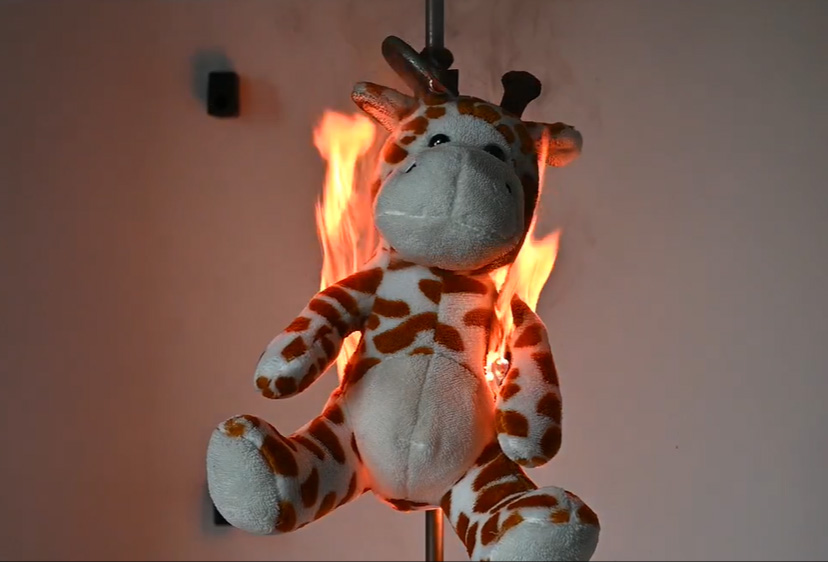
Flammability testing evaluates how quickly and how severely a plush toy ignites and burns when exposed to a flame source. This is a critical safety dimension because plush toys are often used near bedding, furniture, and other flammable materials — and a product that ignites readily and burns rapidly presents a significant fire safety risk in a domestic environment.
Flammability requirements for plush toys differ between the US and EU markets in their specific test methods and threshold requirements, but both markets mandate that plush toys meet defined flame resistance standards. Failure in flammability testing is one of the most commercially serious compliance outcomes — because flammability is a fundamental physical property of the material that cannot be corrected by reworking finished units.
Here is an overview of the flammability requirements applicable to plush toys in major markets:
| Market | Standard | Test Method | Requirement | Consequence of Failure |
|---|---|---|---|---|
| United States | 16 CFR Part 1610 | Fabric flammability test | Class 1 (normal) flammability required | Product cannot be sold |
| United States | ASTM F963 | Fabric flammability reference | Requires compliance with 16 CFR 1610 | As above |
| European Union | EN71-2 | Flammability test for toys | Specific burn rate and ignition requirements | CE marking cannot be applied |
| United Kingdom | UK Toy Safety Regulations | Equivalent to EN71-2 | Same as EU | UKCA marking cannot be applied |
Why Fabric Selection Is the Most Important Flammability Control
Unlike chemical compliance — where testing identifies a problem that can sometimes be resolved through material substitution — flammability compliance is determined primarily at the material selection stage. Fabrics either meet flammability requirements or they do not, and there is limited ability to remediate a non-compliant fabric after it has been incorporated into a finished product.
This makes pre-production fabric flammability testing one of the most important compliance investments a buyer and manufacturer can make. Testing fabric samples before they are used in production — rather than testing finished products after the full production run is complete — ensures that any non-compliant material is identified and replaced before it creates a compliance failure at the product level.
Most reputable plush fabric suppliers maintain flammability test reports for their standard fabrics. Requesting and verifying these reports before approving fabric for production is a standard practice in compliant plush toy manufacturing — and one that buyers should confirm their manufacturer follows as part of the pre-production process.
EN71 Part 2 — European Flammability Requirements
EN71 Part 2 specifies flammability requirements for toys sold in the European market. For plush toys, the key requirements cover the rate at which the outer fabric burns when exposed to a flame source, the behavior of the filling material when ignited, and the flame propagation characteristics of any stuffed or upholstered sections of the product.
One important aspect of EN71 Part 2 is that it applies to the toy as a whole — not just the outer fabric in isolation. This means that the combination of outer fabric, filling material, and any internal structural components must be tested together to confirm overall product flammability compliance. A fabric that passes flammability testing in isolation may produce a different result when tested in combination with the filling material used in the final product.
What Additional Tests Apply to Weighted, Electronic, or Functional Plush Toys?
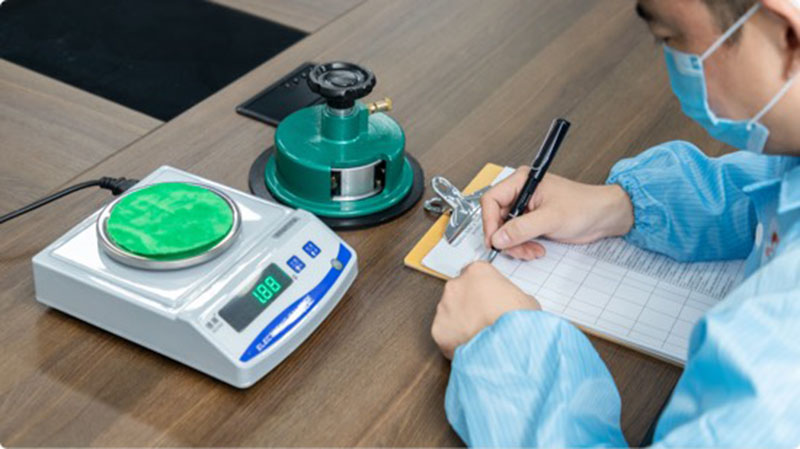
Standard mechanical, chemical, and flammability tests cover the baseline compliance requirements for conventional plush toys. Products that incorporate additional functional elements — weighted filling systems, electronic components, batteries, sounds, or lights — face additional test requirements that address the specific hazards those features introduce.
Weighted, electronic, and functional plush toys require additional testing beyond the standard plush toy test battery to address the specific safety risks associated with their functional features. These additional tests cover electrical safety for products with electronic components, battery safety for products with battery compartments, electromagnetic compatibility for wireless features, and structural integrity requirements specific to weighted filling systems. Buyers developing products in these categories must ensure that the additional test requirements for their specific functional features are identified and addressed during the compliance planning stage.
Here is an overview of additional tests applicable to functional plush toy variants:
| Product Type | Additional Test Required | Standard Reference | Hazard Addressed |
|---|---|---|---|
| Weighted plush toys | Enhanced seam and filling containment testing | ASTM F963, EN71-1 | Filling leakage, ingestion risk |
| Sound-producing plush | Sound level testing (85 dB limit at maximum) | ASTM F963, EN71-1 | Hearing damage |
| Light-emitting plush | Optical radiation assessment | EN62471 | Eye damage from intense light |
| Battery-operated plush | Battery compartment security, electrical safety | IEC 62115, EN71-1 | Battery ingestion, electrical hazard |
| USB-rechargeable plush | Electrical safety, charging safety | IEC 62368-1 | Electrical shock, overcharge hazard |
| Bluetooth/wireless plush | Radio frequency compliance | FCC Part 15 (US), CE Radio (EU) | Interference, regulatory compliance |
| Heated plush | Thermal safety, temperature limits | IEC 60335 | Burn hazard |
| Plush with magnets | Magnet strength assessment | ASTM F963, EN71-1 | Ingestion, magnetic interference |
Weighted Plush Toy Compliance Requirements
Weighted plush toys present specific compliance challenges that go beyond standard plush testing. The internal weighted filling — typically glass beads, plastic pellets, or steel shot — introduces hazards not present in conventionally filled products: the risk of filling leakage if the containment structure fails, and the ingestion or aspiration risk if loose filling becomes accessible.
For weighted plush products, the seam strength and structural integrity testing specified in ASTM F963 and EN71-1 is applied with particular focus on the containment of the weighted filling. The inner bag or compartment structure that holds the weighted filling must pass pull force and tension tests that demonstrate it will not fail under normal use conditions, and the outer seams of the product must prevent access to the inner bag even if the outer seam is stressed or partially compromised.
Many regulatory experts recommend that weighted plush toys intended for children also be assessed under the scope of soft-filled articles regulations in addition to toy standards — since the weight and construction of these products may place them in a regulatory category adjacent to, or overlapping with, other textile product categories depending on the specific market.
Electronic Component Testing
Plush toys incorporating electronic components — sound modules, light elements, Bluetooth connectivity — face electrical safety testing requirements that are separate from and additional to toy safety testing. In the US, electronic toy components must comply with UL 696 and the broader requirements of ASTM F963 as applied to electrical toys. In Europe, electronic toy safety is addressed through the Low Voltage Directive and relevant IEC standards applied in conjunction with EN71.
Battery compartment security is a particularly important compliance point. Battery compartments in children’s toys must be secured in a way that prevents unintended access by young children — typically requiring a screwdriver to open. This requirement exists to prevent battery ingestion, which is one of the most serious toy-related safety incidents documented in consumer product safety databases.
How Does the Testing Process Work from Sample Submission to Certification?
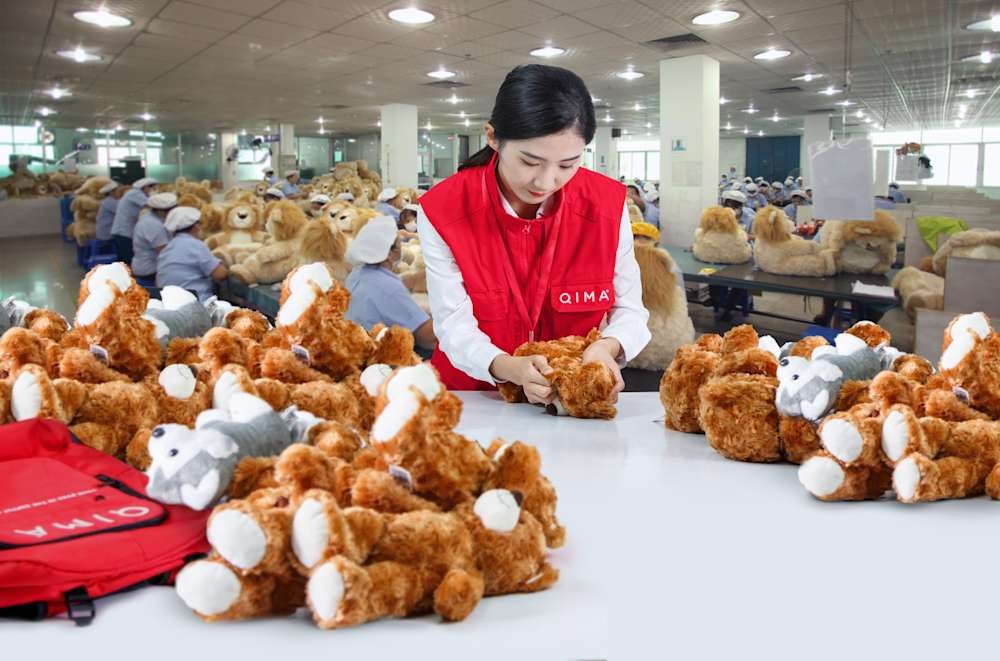
Understanding the mechanics of the testing process — how samples are submitted, how long testing takes, what the output looks like, and how to interpret the results — helps buyers manage the compliance timeline efficiently and avoid the delays that arise from process misunderstandings.
The plush toy testing process follows a defined sequence from sample preparation through laboratory testing to report issuance. The process begins when the buyer or manufacturer submits samples of the product — along with relevant documentation — to an accredited testing laboratory. The laboratory performs the applicable tests against the specified standards and issues a detailed test report documenting each test result. A passing report forms the basis of the compliance documentation required for market entry.
Here is a step-by-step overview of the testing process:
| Testing Stage | What Happens | Who Acts | Typical Duration |
|---|---|---|---|
| Standard identification | Determine applicable tests based on product, market, and age grade | Buyer + laboratory | 1–2 days |
| Sample preparation | Prepare sufficient samples for all required tests | Manufacturer | 1–3 days |
| Sample submission | Ship samples to accredited laboratory | Manufacturer or buyer | 1–5 days shipping |
| Laboratory intake | Laboratory registers samples and confirms test scope | Laboratory | 1–2 days |
| Testing | All applicable tests conducted in laboratory | Laboratory | 7–21 days depending on scope |
| Report review | Preliminary results reviewed, any failures identified | Laboratory + buyer | 1–3 days |
| Report issuance | Final test report issued with pass/fail result per test | Laboratory | 1–2 days after review |
| Corrective action (if needed) | Failed elements redesigned and retested | Manufacturer + buyer | Variable |
| Production clearance | Passing report used to authorize bulk production compliance | Buyer | Before production shipment |
How Many Samples Are Required for Testing
The number of samples required varies by standard and test scope. A comprehensive ASTM F963 and CPSIA test program for a plush toy typically requires between 12 and 24 samples — with different samples allocated to different test categories, since some tests are destructive and the sample cannot be reused for additional testing after the test is complete.
This sample requirement has an important implication for timing: testing samples must be produced before or alongside bulk production, not sourced from the bulk production run after it is complete. Planning the testing timeline to align with the development process — rather than sequentially after bulk production — is one of the most practical ways to prevent compliance-related shipment delays.
What a Test Report Contains and How to Read It
A plush toy test report from an accredited laboratory is a structured document that covers the test scope, the test methods applied, the results for each individual test, and an overall determination of pass or fail. Understanding how to read and interpret this document helps buyers use it effectively as both a compliance record and a quality management tool.
The most important sections of a test report for practical buyer use are the summary section — which provides the overall pass/fail determination — and the individual test result section — which documents the result for each specific test conducted. When a product fails a specific test, the test report identifies which test failed, what result was obtained, and what the required threshold was. This information is directly actionable for manufacturers working to bring a non-compliant product into compliance.
What Documentation Should Buyers Require from Their Plush Toy Manufacturer?
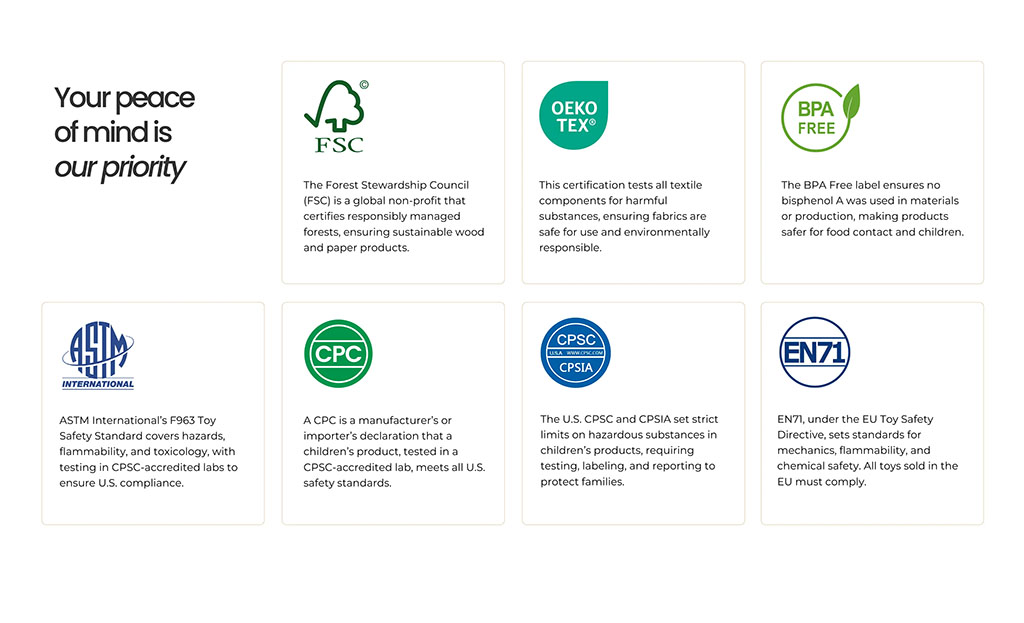
Compliance documentation is not just a regulatory requirement — it is a critical risk management tool for buyers. The documentation that exists before and after production determines whether a buyer can demonstrate compliance when challenged, whether they can defend against a recall or regulatory action, and whether they have the legal and commercial standing to hold a non-compliant manufacturer accountable.
Buyers should require a specific set of compliance documentation from their plush toy manufacturer before and after production, covering material test reports, product test reports, factory audit documentation, labeling compliance, and production batch traceability. The absence of any of these documents creates a gap in the compliance record that can create significant problems if a compliance issue arises after market entry.
Here is a comprehensive documentation checklist for plush toy buyers:
| Document Type | What It Covers | When to Require It | Who Provides It |
|---|---|---|---|
| Material test reports | Chemical compliance of fabric, filling, accessories | Before production begins | Material suppliers via manufacturer |
| Flammability test reports | Fabric flammability compliance | Before production begins | Material suppliers via manufacturer |
| Product test report (ASTM F963) | Full mechanical and chemical compliance (US) | After sample, before or during bulk | Accredited laboratory |
| Product test report (EN71) | Full mechanical and chemical compliance (EU) | After sample, before or during bulk | Accredited laboratory |
| CPSIA tracking label confirmation | Label content and placement on product and packaging | Before shipment | Manufacturer |
| CE Declaration of Conformity | EU market compliance declaration | Before EU market entry | Manufacturer or importer |
| Factory audit report | Manufacturing capability and social compliance | Before placing order | Third-party auditor |
| Production batch record | Traceability of materials used in specific batch | After production | Manufacturer |
| Children’s Product Certificate (CPC) | US mandatory certificate for children’s products | Before US market entry | Importer of record |
The Children’s Product Certificate
The Children’s Product Certificate — CPC — is a mandatory document for products sold in the US market that are intended for children under 12 years of age. The CPC is not issued by a laboratory — it is issued by the importer of record, based on testing results from an accredited laboratory. It certifies that the product meets all applicable children’s product safety requirements.
Buyers who are the importer of record for plush toys entering the US market are legally responsible for issuing the CPC and maintaining the documentation that supports it. This means that having valid, current test reports from accredited CPSC-accepted laboratories is not just a quality assurance measure — it is a legal prerequisite for issuing a compliant CPC.
Maintaining a Compliance File for Each Product
The most effective approach to compliance documentation management is maintaining a dedicated compliance file for each product SKU that contains all relevant documents in an organized, accessible format. This file should be updated every time a material or design change occurs that might affect compliance — because any change to the product’s materials or construction may invalidate existing test reports and require retesting of the affected elements.
A well-maintained compliance file also provides the fastest and most credible response to any compliance inquiry — from a retailer, platform, customs authority, or regulatory body. Being able to produce complete, current compliance documentation immediately in response to a request is the clearest signal of a brand’s compliance seriousness and the most effective way to resolve compliance inquiries without escalation.
How Can Buyers Choose the Right Testing Laboratory for Their Plush Toy Products?
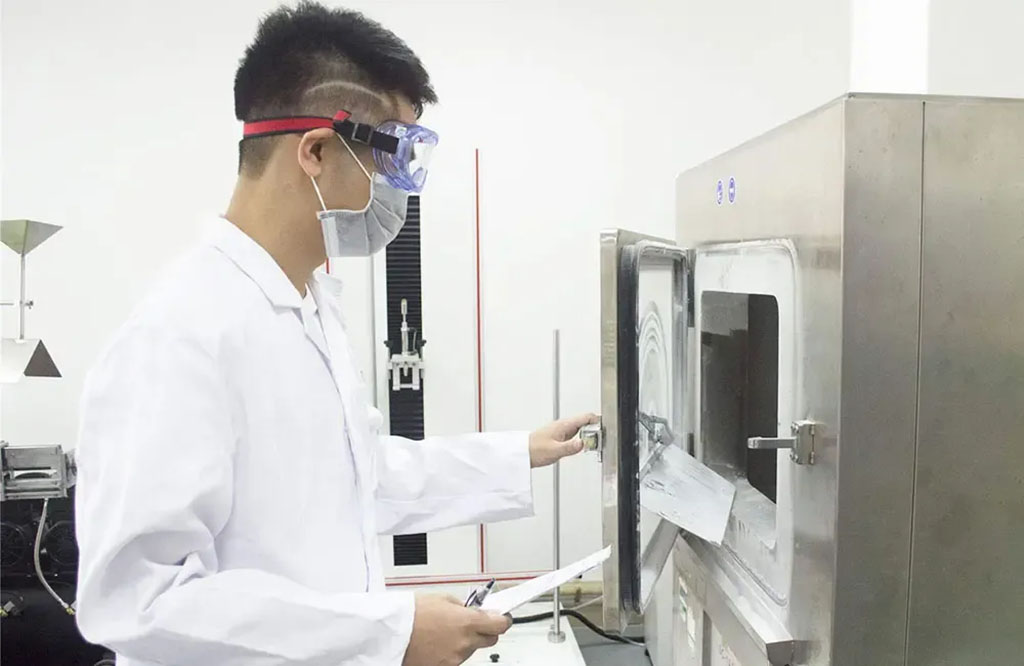
Not all testing laboratories are created equal. For plush toy compliance testing, using an accredited laboratory that is recognized by the relevant regulatory authorities is not optional — test results from non-accredited laboratories are not accepted as compliance evidence by regulators, platforms, or major retailers.
Buyers should choose a testing laboratory for plush toys based on its accreditation status for the applicable standards, its acceptance by the relevant regulatory authority in the target market, its experience with plush toy and textile product testing, its sample handling and turnaround time capability, and its ability to provide clear, actionable reports that support compliance decisions.
Here is an overview of the key laboratory selection criteria and how to evaluate them:
| Selection Criterion | What to Look For | How to Verify |
|---|---|---|
| CPSC acceptance (US) | Listed as CPSC-accepted third-party laboratory | Check CPSC website laboratory list |
| EN71 accreditation (EU) | Notified body or accredited under EN ISO 17025 | Check laboratory accreditation certificate |
| ILAC membership | International Laboratory Accreditation Cooperation recognition | Check ILAC member body acceptance |
| Plush toy experience | Track record with textile and soft toy testing | Ask for reference list or portfolio |
| Sample turnaround time | Standard and expedited options available | Request current turnaround time schedule |
| China-based testing option | Local testing reduces shipping time and cost | Ask about mainland China laboratory locations |
| Report format | Clear pass/fail by test, actionable failure information | Request sample report format |
The Major Accredited Laboratories for Plush Toy Testing
The three most widely recognized and accepted testing organizations for plush toy compliance globally are SGS, Bureau Veritas, and Intertek. All three maintain accredited laboratory facilities in China — where most plush toys are manufactured — as well as in the US, Europe, and other markets. Using any of these three for product compliance testing provides the highest level of recognition across all major markets and all major retail and e-commerce platforms.
Each of these laboratories offers both standard testing services — with turnaround times typically ranging from 10 to 21 days — and expedited services — with turnaround times as short as 3 to 5 days for urgent compliance needs. The cost difference between standard and expedited testing is significant, so planning the testing timeline to avoid expedited fees is a practical budget management consideration.
Working with Your Manufacturer on Laboratory Selection
Many experienced plush toy manufacturers have established working relationships with accredited testing laboratories — including preferred pricing arrangements, efficient sample submission processes, and experience coordinating the documentation requirements that laboratories request alongside samples. Buyers who leverage these established relationships rather than arranging testing entirely independently often benefit from faster processing, better pricing, and more efficient report handling.
At Kinwin, we maintain active relationships with accredited testing laboratories including SGS and Intertek, and we actively support our clients through the testing process — from identifying the applicable test scope for their product and market, to preparing and submitting samples, to reviewing results and coordinating any necessary corrective action. Our goal is to ensure that every product we produce is not only manufacturable but fully compliant and market-ready from the moment it leaves our facility.
If you are developing a new plush toy product and want to understand exactly which tests apply to your specific product and target market, we would be glad to walk you through the compliance requirements as part of our pre-development consultation. Reach out at [email protected] or visit kinwintoys.com to start the conversation.
Conclusion
Plush toy safety testing is not a bureaucratic obstacle — it is the foundation of responsible product development and the clearest signal of a brand’s commitment to the safety of the customers it serves. Understanding which tests apply, when they should be conducted, what documentation they produce, and how to use that documentation effectively transforms compliance from a stressful end-of-process scramble into a structured, predictable part of product development.
The brands that handle compliance most effectively are not necessarily those with the largest compliance teams or the biggest testing budgets. They are the ones who integrate compliance thinking into every stage of product development — choosing certified materials from the start, testing at the sample stage rather than after bulk production, maintaining complete documentation for every product, and working with manufacturing partners who understand compliance requirements as deeply as they understand production.
At Kinwin, compliance is built into our process from the first material selection decision. We work with certified material suppliers, guide our clients through applicable test requirements for their target markets, and coordinate with accredited laboratories to ensure that every product we produce can demonstrate full compliance before it reaches the market. This is not an additional service — it is part of what it means to be a manufacturing partner who genuinely supports our clients’ success.
FAQ
Q1: If I change a material or design element after the product has already passed testing, do I need to retest?
Yes — in most cases, any material or design change that could affect compliance requires retesting of the affected elements. The scope of retesting depends on the nature of the change. A fabric color change using a different dye lot may require retesting for chemical compliance but not mechanical testing. A change to the eye attachment method requires retesting of the pull force assessment. A change to the filling material requires retesting of both chemical compliance and structural integrity. The safest approach is to consult with your testing laboratory before implementing any post-testing change, and to document all changes in your compliance file along with the retesting evidence. Failing to retest after a material change is one of the most common compliance management errors — and one of the most serious, because it creates a gap between the documented compliance record and the actual product on the market.
Q2: Are adult plush toys subject to the same safety testing requirements as children’s toys?
Not always — but the distinction is less clear-cut than many buyers assume. Products explicitly marketed and labeled for adults only may not be subject to the most stringent children’s toy safety requirements in all markets. However, platform compliance programs — particularly Amazon’s — often apply toy safety standards to all plush products regardless of stated age grade, because plush toys are routinely purchased as gifts across age groups and may end up in households with children regardless of the intended user. Additionally, chemical safety requirements under REACH and CPSIA apply to consumer products broadly, not only to children’s toys. Buyers developing adult-positioned plush products should confirm the specific compliance requirements with their testing laboratory before assuming they are exempt from toy safety testing.
Q3: How long are plush toy test reports valid, and when do they need to be renewed?
Test reports do not have a universal expiry date — their validity depends on whether the product, materials, or applicable standards have changed since the test was conducted. In practice, most major retailers and platforms accept test reports that are no more than one to two years old for the same product without changes. If the applicable standard is revised — as ASTM F963 and EN71 are periodically updated — products tested to the previous version may need to be retested against the new version requirements. Any change to the product’s materials, construction, or accessories should trigger retesting of the relevant compliance elements regardless of the age of the existing reports. Maintaining a clear record of when each product was last tested and against which version of each standard is the most practical way to manage test report validity across a product portfolio.
Q4: What happens if a plush toy fails a specific test — can the product be modified and retested, or does it need to be completely redesigned?
In most cases, a specific test failure can be addressed through a targeted modification rather than a complete product redesign. A pull force failure on an eye attachment is addressed by changing the attachment method — using a locking washer backing rather than glue, or increasing the stitch density at the attachment point — and retesting the modified attachment. A chemical failure on a specific fabric is addressed by replacing that fabric with a certified alternative and retesting the chemical compliance of the new material. A seam strength failure is addressed by increasing stitch density or thread weight at the failing seam and retesting seam strength. The key is identifying precisely which element failed and why — which is why a detailed test report with specific failure data is so important — and then making a surgical correction to that element rather than rebuilding the entire product.
Q5: Is OEKO-TEX certification a substitute for toy safety testing, or do both need to be obtained?
OEKO-TEX Standard 100 certification is a textile safety certification that verifies a fabric has been tested and found free from a defined list of harmful substances. It is a strong indicator of fabric chemical safety and is valued in the market as a credibility signal. However, it is not a substitute for toy safety testing under ASTM F963, EN71, or CPSIA. OEKO-TEX certification covers only the chemical safety of the fabric itself — it does not address mechanical safety, flammability, small parts assessment, or the other elements of toy safety compliance. A plush toy made entirely from OEKO-TEX certified fabrics still requires full toy safety testing before it can be legally sold in regulated markets. The two certifications address different aspects of product safety and are complementary rather than interchangeable.