When families message me about head lice, one of the first panicked questions is always:
“Do lice live on stuffed animals? Do I have to bag or wash everything?”
The short answer is calming: medical research shows that head lice do not live well on stuffed animals. They need a human scalp to survive. They can fall onto plush toys, but they die fairly quickly and are very unlikely to start a new infestation from there. 醫療新聞今天+3疾病控制與預防中心+3疾病控制與預防中心+3
In this guide, I’ll explain what the science says, how long lice and nits can last away from the scalp, and what level of cleaning actually makes sense for plush toys. My goal is to help you protect your family without doing unnecessary, exhausting deep-cleaning.
Do lice survive on stuffed animals according to medical research?
From a medical point of view, head lice are human scalp specialists. They need warm skin and regular blood meals to stay alive. Once they leave the head and end up on something like a stuffed animal, their survival window becomes very short.
Health authorities such as the CDC and pediatric organizations consistently say that lice spread mainly by direct head-to-head contact, not by toys, furniture, or carpets. AP News+3疾病控制與預防中心+3ipm.ucanr.edu+3 Adult lice usually die within 1–2 days off the scalp because they can’t feed. Healthline+3疾病控制與預防中心+3疾病控制與預防中心+3
So yes, a live louse can briefly land on a stuffed animal—but it is not a place where lice live or multiply. It’s more like a temporary, hostile surface where they soon die.
Table 1 – What research says about lice on stuffed animals
| Question | Medical Research Insight |
|---|---|
| Main way lice spread? | Direct head-to-head contact between people, not via objects or pets. AP News+3疾病控制與預防中心+3ipm.ucanr.edu+3 |
| Can lice live long on plush toys? | No. Adults typically die within 1–2 days off the scalp. Healthline+3疾病控制與預防中心+3疾病控制與預防中心+3 |
| Are stuffed animals “normal hosts”? | No. Toys are considered low-risk surfaces, not habitats. ipm.ucanr.edu+1 |
| Do nits develop on stuffed toys? | Nits need scalp temperature to hatch and usually die off-scalp. 疾病控制與預防中心+2PMC+2 |
| Do experts recommend extreme toy cleaning? | No. Focus is on treating hair; toy cleaning is simple and limited. ipm.ucanr.edu+1 |
For you as a parent or buyer, this means plush toys are not the main enemy. Treating the hair properly does most of the work.
How long can lice and nits remain viable on plush surfaces?
To understand risk, it helps to separate lice (the moving insects) from nits (the eggs).
- Adult and nymph (baby) head lice:
- Survive about 1–2 days off the scalp without feeding. Some reports say “up to 48 hours,” others “up to 2–3 days” in ideal lab conditions, but 1–2 days is the common guidance. Healthline+4疾病控制與預防中心+4PMC+4
- Nits (eggs):
- Need the warmth of the scalp to develop.
- Away from the head, they usually cannot complete development and typically die within about a week, often sooner. 醫療新聞今天+3疾病控制與預防中心+3PMC+3
Plush surfaces are cooler, drier, and don’t provide blood meals. So even if a louse or nit gets onto a stuffed animal, the window for real risk is very short, and the chance of it crawling back to a new scalp is low.
Table 2 – Survival times of lice and nits on vs. off the scalp
| Location / Condition | Adult Lice Survival | Nits (Eggs) Survival & Viability |
|---|---|---|
| On human scalp | Up to ~30 days with regular feeding | Hatch in 7–10 days near scalp, then life cycle continues. 疾病控制與預防中心+2疾病控制與預防中心+2 |
| On plush toys / fabrics | Typically die within 1–2 days | Usually can’t hatch; die within several days to a week. 醫療新聞今天+3疾病控制與預防中心+3PMC+3 |
| Without access to blood | Die in 24–48 hours | Eggs fail to develop at room temperature. 疾病控制與預防中心+2疾病控制與預防中心+2 |
| At cool room temperature | Move more slowly, become weak quickly | Hatching unlikely; environment not like the scalp. PMC+1 |
This is why many expert cleaning guides suggest that after 48 hours, items that were set aside (not touching any heads) are no longer a realistic lice risk. newportgriz.com+2bgp.tolland.k12.ct.us+2
What conditions make stuffed animals unlikely hosts for lice?
Head lice are very specialized; they are not general “house bugs.” There are several reasons plush toys are poor environments for them:
- No food source
- Lice need human blood several times a day. Without it, they die quickly. There’s no way to feed on fabric or stuffing. 疾病控制與預防中心+2疾病控制與預防中心+2
- Temperature and humidity
- The temperature near the scalp is perfect for lice. Plush toy surfaces are cooler and drier, which is stressful for them. 疾病控制與預防中心+2醫療新聞今天+2
- Movement limits
- Lice are crawlers, not jumpers or fliers. Soft, deep fibers can trap and slow them, making it harder to reach a new head. 疾病控制與預防中心+1
- No hair shafts
- Nits are glued to hair. Fabric fibers don’t give the same structure, and eggs off the head rarely reach full development. 疾病控制與預防中心+1
Table 3 – Why stuffed animals are poor environments for lice
| Factor | Situation on Human Head | Situation on Stuffed Animal | Effect on Lice Survival |
|---|---|---|---|
| Food (blood) | Available several times a day | Not available at all | Lice starve in 1–2 days. |
| Temperature | Warm, stable, close to body temperature | Cooler, fluctuates with room conditions | Eggs don’t develop; lice weaken. |
| Humidity | Higher near scalp/skin | Drier in open air | Dehydration speeds lice death. |
| Attachment surface | Hair shafts ideal for gripping and egg laying | Fabric pile is irregular, no hair roots | Poor grip, eggs not well supported. |
| Movement pathway | Easy movement between hairs during head contact | Isolated, no direct link to another scalp | Low chance of transferring to a host. |
All of this supports the idea that stuffed animals are possible short-term landing spots, but not true “homes” for lice.
How should parents clean plush toys after a lice exposure?
Here’s where a lot of stress comes in. Many parents feel they must wash or bag every single item—which is exhausting and usually unnecessary. Most medical and public health sources now recommend simple, targeted cleaning of items used in the past 1–2 days. AP News+3疾病控制與預防中心+3ipm.ucanr.edu+3
For stuffed animals that were hugged, slept with, or used as pillows by a child with lice in the last 48 hours, these are common options:
- Dryer heat
- Place the plush in a dryer on high heat for 20–40 minutes, following fabric limits. Tom’s Guide+5newportgriz.com+5bgp.tolland.k12.ct.us+5
- Hot wash (if allowed)
- Wash in hot water (around 130°F / 54°C) and then dry on high heat. Tom’s Guide+3醫療新聞今天+3dshs.texas.gov+3
- Sealing and setting aside
- For delicate or non-washable toys, seal in a plastic bag for at least 48 hours, up to 1–2 weeks according to some school and health guidelines. My Vanderbilt Health+3newportgriz.com+3dshs.texas.gov+3
- Simple “do not use” period
- Some experts note that lice will die naturally off the head, so simply not using certain stuffed animals for a couple of days is usually enough. ipm.ucanr.edu+2醫療新聞今天+2
Important: For medical decisions and treatment choices, always follow your pediatrician’s or local health authority’s guidance. I’m summarizing general information, not giving personal medical advice.
Table 4 – Practical cleaning options for plush toys after lice exposure
| Cleaning Option | Basic Method | When It’s Most Useful |
|---|---|---|
| Dryer (preferred) | 20–40 min on high heat, if toy can handle it | Most standard plush animals, quick and effective |
| Hot wash + dry | Wash at ~130°F / 54°C, then tumble dry on high | Colorfast, washable plush; strong cleaning plus heat |
| Bagging / sealing | Place in sealed plastic bag, store 48 hrs–2 weeks | Delicate or non-washable toys, low-frequency use items |
| “Rest” period | Put aside where no heads touch for at least 48 hrs | Extra-low risk items, when you want to avoid overcleaning |
| Professional cleaning | Dry-clean where appropriate | High-end collectibles or special fabrics |
For most families, heat in the dryer plus a short “rest period” for anything delicate is more than enough.
When is machine washing or sealing stuffed animals necessary?
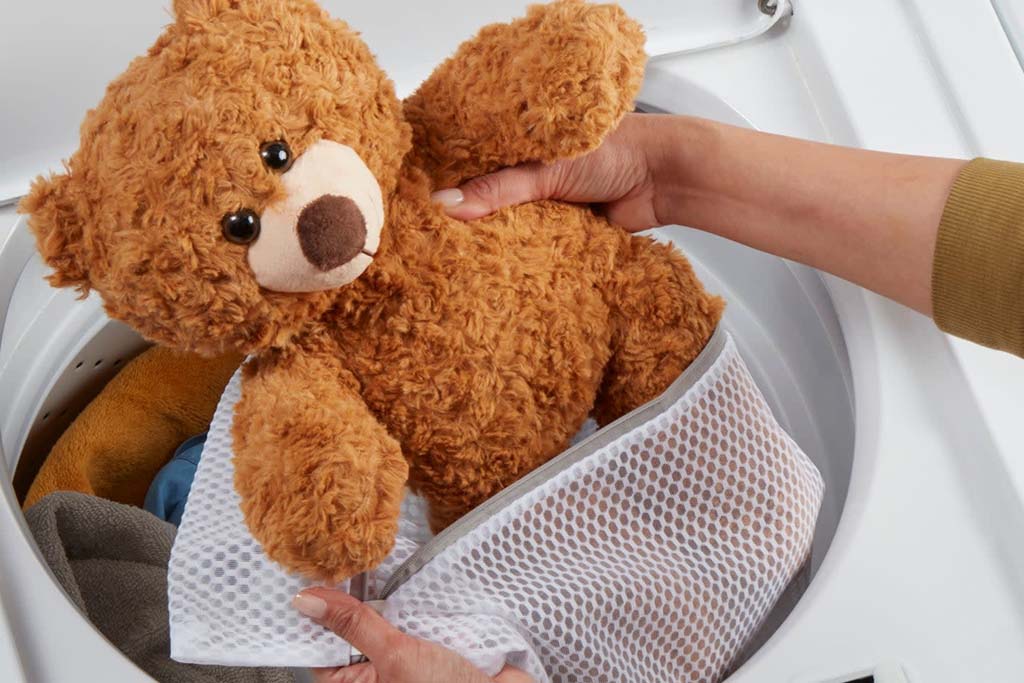
You do not have to wash or bag every stuffed animal in the house. Instead, focus on toys that had direct, recent contact with the infested person’s head or body. Many guidelines suggest focusing on items used in the previous 1–2 days, because lice rarely live longer than that off the scalp. AP News+3疾病控制與預防中心+3醫療新聞今天+3
You might choose washing or sealing if:
- The child sleeps with the plush every night, especially pressed against the head.
- The toy was used as a pillow or headrest.
- The plush was used in pretend play close to hair (for example, “hair salon” games).
For plush that sat on a shelf and never touched the head, extra cleaning is usually more for your peace of mind than for real lice control.
Table 5 – Scenarios and recommended actions
| Scenario | Realistic Lice Risk Level | Reasonable Action |
|---|---|---|
| Favorite bedtime plush hugged against head nightly | Higher (direct recent head contact) | Machine wash & dry on high heat, or dry + bagging |
| Plush used as pillow on sofa during infestation | Moderate | Dryer cycle or 48-hour “rest” off-limits |
| Plush displayed on shelf, no recent handling | Very low | No special action needed |
| Large decorative plush on bed foot, not near head | Low | Optional: dryer or “rest” period if you wish |
| Box of stored plush not played with recently | Extremely low | No action needed |
Keeping your routine simple and targeted makes the whole lice cleanup process much less stressful and more sustainable.
How do experts distinguish lice risk between fabric items and hair?
Health experts make a clear distinction between hair, where lice live and reproduce, and objects, where lice only survive briefly if they happen to fall off.
Key points from organizations like the CDC, pediatric societies, and children’s hospitals:
- Head-to-head contact is the main route. Objects like hats, brushes, bedding, and stuffed animals are secondary and much less important. AP News+5疾病控制與預防中心+5ipm.ucanr.edu+5
- Adult lice cannot live more than about 1–2 days off the scalp, so the time window for objects to matter is short. westportps.org+4疾病控制與預防中心+4疾病控制與預防中心+4
- Nits do not easily hatch off the scalp and are much less of a threat on fabric than live lice in hair. seattlechildrens.org+3疾病控制與預防中心+3加拿大兒科醫學會+3
- Cleaning the environment is helpful, but experts warn against over-focusing on laundry and toys at the expense of treating the hair properly. ipm.ucanr.edu+2ccchd.com+2
Table 6 – Hair vs. fabric: how experts view lice risk
| Aspect | On Hair / Scalp | On Stuffed Animals & Fabrics |
|---|---|---|
| Main function for lice | Habitat, food source, egg-laying site | Accidental surface, no food or long-term survival |
| Typical survival time | Up to ~30 days with feeding | Usually 1–2 days, often less |
| Reproduction | Yes – full life cycle (egg → nymph → adult) | No – eggs can’t hatch properly, adults die soon |
| Primary control method | Proper lice treatment on hair, combing, retreatment schedule | Simple cleaning & short isolation of key items |
| Overall importance | Critical – must be treated | Secondary – low risk, simple steps are enough |
For you, this means: put most of your energy into the scalp, and treat stuffed animals in a focused, moderate way.
Conclusion
Medical research shows that lice do not truly “live” on stuffed animals. They can fall onto plush toys, but they die quickly without a human scalp, and they don’t complete their life cycle on fabric. With a few practical steps—like running key plush toys through a hot dryer, or setting them aside for a couple of days—you can reduce an already low risk to almost zero, without turning your home upside down.
In my work at Kinwin, I focus on how plush toys are designed, produced, and cleaned in real families’ lives. If you’re a brand owner or retailer developing plush lines for children and parents, and you want toys that are both lovable and practical to care for, you are very welcome to contact me at [email protected] or visit kinwintoys.com to explore how our factory can support your next project.