Skip to content
Deformation in plush toys is one of the most commercially visible quality failures in the category — and one of the most insidious, because it often does not manifest immediately. A product can look perfect in the approved sample, maintain its shape through the initial quality inspection, and still reach customers in a deformed state after transit compression, or develop visible shape problems after a few weeks of normal use.
When deformation occurs, the commercial consequences are direct and measurable. A character plush that loses its recognizable proportions is no longer recognizable. A product that collapses in storage looks cheap and damaged before it is ever used. A weighted plush that develops permanent compressions from uneven filling creates a quality perception problem that no amount of customer service can fully remedy.
What makes deformation particularly challenging is that it has multiple distinct causes — each requiring a different prevention approach. Pattern engineering problems produce deformation at the manufacturing stage. Filling density specification errors produce deformation under use. Internal structure inadequacies produce deformation from gravity and compression. Fabric selection mismatches produce surface deformation over time. Production process failures produce deformation from inconsistent filling or improper handling.
Understanding each cause and its specific prevention enables buyers and manufacturers to build deformation resistance into plush products systematically — not through a single quality check but through decisions made at every stage from design through delivery.
What Causes Plush Toy Deformation and Why Is It a Critical Quality Issue?
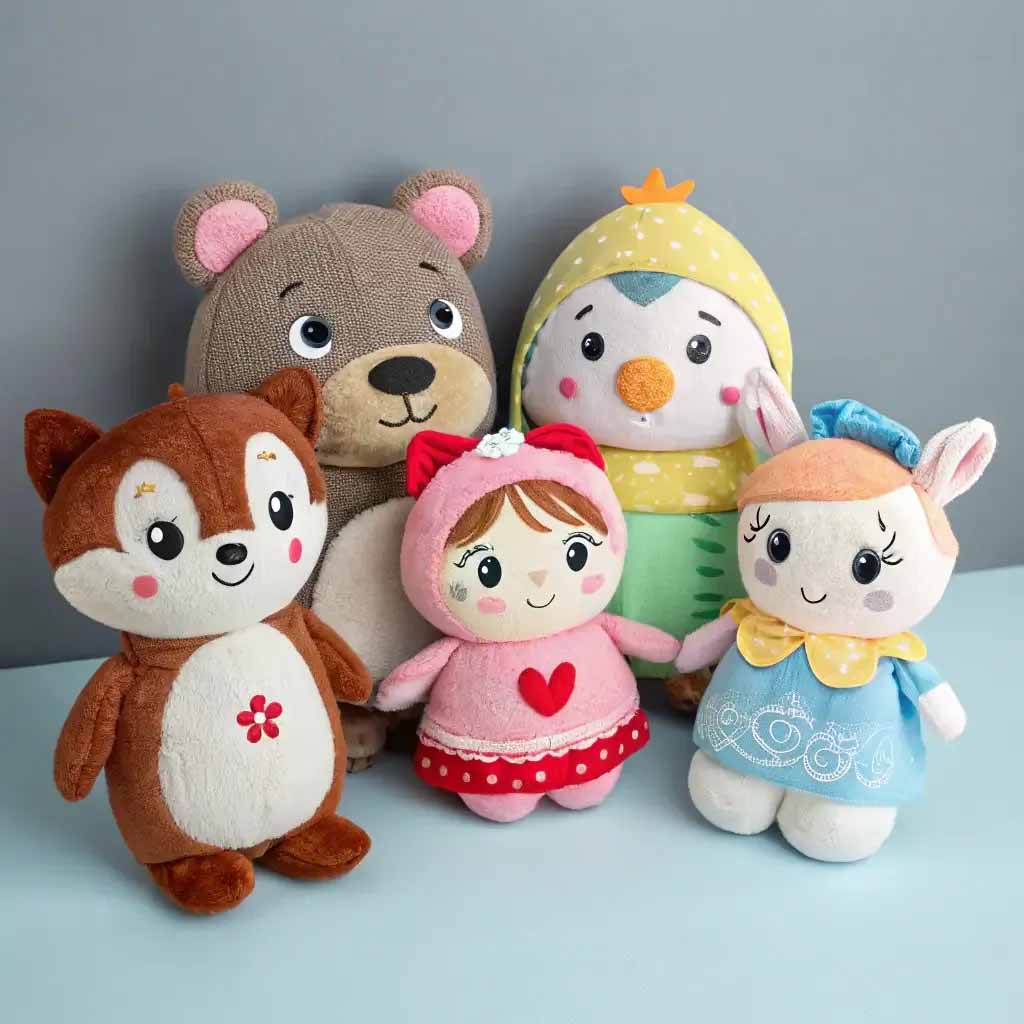
Plush toy deformation encompasses any change from the intended three-dimensional form of the approved product — whether that change occurs during manufacturing, transit, storage, or use. Understanding the distinct mechanisms that produce deformation is the foundation for preventing each one effectively.
Deformation in plush toys is caused by four primary mechanisms operating independently and in combination: structural inadequacy in the pattern and internal design, insufficient or incorrectly distributed filling that fails to maintain shape under compression or gravity, fabric characteristics that compress or distort under load, and production execution failures that introduce shape inconsistency or weakness at the manufacturing stage.
Here is a comprehensive overview of deformation causes and their commercial impact:
| Deformation Cause | When It Manifests | Visibility to Customers | Commercial Consequence | Preventability |
|---|---|---|---|---|
| Insufficient stuffing density | Immediately — product looks flat | High | Returns, quality complaints | High — density specification |
| Uneven stuffing distribution | Immediately — asymmetric shape | High | Character recognition failure | High — process control |
| Pattern engineering error | Manufacturing stage | High — incorrect proportions | Sample revision requirement | High — experienced pattern making |
| Filling compression from transit | On delivery — recoverable or permanent | Medium-High | Quality perception on receipt | High — packaging design |
| Gravity-induced filling migration | Over days to weeks of display | Medium | Retail shelf presentation failure | Medium-High — internal structure |
| Fabric pile compression | Over weeks to months of use | Medium | Perceived quality decline | Medium — fabric selection |
| Seam failure under filling load | Use — seam opens, filling escapes | Very High — safety and quality | Return, complaint, recall risk | High — seam specification |
| Accessory pull distortion | Use — surface distorted near attachments | Medium | Quality perception | High — attachment technique |
Why Deformation Is a Brand Reputation Risk
Beyond the direct commercial costs of returns and complaints, deformation creates a brand reputation risk that operates through the review and rating systems of e-commerce channels. A customer who receives a product that has deformed in transit or deforms rapidly in use posts a one-star review with a photograph — and that review affects the conversion rate and organic ranking of the listing for every subsequent potential customer.
In categories where customer photography drives purchasing decisions — plush toys are highly visual, highly photographed, and frequently gifted — the visual evidence of deformation in customer reviews creates a far larger commercial impact than the isolated complaint itself. This downstream effect makes deformation prevention not just a quality management priority but a brand growth priority.
How Do Pattern Engineering Decisions Prevent Deformation Before Production Begins?
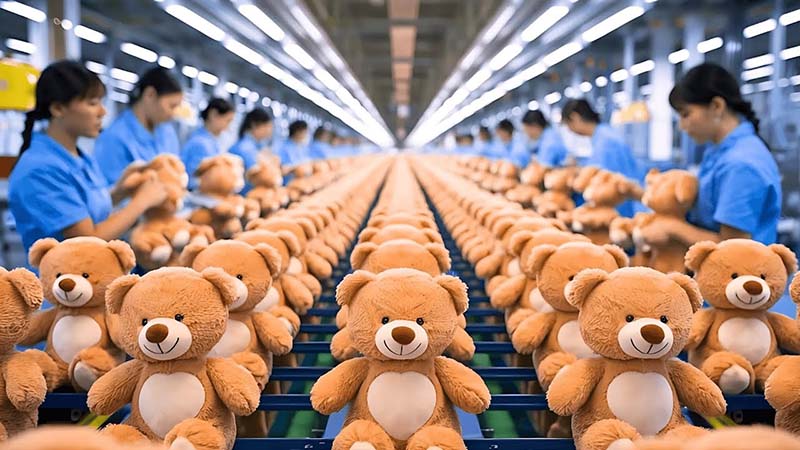
Pattern engineering is the primary deformation prevention lever available before any material is sourced or any unit is produced — because the three-dimensional structure of a plush toy is determined by how its two-dimensional fabric panels are engineered to combine into a coherent three-dimensional form. Pattern engineering errors produce structural weaknesses that cause deformation regardless of how high-quality the materials are or how carefully the production process is managed.
Pattern engineering decisions prevent deformation through three specific mechanisms: establishing the correct panel geometry that produces the intended three-dimensional form when assembled, designing seam placements that distribute structural load effectively across the product’s form, and creating the proportional balance between the product’s volume and the filling that will occupy it.
Here is a framework for understanding how specific pattern engineering decisions affect deformation resistance:
| Pattern Engineering Decision | Effect on Deformation Resistance | Error Consequence | Professional Standard |
|---|---|---|---|
| Panel geometry accuracy | Determines whether assembled form matches intended shape | Panels produce incorrect 3D form — requires fundamental rebuilding | Multi-view design reference with dimension table |
| Seam placement for load distribution | Determines whether seams are positioned to resist filling pressure | Seams at high-pressure points fail under filling load | Seams at neutral stress positions wherever possible |
| Volume-to-opening ratio | Determines ease of filling and closing without distortion | Insufficient opening creates stuffing difficulty and uneven distribution | Opening sized for adequate stuffing access |
| Proportion engineering for stuffed form | Accounts for how stuffing changes visible proportions | Unstuffed proportions produce incorrect stuffed form | Pattern proportions adjusted for expected fill volume |
| Curve geometry accuracy | Determines three-dimensional form at curved sections | Flat or distorted curves in finished product | Properly engineered darts and curved seams |
| Panel count optimization | Determines surface smoothness and shape accuracy | Too few panels — faceted appearance; too many — unnecessary complexity | Panel count matched to design complexity |
The Proportion Engineering Challenge
One of the most technically demanding pattern engineering problems in plush toy production is proportion engineering — the adjustment of pattern panel dimensions to account for the fact that stuffing changes the apparent proportions of the product in ways that are not immediately obvious from flat design artwork.
A plush toy head that appears circular in flat design artwork requires panels engineered to produce a circular form when stuffed — not panels that are circular in the flat state, which will produce a different three-dimensional form when filled. The amount of compensation required depends on the pile height, the filling density, and the specific geometry of the panels — which is why experienced pattern makers consistently produce more accurate first samples than inexperienced ones on complex character designs.
This proportion engineering is also the reason why the approved sample — built by skilled sample sewers who make real-time adjustments during construction — sometimes does not directly predict the first production unit, which is built by production operators following the pattern exactly. The pattern must be engineered to produce the correct form when built by production operators following instructions, not when built by skilled artisans making judgment-based adjustments.
Seam Placement for Structural Integrity
Seams are potential weak points in a plush toy’s structure — particularly in products with high filling density or large filling volumes that create significant internal pressure. Pattern engineering that places seams at the highest-stress areas of the product — where filling pressure is greatest and where the product is most frequently compressed or deformed during use — creates a higher risk of seam failure that leads to filling escape and subsequent deformation.
Professional pattern engineering minimizes seam placement at high-stress areas where design allows — using single-panel constructions for rounded forms where seams can be placed at the sides or back rather than at the face or primary viewing surfaces, and designing seam placement to avoid the areas where filling pressure concentrates.
How Does Filling Material Selection and Density Specification Prevent Shape Loss?
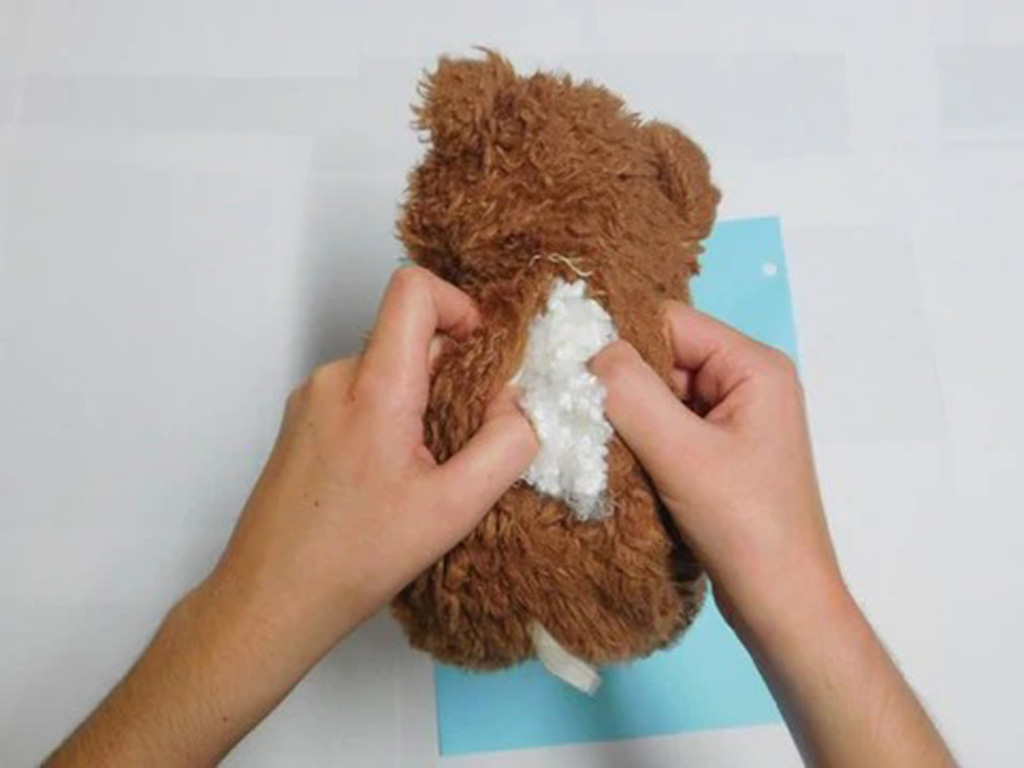
Filling is the substance that gives a plush toy its three-dimensional form — and the quality, type, and density of that filling directly determines whether the product maintains its shape under the compression forces of normal use, transit, and storage. Inadequate filling is the most immediately visible cause of plush toy deformation — and one of the most controllable through precise specification.
Filling material selection and density specification prevent shape loss through two complementary mechanisms: selecting filling materials with the loft recovery and compression resistance characteristics that maintain shape under repeated deformation forces, and specifying the density at which those materials are used with sufficient precision to achieve consistent shape maintenance across the full production run.
Here is a filling performance comparison framework for shape retention:
| Filling Material | Loft Recovery | Compression Resistance | Shape Retention Over Time | Best Application |
|---|---|---|---|---|
| Premium high-loft PP cotton | Excellent | Good | Excellent | Premium retail plush, character plush |
| Standard PP cotton | Good | Moderate | Good — adequate for most applications | Standard retail plush |
| Low-grade PP cotton | Poor | Low | Poor — compresses permanently | Not recommended for quality products |
| Recycled PP cotton | Variable | Variable | Variable — quality depends on source | Sustainable positioning — quality varies |
| Memory foam inserts | Excellent at insert | Very High | Excellent — non-compressible | Premium specialty plush — high cost |
| Polyester fiber fill (alternative) | Good | Moderate | Good | Alternative to PP cotton |
The Density Specification Precision Requirement
Filling density specification is the most directly controllable dimension of filling-related deformation prevention — and the one that most directly requires precise technical specification rather than general guidance.
A filling density specification that says “firm stuffing” or “well-stuffed” provides no objective basis for production control, quality verification, or problem resolution when units arrive at lower-than-expected density. A filling density specification that says “target unit weight 180g ±10g for 30cm product, with compression at midpoint to minimum 60% of unstuffed height” provides a measurable, verifiable standard that production can be calibrated to, IPQC can monitor against, and FQC can confirm.
The specific density required for shape retention depends on the product’s size, construction, and intended use — which is why the density specification must be established through sampling rather than calculated from general rules. The process is:
- Build counter samples at three density levels — below, at, and above the estimated target
- Evaluate each level for shape retention after being compressed to simulate transit and use
- Identify the minimum density at which shape retention meets the commercial standard
- Specify that density as the target, with a tolerance that allows for production variation while maintaining minimum acceptable shape retention
This sampling-based density calibration approach identifies the functional minimum rather than the theoretical optimum — ensuring that the specification is set at the level that actually achieves the required shape retention rather than at a level that seems intuitively correct.
High-Loft Filling and Its Role in Deformation Prevention
High-loft PP cotton — filling fiber that has been processed to maximize the air entrapped between fibers, creating a lighter, more voluminous filling with better compression recovery — is the professional standard for plush toys where shape retention is a primary quality requirement. The higher cost of premium high-loft filling relative to standard filling is consistently offset by its superior shape retention performance — fewer units arrive deformed, fewer customer complaints arise from shape loss in use, and the visual quality of the product at retail display is more consistent.
For products at price points that cannot support premium filling economics, the minimum acceptable standard is filling that recovers at least 85 percent of its pre-compression height after the compression and release cycle that simulates normal use. Filling that does not meet this recovery threshold will produce visible, progressive deformation over the product’s use life — creating the quality perception problems that generate negative reviews and reduce repeat purchase rates.
How Does Internal Structure Design Maintain Three-Dimensional Form Over Time?
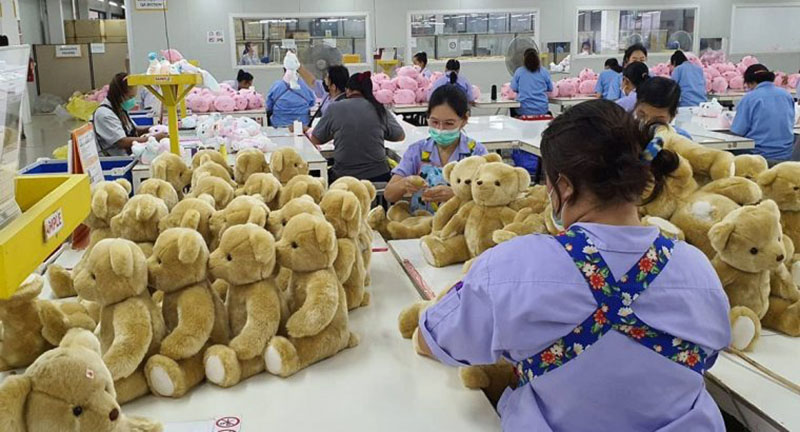
Internal structure design addresses a category of deformation that filling density alone cannot prevent — the gravity-induced migration of filling material within the product over time. Even correctly density-specified, high-quality filling material can migrate toward the lowest point of the product if it is stored or displayed in a position that allows gravity to concentrate it — creating a product that bulges at the bottom and collapses at the top while containing the correct total filling weight.
Internal structure design maintains three-dimensional form over time by creating physical containment that prevents filling migration — distributing filling in fixed zones within the product’s body rather than allowing it to flow freely from area to area as the product is repositioned.
Here is a framework for internal structure design approaches and their deformation prevention effectiveness:
| Internal Structure Approach | Migration Prevention | Complexity | Cost | Best Application |
|---|---|---|---|---|
| Free fill — no internal structure | None — filling migrates freely | Very Low | Lowest | Small, simple products where shape is less critical |
| Channel quilting — vertical or horizontal | Partial — limits cross-channel migration | Low | Low | Simple products, budget applications |
| Grid compartmentalization | Good — limits migration to compartment size | Medium | Medium | Standard character plush |
| Anatomical compartments — designed by body area | Excellent — filling fixed to specific areas | High | Higher | Complex character plush, premium products |
| Partial armature — wire or plastic frame | Excellent for shape-critical areas | Very High | Highest | Poseable plush, high-detail character products |
| Foam inserts for specific body sections | Excellent for insert area | Medium-High | Medium-High | Products where specific areas must maintain hard shape |
Compartmentalization for Character Plush
For character plush toys where the three-dimensional character form is the primary commercial value of the product — where a customer is buying a specific character whose recognizable proportions define the product — compartmentalized internal structure is the professional standard. Without compartmentalization, the filling in a character head can migrate toward the face under gravity, compressing the head and changing the facial proportions that define the character’s visual identity.
Compartmentalization divides the product’s body into fixed zones — head, body, each limb — with each zone filled independently and closed before adjacent zones are assembled. This approach ensures that the filling in the head stays in the head, the filling in the body stays in the body, and each limb maintains its intended filling weight and distribution regardless of how the product is repositioned.
The complexity and cost of compartmentalized construction is higher than free-fill construction — additional sewing operations, more complex stuffing sequence, and more careful quality monitoring are all required. For character products where shape maintenance over time is a key quality attribute, this complexity is justified by the commercial value of deformation prevention.
Armature and Foam Inserts for Structural Support
For products where specific body areas must maintain a precise three-dimensional form that filling alone cannot reliably sustain — a standing plush with defined limb positions, a plush with a specific head tilt, a product with structural features that must project in a defined direction — armature or foam inserts provide structural support that maintains position independently of filling behavior.
Armature — typically plastic-coated wire or rigid plastic rods — provides internal skeletal support that holds the product’s form against gravity and compression. It adds cost and production complexity but enables forms that would be impossible to achieve through filling alone. For safety reasons, armature in children’s plush must be carefully designed to ensure that it cannot puncture through the outer product and create a hazard — which requires specific construction techniques and regular structural testing.
Foam inserts — shaped foam sections that occupy specific areas of the product body — provide area-specific rigidity that resists compression and maintains shape in the supported area. They are commonly used for flat display-focused products, head sections in character plush, and standing plush products that must display in a defined position.
How Do Fabric Selection and Pile Characteristics Affect Shape Retention?
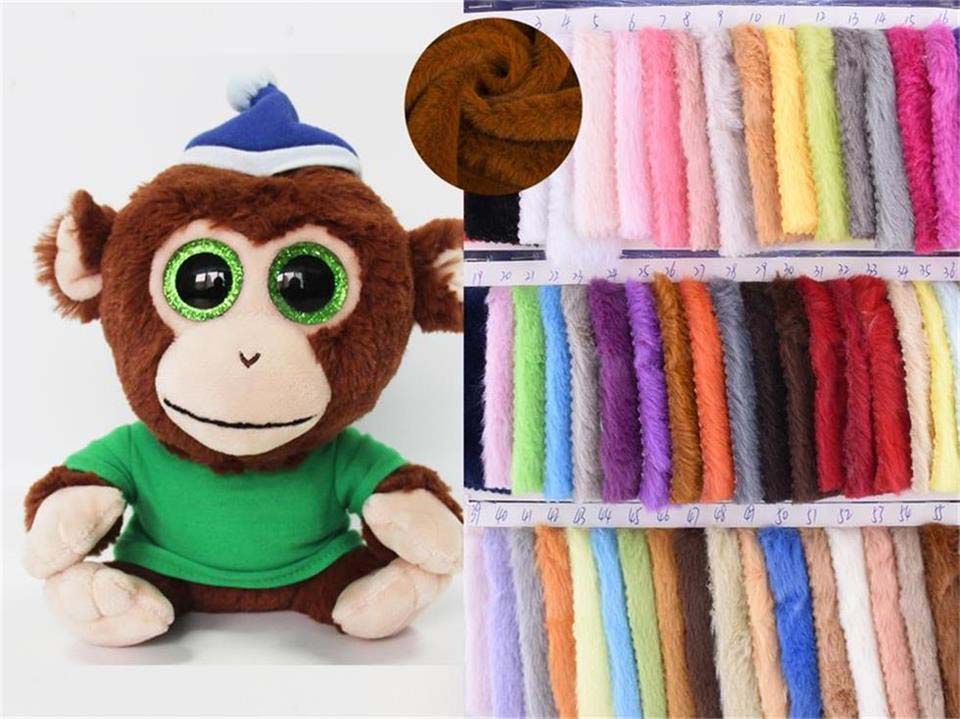
Fabric is not typically the primary driver of plush toy deformation — that role belongs to filling density and internal structure. But fabric selection affects deformation in specific ways that are worth understanding, because the wrong fabric can create shape problems that no amount of filling optimization can fully compensate for.
Fabric selection and pile characteristics affect shape retention through three mechanisms: pile compression under sustained load that changes the surface appearance of the product, fabric stretch that allows the outer structure to deform beyond its intended proportions, and backing construction that affects the overall dimensional stability of the product’s form.
Here is a framework for understanding how fabric characteristics affect deformation:
| Fabric Characteristic | Deformation Mechanism | Risk Level | Prevention Approach |
|---|---|---|---|
| Pile compression recovery | Pile compressed in transit or use does not recover fully | Medium | Select fabric with verified pile recovery specification |
| Fabric stretch | Outer fabric stretches under filling pressure — product larger than intended | Medium | Match fabric stretch characteristics to construction requirements |
| Backing stability | Unstable backing allows panel distortion under load | Medium-High | Specify stable backing construction for structural panels |
| Pile matting | Pile mats permanently under compression | Medium | High-loft fibers with anti-matting treatment |
| Seam fraying | Seam edges fray under load — seam integrity compromised | Low-Medium | Seam finishing treatment on fraying-prone fabrics |
Pile Recovery Testing
For products where pile compression during transit packaging is a concern — high-pile products that will be compressed in retail packaging or vacuum-sealed for shipping — pile recovery testing at the fabric approval stage provides direct evidence of whether the fabric will recover its pile height after compression.
The practical test is simple: compress a fabric swatch to a defined percentage of its original pile height using a standardized weight, maintain compression for a period equivalent to typical transit duration (24 to 72 hours), remove the weight, allow recovery for a defined period (typically 24 hours at standard conditions), and measure the recovered pile height as a percentage of original. Fabrics that recover to 90 percent or more of original pile height within 24 hours are suitable for compressed packaging applications. Fabrics that recover less should be packaged differently or replaced with higher-recovery alternatives.
Fabric Stretch Management
In plush toy production, some fabric stretch is beneficial — it allows panel edges to ease around curves and produce smooth, wrinkle-free surfaces. Too much stretch creates a different problem: a product that looks correct in the sample but stretches under filling pressure during production, resulting in a product that is visibly larger than the specification and has a looser, less structured appearance.
For products where dimensional accuracy is important — character plush where proportions define the character’s recognizable form — specifying a maximum stretch tolerance for the outer fabric and verifying compliance at the fabric approval stage prevents the dimensional deformation that excessive stretch produces.
How Do Production Controls Prevent Deformation During Manufacturing?

Production controls are the operational mechanisms that prevent the filling, construction, and handling decisions made during manufacturing from introducing deformation that the design and specification systems were designed to prevent. Even correctly specified designs with correctly specified materials will produce deformed products if the production process introduces filling inconsistency, construction errors, or handling damage.
Production controls prevent deformation during manufacturing through six specific operational systems: stuffing machine calibration and weight monitoring, stuffing sequence management for complex products, compartment fill sequence control, seam integrity verification, pre-packing shape assessment, and packaging configuration to prevent transit deformation.
Here is a complete production deformation prevention control framework:
| Control System | Deformation Type Prevented | Control Method | Documentation |
|---|---|---|---|
| Stuffing machine calibration | Under- or over-filling causing shape loss | Weight measurement before and during production | Calibration record, weight log |
| IPQC weight monitoring | Density drift during long runs | Weight measurement at defined intervals | Weight IPQC log |
| Stuffing sequence management | Uneven distribution in complex products | Defined sequence — fill by compartment, assess before closing | Work instruction |
| Post-stuffing shape assessment | Shape errors before closing seam | Visual comparison to counter sample before closing | First-off inspection record |
| Seam integrity verification | Seam failure causing shape change | Seam pull test during IPQC | Pull test log |
| Pre-packing shape inspection | Shape defects entering packaging | Pre-pack visual check against counter sample | Pre-pack inspection record |
| Packaging configuration | Transit compression deformation | Packaging design tested against transit simulation | Packaging specification |
The Post-Stuffing Shape Assessment Step
One of the most effective and most commonly omitted deformation prevention controls is a post-stuffing shape assessment conducted before the closing seam is sewn. At this point in the production sequence, the product is fully stuffed — the filling is in position and the shape of the product is established — but the closing seam has not yet been sewn, meaning that any filling distribution problems can still be corrected by adjustment before the product is permanently closed.
This assessment is the last opportunity to catch uneven filling distribution, incorrect density, or filling migration that has occurred during the stuffing process — at a point where correction requires only manual filling adjustment and closure, rather than the seam-opening and re-stuffing process required once the product is closed.
Factories that include post-stuffing shape assessment as a standard production step catch a significant proportion of filling-related deformation causes before they are built into finished products. Factories that skip this step rely on final inspection to catch deformation — by which point correction is significantly more expensive.
Stuffing Sequence Management for Complex Products
For products with multiple body areas — head, body, limbs — the sequence in which areas are stuffed directly affects the distribution and consistency of filling across the product. A random or uncontrolled stuffing sequence produces variable results because the filling in each area affects the available volume and shape of adjacent areas.
Professional factories define a specific stuffing sequence for each product type — typically filling from the extremities toward the center, ensuring that smaller areas receive precise filling before the larger body areas are closed in a way that might put pressure on the smaller areas. This sequence is specified in the work instructions and verified in the first-off inspection to ensure it is being followed before the production run proceeds.
How Does Post-Production Handling and Packaging Affect Shape Integrity?
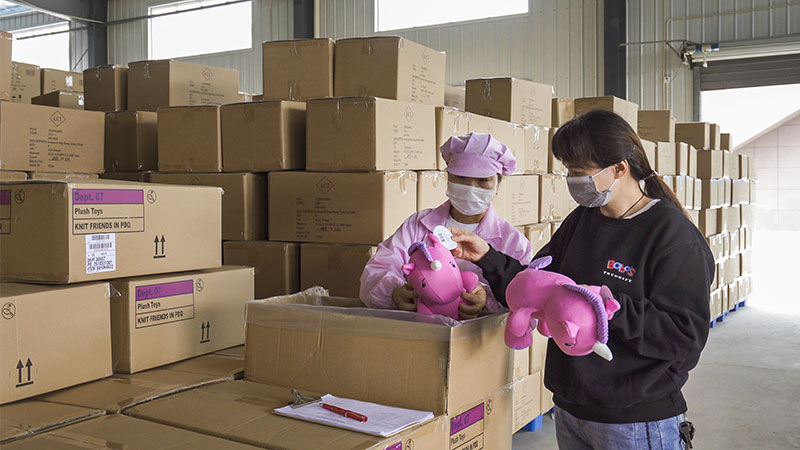
Post-production handling and packaging decisions determine whether products that have been correctly manufactured arrive at their destination in the same shape they left the factory — or whether transit compression, improper storage, or handling damage undoes the quality management investment of the production process.
Post-production handling and packaging affect shape integrity through three primary mechanisms: compression force during packaging operations, sustained compression during transit, and mechanical shock during shipping that can displace filling material or stress seams.
Here is a framework for managing post-production deformation risk:
| Post-Production Risk | Mechanism | Prevention Approach | Implementation |
|---|---|---|---|
| Packaging compression | Product compressed into packaging — may not recover | Design packaging to accommodate product without compression | Packaging dimension testing at counter sample stage |
| Transit compression | Stacked product weight deforms lower units | Carton configuration limits stack height on any unit | Carton stacking strength specification |
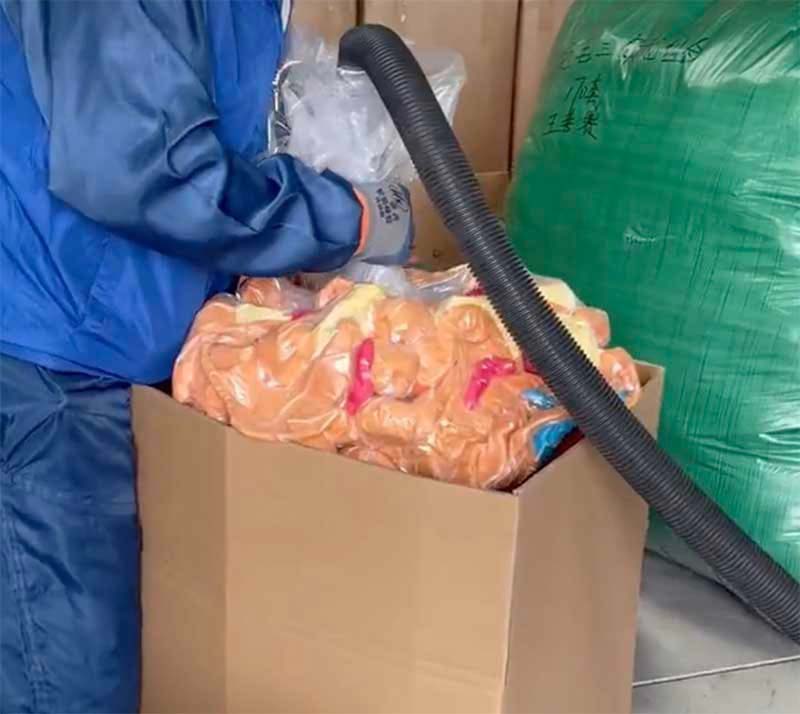
| Vacuum compression — temporary | Products compressed for efficient shipping | Verify pile and shape recovery after compression | Recovery test at packaging approval stage |
| Vacuum compression — permanent | Products compressed for too long or at too high pressure | Limit compression time and pressure | Packaging protocol specification |
| Mechanical shock — filling migration | Impact forces shift filling from correct distribution | Internal structure design prevents post-shock migration | Compartmentalization as appropriate |
| Storage position — filling migration | Prolonged storage in specific position allows migration | Packaging design maintains stable storage position | Packaging configuration with gravity consideration |
Transit Compression Testing
For products that will be packaged in ways that involve compression — retail display boxes that fit the product snugly, vacuum-compressed shipping bags, tightly filled cartons where adjacent products apply load — transit compression testing at the packaging design stage verifies whether the products will recover their intended shape after the compression duration of typical transit.
The test protocol simulates transit conditions: package the product in the intended retail or shipping packaging, apply the compression force that stacked cartons or retail display would create, maintain for the expected transit duration (typically 5 to 14 days for international shipping), open the packaging, and assess shape recovery after a defined recovery period (typically 24 hours).
Products that do not recover to the visual standard established in the counter sample after this transit simulation require either a packaging modification that reduces compression, a filling density increase that improves compression recovery, or an internal structure addition that maintains shape through compression.
The Retail Display Position Consideration
For products that will be displayed standing, sitting, or in a specific position on retail shelves — as opposed to products that will be displayed lying flat in retail packaging — the stability of the display position under gravity is a deformation prevention consideration that extends beyond transit to the entire retail display period.
A product that is designed to display in a sitting position but has a filling distribution that causes it to slump forward after a few days on the shelf creates a visual quality problem at the point of sale — exactly the environment where the product is being evaluated by potential customers. Ensuring that the product’s filling distribution and internal structure support the intended display position for the expected retail display period is a deformation prevention consideration that applies to the product design stage rather than just to production and packaging.
How Can Buyers Specify and Verify Deformation Prevention Standards?
Deformation prevention standards can be specified in the product brief and purchase agreement in measurable, verifiable terms that create a common understanding between buyer and manufacturer of what shape retention is required and how it will be assessed. This specificity transforms deformation from a vague quality concern into a defined, verifiable standard.
Here is a complete framework for specifying and verifying deformation prevention standards across the product development process:
Specification Stage — Design Brief
| Specification Element | What to Include | Format | Why It Matters |
|---|---|---|---|
| Shape retention standard | Visual description of acceptable form after compression | Counter sample comparison description | Establishes what “acceptable” means |
| Fill weight specification | Target weight with tolerance | e.g., “180g ±10g for 30cm product” | Enables production calibration |
| Density specification | Compression resistance standard | e.g., “Compress to 60% of height — unit must recover to 90% within 24 hours” | Defines functional density requirement |
| Internal structure requirement | Compartmentalization or other structure | Diagram of required internal division | Prevents filling migration |
| Fabric pile recovery | Minimum recovery after compression | e.g., “Pile must recover to 90% of original height after 24-hour compression at 2kg/cm²” | Prevents permanent pile compression |
| Transit compression resistance | Shape maintained after packaging duration | e.g., “Product must recover to visual counter sample standard after 7-day packaging compression” | Prevents transit deformation |
Sampling Stage — Counter Sample Verification
| Verification Action | What Is Assessed | Method | Acceptance Standard |
|---|---|---|---|
| Fill weight measurement | Counter sample weight within specification | Scale measurement | Within ±5% of target |
| Compression recovery test | Shape recovery after simulated use compression | Compress, release, assess after 24 hours | 90% recovery minimum |
| Display stability test | Product maintains intended position under gravity | Display in intended position for 48 hours | No visible slumping or migration |
| Transit simulation test | Shape retention after packaging compression | Package for 7 days, assess recovery | Recovers to counter sample standard |
| Internal structure verification | Compartments prevent migration | Reposition product, assess filling distribution | Filling remains correctly distributed |
Production Stage — IPQC
| Monitoring Activity | What Is Monitored | Interval | Corrective Action Trigger |
|---|---|---|---|
| Weight IPQC | Unit fill weight consistency | Every 150–200 units | Any reading outside ±5% of target |
| Shape assessment spot check | Visible shape against counter sample | Every 200 units | Any visible shape deviation from standard |
| Post-stuffing check | Shape before closing seam | Every 100 units | Any visible distribution problem before closure |
| Seam integrity check | Seam strength at stress points | Every 2 hours | Any visible weakness or thread tension issue |
Pre-Shipment Stage
| Verification Activity | What Is Assessed | Method | Standard |
|---|---|---|---|
| FQC shape assessment | Batch units against counter sample | AQL sampling, visual comparison | Within visual tolerance of counter sample |
| FQC weight check | Sample unit weights | Weight measurement | Within ±5% of target |
| Packaging compression test | Representative packaged units | Transit simulation on sample | Recovers to counter sample standard |
| Third-party deformation check | Independent shape assessment | Include in third-party inspection scope | Same AQL as FQC |
At Kinwin, deformation prevention is built into our product development and production management process at every stage — from the pattern engineering decisions our experienced team makes at the brief stage, through the filling density calibration we establish during counter sample development, to the weight IPQC monitoring we conduct throughout every production run.
For products where shape retention is a primary quality attribute — character plush where recognizable proportions define commercial value, weighted plush where consistent pressure distribution depends on filling integrity, display plush where stable standing position is a retail requirement — we work with clients at the design stage to identify the specific deformation risks and build the prevention measures that address them into the product specification before sampling begins.
If you are developing a plush product where deformation resistance is important to your market and brand positioning, we would be glad to walk through how our approach addresses each dimension of the prevention framework described in this guide.
Reach out to our team at [email protected] or visit kinwintoys.com to start that conversation.
Conclusion
Deformation in plush toys is not an inevitable manufacturing outcome — it is the result of specific, addressable failures at specific stages of the design, material selection, and production process. Pattern engineering that does not account for stuffed proportions produces deformation at the manufacturing stage. Filling density specification that is imprecise or too low produces deformation under use. Internal structure that allows filling migration produces deformation over time. Fabric selection that does not account for compression recovery produces surface deformation. Production controls that do not monitor and maintain filling consistency produce deformation variation across the production run.
Each of these causes has a specific prevention — and most preventions are most cost-effectively implemented at the design stage, before any sampling investment has been made. The investment in deformation-resistant design decisions, filling specifications, and internal structure development is consistently smaller than the cost of the deformation problems that investment prevents.
Buyers who understand deformation mechanisms can build prevention requirements into their product specifications and supplier relationships that make deformation resistance a structural characteristic of the product rather than a quality outcome dependent on favorable production conditions.
FAQ
Q1: How should buyers handle products that arrive with deformation from transit compression — is this always a manufacturing defect or can it be a packaging issue?
Transit deformation must be assessed by determining whether the deformation is temporary — recoverable after the product is removed from packaging and allowed to recover — or permanent. Temporary deformation that resolves within 24 to 48 hours of unpacking is typically a packaging issue rather than a manufacturing defect — the product was correctly manufactured but the packaging created compression conditions that the product needs recovery time to recover from. This is addressable through packaging modification at no manufacturing cost. Permanent deformation that does not recover after adequate time outside the packaging indicates either insufficient filling density, incorrect filling material, inadequate internal structure, or fabric compression characteristics that are incompatible with the packaging format. This is a manufacturing specification issue that requires product redesign or specification change.
Q2: What filling density level is generally adequate to prevent visible deformation in a standard 30cm character plush, and how should this be calibrated?
A general guideline for standard 30cm character plush is a filled unit weight of approximately 150 to 200 grams — but this range should be treated as a starting point for calibration rather than a definitive specification, because the correct density depends on the product’s specific construction, the pile height and fabric characteristics, and the fill recovery characteristics of the specific PP cotton being used. The calibration approach is to produce counter samples at the low end, middle, and high end of this range and evaluate each for shape retention under the specific compression and recovery test described in this guide. The minimum density at which the product passes the recovery test becomes the production specification — not an assumed density based on general guidelines. Products with longer pile, more complex constructions, or premium market positioning typically benefit from filling at the higher end of this range.
Q3: Are there products where deformation is acceptable or even desirable — for example, products specifically designed to be squeezable or flexible?
Yes — there are product categories where intentional deformation under compression is a design feature rather than a quality failure. Stress-relief squeeze toys, sensory plush products designed for compression interaction, and products with intentionally pliable character forms all have different deformation requirements from the shape-retention standards described in this guide. For these products, the relevant specification is not “resists deformation” but “deforms predictably under compression and recovers reliably.” The prevention framework changes accordingly — the focus moves from preventing compression deformation to ensuring that deformation behavior is consistent across units, that the recovery behavior meets the intended functional specification, and that the product structure can withstand repeated compression-recovery cycles without the seam failures and filling migration that would represent actual defects in this product category.
Q4: How does the deformation prevention approach differ for products that will be displayed in different positions — standing versus sitting versus lying flat?
Display position significantly affects the deformation risks that need to be managed — because gravity acts differently on the filling distribution depending on how the product is oriented. A product designed to stand upright must have filling distributed to support its weight in the vertical orientation — with denser filling at the base if necessary, and internal structure that prevents the filling from migrating downward and causing the upper body to collapse. A product designed to sit must have filling distribution and internal structure that maintains the seated posture under gravity — with support in the lumbar area if the product has a distinct torso form. A product designed to lie flat has lower deformation risk from gravity — but more risk from compression if it will be stacked or packaged with weight above it. The display position specification should be part of the design brief, and the deformation resistance testing during the counter sample stage should assess the product in its intended display position over the expected display duration.
Q5: Can the deformation prevention measures described in this guide be cost-effectively implemented for budget-tier plush products, or do they only make economic sense for premium products?
Most of the deformation prevention measures described in this guide are cost-effective at any price point — because they primarily represent decisions made at the design and specification stage rather than material or production process additions that increase unit cost. Pattern engineering for correct proportions, filling density calibration through sampling, internal structure planning, and production control IPQC weight monitoring all cost primarily management attention and sampling time rather than per-unit production cost. The material cost dimension — choosing premium high-loft filling over standard filling, or adding internal compartmentalization — does add unit cost, and buyers must make the product-specific decision about whether the shape retention improvement justifies the cost addition at their price point. For budget products, the most important deformation prevention investments are the zero-marginal-cost ones: correct pattern engineering, adequate density specification, and production weight monitoring that ensures the specified density is consistently achieved.