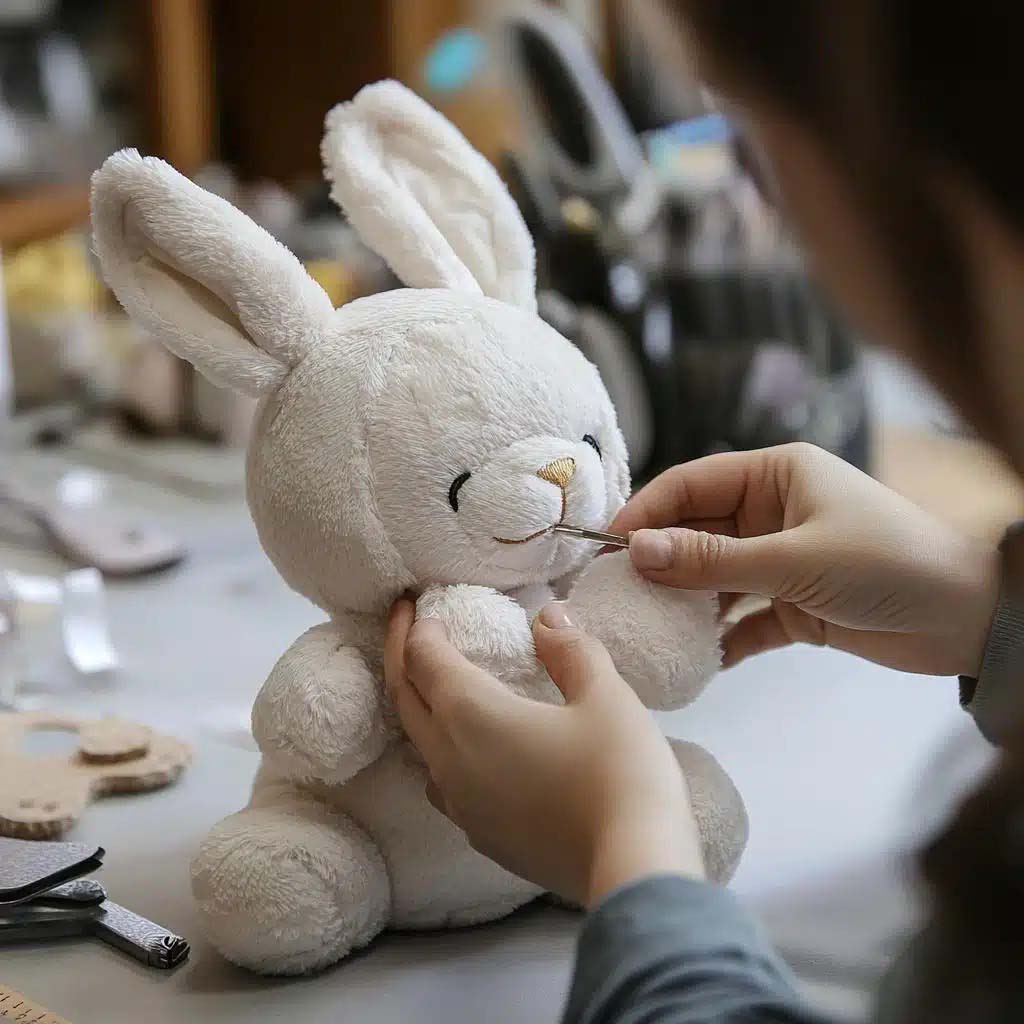
Promotional plush toys occupy a distinct position in the plush manufacturing landscape — one that creates a specific set of fabric selection challenges that differ meaningfully from the challenges of retail product development. A promotional plush is not primarily competing on the shelf against other plush toys. It is serving a brand communication function — representing a company, an event, a campaign, or a character in a context where the primary measure of success is whether the product effectively delivers the brand message to the intended recipient.
This function changes what fabric selection is trying to achieve. For retail plush, fabric selection optimizes for customer-perceived quality, premium feel, and long-term shape retention that justify a retail price point. For promotional plush, fabric selection must optimize for a different set of priorities: adequate quality that reflects positively on the brand, cost efficiency that makes production at promotional economics viable, color accuracy that reproduces the brand’s visual identity correctly, and compliance with safety standards that apply to the intended distribution context.
Getting this balance right — achieving brand-appropriate quality at promotional economics without compromising compliance or brand representation — is the practical challenge of promotional plush fabric selection. This guide provides the complete framework for making those decisions well.
What Makes Promotional Plush Toy Fabric Requirements Different from Retail Products?
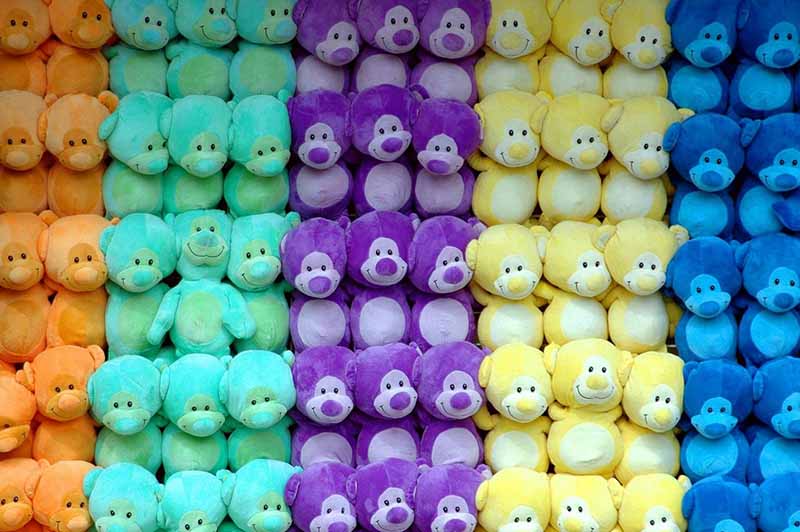
The fundamental difference between promotional and retail plush fabric requirements is in the priority ordering of quality dimensions — not in whether quality matters but in which quality dimensions matter most and how they trade off against cost efficiency.
For retail plush products, premium tactile quality — how the product feels in the hand — is a primary purchasing driver. Customers who are evaluating a retail plush toy on a shelf or in an online listing are making quality judgments that directly determine purchase decisions. The fabric must be soft enough, full enough, and visually impressive enough to justify the retail price and motivate the purchase.
For promotional plush products, the quality decision has already been made upstream — a brand has chosen to produce promotional plush, the budget has been allocated, and the products will be distributed regardless of whether individual recipients would have chosen to purchase them at retail. The relevant quality question shifts from “is this good enough to motivate purchase?” to “does this reflect positively on the brand that is giving it away?”
Here is a framework for understanding how fabric requirements differ between promotional and retail contexts:
| Quality Dimension | Retail Priority | Promotional Priority | Implication for Fabric Selection |
|---|---|---|---|
| Tactile softness | Very High — primary purchase driver | Medium — important for brand impression | Lower softness threshold acceptable |
| Visual appearance | Very High — shelf and listing performance | Very High — brand representation | Same or similar standard required |
| Color accuracy | High — matches product photography | Very High — brand color compliance | Equal or stricter requirement |
| Logo reproduction | Variable | Very High — primary product purpose | Specific fabric requirements for logo quality |
| Long-term durability | High — retail lifetime expectations | Medium — often one-time event or limited use | Lower durability threshold acceptable |
| Shape retention over time | High — retail lifespan | Medium — shorter expected use period | Lower density acceptable |
| Compliance | Non-negotiable | Non-negotiable | Same requirement regardless of context |
| Unit cost | Secondary — quality justifies price | Primary — budget determines viability | Cost efficiency is a primary driver |
The Brand Representation Quality Floor
The most important distinction in promotional plush fabric selection is understanding the quality floor — the minimum quality level below which the product creates a negative brand impression rather than a positive one. Above this floor, fabric selection can optimize for cost efficiency. Below it, the product undermines the promotional investment by making the brand appear cheap or careless.
This quality floor is brand-specific and context-specific. A promotional plush for a premium consumer brand with loyal customers has a higher quality floor than a promotional item for a trade show where thousands of units will be distributed to a broad audience. A plush mascot that will be prominently displayed has a higher quality floor than a small giveaway item that will spend most of its life in a desk drawer.
Identifying the quality floor for a specific promotional project — and then selecting the fabric that meets that floor most cost-efficiently — is the practical framework for promotional plush fabric decisions.
How Do Cost Efficiency and Brand Representation Balance in Promotional Fabric Selection?
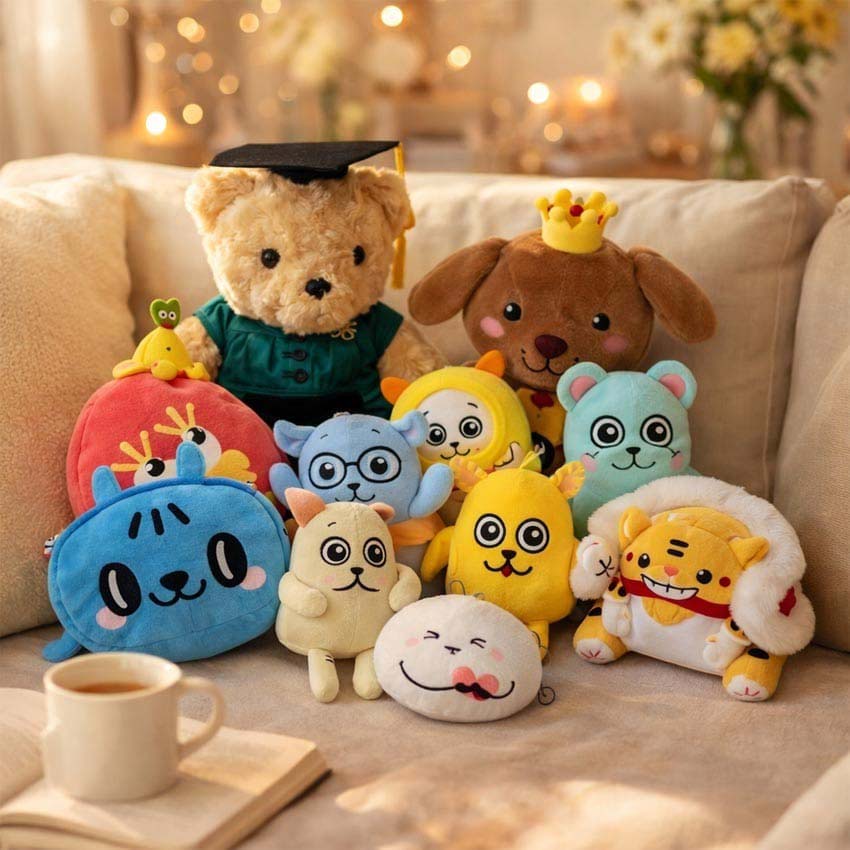
The tension between cost efficiency and brand representation is the central challenge of promotional plush fabric selection — and it is a tension that resolves differently for different brands, budgets, and distribution contexts. Understanding where the balance point is for a specific project requires explicit analysis rather than default assumptions about either quality or cost.
Cost efficiency in promotional plush fabric is achievable through several mechanisms that do not necessarily compromise brand representation: selecting fabric grades that meet the quality floor without exceeding it, optimizing pile height to the minimum that produces the intended visual appearance, choosing standard catalog colors rather than custom-dyed fabrics where brand color requirements allow, and consolidating fabric selection across multiple promotional product types to achieve volume-based pricing.
Here is a framework for balancing cost efficiency and brand representation in fabric selection:
| Fabric Decision | Cost Efficient Option | Premium Option | Brand Representation Impact |
|---|---|---|---|
| Fabric grade | Standard pile plush | Premium high-density plush | Moderate — noticeable in hand, less so in photography |
| Pile height | 10–15mm | 20–30mm | Moderate — longer pile appears fuller, softer |
| Color sourcing | Catalog standard colors | Custom-dyed brand colors | High — brand color accuracy is often non-negotiable |
| Fiber type | Standard polyester | Premium polyester or specialty fiber | Low to Moderate — primarily tactile, less visual |
| Fabric certification | Standard production | OEKO-TEX or equivalent | Compliance — may be required regardless of cost |
| Backing construction | Standard backing | Premium backing | Low visual impact — affects dimensional stability |
The Custom Color Premium Decision
One of the highest-cost decisions in promotional plush fabric selection is whether to use custom-dyed fabric that precisely matches the brand’s Pantone color requirements or catalog standard colors that approximate the brand’s colors within the range available from standard production.
Custom color matching adds cost — both the direct cost of minimum dye lot requirements and the indirect cost of additional development time for color confirmation. For brands where color accuracy is a high-profile compliance requirement — where the brand’s legal and marketing teams actively monitor and enforce color standards — this cost is not optional. For brands where color is important but not subject to strict legal standards, the decision involves assessing whether the visible gap between a catalog color approximation and the precise brand color is commercially acceptable.
The practical approach is to obtain catalog color swatches from the factory’s standard range and compare them against the brand’s Pantone reference under D65 standardized lighting — the same standard used in professional color matching. If the closest catalog color falls within one to two Pantone shades of the brand reference, the approximation is typically acceptable for most promotional contexts. If the gap is larger, custom dyeing is likely required.
Which Fabric Types Perform Best for Promotional Plush Applications?
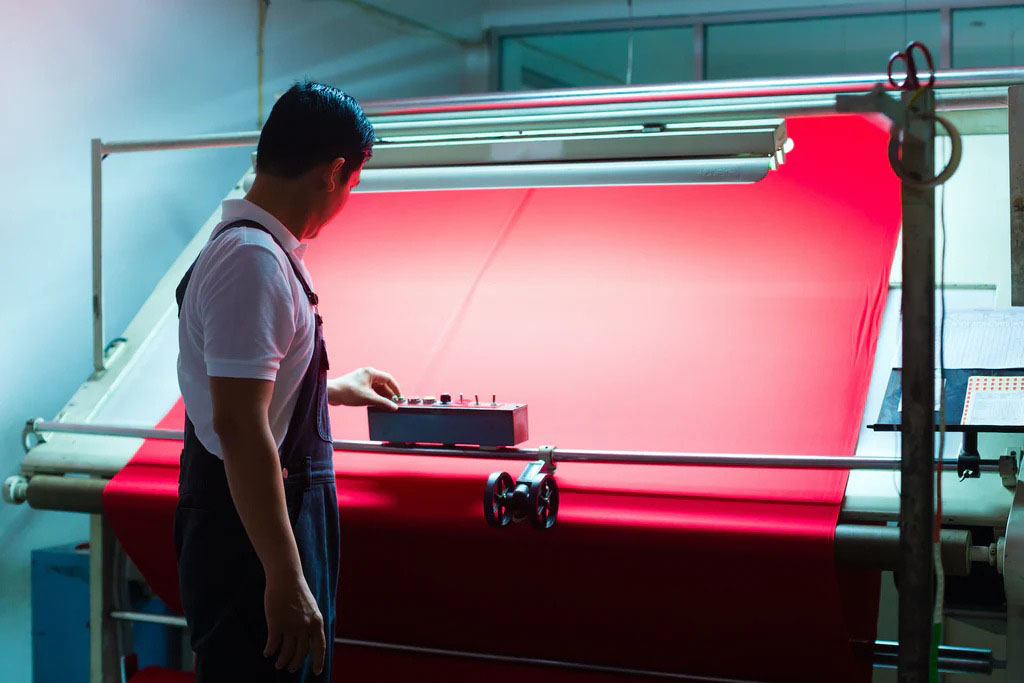
Fabric type selection for promotional plush involves matching the fabric’s specific performance characteristics to the requirements of the promotional application — the product format, the intended use environment, the brand’s visual requirements, and the production volume that will be ordered.
Here is a comprehensive performance guide across the fabric types most commonly used in promotional plush applications:
| Fabric Type | Cost Level | Visual Quality | Tactile Quality | Color Reproducibility | Best Promotional Application |
|---|---|---|---|---|---|
| Standard short-pile polyester | Very Low | Good | Adequate | Excellent | Budget giveaways, high-volume trade show items |
| Medium-pile polyester plush | Low-Medium | Good-Very Good | Good | Very Good | Standard corporate gifts, event mascots |
| High-density short-pile | Medium | Very Good | Good | Very Good | Quality corporate gifts, branded mascots |
| Minky / ultra-soft | Medium-High | Very Good | Excellent | Good | Premium brand representatives, limited distribution |
| Velboa | Low | Good | Good | Excellent | Cost-sensitive applications with color accuracy requirement |
| Long-pile luxury plush | High | Excellent | Excellent | Good | Premium brand events, executive gifts |
| Modacrylic blend | Medium-High | Very Good | Very Good | Good | Applications with flame resistance requirements |
| Custom-printed fabric | Variable | Variable | Standard | Excellent for pattern | Complex pattern or photographic image reproduction |
Short-Pile Polyester — The Promotional Plush Workhorse
Standard short-pile polyester plush — pile heights of 8 to 15mm — is the most commonly used fabric for promotional plush applications because it balances cost, visual quality, and color reproducibility in a combination that suits most promotional budgets and brand requirements.
At this pile height, polyester plush presents as visually clean and appealing in product photography — which matters because most promotional plush products are photographed for marketing materials, social media, and ordering catalogs. The shorter pile maintains good color definition and embroidery clarity — both important for brand representation. And the cost per unit at standard promotional order quantities is significantly lower than longer-pile alternatives.
The primary limitation of short-pile polyester for promotional applications is tactile quality — it does not achieve the ultra-soft, premium feel of longer-pile or minky fabrics. For distributions where recipients will handle the product extensively and form quality judgments based on how it feels, this tactile gap may be significant enough to justify a step up in fabric specification.
Velboa — The Color Accuracy Option
Velboa — a short, dense plush with a very regular, even surface — is a fabric type that is often overlooked in promotional plush applications but offers specific advantages for brand-sensitive color reproduction. Its dense, uniform surface pile accepts dye very evenly, producing consistent, saturated color with minimal variation across the surface. For brands with Pantone-critical color requirements where color consistency is as important as tactile quality, velboa often achieves better color consistency than standard plush fabrics at comparable or lower cost.
The tactile character of velboa differs from standard plush — it has a different texture that some perceive as less traditionally “soft” than longer-pile alternatives. For promotional applications where visual brand representation is the primary requirement and tactile experience is secondary, this trade-off is often commercially acceptable.
How Do Print, Color, and Logo Reproduction Requirements Affect Fabric Selection?
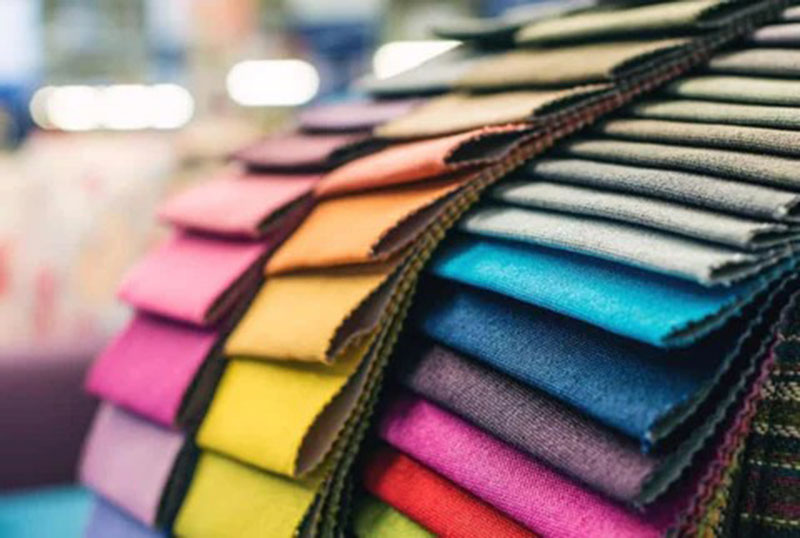
Logo and brand mark reproduction is the primary functional requirement that distinguishes promotional plush from generic plush — and it is the requirement that most directly constrains fabric selection in promotional applications. A promotional plush fabric must not only look and feel appropriate but must support accurate, durable reproduction of the brand’s visual identity.
Logo and brand color reproduction on plush fabrics is achieved through three primary methods — embroidery, printed fabric inserts, and sublimation printing — each with specific fabric requirements that must be matched in fabric selection.
Here is a comprehensive guide to how different reproduction methods interact with fabric selection:
| Reproduction Method | Fabric Requirement | Color Range | Resolution Achievable | Durability | Best Application |
|---|---|---|---|---|---|
| Embroidery | Any pile height — shorter pile gives sharper definition | Limited to thread colors | Low to Medium — thread-based | Very High — permanent | Logos, text, simple icons |
| Heat transfer print on fabric insert | Smooth or short pile fabric | Unlimited — full color | High — photographic quality possible | Medium — depends on application method | Complex logos, photographic images |
| Sublimation printing | Polyester fabric only — pile disrupts image | Unlimited — full color | Very High | High | Full-surface printing, complex patterns |
| Screen printing on fabric | Smooth or very short pile | Limited by screen count | Medium | Medium | Simple multi-color logos on large surface |
| Woven label attachment | Any fabric | Unlimited — woven colors | Medium — thread-limited | Very High | Premium brand marks, woven quality feel |
Embroidery and Fabric Pile Height
Embroidery is the most durable and most commonly used brand mark reproduction method for promotional plush — and it is the method most directly affected by fabric pile height selection. The fundamental challenge of embroidery on plush fabric is that the pile creates visual competition with the embroidery — longer pile obscures fine embroidery detail, reduces contrast between the embroidery and the background, and creates a less defined logo appearance.
For embroidered logos on promotional plush, shorter pile fabrics — 8 to 12mm — consistently produce sharper, more defined logo reproduction than longer pile alternatives. The embroidery sits clearly on top of a shorter pile surface and reads clearly from normal viewing distances. On longer pile fabrics — 20mm and above — fine embroidery details may be difficult to read and the logo may appear less prominent than intended.
This embroidery-pile relationship creates a specific constraint on fabric selection for embroidery-heavy promotional designs: when embroidery clarity is a priority, pile height must be limited regardless of other fabric quality considerations. If a premium long-pile tactile experience is also required, alternative reproduction methods — printed inserts, woven labels — may be more appropriate than embroidery.
Color Accuracy and Fabric Background Color
The background color of the promotional plush product — determined by the fabric color — directly affects how accurately brand colors can be reproduced through embroidery, because embroidery thread colors are perceived differently against different background colors.
Red embroidery thread on a white background reads as a clear, bright red. The same red embroidery thread on a dark navy background reads as a slightly different shade of red — darker, less saturated — because the background color affects color perception. For brands with Pantone-critical color requirements that extend to embroidered logos, this background color interaction must be accounted for in the embroidery thread selection — typically requiring thread evaluation against the actual production fabric rather than against a standard reference.
When brand color accuracy is critical and the fabric background color creates problematic color interaction, using a light neutral background fabric — white, cream, or light grey — for the specific panel or area where the brand mark will be reproduced can maintain embroidery color accuracy while the main body fabric uses the brand’s primary color.
How Do Safety and Compliance Requirements Apply to Promotional Plush Fabrics?
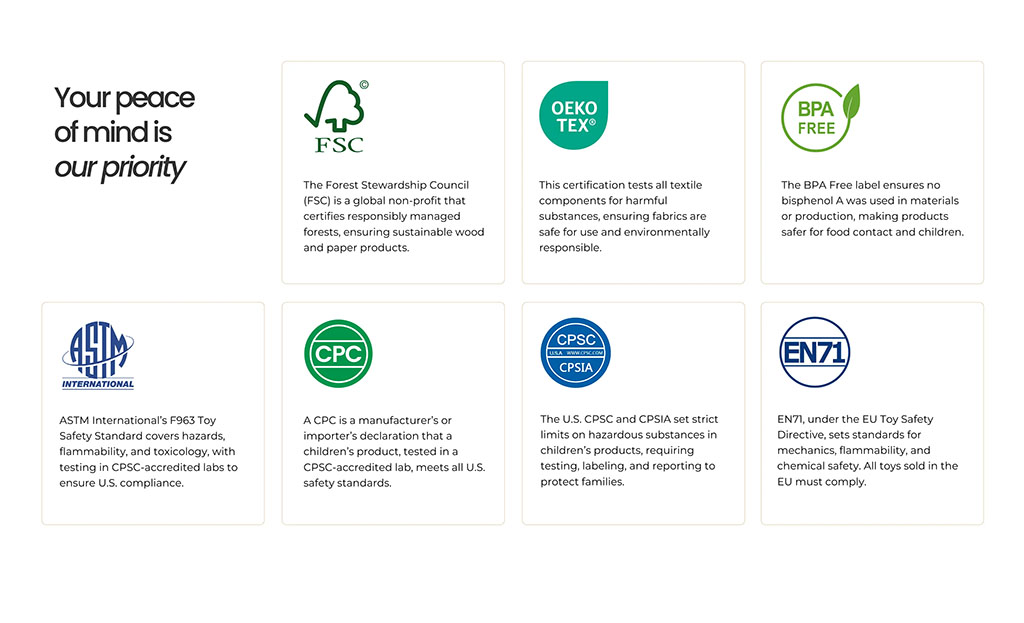
Safety and compliance requirements for promotional plush fabrics are often underestimated by buyers who assume that promotional items face less stringent requirements than retail products. This assumption is incorrect — and acting on it creates compliance exposure that can be more commercially damaging for promotional products than for retail products, because promotional items are often distributed at events or through retail partners who have their own compliance requirements.
The applicable safety and compliance standards for promotional plush fabrics depend on the intended recipient and the distribution channel — not on whether the product is promotional or retail. Products distributed to children must meet all applicable toy safety standards regardless of whether they are sold or given away. Products distributed through retail channels must meet those retailers’ compliance requirements. Products exported to regulated markets must meet those markets’ import compliance requirements.
Here is a compliance framework for promotional plush fabrics across distribution contexts:
| Distribution Context | Applicable Standards | Compliance Requirement | Documentation Required |
|---|---|---|---|
| General adult distribution | Market-dependent chemical safety | REACH (EU), CPSIA (US) for fabric | Material test reports |
| Children’s distribution — any age | Toy safety standards | ASTM F963 (US), EN71 (EU) | Product safety test report |
| Corporate gifting — regulated market | Import compliance | Market chemical safety standards | Material compliance documentation |
| Retail channel distribution | Retailer compliance program | Retailer-specific requirements | Retailer compliance documentation |
| Trade show — EU distribution | EU toy safety if any recipient may be a child | EN71 if children’s toy classification | CE marking documentation |
| Licensed character merchandise | License agreement compliance | License-specified standards | License compliance documentation |
The Age Grade Assumption Error
The most common compliance error in promotional plush distribution is assuming that products distributed to adults are exempt from toy safety requirements. This assumption fails in two specific scenarios.
First, many promotional plush items are distributed in contexts where children may be present — family-oriented events, retail environments, hospitality venues — and a product that is designed and marketed as an adult promotional item may still be evaluated against children’s toy safety standards if it is reasonably foreseeable that children will access it.
Second, the product’s own design characteristics determine its regulatory classification in some markets — not the stated intended recipient. A product that looks like a toy and would reasonably be used as a toy by a child may be classified as a toy regardless of how the distributor intends it to be used.
The safest compliance approach for promotional plush products is to source materials and manufacture to the applicable toy safety standards for the product’s target market regardless of the intended distribution age — because this eliminates the regulatory classification risk and provides documentation that satisfies the requirements of any distribution context.
How Does Order Volume Affect Fabric Options and Minimum Purchase Requirements?

Order volume is one of the most practically constraining factors in promotional plush fabric selection — because fabric suppliers have minimum purchase requirements that determine which fabric options are commercially accessible at different production volumes.
This volume-option relationship works in both directions: higher order volumes unlock access to more fabric options — including custom colors and specialty constructions — while lower order volumes restrict selection to catalog standard fabrics available without minimum purchase constraints.
Here is a practical guide to how order volume affects fabric accessibility:
| Order Volume | Accessible Fabric Options | Custom Color Availability | Typical Minimum Fabric Purchase | Cost Impact |
|---|---|---|---|---|
| Under 200 units | Standard catalog colors only | Not typically available | Must order excess fabric above production need | Highest per-unit fabric cost |
| 200–500 units | Standard catalog plus some extended range | Available at higher minimum — typically 300m per color | Fabric ordered near production need | High per-unit cost |
| 500–1,000 units | Full catalog range | Available — standard minimum typically met | Production-efficient fabric ordering | Medium per-unit cost |
| 1,000–3,000 units | Full catalog plus custom color with minimum | Custom color typically economically viable | Multiple colorways possible | Favorable per-unit cost |
| 3,000+ units | Full range including specialty construction | Custom color and construction viable | Maximum volume efficiency | Best per-unit cost |
The Catalog Color Flexibility Strategy
For promotional projects at lower order volumes — under 500 units per colorway — where custom color dyeing is not economically viable, the most effective fabric selection strategy is to work backward from the available catalog color range to find the closest match to the brand’s color requirements.
This process involves requesting the factory’s complete standard color range for the selected fabric type, comparing each available color against the brand’s Pantone specification under D65 standardized lighting, and identifying the closest match within the commercial tolerance established for the specific project. For most brands, a catalog color that falls within one to two Pantone shades of the brand reference is acceptable for promotional applications where the color appears in isolation rather than alongside brand materials using the exact Pantone color.
For corporate clients where the brand guidelines specify zero tolerance for color variation — typically luxury brands and brands with strong legal IP protection for their color usage — the minimum volume for custom color dyeing is a non-negotiable production requirement, and project planning must account for the volume commitment needed to justify the custom color investment.
How Should Buyers Specify Promotional Plush Fabric to Get Consistent Results?
Fabric specification for promotional plush requires the same completeness as specification for retail plush — not because promotional fabric requires the same quality investment but because incomplete specification produces inconsistent results that create the same downstream quality and compliance problems regardless of the product’s commercial positioning.
Here is a complete specification framework for promotional plush fabric:
| Specification Element | What to Include | Why It Matters for Promotional Applications |
|---|---|---|
| Fabric type | Specific fabric construction with pile height range | Defines visual appearance and embroidery compatibility |
| Color specification | Pantone reference with acceptable deviation range | Defines brand color compliance threshold |
| Color sourcing approach | Catalog color or custom dye | Determines cost structure and availability |
| Logo reproduction method | Embroidery, print, or other — with position and size | Determines fabric requirements for reproduction quality |
| Compliance requirement | Applicable standards for distribution context | Ensures market-appropriate fabric used |
| OEKO-TEX requirement | Whether certification required | May be required for certain distribution contexts |
| Minimum quality floor | Explicit statement of minimum acceptable standard | Prevents quality below brand representation threshold |
| Physical reference | Approved fabric swatch if available | Most reliable quality communication method |
| Pile height tolerance | Acceptable range if pile height is critical | Prevents pile height variation from affecting logo quality |
Establishing the Minimum Quality Floor in Writing
The most important — and most commonly omitted — element of promotional plush fabric specification is an explicit written statement of the minimum quality floor: the lowest acceptable quality level below which the product fails to meet the brand representation standard.
Without this explicit statement, the minimum quality floor is implied rather than defined — and implied standards are the most common source of quality disputes in promotional product manufacturing, because the buyer’s implied standard and the factory’s assumed standard may differ significantly.
The minimum quality floor statement should describe, in specific terms, what the buyer will and will not accept: “Fabric must not be visibly thinner than the reference swatch when viewed at arm’s length” or “Color must fall within two Pantone shades of the reference under D65 lighting” or “Pile must recover to original height within 24 hours of compression.” These specific statements create verifiable standards that IQC, IPQC, and FQC can assess objectively.
How Does Kinwin Approach Fabric Selection for Promotional Plush Projects?

At Kinwin, promotional plush projects receive the same systematic fabric selection and quality management approach as retail product development — because we understand that the brand representation consequences of a fabric quality failure are no less significant for a promotional product than for a retail one, even when the budget requirements are different.
Our approach to promotional plush fabric selection addresses three specific client priorities that we encounter consistently in promotional projects:
Budget-Efficient Fabric Selection Without Brand Compromise
Our first priority in any promotional plush project is understanding the brand’s specific quality floor — the minimum that must be achieved for the product to reflect positively on the brand — and then selecting the most cost-efficient fabric option that meets that floor. We do not default to the cheapest available fabric and call it adequate. We assess each promotional brief against the specific brand context and select the fabric that optimizes cost within the quality constraints the brand actually requires.
For corporate clients where brand color accuracy is the primary quality requirement, we work with our catalog range to identify the closest available color match before recommending custom dyeing — because catalog colors are significantly more cost-efficient and meet the requirement for most brand contexts. For clients where tactile quality is the brand floor requirement, we recommend the minimum pile height and density that achieves the target feel rather than defaulting to premium specifications that exceed what the promotional context requires.
Logo and Brand Mark Reproduction Quality
Our development team reviews every promotional brief for logo and brand mark reproduction requirements before fabric selection is finalized — because the fabric choice must support the reproduction method that will achieve the required logo quality.
For embroidered logos, we specify pile heights that support the embroidery detail level required by the brand mark — shorter pile for fine detail, with specific recommendations about the minimum pile height at which the specific logo design will read clearly. For printed reproduction methods, we identify fabric constructions that support the print process selected. And for any logo reproduction approach, we verify that the selected fabric color creates the appropriate contrast with the logo colors before production begins — preventing the color contrast failures that produce poor logo readability in finished products.
Compliance as Standard — Not Optional
Every promotional plush fabric we source for any project carries current compliance documentation — material test reports for chemical safety, flammability compliance where applicable, and OEKO-TEX certification for clients who require it. We do not apply different compliance standards to promotional products versus retail products — because the distribution context of a promotional product does not change the applicable regulatory requirements, and compliance failures in promotional products can create the same brand reputation problems as compliance failures in retail products.
For clients who distribute promotional plush at events or through retail partners with specific compliance requirements, we can provide the specific documentation packages those partners require — whether that is a retailer compliance portal submission, a third-party lab test report in a specific format, or documentation for CE marking in EU markets.
If you are developing promotional plush products and want to discuss how fabric selection, logo reproduction, compliance management, and production quality control can be structured to meet your specific brand requirements and budget constraints, we would be glad to walk through it with you directly.
Reach out to our team at [email protected] or visit kinwintoys.com to start that conversation.
Conclusion
Promotional plush fabric selection is not a simplified version of retail fabric selection — it is a differently prioritized version that requires the same systematic approach but applies different weights to different quality dimensions based on the specific requirements of the promotional context.
The key decisions — where to set the quality floor, how to achieve brand color accuracy within budget constraints, which fabric type and pile height best support the logo reproduction method, and how to ensure compliance across the intended distribution context — require explicit analysis for each project rather than defaults that assume either maximum quality or minimum cost.
Buyers who approach promotional plush fabric selection with this explicit, analytical framework consistently achieve better brand representation outcomes at their budget constraints than those who either default to the cheapest available option or apply retail quality standards to promotional budget limitations. The right fabric for a promotional plush is the one that meets the brand’s actual quality floor most cost-efficiently — not the cheapest available, and not necessarily the best available.
At Kinwin, we bring this analytical approach to every promotional project we develop — because we understand that the brand’s reputation is at stake in promotional distribution just as it is in retail, and that the fabric decisions made at the development stage are the foundation on which that reputation either benefits or suffers.
FAQ
Q1: Is it possible to use different fabric grades for different panels of the same promotional plush — for example, premium fabric for the face and standard fabric for the back — to optimize cost without compromising brand appearance?
Yes — and this is a legitimate cost optimization strategy for promotional plush products where the product will be displayed or photographed primarily from one angle. Using premium fabric on the primary viewing surface — the face, the front, or any surface that will be prominently displayed — and standard fabric on the back and less visible surfaces reduces material cost without affecting the brand impression created by the product. The practical implementation requires clear specification of which fabric grade applies to which panels, physical reference swatches for both grades, and careful IQC verification that each panel is cut from the correct fabric. It also requires the factory’s pattern making team to clearly designate panel assignments in the production workflow — preventing the incorrect assignment that would put standard fabric on a premium-required surface. For promotional projects with meaningful cost pressure and clear primary-viewing-angle display requirements, this multi-grade approach can reduce fabric cost by 15 to 30 percent while maintaining the brand-facing quality that matters most.
Q2: How should buyers handle a situation where the brand’s required Pantone color is not achievable in any available catalog fabric and custom dyeing is not within the budget?
When the exact brand Pantone color is not achievable within budget, the practical path forward involves three steps. First, quantify the color gap — measure exactly how far the closest available catalog color is from the brand reference under D65 lighting, expressed in the closest Pantone shade equivalent. Second, get explicit approval from the brand’s marketing or brand standards team for the specific catalog color being proposed, with the measured deviation documented — this approval should be in writing and should reference the specific Pantone deviation. Third, confirm in the approval documentation that the approved catalog color is the production standard for this project, which protects against later claims that the fabric color was incorrect. For most promotional contexts, a deviation of one to two Pantone shades is commercially acceptable when approved through this process. For brands with strict color IP protection, the minimum order volume for custom dyeing may need to be revisited as a project parameter — because the brand protection cost of incorrect color may exceed the additional cost of custom dyeing at a higher-than-planned volume.
Q3: What fabric specifications are most important to include in a promotional plush brief when the buyer has limited technical knowledge of fabric characteristics?
For buyers with limited technical fabric knowledge, four specification elements provide the most value with the least technical expertise required. First, a reference product — providing a physical sample of a commercially available plush product whose fabric quality represents the minimum acceptable standard is the most reliable specification method for buyers who cannot specify pile height in millimeters or density in grams per square meter. Second, logo reproduction method — specifying clearly whether the logo will be embroidered, printed, or applied as a label enables the factory to select pile height and fabric construction that supports the intended reproduction quality without detailed technical guidance from the buyer. Third, Pantone color reference — providing the specific Pantone TPX code for the brand’s primary color enables accurate color matching regardless of the buyer’s ability to describe the color in technical terms. Fourth, compliance requirement — stating the intended distribution context (adult, children’s, EU, US, retail channel) enables the factory to apply the correct compliance standards without the buyer needing to specify which regulatory standards apply. These four elements provide enough information for an experienced factory to make appropriate fabric selection recommendations, which the buyer can then evaluate against the reference product standard.
Q4: How do fabric requirements change for promotional plush products that will be used as trade show giveaways versus products that will be sold through retail channels as limited-edition promotional items?
Trade show giveaway and retail promotional product fabric requirements differ primarily in three dimensions: durability expectations, compliance documentation requirements, and cost tolerance. Trade show giveaway products typically have limited expected use — they are received, perhaps displayed on a desk or given to a child, and may not be heavily used. This limited use expectation supports lower durability specification — fabric grades that might not hold up through years of retail use are entirely adequate for the promotional giveaway context. Retail promotional products — limited editions, licensed character merchandise, co-branded retail items — must meet the compliance documentation requirements of the retail channel and should hold up through a normal retail product lifespan. Compliance documentation requirements also differ: trade show giveaways distributed within a single market typically require less formal compliance documentation than retail products that will be sold through multiple retailers with their own compliance programs. Cost tolerance differs because retail promotional products often carry a retail price that supports higher production cost, while trade show giveaways are pure marketing budget items with no revenue offset.
Q5: Can fabric swatches sent by a factory be reliably used to assess promotional plush fabric quality before placing an order, or is a physical product sample required?
Fabric swatches provide valuable but incomplete quality assessment information. They are reliable for color accuracy evaluation under D65 lighting, pile height visual assessment, and surface texture evaluation. They are less reliable for assessing the full tactile quality of the fabric as it will be experienced in a finished product — because the pile behavior, the compression response, and the overall feel of a small swatch differs from the same fabric sewn, stuffed, and finished into a product. For promotional plush decisions where tactile quality is within the quality floor parameters — the swatch appears to meet the minimum standard — ordering the project based on swatch evaluation is typically acceptable. For decisions where tactile quality is at or near the quality floor and the margin for error is small, requesting a physical sample of a comparable product made with the proposed fabric is more reliable. Many promotional plush projects do not budget for dedicated sample development — in which case, swatches for color and visual evaluation combined with the factory’s portfolio samples of comparable products made with similar fabrics provides the most reliable quality assessment available within project constraints.