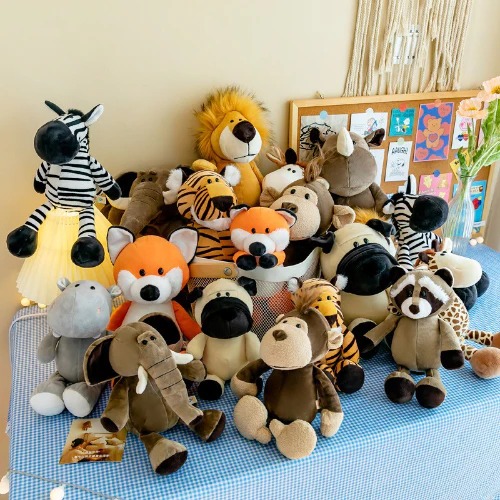
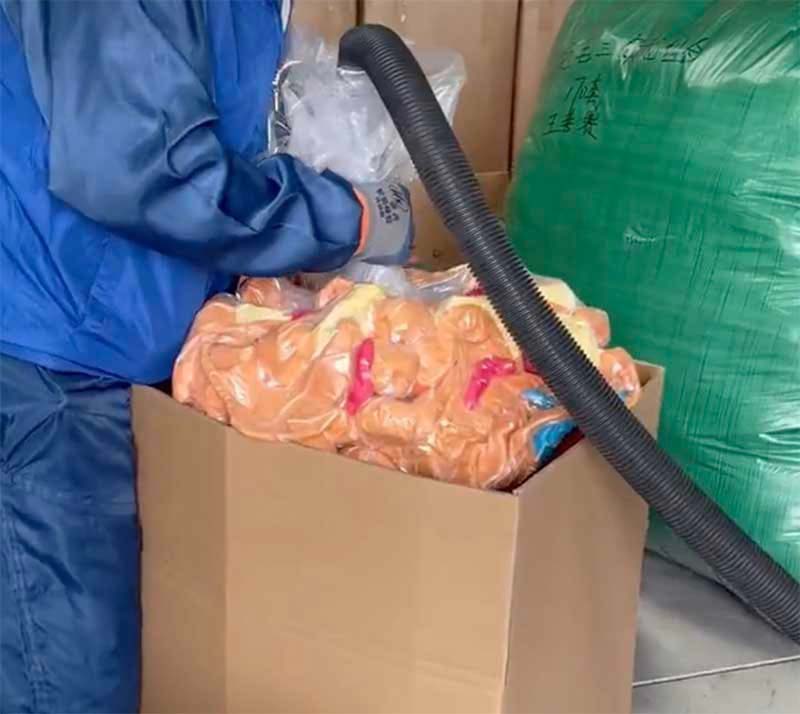
Weighted plush feels different because it hugs back. The secret is a carefully engineered weight system hidden inside the toy: inert beads or pellets contained in a sealed liner, stitched into the body so the weight stays even and safe. I’m Amanda from Kinwin. In clear, practical English, I’ll explain what we put inside weighted plush, how the different media feel, how we stop leaks and shifting, how to choose target weights, which tests matter, and how we balance comfort with washability. Every section includes a factory-ready table you can paste into RFQs and SOPs.
What materials are used to create weight in stuffed animals?
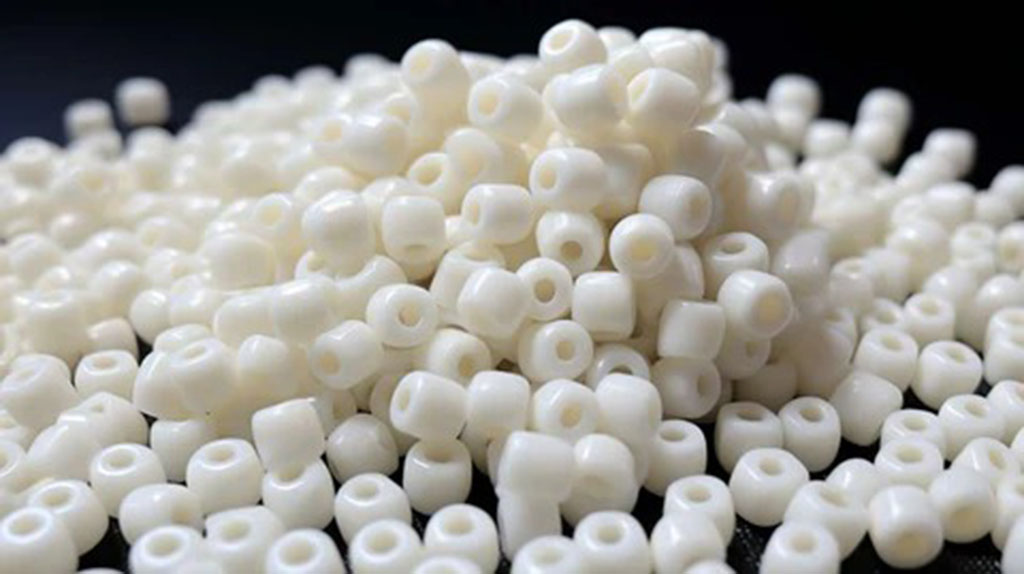
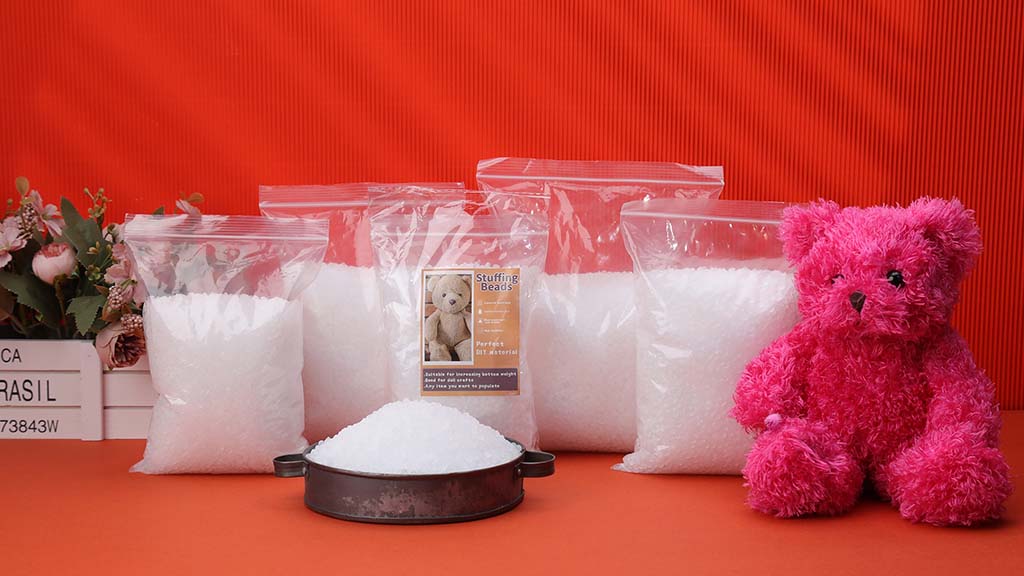
The “weight” is not the same as the soft filling. We add dense, inert media inside a secondary liner (an inner bag) and then surround that liner with traditional filling (usually polyester fiberfill). The common media are glass microbeads, steel beads/shot, and plastic pellets (polypropylene or copolyester). Glass and steel deliver high mass in small volumes; plastic pellets are lighter and feel softer when squeezed. We choose the medium based on target weight, toy size, feel, cost, and wash plan. Whatever we choose, it must be chemically safe, low-odor, and smooth with no sharp edges.
Table 1 — Weighting media overview
| Medium | Density (feel) | Hand-Feel in Use | Typical Placement | Pros | Watch-Outs |
|---|---|---|---|---|---|
| Glass microbeads | High density | Silky, sand-like flow | Belly/core; small pockets | Smooth, inert, compact mass | Costs more than plastic pellets |
| Steel beads/shot | Very high density | Firm, with quick settle | Small targeted zones | Small volume for big weight | Metal detection logistics; avoid for wash-heavy SKUs |
| Plastic pellets (PP/COPET) | Medium density | Soft, rounded “bean” feel | Larger belly pockets | Budget-friendly; washable | Bulkier volume for same weight |
How do glass beads, steel beads, and plastic pellets differ in feel and safety?
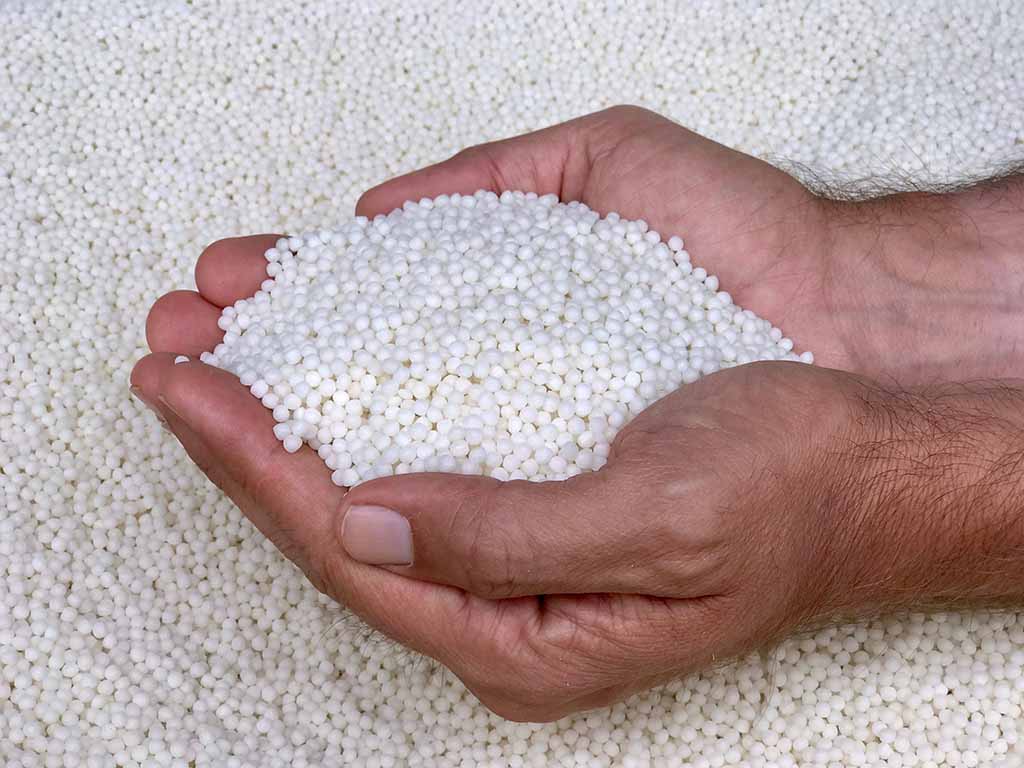
Glass microbeads feel silky and even. Because they are dense and small, they distribute weight smoothly—ideal for lap comfort or “grounded” bellies. Steel beads pack the most weight into the smallest space, creating a firm center of mass; we use them sparingly and only with robust liners and clear labeling. Plastic pellets are gentler and bouncy, suitable for children’s weighted accents or where soft squeeze matters more than heavy mass.
Safety depends on containment: any granule becomes a small-parts hazard if it escapes. That’s why we always use sealed, segmented liners and reinforce seams. We also screen for chemical compliance (heavy metals, phthalates), check odor/VOC, and avoid sharp or irregular granules that could abrade the liner.
Table 2 — Feel vs. safety comparison
| Medium | Sensory Profile | Best For | Safety Strength | Safety Risk if Misused | Mitigation |
|---|---|---|---|---|---|
| Glass microbeads | Even, silky weight | Adult/teen comfort bellies | Inert, smooth | Small-parts if leaked | Sealed, segmented liner + seam reinforcement |
| Steel beads/shot | Compact, firm core | Small toys needing high mass | Very compact mass | Heavy if loose; metal detection | Thick liner fabric; needle detection logs |
| Plastic pellets | Soft, rounded squeeze | Kids’ weighted accents | Wash-friendly grades exist | Migration if not tacked/segmented | Larger segments + tack points |
What fabric liners and stitching techniques prevent leakage and shifting?
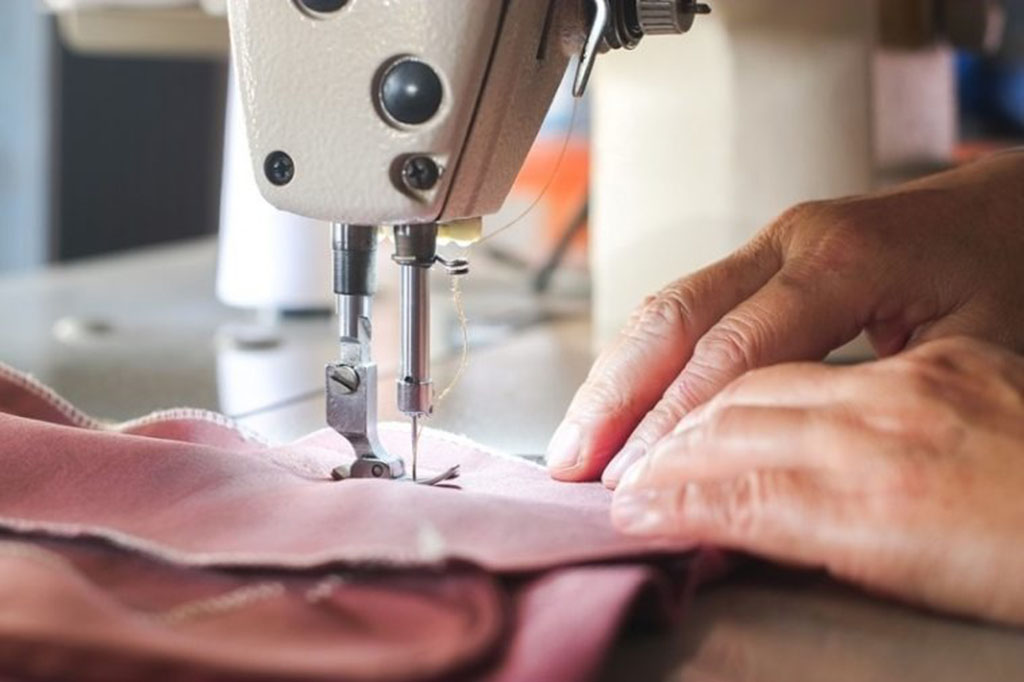
A safe weighted plush uses a two-wall system: the outer shell (the plush fabric) and an inner liner (the bead bag). The liner is made from tightly woven polyester or microfiber down-proof fabric to stop granules from escaping. Inside that liner, we build baffles/segments—much like a quilt—so the media cannot pool in one corner. We then tack the liner to interior seams at specific points to anchor the mass to the toy’s anatomy (belly, hips), preserving posture.
Stitching matters. We increase seam allowance on curved zones, use shorter stitch length where stress concentrates, and avoid sharp seam turns that act like “tear starters.” Openings for closing are placed on straight belly runs so the final ladder stitch remains tidy and strong. Before closing, we palpate for hard spots, add fiberfill to “cushion” the liner, and run a shake test to confirm stability.
Table 3 — Liner & stitching engineering (leak and shift control)
| Component | Spec/Technique | Purpose | QC Check |
|---|---|---|---|
| Liner fabric | Tightly woven poly or microfiber (down-proof) | Prevent bead egress | Light test; bead rub test |
| Segmentation | 3–8 baffled chambers (size by toy) | Stop pooling/migration | Uniform fill per chamber |
| Tack points | Anchor liner to shell seams | Fix weight to anatomy | Pull check at tacks |
| Seam rules (shell) | 0.5–0.7 cm on curves; 2.5–3.0 mm stitch length | Strength at stress arcs | Seam-pull test (target N) |
| Closure | Ladder stitch on straight belly | Strong, discrete close | Visual + tug check |
| Cushioning | Fiberfill layer around liner | Softens feel; hides edges | Palpation for hard spots |
How does target weight influence ergonomics and product safety?
The right weight depends on size, user age, and use scenario. For a 25–35 cm plush, 150–400 g of added weight in the belly usually feels “grounded” without straining small wrists. Larger 40–50 cm plush may carry 400–800 g across belly and hips. For desk buddies and travel companions, we aim for low center of gravity so the toy sits still without toppling. For younger users, we keep weight conservative and focus on balance, not mass.
Heavier is not always better. Excess weight can stress seams, flatten posture, and reduce wash practicality. We document a grams-per-zone sheet so operators replicate balance exactly. We also disclose the finished weight and age guidance on labels and PDPs to set correct expectations and ensure safe use.
Table 4 — Target weight planning (guide values, adjust per design)
| Toy Size (nose-to-tail) | Typical Added Weight | Distribution Plan | Ergonomic Goal | Label Note |
|---|---|---|---|---|
| 20–25 cm | 100–200 g | Single belly chamber | Sit-stable on desk | Finished weight disclosed |
| 25–35 cm | 150–400 g | Belly + small hip baffles | Grounded feel, easy carry | Age guidance for users |
| 40–50 cm | 400–800 g | Belly + hips (3–6 segments) | Lap comfort | “Not for very young children” if needed |
| 60 cm+ | 700 g–1.2 kg | Distributed core + hips | Sofa cuddle; stay-put | Care icons reflect handling |
What testing standards ensure weighted plush compliance and durability?
Weighted plush must pass the same toy safety rules as non-weighted plush, plus extra checks for leakage and seam strength. We follow EN 71 (EU), ASTM F963 (USA), and CPSIA (tracking labels, chemicals), and we often align with REACH/SVHC for chemistry transparency. Because the weight system changes behavior, we run composite flammability (shell + fill), seam-pull, drop, and leakage tests on finished toys, not just materials. We validate wash labels with bag-wash cycles (typically 30 °C, air-dry) and check for odor/VOC on arrival.
Table 5 — Test & compliance pack (put this in your PO)
| Test/Doc | Purpose | Applies To | Pass Signal |
|---|---|---|---|
| EN 71-1 / ASTM F963 mechanical | Small parts, seam integrity | Finished weighted toy | No small-parts failures; seams hold |
| EN 71-2 flammability | Composite burn behavior | Shell + fill + liner | Meets burn criteria |
| EN 71-3 / chemical screens | Element migration; clean chemistry | Fabrics, liner, media | Within limits; COAs filed |
| Leakage test | Media containment | Liner + tacks + seams | No escape after flex/shake |
| Drop test (1.0–1.2 m) | Impact resilience | Finished toy | No burst; no bead loss |
| Wash validation | Label truth, hygiene | Darkest colorway | Shape intact; no leaks/lumps |
| CPSIA tracking | Traceability | Labels/ERP | Lot → carton → unit linkage |
| Odor/VOC panel | Arrival comfort | Finished toy | Neutral/low-odor score |
How do manufacturers balance comfort, function, and washability in design?

Weighted plush must still feel soft, look photo-ready, and be serviceable at home. We surround the liner with quality polyester fiberfill to keep squeeze gentle and silhouette rounded. For faces, we use short plush with a thin batting so embroidery stays smooth even when weight shifts slightly during handling. We plan openings on straight bellies for strong closes, and we avoid squeakers or fragile trims in heavy zones. For washability, we provide bag-wash 30 °C, air-dry only when validated; some heavy models are surface clean by design. Packaging includes clear weight, care, and age information.
Table 6 — Comfort × function × care blueprint
| Goal | Design Choice | Why It Works | Validation |
|---|---|---|---|
| Soft hand-feel | Quality PP fiberfill around liner | Cushions weight; no hard edges | Palpation + sit test |
| Clean face | Short plush + thin batting | Matte look; crisp embroidery | Face flatness check |
| Stable posture | Low center of gravity; belly/hip baffles | Sits still on desk/sofa | 5-position sit test |
| Honest care | Bag-wash 30 °C only if proven | Reduces returns | Photo evidence; dark-color test |
| Clear info | Finished weight + age guidance | Right expectations | Packaging/PDP disclosure |
Conclusion
Inside a weighted stuffed animal you’ll find dense, inert beads or pellets held in a sealed, segmented liner, cushioned by soft fiberfill, and anchored to the toy’s structure for even, safe weight. When media selection, liner engineering, target weight, and testing come together, the plush feels calm and stays safe through real-life use and cleaning.
At Kinwin, we design that full system—media specs, down-proof liners, baffle layouts, tack maps, density maps, seam rules, and compliance tests—so your weighted plush ships photo-ready, cuddle-ready, and audit-ready for global markets.
Contact: [email protected] | kinwintoys.com