Skip to content
Stuffing determines how a plush toy feels, how long it lasts, and how buyers perceive its value. While fabrics define the outer softness, it is the inner filling that provides huggability, structure, and comfort. The choice of stuffing also affects compliance with safety standards, customization opportunities, and sustainability goals. This guide explains the best stuffing options for plush toys and what factors you should consider when sourcing or designing.
What factors determine the best stuffing choice for plush toys?
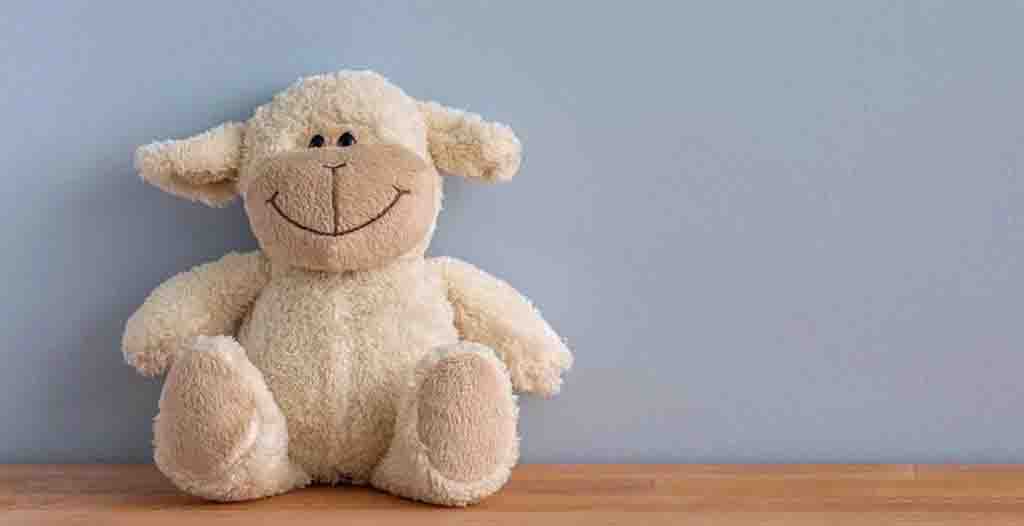
Selecting the right stuffing is about balancing softness, durability, safety, and cost.
Key factors in stuffing selection
- Softness and resilience – Filling should feel fluffy yet return to shape after squeezing.
- Weight and density – Defines whether the plush is light and cuddly or firm and structured.
- Safety compliance – Must pass EN71, ASTM, and CPSIA tests for choking, flammability, and toxicity.
- Production scalability – Easy to source in bulk and consistent in quality.
- Market positioning – Premium or eco-friendly lines may require specialty fillings.
| Factor | Why It Matters | Buyer Implication |
|---|---|---|
| Softness | Defines huggability | Polyester fiberfill or memory foam for comfort |
| Density | Shapes usability | Weighted beads for therapy, light fiberfill for kids |
| Safety | Retail requirement | Choose tested, hypoallergenic options |
| Scalability | Cost efficiency | Synthetics outperform naturals |
| Branding | Aligns with positioning | Eco-fillings strengthen sustainability claims |
How does polyester fiberfill compare to natural stuffing materials?
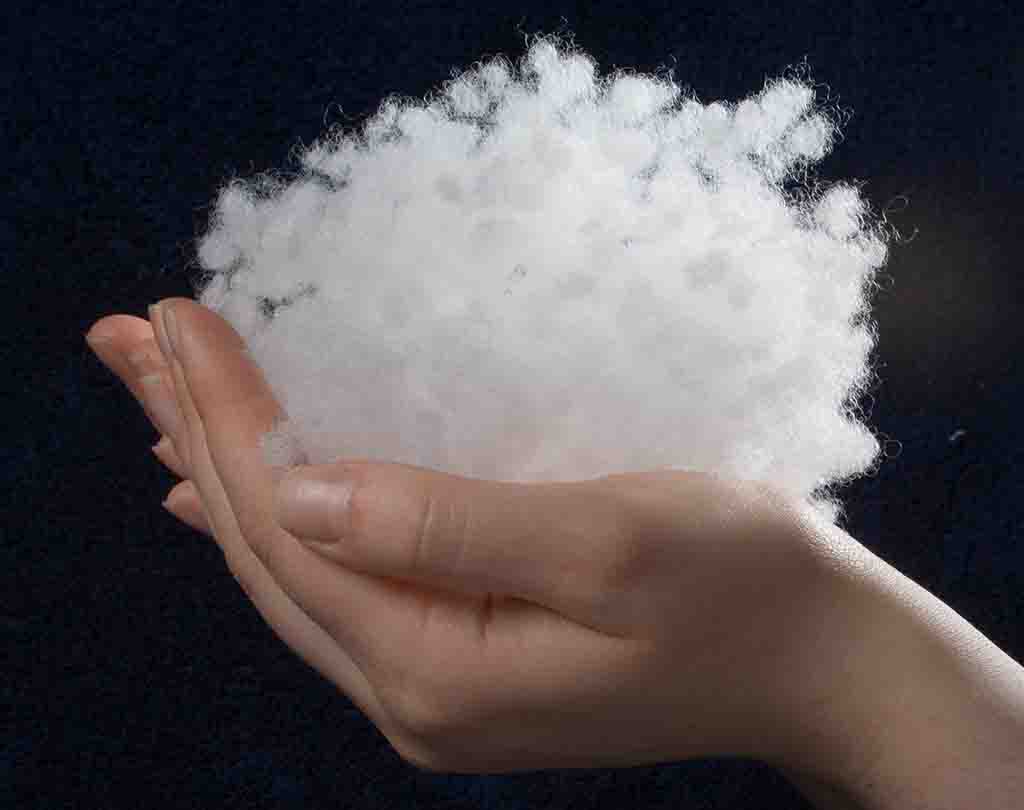
Polyester fiberfill is the global standard stuffing for plush toys because it is soft, affordable, and hypoallergenic. It is made from fine synthetic fibers that trap air, creating a fluffy, lightweight cushion.
Polyester Fiberfill Advantages
- High softness and resilience.
- Machine washable and quick drying.
- Consistent quality across large production runs.
- Cost-efficient, ideal for bulk sourcing.
Natural Fillings (Cotton, Wool, Kapok)
- Cotton: Natural and breathable, but flattens faster than polyester.
- Wool: Warm and dense, but heavier and less washable.
- Kapok: Lightweight and eco-friendly, but less durable over time.
While natural fillings appeal to eco-conscious markets, polyester remains dominant due to its reliability and scalability.
| Stuffing Type | Softness | Durability | Cost | Eco Score |
|---|---|---|---|---|
| Polyester Fiberfill | High | High | Low | Medium |
| Cotton | Medium | Medium | Medium | High |
| Wool | Medium | Medium | High | Medium |
| Kapok | Medium | Low | Medium | High |
What role do foam and memory foam play in plush toy filling?

Foam-based fillings create a different tactile experience compared to fluffy fiberfill.
Regular Foam
- Lightweight, supportive, and holds shape well.
- Common in plush cushions or structured plush items.
Memory Foam
- Denser and molds to touch, returning slowly to its shape.
- Creates a premium feel for therapeutic or decorative plush.
- More expensive and heavier than fiberfill.
Application in Plush Toys
Foam or memory foam is not used for every toy, but it elevates premium lines, cushions, or adult-oriented comfort plush.
| Filling Type | Softness | Structure | Market Segment |
|---|---|---|---|
| Foam | Medium | High | Cushions, structured plush |
| Memory Foam | Medium-High | Very High | Premium & therapeutic plush |
How do eco-friendly options like organic cotton or recycled fibers perform?
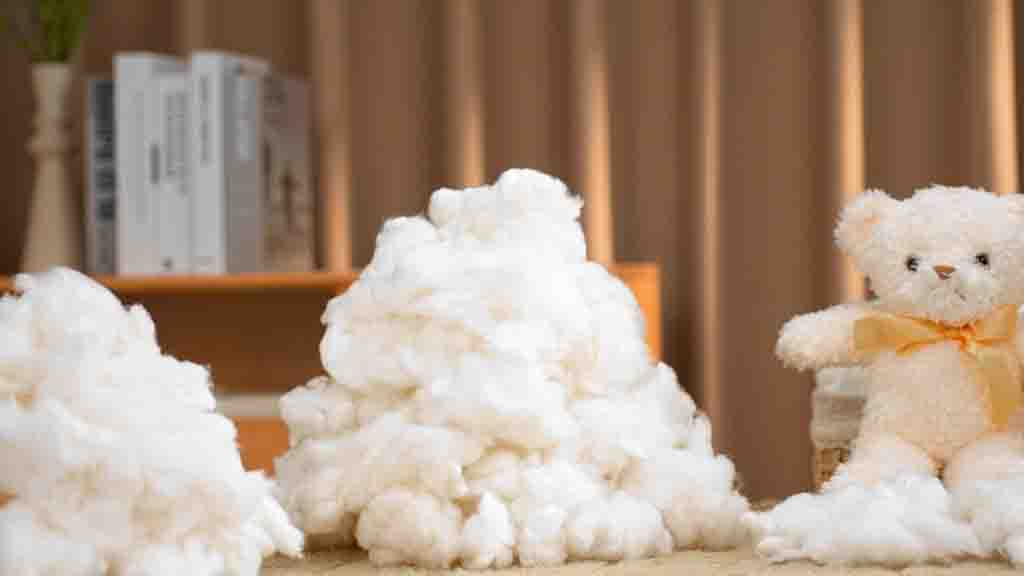
Eco-friendly fillings are becoming increasingly important as brands aim for sustainability.
Organic Cotton Stuffing
- Natural, breathable, and biodegradable.
- Softer than wool but less resilient than polyester.
- Popular in Europe and North America where eco-labels drive purchase decisions.
Recycled Polyester (rPET)
- Made from recycled plastic bottles.
- Offers softness close to virgin polyester fiberfill.
- Strong eco-marketing value, especially with certifications.
Market Trends
Buyers in eco-conscious regions are willing to pay more for sustainable plush. However, costs are higher and supply chains may be less stable than for conventional polyester.
| Eco Filling | Softness | Durability | Eco Value | Cost |
|---|---|---|---|---|
| Organic Cotton | Medium | Medium | Very High | High |
| Recycled Polyester (rPET) | High | High | High | Medium |
| Bamboo Fiber | Medium-High | Medium | Very High | Medium-High |
Which specialty fillings are used for weighted or therapeutic plush toys?

Weighted plush toys have surged in popularity for stress relief, sensory therapy, and adult comfort markets.
Common Specialty Fillings
- Glass beads – Provide smooth, consistent weight.
- Plastic pellets (poly beads) – Affordable and lightweight, commonly used in plush with “bean bag” feel.
- Microbeads – Create a silky, moldable texture, often used in stress-relief plush.
Benefits of Weighted Plush
- Soothing pressure helps with anxiety and stress.
- Popular among adults as well as children with sensory needs.
- Expands plush beyond “toy” into wellness and lifestyle categories.
| Specialty Filling | Texture | Best Use |
|---|---|---|
| Glass Beads | Smooth, dense | Premium weighted plush |
| Plastic Pellets | Light, firm | Bean bag plush |
| Microbeads | Silky, moldable | Stress-relief plush |
How does stuffing quality impact durability, safety, and overall huggability?
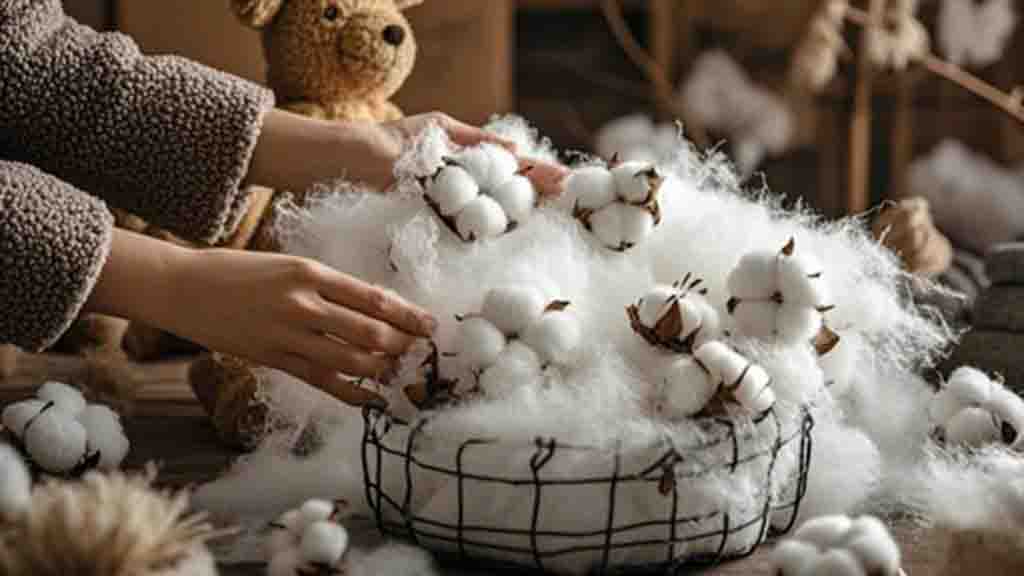
The quality of stuffing determines whether a plush toy becomes a long-term companion or loses shape within weeks.
Impact Areas
- Durability – High-quality fiberfill retains loft, preventing flattening.
- Safety – Certified hypoallergenic and non-toxic fillings protect children.
- Huggability – Balanced stuffing density ensures softness without being floppy.
- Resale value – For collectibles, stuffing consistency adds to perceived quality.
Why It Matters for Buyers
Poor stuffing leads to customer dissatisfaction, bad reviews, and higher return rates. For B2B buyers, ensuring consistent filling quality is essential to protect both brand reputation and consumer trust.
| Quality Factor | Impact | Buyer Concern |
|---|---|---|
| Loft Retention | Keeps plush cuddly | Prevents returns |
| Safety | Avoids toxic/hazard risks | Certification must |
| Density Balance | Defines comfort | Match market segment |
| Consistency | Predictable feel | Needed for brand lines |
Conclusion
The best stuffing for plush toys depends on market goals and buyer needs. Polyester fiberfill remains the industry standard for its softness, durability, and scalability, while foam and memory foam elevate premium lines. Eco-friendly options like organic cotton and rPET meet sustainability demands, and specialty fillings such as beads or microbeads create therapeutic weighted plush. High stuffing quality is the key to ensuring toys stay huggable, safe, and trusted across markets.
At Kinwin, we help brands and retailers choose the right stuffing for their product line—whether that’s fiberfill for mass-market plush, rPET for eco lines, or weighted beads for therapeutic toys. Every product is tested under EN71, ASTM, CPSIA, and ISO standards to guarantee safety and quality.
📧 Contact us at [email protected]
🌐 Visit kinwintoys.com
Let’s create plush toys that combine softness, safety, and market appeal.