Skip to content
Every buyer who sources plush toys has seen this situation: two factories quote for the same product and the prices are meaningfully different. One quotes $4.80 per unit. The other quotes $6.20 per unit. The designs are the same, the specifications appear the same, and both factories project confidence. On a 2,000-unit order, the price difference is $2,800.
The lower-priced factory wins the order. And then something happens — maybe during sampling, maybe during production, maybe at delivery, maybe when the products reach customers — that costs more than $2,800 to manage.
This scenario is not occasional. It is the most consistent pattern in plush toy sourcing, repeated across buyers at every stage of experience with every variety of product. The cheapest quote produces the lowest total cost outcome only when the cheapness reflects genuine production efficiency at equivalent quality — which is rarer than the frequency with which the lowest quote is selected.
Understanding exactly why cheap plush suppliers are risky — not in abstract terms but in the specific, identifiable cost mechanisms that transform a quoted price advantage into a total cost disadvantage — is the analytical foundation for making sourcing decisions that actually optimize economics rather than just optimizing the quotation comparison.
Why the Lowest Plush Quote Is Almost Never the Lowest Total Cost?

The unit price in a plush toy quotation is the most visible number in any supplier comparison — and it is the number that most directly influences selection decisions. Its visibility is deceptive, because unit price captures only a fraction of the total cost of a sourcing relationship.
The unit price captures the production cost of manufacturing the specified product at the specified volume. What it does not capture — and what cheap suppliers almost always exclude from their quoted economics — is the development investment required before production can begin, the quality remediation cost of the defects that inadequate quality systems will not catch, the compliance testing cost for market entry, the cost of shipping delays that miss seasonal windows, and the management time that unreliable suppliers require.
Here is a total cost comparison framework for a 1,000-unit order from a cheap supplier versus a professional manufacturer:
| Cost Category | Cheap Supplier | Professional Manufacturer | Notes |
|---|---|---|---|
| Unit production cost | $4.80 | $6.20 | Cheap supplier saves $1,400 |
| Total production cost | $4,800 | $6,200 | |
| Sampling — extra rounds from brief misinterpretation | $600 (3 rounds) | $200 (1 round) | Cheap supplier costs $400 more |
| Sample shipping — extra rounds | $180 | $60 | |
| Compliance testing — excluded vs included | $800 | $0 | |
| Quality rework — 12% defect rate vs 2% | $576 | $96 | |
| Third-party inspection — required vs standard | $450 | $0 | |
| Delay cost — 2-week late delivery | $800 | $0 | |
| Management time — 15 extra hours | $750 | $0 | |
| Total effective cost | $8,956 | $6,556 | Cheap supplier costs $2,400 more |
This illustration is not hypothetical. It represents a pattern that plays out with consistent regularity across plush toy sourcing relationships where the cheapest quote is selected without total cost analysis. The $1,400 production cost saving is real. The $2,400 total cost disadvantage is also real — and it is the outcome of the specific mechanisms that drive cheap supplier risk.
What Drives the Cheap Price
Understanding what drives a low quote is more useful than simply knowing that it exists. Low quotes in plush toy manufacturing almost always reflect one or more of the following:
Material grade reductions that are not disclosed in the brief response. Quality control investments that are absent from the factory’s overhead structure. Development team capabilities that are inadequate for the product complexity. Compliance infrastructure that does not exist or is not maintained. Workforce quality and stability that produces higher defect rates. And sometimes, deliberate pricing strategy that intends to add costs through change orders, quality concessions, and rework billing after the original order is committed.
None of these cost drivers is revealed by the quoted unit price. All of them become visible through their consequences.
How Do Material Shortcuts Create Quality Failures That Cost More Than They Save?

Materials represent 40 to 60 percent of a plush toy’s production cost — which makes material quality the area where cost reduction most directly translates into price advantage. A cheap supplier who uses lower-grade fabric, lower-density filling, and cheaper accessories can quote a meaningfully lower price while appearing to produce an equivalent product.
The equivalence is visible in the quotation. It is not visible in the product.
Here is how specific material shortcuts create cost consequences that exceed the savings:
| Material Shortcut | Savings Per Unit | Consequence | Consequence Cost |
|---|---|---|---|
| Lower-grade PP cotton (30% less dense) | $0.15–$0.30 | Limp product — returns and negative reviews | $2–$15 per unit from review impact |
| Uncertified fabric (no OEKO-TEX) | $0.20–$0.50 | Chemical test failure | $5,000–$20,000 per batch |
| Short pile fabric vs specified | $0.30–$0.60 | Visual quality gap — brand perception damage | Ongoing review and conversion impact |
| Cheaper safety eyes (no pull test cert) | $0.10–$0.20 | Safety test failure — recall risk | $10,000–$50,000+ if recall |
| Lower-loft filling | $0.10–$0.25 | Deformation in use — customer complaints | $1–$5 per unit from returns |
| Non-REACH-compliant dye | $0.15–$0.40 | EU market chemical test failure | Full batch remediation cost |
The Unauthorized Substitution Mechanism
The most commercially damaging form of material shortcut is not one that is reflected in the quotation — it is the unauthorized substitution that happens after the quotation is accepted. A cheap supplier who quotes on the specified materials may then substitute lower-grade materials at the production stage without informing the buyer, knowing that the buyer cannot distinguish the substitution from photography or even from casual sample inspection.
This substitution is discovered when the bulk order arrives and feels noticeably different from the approved sample — or when chemical compliance testing reveals that the production materials differ from the materials in the tested sample. At that point, the buyer has paid for a production run built on materials they did not specify or approve, and the options for remediation are all expensive.
Preventing unauthorized substitution requires contractual protection — an explicit written prohibition on material changes without buyer approval — combined with bulk material swatch approval before cutting begins, and compliance documentation verification that covers the specific material lots used in production. Cheap suppliers typically resist these requirements precisely because they intend to use the substitution flexibility those requirements would eliminate.
How Do Development Gaps in Cheap Suppliers Multiply Sampling Costs?
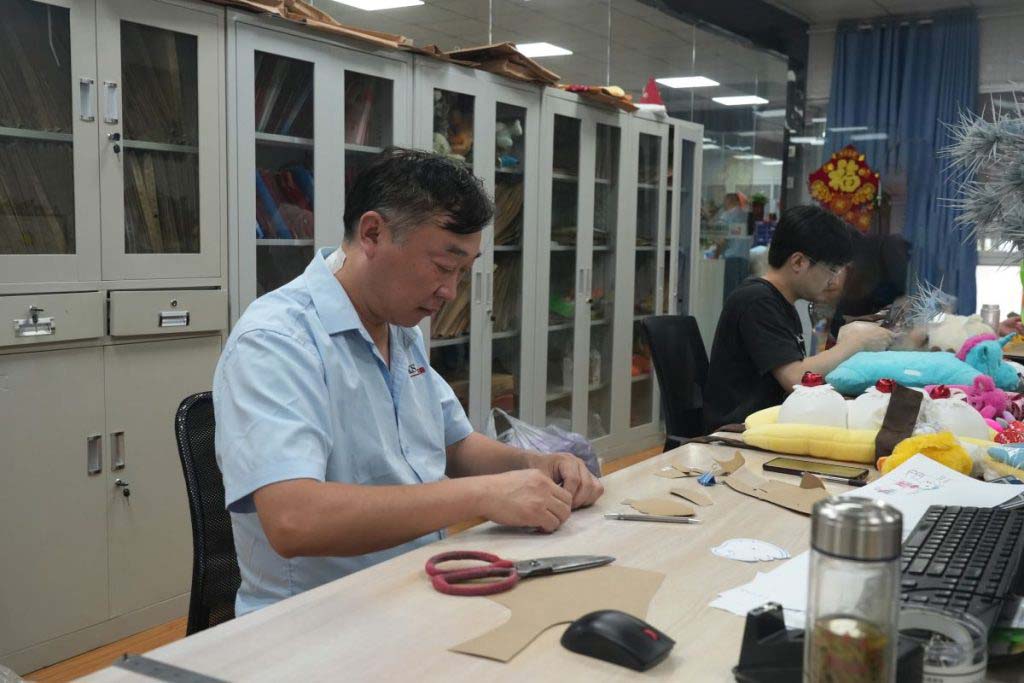
Development capability — the ability to accurately interpret design briefs, produce precise first samples, and manage revision rounds efficiently — is one of the most expensive capabilities to build and maintain in a plush toy factory. It requires dedicated experienced pattern makers, a separate sampling facility with skilled sample sewers, institutional knowledge accumulated across many product types, and the process discipline to conduct structured brief reviews before sampling begins.
These are investments that cheap suppliers have not made. Their sampling is handled by production workers alongside their regular duties. Their pattern making relies on generic templates rather than custom engineering. Their brief review process — if it exists — does not identify ambiguities or risks before the first sample is built.
The commercial consequence is systematic: cheap suppliers produce first samples that deviate significantly from design intent, requiring multiple revision rounds to close the gap between what was submitted and what is needed.
Here is how development gaps translate into sampling cost multiplication:
| Development Gap | Without Gap | With Gap | Cost Difference |
|---|---|---|---|
| Brief interpretation accuracy | 1–2 revision rounds | 3–5 revision rounds | $400–$900 per design |
| Pattern making accuracy | Minor proportion adjustment | Fundamental rebuilding | 2–4 weeks additional timeline |
| Material sourcing accuracy | Correct material first time | Wrong material requires replacement | $200–$500 + timeline |
| Revision management | All changes addressed in one round | Partial correction requires additional rounds | $200–$400 per extra round |
| Counter sample included | Production readiness confirmed | Absent — sample-to-bulk gap | $5,000–$20,000 if batch fails |
The Multiplier Effect Across Multiple Designs
Development gap costs multiply significantly when a buyer is developing multiple designs simultaneously — which is the common scenario for brand launches and range expansions. Each design with a cheap supplier may generate three or more revision rounds rather than one. For a five-design launch, this difference produces 10 to 15 revision rounds rather than five — adding $3,000 to $6,000 in sampling and shipping costs before a single bulk unit is produced.
This is the sampling cost multiplier that most buyers discover too late — after the development cycle has already consumed a disproportionate share of the launch budget, often forcing compromises on launch timing, production volume, or marketing investment that would not have been necessary if sampling efficiency had been preserved through the right supplier selection.
How Does Weak Quality Control at Low-Cost Suppliers Create Post-Production Risk?

Quality control infrastructure — dedicated QC personnel, documented inspection protocols, independent QC reporting structure, calibrated testing equipment — is an ongoing cost that every factory either builds into its overhead or eliminates from it. Cheap suppliers eliminate it, or maintain the appearance of it without the operational substance.
The commercial consequence of absent quality control is not primarily visible in the first order. A factory without genuine QC systems can produce a good first order under the attention and care of a new client relationship. The weakness becomes visible over time: in the second order, when the management attention that produced the good first order has moved to the next new client. In large orders, when the production scale exceeds what informal quality management can cover. In complex products, when the quality demands exceed what unstructured monitoring can meet.
Here is how specific quality control gaps create post-production risk:
| QC Gap | What It Fails to Catch | When Discovered | Remediation Cost |
|---|---|---|---|
| No IQC — incoming material inspection | Non-compliant or substandard materials | Product testing or customer complaints | $5,000–$30,000 |
| No first-off inspection | Production setup errors — affects entire run | Final inspection or on delivery | Full batch rework |
| No IPQC — in-process monitoring | Density drift, embroidery position drift | Final inspection or on delivery | Significant rework |
| Non-independent QC team | Quality compromises under production pressure | On delivery or customer use | Variable |
| No documented QC records | No basis for quality dispute resolution | When dispute arises | Unresolvable |
| No seam strength testing | Seam failures in use | Customer complaints, returns | Returns + brand damage |
| No pull force testing | Accessory detachment in use | Safety incident, potential recall | $10,000–$500,000+ |
The Defect Rate Economics
The economic impact of quality control weakness is most clearly expressed through defect rate comparison. A factory with mature quality systems consistently operating at 2 to 3 percent defect rates produces fundamentally different economics from a factory with weak systems operating at 8 to 15 percent defect rates — even if their quoted unit price is identical.
On a 5,000-unit order, the difference between a 2 percent and a 10 percent defect rate is 400 additional defective units. At $5 average rework cost per unit, this is $2,000 in direct rework cost. Including inspection cost to identify the defects, potential expedited shipping to recover the timeline lost to rework, and management time to oversee the remediation process, the total quality gap cost is typically $3,000 to $6,000 — which in many cases exceeds the unit price saving that motivated the supplier selection.
How Do Compliance Gaps Turn Price Savings Into Market Access Failures?
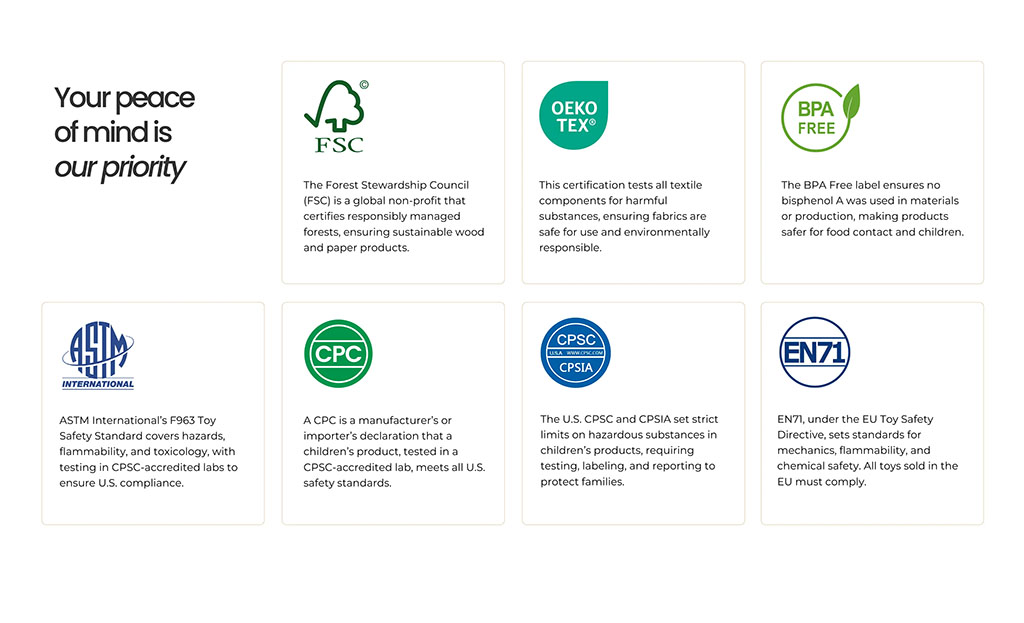
Compliance infrastructure — the regulatory knowledge, certified material sourcing, testing laboratory relationships, and documentation management capability that enables a factory to produce market-ready products — costs money to build and maintain. Cheap suppliers have not built it. The price savings they offer partly reflect the absence of these investments.
The commercial consequence of compliance gaps appears at market entry — when a retailer, platform, or customs authority requests compliance documentation and the buyer cannot provide it, or when third-party testing reveals that the product does not meet applicable standards because the materials used were not compliance-verified.
Here is how compliance gaps create market access failures:
| Compliance Gap | Immediate Consequence | Commercial Cost |
|---|---|---|
| Non-compliant fabric dyes | Chemical test failure | Batch rework or destruction — $5,000–$30,000 |
| Missing CPSIA tracking labels | US customs hold | Relabeling cost + delay — $500–$2,000 |
| No CE Declaration of Conformity | EU market entry blocked | Cannot sell in EU — revenue loss |
| Expired or absent test reports | Platform listing removal | Revenue loss during reinstatement |
| Non-compliant accessory attachment | Safety test failure | Recall risk — $10,000–$500,000+ |
| Wrong age grading | Incorrect test scope | Compliance gap — must retest |
| No Children’s Product Certificate | CPSC violation | Legal liability |
The Compliance Failure Cost Calculation
A single chemical compliance failure on a 2,000-unit order illustrates the compliance gap economics clearly. The batch fails because a fabric was sourced from an uncertified supplier without REACH compliance testing. The options are: rework the batch by replacing the non-compliant fabric in all 2,000 units (labor-intensive, $3,000–$8,000), destroy the batch and reproduce with compliant materials (full production cost repeated), or reroute the goods to a non-regulated market (if an alternative market exists — which it may not).
The compliance failure cost — in the most optimistic scenario — is the cost of replacing the non-compliant fabric and retesting, plus the delay cost of the additional production time. In the worst case, it is the full cost of reproducing the order. In either case, the cost is many times larger than the material cost saving that created the risk.
This calculation is why compliance-first material sourcing — using materials with current compliance documentation from verified suppliers — is not just a regulatory precaution. It is an economic risk management decision whose return is the prevention of compliance failure costs that are systematically larger than the compliance investment.
How Does Unreliable Communication Create Costly Blind Spots During Production?
Communication quality — how proactively and accurately a factory shares production information with buyers throughout the manufacturing process — is one of the most commercially significant differentiators between cheap suppliers and professional manufacturers, and one of the least visible in the quotation comparison stage.
Cheap suppliers typically communicate reactively: they respond to buyer inquiries but do not proactively share production status, quality findings, or developing problems. This reactive communication creates blind spots — periods of production where problems are developing but the buyer has no information about them, and therefore no ability to respond before the problems escalate.
The commercial cost of communication blind spots is the cost of late problem discovery — the additional expense of managing a problem that was discoverable earlier but was not discovered until it had compounded:
| Communication Failure | What It Allows to Develop | Discovery Timing | Cost Consequence |
|---|---|---|---|
| No first-off inspection report shared | Production setup errors uncorrected for entire run | Final inspection | Full batch rework |
| No mid-production updates | Quality drift uncorrected for weeks | Delivery | Rework or acceptance of non-conforming goods |
| Late delay disclosure | Buyer cannot plan alternative | Shipment stage | Expedited freight cost + missed window |
| No material deviation notification | Non-conforming material built into production | Final inspection or customer | See compliance gap costs |
| No QC deviation reporting | Problems resolve without documentation | Dispute arises | Unresolvable |
The Silence Problem in Practice
The practical experience of communication silence from a cheap supplier is familiar to any buyer who has placed an order and then heard nothing for three weeks. During those three weeks, the buyer cannot know whether production is progressing normally, whether a problem is developing, or whether the order is even in active production. Any planning that depends on the production status — inventory management, marketing timing, retail partner commitments — must be made without information.
When the silence breaks, the buyer is in a reactive position — managing whatever situation has developed rather than having the information needed to prevent it. The cost of this reactive management — expedited responses, emergency decisions, premium services to recover timeline — is not in any quotation but is consistently present in the total cost of cheap supplier relationships.
How Do Reliability and Consistency Problems Compound Across Multiple Orders?
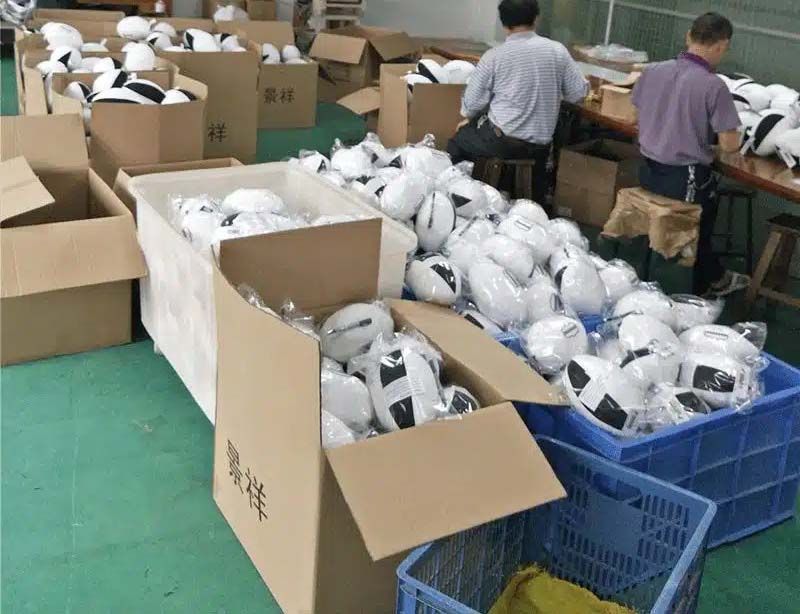
The risks described in the preceding sections are individually significant. Their compounding effect across multiple orders with the same cheap supplier is where the true cost of a low-price sourcing relationship becomes most commercially damaging.
A cheap supplier who produces an acceptable first order under management attention and new-relationship care may not maintain that performance on the second order, when the attention has moved to the next new client. The quality that was good enough to approve in the sample stage may not be what arrives in the bulk delivery. The communication that was responsive during initial engagement may become slow and evasive when problems arise. The density that was within specification on the first order may drift below it on the third order as the factory recalibrates its economics of serving an established account.
Here is how reliability problems compound across order cycles:
| Order Cycle | Pattern with Cheap Supplier | Compounding Effect |
|---|---|---|
| First order | Acceptable — new relationship attention | Positive outcome masks underlying capability gaps |
| Second order | Noticeable quality decline — attention moved to new clients | Investment in first-order management yields no improvement |
| Third order | Quality problems become systematic — defect rate increases | Pattern established — buyer adapts or switches |
| Reorder consistency | Fabric batch variation not managed — color deviations | Same product looks different across orders |
| Response to growth | Factory cannot scale quality management with volume | Bigger orders produce bigger quality problems |
| Long-term | Product quality decline visible in reviews | Review decline reduces commercial performance |
The Switching Cost Problem
One of the most underappreciated costs of a cheap supplier relationship is the switching cost — the investment required to find, evaluate, qualify, and establish a new supplier after the cheap supplier relationship has failed to deliver. This switching cost includes the time and money of new supplier evaluation, the development investment of new sampling cycles with the replacement factory, and the commercial disruption of any production gaps during the transition.
Buyers who select a cheap supplier, experience the problems described in this guide, and then switch to a professional manufacturer bear the switching cost in addition to all the quality-related costs of the cheap supplier period. Buyers who select the professional manufacturer from the start avoid the switching cost entirely — and avoid the compounding costs of multiple disappointing order cycles that precede the switch.
How Should Buyers Evaluate the True Cost of a Cheap Plush Supplier?

Evaluating the true cost of a cheap plush supplier requires going beyond unit price comparison to a total cost analysis that accounts for all the cost dimensions described in this guide. This analysis does not require precise numbers for every component — many of the cost risks are probabilistic rather than certain. But even a rough total cost estimate that accounts for the most significant risk categories consistently reveals that cheap supplier economics are less favorable than the unit price suggests.
Here is a practical framework for total cost evaluation of a cheap plush supplier:
Step 1 — Identify the Risk Profile
| Risk Category | Low Risk Indicators | High Risk Indicators |
|---|---|---|
| Material shortcuts | Itemized specification with compliance certs | Generic specification, no compliance documentation |
| Development gaps | Portfolio samples of comparable complexity | No complex portfolio examples |
| Quality system weakness | Documented QC records available | Cannot produce QC documentation |
| Compliance gaps | Current test reports available | Missing or expired compliance documentation |
| Communication reliability | Proactive detailed responses | Vague, slow, or incomplete responses |
| Reliability over time | Multiple reorder references | Only first-order references available |
Step 2 — Estimate Risk-Adjusted Costs
For each risk category where the cheap supplier shows high-risk indicators, estimate the probability and cost of the specific failure mode associated with that risk:
| Risk Category | Probability Estimate | Failure Cost Estimate | Expected Cost |
|---|---|---|---|
| Material quality failure | Probability × | Rework/replacement cost | = Expected material cost |
| Excess sampling rounds | Probability × | Per round cost | = Expected sampling cost |
| Quality rework | Probability × | Per unit rework cost × units affected | = Expected rework cost |
| Compliance failure | Probability × | Batch remediation cost | = Expected compliance cost |
| Late delivery | Probability × | Expedited freight + missed window cost | = Expected delay cost |
Step 3 — Compare Total Cost
Sum the risk-adjusted costs for each category and add them to the unit production cost to produce a total effective cost per unit. Compare this against the professional manufacturer’s total cost — which should include their higher unit price but significantly lower risk-adjusted cost additions.
| Supplier | Unit Price | Risk-Adjusted Additional Costs | Total Effective Cost |
|---|---|---|---|
| Cheap supplier | $4.80 | $3.20 | $8.00 |
| Professional manufacturer | $6.20 | $0.30 | $6.50 |
This comparison framework transforms the sourcing decision from a unit price comparison into a total cost comparison — which is the economically correct basis for the decision.
The Reference Check Investment
The most cost-effective single investment a buyer can make in evaluating a cheap supplier is conducting thorough reference checks with existing clients — specifically asking about experiences on the second and third orders, not just the first. A cheap supplier who performs adequately on first orders under new-relationship attention but consistently deteriorates on subsequent orders will be identified through these reference conversations in ways that no sample evaluation or factory presentation can reveal.
At Kinwin, we welcome exactly this kind of reference-based evaluation — because we are confident that clients who speak with our existing buyers about their experiences across multiple orders will find that the quality and reliability of our manufacturing is consistent rather than front-loaded. That consistency is the practical expression of the professional manufacturing infrastructure described throughout this guide, and it is what makes our pricing — which is not the lowest in the market — represent genuine total cost value for the brands that source with us.
If you are currently evaluating plush toy suppliers and want to understand specifically how our total cost compares to lower-priced alternatives for your specific product — including a frank discussion of what our pricing includes and what it would cost to manage the risks that cheaper alternatives carry — we would be glad to have that conversation.
Reach out to our team at [email protected] or visit kinwintoys.com to start the conversation.
Conclusion
The cheapest plush supplier is risky because the economics of cheap manufacturing systematically produce total costs that exceed the unit price savings that make them attractive. Material shortcuts generate quality failures and compliance costs. Development gaps multiply sampling investment. Weak quality control creates post-production remediation costs. Compliance gaps block market entry. Communication silence creates blind spots that allow problems to compound. And reliability failures across multiple orders destroy the value of every investment made to establish the sourcing relationship.
None of these costs are hypothetical. Each represents a pattern that plays out with consistent regularity in plush toy sourcing relationships where unit price was the primary selection criterion. The buyers who avoid these patterns are those who evaluate suppliers on total cost — accounting for all the cost dimensions that the unit price does not capture — and who select suppliers based on the value of what they actually deliver rather than the visibility of what they initially quote.
The professional manufacturer’s premium over the cheapest available price consistently represents less than the cost of the problems that premium prevents. Recognizing this relationship — and making sourcing decisions that reflect it — is the practical foundation of sustainable plush toy brand economics.
FAQ
Q1: How can buyers identify whether a low-priced supplier’s quality gap will be commercially significant before placing an order?
The most reliable pre-order identification method combines three approaches. First, request physical samples of comparable existing products from the factory’s portfolio and evaluate them systematically — measuring key dimensions, conducting pull force tests on accessories, assessing stuffing density through compression and recovery, comparing color under D65 lighting to a reference standard. A sample evaluation that reveals quality gaps in these objective dimensions predicts the gap in production output. Second, request QC documentation from a recent production run — incoming inspection reports, IPQC weight logs, and FQC inspection reports. A factory that cannot produce organized, complete documentation for recent production either does not conduct the documented QC that the documentation would represent, or does not maintain records that support buyer verification — both of which predict quality management inadequacy. Third, conduct reference checks with existing clients specifically asking about second and third order quality relative to first orders — the most reliable predictor of quality consistency over time.
Q2: Is there ever a situation where the cheapest supplier is genuinely the best choice, and how should buyers identify that situation?
Yes — the cheapest supplier is genuinely the best choice when two conditions are simultaneously met: the lower price reflects genuine production efficiency at equivalent quality rather than quality or capability shortcuts, and the risk profile of the specific order is low enough that the smaller potential cost differentials justify the price saving. Genuinely efficient cheap suppliers — those whose lower price reflects scale economies, process optimization, or lower overhead rather than quality compromise — do exist, but they are less common than cheap suppliers whose price reflects quality compromise. Identifying them requires the same verification process described throughout this guide: sample evaluation, QC documentation review, reference checks, and compliance capability assessment. If a low-priced supplier clears all these verifications convincingly, the lower price may represent genuine value. The low-risk order scenario where cheap supplier risk is most acceptable is a small test order with limited commercial exposure — where the financial downside of quality problems is bounded, the primary objective is market testing, and the buyer has the management capacity to monitor quality carefully throughout the order.
Q3: When a buyer discovers mid-production that a cheap supplier has made an unauthorized material substitution, what are the most effective immediate responses?
The immediate response to discovering an unauthorized material substitution mid-production should follow a specific sequence. First, halt production of the affected operation and quarantine the units produced with the substituted material — to prevent further production that may compound the compliance or quality exposure. Second, document the substitution comprehensively — photographs of the substituted material alongside the approved reference, weight or density measurements that demonstrate the difference, and communications with the factory acknowledging the substitution. Third, assess the compliance exposure — does the substituted material pass or fail the applicable compliance tests? If it fails, the batch cannot enter the target market and must be remediated. If it is uncertain, expedited compliance testing should be commissioned immediately. Fourth, assess the quality impact — does the substituted material produce a product that meets the approved quality standard, or does it produce a commercially unacceptable quality gap? Fifth, communicate the situation to the factory in writing, referencing the contractual prohibition on unauthorized material changes, and demand remediation — either production with the correct material from the point of discovery forward, or remediation of all affected units. Sixth, assess the commercial situation and determine whether the relationship can continue with the required corrective measures or whether supplier transition is necessary.
Q4: How should buyers communicate cost requirements to a supplier without inadvertently encouraging them to cut quality to meet the target?
Communicating cost requirements to a supplier requires providing both the target and the non-negotiable quality floor — so that the supplier understands which cost reductions are acceptable and which are not. The most effective approach is to present the target cost alongside a specific statement of the quality dimensions that are non-negotiable: fill weight specification, fabric grade specification, compliance certification requirement, and any other quality elements that the product’s commercial performance depends on. Framing the communication as “help us achieve this cost target through production optimization — design simplification, material grade matching to requirements, construction efficiency — without compromising these specific quality standards” invites the supplier to bring their manufacturing expertise to the cost-quality optimization rather than simply choosing to reduce quality to reach the number. This framing also establishes a clear basis for accountability: if the supplier subsequently reduces quality in ways that were explicitly stated as non-negotiable, the contractual and commercial response is grounded in the pre-agreed standards rather than in a disputed judgment about what was intended.
Q5: At what point in a disappointing cheap supplier relationship should a buyer cut their losses and switch suppliers, versus trying to remediate the relationship?
The decision to switch versus remediate should be based on diagnosing the root cause of the performance problems rather than on the number of disappointing experiences or the relationship history. If the performance problems trace to specific, addressable operational gaps — a specific process that needs improvement, a specific communication standard that needs to be enforced — and the factory has demonstrated willingness and capability to address those gaps when they are explicitly raised, remediation is worth attempting. A direct conversation with factory management presenting specific evidence of the performance gap and requesting a specific corrective action plan with defined timelines and metrics is the appropriate first step. If the problems trace to structural capability gaps — absent quality systems, inadequate development infrastructure, systematic compliance weakness — these cannot be remediated through conversation and expectations. They require capability investment by the factory that takes time and resources the factory may not be willing to commit. In this case, beginning parallel supplier development — qualifying a new supplier while continuing to produce with the current one — is the commercially responsible response, because continuing to depend entirely on a supplier with structural capability gaps while waiting for those gaps to be addressed exposes the business to ongoing quality and compliance risk without a defined endpoint.