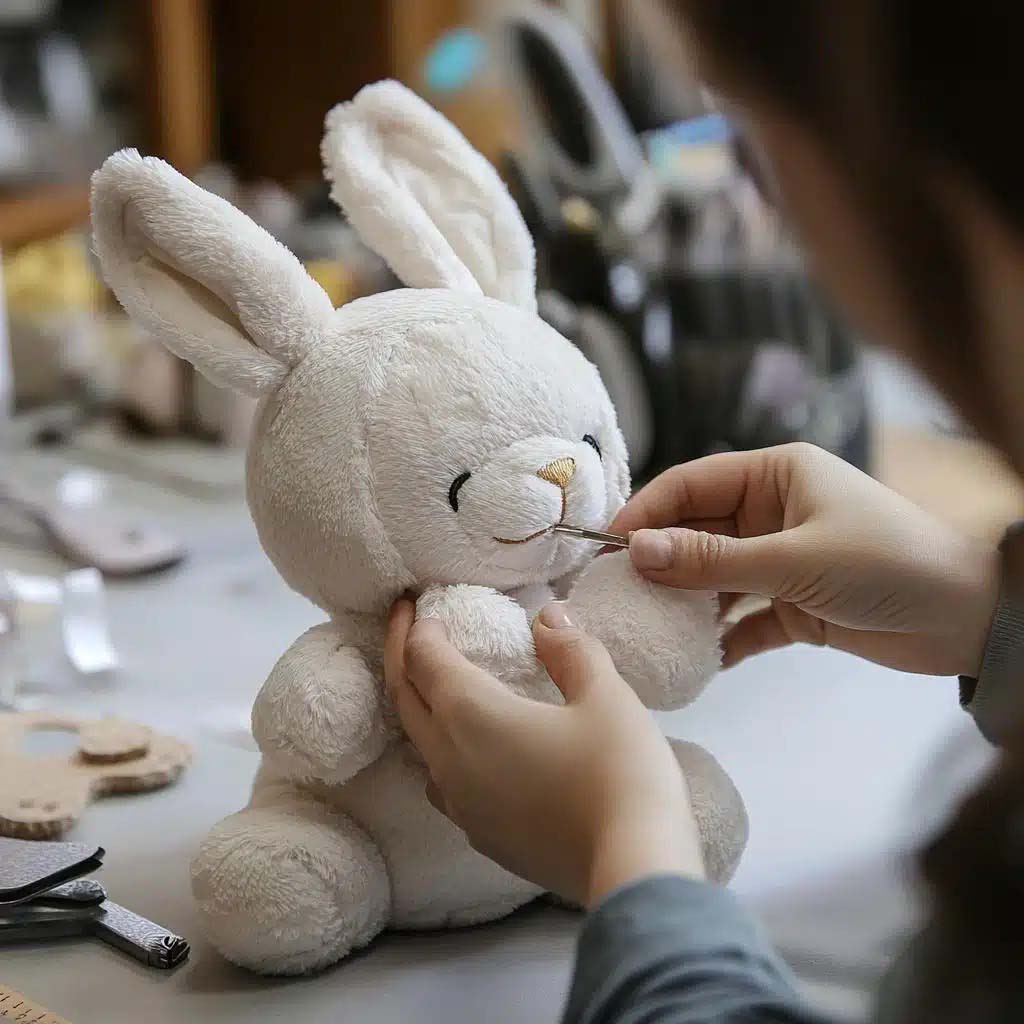
The sampling process is the most important phase in custom plush toy development. It is where a design concept becomes a physical product for the first time — and where the decisions made about materials, construction, and quality standards either set the production run up for success or create problems that carry all the way through to the finished bulk order.
For buyers who are new to custom plush sourcing, the sampling process can feel unpredictable. Samples arrive that do not quite match the design. Revision rounds pile up. Timelines stretch. Costs exceed the original budget. What starts as a straightforward product launch turns into a months-long development cycle that tests patience and erodes margin before a single bulk unit is produced.
Most of this frustration is avoidable. The sampling process follows a consistent logic — and buyers who understand that logic can enter it prepared, manage it efficiently, and emerge from it with an approved sample that reflects their design accurately and translates reliably into consistent bulk production.
This guide explains the entire plush toy sampling process from start to finish — what happens at each stage, what buyers should do at each stage, and where the most common problems occur and how to prevent them.
What Is the Plush Toy Sampling Process and Why Does Every Step Matter?
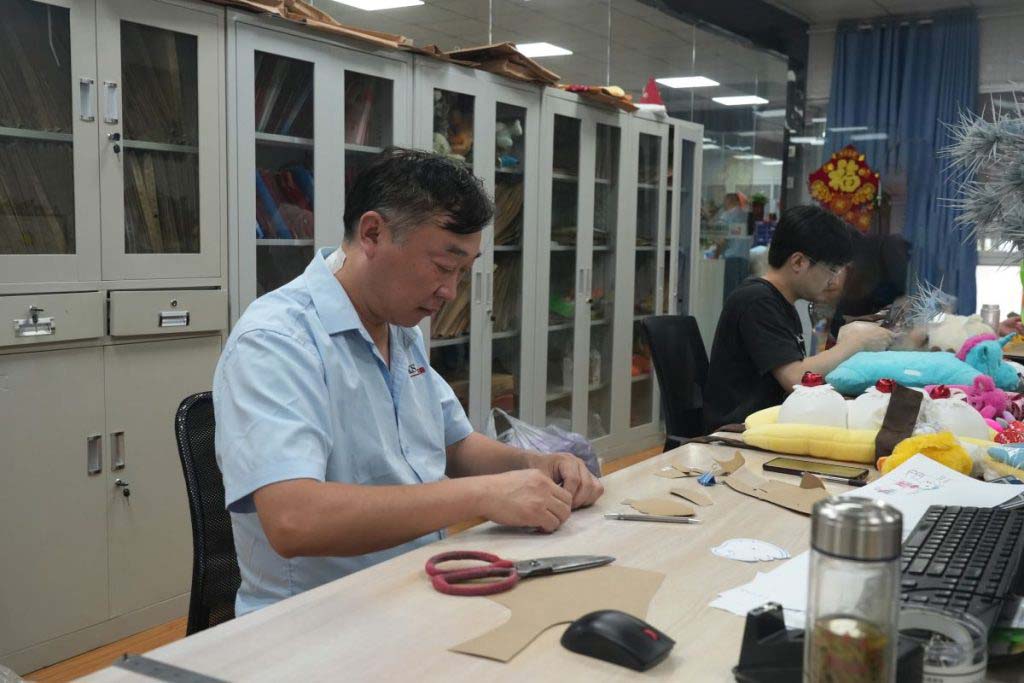
The plush toy sampling process is the structured sequence of development steps that takes a product from design concept to an approved physical prototype ready for mass production. It is not a single event — it is a multi-stage process that involves design interpretation, technical pattern development, material sourcing, prototype construction, evaluation, revision, and final confirmation. Each stage builds on the previous one, and the quality of each stage directly determines the efficiency and outcome of the stages that follow.
The plush toy sampling process typically consists of six to eight sequential stages: design brief preparation, factory design review and feasibility assessment, pattern making and material sourcing, first sample construction, buyer evaluation and revision feedback, revision rounds, counter sample production, and sample approval. Every step in this sequence serves a specific purpose — and skipping or rushing any step introduces risks that compound through the rest of the process.
Here is a complete overview of the sampling process stages:
| Sampling Stage | Primary Purpose | Key Output | Risk if Rushed or Skipped |
|---|---|---|---|
| Design brief preparation | Define product requirements precisely | Complete, actionable brief | Factory misinterpretation, excess revisions |
| Factory design review | Assess feasibility, identify risks | Feasibility confirmation, material proposal | Undiscovered design issues emerge in sampling |
| Pattern making | Translate 2D design into 3D cutting templates | Production-ready patterns | Incorrect shape, proportion errors |
| Material sourcing | Source and confirm all specified materials | Confirmed material set | Wrong materials, delays, compliance risk |
| First sample construction | Build physical prototype | First physical sample | N/A — core sampling stage |
| Buyer evaluation | Assess sample against brief | Structured revision feedback | Vague feedback, additional revision rounds |
| Revision rounds | Address specific deviations | Revised samples converging to standard | Circular revisions, cost overruns |
| Counter sample | Confirm bulk production readiness | Pre-production approved sample | Sample-to-bulk inconsistency |
| Sample approval | Establish production reference standard | Signed-off production reference | No clear standard for bulk QC |
Why the Sampling Process Cannot Be Shortcut
A common source of frustration in plush toy development is the desire to accelerate sampling — to get to bulk production as quickly as possible and minimize the upfront time and cost investment. This instinct is understandable commercially, but shortcutting the sampling process consistently produces worse outcomes than taking the time to do it properly.
Every stage of the sampling process exists because it addresses a specific type of risk. Pattern making prevents shape errors. Material sourcing prevents compliance and quality failures. First sample evaluation prevents design deviations from reaching production. Revision rounds prevent the approved sample from being a compromise rather than a genuinely satisfying result. Counter sample confirmation prevents sample-to-bulk inconsistency. Each of these risks, if not addressed during sampling, will manifest in the bulk production run — where it costs significantly more to identify and resolve.
The Relationship Between Sampling Quality and Production Consistency
There is a direct and measurable relationship between the quality of the sampling process and the consistency of the bulk production run. A product that enters production with a precisely documented, well-tested, factory-confirmed approved sample consistently produces better bulk quality than one that enters production with a hastily approved sample and incomplete specifications.
This relationship exists because the approved sample and its accompanying documentation — the tech pack — are the primary reference standards used by every department in the factory during bulk production. The more precisely those standards are defined, the less interpretation is required at the production stage, and the less variation results from that interpretation.
How Do You Prepare a Design Brief That Sets the Sampling Process Up for Success?
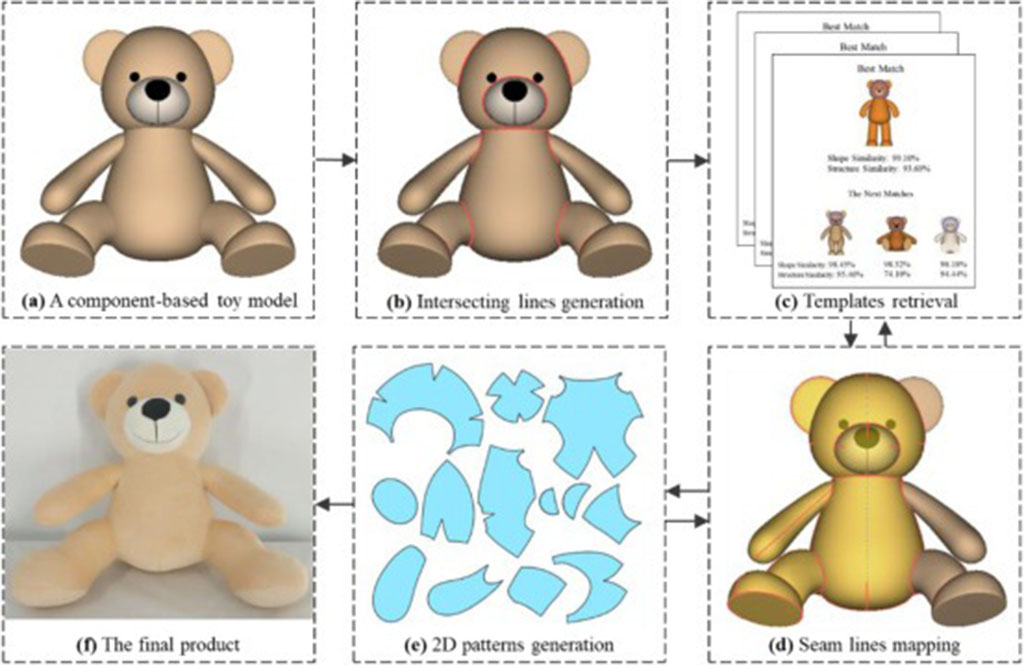
The design brief is the foundation of the entire sampling process. It is the document that communicates everything the factory needs to know to build an accurate first sample — and the quality of that communication determines how closely the first sample reflects the buyer’s intent. A thorough, precise brief produces an accurate first sample. An incomplete or ambiguous brief produces a sample that reflects the factory’s interpretation rather than the buyer’s vision — and generates revision rounds that could have been avoided.
A design brief that sets the sampling process up for success includes precise dimensional specifications, Pantone color references for every color area, fabric and filling material specifications, detailed embroidery and facial feature information, accessory specifications with dimensions and attachment requirements, construction notes, packaging requirements, and compliance targets. The more completely these elements are defined before the brief is submitted, the fewer assumptions the factory needs to make during pattern making and material sourcing.
Here is a comprehensive design brief checklist organized by information category:
| Brief Category | Required Information | Specification Format | Impact if Missing |
|---|---|---|---|
| Design reference | Front, back, and side view artwork | Flat illustration or 3D render | Shape and proportion misinterpretation |
| Overall dimensions | Height, width, depth of product | Measurement table in cm with tolerances | Incorrect size in first sample |
| Color specification | All color areas with references | Pantone TPX or TPG codes | Color mismatch requiring revision |
| Fabric specification | Fabric type, pile height, texture | Written spec with physical swatch | Wrong fabric sourced |
| Filling specification | Filling type, target density | Written spec with reference standard | Incorrect feel and shape |
| Facial features | Eye type and size, embroidery design, placement | Annotated diagram and artwork file | Expression differs from design intent |
| Accessories | All attached elements with dimensions | Item list with technical drawings | Wrong accessories sourced or positioned |
| Construction notes | Seam type, closure method, stuffing approach | Written technical notes | Non-standard construction approach |
| Compliance requirements | Target market, applicable standards | Written statement | Non-compliant materials sourced |
| Packaging requirements | Box type, insert, label content | Dieline or reference image | Packaging misaligned with brief |
The Most Impactful Brief Element — Color Specification
Of all the elements in a design brief, color specification has the highest impact on first sample accuracy — and is the most frequently done inadequately. Describing colors in natural language — “sky blue,” “warm beige,” “dusty rose” — leaves interpretation entirely to the factory. The color they associate with those words will rarely match the buyer’s mental image precisely.
Pantone color references eliminate this ambiguity entirely. A Pantone TPX code specifies a precise color within a standardized, internationally recognized color system that fabric suppliers can match against physical swatch cards. When a factory receives a Pantone reference, there is no interpretation required — the color is objectively defined. This single change to briefing practice eliminates the color revision round that occurs in most sampling cycles where colors are described rather than specified.
Providing Physical Reference Materials
Written specifications communicate objective properties precisely. Physical reference materials communicate sensory properties — texture, softness, weight — that cannot be adequately captured in words. For material specifications in particular, sending physical reference samples to the factory is one of the most effective ways to align expectations before the first sample is built.
A swatch of the desired fabric type, a compression sample demonstrating the target stuffing density, or an example product from the market that represents the quality level the buyer is targeting — these physical references give the factory’s pattern maker and material sourcer a tangible benchmark that no description can fully replace. Buyers who provide physical reference materials alongside written briefs consistently receive more accurate first samples than those who rely on written descriptions alone.
What Happens Inside the Factory During the First Sample Development Stage?
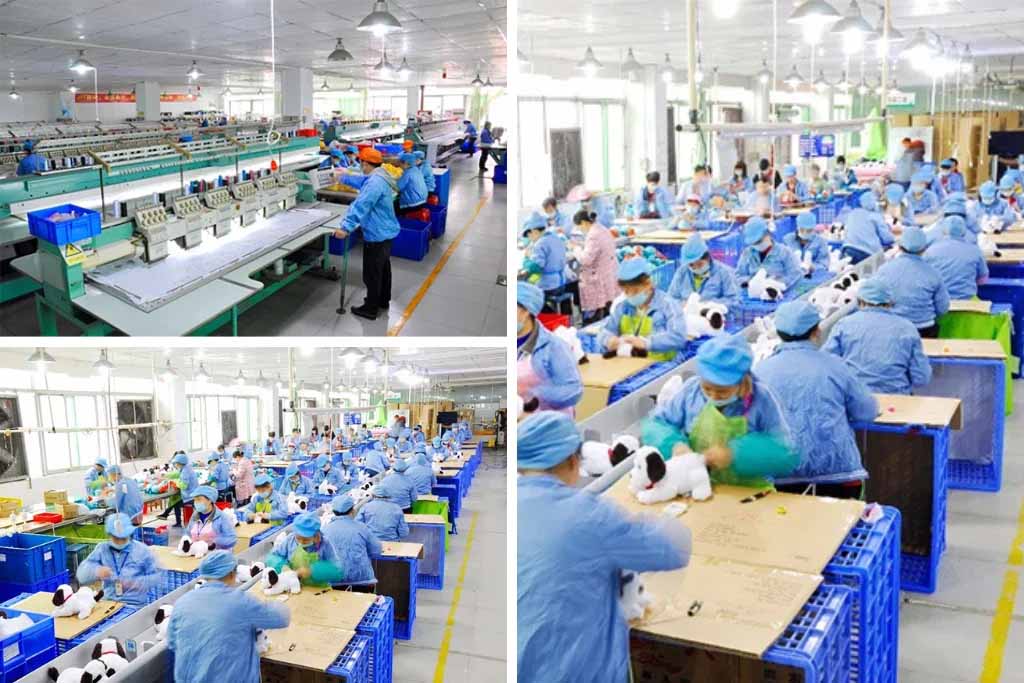
For most buyers, the time between submitting a design brief and receiving a first sample is a black box. The factory confirms receipt of the brief, and two weeks later a package arrives. What happened in between — the decisions made, the problems encountered, the skills applied — is invisible to the buyer but entirely determines the quality of what arrives in that package.
Understanding what actually happens inside the factory during first sample development helps buyers write better briefs, ask more targeted questions, and interpret the results of the first sample more accurately. It also reveals which factory capabilities and characteristics most directly affect first sample quality — which is essential information for factory evaluation.
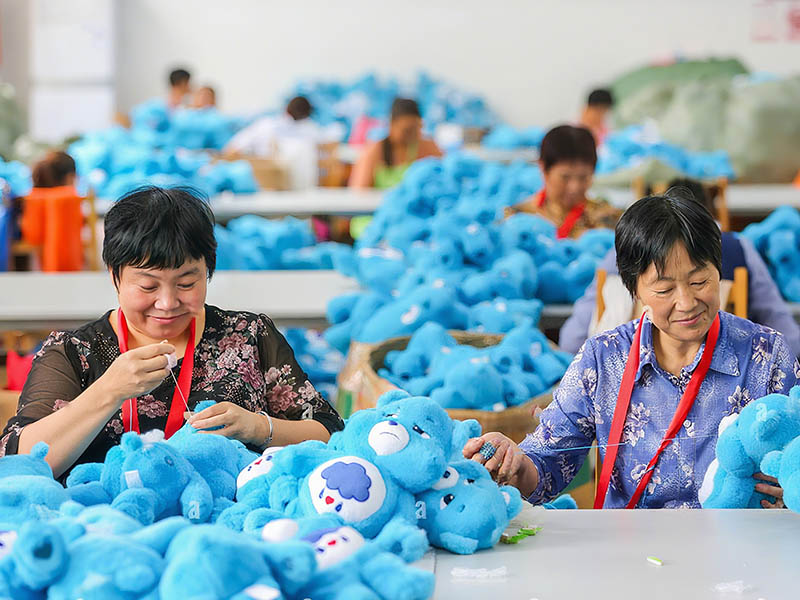
The first sample development stage inside a plush toy factory involves four sequential activities: design review and feasibility assessment by the development team, pattern making by specialized pattern makers, material sourcing and preparation, and prototype construction by dedicated sampling sewers. Each activity is handled by different personnel with different skills, and the quality of each activity directly affects the quality of the first sample.
Here is a detailed breakdown of what happens at each stage inside the factory:
| Internal Stage | Who Is Responsible | What They Do | Timeline |
|---|---|---|---|
| Design review | Product development team | Assess brief, identify ambiguities, request clarifications | 1–2 days |
| Feasibility assessment | Development + production | Identify construction challenges, propose solutions | 1–2 days |
| Pattern making | Specialized pattern maker | Create cutting templates from design brief | 3–7 days |
| Material sourcing | Purchasing team | Source and confirm all specified materials | 3–7 days (parallel to pattern making) |
| Material preparation | Cutting team | Cut fabric panels from confirmed patterns | 1–2 days |
| Prototype construction | Dedicated sampling sewer | Hand-build prototype from panels and materials | 2–5 days |
| Internal QC review | QC team | Check sample against brief before dispatch | 1 day |
| Deviation documentation | Development team | Document any deviations from brief with explanations | 0.5 day |
| Sample dispatch | Logistics team | Pack and ship sample with deviation notes | 1 day |
The Pattern Making Stage — Where First Sample Accuracy Is Determined
Pattern making is the most technically demanding stage of first sample development — and the stage that most directly determines the accuracy of the first sample’s shape and proportion. A pattern maker working on a plush toy design is solving a three-dimensional engineering problem: how to create a set of two-dimensional fabric panels that, when cut, sewn, and stuffed, produce a three-dimensional object with the correct shape, proportions, and visual character.
This problem does not have a single correct solution — there are many ways to panel a plush toy shape, and different solutions produce different results in terms of seam placement, pile direction consistency, and the specific three-dimensional form achieved. An experienced pattern maker develops intuition for which paneling approach will produce the best result for a specific design — an intuition that is built over years of working with different shapes and different fabric types.
This is why the experience level of a factory’s pattern making team is one of the most important capability factors to assess when choosing a plush toy manufacturer. A factory with experienced, specialized pattern makers consistently produces more accurate first samples than one relying on less experienced staff — reducing revision rounds, accelerating development timelines, and delivering better final products.
The Internal QC Review — A Step That Separates Professional Factories
One stage of the internal development process that distinguishes professional factories from less mature ones is the internal QC review conducted before the sample is dispatched to the buyer. In a factory with a mature development process, the completed first sample is reviewed by the QC team against the design brief before packing — checking overall proportions, color accuracy, fabric quality, embroidery positioning, accessory attachment, and finishing standard.
When this review identifies issues — a color that does not match the brief, a proportion that is noticeably off, an accessory that is incorrectly attached — the factory has a choice: fix the issue before dispatch or ship the sample as-is and wait for the buyer’s feedback. A professional factory fixes the issue internally when it can, and documents any remaining deviations clearly for the buyer when the sample is dispatched.
This internal review adds one to two days to the dispatch timeline — but it eliminates the most easily preventable revision requests from the buyer’s feedback, which saves far more time than it costs.
How Should Buyers Evaluate a Plush Toy Sample When It Arrives?
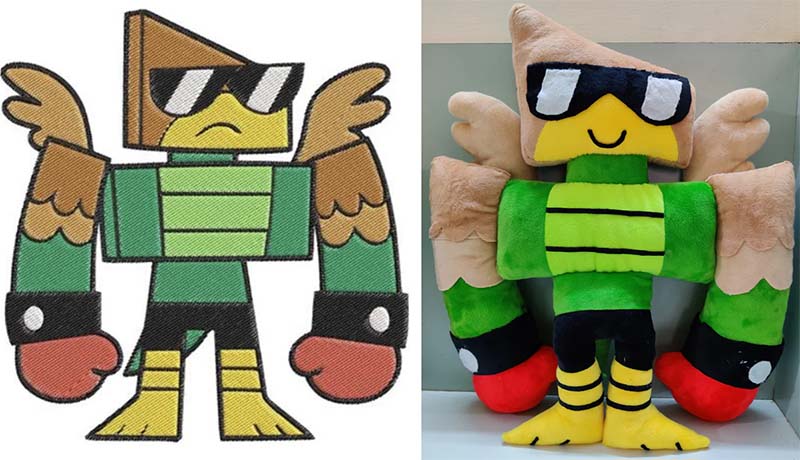
Sample evaluation is a skill. Buyers who evaluate samples impressionistically — who look at the sample, decide it does not feel quite right, and send vague feedback to the factory — consistently generate more revision rounds than buyers who evaluate samples systematically, document their findings precisely, and communicate clear, actionable revision instructions.
The goal of sample evaluation is to produce a comprehensive, prioritized list of every deviation from the design brief that needs to be addressed in the next revision round — documented specifically enough that the factory can act on each item without further clarification. Achieving this in a single evaluation session, with all stakeholders aligned, and without missing any issue that will appear again later, is what efficient sample evaluation looks like.
Buyers should evaluate a plush toy sample using a systematic checklist that covers all major product dimensions: overall dimensions and proportions, shape accuracy relative to the design reference, color accuracy against Pantone references, fabric quality and feel, stuffing density and shape retention, facial feature placement and accuracy, stitching quality and seam integrity, accessory attachment strength, finishing standard, and label placement and content. Every deviation from the brief should be documented with specific measurements or annotated photographs before revision feedback is compiled.
Here is a structured evaluation checklist organized by assessment area:
| Evaluation Area | What to Assess | Documentation Method | Common Issues Found |
|---|---|---|---|
| Overall dimensions | Measure height, width, key proportions | Measurement table with deviations noted | Product too large or small vs spec |
| Shape accuracy | Compare silhouette to design reference | Side-by-side photo with markup | Proportion imbalance, shape distortion |
| Color accuracy | Compare all color areas to Pantone references | Annotated photo under D65 lighting | Color too warm, too cool, wrong saturation |
| Fabric quality | Assess pile height, density, surface consistency | Written notes with close-up photos | Pile shorter than sample, density too low |
| Stuffing density | Compress and release, assess firmness | Written description vs approved target | Too soft, too firm, uneven distribution |
| Facial feature placement | Measure position against spec coordinates | Annotated photo with measurements | Eyes too close, nose too low |
| Embroidery quality | Assess thread tension, color, line consistency | Close-up photos from multiple angles | Tension uneven, color slightly off |
| Stitching quality | Inspect all seams under tension | Photos of any visible seam issues | Loose stitching, visible thread |
| Accessory attachment | Apply pull force to all attached elements | Written test result | Eye loose, ribbon detaches |
| Finishing standard | Check for loose threads, surface marks | Annotated photos of any defects | Loose threads visible, marks on fabric |
| Label content | Check care label, brand label, compliance label | Photo with content verification | Incorrect care symbols, missing content |
Evaluating Under the Right Conditions
Sample evaluation conditions significantly affect the accuracy of color assessment — the most subjective and most frequently disputed dimension of sample quality. Color appears differently under warm incandescent lighting, cool fluorescent lighting, and natural daylight. The same fabric can appear correct under one light source and noticeably different under another.
The industry standard for color-critical evaluation is D65 daylight — a standardized artificial light source that replicates natural daylight conditions and provides consistent, reproducible color assessment. Evaluating samples under D65 lighting and communicating this to the factory when providing color feedback eliminates the most common source of color revision disagreement — where the buyer and factory are literally seeing the same color differently because they are viewing it under different light sources.
Consolidating Stakeholder Feedback Before Submission
One of the most avoidable sources of additional revision rounds is fragmented stakeholder feedback. When a buyer submits initial revision feedback and then a second stakeholder — a brand partner, a retail buyer, a product manager — reviews the sample and raises additional concerns that were apparent from the beginning but not included in the first feedback document, a second revision round is generated not by factory error but by incomplete internal review.
Establishing a firm process rule — all feedback is consolidated from all stakeholders before any communication is sent to the factory — prevents this pattern entirely. The time required to gather and align stakeholder feedback before submission is always shorter than the time cost of an additional revision round created by piecemeal communication.
How Are Revision Rounds Managed to Reach an Approved Sample Efficiently?
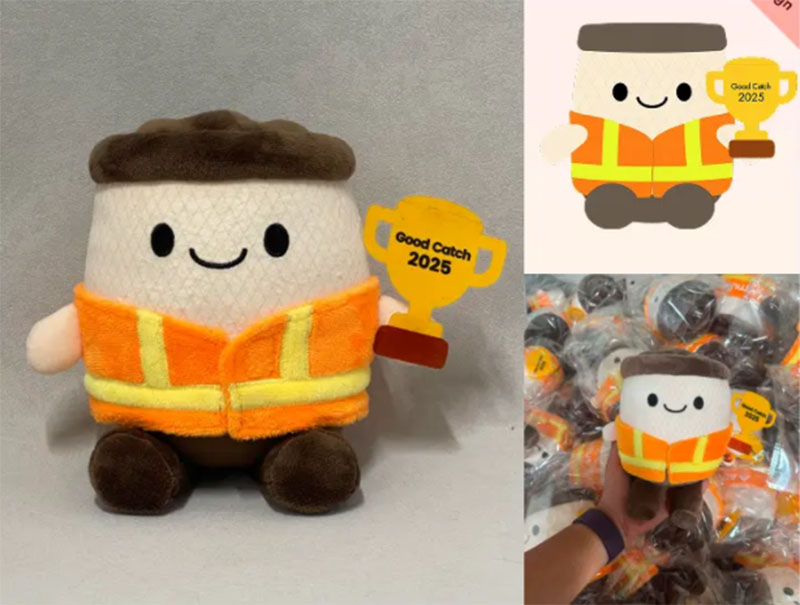
Revision rounds are a normal and expected part of the sampling process — they are the mechanism through which a first sample is refined into an approved product. The goal is not to eliminate revision rounds entirely but to minimize the number required by managing each round efficiently.
Revision rounds are managed efficiently by submitting comprehensive, specific, and prioritized feedback in a single document after each evaluation, confirming understanding with the factory before work begins, tracking all changes across rounds to prevent regression, and maintaining clear communication about which elements are approved and which remain open between rounds. Each of these practices addresses a specific pattern of revision inefficiency that commonly extends the sampling timeline unnecessarily.
Here is a framework for managing revision rounds effectively:
| Revision Management Practice | What It Prevents | How to Implement |
|---|---|---|
| Comprehensive single-document feedback | Multiple rounds for the same issues | Review all elements before sending any feedback |
| Specific, measurable revision notes | Factory addressing issues incorrectly | Include measurements, annotations, Pantone references |
| Factory confirmation before work begins | Misunderstood revision instructions | Request factory to confirm revision action list |
| Change tracking across rounds | Regression of previously approved elements | Maintain cumulative change log per design |
| Partial approval documentation | Relitigating approved elements in later rounds | Formally approve each element as it is confirmed |
| Priority ranking of revision items | Factory focusing on minor items first | Clearly mark critical, major, and minor items |
Writing Revision Notes That Factories Can Act On
The quality of revision notes has a direct and significant impact on the efficiency of the revision round. Vague feedback — “the expression doesn’t look right” or “the body shape needs to be adjusted” — leaves the factory without a clear corrective action and frequently produces a revision that addresses the general concern but misses the specific issue.
Effective revision notes are specific, measurable, and reference-supported. Instead of “the face looks wrong,” write: “Left eye is positioned 4mm too low relative to the nose — please raise to match the coordinate specified in the attached annotated photo. Right eye position is correct — no change required.” Instead of “the body needs to be rounder,” write: “Body width at widest point measures 18cm — target is 21cm per the dimension table in the brief. Please increase belly width by 3cm and confirm against spec before the next revision.”
This level of specificity gives the factory exactly what they need to make the correct change — no interpretation required, no ambiguity about what is being requested, and no risk of the factory addressing a different aspect of the issue than the one the buyer identified.
Managing Multiple Open Items Across Rounds
As sampling progresses through multiple revision rounds, tracking which items have been approved, which remain open, and which were introduced in the most recent round becomes increasingly important. Without a clear tracking system, two problems occur consistently. First, previously approved elements get reopened — a buyer who approved color in round two notices a slight difference in round three and raises it again, triggering discussion about whether it changed or whether the evaluation conditions were different. Second, items raised in an earlier round that were not fully addressed get forgotten as new items dominate the round three review.
A simple change log — a shared document that records the status of every revision item across every round — prevents both problems. Each item is listed with the round in which it was raised, the action requested, the factory’s response, and the approval status. This document becomes the single source of truth for the revision history and ensures that nothing falls through the cracks between rounds.
What Is a Counter Sample and Why Is It a Critical Step Before Mass Production?

The counter sample is one of the most underutilized and most valuable steps in the entire sampling process. It sits between sample approval and bulk production — and its purpose is to confirm that the approved design can be accurately reproduced in the actual bulk production environment before the full production run begins.
A counter sample is a pre-production prototype built using the actual bulk production materials, patterns, and manufacturing processes — rather than the carefully managed conditions of the development sampling stage. Its purpose is to verify that there is no meaningful gap between the approved development sample and what the production environment can reliably replicate, before any bulk units are produced. A counter sample that accurately matches the approved standard gives both the buyer and the manufacturer confidence that bulk production will be consistent. A counter sample that reveals deviations — due to material batch differences, process adjustments, or production environment differences — allows those deviations to be identified and corrected before they affect the full production run.
Here is a comparison of what development samples and counter samples confirm:
| Confirmation Area | Development Sample | Counter Sample |
|---|---|---|
| Design interpretation | Yes — confirms factory understood the brief | Not primary purpose |
| Material selection | Yes — confirms materials match specification | Confirms bulk materials match approved sample |
| Shape and proportion | Yes — confirms pattern accuracy | Confirms production environment replicates pattern |
| Color accuracy | Yes — against Pantone reference | Confirms bulk fabric batch matches approved color |
| Production process | No — built under development conditions | Yes — built under actual production conditions |
| Bulk material confirmation | No — development materials may differ | Yes — uses actual bulk production materials |
| Production consistency | Cannot confirm | Confirms production can replicate standard |
When Counter Samples Reveal Problems — And Why That Is Valuable
The most common concern buyers express about counter samples is that they add time and cost to an already lengthy development process. This concern is understandable — but it reflects a misunderstanding of what counter samples are designed to reveal.
Counter samples most often reveal one of three types of deviation. First, a color deviation between the approved sample fabric and the actual bulk production fabric — which may come from a different dye lot even when ordered from the same supplier. Second, a stuffing density difference between development conditions and production line conditions — where the stuffing machine’s output differs slightly from the hand-stuffing used in development. Third, a material quality difference where the bulk material — sourced in large quantities from a different delivery — shows subtle differences from the small quantity used in development sampling.
Each of these deviations, if identified in the counter sample, can be addressed before bulk production begins. The cost of addressing them at this stage — adjusting the material batch, recalibrating the stuffing machine, or substituting the material — is a fraction of the cost of addressing the same deviation after thousands of bulk units have been produced with it.
Counter Sample as the Production Reference Standard
An approved counter sample does something that an approved development sample cannot — it establishes a confirmed production reference standard. The counter sample was built under bulk production conditions, which means that the factory’s production team can be confident that what was approved is achievable at scale using the actual production processes and materials.
This is the foundation of production consistency. When the production team begins bulk manufacturing, they are not trying to replicate a development sample that was built under different conditions — they are replicating a counter sample that was built under the same conditions they are working in. This alignment between the reference standard and the production environment is one of the most powerful structural safeguards against sample-to-bulk inconsistency.
How Does Sample Approval Translate Into a Consistent Mass Production Standard?
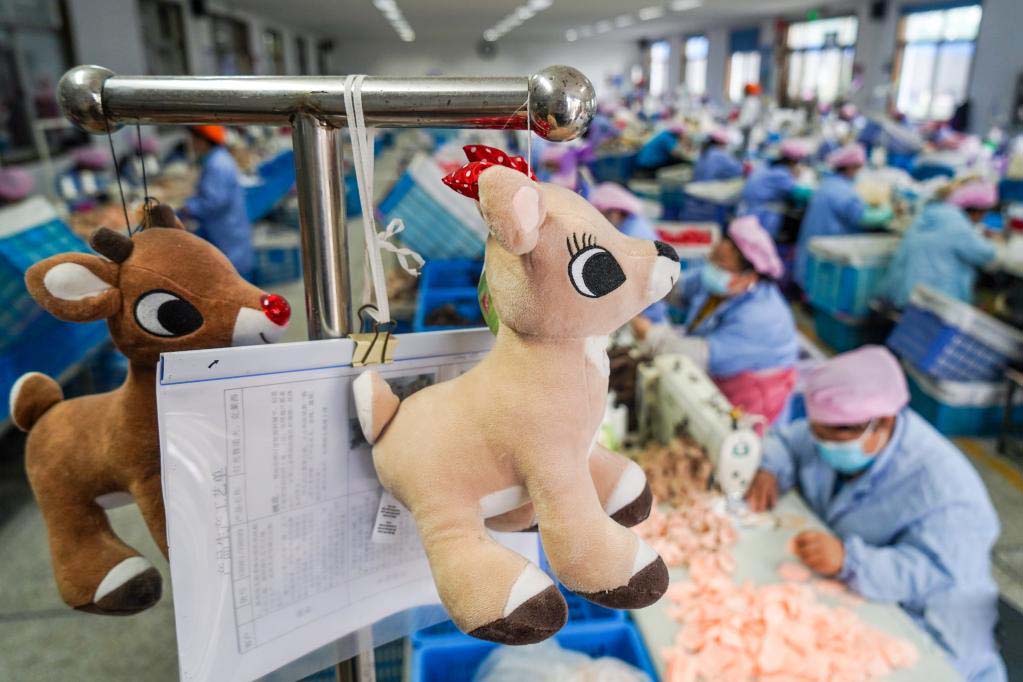
Sample approval is not the end of the sampling process — it is the transition point between development and production. The value of an approved sample is not just that it confirms the design is correct. It is that it establishes the reference standard against which every unit in the bulk production run will be measured. The quality of this transition — how completely and precisely the approved sample’s standards are documented and communicated to the production team — is what determines whether bulk production reproduces the approved standard accurately.
Sample approval translates into consistent mass production through a combination of four mechanisms: a complete tech pack that documents all product specifications in measurable terms, the physical approved sample retained at the factory as a production reference, product-specific work instructions distributed to every production department, and quality control criteria that define acceptable variation at each inspection checkpoint. Together, these mechanisms close the gap between what was approved and what the production team produces.
Here is an overview of how sample approval standards are translated into production controls:
| Translation Mechanism | What It Documents | Who Uses It | How It Prevents Inconsistency |
|---|---|---|---|
| Tech pack | All measurable specifications | All production departments | Provides objective reference for every decision |
| Physical approved sample | Visual and tactile reference standard | QC team, production supervisors | Provides direct comparison standard |
| Work instructions | Step-by-step production procedures | Production line operators | Reduces interpretation variation |
| QC criteria | Pass/fail standards for each inspection point | QC inspectors | Objectifies quality judgment |
| Visual reference set | Range of acceptable variation | QC inspectors | Defines boundaries of acceptable output |
The Tech Pack as the Central Production Document
The tech pack is the most important document in the production process. It is the comprehensive technical reference that translates the physical approved sample into written, measurable standards that every member of the production team can work from independently — without needing to physically compare their work against the approved sample at every step.
A complete tech pack for a plush toy covers overall dimensions with tolerances, fabric specifications including pile height and density, filling specifications including target density or weight, color references for every color area, embroidery placement coordinates, accessory specifications and attachment requirements, construction notes covering seam type and stuffing approach, and QC checkpoints with pass/fail criteria.
The difference between a complete tech pack and an incomplete one is directly visible in bulk production consistency. When all specifications are precisely documented, production decisions are made against objective criteria. When specifications are incomplete, production decisions are made by interpretation — and different interpretations produce different outputs.
Maintaining the Physical Approved Sample as a Production Reference
The physical approved sample — or, preferably, the approved counter sample — should be retained at the factory as a production reference standard for the duration of the production run. It should be accessible to QC inspectors at the inspection station, clearly labeled and protected from damage, and used as the primary visual reference during first-off inspection and in-process quality checks.
For buyers who want independent assurance that the physical reference standard is being used correctly, requesting photos of the approved sample displayed at the QC station — alongside the first-off inspection unit — is a reasonable and practical request. A factory that displays and uses the approved sample prominently during production is making a visible commitment to the production standard it represents.
What Are the Most Common Sampling Mistakes That Delay Production and Increase Cost?
The most valuable knowledge about the sampling process is not just understanding how it works when it goes well — it is understanding the specific mistakes that most commonly cause it to go wrong. These mistakes occur predictably, across different buyers and different factories, because they reflect consistent patterns of behavior that are easy to identify and correct once they are understood.
The most common sampling mistakes that delay production and increase cost fall into four categories: brief preparation failures that create misinterpretation at the start of the process, evaluation failures that allow issues to accumulate across rounds, communication failures that make revision instructions ambiguous or incomplete, and process management failures that allow scope to change or standards to drift between rounds. Each category has specific manifestations that are recognizable once identified.
Here is a comprehensive overview of common sampling mistakes and their consequences:
| Mistake Category | Specific Mistake | Consequence | Prevention |
|---|---|---|---|
| Brief preparation | Submitting brief without Pantone references | Color revision in every round | Include Pantone codes for all colors |
| Brief preparation | Dimensions described rather than specified | Size deviation requiring multiple corrections | Provide measurement table with tolerances |
| Brief preparation | Material specified in words without physical reference | Wrong material sourced | Send physical swatches with brief |
| Brief preparation | Design not internally agreed before submission | Scope changes mid-development | Align all stakeholders before briefing |
| Sample evaluation | Reviewing under inconsistent lighting | Color issues missed or overstated | Use D65 standard lighting for review |
| Sample evaluation | Not measuring against specification | Dimensional issues missed | Measure all key dimensions before feedback |
| Sample evaluation | Evaluating without pull testing accessories | Attachment issues missed until later | Test all accessory attachments physically |
| Communication | Sending fragmented feedback from multiple people | Factory receives conflicting instructions | Single point of contact manages all feedback |
| Communication | Vague revision descriptions | Factory addresses wrong aspect of issue | Specific, measurable, annotated feedback |
| Communication | Not confirming factory understood revisions | Factory proceeds with different interpretation | Request revision action list confirmation |
| Process management | Changing design direction between rounds | Previous work becomes unusable | Freeze design before sampling begins |
| Process management | Not tracking approved elements across rounds | Previously resolved issues reopened | Maintain cumulative change log |
| Process management | Skipping counter sample to save time | Sample-to-bulk inconsistency in production | Always conduct counter sample before bulk |
The Design Freeze Problem
One of the most damaging and most common sampling process failures is the absence of a design freeze before sampling begins. A design freeze is a formal internal decision that the product concept is complete and no fundamental design changes will be made during the sampling process.
Without a design freeze, buyers sometimes use the sampling process as an extension of the design exploration phase — making fundamental changes to character concept, proportions, or material direction based on seeing the physical sample rather than having resolved these questions before sampling began. Each fundamental change effectively restarts the sampling cycle for the affected elements, consuming the factory’s time, generating additional sampling fees, and extending the development timeline.
The rule is simple and important: design exploration should happen before the brief is submitted. Physical sampling should be reserved for confirming that the factory can execute a finalized design accurately — not for discovering what the design should be.
The Skipped Counter Sample Problem
The single most commonly skipped step in the sampling process — and the one that most directly causes sample-to-bulk inconsistency — is the counter sample. Buyers who skip the counter sample to save time and cost consistently encounter greater problems in bulk production than those who include it, because the deviations the counter sample would have revealed do not disappear — they simply surface later, at higher cost and with less ability to prevent them from affecting the full production run.
The counter sample investment — typically one additional sample fee and one to two weeks of timeline — is almost always recovered many times over in prevented rework, reduced QC disputes, and more consistent bulk delivery. For first orders with a new factory, for complex designs with multiple risk factors, and for large-volume production runs where the cost of batch-level inconsistency is high, the counter sample is not optional — it is the most cost-effective quality investment available at the pre-production stage.
At Kinwin, we include the counter sample as a standard step in our development process for all production orders. Our clients have found that this investment consistently produces more reliable bulk quality and a smoother transition from development to production — which is exactly the outcome the sampling process is designed to achieve.
If you are planning a new custom plush product development and want to understand how our sampling process works in practice — including timelines, fees, revision policies, and how we manage the transition from approved sample to consistent bulk production — we would be glad to walk you through it in detail.
Reach out to our team at [email protected] or visit kinwintoys.com to start the conversation.
Conclusion
The plush toy sampling process is not a bureaucratic formality that stands between a design concept and a finished product. It is the mechanism through which quality is built into a product before mass production begins — the stage where problems are found and fixed at their lowest possible cost, and where the standards that will govern thousands of finished units are established, tested, and confirmed.
Buyers who understand the sampling process — who invest in thorough brief preparation, evaluate samples systematically, communicate revision feedback precisely, and insist on counter sample confirmation before bulk production — consistently achieve better products, faster timelines, and lower total development costs than those who approach sampling as a necessary inconvenience to be rushed through.
The sampling process deserves the time and attention it requires. The bulk production run that follows will be only as good as the standards established during sampling — and those standards are only as good as the care taken to define, test, and confirm them.
At Kinwin, our sampling process is built to give buyers the clarity, accuracy, and confidence they need at every stage — from first sample through counter sample approval. We invest in the development infrastructure, the experienced personnel, and the structured communication processes that make the sampling stage efficient, transparent, and reliably productive for every client we work with.
FAQ
Q1: Is it possible to approve a sample remotely without physically receiving it, and what are the risks of doing so?
Remote sample approval — evaluating a sample based on photographs and video rather than physical inspection — is possible and is increasingly practiced by buyers who cannot receive samples quickly due to international shipping times or logistics constraints. However, remote approval carries significant limitations that buyers should understand before relying on it. Photographs cannot accurately convey tactile properties — stuffing density, fabric softness, weight distribution — that are essential quality attributes of a plush toy. Color accuracy through photography is notoriously unreliable, as camera sensors, lighting conditions, and screen calibration all affect how colors appear in photos. And structural integrity — the security of accessory attachments, the strength of seams — cannot be assessed visually without physical handling. For properties that can be assessed visually — overall shape, proportion, embroidery positioning, color in a controlled photography environment — remote review is viable as a preliminary screen. For properties requiring physical assessment, there is no substitute for having the sample in hand before approval.
Q2: How should buyers handle a situation where the factory’s first sample is so far from the brief that it needs to be completely rebuilt?
A first sample that requires complete rebuilding rather than targeted revision is a significant signal that should be investigated before a rebuild is commissioned. The first step is to review the design brief carefully alongside the sample and determine whether the deviation resulted from factory misinterpretation of a clear specification or from ambiguity in the brief that the factory filled with their own assumptions. If the brief was clear and the factory produced something fundamentally different without explanation, request a detailed explanation from the factory of how they interpreted the brief before proceeding — and assess whether this misinterpretation reflects a capability problem or a communication failure. If the brief had meaningful ambiguities that contributed to the deviation, address those comprehensively in the revised brief before the rebuild begins. In either case, requesting a preview photo or video from the factory before the rebuilt sample is dispatched can catch major issues before another international shipping cycle is spent on a result that still misses the mark.
Q3: Can buyers request samples in multiple colorways simultaneously to reduce the total development timeline?
Yes — developing multiple colorways of the same design simultaneously is a common and effective strategy for reducing the total development timeline, particularly for buyers planning to launch a product range with color variants. Once the design and construction are approved in the primary colorway, subsequent colorways typically require only material substitution and color verification rather than full pattern and construction re-evaluation, which makes them faster and less expensive to develop. The practical approach is to approve the primary colorway’s design, construction, and all non-color elements fully, and then develop the additional colorways in parallel with the counter sample stage or early production preparation of the primary colorway. This parallel development approach can reduce the total timeline for a multi-colorway launch by several weeks compared to developing colorways sequentially.
Q4: What is the best way to store and manage approved samples for reference on future reorders?
Approved samples should be stored carefully and systematically to serve as reliable production references for future reorders. Each approved sample should be labeled clearly with the product name, colorway, approval date, and the order it was approved for — and stored in a clean, stable environment protected from light, moisture, and compression that could alter the fabric color or stuffing density over time. For buyers who reorder the same products across multiple seasons, maintaining a reference library of approved samples organized by product SKU provides the most reliable basis for confirming bulk production consistency on reorders. Before each reorder, comparing the bulk material swatches against the archived approved sample — rather than relying on the factory’s memory of the original standard — is the most reliable way to catch any material batch variation before it affects the production run.
Q5: How does the sampling process differ when working with a factory for the first time compared to an established manufacturing relationship?
The sampling process with a new factory typically requires more time and more revision rounds than the same process with an established factory partner — even for similar product types and complexity levels. This is because a new factory is building its understanding of the buyer’s quality standards, preferences, and communication style from scratch, while an established factory already has deep institutional knowledge of those standards. With a new factory, it is worth investing more time in brief preparation, being more explicit about quality standards and tolerances, requesting more detailed factory communication during the development stage, and being prepared for the first sample accuracy to be lower than it would be with a factory that already knows the buyer’s expectations. Over successive orders with the same factory, the sampling process consistently becomes faster and more efficient as the factory’s knowledge of the buyer’s standards deepens — which is one of the most tangible commercial arguments for developing long-term manufacturing relationships rather than switching factories frequently.