
Make a Stuffed Animal from a Picture — Turning 2D Art into 3D Plush
Make a Stuffed Animal from a Picture — Turning 2D Art into 3D Plush
Any Image Format · Sketch to Plush · 95%+ Accuracy · 7-Day Sampling · NDA Protected · CE/ASTM Certified · MOQ 500 pcs
A picture is the most natural starting point for a custom stuffed animal — it is how almost every original character exists before it becomes a physical toy. Whether that picture is a professional multi-view character sheet, a digital illustration, a hand-drawn sketch, a logo, a child’s drawing, an anime character reference, or a photo of an existing toy — KINWIN’s pattern makers can work from it to create a physical stuffed animal that faithfully translates the 2D image into three-dimensional form.
The translation from 2D image to 3D plush is a specialist craft — not an automated process. It requires experienced pattern makers who understand how a flat illustration’s proportions, features, and personality translate into sewn, stuffed, three-dimensional form. This guide explains exactly how KINWIN does it, what images work best, what challenges arise in the translation process, and what you can expect from the finished result.
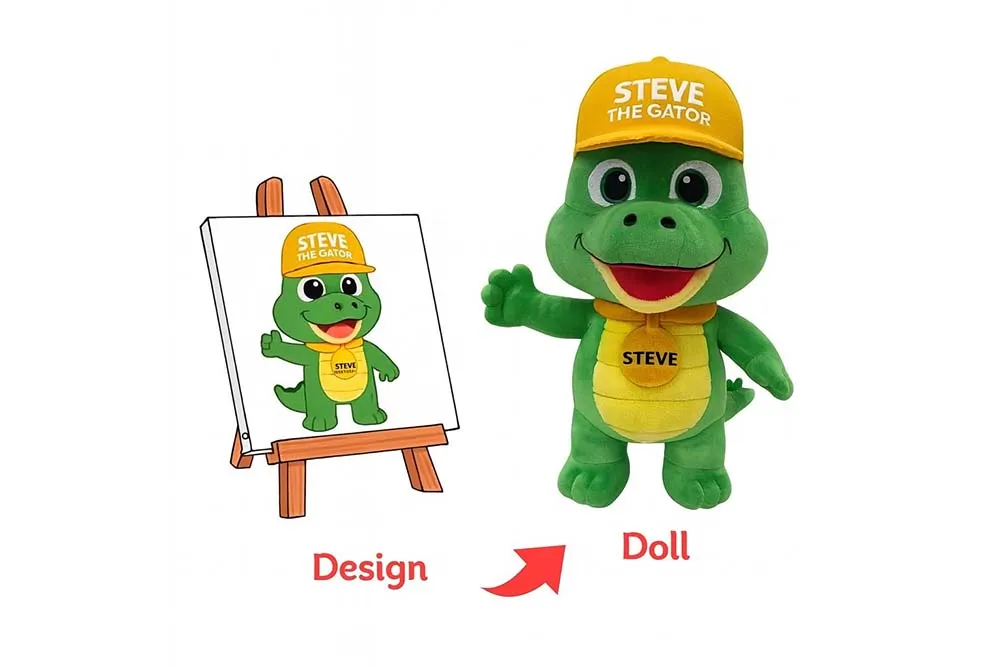
The 2D-to-3D Translation Challenge
The 2D-to-3D Translation Challenge
The fundamental challenge in making a stuffed animal from a picture is that a 2D image and a 3D plush toy are fundamentally different objects — and the translation between them is never purely mechanical.
What 2D Images Don't Show
A single-view 2D image — the most common starting point — leaves dozens of construction decisions unmade. What does the back of the character look like? What is the head shape when viewed from the side? How do the ears attach to the head? Where do the limbs connect to the body? What is the tail’s exact shape in three dimensions? How does the character sit or stand? What fills the space between the front and back panels?
These are not details that can be invented arbitrarily — they determine whether the finished 3D plush looks like the 2D character or merely resembles it. KINWIN’s design alignment process bridges this gap systematically, extracting construction decisions from the design reference through structured consultation before any pattern is cut.
What Changes in the Translation to 3D
- Proportions: heads in 2D illustration are often drawn larger than they would naturally sit on a 3D body — KINWIN’s pattern makers adjust proportions so the 3D result captures the character’s spirit, not just mechanically copies dimensions
- Line vs volume: features that work as 2D lines (sharp jaw angles, pointed ears with hard edges) must be interpreted as 3D volumes — which are inherently softer and more rounded in plush construction
- Flat vs textured surfaces: 2D illustrations often show flat color fields that become textured pile fabric in 3D — the texture of the fabric adds visual and tactile dimension that the 2D image doesn’t represent
- Facial features: 2D faces often have very specific geometric eye shapes (star eyes, heart eyes, asymmetric expressions) that need thoughtful interpretation in embroidery or safety eye format
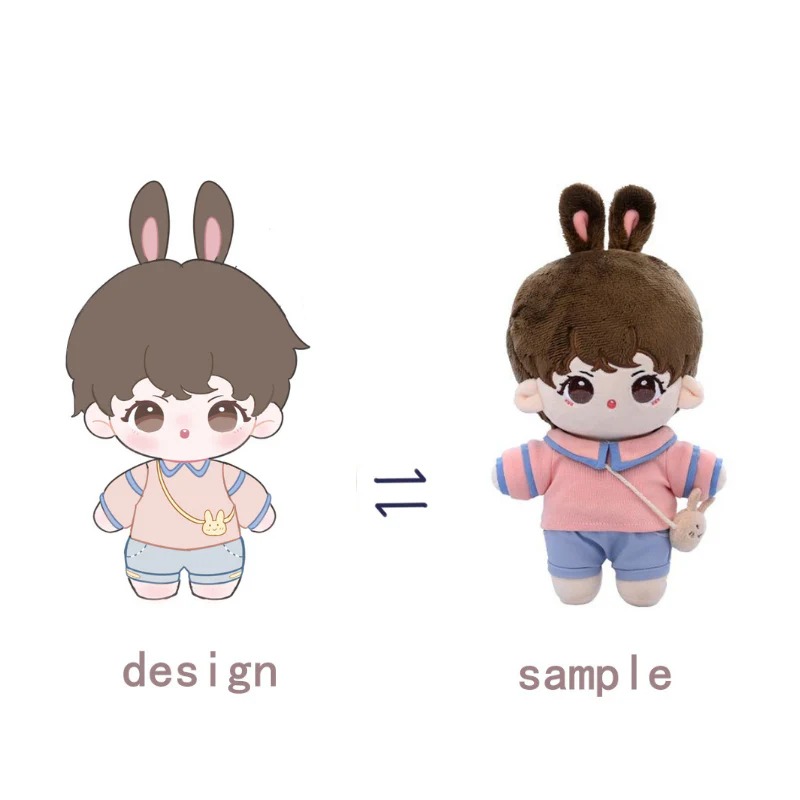
KINWIN’s Picture-to-Plush Translation Process
KINWIN's Picture-to-Plush Translation Process
Here is exactly what happens at KINWIN from the moment your picture reference arrives to the moment a physical plush toy is in your hands.
Step 1: Reference Analysis (Day 1–2)
Step 1: Reference Analysis (Day 1–2)
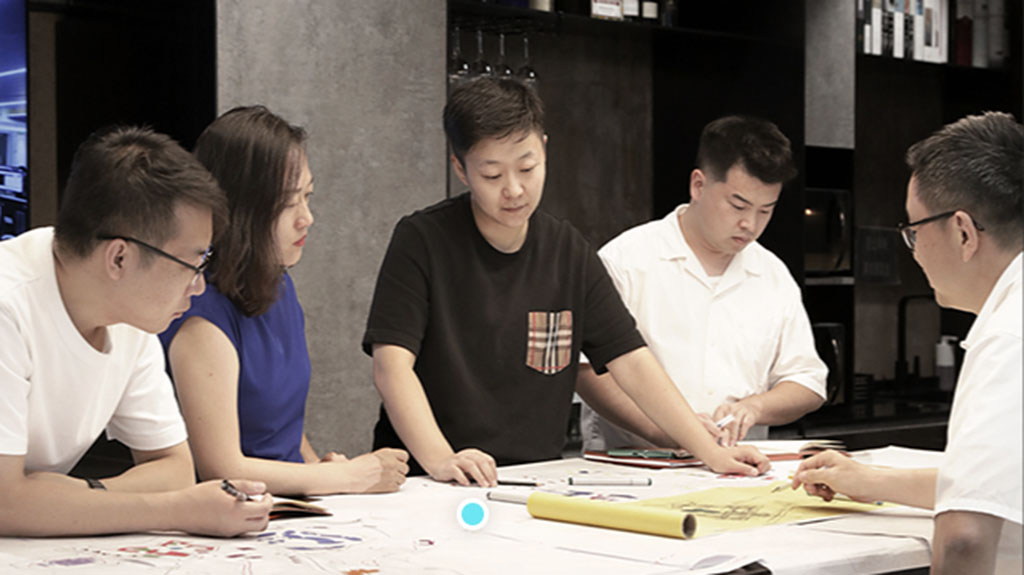
KINWIN’s design team performs a systematic analysis of your image reference, documenting: visible proportions (head-to-body ratio, limb lengths, silhouette shape), color zones and counts, facial feature positions and sizes, visible accessories and details, and character personality impression. Questions about information not present in the image are compiled into a structured design alignment query.
Step 2: Design Alignment Document (Day 2–4)
Step 2: Design Alignment Document (Day 2–4)
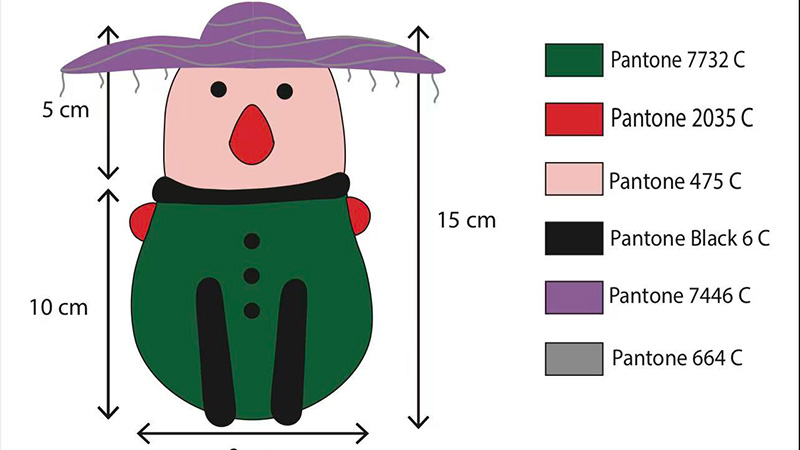
KINWIN prepares a design alignment document that shows — in annotated visual format — how each element of your 2D reference will be interpreted in 3D plush form. This document confirms: body proportion decisions, missing view constructions (back, side, bottom), facial feature dimensions and placement, fabric color assignments with Pantone references, filling density targets, and any adaptation decisions made for 3D construction. You review and approve this document before sampling begins.
Step 3: Pattern Making (Day 4–6)
Step 3: Pattern Making (Day 4–6)
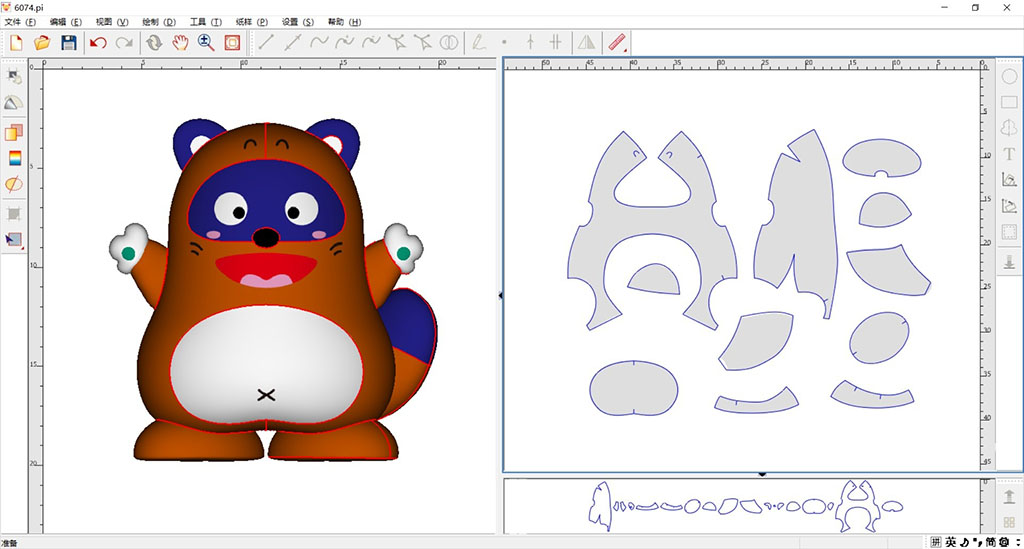
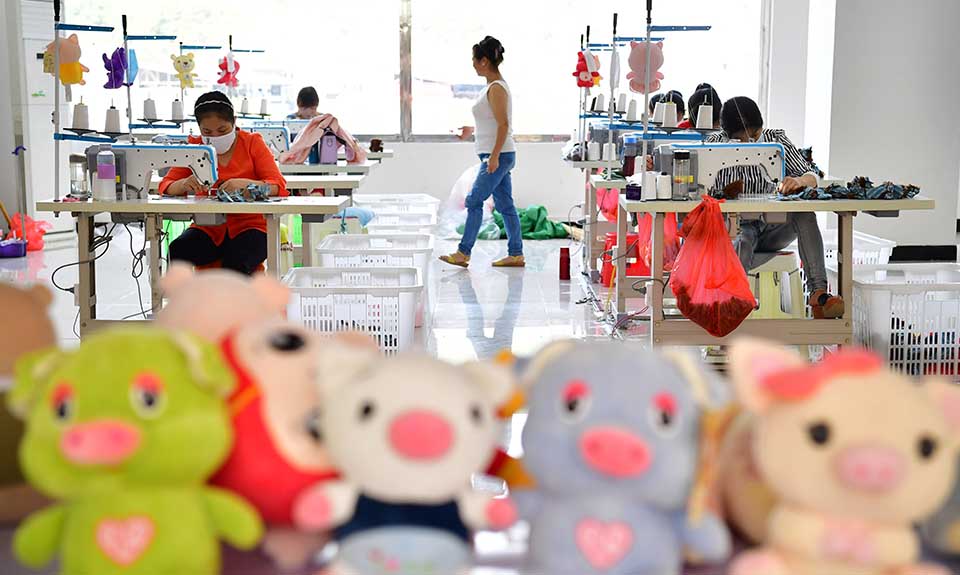
A senior pattern maker — someone with an average of 8+ years of plush toy construction experience — uses the approved design alignment document to hand-craft and digitize the complete set of construction patterns. Pattern components developed for a typical character from a picture: head crown panel, head side panels, face panel, chin panel, body front panel, body back panel, limb components (upper and lower), ear components (outer and inner), tail, any accessories or clothing, bead compartment (if weighted).
Step 4: Prototype Construction (Day 6–7)
Step 4: Prototype Construction (Day 6–7)
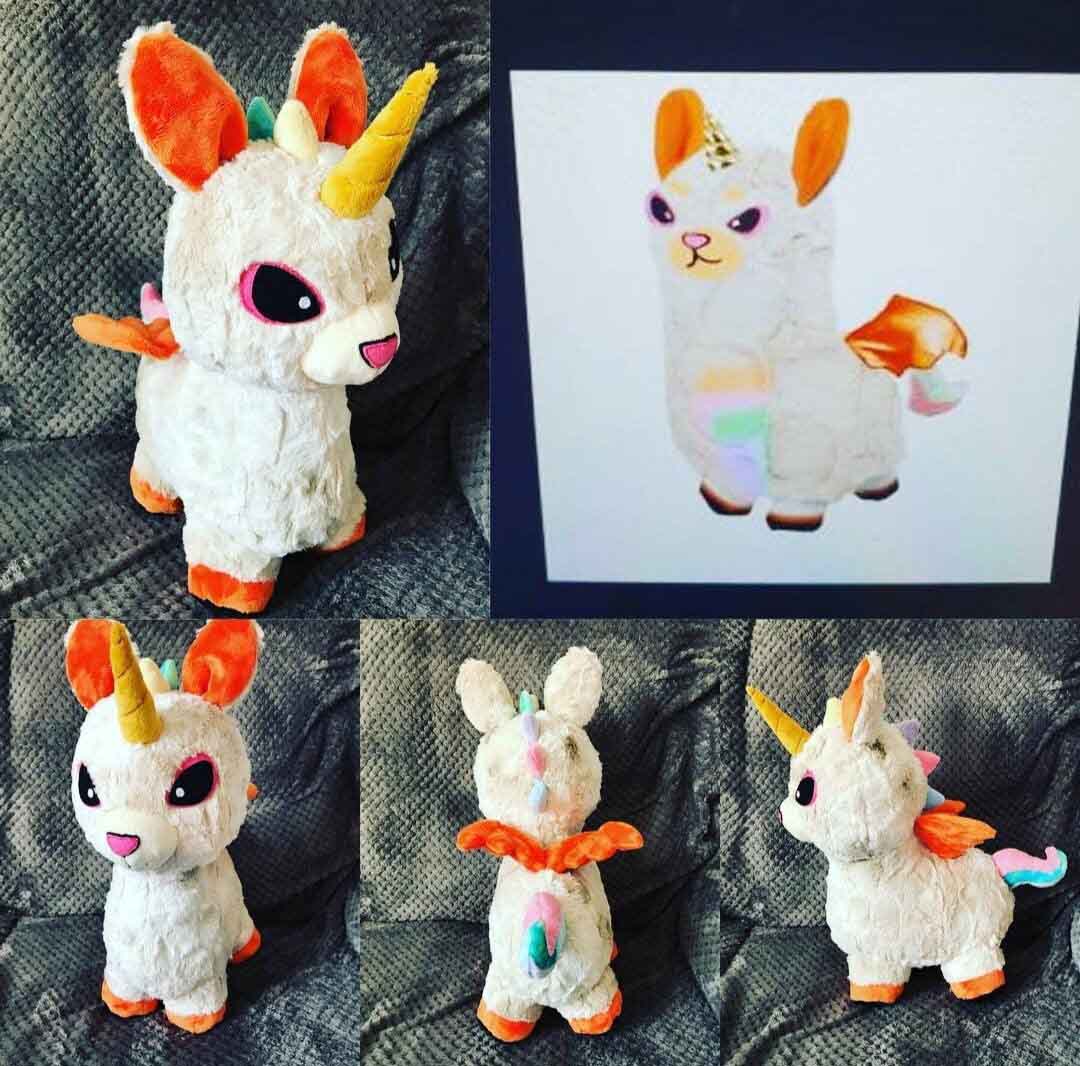
The prototype is hand-constructed by the pattern maker using the confirmed fabrics, following the design alignment document specifications. The completed prototype is photographed from front, back, both sides, and detail close-ups against a white background. An internal QC comparison against the design reference is conducted before the sample is approved for shipping to you.
Step 5: Your Review and Revision
Step 5: Your Review and Revision
You receive the physical sample and the HD photography. Evaluate both — the physical sample for tactile qualities (filling density, fabric feel, weight), and the photography for visual accuracy against your original image. Provide specific, measurable feedback for any required changes. KINWIN produces revisions until the sample matches your vision — unlimited revision rounds at no additional charge.
Specific Guidance by Image Type
Specific Guidance by Image Type
Starting from Digital Character Artwork
Digital character artwork — particularly professional-quality illustrations with clean linework, clear color fills, and visible proportions — is the best possible starting point. KINWIN works from any digital art style: anime/manga, cartoon, realistic, chibi, semi-realistic, or stylized.
- Provide the layered source file (PSD, AI) so color zones are clearly separated
- Include exact Pantone TPX color references for each zone
- If your character has a specific expression — particularly a non-standard one — note what emotion it should convey
- If the character has distinctive proportions (very large head, very small body), confirm whether you want those exact proportions replicated in 3D or adapted for the plush aesthetic
Starting from a Hand-Drawn Sketch
Hand-drawn sketches are a completely valid and frequently used starting point. Many of the most distinctive original characters begin as someone’s sketch — the roughness of the line quality does not affect the outcome as long as the character’s key proportions and features are visible.
- Photograph it against a plain white background
- If possible, draw front and back views — even a rough back view is extremely helpful
- Add color notes directly on the drawing
- Include a size reference (show how tall the character should be compared to a common object)
- Annotate anything that might be ambiguous
Starting from a Photo of an Existing Toy
Photographs of existing physical toys are excellent references because they show a 3D object — which is what KINWIN is making. Multiple-angle photos give pattern makers the most complete information.
- Provide front, back, both sides, top-down, and detail close-up photos
- Important: KINWIN will not replicate commercially available products from another brand — both for IP reasons and because your goal should be a distinct product
- If you own the IP for the toy in the photo, provide documentation and KINWIN will replicate it accurately
Starting from an Anime or Manga Reference
Anime and manga characters are among the most popular picture references — and also some of the most challenging to translate into 3D form, because anime aesthetics are specifically designed for 2D representation.
- Geometric eye shapes (star eyes, spiral eyes, crescent eyes) must be interpreted in embroidery or safety eye format
- Very angular hair shapes must be softened for plush construction
- Extreme body proportions must be adapted for the toy format
- Flat nose/mouth conventions in anime must become three-dimensional embroidery
- KINWIN has extensive experience with anime-to-plush translation and maintains design guidance specifically for this aesthetic
Starting from a Child's Drawing
Making a stuffed animal from a child’s drawing is one of the most emotionally meaningful custom plush commissions — turning a child’s imagination directly into a physical object.
- KINWIN interprets the drawing’s character spirit faithfully, including specific color choices, approximate proportions, and distinctive features
- We will NOT ‘clean up’ or over-professionalize the design — the goal is to preserve the charming naivety of the original
- The result is a beautifully made physical toy that is recognizably that child’s character
Accuracy Expectations — What 95%+ Character Similarity Means in Practice
Accuracy Expectations — What 95%+ Character Similarity Means in Practice
The 95% That Matches
- Character recognition: anyone who knows the character from the picture immediately recognizes the plush as that character
- Proportional accuracy: the head-to-body ratio, limb lengths, and overall silhouette match the reference
- Color accuracy: all fabric colors within ΔE ≤ 2.0 of the Pantone references confirmed during material alignment
- Facial identity: the face — the most emotionally communicative element — conveys the same personality as the reference
The 5% That Differs — And Why
- Adaptation decisions required by the transition from 2D to 3D: proportional adjustments, softening of hard geometric edges, construction simplifications for unseen areas
The 5% that differs is not a failure — it is an inherent property of the medium translation. A plush toy is not a miniature statue of your 2D character; it is a three-dimensional soft object that captures the character’s essence in the stuffed toy medium.
The most successful plush toys from picture references are those where the brand has understood this distinction and worked with KINWIN to optimize for the plush medium rather than demanding impossible geometric precision.
How to Provide Your Picture Reference to KINWIN
How to Provide Your Picture Reference to KINWIN
Getting the most from your image reference requires sending it effectively — with the supporting information that allows KINWIN’s pattern makers to make informed decisions about the aspects your image doesn’t show.
File Formats Accepted
- Digital artwork: AI, EPS, SVG (vector — ideal), PSD (Photoshop layers), PNG (minimum 300dpi), JPG, PDF
- Photographs: any format — JPEG, PNG, HEIC; multiple angles preferred
- Scanned artwork: minimum 300dpi scan; white or light background preferred
- 3D files: OBJ, STL, FBX, ZTL — 3D character models are excellent references
- Physical mail: original drawings or existing physical samples can be mailed to KINWIN for reference
Supplementary Information That Maximizes Accuracy
- Color specifications: Pantone TPX references for each color zone — eliminates color guesswork
- Size specification: target height (sitting or standing) in cm or inches
- Character personality notes: how the character should feel emotionally — affects expression interpretation
- Back view guidance: even a rough description of what the back should look like
- Similar references: existing plush toys that share the aesthetic you are targeting — provides visual context
- Things NOT to do: notes on elements of the reference that should NOT be replicated — saves revision rounds
Why KINWIN Is the Right Manufacturer for Picture-to-Plush Programs
Why KINWIN Is the Right Manufacturer for Picture-to-Plush Programs
✓ 30+ senior pattern makers with average 8+ years plush toy specialization — the most critical skill for picture-to-plush accuracy
✓ Design alignment document process — systematic extraction of 3D decisions from 2D references before sampling
✓ 95%+ character similarity target — a measurable, accountable accuracy standard
✓ Experience with all image types: digital art, sketches, anime, logos, children’s drawings, photos
✓ 200,000+ samples per year — experience with virtually every character type and construction challenge
✓ 7-day standard sampling turnaround from confirmed design alignment
✓ Unlimited free revisions until the physical sample matches your picture reference
✓ NDA signed before any design images are shared — your picture and character are protected
✓ CE, EN71, ASTM F963 certified — finished product is market-ready
✓ MOQ 500 pieces — accessible for indie brands, IP holders, and first-time launches
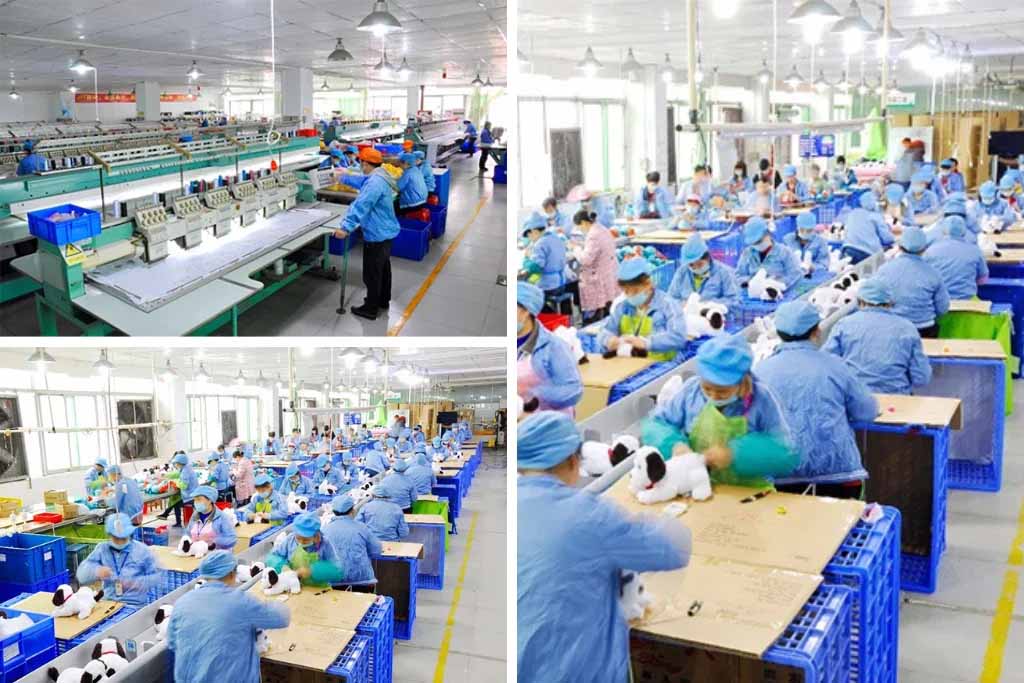
Every great stuffed animal started as a picture. KINWIN turns pictures into the plush toys they were always meant to become.
Frequently Asked Questions — Stuffed Animal from Picture
Frequently Asked Questions — Stuffed Animal from Picture
Q1. I only have a front-view image of my character — is that enough to make a plush toy?
Yes — a single front-view image is the most common starting point for custom plush toy development, and it is sufficient to begin the process. KINWIN will use your front-view reference as the primary specification source, and our design alignment process will fill in the missing views through structured consultation: we will ask about the back design (is it a plain back or does it have distinctive features?), the side profile (how does the head shape transition from front to side?), and the construction of any elements that are only partially visible from the front. Where you do not have strong opinions about the missing views, our pattern makers will make professional decisions consistent with the character’s established style. For characters where the back and side views are important to you, providing rough sketches or even written descriptions of these views — even if imprecise — significantly improves first-sample accuracy.
Q2. How accurately will the stuffed animal match my original picture?
KINWIN targets 95%+ character similarity to the approved reference — and for high-quality digital art references with clear proportions and Pantone color specifications, this target is consistently achieved. The 5% that differs is inherent to the 2D-to-3D medium translation: geometric shapes become rounded volumes, line-defined features become embroidered or three-dimensional elements, and construction decisions for unseen views are made by the pattern maker. The result should be immediately recognizable as your character to anyone who knows the reference image. The most important factor in achieving maximum accuracy: the design alignment document that KINWIN produces before sampling begins. This document lets you see and approve how every element will be interpreted in 3D before any fabric is cut — giving you the opportunity to correct any interpretation decisions before they become a physical prototype.
Q3. Can you make a stuffed animal that looks exactly like a photo of my pet?
KINWIN can create a custom stuffed animal inspired by a photo of your pet — but with the understanding that a plush toy is an artistic interpretation of a real animal, not a photorealistic replica. What we can accurately capture: the species and breed characteristics, the approximate body proportions, the coloring and markings (using Pantone-matched fabrics), the distinctive features that make your specific pet recognizable (a particular ear shape, a distinctive marking pattern, a characteristic expression). What requires interpretation: the exact fur texture transitions to pile fabric (similar aesthetic but different material), any asymmetric real-world characteristics that work in photos but are difficult to replicate in sewn construction, and the naturalistic detail of a real animal simplified into plush construction. For best results, provide multiple clear photos of your pet from multiple angles, including close-ups of the face and any distinctive markings.
Q4. Is there a risk that my character design will be copied if I share my picture with KINWIN?
KINWIN signs a Non-Disclosure Agreement before any design images, character references, or creative materials are shared. Our IP protection protocols include: design file access is restricted to the specific personnel working on your project; your designs are never visible to teams working on other clients; all design files are stored in controlled systems with access logging; any rejected or overrun physical materials are destroyed rather than retained. KINWIN has passed Disney FAMA factory audit — which includes IP security as a core assessment criterion — demonstrating our IP protection protocols meet the most demanding standards in the entertainment licensing industry. Your picture and character concept remain your intellectual property throughout the development and manufacturing process.
Q5. How many pieces do I need to order to get a stuffed animal made from my picture?
KINWIN’s minimum order quantity is 500 pieces per design — for both full OEM character development from your picture and branding applications on ODM designs. This minimum applies regardless of how simple or complex the character is, and covers the complete service: pattern making from your picture, design alignment process, material sourcing and color matching, prototype sampling with unlimited revisions, safety certification for your target markets, brand identity application, and production-grade packaging. For independent creators, artists, and IP holders who are scaling from handmade to manufactured, 500 pieces is a realistic test-market quantity that generates meaningful sales data before committing to larger orders. Contact KINWIN to discuss your specific project — provide your picture and we will respond with a development plan and quotation within 24 hours.
If You Can lmagine lt,We Will Create lt!
1.Tell Us What You Need
Tell us as specific as possible of your needs and share your idea.
2.Get Solution & Quote
We will work on the best solution according to yourrequirements,the specific quote will be provided within 24 hours.
3.Approve for Mass Production
We will start mass production after getting your approval.