
Stuffed Animal Factories — How to Find, Evaluate and Work with the Right Manufacturer
Stuffed Animal Factories — How to Find, Evaluate and Work with the Right Manufacturer
Factory Types · Evaluation Criteria · Red Flags · Certifications · Audit Guide · KINWIN Factory Profile
Finding the right stuffed animal factory is the most consequential supply chain decision a plush toy brand makes. The manufacturer you choose determines your product quality, safety compliance, production reliability, IP security, and ultimately your brand reputation in the market. A poor manufacturer choice is not just an operational problem — it is a brand risk that can surface as product recalls, marketplace suspensions, or simply a steady stream of negative reviews from customers who received products that didn’t meet expectations.
This guide gives you the complete framework for finding, evaluating, and working with stuffed animal factories — including what different factory types offer, what certifications and quality evidence to require, what red flags to watch for, how to conduct due diligence, and what a professional factory relationship looks like in practice.
Types of Stuffed Animal Factories — Know Who You Are Talking To
Types of Stuffed Animal Factories — Know Who You Are Talking To
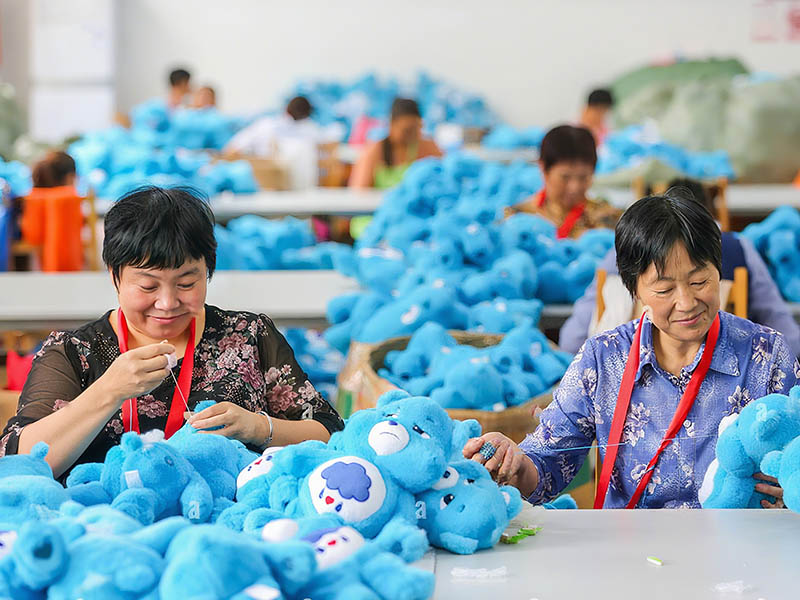
Not every entity presenting itself as a stuffed animal factory actually owns and operates manufacturing facilities. The type of entity you are working with has major implications for quality control, IP security, pricing transparency, and accountability.
Direct Manufacturer
What they are: Owns production lines, employs workers, controls QC
Advantages: Full quality control, accountability, IP security
Risks: Higher MOQ, may have limited design services
Trading Company
What they are: Brokers orders to third-party factories
Advantages: Wider product range, lower apparent MOQ
Risks: No QC control, markup on price, IP exposure
Sourcing Agent
What they are: Identifies factories; manages orders for a fee
Advantages: Market knowledge; access to smaller factories
Risks: Additional cost layer; accountability unclear
Factory with Trading Arm
What they are: Manufactures own products + brokers for others
Advantages: Some manufacturing capability, wider range
Risks: Unclear which products are made in-house
OEM Specialist Factory
What they are: Dedicated to custom OEM production for brands
Advantages: Deep OEM expertise, quality systems, compliance
Risks: May have higher MOQ; longer lead times
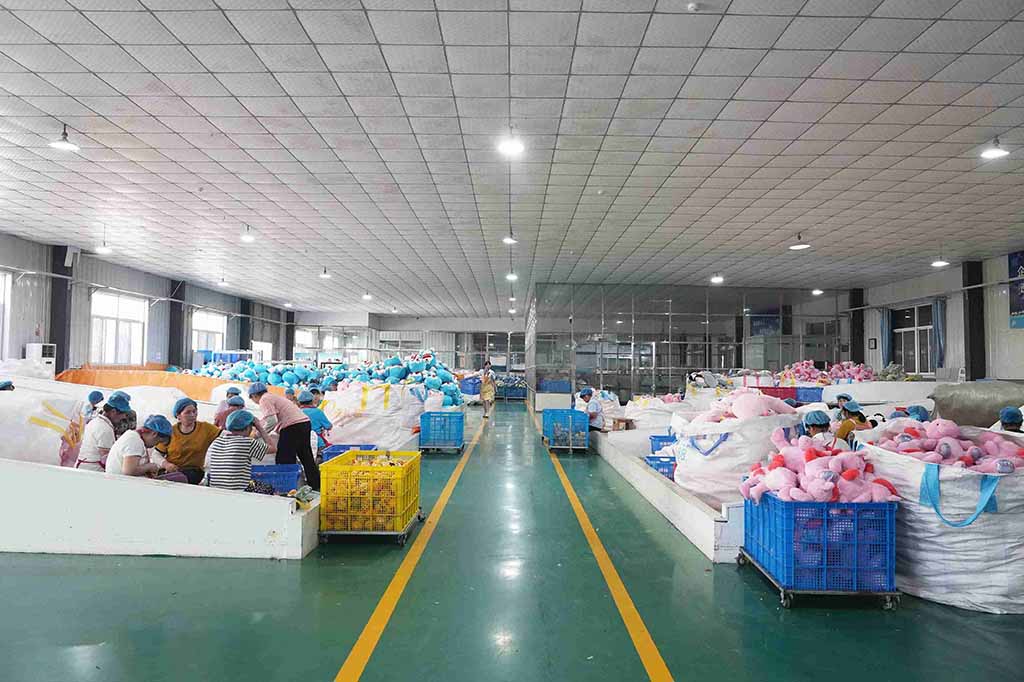
KINWIN is a direct OEM/ODM manufacturer — we own and operate all 15 of our production lines, employ all production personnel directly, and conduct all QC in-house. There is no subcontracting of production to third parties. Every order is produced under our direct supervision in our Dongguan facility.
How to Identify a Real Stuffed Animal Factory vs a Trader
How to Identify a Real Stuffed Animal Factory vs a Trader
The difference between a factory and a trader is fundamental — but traders frequently present themselves as factories. Here is how to verify manufacturer status.
Direct Verification Methods
- Request the factory’s business license : shows registered business scope — manufacturing businesses have ‘manufacturing’ in their scope; trading companies do not
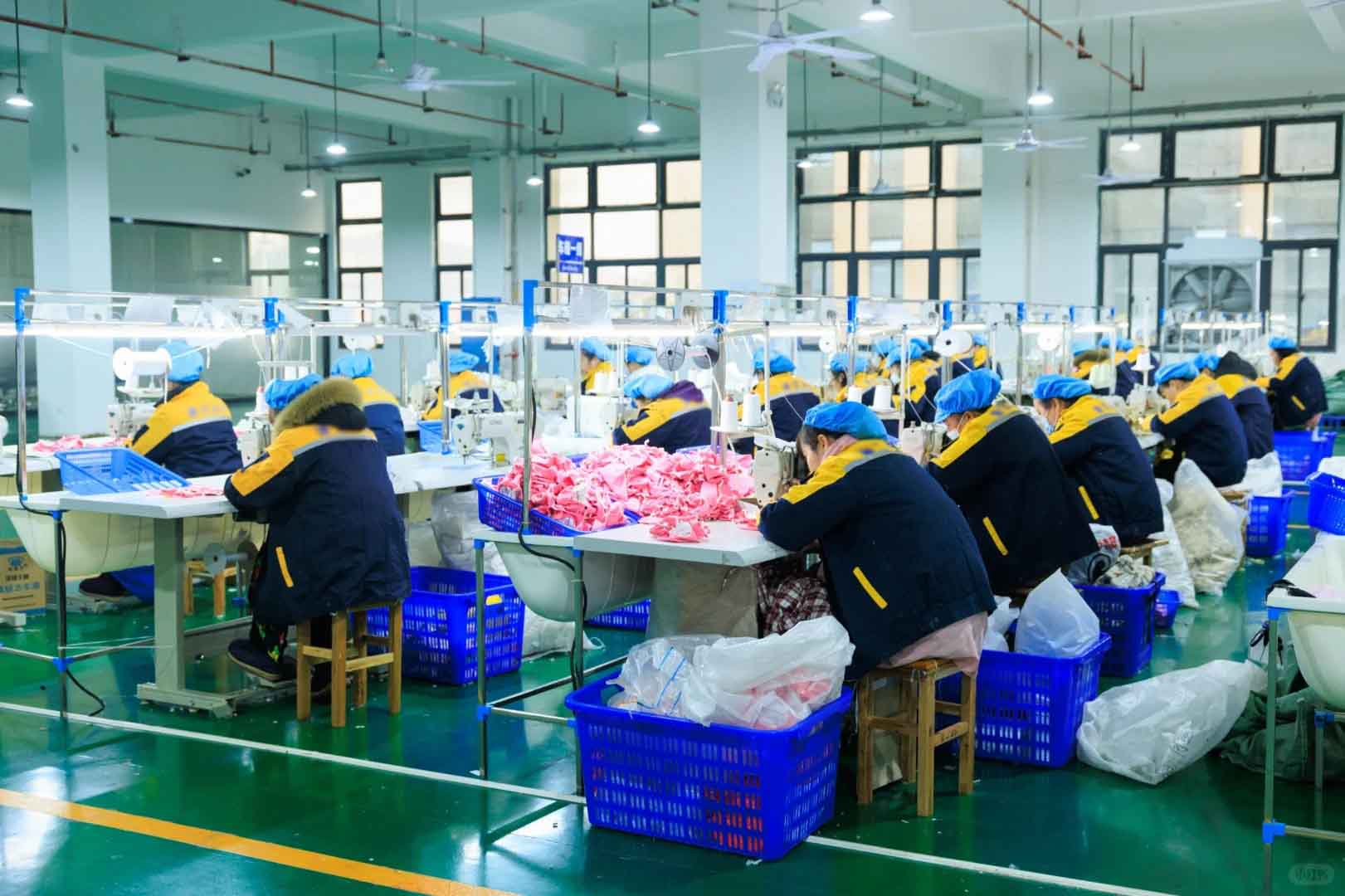
- Request factory photos — specifically production line photos, not just product photos: real factories have recognizable production floor environments
- Ask for the factory’s ISO 9001 certificate: the certificate scope should reference manufacturing operations, not trading
- Request a factory visit: real manufacturers welcome visits (with advance notice); traders often deflect or propose a visit to ‘their partner factory’
- Ask specifically: ‘Do you own and operate the production facility where my order will be manufactured?’ — a direct question requiring a direct answer
- Request employee count breakdown by department: factories will have production workers, QC inspectors, pattern makers — traders will not
Soft Signals That Suggest a Trader
- Extremely fast quotation with no questions: real manufacturers need to understand your specifications before quoting — instant quotes suggest catalog pricing, not custom manufacturing
- No mention of pattern makers, production lines, or manufacturing capacity: traders talk about products; manufacturers talk about production processes
- Very wide product range covering multiple unrelated categories: specialized stuffed animal factories focus on their category
- Inability to discuss specific production processes: ask how embroidery placement is controlled in production — a manufacturer will describe their placement template system; a trader will give a vague answer
Factory Evaluation Framework — 5 Dimensions
Factory Evaluation Framework — What to Assess and How
Evaluating a stuffed animal factory requires assessing capability, quality systems, compliance, and reliability across multiple dimensions. Here is a structured evaluation framework.
Dimension 1: Manufacturing Capability
Dimension 1: Manufacturing Capability
Assess whether the factory has genuine production capacity and specialist expertise for custom stuffed animal manufacturing.
- How many production lines? — Good: 10+ for full-service manufacturer / Red flag: fewer than 5
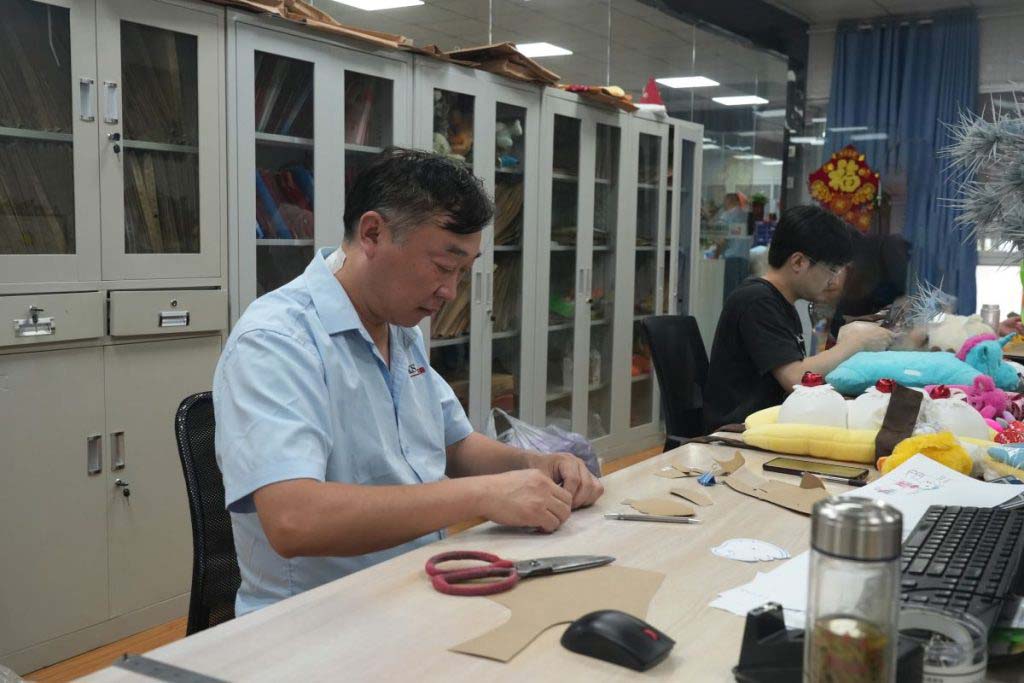
- How many pattern makers? — Good: 20+ senior pattern makers / Red flag: cannot answer or very few
- Annual production volume? — Good: hundreds of thousands of units / Red flag: vague or very small
- Standard sampling turnaround? — Good: 7-10 working days / Red flag: vague or very long
- Do you subcontract production? — Good: no — all in-house / Red flag: yes or vague
- Can I visit the factory? — Good: yes, with advance notice / Red flag: no, deflection, or conditions
Dimension 2: Quality Systems
Dimension 2: Quality Systems
Assess whether the factory has systematic, documented quality management — not informal or individual-dependent practices.
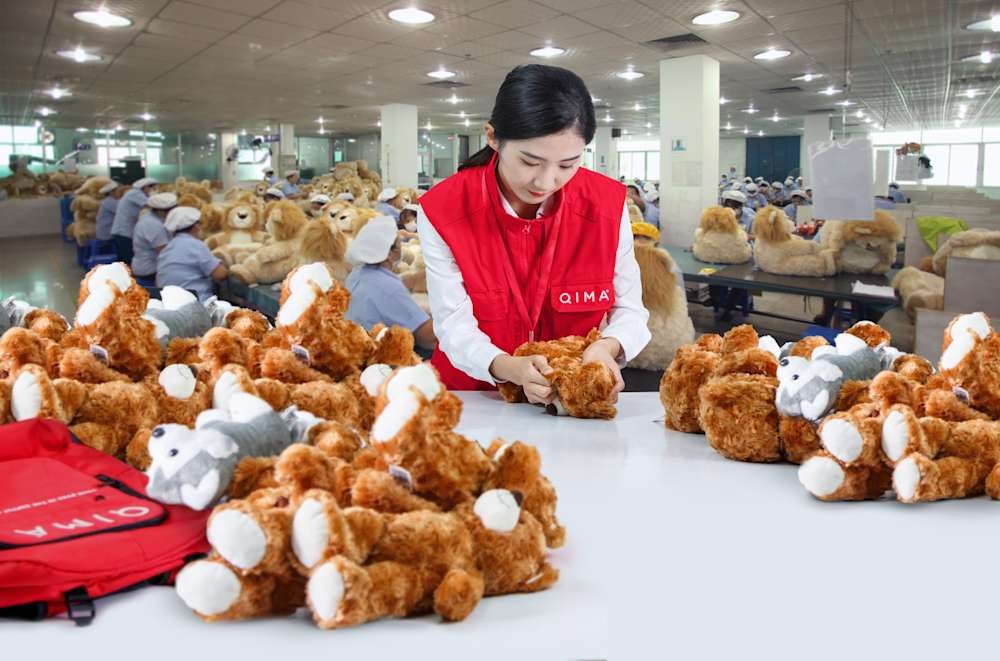
- Inspection method? — Good: 100% in-process + 100% final / Red flag: AQL sampling only
- How is golden sample used? — Good: physically present on production floor / Red flag: photo only
- Filling density specification? — Good: gram-weight targets per section / Red flag: vague terms like ‘soft’ or ‘full’
- CAPA process? — Good: documented root cause analysis / Red flag: no formal process
- ISO 9001 certified? — Good: current certificate from accredited body / Red flag: no or expired
- Pre-shipment audit? — Good: yes — random carton sampling / Red flag: no formal audit
Dimension 3: Safety Compliance
Dimension 3: Safety Compliance
Assess whether the factory can produce products that meet regulatory requirements for your target markets.
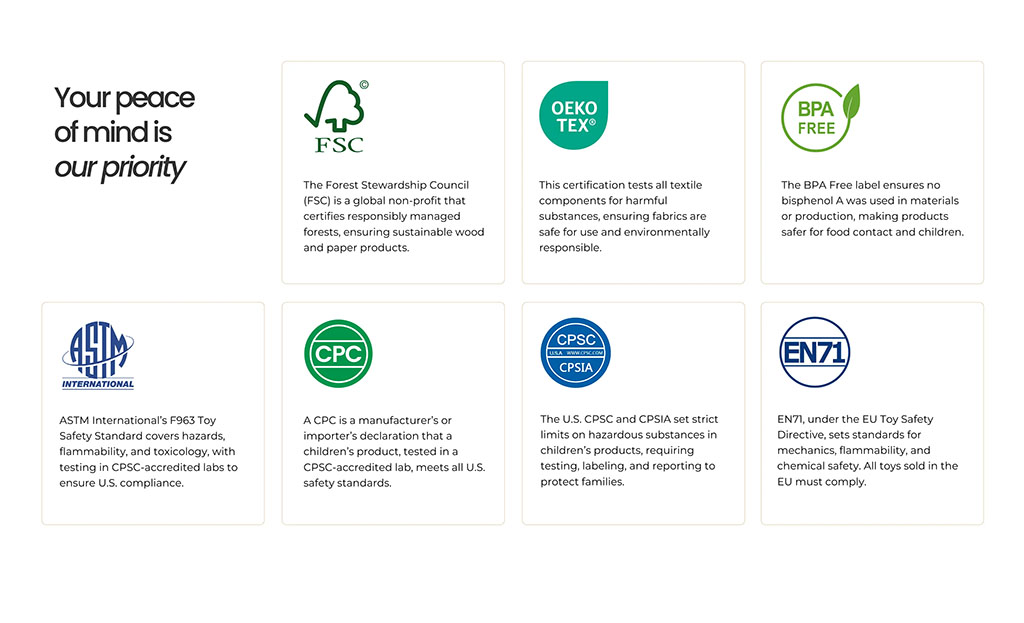
- OEKO-TEX certified fabrics? — Good: mandatory for all children’s products / Red flag: not standard
- CE + EN71 capability? — Good: active test reports + sample CE Declarations / Red flag: cannot produce examples
- ASTM F963 + CPSC CPC? — Good: active test reports + sample CPCs / Red flag: cannot produce examples
- Laboratory partners? — Good: SGS, Intertek, Bureau Veritas / Red flag: unknown labs or no third-party
- Azo dye risk management? — Good: OEKO-TEX certification required from all suppliers / Red flag: relies on supplier declaration only
Dimension 4: Social Compliance & Ethics
Dimension 4: Social Compliance & Ethics
Assess whether the factory operates to internationally recognized labor and ethical standards — increasingly required by retail buyers.
- BSCI or SMETA audit? — Good: current audit report with passing score / Red flag: no audit or refused
- Working hours compliance? — Good: documented compliance with legal maximums / Red flag: cannot confirm
- Wages at or above legal minimum? — Good: payroll documentation available / Red flag: vague or evasive
- No child labor? — Good: age verification process documented / Red flag: cannot confirm
- Environmental management? — Good: waste disposal records available / Red flag: no documentation
Dimension 5: IP Security
Dimension 5: IP Security
Assess whether the factory has systems to protect your character designs, prevent unauthorized reproduction, and manage IP materials securely.
- NDA available? — Good: yes — before any design exchange / Red flag: reluctance or conditions
- Design file access controls? — Good: project-to-project isolation; access logging / Red flag: no formal controls
- IP audit passed? — Good: Disney FAMA or equivalent / Red flag: no IP-specific audit
- Physical IP security? — Good: controlled factory floor access / Red flag: open floor, visitors unrestricted
- Overrun material disposal? — Good: documented destruction procedure / Red flag: no formal procedure
Factory Visit Guide — What to Look for When You Visit
Factory Visit Guide — What to Look for When You Visit
A factory visit is the most valuable due diligence activity available to a stuffed animal buyer. What you see, hear, and sense during a factory visit cannot be replicated by documentation review alone.
Production Floor Observations
- Golden samples: are approved golden samples physically present at each production station?
- In-process QC: are quality checks happening at each workstation, or only at the end?
- Organization: is the production floor organized, well-lit, and systematically laid out?
- Embroidery station: how is face placement controlled? (Look for physical templates or positioning jigs)
- Filling station: are workers using any measurement (scales, weighing equipment) for filling density?
- Final inspection: is there a dedicated final inspection station with workers comparing each unit against a reference?
- Material storage: are fabrics stored with protection from contamination, humidity, and light?
Personnel Conversations
- Ask to meet the head of quality control — this person should be able to describe the QC system in detail from memory
- Ask to meet a senior pattern maker — ask about their experience and what makes a good pattern for plush toys
- Ask workers on the production line about their training — a good factory trains workers systematically
Documentation to Request During Visit
- ISO 9001 certificate (original or verified copy)
- Most recent BSCI or SMETA audit report
- Sample CE Declaration and EN71 test reports for a recent production order
- OEKO-TEX certificates for the fabrics used in the factory’s standard production
- Sample production work instructions for a standard character plush
- Golden sample retention policy — how long are golden samples kept?
Red Flags — When to Walk Away from a Factory Relationship
Red Flags — When to Walk Away from a Factory Relationship
Some factory behaviors are not negotiation points — they are signals that the relationship will not work regardless of other factors. Recognizing these red flags saves time, money, and brand damage.
⚠ Refuses factory visits or adds conditions to site access — transparency should not be a privilege
⚠ Cannot provide current safety certification documents (CE Declaration, EN71 test reports, ASTM F963 reports) — if they cannot provide these, they cannot certify your product
⚠ Pressures you to approve a sample that does not meet your specifications — a professional manufacturer never pressures you to accept substandard work
⚠ Claims to produce an impossibly wide range of unrelated products from one factory — specialization is a quality signal
⚠ Refuses to sign an NDA before receiving your design files — this is non-negotiable for any brand with proprietary characters
⚠ Quality problems dismissed as ‘normal’ or ‘acceptable’ without corrective action — quality failures require root cause analysis and corrective action, not acceptance
⚠ Extreme pricing below market — suggests material shortcuts, uncertified materials, or subcontracting to lower-quality facilities
⚠ Evasive answers to direct questions about production processes, material sourcing, or QC methods
KINWIN Factory Profile — Full Specification
KINWIN Factory Profile — Full Specification for Buyer Due Diligence
For buyers conducting due diligence on KINWIN as a potential manufacturing partner, here is the complete factory specification and certification profile.
Legal Name
KINWIN Toy Co., Ltd.
Location
No. 5 Longxi Road, Nancheng District, Dongguan, Guangdong, China
Factory Type
Direct OEM/ODM manufacturer — all production in-house
Production Lines
15 dedicated plush toy lines
Pattern Makers
30+ senior pattern makers, average 8+ years
Annual Sample Output
200,000+ samples across all categories
Years in Operation
17+ years
Markets Served
30+ countries
Client Brands
1,000+ brands globally
ISO 9001:2015
Certified — current
Disney FAMA
Approved — IP security + quality
BSCI
Certified — social compliance
SGS / SMETA
Certified — ethical trade audit
CE / EN71
Full capability — all parts
ASTM F963 + CPSC
Full capability
OEKO-TEX
All fabrics OEKO-TEX certified
FSC Packaging
Available on all paper packaging
GRS Recycled Materials
RPET fabric + recycled fill available
MOQ
500 pieces per design
Sampling Turnaround
7 working days standard
Factory Visits
Welcome with advance scheduling
Contact
+86 136 3179 5102 · kinwintoys.com
Building a Long-Term Factory Relationship
Building a Long-Term Factory Relationship
The most valuable supply relationships are not transactional — they are partnerships where both parties invest in each other’s success.
- Communicate your growth trajectory: factories allocate better production slots, priority scheduling, and account management resources to clients they see as long-term partners
- Provide detailed, constructive feedback: specific, measurable revision feedback improves sample accuracy and demonstrates your quality standards clearly — manufacturers respond to clients who communicate precisely
- Pay on time, consistently: factories prioritize clients who pay reliably — this affects production slot allocation and account management attention
- Plan collaboratively: sharing your production calendar (upcoming seasons, expected volumes) allows the factory to plan resources in advance — resulting in better availability and pricing
- Visit regularly: annual factory visits maintain the personal relationship that underlies reliable supply partnerships and allow you to stay current on the factory’s capabilities and capacity
Why Brands Choose KINWIN as Their Stuffed Animal Factory
Why Brands Choose KINWIN as Their Stuffed Animal Factory
The right factory is not the cheapest factory — it is the factory that consistently produces what you specified, protects your brand, and grows with you.
✓ 7-day standard sampling — one of the fastest among certified Dongguan manufacturers
✓ Factory visits welcome with advance scheduling
✓ Full transparency: all certifications and audit reports available on request
✓ 1,000+ brands served across 30+ countries
✓ NDA from first contact; Disney FAMA IP security verified
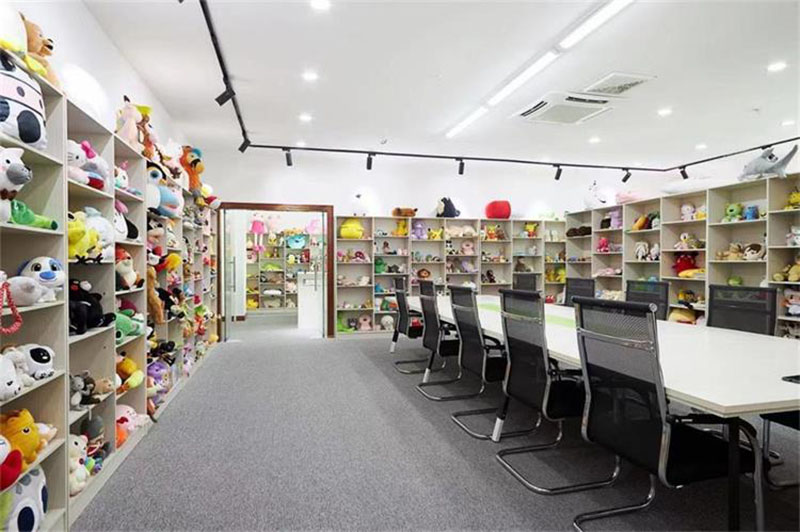
✓ Direct manufacturer: all 15 production lines owned and operated in-house — no subcontracting
✓ Complete certification portfolio: Disney FAMA, BSCI, SMETA, ISO 9001, CE, EN71, ASTM F963, OEKO-TEX, FSC, GRS
✓ 17+ years manufacturing experience in Dongguan — the global center of plush toy production
✓ 30+ senior pattern makers: the most critical manufacturing capability for quality plush toys
✓ 100% inspection at every production stage — not AQL sampling at factory level
Frequently Asked Questions — Stuffed Animal Factories
Frequently Asked Questions — Stuffed Animal Factories
Q1. How do I find stuffed animal factories to work with?
The main channels for finding stuffed animal factories are: trade directories (Alibaba, Global Sources, Made-in-China) which list factories but require careful vetting; industry trade shows (Canton Fair, Toy Fair Nuremberg, Hong Kong Toys & Games Fair) where factories present their capabilities in person; sourcing agents who know the manufacturing landscape in specific regions; industry referrals from other brands who have sourced plush toys; and direct online search for manufacturers with specific certifications. Whichever discovery channel you use, finding a factory is only the first step — thorough evaluation through documentation review, sample assessment, and ideally factory visits is what determines whether a factory can actually deliver what you need. KINWIN can be contacted directly through kinwintoys.com — we respond to all inquiries within 24 hours with a development plan and quotation.
Q2. What certifications should a stuffed animal factory have?
At minimum, a professional stuffed animal factory should hold: ISO 9001:2015 (quality management system), BSCI or SMETA (social compliance), and demonstrated capability to produce CE/EN71 (EU) and ASTM F963/CPSC (US) safety certifications for finished products. OEKO-TEX certified fabric sourcing should be standard for all children’s products. Beyond the minimum, factories with Disney FAMA approval have demonstrated the highest IP security and quality standards. The critical distinction: some certifications are factory-level (ISO 9001, BSCI, Disney FAMA) and some are product-level (CE, EN71, ASTM F963) — a factory being certified does not automatically mean your product is certified. Product-level safety certifications are earned for each specific product through testing.
Q3. Should I work with one factory or multiple factories for my stuffed animal products?
For most brands, working with a single primary stuffed animal factory produces better outcomes than splitting volume across multiple factories — for several reasons. Quality consistency: when you split production across factories, each factory interprets your golden sample slightly differently, leading to product inconsistency across your line. IP security: more factories means more exposure points for your character designs. Account priority: a single factory relationship with meaningful volume gets better production slot priority, account management attention, and pricing than the same volume split across two or three factories. Golden sample management: one factory retains all your golden samples in one system. The primary reason to use multiple factories is risk mitigation for very large programs — where single-factory production capacity could be the constraint.
Q4. How do I conduct a factory audit remotely if I cannot visit in person?
Remote factory auditing has become more structured since 2020. Options available: (1) Third-party audit service: engage SGS, Intertek, Bureau Veritas, or QIMA to conduct an on-site audit on your behalf — they produce a formal report covering quality systems, social compliance, and facility conditions. This is the most reliable remote audit option and the output is a standardized report you can compare across factories; (2) Virtual factory tour: request a live video walkthrough of the production facility — you can observe the production floor, QC stations, and material storage in real time while asking questions; (3) Documentation-based audit: request all certifications, audit reports (BSCI/SMETA), ISO 9001 documentation, and sample production records; (4) Reference checks: request contact details for two or three existing clients who have placed multiple orders — speaking directly with references provides insight that documentation cannot.
Q5. What payment terms are standard when working with stuffed animal factories?
Standard payment terms for custom stuffed animal manufacturing are: 30% deposit paid before production begins (covers material procurement and production initiation), and 70% balance payment before shipment is authorized (after passing quality inspection). This structure is industry-standard and protects both parties: the brand is not at risk for full payment before quality is verified; the factory is not at risk for full production costs without committed funds. Payment is typically via bank transfer (T/T). For established clients with an order history, some factories offer extended terms (Net 30 from shipment). Letter of Credit (L/C) is available for larger programs. Avoid factories requiring 100% payment upfront before production — this removes all your quality leverage. KINWIN operates on 30% deposit + 70% before shipment as standard.
If You Can lmagine lt,We Will Create lt!
1.Tell Us What You Need
Tell us as specific as possible of your needs and share your idea.
2.Get Solution & Quote
We will work on the best solution according to yourrequirements,the specific quote will be provided within 24 hours.
3.Approve for Mass Production
We will start mass production after getting your approval.