 Skip to content
Stress Relief Plush Toys — Custom Weighted, Squishy & Comfort Plush for Adult Wellbeing
Stress Relief Plush Toys — Custom Weighted, Squishy & Comfort Plush for Adult Wellbeing
Weighted Glass Bead Fill · Squishy Memory Foam · Anxiety Relief · Sensory Design · OEKO-TEX · CE/ASTM · MOQ 500 pcs
The therapeutic soft toy market for adults is one of the fastest-growing segments in the plush category — driven by mainstream acceptance of mental health self-care, the documented benefits of tactile comfort objects for anxiety and stress regulation, and a generation of adult consumers who are openly comfortable purchasing comfort objects for themselves. Stress relief plush toys are no longer a niche or an embarrassment: they are a legitimate wellness product category with serious commercial potential and genuine therapeutic backing.
KINWIN manufactures custom stress relief and comfort plush toys for wellness brands, DTC mental health product companies, corporate wellbeing programs, therapeutic gifting brands, and healthcare organizations. From weighted plush toys with glass bead filling to ultra-soft squishy characters designed for tactile anxiety relief, our stress relief plush programs are engineered for the specific sensory and functional requirements of adult therapeutic use.
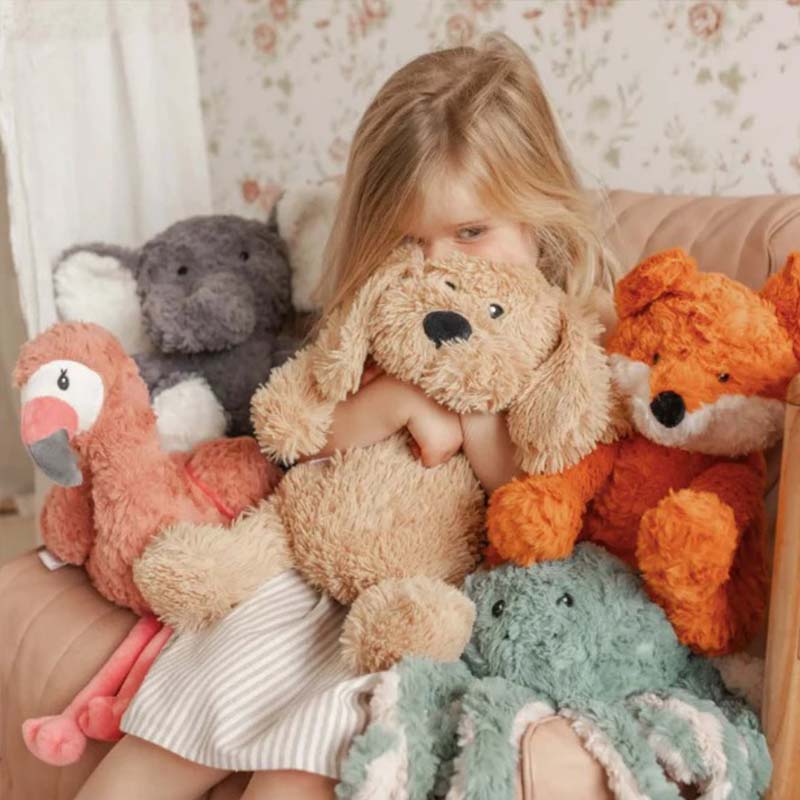
Why Plush Toys Work for Stress and Anxiety Relief
The Science Behind Stress Relief Plush — 3 Documented Mechanisms
Tactile Stimulation and the Nervous System
Physical touch — including contact with soft textures — activates the parasympathetic nervous system, reducing cortisol levels and heart rate. Squeezing, pressing, and holding a soft object provides proprioceptive input that research consistently associates with reduced anxiety and improved emotional regulation. The specific texture of high-quality plush fabric — ultra-soft, slightly yielding, pleasant against skin — provides exactly the kind of gentle tactile input that supports nervous system downregulation.
Design implication: Fabric selection is therapeutic, not just aesthetic — Minky and ultra-soft fabrics activate the nervous system calming response more effectively than rough or synthetic-feeling fabrics
Weight and the Calming Effect
Weighted objects produce a well-documented calming effect through deep pressure stimulation — the same mechanism that underlies weighted blankets. Applied weight increases serotonin and melatonin production while reducing cortisol. A weighted plush toy brings this mechanism to a format that is huggable, portable, and emotionally engaging in ways that a weighted blanket is not. The weight must be correctly calibrated: too light and the therapeutic effect is absent; too heavy and the toy becomes uncomfortable to hold for sustained periods.
Design implication: Weight specification is a therapeutic engineering decision — KINWIN calibrates gram-weight targets per body section, not just overall weight
Emotional Object Attachment
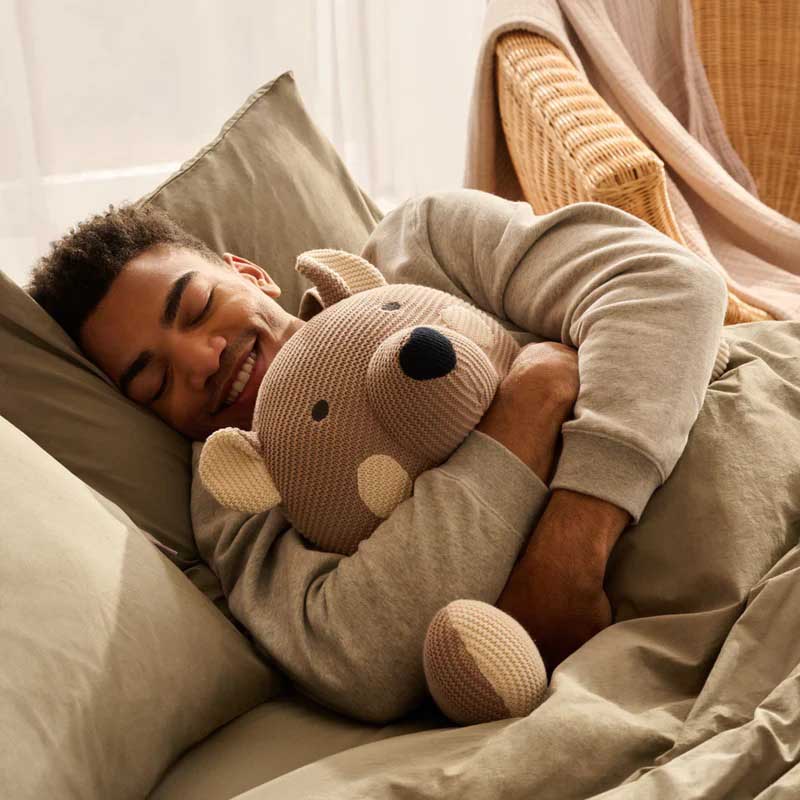
Humans form genuine emotional attachments to objects — particularly soft, face-having objects that trigger nurturing instincts. An emotionally engaged relationship with a comfort object reduces perceived stress independently of any physical mechanism: the presence of the object, and the positive associations it carries, provides psychological safety. This is why character design matters for stress relief plush: a character with a gentle, emotionally warm face creates a stronger comfort response than a generic shapeless soft object.
Design implication: Face expression is a therapeutic design parameter — calm, gentle, slightly sleepy expressions produce stronger comfort responses than excited or energetic ones
Stress Relief Plush Toy Formats — 6 Therapeutic Approaches
6 Stress Relief Formats with Different Therapeutic Mechanisms

Weighted Plush Toy
Mechanism: Deep pressure stimulation — weight-based calming
Target: Adults with anxiety, ADHD, sensory processing differences
Key design: Glass bead fill calibrated to 10% body weight guideline; even weight distribution
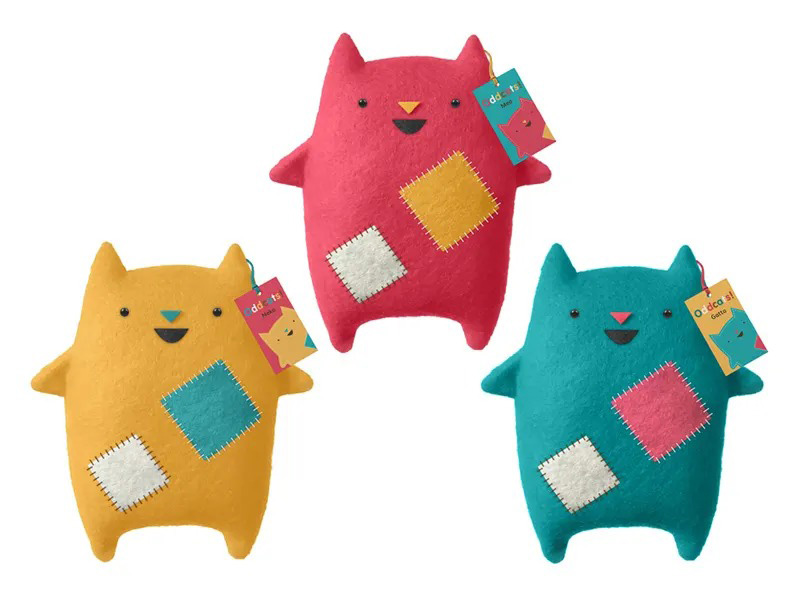
Squishy / Squeezy Plush
Mechanism: Proprioceptive input — squeeze-and-release tactile engagement
Target: Desk stress relief, fidget use, general anxiety
Key design: Memory foam or specialized fill for satisfying compress-and-rebound; durable seams

Ultra-Soft Comfort Character
Mechanism: Tactile comfort and emotional attachment
Target: Adults seeking comfort objects, emotional support plush
Key design: Minky or premium fabric; emotionally warm face design; huggable proportions
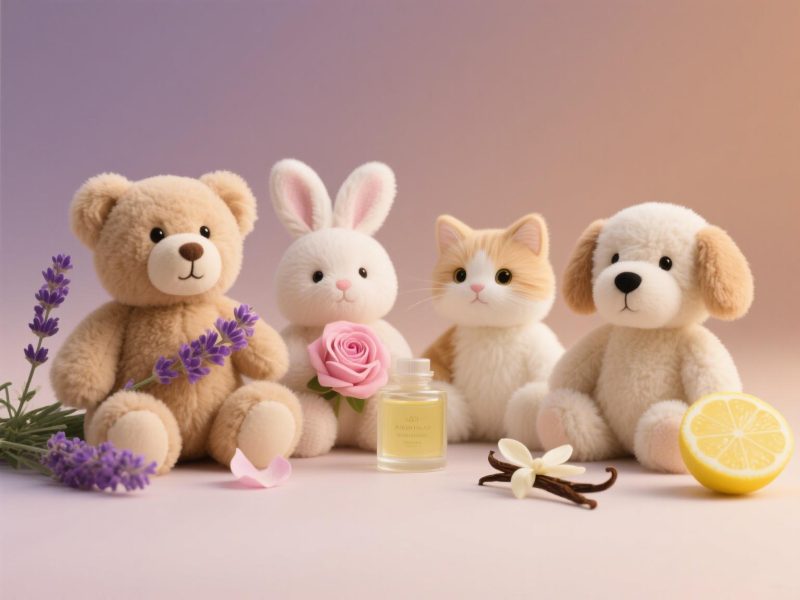
Scented Plush
Mechanism: Olfactory calming — aromatherapy via fabric or insert
Target: Anxiety relief, sleep support
Key design: Scent insert pocket; fabric that allows scent renewal; lavender or chamomile standard

Heated / Microwaveable Plush
Mechanism: Thermotherapy — warmth for muscle tension and comfort
Target: Stress + physical tension, sleep support
Key design: Heat-safe materials throughout; grain fill heat retention; washable outer cover

Sensory / Fidget Plush
Mechanism: Multiple tactile inputs — textures, sounds, movable elements
Target: Sensory processing, ADHD, autism spectrum
Key design: Multiple fabric textures; safe crinkle/rattle elements; no sharp edges
Weighted Plush Toys — Engineering the Therapeutic Weight
Weight Specification and Glass Bead Engineering
Weight Specification Guidelines
The occupational therapy guideline for weighted products is approximately 10% of the user’s body weight — though this is a starting guideline, not a medical prescription, and individual preferences vary significantly. For a plush toy intended for general adult use, KINWIN recommends a weight range of 500g-1.5kg depending on product size and intended use context.
Small (15-20cm)
300-600g · Desk accessory, palm-held stress relief
Fill: Glass beads in sealed inner compartment
Standard (20-30cm)
500g-1.0kg · General comfort, lap use, hugging
Fill: Glass beads distributed across body sections
Large (30-45cm)
800g-1.5kg · Full hug comfort, sleep companion
Fill: Glass beads in baffled inner lining
Body Pillow (100cm+)
1.5-3.0kg · Sleep companion, full-body comfort
Fill: Combined glass beads + standard fill for comfort
Glass Bead Fill — Material and Safety
- Inner bead compartment: glass beads contained in a sewn inner pouch or baffled liner, not loose within the main body cavity — preventing bead contact with outer pile fabric and eliminating loose bead risk if outer seam fails
- Compartment seam integrity: inner bead compartment sewn with higher stitch density than standard plush and reinforced at all stress points — bead containment is the critical safety requirement
- Washing compatibility: glass bead fill is machine-washable and does not absorb water — weighted plush with glass bead fill can be washed without weight or structural change
- Age grading: KINWIN’s standard weighted plush programs are designed and marketed for adult use (14+ at minimum, typically 18+) with appropriate labeling
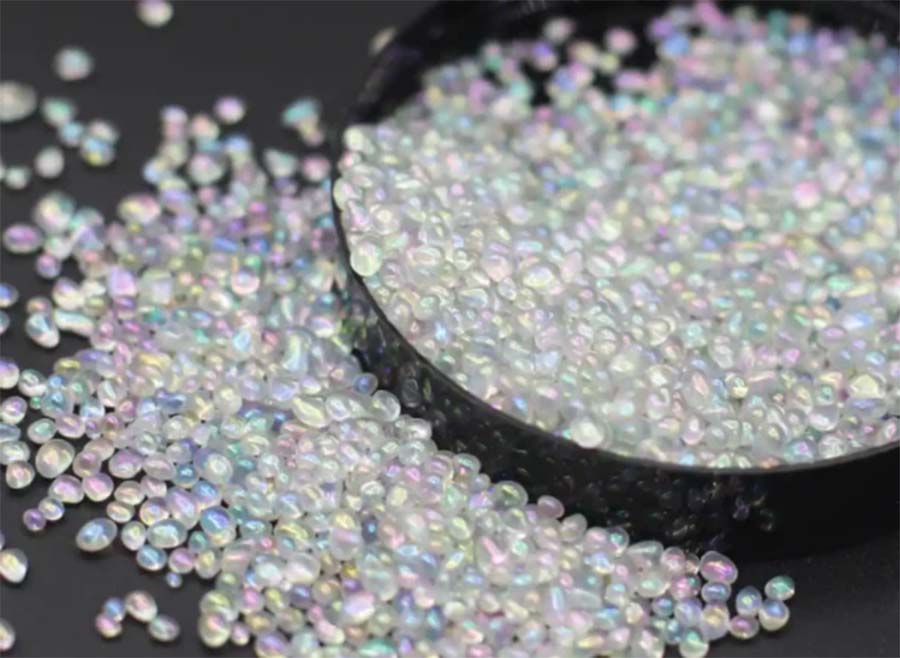

Squishy and Squeezy Plush — 5 Fill Materials Compared
Fill Material Comparison for Squishy Stress Relief Plush
Squishy stress relief plush toys work through a different mechanism than weighted plush — the therapeutic benefit comes from the active compression and release cycle, not from passive weight. The satisfying ‘squeeze’ requires specific fill material properties that standard PP cotton does not provide.
Memory Foam
Feel: Slow, dense compression — deeply satisfying · Rebound: Slow — 3-8 seconds
Durability: Excellent — retains properties long-term · Best for: Premium stress relief, therapeutic use
Slow-Rebound Polyurethane
Feel: Medium compression, slightly slower than standard · Rebound: Medium — 1-3 seconds
Durability: Very good · Best for: Mid-range stress relief plush
High-Density PP Cotton
Feel: Firmer squeeze, quick rebound · Rebound: Fast — under 1 second
Durability: Good · Best for: Budget stress relief; general comfort
TPR (Thermoplastic Rubber) Core
Feel: Very firm, rubbery squeeze · Rebound: Immediate — elastic
Durability: Excellent · Best for: Desk squeeze toys; palm-sized formats
Gel Bead Fill
Feel: Fluid, conforming — unique sensation · Rebound: Medium
Durability: Good with intact containment · Best for: Sensory novelty; specialty formats

Memory foam is KINWIN’s most-requested fill for premium squishy stress relief plush — the slow compression and slow rebound (3-8 seconds) creates a uniquely satisfying tactile experience that is genuinely different from any PP cotton plush. Memory foam fill adds production complexity but produces a product that is meaningfully differentiated from any standard plush on the market.
Designing for Maximum Therapeutic Effectiveness
Face Design and Size Guidelines for Therapeutic Use
Stress relief plush that is also beautifully designed — a character with genuine emotional warmth and excellent material quality — produces stronger therapeutic effects than an undifferentiated squeezy blob. The design decisions that maximize therapeutic effectiveness are not separate from the decisions that maximize commercial appeal.
Face Design for Emotional Safety
- Drooping or half-closed eyes: convey peaceful relaxation — particularly effective for sleep-support plush
- Gentle upward curve for the mouth: a small, quiet smile communicates contentment without excitement
- Soft color palette: muted pastels, warm neutrals, lavender and sage tones — color psychology supports calming design intent
- Rounded, soft silhouette: no sharp angles, no spiky features — the character’s entire shape should communicate softness and safety
- Proportions: slightly larger head, compact body — the nurturing proportion ratio that triggers care responses
Size for Therapeutic Use Context
- Desk use / palm-held: 12-20cm — large enough to squeeze meaningfully, small enough to keep on a desk without dominating the space
- Hugging / full-contact comfort: 25-40cm — large enough to hug but not so large that it becomes unwieldy
- Sleep companion: 30-50cm — sized for comfortable cuddling through a sleep period

The Stress Relief Plush Market — 7 Buyer Segments
Stress Relief Plush Buyer Segments — Motivation, Format and Channel
Adult Self-Purchaser
Motivation: Personal stress / anxiety management
Format: Weighted or squishy character · Channel: DTC, Amazon
Gift Purchaser (for adult)
Motivation: Thoughtful wellbeing gift
Format: Premium comfort character, gift box · Channel: DTC, gift retail
Corporate Wellness Program
Motivation: Employee wellbeing initiative
Format: Branded stress relief character · Channel: B2B direct
Mental Health Brand
Motivation: Therapeutic product line
Format: Range of formats — character-based · Channel: DTC, health retail
Healthcare / Therapy Practice
Motivation: Patient comfort, therapy tool
Format: Soft, safe comfort character · Channel: B2B, healthcare
Subscription Wellness Box
Motivation: Monthly self-care curation
Format: Compact squishy or comfort character · Channel: B2B subscription
Children with Sensory Needs
Motivation: Sensory processing support, emotional regulation
Format: Sensory plush, weighted small format · Channel: Specialist retail, healthcare
Branding Stress Relief Plush — Positioning in the Wellness Market
Positioning as a Wellness Product, Not a Toy
Stress relief plush toys occupy the intersection of the toy market and the wellness product market — and how they are branded determines which market’s dynamics they benefit from. Positioned as a toy, they compete on cuteness and price. Positioned as a wellness product, they compete on efficacy, quality, and therapeutic credibility — a much more defensible market position.
- Therapeutic language on hang tag and packaging: reference the specific mechanism — deep pressure stimulation, tactile anxiety relief, proprioceptive input — gives the product credibility beyond ‘cute soft toy’
- Material story: OEKO-TEX certification, glass bead fill composition, memory foam specification — the material quality is part of the therapeutic story
- Character personality: a named character with a wellness-oriented personality (calm, grounding, reassuring) creates an emotional framework for the therapeutic relationship
- Gift positioning: stress relief plush are among the most well-received adult wellness gifts — packaging that communicates ‘thoughtful self-care gift’ rather than ‘toy’ unlocks the gifting market
- Community building: users of stress relief plush often share their relationship with the product — social content about comfort objects has strong organic reach among adult audiences
Why Wellness Brands Choose KINWIN for Stress Relief Plush
Why Wellness Brands Choose KINWIN for Stress Relief Plush
✓ Weighted plush expertise: glass bead fill in sealed inner compartments; gram-weight calibration per body section; even weight distribution engineering
✓ Memory foam fill option: foam-cut character construction for premium squishy stress relief products
✓ Multiple therapeutic format capability: weighted, squishy, scented, heated, sensory — all manufactured in-house
✓ OEKO-TEX Standard 100 on all materials — safe for prolonged skin contact in therapeutic adult use
✓ Face design consultation for therapeutic emotional expression — calm, grounding, gentle
✓ CE and ASTM certification — stress relief plush entering toy-classified channels fully compliant
✓ Premium fabric options: Minky, Sherpa, Crystal Super Soft — ultra-tactile fabrics for maximum comfort
✓ Custom character development for original wellness brand mascots
✓ Corporate wellness program supply: branded stress relief plush for employee wellbeing initiatives
✓ Gift box packaging options for retail and gifting channel positioning
✓ MOQ 500 pieces — wellness brand programs accessible at launch scale
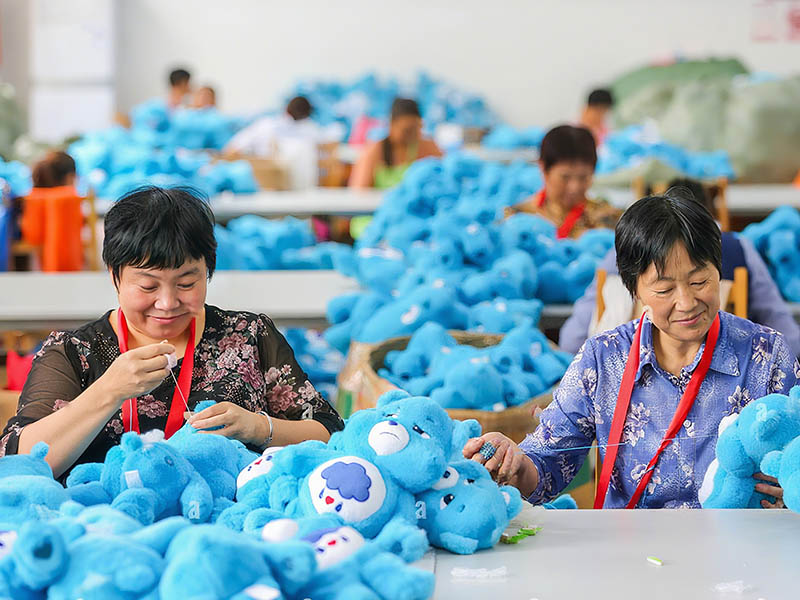
Stress relief plush that works is not an accident of softness — it is an engineering outcome and a design intention. KINWIN manufactures both.
Frequently Asked Questions — Stress Relief Plush Toys
Frequently Asked Questions — Stress Relief Plush Toys
Q1. How heavy should a weighted stress relief plush toy be?
The occupational therapy guideline for weighted products is approximately 10% of the user’s body weight — for a typical adult this suggests 600g-900g. However, this guideline was developed primarily for weighted blankets and vests, not plush toys, and weighted plush toys are used differently: they are held, squeezed, and carried rather than worn. In practice, KINWIN’s most effective weighted stress relief plush programs use 500g-1.0kg for standard character formats (20-30cm), calibrated to feel substantial and grounding without becoming fatiguing to hold. The right weight for your specific product depends on its size, the intended use context (desk use vs sleep companion vs carry), and your target user profile. KINWIN provides fill weight samples during the development sampling process so clients can physically experience and approve the weight before production is confirmed — weight is a subjective sensory parameter that benefits from hands-on review rather than specification alone.
Q2. Is memory foam safe for plush toys — are there chemical concerns?
Standard polyurethane memory foam used in furniture and mattresses can contain VOCs (volatile organic compounds) and chemical additives that are not appropriate for close-contact products like plush toys. KINWIN sources memory foam specifically certified for toy and close-contact product use — CertiPUR-US certified foam (US standard) or equivalent EU-compliant foam formulations that meet restricted substance requirements for foam used in consumer products. The foam is also covered by the outer OEKO-TEX Standard 100 certified fabric, which provides an additional barrier. For stress relief plush where prolonged skin contact and face contact are expected, KINWIN applies the same chemical safety standards as any other plush toy material — OEKO-TEX certification where available, and verified restricted substance compliance as a minimum. The finished product undergoes the same EN71 Part 3 chemical migration testing as any other plush toy in the range.
Q3. Can KINWIN make a stress relief plush toy that is both weighted AND squishy?
Yes — combining glass bead weighting with a slow-rebound outer feel is achievable through a dual-layer construction approach. The inner structure contains the glass bead fill in a sealed compartment (providing the deep pressure weight), while the outer fill layer uses slow-rebound foam or a specific PP cotton density that provides a yielding, satisfying surface texture when squeezed. The result is a product that delivers the grounding sensation of weight when held passively and the tactile engagement of a satisfying squeeze when compressed. This construction is more complex than a single-fill weighted plush and adds production time and cost, but produces a product that simultaneously addresses both the passive and active therapeutic use cases — a genuinely differentiated stress relief product. KINWIN has developed dual-layer weighted-plus-squishy constructions for wellness brand clients and can provide samples of existing constructions for evaluation during the brief stage.
Q4. How do I market a stress relief plush toy without making unsupported medical claims?
This is an important regulatory consideration — stress relief plush toys are consumer products, not medical devices, and claims about therapeutic benefit must be positioned appropriately. The safe marketing approach: describe the mechanism accurately and specifically (‘glass bead fill for grounding weight sensation’, ‘memory foam for satisfying tactile engagement’) rather than making outcome claims (‘treats anxiety’, ‘cures stress’). Reference the sensory properties and the self-care context (‘designed for moments when you need a soft, grounding companion’) rather than clinical outcomes. Use language that positions the product as a self-care tool that the user chooses to use, rather than a treatment. KINWIN’s hang tag and packaging design guidance specifically addresses this distinction — we advise on language that communicates the product’s therapeutic quality accurately and compellingly without crossing into medical claim territory that would require device registration or clinical evidence substantiation.
Q5. Are stress relief plush toys classified as toys and subject to toy safety regulations?
This depends on the product’s labeling and intended use. If a stress relief plush toy is marketed for or accessible to children under 14, it is classified as a toy and subject to full toy safety regulations — EN71 (EU/UK), ASTM F963 (US), and applicable age-specific requirements. If a stress relief plush toy is explicitly marketed for adult use only (14+ or 18+), it may be classified as a general consumer product rather than a toy — which has different (though not necessarily less demanding) safety requirements in some markets. In practice, KINWIN recommends full toy safety testing (CE/EN71 or ASTM F963) for all stress relief plush programs regardless of intended age positioning, for several reasons: toys sold through retail channels may be purchased for children regardless of age labeling; the toy safety standards represent a comprehensive and well-established safety framework; and CE certification specifically is a commercial requirement for many retail buyers and marketplaces regardless of product classification. KINWIN provides full compliance documentation either way and advises on correct product classification for your specific program.
If You Can lmagine lt,We Will Create lt!
1.Tell Us What You Need
Tell us as specific as possible of your needs and share your idea.
2.Get Solution & Quote
We will work on the best solution according to yourrequirements,the specific quote will be provided within 24 hours.
3.Approve for Mass Production
We will start mass production after getting your approval.
