
PP Cotton Stuffed Animals — Fill Material Guide for Custom Plush Toy Manufacturing
PP Cotton Stuffed Animals — Fill Material Guide for Custom Plush Toy Manufacturing
PP Cotton Fill · Density Specifications · Grade Selection · Hypoallergenic · OEKO-TEX · Section-Specific Targeting · MOQ 500 pcs
PP cotton — polypropylene or polyester fiber fill — is the standard filling material for the vast majority of the world’s stuffed animals. Its dominance is not accidental: PP cotton is hypoallergenic, lightweight, resilient, washable, non-toxic, available in certified forms, and can be specified at a range of densities that determine the finished toy’s feel, shape, and quality perception. Understanding PP cotton is understanding the single most important quality variable inside every stuffed animal.
KINWIN uses OEKO-TEX Standard 100 certified PP cotton fill exclusively — sourced from certified suppliers who demonstrate chemical compliance and maintain quality consistency across production batches. Fill density is specified per body section on every KINWIN production order, and filling is monitored by weight at each production station. This page explains what PP cotton is, how it behaves at different densities, how KINWIN specifies it, and why it matters for the quality of the finished product.
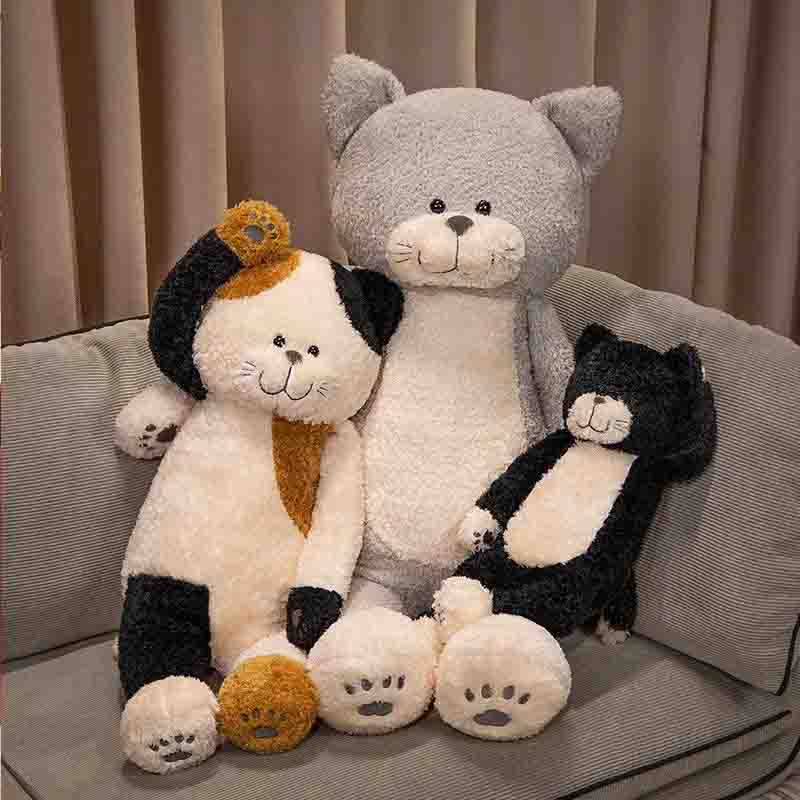
What PP Cotton Actually Is — And How It Compares
PP Cotton vs Natural Fills — 7 Property Comparison
Despite being called ‘cotton’, PP cotton contains no natural cotton fiber. The name is a manufacturing industry convention. PP cotton is a fine, crimped synthetic fiber — either polypropylene or, more commonly in plush toy manufacturing, polyester (PET) — processed into a loose, fluffy batting material resembling cotton wool in appearance and texture.
Fiber Origin
PP Cotton: Synthetic — petroleum-derived polyester
Natural Cotton: Natural — cotton plant · Wool: Natural — sheep wool
Hypoallergenic
PP Cotton: Yes — no natural allergens
Natural Cotton: No — dust mite risk, natural allergens · Wool: No — wool allergens common
Washability
PP Cotton: Excellent — machine washable, dries quickly
Natural Cotton: Good — may shrink or clump · Wool: Poor — felts and shrinks
Loft Retention
PP Cotton: Good — recovers after compression
Natural Cotton: Poor — compresses permanently · Wool: Good — naturally resilient
Weight
PP Cotton: Very light — low density possible
Natural Cotton: Heavier than polyester · Wool: Moderate weight
OEKO-TEX Certifiable
PP Cotton: Yes — Standard 100 available
Natural Cotton: Yes — GOTS for organic · Wool: Yes — GOTS for organic
Cost
PP Cotton: Low — most economical fill option
Natural Cotton: Higher · Wool: Highest
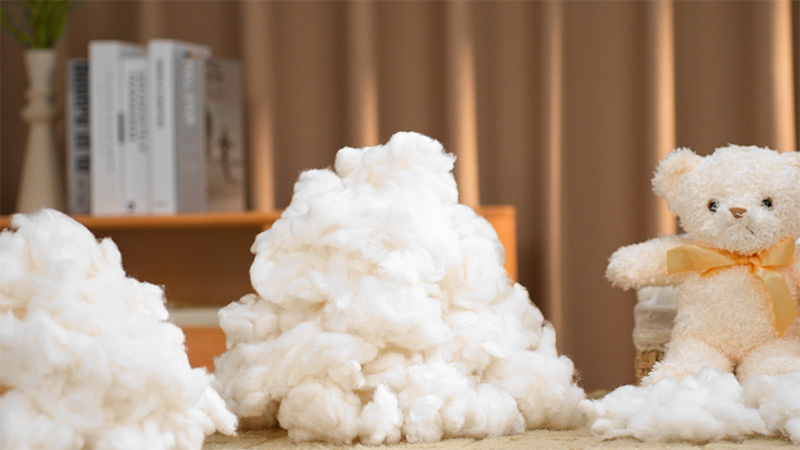
Fill Density — The Most Important Quality Variable
The Density Spectrum — 7 Levels from Underfilled to Overfilled
Fill density is the single variable that most affects the perceived quality of a stuffed animal. A well-designed character with excellent fabric in an incorrect fill density feels wrong — either insubstantial and cheap, or overstuffed and stiff. Getting fill density right is not a matter of ‘as full as possible’ — it is a matter of specifying the correct density for the product’s intended feel, posture, and use.
Very Low (Underfilled)
Feel: Limp, floppy — cannot hold shape
Shape: Collapses — cannot sit or stand
Applications: Never recommended — quality failure
Low
Feel: Soft, very squishy — compresses with minimal resistance
Shape: Holds basic shape but cannot stand
Applications: Some therapeutic / comfort applications
Medium-Low
Feel: Soft and yielding — pleasant squeeze, recovers slowly
Shape: Sits stably; limbs may droop slightly
Applications: Plush pillows, comfort-oriented characters
Medium
Feel: Balanced — firm enough to hold shape, soft enough to squeeze
Shape: Sits and stands stably; limbs maintain position
Applications: Standard retail plush — most common specification
Medium-High
Feel: Substantial — noticeable resistance when squeezed
Shape: Excellent shape retention; good posture for photography
Applications: Premium retail, display-oriented characters
High
Feel: Firm — significant resistance; feels dense and solid
Shape: Maintains shape under pressure; excellent posture
Applications: Display characters, photography samples, claw machine prizes
Overfilled
Feel: Hard — minimal yield; uncomfortable to squeeze
Shape: Fabric pulls tight; seam stress; shape distortion
Applications: Quality failure — avoid
The correct density for most retail plush toys is medium to medium-high — firm enough to maintain the character’s intended shape for photography and display, soft enough to squeeze comfortably when held. The specific target within this range depends on the character’s intended use: a pillow character needs lower density for comfort; a display character needs higher density for shape retention.
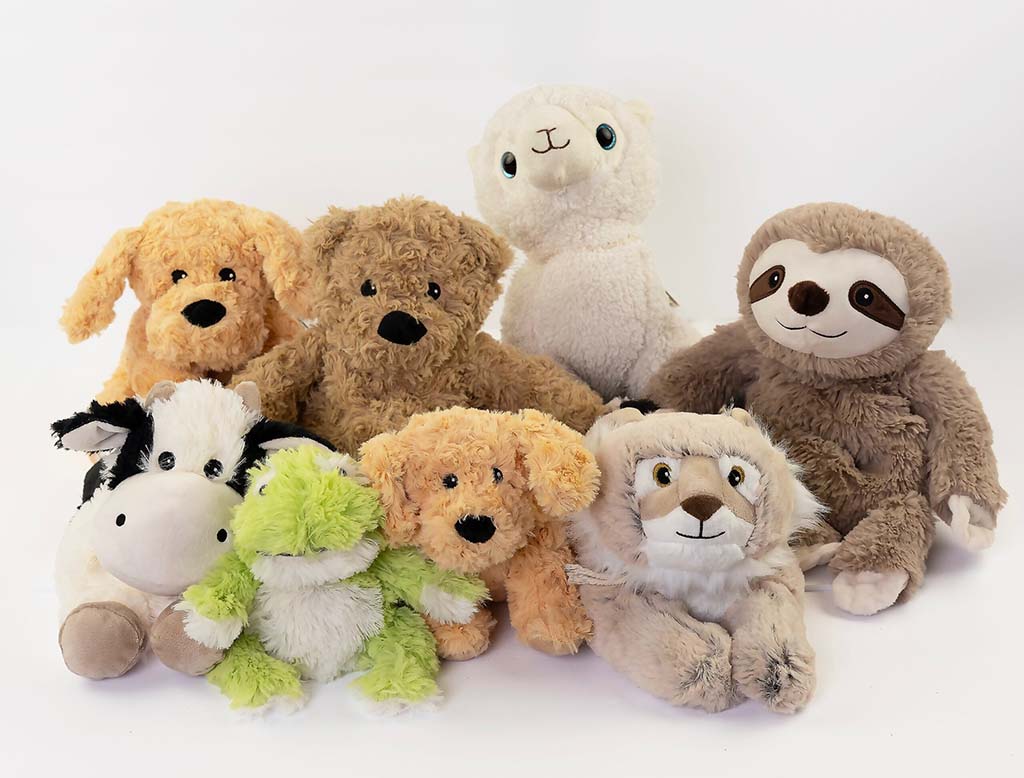
Section-Specific Fill Density — Why One Density Doesn’t Fit All
7 Body Sections with Different Fill Requirements
A stuffed animal is not a single uniform cavity filled to one density. Different body sections have different shape requirements, different gravity loads, and different tactile expectations. Filling the entire toy to a single density produces a product where some sections are incorrectly dense relative to their function.
KINWIN specifies fill density by section on every production order, with gram-weight targets per body section that account for section volume, shape requirements, and the effect of gravity on the stuffed form. The filling operation at each station is weight-monitored, not left to worker judgment.
Head
Priority: Shape retention — must be round and consistent · Target: Medium-high
Why: Head roundness is the most visible quality indicator; sags under gravity if underfilled
Face Panel
Priority: Embroidery surface — must be taut · Target: Medium-high (head fill achieves this)
Why: Loose face panel causes embroidery to pucker and distort
Body / Torso
Priority: Balance of posture + huggability · Target: Medium
Why: Must support upright posture without sacrificing squeeze comfort
Arms
Priority: Articulation — should move without flopping · Target: Medium
Why: Too light = floppy arms; too firm = rigid, uncomfortable
Legs / Base
Priority: Stability — supports sitting or standing posture · Target: Medium-high at base
Why: Weight-bearing sections need more support for posture stability
Ears
Priority: Character-defining shape · Target: Medium to medium-high
Why: Ears are often the character’s most distinctive feature; must hold shape
Tail
Priority: Shape and articulation · Target: Medium-low to medium
Why: Tails should have some movement and flexibility
PP Cotton Grades — What Affects Fill Quality
7 Quality Indicators — Higher Grade vs Lower Grade PP Cotton
Not all PP cotton is identical. The quality of the fiber — its crimp, its diameter, its loft, and its chemical treatment — affects how it behaves in a finished toy. Lower-grade fill compresses faster, clumps more easily, and produces a toy that loses its shape and feel more quickly with use and washing.
Fiber Crimp
Higher grade: More pronounced, consistent crimp — better loft and recovery
Lower grade: Less crimp — faster compression, poorer loft recovery
Fiber Diameter
Higher grade: Finer fibers — softer feel, higher perceived quality
Lower grade: Coarser fibers — rougher texture through fabric
Silicon Treatment
Higher grade: Light silicone finish — prevents fiber clumping, maintains loft
Lower grade: No treatment — clumps after washing or compression
OEKO-TEX Certification
Higher grade: Standard 100 certified — verified chemical safety
Lower grade: Uncertified — chemical compliance unknown
Batch Consistency
Higher grade: Consistent loft and density batch to batch
Lower grade: Variable — density inconsistency between production runs
Post-Wash Performance
Higher grade: Recovers loft after washing
Lower grade: Compresses and clumps after washing
Color Stability
Higher grade: Clean white — no yellow discoloration
Lower grade: May yellow over time
KINWIN sources fill exclusively from OEKO-TEX Standard 100 certified suppliers whose material meets our minimum grade specification. For clients where fill quality is a specific concern — premium market positioning, products intended for prolonged use, or baby products — KINWIN can specify premium-grade fill with enhanced crimp, silicone treatment, and documented batch consistency.
PP Cotton and Washability
Washability — How PP Cotton Performs Through Repeated Washing
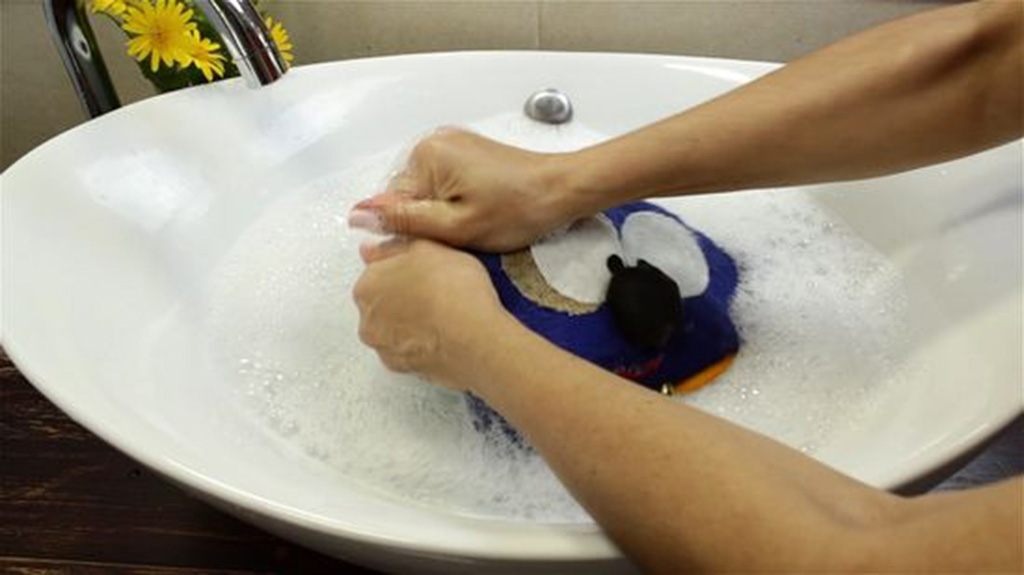
PP cotton is inherently washable — polyester fiber does not absorb water, does not shrink, and does not felt or mat in the way that natural fiber fills do. A correctly filled stuffed animal with good-quality PP cotton can be machine washed and will recover its loft after drying. However, washing performance is fill-grade dependent.
- Machine washing at 30-40°C is appropriate for most PP cotton filled plush toys — higher temperatures accelerate fiber compression
- Tumble drying on low heat helps restore loft after washing — the heat softens the fiber crimp and allows it to re-expand
- Air drying is slower but preserves loft equally well when the toy is periodically shaken during drying
- For baby comfort plush requiring frequent washing, KINWIN specifies premium-grade silicone-treated fill and reinforced seam construction to withstand repeated thermal cycling
Recycled Fiber Fill — The Eco Alternative to Virgin PP Cotton
GRS-Certified Recycled Polyester Fiber Fill
For brands with sustainability positioning, GRS-certified recycled polyester fiber fill is available as a direct functional substitute for virgin PP cotton. Recycled fill is produced from post-consumer recycled PET materials — primarily plastic bottles — processed into polyester fiber that is functionally equivalent to virgin PP cotton at matched grade and density.
- GRS (Global Recycled Standard) certification verifies the recycled content chain of custody — allowing brands to make substantiated ‘made with recycled materials’ claims
- Functional equivalence: loft, density, washability, and feel are comparable to virgin fill at matched grade specifications
- OEKO-TEX Standard 100 certification available for recycled fill — chemical safety is not compromised by recycled origin
- GRS transaction certificates provided with each order for marketing claim substantiation
- Slightly higher cost than virgin fill — typically a modest premium at standard order volumes
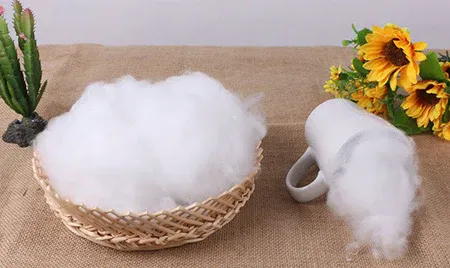
KINWIN offers recycled fiber fill for all custom plush programs as a material option. For eco-positioned brands, combining RPET pile fabric with GRS recycled fill creates a fully recycled bill of materials — with all the certification to substantiate it.
How KINWIN Controls Fill Density in Production
Fill Density Control — 6-Point Production Quality System
Fill density control is one of the most commonly under-managed quality parameters in plush toy manufacturing. Without specific weight targets and measurement, filling becomes worker-dependent — and worker judgment varies, producing inconsistency across units and between production runs. KINWIN’s fill control system eliminates this variability.
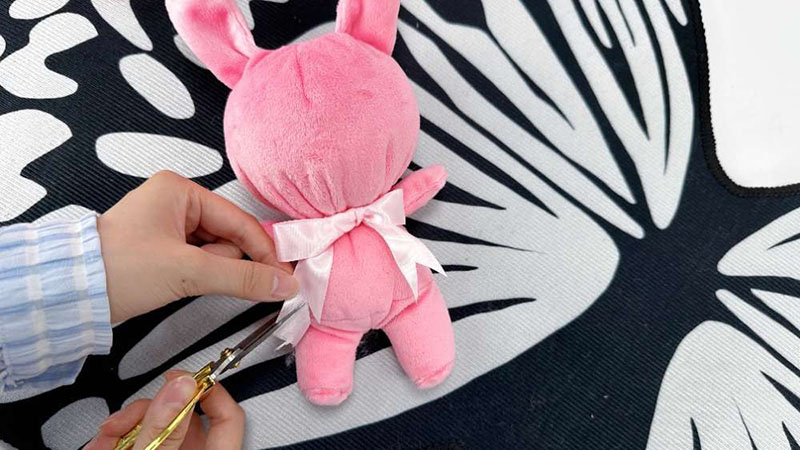
- Section-specific gram-weight targets: every body section has a documented target weight specified in the tech pack — not a vague description like ‘soft’ or ‘full’
- Calibrated scales at filling stations: all filling stations are equipped with calibrated scales that workers use to weigh fill before inserting — not estimate by feel
- Golden sample as tactile reference: the approved golden sample is physically present on the production floor as a reference for the correct feel — workers compare each unit against the reference
- In-process inspection: fill density is checked at the semi-finished inspection stage before closing seams — corrections can be made before the unit is completed
- Final inspection squeeze check: each finished unit passes a squeeze check against the golden sample standard during final inspection
- Batch consistency documentation: fill weight records are maintained for each production run — providing traceability if a batch consistency issue is identified
Why Brands Choose KINWIN for PP Cotton Stuffed Animal Manufacturing
Why Brands Choose KINWIN for PP Cotton Stuffed Animal Manufacturing
✓ OEKO-TEX Standard 100 certified fill — chemical safety verified for all age grades including under-3
✓ Section-specific gram-weight fill targeting — every body section specified, not left to worker judgment
✓ Calibrated scales at all filling stations — weight-monitored filling, not volume-estimated
✓ Premium fill grade sourcing — loft-retaining, silicone-treated fiber for post-wash performance
✓ GRS recycled fiber fill option — for eco-positioned brands with sustainability claims to substantiate
✓ Golden sample fill reference on production floor — tactile consistency benchmark for every unit
✓ 100% in-process and final fill inspection — density failures caught before units are completed
✓ Fill specification documented in tech pack and retained indefinitely — reorders consistent with original
✓ Multiple fill density variants for same character — retail, display, therapeutic versions from same pattern
✓ 17+ years fill engineering experience across all character types, sizes, and density requirements
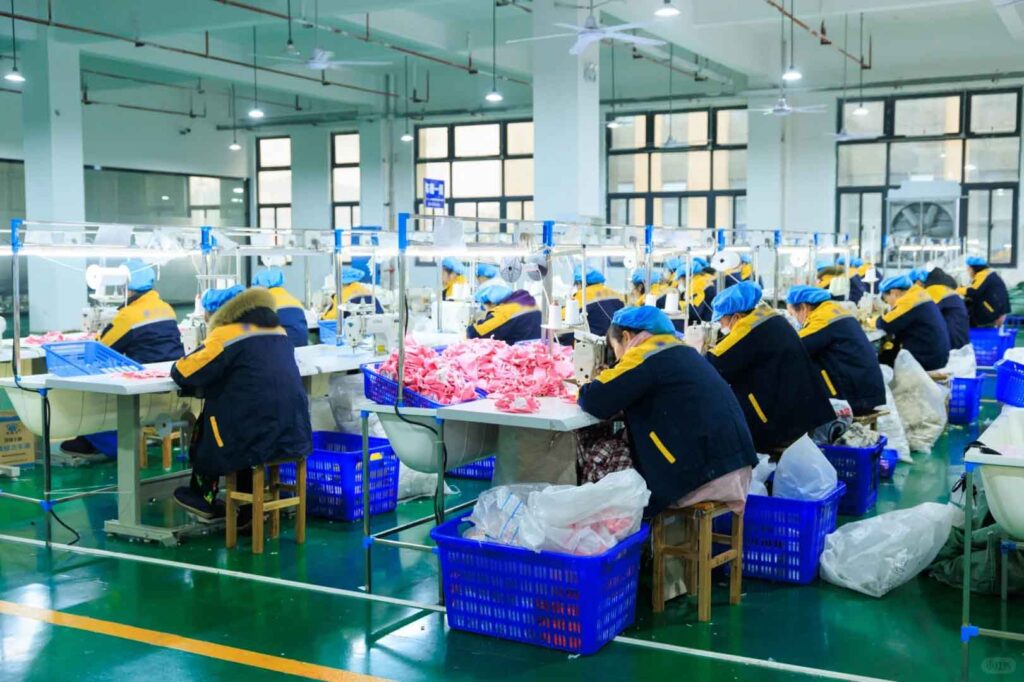
The quality of a stuffed animal is felt before it is seen. PP cotton fill density is what that feel is made of — and KINWIN engineers it precisely.
Frequently Asked Questions — PP Cotton Stuffed Animals
Frequently Asked Questions — PP Cotton Stuffed Animals
Q1. How do I specify the correct fill density for my custom stuffed animal?
The best approach is to use physical reference samples rather than density descriptions alone. During KINWIN’s sampling process, the design alignment document specifies the target fill density in gram-weight terms for each body section — but gram weights are an abstraction until you hold the physical result. KINWIN produces the first prototype at the specified density, and the fill feel is one of the explicit review points during sample evaluation. If the fill is too light or too firm, you provide feedback and KINWIN adjusts the gram-weight targets for the revision. This iterative, hands-on approach produces better results than attempting to specify fill density in writing before any physical sample exists. For clients who have an existing product they want to match or exceed, sending a physical sample of that product to KINWIN allows our team to assess and match the fill density directly — a more reliable specification method than any written description.
Q2. Why does PP cotton fill compress over time and how can this be minimized?
PP cotton fill compresses over time due to the repeated compression and expansion cycles of normal use — each squeeze and release cycle gradually reduces the fiber’s ability to fully recover its original loft. This is an inherent property of any fiber fill, including high-grade PP cotton. The rate of compression depends on fill grade (higher-grade, silicone-treated fibers compress more slowly and recover better), initial density (toys filled at medium density compress to a comfortable soft feel; toys initially overfilled compress to what would have been the correct medium density), and use intensity (toys that are squeezed, slept on, or sat on frequently compress faster than display toys). KINWIN minimizes compression rate by specifying premium-grade fill for products where long-term shape retention is a priority, and by targeting initial density at medium-high rather than maximum — a toy that starts slightly firm and softens with use is more commercially satisfying than one that starts correct and becomes limp. For products where fill compression over time is a specific concern (baby comfort plush, long-use therapeutic plush), KINWIN can advise on fill approaches that maintain feel for longer.
Q3. Is PP cotton fill safe for babies and very young children?
OEKO-TEX Standard 100 Product Class I certified PP cotton fill — which is KINWIN’s standard for all baby and under-3 plush products — is verified safe for direct contact with infant skin and for the mouthing behavior of infants. The certification tests for over 100 harmful substances including heavy metals, azo dyes, formaldehyde, and pesticide residues at the strictest limits calibrated for infant sensitivity. PP cotton fill does not contain natural allergens (unlike wool or natural cotton), does not harbor dust mites in the way that natural fills can, and is hypoallergenic by composition. The primary safety consideration for fill in baby plush is not the fill material itself but the containment — the fill must remain inside the toy even under the most extreme foreseeable abuse testing, so that an infant cannot access the loose fiber. KINWIN’s seam construction for baby plush is engineered specifically to maintain fill containment under EN71 under-3 abuse testing standards.
Q4. What is the difference between PP cotton and polyester fiberfill sold in craft stores?
Craft store polyester fiberfill and industrial PP cotton fill used in plush toy manufacturing are related materials — both are polyester fiber in a fluffy batting form — but they differ significantly in grade, specification, and certification. Craft store fill is typically ungraded, uncertified, inconsistent between batches, and not tested to toy safety chemical standards. Industrial PP cotton fill used by KINWIN is OEKO-TEX Standard 100 certified, sourced from approved suppliers with documented batch consistency, specified to a defined fiber grade, and subject to quality controls that craft fill is not. For commercial plush toy manufacturing that must meet EN71 and ASTM safety standards and produce consistent results across production runs, industrial-grade certified fill is the correct material — not craft store fill, which is appropriate only for one-off handmade items where safety certification is not required.
Q5. Can the same character design be produced with different fill densities for different markets or applications?
Yes — the same character pattern and design can be specified at different fill densities for different applications, with separate golden samples for each density variant. Common examples: a standard retail version at medium density for general market sale, and a higher-density photography or display version for product photography samples and trade show display; a standard fill version for general retail and a lower-density version for a therapeutic or comfort-oriented market where softer feel is the priority; or the same character in a children’s standard version and an adult collector premium version at different densities reflecting different quality positioning. Each density variant requires its own golden sample approval, and the fill specification for each variant is documented separately in KINWIN’s production records. This allows a brand to manage a multi-application character program with consistent construction quality across variants while adjusting the tactile feel to suit each application’s specific requirements.
If You Can lmagine lt,We Will Create lt!
1.Tell Us What You Need
Tell us as specific as possible of your needs and share your idea.
2.Get Solution & Quote
We will work on the best solution according to yourrequirements,the specific quote will be provided within 24 hours.
3.Approve for Mass Production
We will start mass production after getting your approval.