
Plush Toys for the Educational Market — Custom Learning Tools, Classroom Characters & STEM Companions
Plush Toys for the Educational Market — Custom Learning Tools, Classroom Characters & STEM Companions
Curriculum-Linked Characters · Classroom Mascots · Language Learning · STEM Companions · OEKO-TEX · EN71/ASTM · MOQ 500 pcs
Educational plush toys occupy a unique intersection between the toy market and the education sector — products that are purchased by schools, educational publishers, learning toy brands, and families specifically because they support learning outcomes, not just because they are appealing to children. This dual-purpose positioning creates a distinct commercial dynamic: educational plush must satisfy both the child’s emotional engagement (it must be a compelling, likeable character) and the educator’s or parent’s learning objective (it must credibly support the educational purpose it claims to serve).
KINWIN manufactures custom educational plush toys for educational publishers, edtech companies, classroom supply brands, STEM toy brands, language learning programs, early childhood development brands, and school curriculum suppliers. Our educational plush programs are designed around the specific learning contexts they serve — not adapted from standard toy designs.
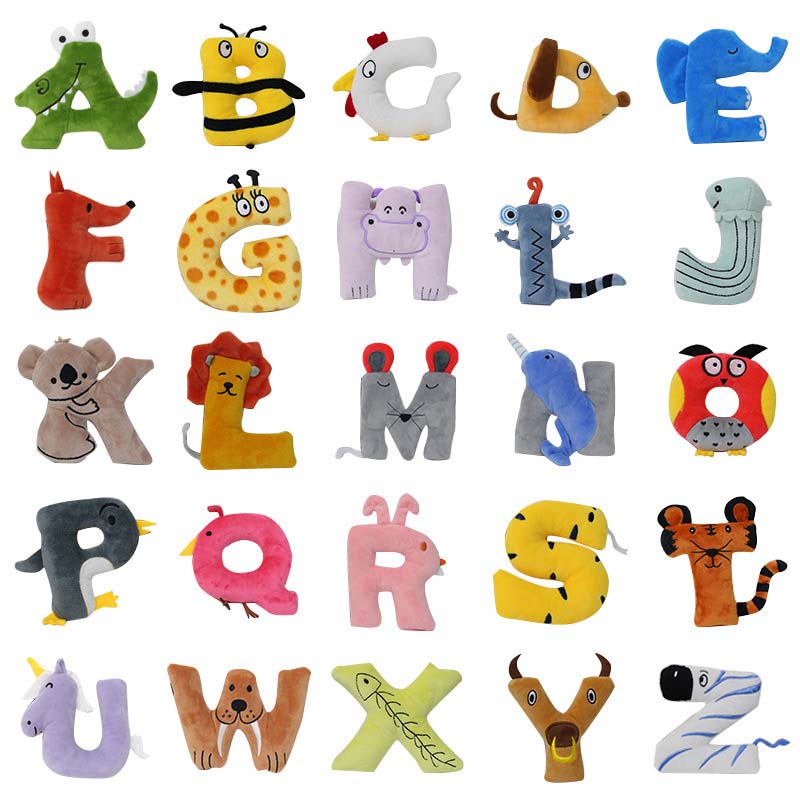
Why Plush Toys Work as Educational Tools
3 Developmental Psychology Mechanisms — Validated in Classroom Research
The effectiveness of plush toys in educational contexts is grounded in developmental psychology principles that have been consistently validated through classroom research. Understanding these mechanisms allows educational brands to design plush characters that are genuinely educationally effective rather than simply educational in label.
Emotional Engagement Enhances Learning
Children learn more effectively when they are emotionally engaged. A character they find appealing — a plush companion that has a name, a personality, and a relationship with the child — creates emotional engagement that enhances attention, motivation, and retention. Educational concepts introduced through or with a beloved character benefit from the emotional context that character provides. This is why educational television has always featured character mascots: the character is the engagement vehicle, and the learning content is the passenger.
Design implication: Character design is an educational design decision — warmth, accessibility, and personality are educational effectiveness parameters, not just aesthetic preferences
Tactile Learning and Kinesthetic Development
Handling a soft object during learning activities provides proprioceptive grounding that supports focus and attention — particularly for younger children and children with sensory processing differences. A classroom plush mascot that children can hold during circle time, story sessions, or individual learning moments provides a tactile anchor that helps maintain engagement during sustained attention tasks.
Design implication: Material selection (fabric softness, fill density, weight) is part of the educational design — the tactile experience of the plush is functionally significant
Social Learning Through Play
Plush characters naturally invite role-play, storytelling, and social interaction — all of which are well-established learning modalities. A classroom character that students take turns bringing home, that students write stories about, or that represents a curriculum concept, leverages play-based learning in ways that worksheets and digital content cannot replicate. The physical, holdable presence of a plush character in the learning environment creates interaction opportunities that purely digital or printed educational materials do not.
Design implication: Program design — how the plush is used in classroom activities — determines educational effectiveness as much as product design
Educational Plush Applications — How Different Programs Use Them
5 Educational Plush Formats and Their Design Requirements
Classroom Mascot Characters
Classroom Mascot Characters
The classroom mascot plush is the most established educational plush format — a character that lives in the classroom, has a name and personality, participates in classroom activities, and goes home with students on a rotating basis. Effective classroom mascot plush programs combine a compelling character design with a structured program — a journal the student completes when the mascot visits, reading materials about the character, or curriculum activities featuring the character.
- Character design: the mascot must be appealing to the full age range of the classroom — typically a broadly appealing animal or creature character with a warm, accessible face
- Durability: classroom mascots are handled repeatedly by many children over a full school year — construction must withstand this use without seam failure or fill compression
- Washability: classroom mascots require machine washing between home visits — reinforced seams, color-fast embroidery, and loft-retaining fill are essential
- Size: 25-35cm is optimal for classroom mascots — large enough to be clearly visible and huggable, small enough to fit in a school bag for home visits
- Custom curriculum branding: the mascot’s design can incorporate curriculum-specific visual elements, school colors, or subject-specific themes
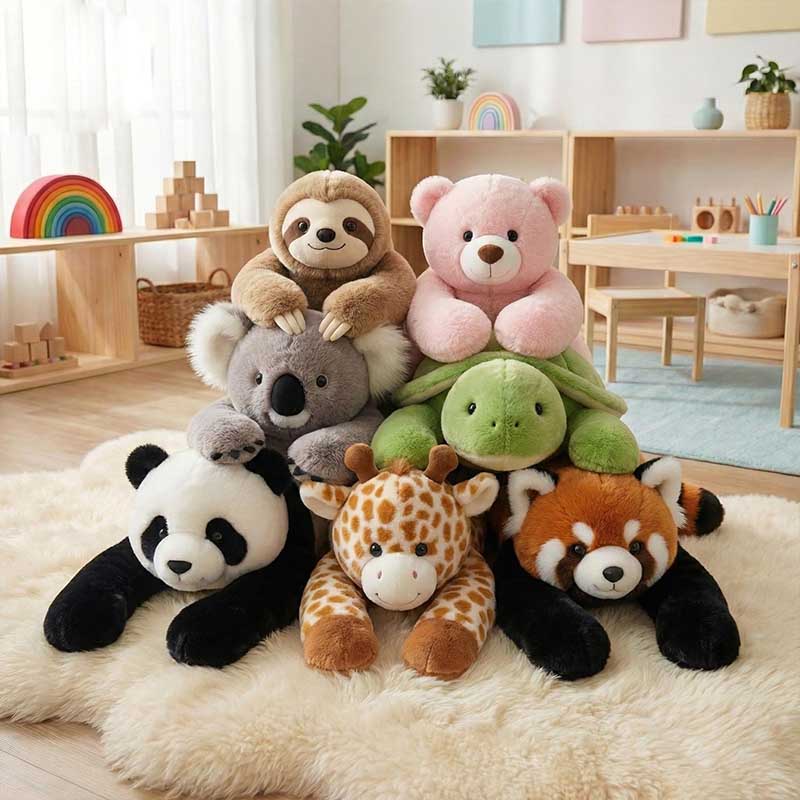

STEM and Science Education Characters
STEM and Science Education Characters
STEM-positioned educational plush represents a growing category — characters designed to embody or represent science, technology, engineering, or mathematics concepts for early learners. From plush versions of scientific organisms (cells, bacteria, viruses, plants) to character representations of mathematical concepts or technology themes, STEM plush occupies the intersection of accurate educational content and emotionally engaging character design.
- Anatomically representative but appealing: STEM plush characters must be recognizable as the scientific subject they represent while being designed with the approachable, warm character aesthetic that makes them appealing as companions rather than purely instructional objects
- Curriculum accuracy: STEM characters should be reviewed by subject matter experts to ensure scientific accuracy — incorrect representations of biological organisms or physical principles undermine the educational purpose
- Series opportunity: STEM plush character series (all eight planets, the human body systems, the periodic table elements as characters) create collection dynamics that drive engagement and repeat purchase
Early Childhood Development and Developmental Milestone Toys
Early Childhood Development and Developmental Milestone Toys
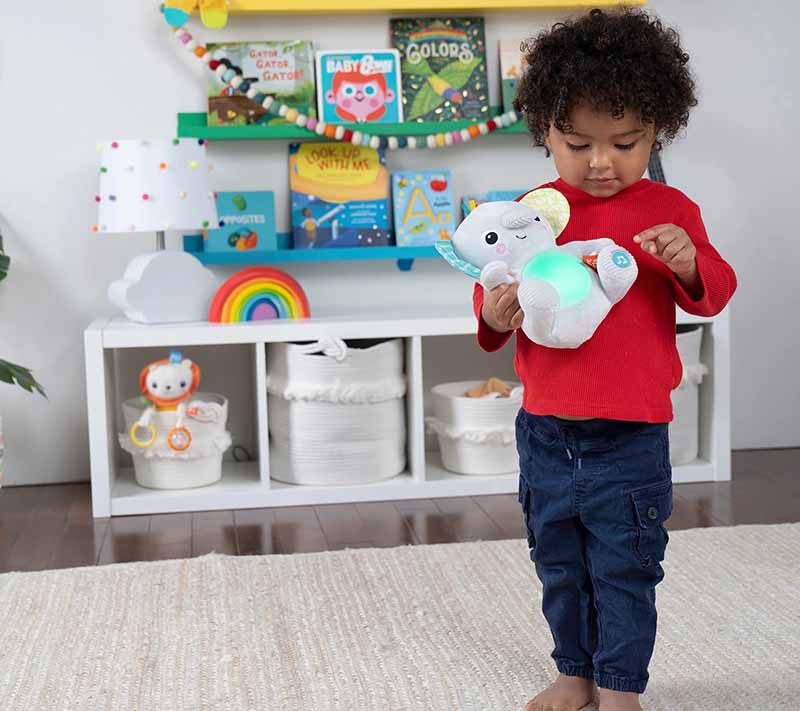
Educational plush for the 0-3 age range serves early childhood development goals — sensory development, motor skill development, language acquisition, and social-emotional development. These products must meet baby safety standards while also delivering developmentally appropriate educational content through their design.
- Sensory development: multiple fabric textures on a single plush character provide varied tactile input — crinkle, smooth, soft, ridged textures stimulate sensory exploration
- Motor development: features designed for young hands — loops to grasp, elements to squeeze, crinkle panels to explore — support fine motor development
- Language acquisition: simple, clear character names and sounds embedded in the character design support early vocabulary; companion materials provide language-rich content
- Social-emotional: character expressions and personalities that model emotions — a character that looks ‘happy’, ‘sad’, ‘excited’ — support emotional vocabulary development
- Safety baseline: all early childhood educational plush must meet OEKO-TEX Class I and EN71 under-3 / ASTM F963 standards — the educational purpose does not create any compliance exemption
Therapeutic and Special Educational Needs
Therapeutic and Special Educational Needs
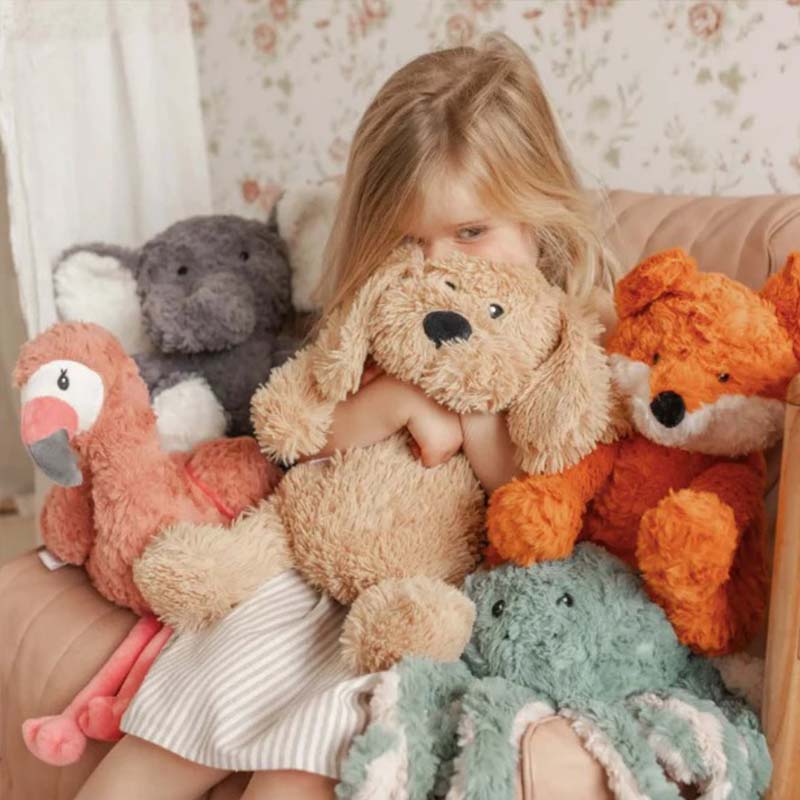
Educational plush for children with special educational needs — autism spectrum conditions, sensory processing differences, emotional and behavioral difficulties, and learning disabilities — requires specific design consideration beyond standard educational plush. These products are purchased by SEN teachers, occupational therapists, educational psychologists, and specialist schools who have specific therapeutic objectives for the product.
- Sensory plush for autism and sensory processing: multiple safe tactile textures; no sudden auditory surprises; consistent, predictable interaction design
- Emotion coaching characters: character sets representing different emotions — used by therapists and teachers to support emotional identification and regulation in children who find this difficult
- Weighted educational companions: weighted plush for children who benefit from deep pressure during learning tasks — calibrated weight appropriate for the child’s size and therapeutic need
- Communication support: plush characters used as communication partners in AAC (Augmentative and Alternative Communication) programs — the character ‘asks’ questions and the child responds
Language Learning Companions — 5 Electronic and Non-Electronic Formats
Language Learning Plush — Format Comparison
Language learning plush toys are among the most commercially developed educational plush categories — combining a character plush with language learning content through electronic sound modules, curriculum-linked accessories, or companion materials. A language learning plush that speaks words and phrases in the target language when squeezed or activated provides audio input in an emotionally engaging, child-friendly format.
Sound Module Plush — Single Language
Learning mechanism: Audio pronunciation in target language when squeezed
Technical requirement: Pre-programmed sound module; clear audio quality; battery compartment
Age range: 3–8 years
Sound Module Plush — Bilingual
Learning mechanism: Audio in two languages; language toggle
Technical requirement: Dual-language programming; toggle mechanism or separate activation points
Age range: 3–10 years
Recordable Voice Plush
Learning mechanism: Child or teacher records vocabulary or phrases
Technical requirement: Recording chip with playback; sufficient recording duration
Age range: 4–10 years
Companion Book Plush Set
Learning mechanism: Character appears in bilingual story books; plush as physical reading companion
Technical requirement: No electronics; design matches book illustrations precisely
Age range: 2–7 years
Flashcard / Activity Companion
Learning mechanism: Character used alongside printed flashcard sets
Technical requirement: Pockets or attachment points for card sets; no electronics
Age range: 3–8 years
Educational Market Procurement — How Buying Decisions Are Made
6 Educational Buyer Types — Criteria, Process and Volume Profile
Educational plush purchasing decisions differ significantly from consumer retail and corporate purchasing — understanding the procurement process is essential for brands entering the educational market.
School / Classroom Teacher
Decision criteria: Curriculum fit; child appeal; durability; safety certification
Procurement: Individual purchase or small school budget; immediate need
Volume: 1-5 units typically; class sets for some programs
Educational Publisher
Decision criteria: Curriculum alignment; IP fit with their content; compliance
Procurement: Formal supplier evaluation; sample review; volume forecasting
Volume: 1,000–50,000+ across print-run lifetime
Edtech / Learning Toy Brand
Decision criteria: Character appeal; play pattern; safety; brand consistency
Procurement: Product development process; sample approval; launch quantity
Volume: 500–20,000 per SKU
School District / LA Purchasing
Decision criteria: Compliance documentation; supplier qualification; curriculum standards
Procurement: Formal tender process; approved supplier lists; volume contracts
Volume: 500–10,000 per program
Specialist SEN Suppliers
Decision criteria: Therapeutic appropriateness; safety; expert endorsement
Procurement: Direct relationship; sample evaluation; specialist review
Volume: 100–2,000 per product
Educational Gift Retail
Decision criteria: Appeal to parent buyers; curriculum link; quality perception
Procurement: Buyer range review; sample assessment; seasonal ordering
Volume: 500–5,000 per SKU
Compliance Requirements for Educational Plush
Safety Compliance — Educational Context Creates No Exemption
Educational plush toys are regulated identically to non-educational toys — the educational purpose creates no compliance exemption. In fact, many educational buyers apply stricter compliance requirements than standard retail buyers because they are accountable to parents, school governors, and local authorities for the safety of products used with children.
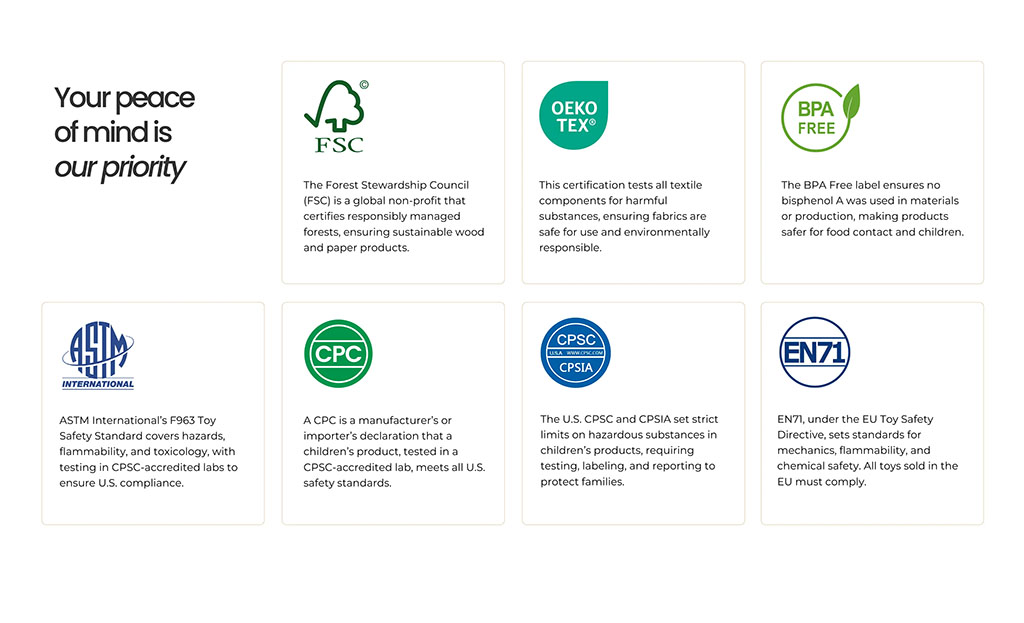
- EN71 Parts 1-3 and CE marking: mandatory for all educational plush sold or distributed in EU/UK — educational context does not exempt
- ASTM F963 and CPSC CPC: mandatory for educational plush distributed in the US — including products given to schools
- OEKO-TEX Standard 100: educational buyers frequently require this as additional evidence of chemical safety — Class I for any product intended for under-3 use
- Electronic toy compliance (EN 62115 / IEC 62115): required for any educational plush with electronic sound modules, LED elements, or other electronic features
- Sound pressure level testing: educational plush with audio output must meet sound level limits — EN71 Part 1 covers acoustic toy requirements for toys intended for children
- Procurement compliance documentation: educational district and institutional buyers frequently require full compliance documentation as part of supplier qualification — KINWIN provides the complete package formatted for institutional submission
Why Educational Brands Choose KINWIN
Why Educational Brands Choose KINWIN
✓ Curriculum-linked character development: original character design from educational brief — characters designed to embody learning concepts, not adapted from generic animal designs
✓ Classroom durability engineering: reinforced seam construction for repeated multi-child handling; washable construction as standard for classroom use
✓ Electronic integration: sound module plush, recordable voice plush, bilingual audio plush — electronic educational formats manufactured in-house
✓ STEM character accuracy review process: design alignment includes subject matter accuracy review for science, geography, and curriculum-specific characters
✓ Baby and toddler educational plush: OEKO-TEX Class I and EN71 under-3 certified — full safety for early childhood development programs
✓ SEN and therapeutic formats: weighted educational plush, sensory multi-texture characters, emotion coaching character sets
✓ Institutional compliance documentation: full compliance package formatted for school district and institutional procurement requirements
✓ EN 62115 / IEC 62115 certified: electronic educational plush compliant for all major markets
✓ Educational publisher program experience: series development, curriculum character sets, companion product coordination
✓ MOQ 500 pieces: educational programs accessible at launch scale for independent educational brands and publisher pilot programs
✓ 17+ years manufacturing experience; 1,000+ brands; 30+ countries
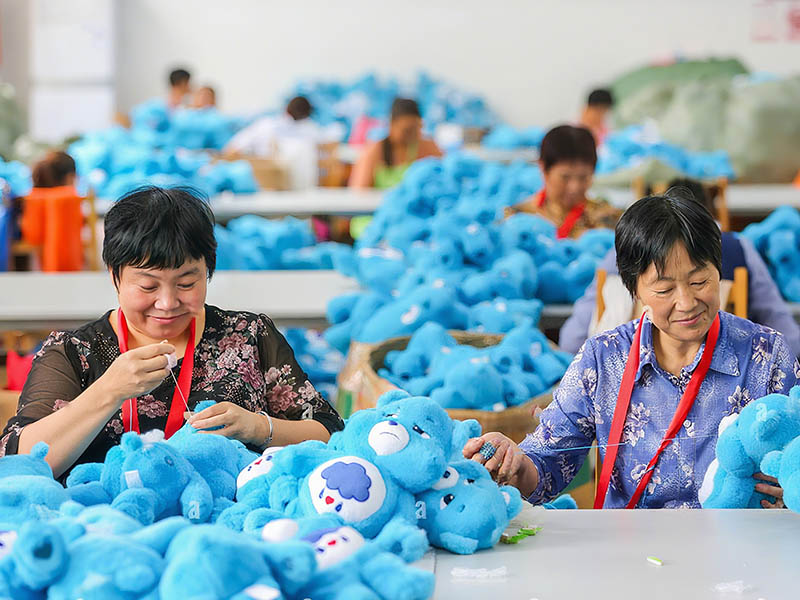
An educational plush toy that children love to learn with is not an accident — it is a design outcome. KINWIN builds the character that makes learning happen.
Frequently Asked Questions — Plush Toys for Educational Market
Frequently Asked Questions — Plush Toys for Educational Market
Q1. Can KINWIN incorporate electronic sound modules into educational plush toys?
Yes — KINWIN manufactures electronic educational plush with sound modules as an in-house capability. Sound module integration in educational plush involves: pre-programmed modules (where the audio content is fixed before manufacturing and programmed into the module at production), custom-programmed modules (where KINWIN works with the brand’s audio content to program the module with their specific vocabulary, phrases, or curriculum content), and recordable modules (where the teacher or child can record their own voice or content). For language learning plush, bilingual programming is available with language selection through a physical toggle or separate activation points for each language. Electronic plush requires IEC 62115 / EN 62115 compliance testing in addition to standard EN71 / ASTM toy safety testing — KINWIN coordinates this testing as part of the standard compliance process for electronic educational plush. Sound level testing is also conducted to confirm audio output meets the limits required for toys used by children in educational settings.
Q2. How does KINWIN approach designing a plush character to represent a specific educational concept?
Educational character design at KINWIN begins with a concept brief that defines both the educational objective and the character’s role in achieving it. For a character representing a scientific organism, we ask: what are the organism’s most visually distinctive features that make it recognizable, and how can those features be translated into a character design that is appealing to children without sacrificing scientific accuracy? For a character representing a mathematical concept or curriculum theme, we ask: what visual metaphor or personality trait embodies the concept in a way children will find memorable? The design alignment document for educational characters includes a subject accuracy review — KINWIN’s design team consults the brand’s curriculum advisors or subject matter experts on accuracy before sampling begins. This prevents the most common educational plush design failure: a character that is visually appealing but inaccurate in ways that undermine its educational credibility. Educational plush that misrepresents the concept it is supposed to teach is not just a product failure — it is an educational harm.
Q3. What durability standards should a classroom plush mascot meet?
Classroom plush mascots face more intensive handling than standard retail plush — they are handled by 20-30 children repeatedly over a full school year, taken home by students, washed regularly, and subjected to the kinds of handling that children apply to things that are communal rather than personally owned. KINWIN’s classroom mascot construction standard addresses this through: reinforced main seams with increased stitch density at stress points; bartack (heavy lockstitch) at all limb attachment points; fully embroidered facial features with no component risk; fill specification that accounts for compression from repeated handling without becoming limp; machine-washable construction with color fastness ratings appropriate for regular washing at 30-40°C; and pull force testing of all attached elements well above standard EN71 Part 1 requirements. As a practical benchmark: a well-constructed classroom mascot should remain in acceptable condition after 30+ machine wash cycles and a full school year of handling by 25 children. KINWIN provides washing guidance with all classroom plush programs and can specify construction to a defined number of wash cycle durability if the educational program specifies this.
Q4. Can educational plush toys be sold through school supply procurement channels?
Yes — but educational plush entering formal school supply procurement channels must meet specific compliance requirements that go beyond standard retail toy safety. Most school district and local authority procurement programs require: full toy safety certification documentation (CE Declaration and EN71 reports for EU/UK; ASTM F963 and CPSC CPC for US), social compliance audit evidence (BSCI or SMETA — educational institutions are accountable to their communities for ethical supply chain), environmental or sustainability credentials (OEKO-TEX certification at minimum; FSC packaging increasingly required), and supplier qualification documentation (ISO 9001 is frequently required for formal institutional supply contracts). KINWIN’s complete certification portfolio — ISO 9001:2015, BSCI, SMETA, CE, EN71, ASTM, OEKO-TEX, FSC — is specifically formatted for institutional procurement submission. Brands planning to supply educational institutions should confirm specific procurement requirements with their target institutions before manufacturing, as requirements vary by country, institution type, and program size.
Q5. What is the difference between an educational toy and a toy with educational packaging?
This is a commercially and legally important distinction. A toy with educational packaging is a standard toy whose marketing claims educational benefit without the product design specifically supporting that claim — ‘develops creativity’ on a standard stuffed animal, for example. An educational toy is a product whose design specifically supports a defined learning objective — a plush character whose physical features represent the curriculum concept it teaches, a sound module plush that delivers curriculum-accurate audio content, or a sensory character whose texture design serves a specific developmental purpose. The distinction matters commercially because educational buyers — schools, educational publishers, learning toy retailers — evaluate products against educational criteria that generic ‘educational’ labeling does not satisfy. A plush sold to a school supply chain needs to demonstrate educational effectiveness through design, not just claim it through marketing language. KINWIN works with educational brands to develop products where the educational purpose is embedded in the character design, the interaction design, and the curriculum materials — not applied as a label to a standard plush.
If You Can lmagine lt,We Will Create lt!
1.Tell Us What You Need
Tell us as specific as possible of your needs and share your idea.
2.Get Solution & Quote
We will work on the best solution according to yourrequirements,the specific quote will be provided within 24 hours.
3.Approve for Mass Production
We will start mass production after getting your approval.