
Plush Toy Sampling Service
Plush Toy Sampling Service
7-Day Standard Turnaround · 95%+ Accuracy · All Design Formats · Free Revisions · 200,000+ Samples/Year · Photo-Ready · NDA Protected
Your plush toy sample is the most important deliverable in the entire development process. It is the moment your concept becomes real — the first time you can hold your character, evaluate the fabric, feel the filling density, and make the decisions that determine whether your product will succeed or fail. A great sample sets up a great production run. A poor sample — or a supplier who rushes through sampling to get to the order — sets up costly revisions, quality problems, and missed launch dates.
KINWIN’s sampling service is built on a simple commitment: every sample we produce should be as close to your approved vision as humanly possible — the first time. We achieve this through a structured design alignment process before sampling begins, specialist pattern makers with an average of 8+ years plush toy construction experience, and a continuous quality review throughout the sampling process.
7 Days
Standard Turnaround
From design alignment approval to first prototype
95%+
Character Accuracy
Consistent, measurable similarity to approved reference
200,000+
Samples Per Year
Experience with virtually every construction challenge
0.8 Rounds
Average Revisions
More than half approved on first prototype
What KINWIN’s Sampling Service Solves
What KINWIN's Sampling Service Solves
Most plush toy development delays and budget overruns trace back to the same root cause: the sample did not match the vision — and nobody caught the misalignment until a physical prototype was already made. KINWIN’s sampling service is specifically engineered to prevent this.
Problem 1: First Sample Doesn’t Look Like the Design
Problem 1: First Sample Doesn't Look Like the Design
The most common and most costly sampling failure. This happens when a manufacturer goes directly from a 2D image to cutting and sewing without structured alignment on proportions, color, pile direction, and construction interpretation.
KINWIN's Solution
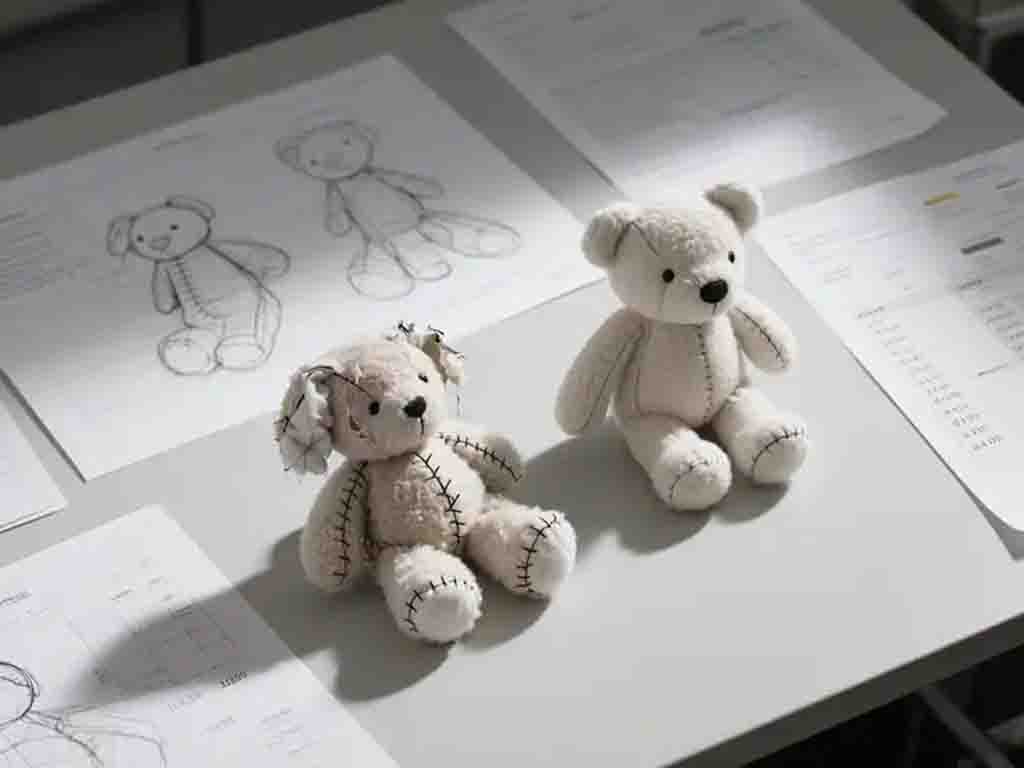
A mandatory design alignment document — a structured confirmation of how every design element will be interpreted before any fabric is cut. By confirming proportions, color zone assignments, pile direction, filling density targets, and branding placement in writing and visual format before sampling begins, we eliminate the most common sources of first-sample rejection.
Problem 2: Face Symmetry & Expression Inconsistency
Problem 2: Face Symmetry & Expression Inconsistency
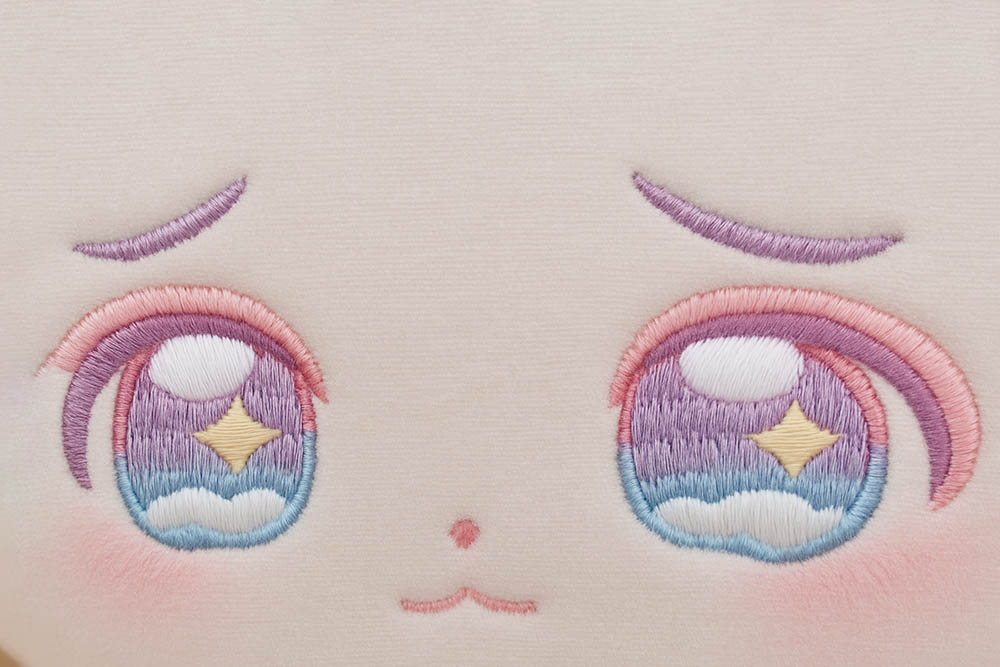
Embroidered faces on plush toys are technically demanding — even small misalignments create ‘wrong’ expressions that immediately register as unappealing. A face that is 2mm off-center reads as ‘broken’ to the human eye even when the error is invisible in measurement.
KINWIN's Solution
KINWIN’s face embroidery process uses placement templates (physical positioning guides applied to the toy face before embroidery begins) and in-process symmetry verification on every unit. Our target is ±0.5mm placement accuracy for all facial features — left-right axis and vertical axis both confirmed.
Problem 3: Filling Density Too Low or Uneven
Problem 3: Filling Density Too Low or Uneven
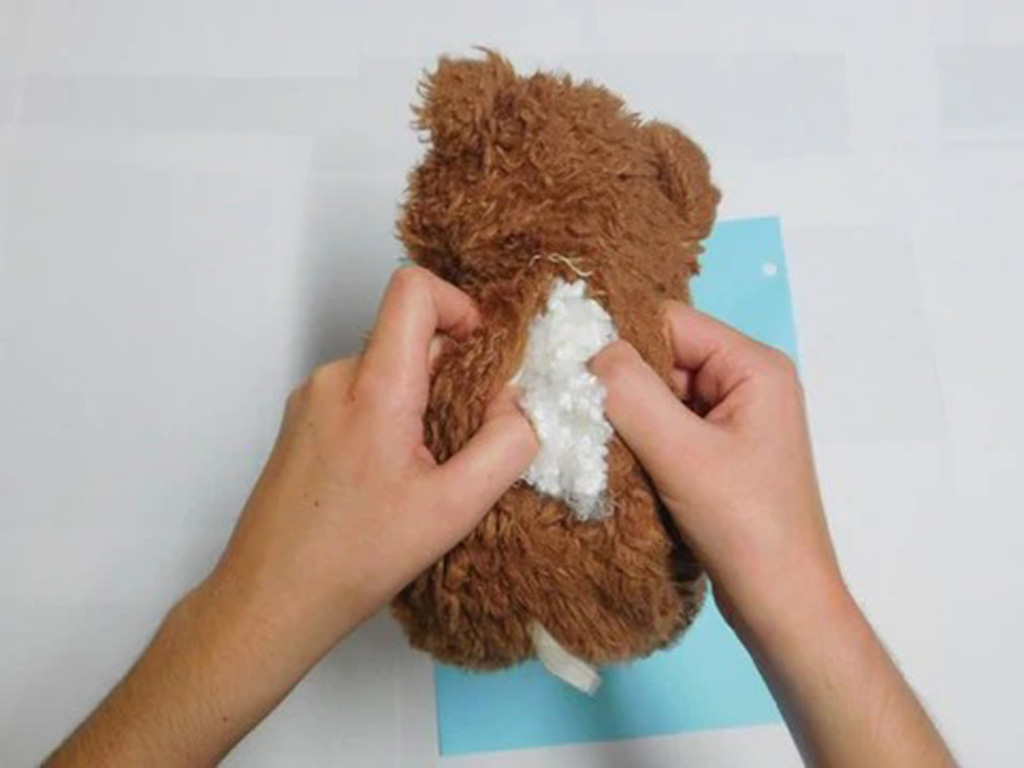
‘Feels cheap’ and ‘went flat after a week’ are the two most common negative reviews for plush toys — both caused by under-filling or inconsistent filling density. Vague filling specifications like ‘soft’ or ‘medium’ cannot be consistently reproduced across a production run.
KINWIN's Solution
KINWIN specifies filling as gram-weight targets per body section (head, body, each limb, tail) — not vague descriptors. Physical golden sample feel is the confirmation benchmark at every production stage. Inconsistent or under-filled units are rejected at the in-process QC station before they move to the next production step.
Problem 4: Color Doesn’t Match the Artwork
Problem 4: Color Doesn't Match the Artwork
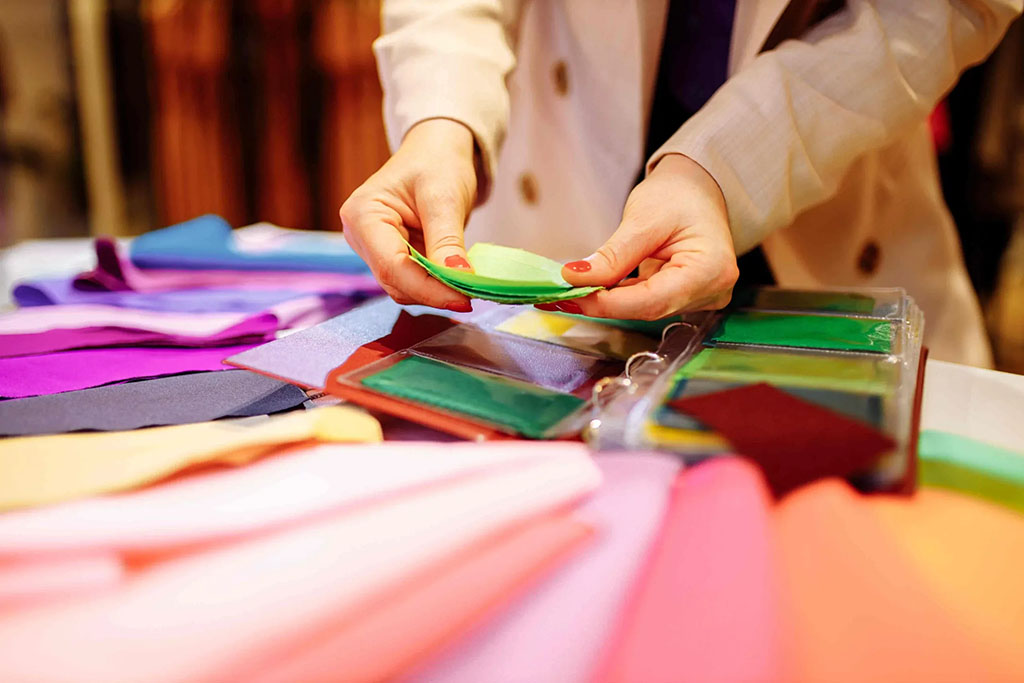
Color mismatches — particularly on face embroidery and key character colors — are immediately visible and cannot be corrected after production. The difference between digital color on screen and physical material color is significant and must be resolved before sampling begins.
KINWIN's Solution
KINWIN performs Pantone TPX color matching for all fabrics and submits physical color swatches and embroidery thread color samples for client approval before sampling begins. This one step eliminates the most visible category of first-sample rejections. Color reference records are retained for all future reorders to ensure batch-to-batch consistency.
Problem 5: Extended Revision Cycles That Delay Launch
Problem 5: Extended Revision Cycles That Delay Launch
Multiple revision rounds are almost always caused by design ambiguity at the brief stage rather than poor execution. When the manufacturer and client have different mental models of what the product should look like, revisions are inevitable — and each round adds 10–14 days to the timeline.
KINWIN's Solution
KINWIN’s design alignment document process creates a shared visual language before sampling — dramatically reducing the revision rounds required to reach approval. Our internal data shows an average of 0.8 revision rounds, compared to the industry average of 2–3. For brands who provide detailed multi-view artwork with Pantone color references, the average is 0–1 rounds.
Sampling Service Types
Sampling Service Types
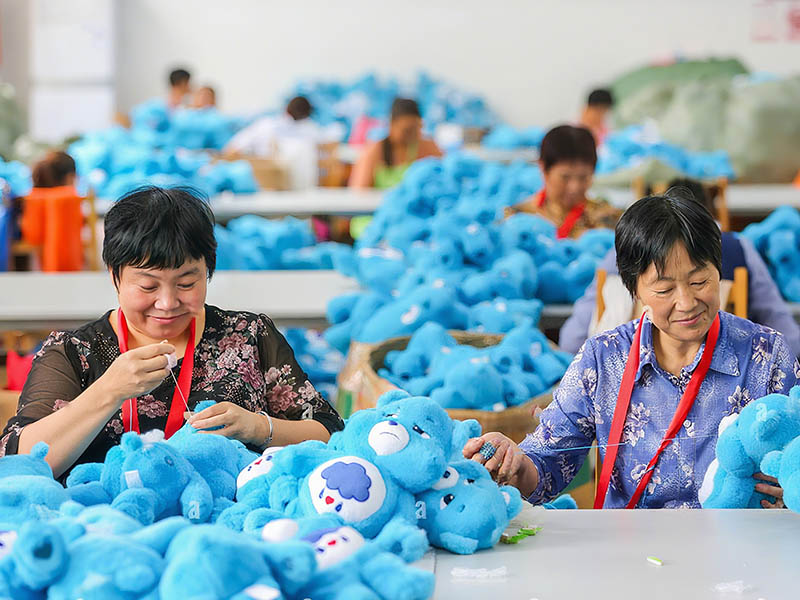
KINWIN offers multiple sampling service tiers to match different project stages, timelines, and objectives.
Standard OEM Sampling — New Character Development
Full character development from your design reference: original pattern making, material sourcing, color confirmation, and prototype construction.
- Timeline: 7 working days from design alignment approval
- Includes: design alignment document, material sourcing, Pantone color matching, full prototype
- Accepts: any design format — sketch, digital file, 3D model, physical reference
- NDA available before any design files are shared
ODM Sampling — Branding & Color Customization Only
Sampling based on KINWIN’s existing design library with your brand colors, logo embroidery, and custom packaging applied. Fastest sampling option.
- Timeline: 3–5 working days from brief confirmation
- Best for: branded promotional plush, gift programs, Amazon seller first orders
- No original character development required
- Lowest sample fee — reflects reduced development scope
Modification Sampling — Adapting Existing Designs
Sampling based on a previously approved design with specific modifications: size change, color variant, seasonal expression change, new accessory, or functional module integration.
- Timeline: 5–7 working days depending on modification complexity
- Faster than full OEM — base pattern already developed
- Sample fee: reduced vs new OEM sampling
- Applies to: size grading, expression variants, seasonal color changes
Electronic & Functional Sampling
Sampling for plush toys with integrated electronic modules — sound chips, LED lighting, recording and playback, vibration motors, or AI conversation modules.
- Timeline: 10–15 working days depending on module complexity
- Includes: module sourcing, integration construction, function verification testing
- Safety note: requires IEC 62115 testing in addition to standard toy safety tests
- AI module integration: 12–15 working days
Photography & Marketing Samples
Production-quality samples prepared specifically for product photography, pre-launch marketing, Kickstarter/Indiegogo campaigns, influencer seeding, and DTC website launch content.
- Includes full production packaging: gift box, hang tag, branded insert
- Available alongside or after golden sample approval
- Multiple units available for different photography setups
- Direct use for pre-order campaigns before production commitment
Pre-Shipment Golden Sample Verification
For reorders or large production programs — confirms the production-run golden sample matches the original approved standard before mass production begins.
- Provides documentary evidence of production quality benchmark
- Confirms color, proportion, embroidery, and fill density against original standard
- Recommended for all orders above 3,000 units or after 6+ months since last order
- Prevents batch-to-batch quality drift on long-running programs
How KINWIN’s Sampling Process Works — Day by Day
How KINWIN's Sampling Process Works — Day by Day
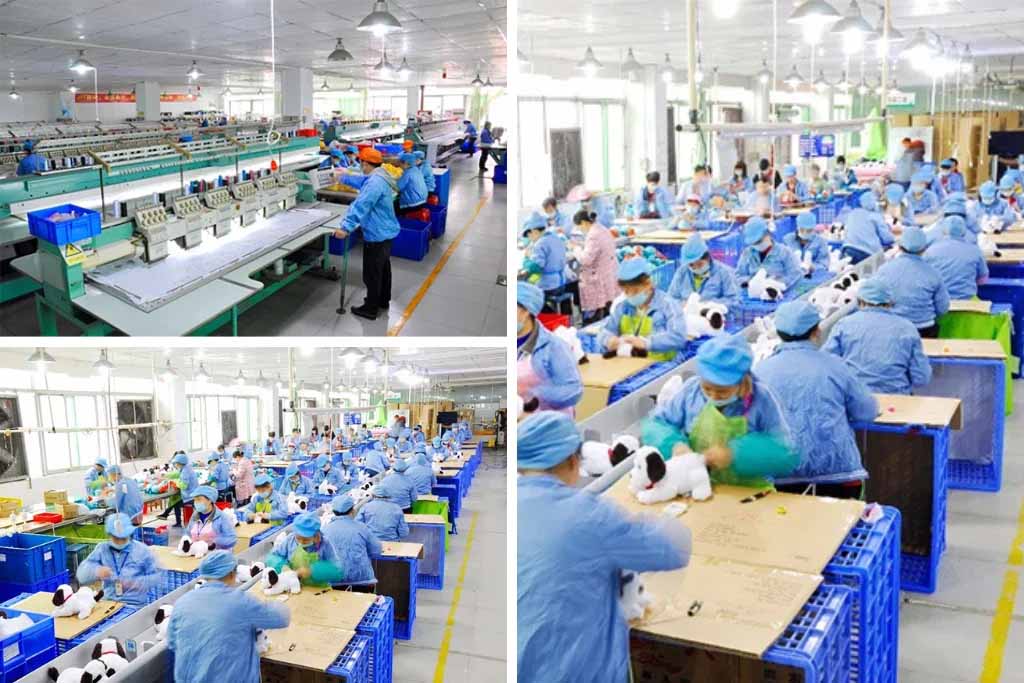
Every KINWIN sample follows a structured process designed to maximize first-sample accuracy and minimize revision cycles.
- Day 1: Brief received, NDA signed (if required), initial review — Client: submit brief + files
- Day 1–2: Design alignment document prepared by KINWIN
- Day 2–3: Design alignment document shared — Client: review & approve
- Day 3–4: Material sourcing, color swatch submission — Client: approve colors
- Day 4: Pattern making begins
- Day 4–7: Prototype construction — cutting, sewing, stuffing, embroidery, assembly
- Day 7: Internal QC review — sample vs design reference
- Day 7–8: HD photography + construction report prepared
- Day 8–9: Sample shipped to client via express courier
- Day 11–13: Client receives and reviews sample
- Day 13–15: Client provides revision feedback
- Day 15–19: Revision produced and shipped (if required)
- Day 21–23: Final approval — golden sample confirmed, production authorized
How to Submit a Sampling Brief to KINWIN
How to Submit a Sampling Brief to KINWIN
The quality and completeness of your sampling brief directly determines how quickly and accurately we can produce your first prototype. Here is exactly what to include.
Minimum Required Information
- Character design reference: at minimum, a front-view image in digital or physical form
- Target size: overall height or specific dimension (e.g. ’30 cm sitting height’)
- Target markets: which countries you will sell in (determines safety certification requirements)
- Target order quantity: first order volume (informs pricing and production planning)
- Intended audience: age group and product use context (toy, gift, home décor, etc.)
File Formats Accepted
- Digital artwork: AI, EPS, SVG, PSD, PNG (300dpi+), PDF, JPG
- 3D files: OBJ, STL, FBX, ZTL
- Physical: mail your physical reference samples or existing toys to KINWIN
- Hand-drawn: photos of hand-drawn sketches with written dimension notes
Strongly Recommended Additional Information
- Multiple views: front, back, side, and detail reference images
- Color specifications: Pantone TPX references for all character colors
- Material preferences: fabric type (short pile, long pile, Sherpa, Minky, etc.)
- Filling preference: standard PP cotton, weighted, memory foam, eco fiber
- Functional features: sound, LED, recording, scent, weighted
- Branding requirements: logo files, label requirements, packaging specifications
- Launch date: target production completion date (allows production scheduling)
How to Evaluate a Plush Toy Sample — Brand Checklist
How to Evaluate a Plush Toy Sample — Brand Checklist
When your sample arrives, a structured evaluation process ensures you capture all feedback in one round — minimizing revision cycles and getting to approval faster.
Visual Accuracy
- Overall character silhouette: does the shape match your reference from all angles?
- Proportion accuracy: head-to-body ratio, limb length, ear/tail proportions
- Face symmetry: are eyes, nose, and mouth symmetrical on the left-right axis?
- Expression match: does the face convey the intended personality/emotion?
- Color accuracy: do all fabric colors and embroidery thread colors match Pantone references?
Material & Construction
- Fabric: correct type and pile length? Feels as expected?
- Filling density: feels appropriately full? No thin patches or lumpy areas?
- Seams: all seams clean and straight? No visible gaps or loose threads?
- Embroidery: stitch coverage complete? No loose ends or thread loops?
- Attached elements: eyes, noses, accessories — secure when pulled firmly?
Functional Performance
- Sound module: activates correctly? Volume appropriate?
- LED: all LEDs function? Color correct?
- Weighted filling: weight feels appropriate for the size? Even distribution?
- Recording function: records and plays back clearly?
- Scent: fragrance present and as intended?
How to Provide Effective Revision Feedback
How to Provide Effective Revision Feedback
The quality of revision feedback determines how efficiently the revision process moves. Specific, measurable feedback produces faster, more accurate revisions than vague descriptions.
Good Feedback Examples
- ‘Left eye needs to move 3mm to the right and 2mm up’
- ‘Body needs 20% more filling density — currently too soft and goes flat when placed on surface’
- ‘Fabric color on right ear is noticeably darker than reference Pantone 14-1118 TPX’
- ‘Nose embroidery is 4mm too large — please reduce to match the 8mm reference in the design sheet’
Feedback to Avoid
- ‘The face doesn’t look right’ — too vague to action without follow-up questions
- ‘Not fluffy enough’ — no measurable target; specify a fill density or comparison reference
- ‘Color is slightly off’ — specify which color zone and which direction (too light/dark/warm/cool)
Why KINWIN’s Sampling Service Stands Apart
Why KINWIN's Sampling Service Stands Apart
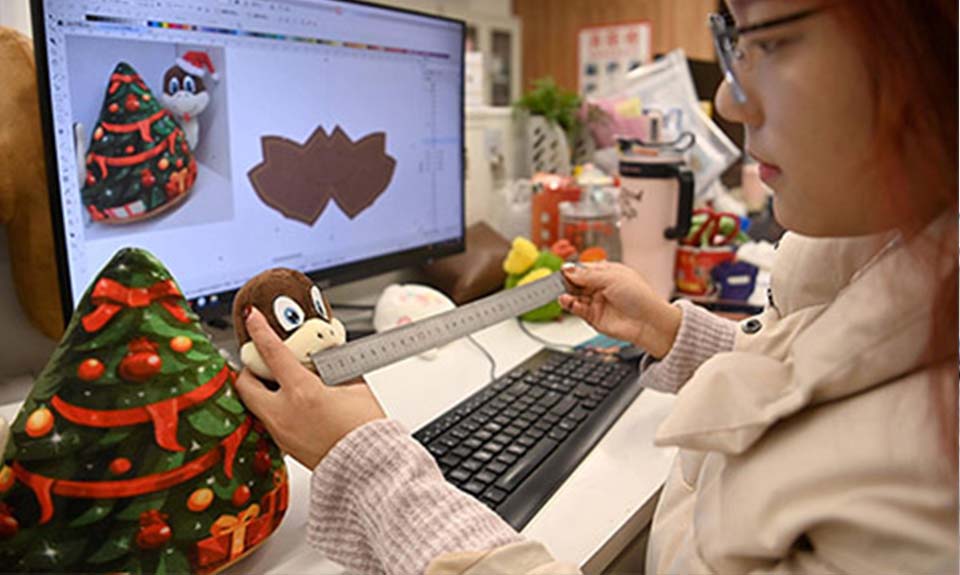
✓ Design alignment document before sampling — the single most effective way to reduce first-sample revision rounds
✓ 30+ dedicated senior pattern makers with average 8+ years plush toy construction specialization
✓ 200,000+ samples produced annually — experience with virtually every construction challenge
✓ 7-day standard turnaround — one of the fastest in the industry without sacrificing accuracy
✓ 95%+ character similarity to approved reference — consistent, measurable accuracy standard
✓ Unlimited free revisions until approved — zero pressure to accept a sample you’re not satisfied with
✓ Pantone color matching with physical swatch confirmation before sampling — eliminates most color surprises
✓ Sample fee fully deductible from production order — sampling is a project investment, not a sunk cost
✓ Photography-ready samples with production packaging available — direct use for marketing launch
✓ NDA protection available from first contact — your IP is safe throughout the process
A perfect sample is the foundation of a perfect product. KINWIN builds the foundation.
Frequently Asked Questions — Plush Toy Sampling Service
Frequently Asked Questions — Plush Toy Sampling Service
Q1. How much does plush toy sampling cost, and is the fee refundable?
KINWIN charges a sample fee that reflects the actual material and skilled labor cost of producing your prototype. The fee varies by character complexity, size, materials, and functional requirements — contact our team for a specific quote. The sample fee is not refunded, but it is fully deductible from your first production order above MOQ. This means that for brands who proceed to production, the sampling investment has zero net cost. For brands who do not proceed to production after sampling, the sample fee covers the genuine cost of the development work performed.
Q2. Can I request sampling without committing to a production order?
Yes. KINWIN offers sampling as a standalone service — there is no obligation to place a production order after receiving your sample. Many brands use our sampling service to develop and test a concept before committing to production investment. Some clients sample with multiple manufacturers before selecting their production partner. We are comfortable with this because our sample quality and the overall sampling experience speak for themselves. The only condition is that sample fees are charged and not refunded (though fully deductible if production proceeds).
Q3. What if I only have a rough sketch — is that enough to start sampling?
Yes. A rough sketch is a completely valid starting point for our sampling process. What matters is that you have a clear vision of what your character should be — even if you cannot technically draw it well. Our design team will use your sketch as the conceptual foundation, ask structured clarifying questions about proportions, colors, materials, and character personality, and develop a refined reference set that our pattern makers can work from. The process takes slightly longer than when detailed multi-view artwork is provided (add 2–3 days for design development), but the outcome — an accurate physical prototype — is exactly the same.
Q4. How many revision rounds does it typically take to reach golden sample approval?
The average revision rounds at KINWIN, based on our internal data, is 0.8 rounds — meaning more than half of our samples are approved on the first physical prototype, with the remainder requiring one revision. This is significantly below the industry average of 2–3 revision rounds. The primary reason for our below-average revision rate is the design alignment document process — by confirming every design decision before sampling begins, we eliminate the most common sources of first-sample rejection. Brands who provide detailed, multi-view artwork with Pantone color references average 0–1 revision rounds; brands who provide rough single-view references average 1–2 rounds.
Q5. Can KINWIN produce photography-ready samples with branded packaging before I commit to production?
Yes. Photography samples with full production-quality branded packaging — gift boxes, branded tissue, hang tags with QR code, poly bag with brand print — can be ordered alongside or after golden sample approval. Many DTC and Shopify brands order photography samples before committing to full production — using the photos for pre-launch campaigns, pre-order pages, Kickstarter/Indiegogo campaigns, and influencer seeding before the production order is placed. Photography samples are priced separately from the standard prototype sample and include a small quantity (typically 3–5 units) with complete packaging for studio and lifestyle photography use.
If You Can lmagine lt,We Will Create lt!
1.Tell Us What You Need
Tell us as specific as possible of your needs and share your idea.
2.Get Solution & Quote
We will work on the best solution according to yourrequirements,the specific quote will be provided within 24 hours.
3.Approve for Mass Production
We will start mass production after getting your approval.